Sunday, September 27, 2026


Critical minerals boom risks second funding gap as governance support shrinks 


Image from BHP.

Governments are pouring billions of dollars into critical minerals projects in a race to secure new supply chains, but a parallel pullback in funding for governance and community engagement could ultimately slow the very projects policymakers are trying to accelerate, according to a new report by the Trust, Accountability and Inclusion (TAI) Collaborative. 

The report, Thinking Strategically About Mineral Governance Funding, was commissioned by the BHP Foundation, a charitable organization registered in the US. The research found that demand for minerals is rising rapidly while funding for mineral governance appears to be tightening, with official development assistance contracting and some legacy philanthropies scaling back support. 

The Washington-based donor network says development finance for mines, processing facilities and other critical minerals infrastructure is expanding just as funding for transparency, regulatory capacity, civil society oversight and community participation is being cut. 

“Yes, there’s some eye-dropping sums being quoted and money flowing into the project development space and investment pipeline,” TAI executive director Michael Jarvis told MINING.COM in an interview. 

“But at the same time, money that used to go to ensuring good outcomes of all those projects — the governance agenda — has been cut.” 

Government donors that previously financed transparency and accountability programs around mining are shifting priorities toward strategic investment and dealmaking, Jarvis said. The trend extends beyond the US to donors in Europe, Japan and elsewhere. 

The shift comes as geopolitical competition over critical minerals is driving unprecedented government intervention in mining and processing. Government policy is expected to remain one of the biggest drivers of mining investment in 2026, with state-backed financing emerging as a central tool in developed markets. 

TAI argues that the resulting imbalance represents a second, largely overlooked financing gap: not the capital required to build mines and processing plants, but the much smaller amount needed to build the institutions and community relationships that allow those projects to operate. 

“It only needs to be a fraction of that bigger sum,” Jarvis said. “It’s not like this needs to be on par, but there isn’t even that 5% fraction of what’s going into the investment side that’s going on the good governance institutions around it at the moment.” 

$10 million could make a difference 

TAI, which has operated since 2010, brings together funders supporting governance work across mining, infrastructure and other sectors. Its work focuses on trust with communities, accountability over public resources and corporate conduct. 

The organization recently examined hundreds of funding streams as part of its research into mineral governance. Its March report on mineral governance funding found that demand for critical minerals is increasing while official development assistance and philanthropic support for governance work are tightening. 

Jarvis said even a relatively modest injection of capital could begin closing the gap. 

“At least a $10 million co-investment around mining governance, to be spent over the next two years, would make a surprising amount of difference,” he said, adding that the amount is roughly equivalent to cuts TAI has observed over the past year. 

Longer term, he said industry itself could contribute a small percentage of project investment toward community engagement and governance capacity. 

“We don’t need to be on equal firepower with the scale of investment that’s flowing into the sector,” Jarvis said. “But we need that thin layer that can make these things serve everyone’s interests better.” 

Among the areas particularly exposed are civil society organizations that work with mining communities and scrutinize project development. 

Several million dollars have been cut from support for international and in-country watchdog groups that can flag opaque dealmaking, questions about who benefits from projects and concerns about operators entering communities, Jarvis said. 

Those cuts are arriving at “the worst possible moment,” as national security and energy-transition pressures encourage governments to move faster on mineral development. 

“A few years from now, we’re going to regret that we made those cuts,” he said. 

Deregulation could backfire 

The funding pullback also coincides with pressure in several jurisdictions to accelerate permitting and reduce regulatory barriers. 

Jarvis questioned the assumption that weaker oversight will necessarily translate into faster mineral production. 

“There’s a hypothesis of some that if you deregulate, that speeds up projects, things can happen faster,” he said. “That might work in the short run, but I would argue that lack of good regulation in the long run creates more of these headaches and problems down the road.” 

Weakening government capacity can leave regulators without the staff or expertise required to manage projects, while cutting funding for civil society removes another layer of oversight, he said. 

TAI’s separate Mined the Gaps: Trust and Critical Minerals report similarly challenges the idea that regulation inherently obstructs development. It argues that procedural fairness, effective oversight and meaningful community participation can prevent conflicts and legal disputes that otherwise delay projects. 

One particular vulnerability occurs during exploration. 

Junior miners are typically incentivized to find deposits, secure financing and advance projects to the point where larger companies become involved. Environmental and community issues established during those early stages can therefore be inherited by the eventual mine developer. 

“In most cases, the communities are the last to know, the last to be engaged,” Jarvis said. 

While many juniors manage those relationships well, others do not, he added. 

“If there’s no understanding of what the issues and risks are amongst local community leaders — or even amongst the regulators, partly because some of them have been gutted, they don’t have staff anymore — you’re laying the seeds for things to blow up down the road.” 

Community relations as investment risk 

For investors evaluating early-stage miners, Jarvis said community relationships should therefore be taken seriously alongside geological results. 

Companies do not necessarily need huge budgets, he said, but they need staff capable of understanding local issues and engaging communities from the beginning. 

Mining projects can operate for decades, making those relationships an ongoing requirement rather than something companies address only during permitting. 

Communities may be consulted when a project initially moves forward, but projects subsequently change as costs, designs and management teams evolve. Community engagement needs to evolve with them, Jarvis said. 

There should be mechanisms for checking whether promised jobs are materializing, whether water use remains consistent with commitments and whether communities continue to support development. 

“We just need to get smarter and better at that interaction on an ongoing basis throughout the life cycle of the project,” he said. 

TAI argues the problem is not confined to developing economies. Similar tensions are emerging in Australia, Canada and the US. 

Nor is the organization’s objective to prevent mines from being built, Jarvis said. 

If he had $50 million to deploy, he said he would direct it toward networks that engage communities around mining projects and transfer knowledge about successful approaches between jurisdictions. 

“It’s not to block the mines,” Jarvis said. “It’s to ensure that these things work in a way that serves everyone’s benefit.” 

Pressure to get deals done 

The governance question also extends to how governments award the rapidly growing pool of public money available for critical minerals. 

Jarvis said transparency around funding awards, competitive bidding and contract terms becomes particularly important as governments take a larger role in selecting projects. 

“The more you make these things at risk of collusion or favoritism, it tends to not work well for the long-term outcomes for anybody’s benefit, except perhaps some individuals,” he said. 

Good operators also benefit from a level playing field, he added, while political pressure to rapidly select winners risks producing poor decisions. 

“It’s this trade-off between a push for speed and having announcements against actually what makes long-term good economic sense,” Jarvis said. “And I’m not sure the two match up very well right now.” 

With governments pursuing critical minerals for everything from renewable energy and batteries to national defense, TAI does not dispute the urgency of bringing more production online. 

Its warning is that financing alone will not get it accomplished. 

“For all the hype and boom, we’re not going to see the result we want unless we’re thinking about all the pieces that need to be put in place,” Jarvis said. 

“At the moment it’s all focused on the finance and not the rest of it.” 


Hapag-Lloyd and FIMI Submit Framework of Revised Structure for Zim Israel

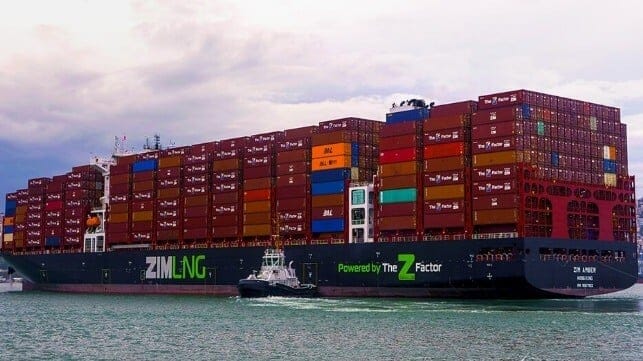
Zim containership
The proposed takeover of Zim is being revised to address concerns from the Israeli government (Zim)

Published Sep 24, 2026 6:42 PM by The Maritime Executive


Israeli media is reporting that Hapag-Lloyd CEO Rolf Habben Jansen flew to Israel and that, today, September 24, with Ishay Davidi’s FIMI Opportunity Funds, they submitted what they are calling a “significantly improved framework” for their proposed takeover of container carrier Zim. The companies are saying they understood the concerns raised by factions within the Israeli government and that they have addressed the issues, creating a stronger Zim Israel as the surviving Israeli company.

The Israeli government had indicated that it would vote to reject the proposed takeover of Zim by Hapag-Lloyd and the creation of a new, smaller Zim run by FIMI. Questions were raised about the financial viability of the new, smaller shipping company that was mostly focused on the Mediterranean and as a feeder to Hapag-Lloyd. Security concerns were also raised over Israel’s control of the shipping company and ability to maintain key supply chains.

The information submitted today is said to be a framework that outlines what the companies are calling “ten material improvements” to the structure of the deal. The companies said they would submit complete documentation within 45 days.

The Israeli outlet Calcalist, which was first to break the news of the pending takeover months ago, reports it reviewed the document submitted today. It says the new proposal enhances the Israeli ownership of Zim Israel and strengthens the so-called Golden Share. It reduces the threshold to trigger a government review and ensures that Zim Israel will remain an Israeli company.

One of the key objections was the limited routes for the new Zim. The revised proposal adds a weekly route to the Far East for Zim Israel in addition to the planned service in the Mediterranean and trans-Atlantic. It also proposed to increase the size of the Zim Israel fleet, doubling its current reefer capacity to protect the Israeli food chain.

Hapag-Lloyd will enter into a long-term commercial agreement with Zim Israel, providing it guaranteed global access. 

Zim Israel will maintain its vessel management and professional expertise in Israel. It will also have an independent IT system in Israel.

FIMI reports that, as part of the submission, it will present a new business plan for Zim Israel, which was reportedly validated by independent international consultants. Calcalist reports the plan projects increasing Zim Israel’s revenues over 10 years by $1.7 billion and a $200 million improvement in net operating profit.

International lawyers are also said to have reviewed Hapag-Lloyd’s corporate governance and will submit an opinion as part of the revised information packet. One of the concerns that had been raised related to the investment in Hapag by Arab sovereign wealth funds. The report says Hapag is also highlighting that it has maintained its service to Israel consistently since October 2023, despite periods of severe security disruptions.

To address issues raised by the unions in Israel, the deal is reported to include a special collective agreement guarantee for continued employment and training of Israeli seafarers. There is also a “10-year safety net,” enhanced terms for voluntary retirement, and a commitment to avoid layoffs through the end of 2027.

The Israeli media outlet Globes, however, highlights that the valuation of the proposed deal remains the same at $4.2 billion or $35 per share of Zim. It notes that the parties had a goal of closing the deal by the end of 2026, but it is now likely to extend until mid-2027.


Class Societies Join Maritime Anti-Corruption Network for the First Time

Corruption concerns vary by port, and MACN's members collect specific intelligence on specific risks (iStock / Around the World Photography file image)

Published Sep 24, 2026 9:33 PM by The Maritime Executive

The American Bureau of Shipping, DNV and RINA have agreed to join the Maritime Anti-Corruption Network (MACN), bringing new technical expertise to the global association for integrity in shipping. 

Historically, MACN's work has centered on combating facilitation payments (gratuities) in seaports, a longtime feature of interaction between ships' officers and local officials in certain port states around the world. Official solicitations for small payments of petty cash, food or cigarettes are common in some regions, and larger demands for bribes are not unheard-of. Seafarers are often at the receiving end, forced to decide whether to pay or to risk a made-up enforcement action that would delay their ship (and cost their company considerable amounts of money). Overall, MACN says that corruption can increase transport cost by 15 percent, and it has a global estimated cost of about $160 million per year - a cost that shipping stakeholders have to pass on to their customers or absorb on their balance sheets.

MACN's 200-plus members have banded together to resist these practices by sharing best practices; training seafarers on identifying and reporting corrupt practices; collecting incident reports of corrupt demands; sharing intelligence on port-specific corruption risks; and reporting patterns and problems to local authorities for action. The goal is to put up enough resistance and shed enough light on casual corruption that it gets addressed. 

Classification societies have expertise, reach and influence that can help MACN's broader goal to increase integrity in shipping, the organization said in a statement. They also have their own exposure to "integrity risks" when it comes to regulatory decisions, especially in high-risk operating environments. MACN's general assembly voted to allow class societies to join the group this April, and ABS, DNV and RINA are the first. 

"Trust is fundamental to the efficient functioning of global shipping. At ABS, we see integrity as an important part of maintaining confidence in the systems, standards, and relationships that support international trade. Joining MACN provides an opportunity to engage with industry partners, share expertise, and contribute to efforts that strengthen transparency and responsible business practices across the maritime sector," said John McDonald, ABS Chairman and CEO.


Though Balance Sheets are Strong, P&I Clubs Face Risk From Major Casualties

Bezengi
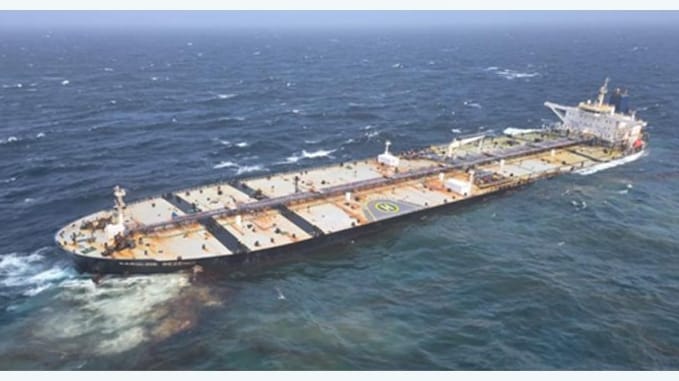
Insurers remain concerned about the risk of shadow-fleet vessels like Caroline Bezengi, above (file image courtesy Ambrey)

Published Sep 23, 2026 5:27 PM by The Maritime Executive


Lloyd's Market specialty insurance brokerage Tysers reports that the rising cost of major casualties will likely prompt P&I clubs to raise their premia by up to 7.5 percent in the coming year, despite their ever-growing free reserves and the strong market environment for investment earnings.  

Overall, the IG is very well capitalized, with total free reserves among the 12 clubs standing at $6.8 billion. Reinsurance and pooling add further strength to defend them against extreme claims, up to and including casualties the size of the Dali allision. But new hazards - conflict, sanctions, and the prospect of uninsured risks from the shadow fleet - create uncertainty in the market. 

The top players in the International Group have strong financial performance, Tysens notes. Juggernaut Gard leads the pack overall with more than 25 percent market share and free reserves of more than $1.7 billion, and enough investment income that it can afford to return premium to members. On technical performance, Japan P&I Club hit an enviable combined ratio of 70% in the last year, its fourth year in a row of strong earnings. 

But the prospect of unpredictable claims in a challenging operating environment will likely prompt higher rates, Tysers says - even though the clubs are sitting on large stockpiles of savings. 

"Many still have work to do to achieve a regular combined ratio around 100% against a background of claims
volatility and the increasing cost of serious casualties. There are strong arguments
that many Clubs are so well-reserved that premium increases are not needed.
However, we imagine they will argue they must continue to work to achieve
underwriting balance," the brokerage concluded. For the 2025 and 2026 years, target rate increases ranged from five to eight percent, and Tysers expects a repeat. 


McAllister’s Latest High-Tech Low-Emission Tug Arrives

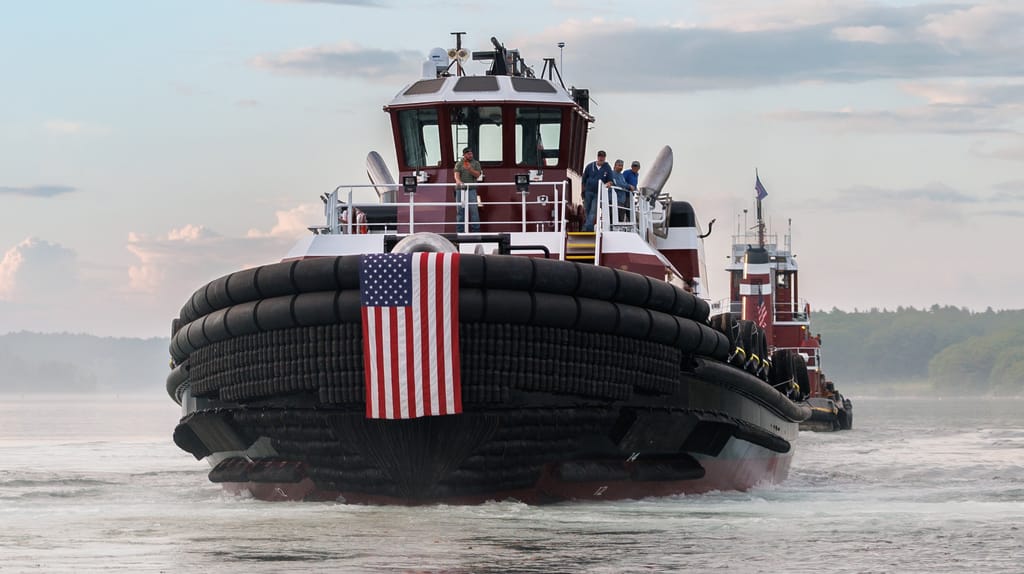
McAllister Towing introduces the MARY McAllister, a state-of-the-art tugboat designed for modern maritime challenges.

The MARY MCALLISTER: McAllister’s Latest High-Tech Low-Emission Tug Arrives

Published Sep 25, 2026 9:21 PM by The Maritime Executive


[By McAllister]

McAllister Towing is proud to announce our newest arrival! Welcome tug MARY McALLISTER. As our customer's vessels grow larger and services for these behemoths become increasingly demanding, McAllister continues to meet their needs with modern and environmentally conscious equipment.

American-built at Washburn & Doughty Associates, Inc. in Maine, MARY is the sixth in a seven-tug series of American Bureau of Shipping classed and certified 84-metric-ton bollard pull, low-emission tractor tugs. The MARY is powered by CAT Tier IV engines producing 6,770 horsepower. She is classed with the following certifications and endorsements from ABS: +A-1 Towing, +AMS, Fire Fighting (FiFi 1), Escort, Low Emissions Vessel. Her firefighting prowess includes pumps and monitors capable of producing 12,000 gallons of water and foam per minute.

The MARY is eventually bound for sunny Florida, but she'll get a little tour of the US East Coast before she gets there. The MARY left Washburn & Doughty just in time to ride out the approaching nor'easter. She will navigate her first North Atlantic storm in Portland before heading south. Joining her sister vessel, ISABEL, in Baltimore, MARY will receive her first work order as part of the McAllister fleet. After her Baltimore hitch, the MARY will proceed to her homeport in Port Everglades where she will be a dynamic force for years to come.

We welcome the MARY as our latest high-tech, low-emission, firefighting and mission-critical tug to global trade. From 1864 to today, we’ve stayed family-owned for five generations and are still investing in new, American-built, state-of-the-art tugs — with another coming in 2027.

The products and services herein described in this press release are not endorsed by The Maritime Executive.


Stena Extends Ferry Class with Order for Hybrid-Battery Vessels

Stena ferry design
Rendering of the next E-Flexer ferries which will be built as hybrids with battery propulsion capabilities (Stena RoRo)

Published Sep 24, 2026 8:28 PM by The Maritime Executive


Stena Line has ordered two hybrid-powered ferries that add battery capabilities to the company’s already successful hybrid E-Flexer ferry platform. Developed a decade ago by Stena RoRo, it is an adaptable class design that has seen a total of 17 vessels ordered, including seven operated by Stena Line and 10 on long-term charters to Stena RoRo customers.

The latest adaptation of the design was developed by Stena RoRo to enable future operation solely on battery power. It will be based on a diesel-electric propulsion system, with the company reporting it will be able to run on various fuels, including biodiesel. The engines will also be prepared for operation in methanol.

Stena RoRo highlights that it developed the design with dedicated spaces prepared for up to 85 MWh of battery capacity. It says it will be suited to a wide range of routes, and the battery concept adds another dimension to the design. Per Westling, CEO of Stena RoRo, says he is convinced that this vessel design will be developed further to suit a wide range of ferry routes.

Battery technology, the company notes, is developing rapidly, and the new vessels have therefore been designed to allow batteries to be installed in line with the ferry operators’ requirements and preferred pace. The amount of battery capacity installed may be determined by factors such as battery cost, energy density, and fire safety, as well as the company’s environmental policy and, not least, developments in regulations.

The latest order was placed for two vessels with an option for two additional vessels to be built at China Merchants Shipbuilding Industry (CMI) Weihai in China. The yard has delivered 13 E-Flexer RoPax vessels to date, with four additional vessels on order. It is also building four RoRo vessels for Stena based on two other designs. This new order calls for the two vessels to be delivered in 2030.

Stena Line reports the new vessels are intended as day ferries for the route between Gothenburg, Sweden, and Frederikshaven, Denmark. The ships will be 214.5 meters (704 feet) in length with three vehicle decks, one for cars and two for trucks. They will have a total of 2,750 lane meters and a passenger capacity of 1,500. Since they are designed as day ferries, they will only have 132 cabins in total for passengers and crew.

“With the new vessels, we are increasing our freight capacity, which we believe will be particularly valuable in connection with our upcoming move to a new port location in Arendal,” said Christina Bromander, Trade Director for Stena Line’s Denmark routes. “The conditions there are excellent for developing our freight business, with opportunities for increased intermodality thanks to the rail connection.”

The vessels currently operating on Stena Line’s Gothenburg–Frederikshavn route, Stena Danica and Stena Jutlandica, have served the route for many years. Stena Danica entered service on the route as early as 1984, while Stena Jutlandica followed in 1996. 

“Our existing vessels have been fantastic workhorses and have served us extremely well on our Denmark route for many years, but the next generation of E-Flexers will represent a major step forward for both our passengers and freight customers. They will enable us to offer a highly attractive and modern product, with significant improvements in sustainability, comfort, the onboard experience and freight capacity,” said Bromander.

Stena RoRo, which is the design arm for the group, will continue to manage the construction program in China.


NYK Expands Offshore Wind Business with SOV Newbuild

wind offshore SOV
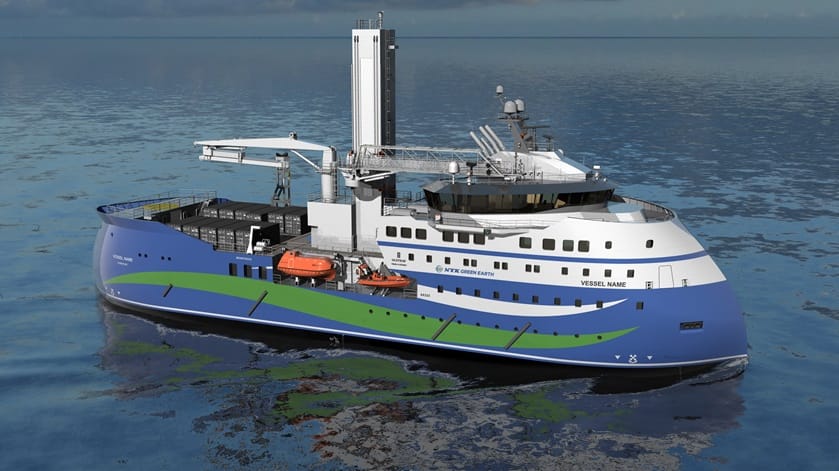
NYK is expanding its offshore operations for wind energy with a newbuild SOV (NYK)

Published Sep 25, 2026 8:32 PM by The Maritime Executive


Japanese shipping major NYK is moving to strengthen its business in the offshore wind power segment. The group, best known for its operations in dry bulk and tankers, has said it views the offshore sector as a strong growth opportunity.

In its latest move, the company has ordered a newbuild service operation vessel (SOV) to support its operations in the Asia-Pacific region. The new 89-meter (292-foot) vessel will be built by PaxOcean Group, a member of Kuok Maritime Group, and will support the construction, operation, and maintenance of offshore wind farms. It will serve as an offshore base for personnel accommodation and logistical support. The company did not reveal the cost of the new vessel.

In recent years, NYK has been pushing to deepen its interests in the offshore wind sector. Last year, the company entered the European market by investing in Northern Offshore Group (NOG), a crew transfer vessel operator with over 60 vessels in the global offshore wind industry.

According to NYK, the investment in NOG in February last year was partially designed to ensure the company gains important operational experience in preparation for future expansion of offshore wind in waters closer to Japan.

With the SOV order, the company reports that the newbuild project is leveraging the expertise and experience accumulated in Europe, a move that will enable it to further develop its offshore wind business in the Asia-Pacific region where the market is recording significant growth. Data show that last year, investments in the region’s offshore wind exceeded $50 billion.

NYK says the new vessel will have a capacity of 120 persons and is designed to support logistics needs associated with offshore wind farm construction projects. The vessel will be equipped with a dynamic positioning system that can automatically calculate external forces such as wind and currents and uses thrusters and other propulsion devices to maintain its position at sea.

The vessel will also incorporate the twin x-stern design developed by Ulstein, which is expected to enhance maneuverability and station-keeping performance while helping reduce vessel motions, noise, and energy consumption. In addition, the vessel will be fitted with a motion-compensated gangway and a motion-compensated crane, enabling the safe transfer of personnel and cargo to offshore wind turbines.

Scheduled for delivery in 2029, the vessel will be deployed in offshore wind projects in Taiwan and across the Asia-Pacific region under a partnership with Taiwan-based offshore wind company IOVTEC and Hsin Chien Marine, a shipowner and ship management company

“By combining their expertise, networks, and resources, NYK, IOVTEC, and HCM aim to ensure the vessel’s safe and reliable operation while contributing to the continued development of the offshore wind industry,” said NYK in a statement.

The company added that the new SOV represents another step in expanding its business domain from “Ocean for shipping” to “Ocean as a workplace” through contributions across the offshore wind value chain.


From Compliance to Capability in Environmental Performance

File image courtesy OSM Thome
File image courtesy OSM Thome / Capt. Nicolae Gainuse

Published Sep 23, 2026 11:35 PM by Julia Anastasiou

Shipping is no stranger to regulation. New requirements come into force, procedures are updated, training is arranged and vessels adapt. It is a cycle our industry knows very well. But the scale and pace of the environmental transition we are now facing means that responding to each new requirement as it arrives is no longer enough.

That makes this year’s World Maritime Day, taking place on 24 September, particularly relevant. The International Maritime Organization has chosen “From Policy to Practice: Powering Maritime Excellence” as its theme for 2026, extending across 2026 and 2027.

For me, the message goes to the heart of one of the biggest challenges facing shipping today. We have spent decades building strong regulatory frameworks, but regulation alone does not deliver change. The real question is how we translate policy into what happens every day onboard our vessels and across our shore-based operations.

As we move towards decarbonisation and more sustainable shipping, compliance will of course remain essential, but we also need to look beyond compliance and build the long-term capability required to achieve what these regulations are ultimately intended to deliver.

Environmental performance is a very good example. Shipowners and ship managers are already navigating tighter emissions requirements, efficiency targets and increasing reporting obligations, while technology continues to change the way vessels are operated. At the same time, we are preparing for a future involving a broader mix of alternative fuels and propulsion systems, each bringing different operational, technical and safety considerations.

The danger is that, with so much happening at once, we begin to view environmental performance primarily through the mechanics of compliance: update the procedure, complete the training, collect the data and submit the report.

All of those things are necessary. But completing them does not necessarily mean that sustainability has become part of how we operate or how our people make decisions.

For me, this is where we need to bring the conversation back to people.

We can put increasingly sophisticated technology onboard a vessel. We can collect enormous amounts of data and develop detailed procedures around new systems and fuels. But ultimately, somebody has to understand that technology, operate it safely and make the right decisions based on the information available.

That is why training cannot simply be about preparing a seafarer to meet the requirements of the next regulation. We need our people to understand what is changing, why it is changing and what it means for the work they do every day.

This becomes even more important as the energy transition gathers pace. Alternative fuels and new propulsion technologies will introduce different operational and safety requirements, and our seafarers need to be prepared for them.

We cannot expect people to make this transition successfully simply by giving them another manual or asking them to complete another course. They need practical knowledge, experience and the confidence to apply what they have learned.

The same applies ashore, where superintendents, crew management teams and other colleagues supporting our vessels need to understand this changing operating environment well enough to make informed decisions and, importantly, to give our seafarers the support they need.

Technology and data are important parts of that picture. We are collecting more environmental and operational information than ever before, but collecting data is not the same as using it effectively. Its real value comes when we understand what it is telling us and turn that insight into action.

Why is one vessel performing differently from another? What can we learn from that? Is there an operational adjustment that could improve efficiency? Is there something that should be incorporated into training or shared with another vessel?

When we start asking these questions, reporting becomes much more than a regulatory requirement. It becomes a tool for continuous improvement.

And this cannot be a one-way conversation from shore to ship. Our seafarers are often the first people to understand whether a procedure works in practice, where a technology is helping and where challenges remain. We need to listen to that experience and create a proper feedback loop between ship and shore. That feedback can then help us improve our training, procedures and operational practices.

For a global ship manager such as OSM Thome, our scale gives us an opportunity to take those lessons further. What we learn on one vessel can potentially benefit many others. Training can evolve as our experience grows, good practices can be shared across fleets, and at the same time we can recognise that different vessels, trades and customers will have different requirements.

This, for me, is where the real transition from compliance to capability takes place.

It happens when environmental performance becomes part of how we think, how we train, how we operate and how we make decisions every day — rather than something we address primarily because another regulation or deadline is approaching.

Compliance will always be essential. It gives us standards, accountability and direction. But it should be our starting point, not the limit of our ambition.

Ultimately, the transition towards more sustainable shipping will depend just as much on people as it does on fuels, technology and regulation. Policy can set the direction and technology can provide us with increasingly powerful tools, but it is our people — equipped with the right knowledge, practical skills, confidence and support — who will turn that direction into meaningful and lasting environmental performance.

Julia Anastasiou is Chief Crew Management Officer at OSM Thome.

The opinions expressed herein are the author's and not necessarily those of The Maritime Executive.


Carnival Cruise Line Celebrates Commitment to Cleaner Oceans

Carnival cruise line

Published Sep 26, 2026 12:50 PM by The Maritime Executive


[By Carnival Cruise Line]
 

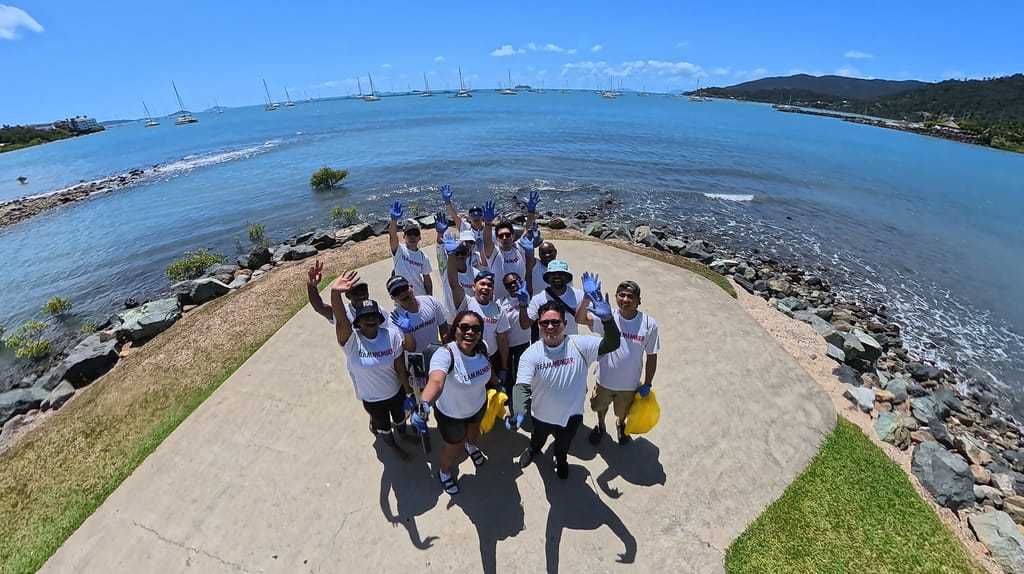
In recognition of International Coastal Cleanup Day on Sept. 19, Carnival Cruise Line brought ship and shoreside team members and community partners together for a coastal cleanup initiative spanning destinations and homeports around the world, reflecting the cruise line’s ongoing commitment to healthier oceans and coastal communities.

Throughout September, 377 shipboard team members across 29 ships and 111 shoreside team members, along with local community partners, participated in 31 beach and waterway cleanups, collecting approximately 175 bags and over 5,000 pounds of trash, waste and debris from coastal and waterway communities. Carnival Glory, the final ship to participate, will complete its cleanup on Sept. 30 bringing the effort to 100% participation across the fleet.

Cleanup locations spanned major U.S. homeports, including Galveston, Texas; Port Canaveral and Miami, Florida, as well as destinations across Alaska, Caribbean, The Bahamas, Mexico, Greece, France and Australia.

“We have the privilege of operating on the world’s oceans and visiting some of its most beautiful coastal destinations, and with that privilege comes a responsibility to protect them,” said Christine Duffy, president of Carnival Cruise Line. “This effort demonstrates what is possible when our people and partners come together around a common goal, taking meaningful action to protect the oceans and destinations we proudly visit.”

The September effort builds on Carnival’s year-round commitment to cleaner coastal communities, with Carnival team members participating in cleanup events throughout the year and contributing more than 7,200 pounds of collected debris across ship and shoreside efforts in 2026.

Supported by local environmental organizations, port partners and community groups, the effort is part of Carnival’s broader sustainability commitment through its Our Sea Pledge program, which focuses on Climate Action, Circular Economy, Sustainable Tourism, Biodiversity & Conservation and Good Health, Inclusion & Belonging. Together, these areas guide Carnival’s efforts to protect the environment, preserve the destinations it visits and make a positive impact in the communities it serves.

The products and services herein described in this press release are not endorsed by The Maritime Executive.


U.S. Navy Gives Unmanned Systems Their Own Warfighting Development Center

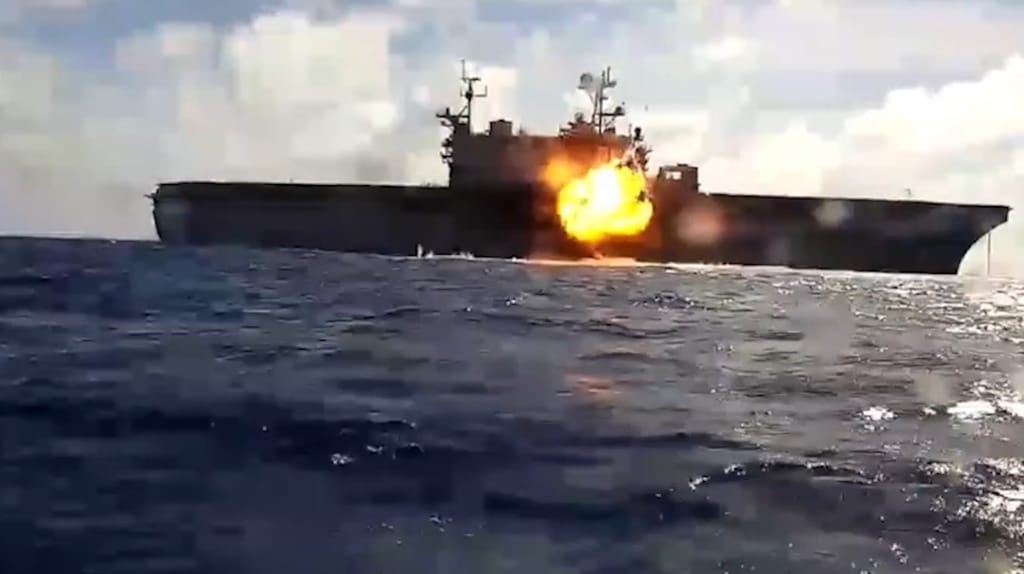
An unmanned bomb boat hits the former USS Peleleiu during a sinking exercise at RIMPAC 2026 (USN)
An unmanned bomb boat hits the former USS Peleliu during a sinking exercise at RIMPAC 2026 (USN)

Published Sep 24, 2026 9:47 PM by The Maritime Executive


The U.S. Navy is taking more steps to restructure its unmanned-system programs, putting operational integration work under the newly-created Robotic and Autonomous Systems Warfighting Development Center (RASWDC, pronounced "Rass-Widdick").

It is the latest in a long string of administrative structures housing various aspects of unmanned systems innovation in the Navy: Third Fleet's Surface Development Squadron One (SURFDEVRON One), the Navy's first real home for unmanned surface vessels; NAVSEA's Program Executive Office Unmanned and Small Combatants (PEO USC); the short-lived Portfolio Acquisition Executive for Robotic and Autonomous Systems (PAE RAS); and the newly-created Direct Reporting Portfolio Manager for Robotic and Autonomous Systems (DRPM RAS). The new center will be more comprehensive in scope, and will include unmanned surface, subsea and aviation systems.

RASWDC will live at Base Little Creek-Fort Story, seven miles east of Norfolk Naval Station. Its role will be a "dedicated, Fleet-facing operational integration point for robotic and autonomous capabilities" - that is, getting the new systems acquired by DRPM RAS to generate capability out in the fleet. 

The one-month-old DRPM RAS - headed by Christopher Miller, who is also the chief developer and buyer of surface combatants, Program Acquisition Executive Maritime - will be accountable for buying, budgeting and setting technical standards for autonomous systems, reporting to Performing the Duties of Under Secretary of the Navy William Toti. Meanwhile, RASWDC will be responsible for "operational employment" of all unmanned systems, reporting to Fleet Forces Command. This includes equipment testing, but the center will also develop the tactics, techniques and procedures to put the equipment to use in a combat environment. 

“Our purpose here is to consolidate the Navy’s autonomous efforts across air, surface, and undersea domains, and give them a single home here at Little Creek. Our mandate is straightforward: educate our warfighters, equip the Fleet with tools that actually survive the environment, and develop the combined tactics to employ them decisively. We are here to make sure our forces don't just field unmanned systems, but dominate with them," said Rear Adm. Melvin Smith, the first commander of RASWDC. 

RASWDC is not taking command of existing unmanned-systems units out in the fleet, nor is it absorbing their responsibilities, so the diversity of local innovation (like the work of Fifth Fleet's Task Force 59) can continue. 


Birdon and C&C Begin Building MUSVs for U.S. Navy Competition

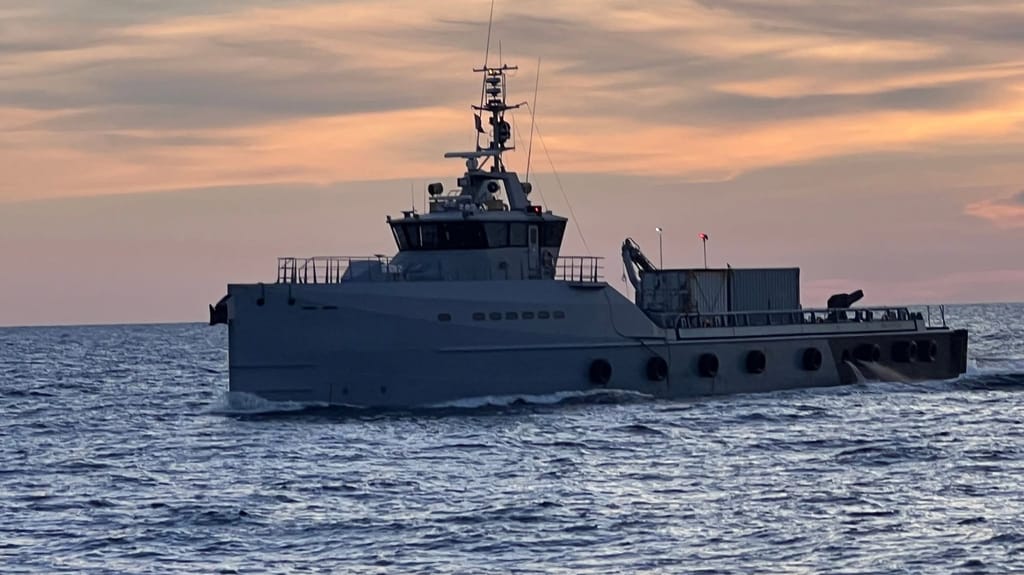
The parent hull design for Birdon's MUSV program (Birdon)

Published Sep 24, 2026 10:46 PM by The Maritime Executive


Australian-owned marine engineering firm Birdon has begun building its first "tranche" of Medium Unmanned Surface Vessels for the long-awaited U.S. Navy MUSV program, and at a fast pace of one vessel every two months. 

After several iterations of its MUSV acquisition strategy, the U.S. Navy has picked out seven different companies to compete for the Medium Unmanned Surface Vessel program, including Sea Machines; Leidos; Saronic Technologies; Galliano Marine Services; PacMar Technologies; Birdon; and Huntington Ingalls Industries (HII), many in partnership with other firms. 

Birdon has partnered with autonomous navigation and control firm Mythos AI, based in Florida, for its underlying unmanned-systems technology. For construction, it has an agreement with New Orleans-area shipyard C&C Marine, a modern, high-automation fabrication facility. Birdon provides system integration, design and prime-contractor oversight. 

The choice of an established shipyard was deliberate, aimed at satisfying the Navy's needs for rapid prototyping and delivery. C&C has been building and repairing working vessels for nearly three decades, and puts a premium on on-time, on-budget performance. It worked with Birdon previously on the Marine Corps' Ancillary Surface Craft (ASC), a prototype 150-foot beach landing vessel for combat logistics. 

Birdon has put C&C's immediate production-ready capability at front and center in the consortium's plans. 

"Starting the build moves this effort from planning into execution. It demonstrates our certainty of delivery, founded on in-place - not promised - capacity," said Birdon President Kevin Mooney. "We are pairing production-ready engineering with a trusted serial manufacturer."