Friday, October 02, 2026


Fact check: What's going on with Spain's 'Maricarmen' housing protests?


By Leticia Batista Cabanas
Published on

Spanish protests against the eviction of 87-year-old Maricarmen have led to misleading claims about Spain's housing activists and the wider rental crisis.

Thousands of people are protesting across Spain after authorities evicted Maricarmen Abascal from her home in Madrid.

Maricarmen, who is 87 years old, had been living there for over 70 years. Images of police forcibly removing her from the flat on a stretcher have now turned the legal dispute into a symbolic fight for housing activists.

The protesters marched through Madrid, camped out in Puerta del Sol, and organised demonstrations in other Spanish cities.

They are using Maricarmen's case to protest the wider housing crisis: rising rents and a shortage of affordable homes, which are fuelling fears that tenants can no longer afford to stay in major cities.

The situation has become a very politicised debate, fuelling several false, misleading, and selectively edited claims.

A legal decision

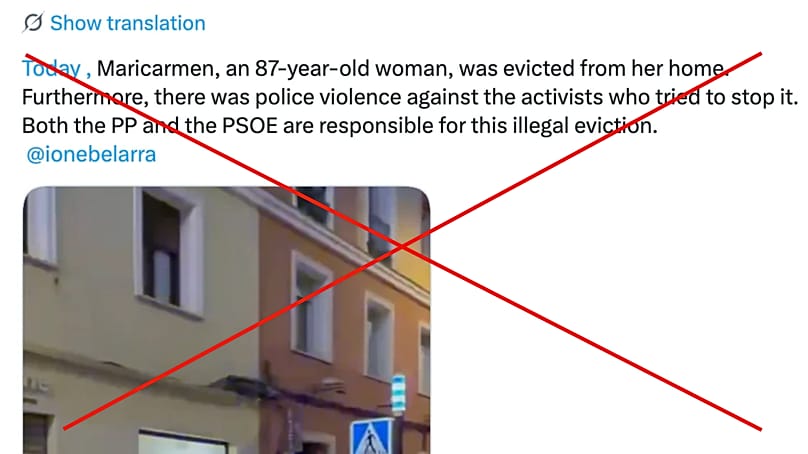
One of the most prominent claims circulating online is that Maricarmen’s eviction was "illegal". This is false: courts authorised the eviction after a years-long dispute over a protected rental contract dating back to the 1950s. It was carried out under a valid court order, despite the backlash it received.

Maricarmen's father originally held the lease, which later passed to her mother and then to Maricarmen herself. The courts ruled that this second transfer could continue for only two years unless Maricarmen had a recognised disability above 65%; authorities recognised hers at 50%.

Spain's Supreme Court upheld the owner’s position, which meant the old, protected tenancy had legally expired and the company could recover the flat. The eviction was therefore lawful.

A tweet calling Maricarmen's eviction "illegal"
A tweet calling Maricarmen's eviction "illegal" Canva

The goal of the protests

So, contrary to what some misleading headlines imply, protesters are not arguing whether the eviction was lawful, but whether it was fair.

This is partly because, under Francisco Franco’s dictatorship laws, married women could not legally sign financial contracts or property leases independently.

Maricarmen's mother could inherit the lease only by subrogation upon her husband's death. Had she been a co-owner or co-signer from the start, Maricarmen's inheritance of the lease would have counted as the first subrogation, legally protecting her right to stay in the home for life.

Protesters also point out that Maricarmen is 87, has lived in the property for more than seven decades, and continued paying her protected rent.

After the old tenancy ended, property management company Urbagestión proposed a rent of around €1,650 a month, far above the roughly €440 to €500 she had previously paid. This is higher than her monthly pension of around €1,350, therefore forcing a vulnerable long-term tenant out because she cannot afford the new rent.

Protesters are asking for stronger protections against evictions of vulnerable tenants, longer or automatically renewed rental contracts, and tighter limits on rent increases.

Some groups also want tougher rules on speculative housing practices and greater public intervention in the rental market. They are now pressing parliament to approve new protections for vulnerable tenants and longer lease terms.

Other false and misleading claims

Another disputed claim going around online is that the Sindicato de Inquilinas, Spain's main union for tenants, prevented Maricarmen from reaching an agreement with the owner before the eviction.

Another tweet calling Maricarmen's eviction "illegal"
Another tweet calling Maricarmen's eviction "illegal" Canva

Urbagestión says the union made it hard to contact Maricarmen directly, while Maricarmen’s lawyer says the opposite: that the company had refused repeated attempts to negotiate.

Urbagestión has also accused people involved in the dispute of coercion, extortion and hacking phones and email accounts. However, the company did not provide evidence for these claims in reporting reviewed by fact-checkers like Spain's Maldita.es.

Another misleading assertion comes from a shortened video of Maricarmen herself. In the clip, she appears to blame left-wing Prime Minister Pedro Sánchez specifically for her situation, but the full interview adds more names: she also criticises Madrid regional president Isabel Díaz Ayuso, Madrid mayor José Luis Martínez-Almeida (both members of the right-wing Popular Party) and Urbagestión itself. The clip therefore uses a genuine quote but removes the wider context of her answer.

A separate false claim involved two protesters called "Irene and Pablo" who spoke to elDiario.es at a protest camp at the Puerta del Sol square in Madrid. Some social-media users suggested they were Pablo Iglesias, former leader of far-left party Podemos, and MEP Irene Montero, from the same party.

However, a quick look at the article itself shows us that they are actually a different 28-year-old woman and 37-year-old man, with no indication that they were the politicians in question.

The next steps

Maricarmen has now accepted an agreement that will allow her to return to the apartment once she leaves hospital. Under the new arrangement, she will pay roughly the same as her previous rent, around €500 a month, capped at 30% of her income. The agreement creates a new tenancy; it does not overturn the court ruling that ended her old, protected lease.

Meanwhile, Spain's government has proposed measures that would extend some eviction protections and lengthen rental contracts, but parliament still needs to approve them. Protesters are therefore continuing their campaign and pushing politicians to adopt those measures while demanding broader reforms to Spain's housing system.


From ocean waste to fabric: inside Spain’s sustainable fashion revolution


By Monica Pinna
Published on

Every year, more than 12 million tonnes of plastic ends up in our oceans. Spanish fashion company Ecoalf transforms marine waste and discarded materials into fabrics and clothing through a circular supply chain. But can sustainable fashion transform an industry built on overproduction?

There are almost 5,000 fishermen and one not-for-profit foundation behind Spanish sustainable fashion brand Ecoalf. Every day, the fishermen recover waste caught in their nets, while the Ecoalf Foundation has developed a system to give that waste a second life, turning it into raw material, ultimately, fabric.

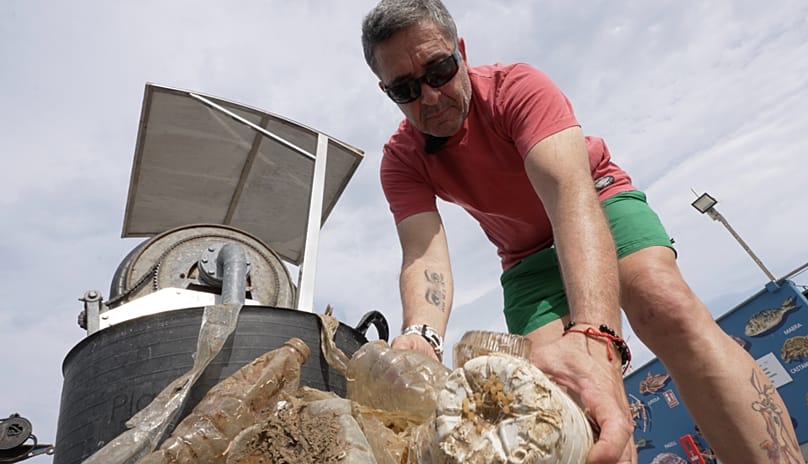
"Plastic alone now accounts for around 80% of everything we bring up. This is our daily reality,” says fisherman Tony Beltrán, while showing the waste that got caught in his nets off the coast of Gandía, south of Valencia. **“**Even before recycling became popular, we were already collecting it, the only difference was that we didn't separate it."

Fisherman Tony Beltrán showing some of the waste caught in the nets off the coast of Gandía, south of Valencia. September 2026.
Fisherman Tony Beltrán showing some of the waste caught in the nets off the coast of Gandía, south of Valencia. September 2026. © Monica Pinna, Euronews

Since 2015, the Upcycling the Oceans project, launched alongside the creation of the Ecoalf Foundation, has recovered more than 2,000 tonnes of marine waste, the equivalent of around 100 truckloads of rubbish. Today, the initiative involves around 80 ports and has expanded to France, Italy, Greece, Egypt and Thailand. Yet, it’s still a drop in the ocean: the Foundation points out that every minute, the equivalent of a truckload of plastic ends up in the world's oceans.

“Our goal has always been to bring together 10,000 fishermen across the Mediterranean so that, together, we can help clean up the Mediterranean Sea,” explains Andrea Ruzo, director of the Ecoalf Foundation.

Of all the materials recovered from the sea, most of them, like glass and metals, follow conventional recycling routes. But around 5% of this waste are plastic bottles, which are transformed into what Ecoalf calls Ocean Yarn.

“The first step, once the waste has been collected, is to shred it and turn it into flakes and then pellets, that’s the stage before spinning,” explains Ángela Pérez, Ecoalf’s expert in textile innovation and sustainability.

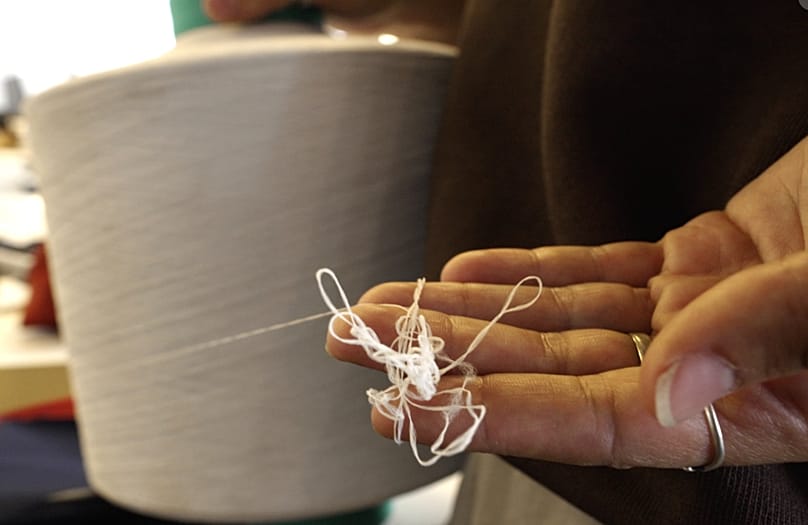
Ocean Yarn, the fiber produced from plastic bottles recovered from the sea.
Ocean Yarn, the fiber produced from plastic bottles recovered from the sea. © Monica Pinna

The beating heart of this supply chain is Ecoalf’s headquarters in Madrid, where ocean yarn and other recycled materials are turned into fabrics.

Since its creation in 2009, the company continues to source raw materials from a range of waste well beyond plastic bottles. Some fibres come from discarded fishing nets, others from tyres or recycled natural textiles, such as cotton and wool. The goal, the company says, is to reduce the environmental impact of both production and the finished garment, while maintaining its look and quality.

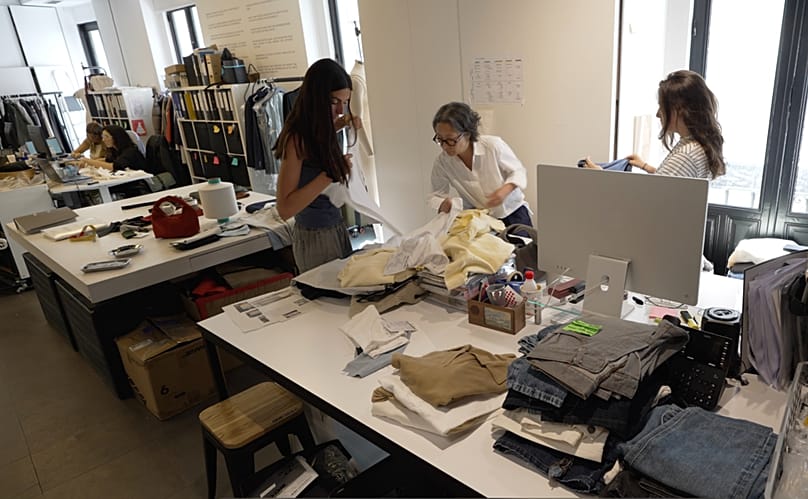
Julie Sohn, Ecoalf’s Creative Director at Madrid’s headquarters.
Julie Sohn, Ecoalf’s Creative Director at Madrid’s headquarters. © Monica Pinna

Circularity influences the decisions a fashion designer makes throughout the design process says Julie Sohn, Ecoalf’s creative director.

“It changes everything from the very beginning. Everything is designed so that the garment can be completely disassembled, without any additional processing, and re-enter the circular economy,” she says.

Among the pioneers of sustainable fashion, Ecoalf was founded with a clear ambition: to prove that a business can succeed while helping transform one of the world’s most polluting industries. 17 years later, the company has grown into a global brand, with annual revenues of around €65 million, 300 employees and dozens of stores worldwide.

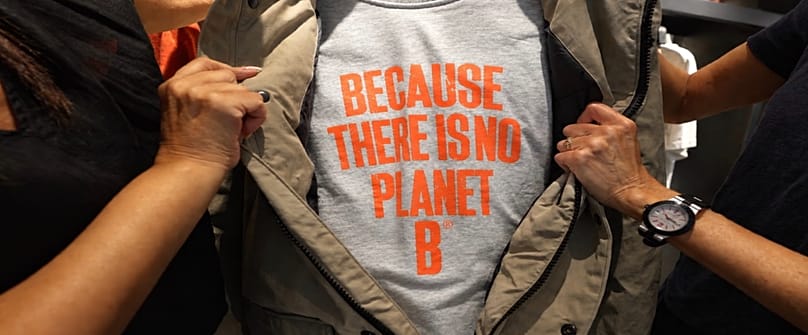
Ecoalf’s slogan, “There is no Planet B,” is featured throughout its collections.
Ecoalf’s slogan, “There is no Planet B,” is featured throughout its collections. © Monica Pinna

“The problem we’ve been facing in recent years is mass overconsumption and overproduction. Brands need to move beyond sustainable capsules or focusing on a single material. We need to learn to design with eco-design principles from the very beginning,” explains Carolina Álvarez-Ossorio, Ecoalf’s chief marketing officer.

But could sustainable fashion eventually replace fast fashion? There is still a long way to go according to Álvarez-Ossorio, who is also convinced designers have a role to play in finding new ways to work with purpose and ultimately help protect our planet.

Ecoalf anti Black Friday campaign.
Ecoalf anti Black Friday campaign. © Ecoalf

Ecoalf is a striking example of the circular economy, but it also raises a bigger question: can recycling the waste we already produce ever compensate for new waste we continue to create?


Humanoid robots: China builds them, but Germany could supply the joints and hands

Germany's future in humanoid robots may lie in the details, as German automotive suppliers are top-class in joints and motors for tiny components.
Copyright Copyright 2026 The Associated Press. All rights reserved


By Franziska Müller
Published on


Europe has so far built few humanoid robots, yet could profit from each one. German car part suppliers may play a key role in joints, says a Fraunhofer study.

At first glance, humanoid robots look like a field dominated by the big tech corporations: artificial intelligence, cameras, sensors, software.

But beneath their casing lies a great deal of traditional industry.

Every leg, every arm and every hand contains motors, gearboxes, bearings and sensors — components European companies have been producing for decades.

German research is still at the starting point in the race to develop humanoid robots, but industrial suppliers are already far ahead when it comes to specialised parts.

Researchers are now asking whether Europe even needs to build humanoid robots itself in order to benefit from a potential boom in the technology.

Could conventional industrial companies simply become suppliers to a new robotics sector? Or will this value creation also relocate to China or the United States?

Europe so far plays hardly any role in finished machines

China currently dominates deliveries by a clear margin and has overtaken the United States. Europe so far plays hardly any role in finished machines. Yet German companies could still profit from their potential march to victory.

An unusual strategy could emerge for Europe: not building the robot itself, but supplying the parts it is made of.

According to a specialist report by the Fraunhofer Institute for Manufacturing Engineering and Automation IPA, this component business could be much easier for Germany in particular to capture.

"In principle, the potential along the German and European supply chain is very large," says the author of the paper, Vincent Bezold, head of the Automated Manufacturing Systems business segment at IPA.

Together with consultancy P3, IPA has examined what opportunities this opens up for industrial suppliers.

They already have the expertise and production facilities for the components humanoids urgently need — and, according to recent comparisons, a specific advantage over Chinese parts of this kind.

IPA expects the market to be worth around 30 billion dollars by 2030.

China dominates global deliveries of humanoid robots

Around 19,100 humanoid robots were delivered in the first half of 2026. A huge share of them — 97 percent — came from China, according to data from research company Smart Analytics Global (SAG) published in August 2026.

For the whole of 2026, researchers expect around 60,000 robots to be shipped, rising to half a million by 2030.

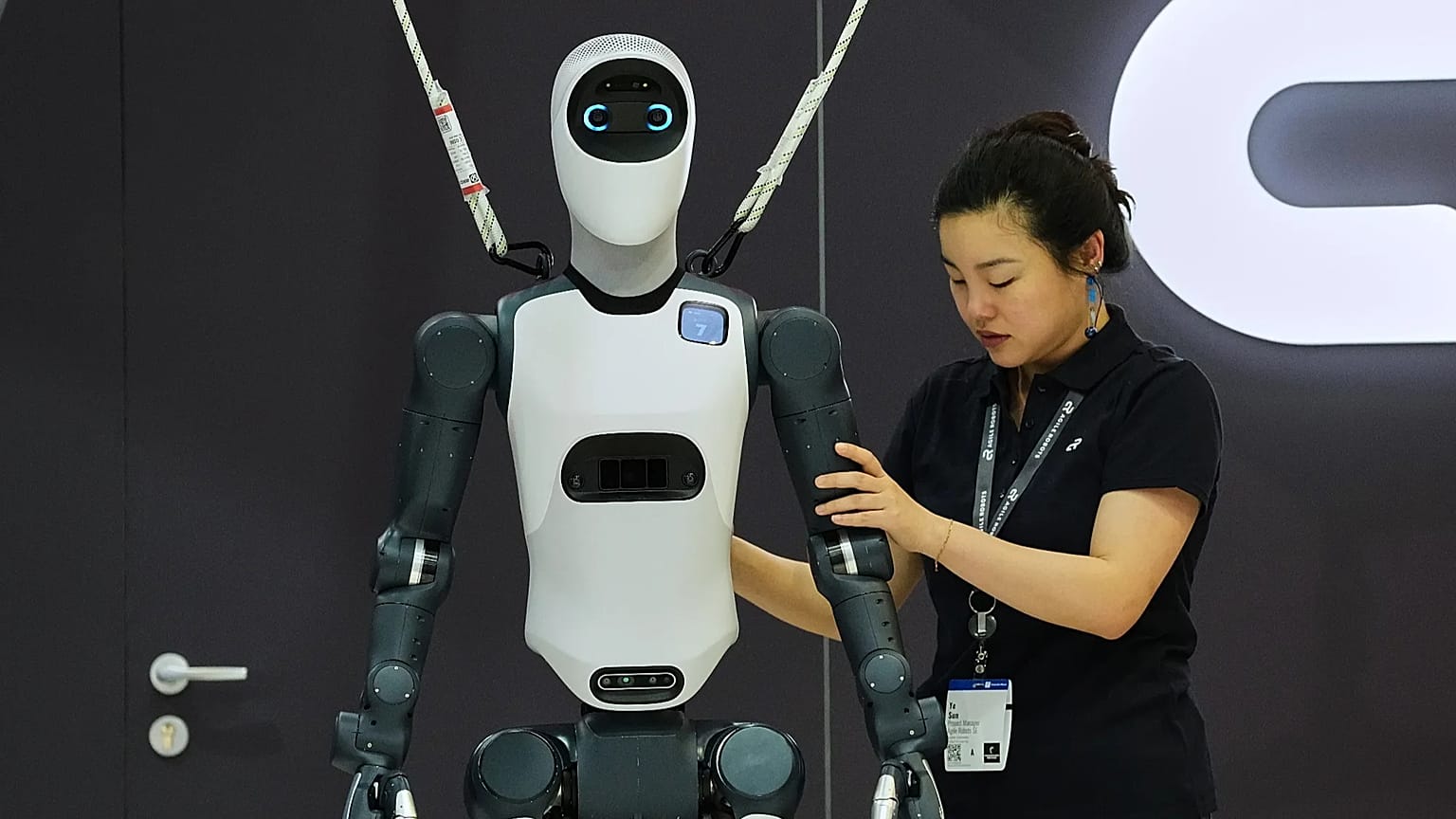
According to SAG, China is currently winning the race to develop AI-powered humanoids. Agibot, a company based in the greater Shanghai area, alone has delivered 8,400 robots. US firms such as Tesla, Figure AI and Agility Robotics are lagging behind.

However, the number of humanoid robots in commercially productive use is still low. Mass production off the assembly line has not yet been reached, and despite China’s high shipping volumes the market is far from settled.

With government backing, China’s industry is working hard to accelerate the rollout of humanoid robots into widespread use.

The goal is clear: humanoid robots in manufacturing, logistics and warehousing. In these areas, robots could perform clearly defined tasks, SAG notes.

Their profitability and productivity can be easily compared and optimised here. Even so, the leap from "robots that can put on a show" to "robots that can work reliably" has yet to be made, SAG adds.

Humanoid robots need more than 40 joints

Behind every AI robot sits a classic mechanical engineering industry. Before the software can link all the components together, they have to be mechanically and technically sound.

Conventional industrial robots manage with seven joints, while humanoid robots need more than 40. Each joint means a motor, gearbox, bearing and sensor.

While Chinese companies such as Agibot are already shipping thousands of humanoids, several of the firms producing crucial components for these machines are based in Germany.

Gearboxes, motors, sensors and grippers are part of the traditional business of German and European automotive suppliers. These include German companies such as Schaeffler, Bosch, Schunk, Wittenstein and Neugart. They could also sell these parts to robot manufacturers.

China is producing these components as well, but so far with significantly shorter lifetimes.

"They don’t happen to run, as recently in Beijing, a half marathon as a PR stunt by chance. They do it because they wouldn’t withstand a full marathon," explains Sebastian Reitelshöfer, head of robotics research at the University of Erlangen–Nuremberg, in an interview with the ARD-Finanzredaktion.

According to Reitelshöfer, some components in these flagship models would only last "one or two weeks".

In his assessment, some showcase models developed in China still have durability problems in certain parts: individual components can only be operated for a few weeks under heavy load

By contrast, some European designs from the automotive sector would last far longer.

That, however, is precisely where one of the difficulties lies, Bezold tells Euronews. Supply chains are primarily developed locally around the original manufacturers.

"As a large proportion of humanoids currently comes from China, corresponding supplier structures are likely to form there as well, just as they did in Germany around the automotive industry," Bezold estimates. There are particular gaps in specialised components.

Not all components are competitive yet

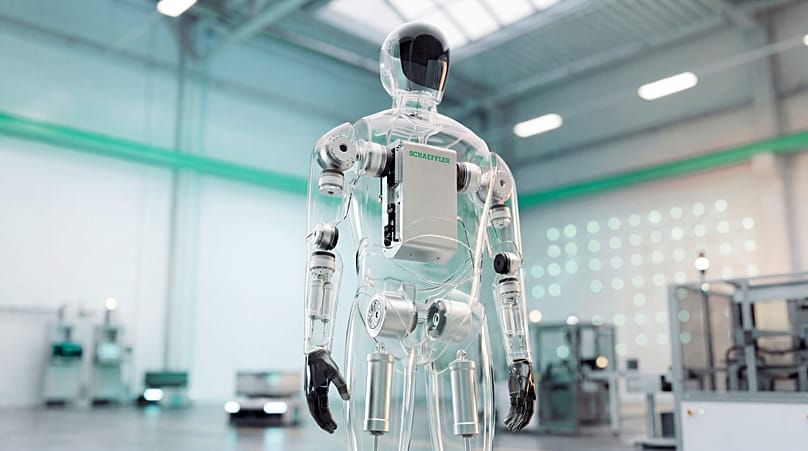
In August, Schaeffler unveiled a new gearbox developed specifically for humanoid robots. The company’s name also appears in the white paper by the Fraunhofer Institute for Manufacturing Engineering and Automation.

The automotive supplier based in Herzogenaurach specialises in motors and drive technology. Its new strain wave gear – a high-precision specialist gearbox for industrial robots – is designed to transmit movements as accurately and powerfully as possible in the smallest installation space. According to the company, the new gearbox meets the core requirements of humanoid robot joints.

Schaeffler develops and supplies key components for scaling up humanoid robotics.
Schaeffler develops and supplies key components for scaling up humanoid robotics. Bild: Schaeffler

A new production method could also cut manufacturing costs by more than 25 percent and reduce material consumption by over 75 percent. That makes the strain wave gear competitive.

"The re-shaped strain wave gear is another example of how we are industrially advancing core robotics components and preparing them for high-volume series production," says Schaeffler’s President Humanoid Robotics, David Kehr. The company is creating solutions "designed for quality, cost-effectiveness and scalability". Series production is expected to start in mid-2027.

At the Hannover Messe in April 2026, the company received the Hermes Award for its development of humanoid robot joints. The prize underscores Schaeffler’s key role as a component supplier in the field of humanoid robotics, the company said in a subsequent statement.

The award specifically recognised the actuators platform used in shoulder, elbow and knee joints in robots. According to Schaeffler, actuators account for around 50 percent of the total cost of a humanoid. They are therefore a central lever for competitiveness.

Schaeffler is thus not simply trying to sell a single part for a robot. The company is looking to define part of the robot’s architecture.

Robot hands from Germany

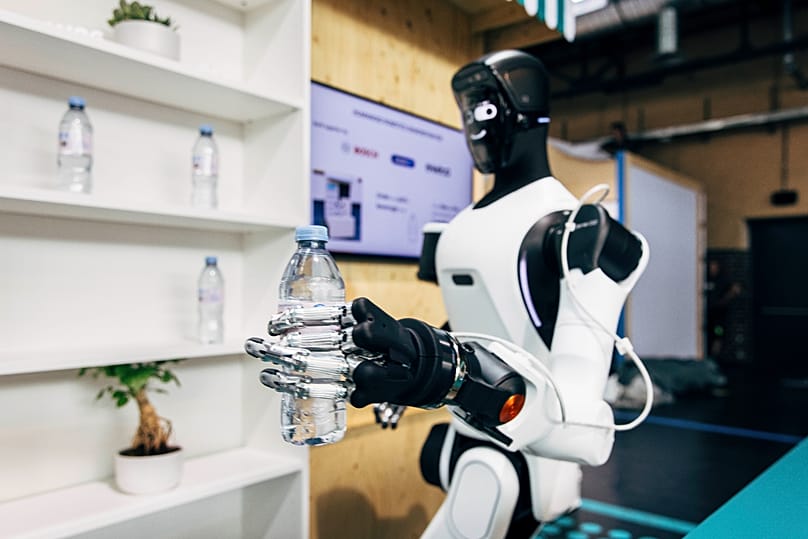
How far this approach can go is illustrated by a partnership between Bosch and Schunk, two other German firms. Since June 2026, the two companies have been working together on a robot hand that can be integrated into different humanoid robot systems. This moves beyond individual parts such as gearboxes or motors to a complete key component of the humanoid robot.

Schunk has spent around 20 years developing robot hands and specialises in gripping technology. Bosch contributes precision mechanics, electronics and software, and is expected to manufacture the hand in series later on.

For Bosch Connected World 2026, Bosch and Schunk jointly integrated a robot hand into a humanoid robot system.
For Bosch Connected World 2026, Bosch and Schunk jointly integrated a robot hand into a humanoid robot system. Foto: Bosch

"Robot hands are a key component in advancing humanoid robotics in production and enabling more flexible and precise work than with conventional gripping systems," said Mathias Pillin, Chief Technology Officer at Robert Bosch GmbH, when the collaboration was announced.

The hand is particularly crucial for industrial use: it has to grip different workpieces, modulate force and operate reliably over long periods. At the same time, it should be compatible with as many robot platforms as possible. Hands are also among the hardware elements that most strongly influence the cost of a humanoid robot.

Supplying parts does not mean controlling the whole production

But a strong components business does not in itself amount to a robotics industry. The key question, therefore, is how much value creation remains in Europe if Chinese or US companies control the robot platforms, the software and access to customers.

For Fraunhofer IPA and P3, the crucial issue is not only whether Europe produces its own humanoid robot, but also where the industrial value chain takes shape. This is the core business of many European suppliers, who could reap substantial profits by entering the market.

From Bezold’s perspective, "access to manufacturers of humanoid robots" is the biggest shortcoming, because there are relatively few manufacturers in Europe and, as things stand today, only a small number of humanoid robots are actually built there. "That makes it harder for European suppliers to become part of the relevant value chains at an early stage."

According to the specialist report, hardware is just as decisive as software development for the economic viability, scalability and industrial impact of humanoid robots. IPA and P3 see an opportunity here for European suppliers and call for coordinated action by industry, policymakers and researchers.

"Suppliers who engage early with actuators, gearboxes, batteries, dexterous hands and lightweight structures can help shape future reference architectures and secure long-term positions in emerging supply chains," the study says. IPA considers the opportunity tangible if action is taken immediately. The authors criticise funding policies that focus exclusively on artificial intelligence.

The humanoid robots that will one day work in factories do not necessarily have to come from a single European plant. Europe may instead be hidden in their joints, hands and drives.

The crucial question is who sets the technical standards

Whether this will develop into an industrial strength of its own, or whether Europe will simply become a supplier of parts for robots from China and the US, is still unclear. What is likely to be decisive is who not only delivers individual components, but also helps define the standards and architectures of the next robot generation.

In its study "Humanoid Robotics 2040", Germany’s mechanical and plant engineering association VDMA argues that the entire production and supply chain should also be brought to Europe.

Over the coming years, VDMA expects a mass market for humanoid robots. Its study (source in German) "Humanoid Robotics 2040", published in April 2026, considers annual sales in the millions to be possible by 2042.

If Europe wants to help shape these markets, the study says it will need "far more capital, stronger support for start-ups and bolder industrial steps". Bezold also argues: "We ourselves need more manufacturers of humanoid robots in Europe." The industry association recommends treating humanoid robots as a priority and getting involved in the supply chain as early as possible. "That also means telling users that they should not be afraid to back projects even if the precise outcome is not entirely clear at the beginning," Bezold explains.

 

Inside Soitec, the French tech company powering the global semiconductor industry


Euronews By Valérie Gauriat Published on


From smartphones to data centres, the French company’s advanced silicon substrates underpin technologies used around the world. Valérie Gauriat went inside its production site in the French Alps.

In the Grésivaudan Valley near Grenoble, sometimes dubbed the “Silicon Valley of the Alps”, millions of highly sophisticated silicon wafers are produced every year.

They come from Soitec, a French company little known to the general public, but a world leader in advanced substrates for the semiconductor industry.

Founded 33 years ago around an invention developed at French technological research institute CEA-Leti, Soitec started with just a dozen or so people. Today, it employs more than 2,000 and holds more than 4,700 active patents worldwide, with production facilities in France and Singapore.

“Our roots are French, our reach is global. Our job is to run faster than the competition,” says Christophe Maleville, Soitec’s Chief Technology Officer.

The company produces advanced substrates: a high-tech silicon wafer used as the base material to build the world's most powerful microchips. Its technology can be found in mobile phones, connected devices, cars and household appliances, as well as data centres.

“Today, we are the world leader in advanced substrates for semiconductors,” says Chief Operations Officer Cyril Menon. He points to Grenoble’s combination of research laboratories, universities and industrial companies as one reason for that success.

Inside Soitec’s highly controlled clean rooms, wafers pass through between 30 and 50 processing stages, involving the transfer of extremely thin layers of material from one substrate to another at atomic scale.

Several million advanced substrates leave Soitec’s factories each year. Around 60% of its revenue is generated in Asia, 30% in Europe and 10% in the United States.

Maintaining a technological lead requires heavy investment: SOITEC devotes 20% of its revenue to research and development.

“The speed of innovation becomes absolutely key, because we have to maintain the distance with the competition,” Maleville says.

Artificial intelligence is creating another opportunity, and another challenge. Its rapid development is driving demand for increasingly powerful data centres, while raising concerns about their energy and resource consumption.

SOITEC’s photonics products are designed to transfer information faster while reducing energy use.

They could also help fuel the highly controversial growth of artificial intelligence.

“How this AI is used is a debate that is worth having,” acknowledges Cyril Menon. “How we regulate it, how we make the best use of this AI, is an important issue for society. And this AI consumes a lot of energy, a lot of resources. So it is also important to provide products that help address this issue.”

For SOITEC’s executives, mastering these technologies is also about Europe’s place in the global industry.

“It is also by having these advanced technologies that we can have an impact on Europe’s future,” concludes Cyril Menon. “And have a seat at the table.”


Hungary and Ukraine edge towards deal that could unlock EU talks

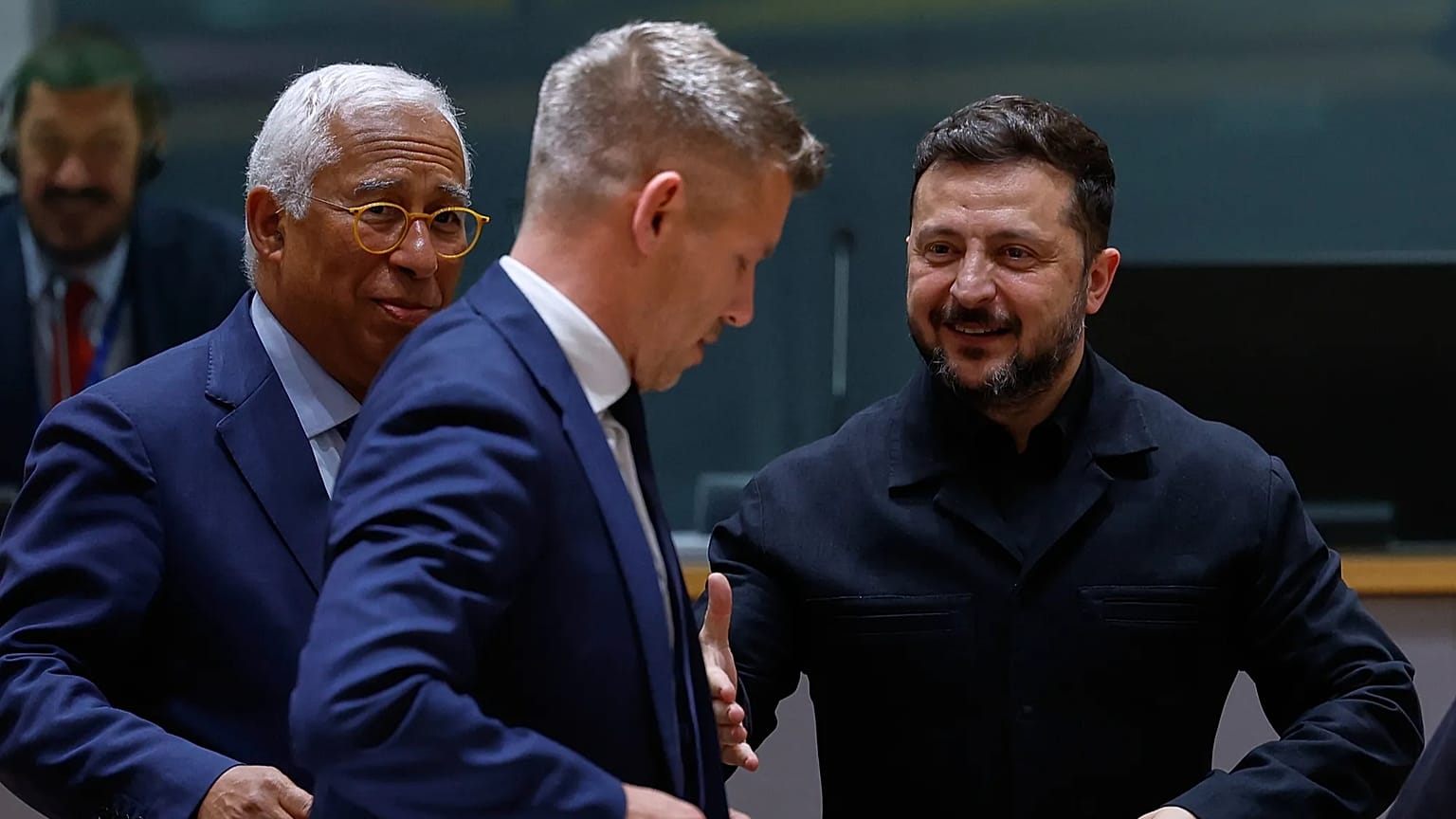
Ukraine's President Volodymyr Zelenskyy, right, greets Hungary's Prime Minister Peter Magyar, center, next to European Council President Antonio Costa during a round table mee
Copyright AP Photo

By Sandor Zsiros
Published on

Kyiv will propose a new law on minority education rights, with a vote expected in October. Budapest has blocked EU accession talks until Ukraine adopts the laws agreed under an 11-point plan on Hungarians in Transcarpathia.

Hungary and Ukraine are close to ending a long-running dispute over the rights of ethnic Hungarians in Ukraine, potentially clearing a major obstacle in relations between Budapest and Kyiv.

Ties soured sharply under Viktor Orbán, whose government repeatedly clashed with Kyiv over Ukraine and blocked its progress towards EU membership. His successor, Péter Magyar, has sought to repair relations since taking office in May, but the rights of ethnic Hungarians in Ukraine's Transcarpathia region remain a source of tension.

In June, the two countries agreed an 11-point plan to strengthen minority rights. Hungary responded by allowing two negotiating clusters to open in Ukraine's EU accession talks.

But Budapest has blocked further progress, insisting that Ukraine's parliament, the Verkhovna Rada, first pass the legislation required under the deal. The laws are due to be adopted by the end of the year.

"Deputy Prime Minister of Ukraine Vsevolod Chsentsov personally informed me that a bill on the educational rights of national minorities will be submitted to the Ukrainian parliament. We welcome this step," Hungarian Foreign Minister Anita Orbán said on social media.

"Hungary remains interested in the dialogue and in tangible results in the everyday life of the Hungarian community in Transcarpathia," she added.

Deal could ease tensions

The breakthrough follows another flare-up between the two governments just two weeks ago.

Magyar and Ukrainian Foreign Minister Andrii Sybiha clashed over Zelenskyy's C8 regional development initiative, with Sybiha accusing the Hungarian leader of following in Orbán's footsteps after Magyar said Hungary had been included against its will.

A bill covering language and cultural rights is due to go before the Rada later in October. Kyiv has not officially commented on the latest developments.

Ukrainian outlet LIGA.net reported that experts from both countries held intensive talks this week and agreed which parts of the 11-point plan Kyiv can deliver.

Dániel Hegedűs, deputy director of the Institut für Europäische Politik, told Euronews that the move could help reverse recent negative trends in bilateral relations, but that the legislation could still run into obstacles in the Rada.

"Given the absence of stable majorities in the Verkhovna Rada, passing the legislation in October is an ambitious goal and a real test of whether the Ukrainian administration can regain political control over issues of strategic importance to the country's EU integration," Hegedűs said.

Minority deal could unlock Ukraine's EU talks

Magyar and Ukrainian President Volodymyr Zelenskyy had previously planned to meet, but the Hungarian leader made the talks conditional on progress over minority rights.

Hungarian public opinion also complicates the picture. After years of hostility towards Ukraine under Orbán, conservative voters remain wary of closer ties with Kyiv. But defending ethnic Hungarians abroad is also popular with conservatives, potentially giving Magyar room to strike a deal.

If Ukraine passes the minority package, Hungary could lift its veto on opening more chapters in Kyiv's EU accession talks.

"It remains to be seen whether passage of the law will secure Hungary's support for opening all negotiation clusters or only for some of them," Hegedűs said.

"In the most positive scenario, passage of the minority law and Hungarian support for opening all negotiation clusters could mark a new era in relations between the two countries."

He added that approval of the minority package in Ukraine "would make Budapest's continuation of its blockade harder to sustain and significantly more costly politically at the European level."


Beyond K-pop and cinema: Major Korean exhibition brings centuries of art and belief to London


By Roselyne Min with AP
Published on

The exhibition includes 10 national treasures and official Korean designations recognising their cultural importance, with most exhibits drawn from the collection of late Samsung billionaire Lee Kun-Hee.

Long before K-pop filled stadiums and Korean films won global acclaim, the peninsula’s artists were casting temple bells, shaping delicate ceramics and capturing mountains in ink.

That older cultural world takes centre stage in ‘Korea’, the British Museum’s first major exhibition on Korean art and history in more than 40 years.

Spanning from 300 BC to the present, its 100 exhibits explore the beliefs and traditions that shaped Korean art.

The display includes 10 national treasures and 13 other treasures, official Korean designations recognising their cultural and historical importance, according to Samsung, the exhibition’s corporate partner.

Incense burner with the mythical creature, Girin, from AD 1100-1200, on display at new ‘Korea' exhibition at the British Museum.
Incense burner with the mythical creature, Girin, from AD 1100-1200, on display at new ‘Korea' exhibition at the British Museum. AP Photo

Among the objects on display are a 900-year-old incense burner crowned with a mythical creature and a huge Buddhist temple bell around 1,000 years old.

The exhibition moves from the luminous blue-green ceramics of the Goryeo dynasty to the restrained porcelain of Joseon, shaped by Confucian ideals, according to the British Museum and Samsung.

Together, they show how Buddhism and Confucian ideas shaped Korean art over the centuries.

For the exhibition’s curator, Yoojin Kwak Choi, the “absolute star exhibit” is Jeong Seon’s Clearing After Rain on Mount Inwang.

Jeong Seon is an 18th-century Korean painter of the Joseon dynasty who helped shift landscape painting from idealised Chinese-style scenes towards Korea’s actual scenery, Choi explains.

Mountain Spirit, 1960, Pak Nosoo
Mountain Spirit, 1960, Pak Nosoo AP Photo

But there are modern examples of Korean craftsmanship too.

Yeesookyung’s 2018 vase combines ceramic shards from North and South Korea. In Korean artisanal tradition, imperfect work is destroyed, so the artist has taken broken shards from that destruction and glued them together with gold leaf.

Most exhibits come from the collection of the late Samsung chairman Lee Kun-Hee.

The billionaire amassed a vast collection over his lifetime, and after his death in 2020, his family donated more than 23,000 works to South Korean national museums.

“Some people might think that Korean culture is new, but it is thousands upon thousands of years old,” said Benjamin Braun, Samsung Europe’s chief marketing officer.

For visitors drawn to Korea through its music and cinema, the exhibition opens a door onto that longer history.

‘Korea’ runs at the British Museum until 31 January 2027.