NDP leader says Ottawa breaking labour law as Bank of Canada strike nears 100 days
Published:

TIFF MACKLEN GOV BANK OF CANADA
OTTAWA — NDP Leader Avi Lewis said the federal government is defying its own labour laws after the head of the Bank of Canada admitted to using replacement workers during a strike involving security officers.
In 2024, Canada passed legislation to ban federally regulated workplaces from bringing in replacement workers during a legal strike, and the new rules took effect last year.
At a rally outside the Bank of Canada Wednesday, Lewis said this strike is the first test of that law.
“This government and this employer have made it absolutely clear that they are prepared to defy the law of this country,” he said.
Security officers at the Bank of Canada went on strike in June after talks failed to secure a new collective agreement between the central bank and the union.
The Canada Industrial Relations Board has released two decisions indicating the central bank contravened the Canada Labour Code by using contractors and the services of union members during the strike.

Tiff Macklem, governor of the Bank of Canada, said in July that some exceptions to the rules allow for the use of replacement workers when necessary to prevent threats to life, health or safety, or to prevent serious damage to property.
“Ahead of the CIRB’s first ruling, the Bank made representations regarding the minimum necessary arrangements to ensure the security of our facilities and people in light of the strike,” he said.
“The bank felt it necessary to put in place alternative arrangements that, in the bank’s view, adhered to the Canada Labour Code and the previous CIRB ruling. The CIRB subsequently ruled a second time. The bank has also complied with that decision.”
Dozens of union members gathered in downtown Ottawa Wednesday as the Bank of Canada strike reached 93 days. Also present was a giant inflatable rat wearing a necklace with a $20 bill with Macklem’s face.
Alex Silas, national executive vice-president of the Public Service Alliance of Canada, said at the rally that the union is asking the Crown corporation to come back to the bargaining table and to remove its concessions.
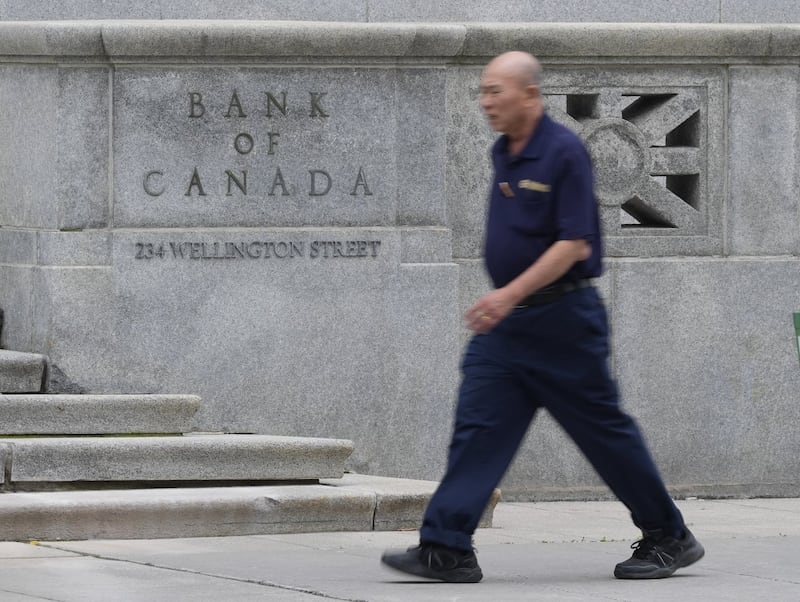
“It’s concerning how little they respect their security officers that they would replace us instead of settling on a fair deal,” he said. “And it’s also concerning that they have completely untrained, unqualified people doing security at the Bank of Canada right now.”
Labour leaders are denouncing what they call a direct attack on the right to strike in the sweeping economic bill the Liberal government tabled Monday.
The Liberals claim the bill would place “guardrails” around a minister’s power to end work stoppages in federally regulated industries. Jobs Minister Patty Hajdu argues the changes in Bill C-39 are aimed at improving labour relations and reducing the number of times negotiations hit a boiling point.
According to the proposed Building Canada Strong Act, a work stoppage must be affecting the “national interest” before the minister can trigger Section 107 of the Canada Labour Code to end a strike or lockout.
The government says it must balance threats to the national interest -- which could include economic impacts or social disruptions -- with the need to protect the right to free association and to strike.
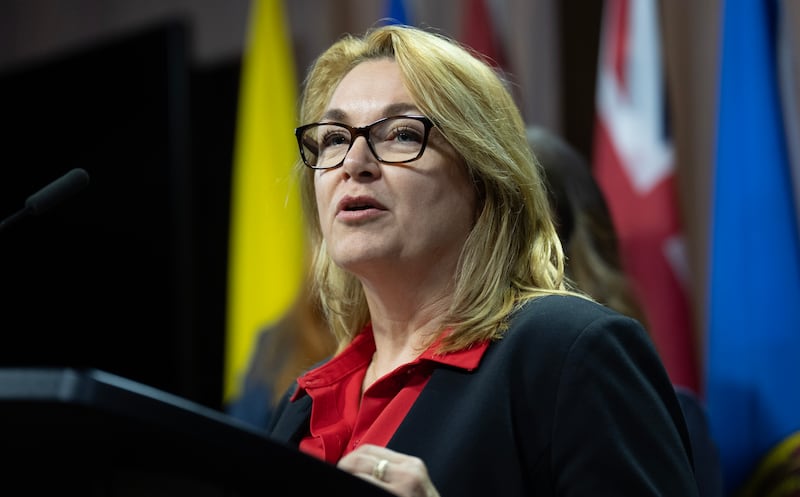
Bea Bruske, president of the Canadian Labour Congress, told reporters in Ottawa on Tuesday that the proposed amendments would formalize the government’s power to break strikes.
Bruske said labour leaders are considering legal avenues to address the proposed changes but suggested those conversations are still in the early stages.
Unifor National president Lana Payne also accused the government of compromising workers’ right to strike in a media statement on Tuesday.
Lewis said Wednesday the labour movement across the country is “on fire against what is being called a direct attack on the fundamental right of workers to withhold their labour.”
“The right to strike is under attack in Canada by the government, by the prime minister, who used to run this little shop at the Bank of Canada behind us,” he said while standing in front of the central bank’s head office.

“The 49 workers who protect the people inside this building are exercising their right to strike and the government agency is bringing in replacement workers. This is a bad sign. It’s a terrible message.”
A statement issued by the Bank of Canada Wednesday said the Crown corporation respects the security officers’ right to strike and remains committed to the collective bargaining process and to working with the union to negotiate a fair settlement.
“When the Canadian Industrial Relations Board issued its orders, the Bank stopped using the external security support as directed,” said the statement. “The Bank continues to comply with these orders and has not used that support since July 23.”
The statement said the Bank of Canada remains committed to “taking all necessary measures to ensure Canada’s central bank is secure.”
“The Bank will not, under any circumstances, compromise the safety and security of our employees, our buildings and the assets we protect on behalf of Canadians,” it said. “The Bank has put in place a strong temporary plan, led by our experienced security managers, to support our operations at head office.”
This report by The Canadian Press was first published Sept. 23, 2026.