Saturday, September 26, 2026

German chemicals giant BASF sounds out Evonik over potential takeover

25.09.2026,

dpa
Photo: Uwe Anspach/dpa

By Marco Engemann, dpa

German specialty chemicals group Evonik confirmed on Friday that larger rival BASF has made a non-binding approach over a possible takeover of the Essen-based company.

BASF has also later confirmed exploratory contacts with Evonik and its largest shareholder, the RAG Foundation, over a potential acquisition.

"The course and outcome of the exploratory talks are currently open," the Ludwigshafen-based chemicals giant said.

Evonik said BASF's non-binding approach concerned a possible voluntary public takeover offer for all of the company's shares. 

But no talks are currently taking place, it added.

BASF said it regularly examines potential acquisitions as part of its corporate strategy, including deals that could strengthen its core businesses and promote profitable growth and value creation.

The confirmations followed reports by the Financial Times and Bloomberg. According to Bloomberg, BASF has been exploring a possible deal with advisers for several months.

The Financial Times, citing people familiar with the matter, reported that BASF had discussed a potential takeover not only with Evonik but also with the RAG Foundation.

The foundation confirmed that BASF had approached it about a possible voluntary public takeover offer but declined to comment further.

The RAG Foundation holds around 43.8% of Evonik, meaning its position would be crucial to any potential deal. It also noted that it currently has three outstanding bonds carrying rights to be exchanged for Evonik shares.

BASF seeks to strengthen position

According to the Financial Times, BASF sees an acquisition as a way to expand its geographic footprint and product portfolio and strengthen its position against Chinese competitors.

A takeover would be a major deal given Evonik's market capitalization of more than €8 billion ($9.1 billion).

The potential deal comes as the chemicals industry grapples with sharply higher energy costs stemming from the war in the Middle East, although shortages of some products have allowed certain companies to benefit from higher selling prices.

BASF has been cutting jobs and restructuring its operations. The company said in July that it had eliminated around 7,000 jobs worldwide between January 2024 and the end of June 2026.

At the same time, higher prices allowed BASF chief executive Markus Kamieth to raise the company's profit forecast for the current year.

Alongside job cuts, particularly at its main Ludwigshafen site, BASF has been reshaping its portfolio.

At the end of June, it completed the sale of a 60% stake in its automotive coatings business to US investment firm Carlyle. BASF retains 40% of the resulting joint venture, Surventis, but ultimately plans to exit the business completely.

The company also plans to list its agricultural business on the Frankfurt stock exchange.

Evonik also cutting costs

Evonik is also pursuing cost reductions despite raising its earnings outlook over the summer.

The company plans to cut another 3,200 jobs by the end of 2029, including 2,150 in Germany. It has also announced plans to discontinue its unprofitable polyester business, which generates annual sales of around €150 million.

Evonik is also withdrawing from commodity businesses, with further divestments planned. The company is seeking to separate its standard chemicals activities in the Performance Materials division.

Chief executive Christian Kullmann is currently absent due to illness following an operation, with Asia chief Claus Rettig standing in for him.

WTO takes up Russian challenge to EU carbon trade measures

25.09.2026, DPA

Photo: Patrick Pleul/dpa

The World Trade Organization (WTO) is to examine a Russian complaint alleging that the European Union's carbon border levy and its emissions trading system violate international trade rules.

Russia submitted a second request for a WTO dispute panel to determine whether the EU's Carbon Border Adjustment Mechanism (CBAM) and an alleged export subsidy under its Emissions Trading System (ETS) are consistent with the bloc's WTO commitments.

The EU had blocked Russia's first request for a panel in July. Under WTO rules, however, a panel is automatically established following a second request.

Russia argues that CBAM creates significant trade barriers for goods imported into the EU.

The mechanism is designed to ensure that certain imports face carbon costs comparable to those imposed on products manufactured within the bloc, with the aim of preventing companies from shifting carbon-intensive production abroad.

Moscow also argues that the EU's allocation of emissions allowances to certain companies under the ETS amounts to an export subsidy intended to make European industries more competitive.

The EU said it was extraordinary that Russia, which it said continues to "wage its war of aggression against Ukraine," was seeking to invoke international law to improve access for its exports to the European market.

It said it would participate in the proceedings to reaffirm its support for the rules-based multilateral trading system rather than to legitimize Russia's actions.

The EU also expressed confidence that both CBAM and the ETS comply with WTO rules.

Ai Weiwei places new art outside Sydney museum inspired by Ukraine war


25.09.2026, DPA

Photo: Bianca De Marchi/AAP/dpa

Chinese artist Ai Weiwei unveiled an installation of 500 cast-iron combat helmets outside the Museum of Contemporary Art Australia in Sydney on Friday, inspired by Germany's controversial decision to send helmets rather than weapons to Ukraine in early 2022. 

The 40-metre-long installation, entitled "Mushrooms," has been displayed on the public green space Tallawoladah Lawn, overlooking the city's famous harbour. 

The helmets are arranged in 10 even rows on a raised platform, with a central walkway allowing visitors to pass through the middle of the work.

The individual helmets are replicas of various 20th-century combat helmets, complete with their inner padding, and represent both the protection and the vulnerability of human life.

In a statement published by the museum on Friday, the artist said: "In the era we live in, the 21st century, wars have not ceased." 

"We continue to exist in a time where war and peace interchangeably assume each other's roles, shaping the identity of our age. I hope this work prompts people to reflect on war and peace," he said. 

The work is closely linked to a controversial episode in German policy on Ukraine. According to the museum, the starting point for "Mushrooms" was the government's decision to supply Ukraine with around 5,000 protective helmets in early 2022.

Ai Weiwei said the title "Mushrooms" refers to the appearance of the helmets, but also to the properties of fungi: They transform decaying material into new life and represent growth in darkness. He added that the term also evokes mushroom clouds from nuclear explosions.

The installation is free to visit until 2028.

NYPD boosts UN security after mysterious manhole incidents

25.09.2026, DPA

Photo: Sebastian Gollnow/dpa

The New York Police Department has stepped up security around the UN General Assembly following a series of mysterious incidents involving people entering and emerging from manholes.

The heightened security follows an incident early on Wednesday when three unidentified people emerged from a sewer in a neighbourhood where many visiting world leaders are staying, according to police.

Their motives remain unclear, and all three managed to escape.

The unexplained incidents have puzzled the NYPD for months, with surveillance footage repeatedly capturing people climbing into or emerging from manholes across the city.

On Friday, two suspects were detained in connection with a similar incident and charged with trespassing and conspiracy, the NYPD said.

A treasure hunt in the sewers?

One possible explanation is that people are venturing underground in search of valuables.

Individuals have recently entered the "sewer system to look for valuables and other scrap metal after a storm," a police spokesman was quoted as saying. Wednesday's incident during UN week could fit the same pattern.

Recently, individuals would enter the “sewer system to look for valuables and other scrap metal after a storm,” a police spokesman was quoted as saying this week by the New York Times.

The newspaper, however, spoke to a city guide who organizes authorized tours of New York's sewers and expressed doubts about that theory. The most valuable item he had found during his many trips underground, Steve Duncan said, was an expired credit card.

New York authorities warn against entering the sewer system, citing dangers including toxic and potentially lethal gases, unstable ground and sudden flooding.

Dozens of dead baby whales wash up on Argentina's coast

25.09.2026, DPA

Photo: -/Jordana Ibanez/dpa

Dozens of whale calves have washed up dead on beaches along Argentina's Valdés Peninsula, officials said.

A bacterial infection is currently considered the most likely cause, the government of Chubut province said this week. The bacterium can cause systemic disease in southern right whale calves. No evidence of a human-caused factor has been found so far.

Provincial authorities are investigating the strandings in collaboration with scientists.

The affected animals are southern right whales (Eubalaena australis), which migrate to the coasts of Argentina, Brazil and Uruguay to breed and raise their young. Large numbers gather in the gulfs of northern Patagonia.

Mariano Coscarella, a scientist with Argentina's National Scientific and Technical Research Council (CONICET), told the newspaper Página 12 that the mortality rate was "fairly high."

Authorities cautioned, however, that right whales die every year and that the current deaths could also form part of natural population dynamics. Mortality can vary considerably between and even within breeding seasons.

A bacterial infection remains the main working hypothesis, with similar outbreaks having been observed elsewhere in the world.

Important habitat and UNESCO World Natural Heritage Site

The Valdés Peninsula in Northern Patagonia, covering some 4,000 square kilometres, is an important refuge for marine mammals. Thousands of sea lions, elephant seals and numerous species of whale come to the coastal waters during the breeding and rearing season. 

Two ocean currents converge there, creating nutrient-rich waters. The peninsula was designated a UNESCO World Natural Heritage Site in 1999.

Friday, September 25, 2026


‘Sunlight salary’: Exactly how much solar panels knock off your energy bills – even under grey skies

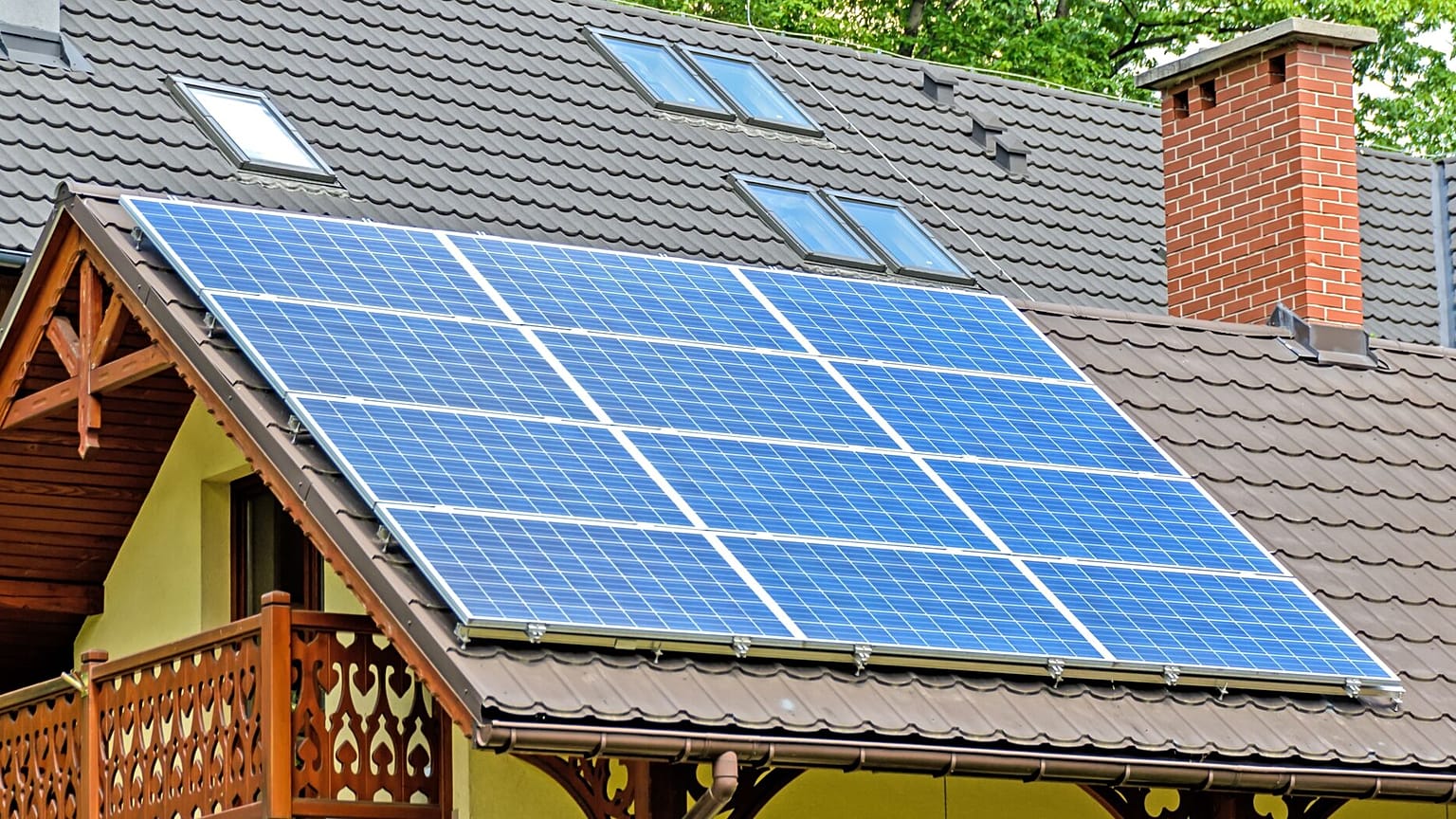
Rooftop solar panels can already save homes significantly - even under cloudy skies
Copyright Unsplash

By Craig Saueurs
Published on

Despite the money they can save households on electricity bills, just one in 10 European roofs has solar panels.

Britain may be famous for grey skies and rainy days, but its sunshine could still help residents shave more than €1,000 a year off household electricity bills.

An analysis of more than 15 million UK homes by solar software company GreenSketch estimates that an optimised rooftop solar and battery system could save the average household around €1,100 a year – what the company calls a ‘sunlight salary’.

Even in Scotland, Wales and Northern Ireland, the average savings topped €930.

The findings show that household savings depend on more than sunshine alone. Electricity prices, the angle of your roof, when you use power, battery storage and payments for electricity sent back to the grid are all important factors.

Grey skies aren’t a barrier to solar power

Researchers used satellite imagery to model individual homes, accounting for the slope of rooftops as well as their orientation, local electricity use and hourly solar generation.

Southwest Wales had the highest average estimated savings at around €1,160 a year, followed by southeast England at about €1,150. In Northern Ireland, the best returns were found in the east rather than the south, which GreenSketch says shows that local weather and geography can affect solar generation as much as geolocation.

Those figures challenge the idea that solar panels only make financial sense in sunnier places. Although they generate more electricity in direct sunlight, solar panels still produce power on overcast days – good news for Europe’s less sunny stretches.

Solar can also cover the cost of installment relatively quickly. The Energy Saving Trust – an independent UK energy advice organisation – estimates that a typical system can pay for itself in 10 to 12 years.

Europe has barely tapped its rooftop potential

The UK findings point to similar potential elsewhere around Europe.

If solar panels don’t need Mediterranean sunshine to cut electricity bills – especially when paired with batteries that let households store power generated during the day and use it later – they could make financial sense far beyond southern Europe.

A Joint Research Centre (JRC) study published earlier this year found that solar panels on rooftops could meet 40 per cent of the EU’s long-term electricity needs by 2050.

In Finland and Denmark, non-residential roofs alone could provide at least 95 per cent of the solar capacity targeted for 2030.

Still, just one in ten European rooftops has solar panels, according to the JRC, leaving enormous room for further expansion.

From Croatia without waste: “truly circular” process offers hazardous chemicals a second life

Euronews
By Julian GOMEZ
Published on

A clean-tech company in Croatia claims to recycle around three million kilograms of polluted solvents annually – without any waste. An “efficient, safe and economically valuable” recycling process of hazardous chemicals… made in Europe.

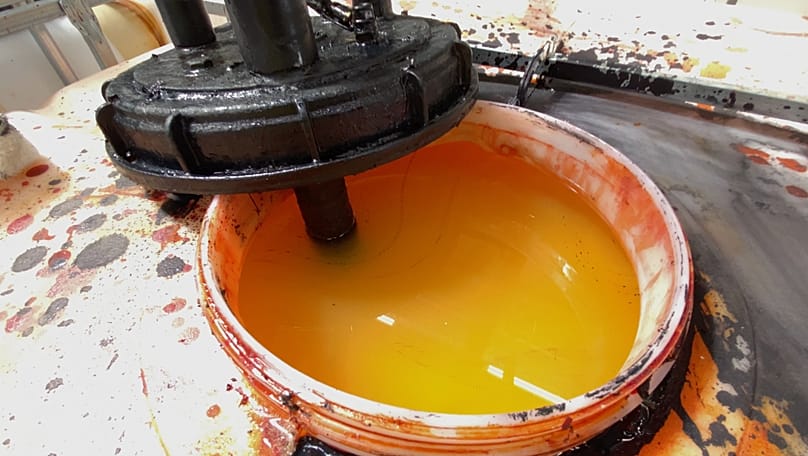
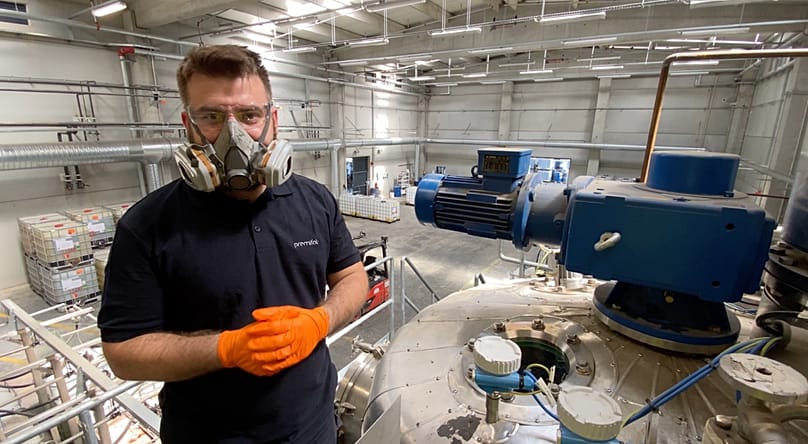
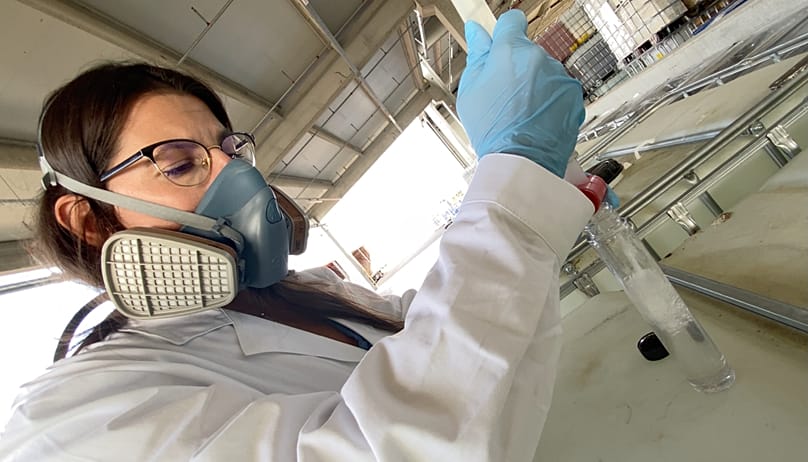
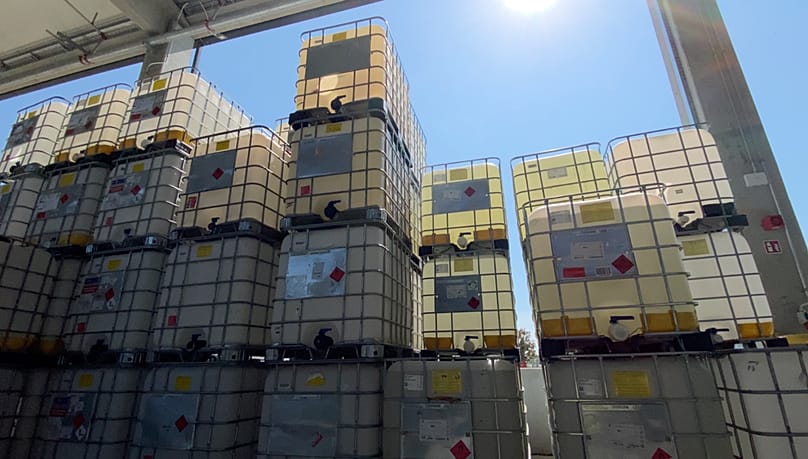
Equipped with air-filtering masks, workers at a recycling plant in Ivanić-Grad, Croatia, recycle ethanol, benzene or acetones, and thinners to dilute paints. These and other used solvents come from the food packaging, pharmaceutical or automotive industries. They are full of hazardous substances.

Polluted solvents prior to the purification process
Polluted solvents prior to the purification process © Euronews

A complex process removes all their residues and turns contaminated solvents into clean ones, ready to be re-used.

“This is the contaminated solvent that we are taking from the machine and into the distillator. We are distilling it, and for the result we are getting the clean solvent that is used to further production. Clean as a whistle”, explains Mario Želježnjak, Production Supervisor at Premifab Ltd as he shows us the different technologies at an unassuming plant recently inaugurated.

Mario Želježnjak, Production Supervisor at Premifab Ltd
Mario Želježnjak, Production Supervisor at Premifab Ltd © Euronews

Along with water and other impurities, the resulting waste is basically sludge that is used to produce energy that feeds the recycling facilities. “Everything is burned inside a rotary kiln and turned into harmless ash,” explains Mario. This ash can subsequently be used as a construction material.

Partially funded by the European Union, the clean-tech company claims to recycle around three million kilograms of used solvents annually—a 90% recycling rate for the contaminated raw material sent by its clients. Facing stiff competition from other major industry players in Germany, France, Spain, and Italy, the company must offer efficiency and versatility, explains its business development director, Igor Podravac.

Igor Podravac is the company´s Business Development Director
Igor Podravac is the company´s Business Development Director © Euronews

“We have a lot of high demanding customers from pharmaceutical, automotive, paint industry,food packaging industry also. After they pollute a material and it is no longer usable for a second treatment, they send this material to us,” he explains while showing us the work done workers. “We are accepting the material, analysing the material, purifying the material and after all the parameters are checked, we return that material into the same production line to get a closed loop circular economy in real life.”

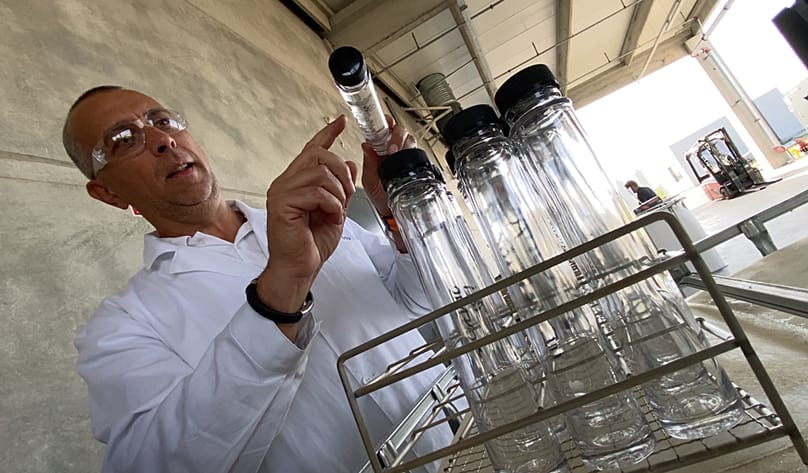
The first step starts at the company´s laboratory. Samples of used solvents are here first analysed to determine if and how they can safely and effectively be recycled. Very different parameters, including temperature, pressure or energy balance must be considered. “Maybe the distillation yield is too low, so it's not really feasible, both material-wise and financial-wise. And on the other hand, if we have lots of distillation residue remaining, that we cannot do anything about it, we opt not to use that material at all,.”, explains Silvija Petković, Quality Control Director & Laboratory Manager. “The specificity within the solvents is their flammability. So they're all flammable liquids, and we need to take all the precautionary measures in order not to burn anything, not to light anything up,” she adds.

Silvija Petković works as Quality Control Director & Laboratory Manager
Silvija Petković works as Quality Control Director & Laboratory Manager © Euronews

After the distillation, and prior to sending the now clean solvents back to the clients, quality control checks are enforced again.

“This one does not conform because of the precipitation, so this one cannot go to the customer. So, this sample is going to stay here, and we need to do further filtration,” Silvija, explains to our camera while holding one sample. “This one is okay, no precipitation, whatsoever. It can be closed and sealed and put into the truck,”after checking a second, much transparent sample.

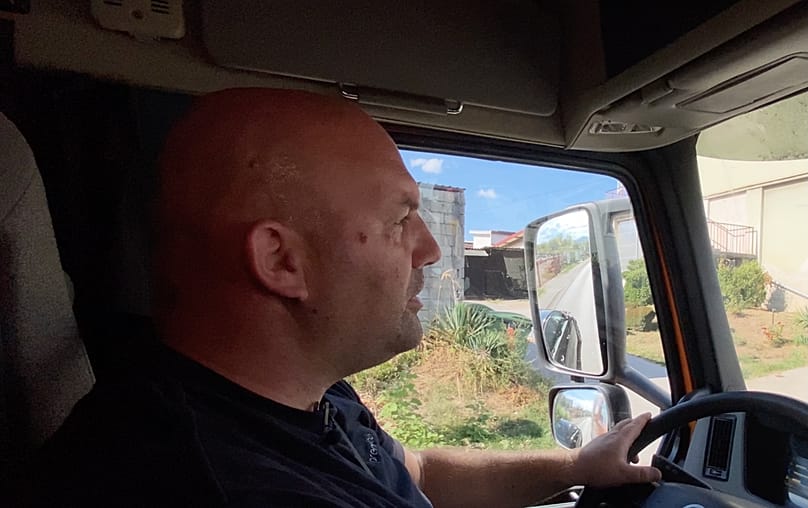
The approved recovered solvents are shipped to the clients in special containers. We follow one such delivery with Nikola Gojavić, a driver at the company. “This cargo is unique because it’s in a liquid state and is highly explosive. Great care is required during loading and transport, so specialised drivers are needed—it’s quite a challenging job,” he tells us while driving.

Driver Nikola Gojavić handles and transports hazardous chemicals
Driver Nikola Gojavić handles and transports hazardous chemicals © Euronews

“The driver must be a specialist because, in the event of an accident or any incident, they must remain composed and be trained to carry out the necessary procedures.”

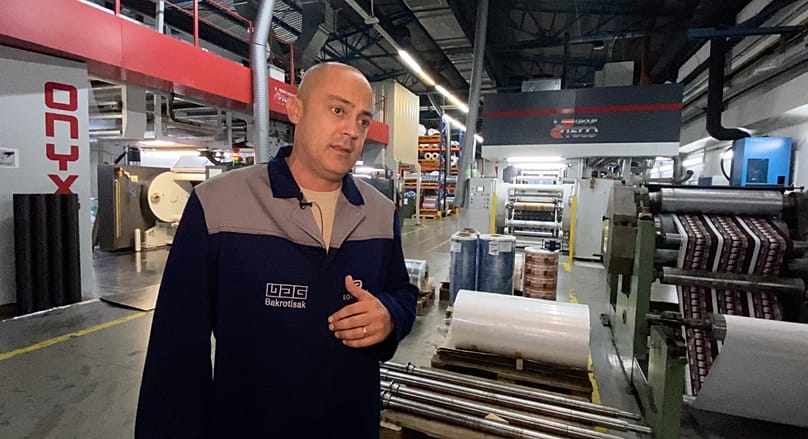
The cargo we follow brings back recovered solvents to a family business called Rotoplast. Each year, it manufactures approximately 5,000 tonnes of packaging and labelling for the food, energy and pet product industries. Solvents are used here to dissolve inks in the printing processes.

“It is important to us that our products, along with being highly effective from a production point of view, are also environmentally sustainable,” says Production Director Antun ÄŒengić. “In cooperation with Premifab, we collect all our waste in a safe way, we transport it to their location, so that they can process it and return it to us as a new resource. With this, we reduce the costs of production.”

The company was founded in 1975 and currently employs 260 staff. Solvents are among the many recycled products that are reused here, claims the CEO, Blaženko Marić.

Blaženko Marić, Chief Executive Officer at Rotoplast. The company reuses purified solvents
Blaženko Marić, Chief Executive Officer at Rotoplast. The company reuses purified solvents © Euronews

“80% of materials, it's possible to use like this. We would like to move to mono materials. For all materials, for all customers. This is the plan for the next few years, to be completely phase out materials which are unrecyclable,” he explains.

Premifab claims to see a significant demand in Europe for this type of recycling services
Premifab claims to see a significant demand in Europe for this type of recycling services © Euronews

Igor Podravac, its business development director, says their turnover has grown “approximately 20 to 25% per year” since they started operations, in December 2014. The company claims that, compared to primary production, recovered solvents generate up to 10 times less CO2 emissions.


AI must serve humans, rather than 'become an instrument of domination and injustice', pope warns

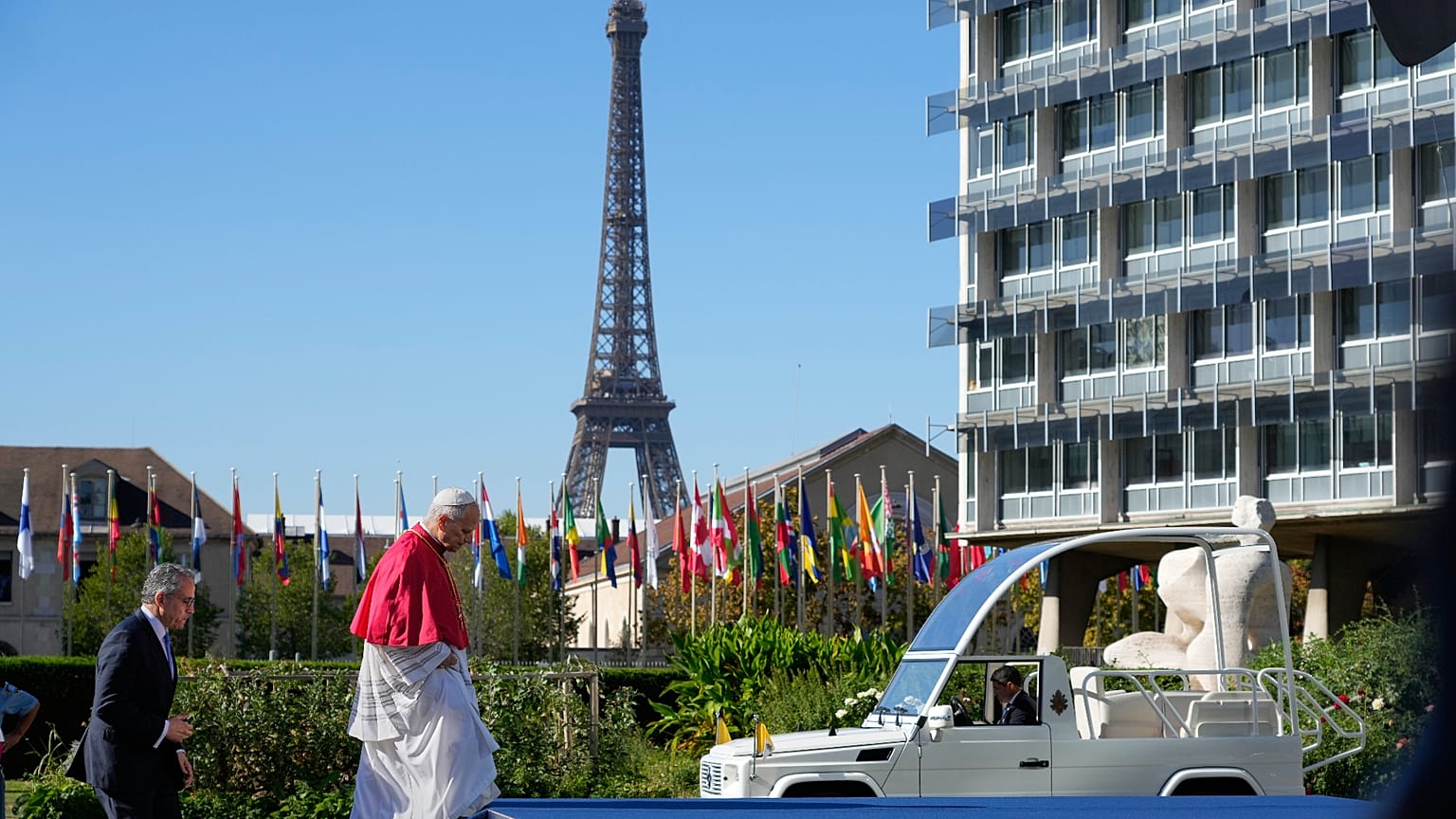
Pope Leo XIV followed by Director-General Khaled El-Enany, leaves UNESCO headquarters, Paris, 25 September 2026.
Copyright AP Photo

By Estelle Nilsson-Julien
Published on

Pope Leo XIV, who has made AI a central component of his pontificate, warned against the dangers of the technology at UNESCO.

Pope Leo XIV warned against the dangers of artificial intelligence on Friday, stating that new technologies must "remain at the service of the human person", rather than becoming "yet another instrument of domination and injustice."

Speaking at UNESCO's headquarters in Paris as part of his four-day trip to France, the pontiff declared that AI risks impoverishing human “ideas and relationships” through a “process of dehumanisation", while also criticising the ever-growing emphasis on productivity in modern societies.

Delivering his speech in both French and English, he argued that judging people according to the "criterion of efficiency" risked undermining respect for human dignity, leading "those who are no longer productive" to be rejected and discarded.

Artificial intelligence has emerged as a prominent theme of the Pope's pontificate. In May, he published his first 42,300 word encyclical entitled "Magnifica humanitas", which addressed the risks that unchecked artificial intelligence creates for humans, arguing in favour of further regulatory oversight.

In his speech, the Pope stressed the need to ensure that emerging technologies offer adequate safeguards for children, stating that the "vulnerability" of young people must "never become an opportunity for exploitation."

European policymakers have been grappling with how to protect children from online harms, with measures such as school phone bans already in place, while the European Commission has proposed the Kids Act, which could restrict social media access for children under 13, gaining increasing attention.

'The most terrible of human works is war'

The Pope also addressed war and reference UNESCO's motto, "since wars begin in the minds of women and men, it is in the minds of women and men that the defences of peace must be constructed."

His remarks come as the world grapples with multiple ongoing conflicts, including the Middle East and Russia's ongoing invasion of Ukraine.

Against this backdrop, the Pope declared that "humanity has come to realise that scientific progress, when it's severed from wisdom, can turn into a weapon of destruction."

He also reflected on the role of international institutions, saying they are viewed “with mixed feelings": on the one hand acting as bodies which tackle challenges that "no single state can face alone", while also "undergoing a crisis of effectiveness, especially when dialogue is seen as an obstacle to action."

In response, the pontiff called for greater "trust."

"Trust that differences do not necessarily pose a threat. Trust that sincere dialogue can bring about a greater good than what each person could achieve alone," he said.

The comments come as international cooperation faces growing political tensions. In July 2025, the Trump administration announced its decision to withdraw from UNESCO, describing the organisation as "woke", culturally divisive and "out-of-step" with the policies supported by Americans who voted the US President in. The decision is set to take effect in December 2026.

A morning visit to the Elysée

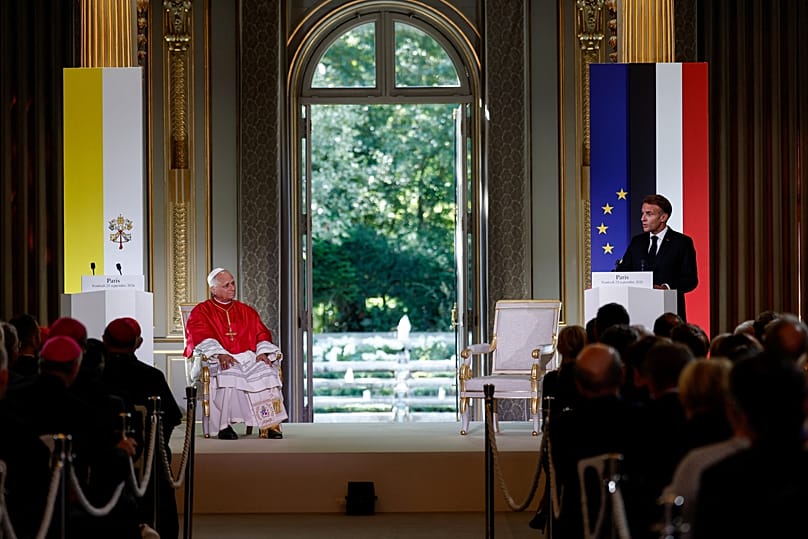
Earlier in the day, French President Emmanuel Macron welcomed the Pope to the Elysée Palace, alongside a number of figures including diplomatic authorities, firemen who intervened during the Notre-Dame-de-Paris fire and representatives from various religious authorities.

During his address, the pontiff reaffirmed the importance of the human right to life — a tense sticking point between France's Catholic Church and politicians.

France enshrined the right to abortion to its constitution in 2024 and earlier this year, a controversial law in favour of assisted dying in extreme medical situation was passed, which revived some of these tensions.

The pontiff qualified the right to life as "the indispensable foundation to every other human right."

He also addressed the global situation by reaffirming the Vatican's staunch opposition to nuclear weapons, calling out the "mistaken belief" that nuclear deterrents provide solutions.

After his UNESCO speech, the pontiff whisked away in his popemobile for a parade through Paris, before Vespers at the Notre-Dame-de-Paris cathedral and a major evening prayer vigil with young people at the Stade de France in Saint-Denis.


Emmanuel Macron and Pope Leo XIV set out clashing world views at first meeting in France


By Laure Valentin
Published on

Speaking at the Elysée, the pontiff set the tone for his first visit to France; dialogue with the Republic, warnings over AI and a call for peace, while acknowledging ongoing disagreements.

French President Emmanuel Macron's meeting withPope Leo XIV gave the French leader an opportunity to revisit the fundamental principles that shape dialogue between the state and religions, while addressing the upheavals confronting contemporary societies.

In his speech, Macron placed the encounter within the framework of the traditional dialogue between France and the Holy See, while recalling the principles of the Republic.

The French president placed particular emphasis on secularism, presented not as a way of distancing society from religion, but as the framework that guarantees freedom of conscience and enables everyone to express themselves.

The meeting also comes as both interlocutors identify artificial intelligence as one of the major challenges of our time. The Élysée stresses that climate and AI were at the top of the global issues discussed during the pair's talks.

On the international stage, Emmanuel Macron defended an engaged France, standing for "peace, multilateralism and respect for international law."

"Every life is worth the same, and all peoples must be defended," said the French leader, referring to the raging wars in Ukraine and the Middle East, which he believes are central to the concerns of both Paris and the Vatican.

He also affirmed that France stands "on the side of peace, active multilateralism, respect for international law and the United Nations Charter."

Emmanuel Macron delivering a speech at the Élysée, Friday 25 September 2026. AP Photo

'AI, peace and human dignity'

In his address, the pontiff placed human dignity at the heart of his message.

Speaking to the Pontifical Academy of Sciences on Thursday, Leo XIV had already warned of the risks linked to artificial intelligence, pursuing a reflection that has become one of the hallmarks of his pontificate.

He warned in particular against a technology liable to be used "for purposes of surveillance, manipulation and discrimination", while calling for technological progress to remain subject to human responsibility.

"The greater our power to transform the world, the greater must be our ability to discern what truly serves human dignity," he said.

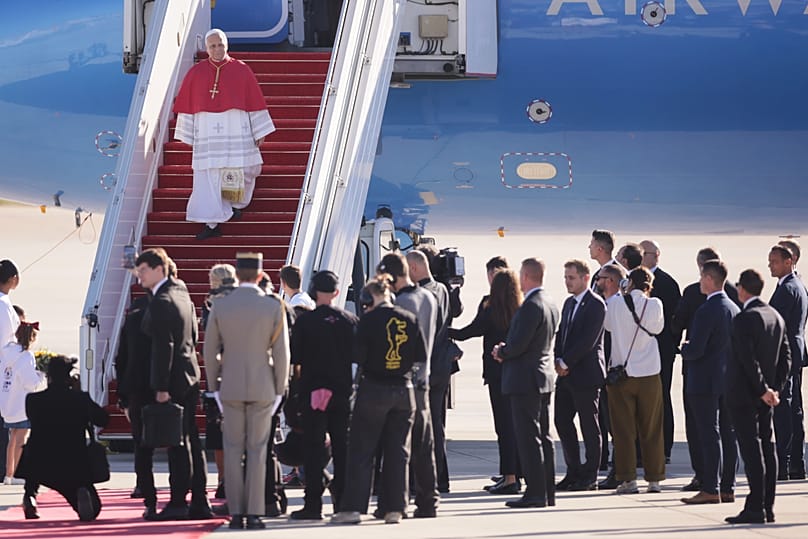
Pope Leo XIV steps off the plane at Orly airport in Paris as he begins a four-day pastoral visit to France, on Friday 25 September 2026. AP Photo

The Pope also assigned France a particular responsibility in a world marked by wars and tensions, especially within Europe.

"Faced with the sound of marching boots and the multifaceted crises shaking our world, France has the vocation to remain a tireless artisan of peace and multilateralism," he said.

He further challenged the idea that nuclear weapons constitute a security guarantee, calling for a break in the arms race and for a deeper emphasis to be placed on dialogue and justice.

On secularism, Leo XIV argued for a concept that he sees as compatible with the presence of religious convictions in the public sphere.

"True secularism does not consist in excluding religion from the public space," said the Head of the Catholic Church, as he addressed bioethical issues on which the Vatican is at odds with developments in France.

He slammed Paris' recently adopted and controversial assisted death bill, and reaffirmed his commitment to protecting every human life. He also opposed surrogacy, in a speech whose guiding thread was the defence of human dignity.

After the meeting at the Élysée, Pope Leo XIV visited the UNESCO headquarters in the French capital, where he will deliver an address on artificial intelligence, youth, peace and interreligious dialogue.

He is then due to celebrate vespers at Notre-Dame cathedral before leading a prayer vigil with young people at the Stade de France.

On Saturday, the Pope will visit the Bakhita House, dedicated to support and social integration, before a Mass at Place de la Concorde ahead of his departure for Lourdes. There, he will celebrate Mass on Sunday and meet bishops, locals and the faithful.

Finally, on Monday Leo XIV will travel to Metz for an interreligious meeting and a session devoted to the "roots of Europe for peace and unity", before a final Mass at Saint-Étienne Cathedral.