AI must serve humans, rather than 'become an instrument of domination and injustice', pope warns
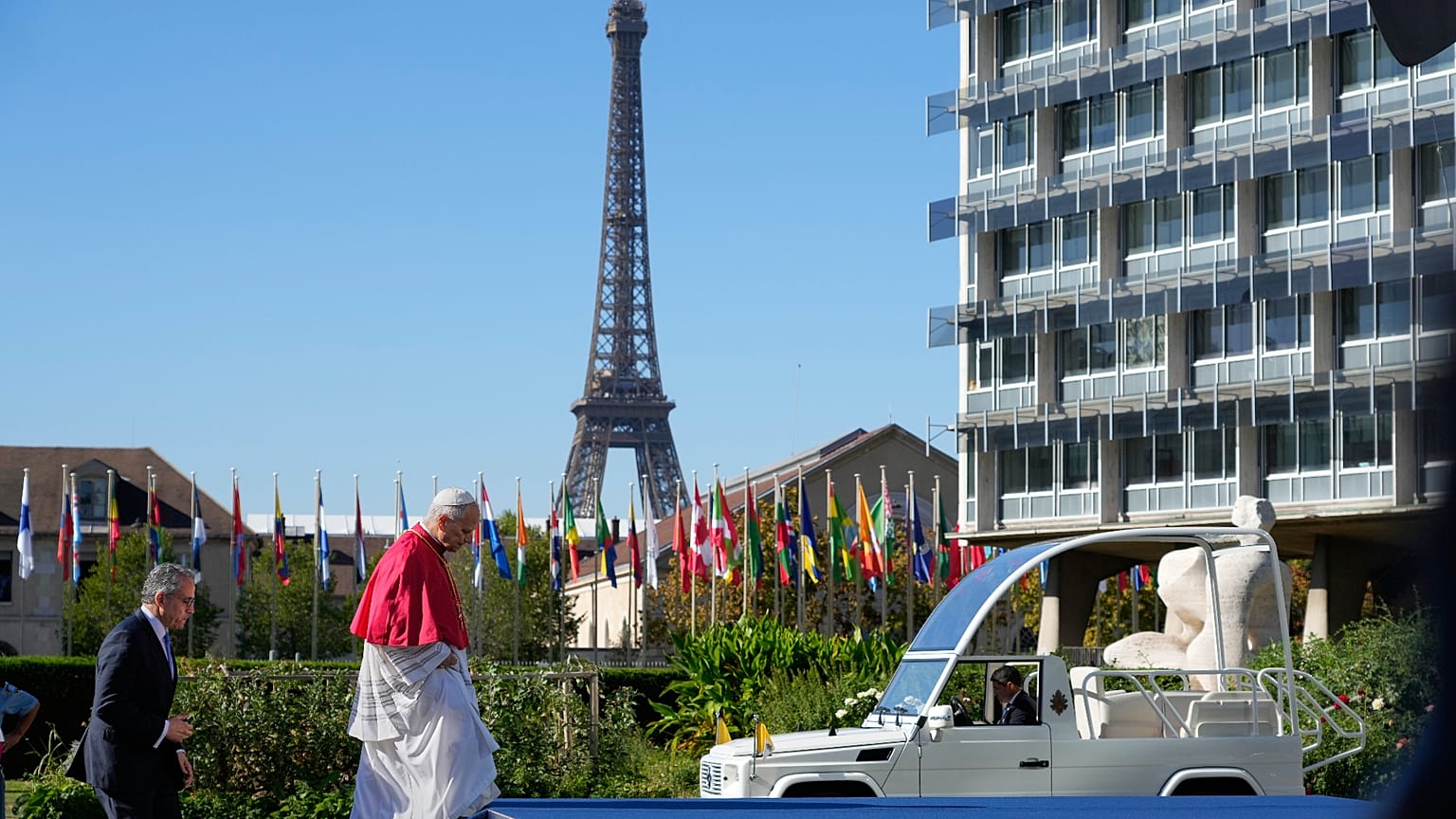
Pope Leo XIV, who has made AI a central component of his pontificate, warned against the dangers of the technology at UNESCO.
Pope Leo XIV warned against the dangers of artificial intelligence on Friday, stating that new technologies must "remain at the service of the human person", rather than becoming "yet another instrument of domination and injustice."
Speaking at UNESCO's headquarters in Paris as part of his four-day trip to France, the pontiff declared that AI risks impoverishing human “ideas and relationships” through a “process of dehumanisation", while also criticising the ever-growing emphasis on productivity in modern societies.
Delivering his speech in both French and English, he argued that judging people according to the "criterion of efficiency" risked undermining respect for human dignity, leading "those who are no longer productive" to be rejected and discarded.
Artificial intelligence has emerged as a prominent theme of the Pope's pontificate. In May, he published his first 42,300 word encyclical entitled "Magnifica humanitas", which addressed the risks that unchecked artificial intelligence creates for humans, arguing in favour of further regulatory oversight.
In his speech, the Pope stressed the need to ensure that emerging technologies offer adequate safeguards for children, stating that the "vulnerability" of young people must "never become an opportunity for exploitation."
European policymakers have been grappling with how to protect children from online harms, with measures such as school phone bans already in place, while the European Commission has proposed the Kids Act, which could restrict social media access for children under 13, gaining increasing attention.
'The most terrible of human works is war'
The Pope also addressed war and reference UNESCO's motto, "since wars begin in the minds of women and men, it is in the minds of women and men that the defences of peace must be constructed."
His remarks come as the world grapples with multiple ongoing conflicts, including the Middle East and Russia's ongoing invasion of Ukraine.
Against this backdrop, the Pope declared that "humanity has come to realise that scientific progress, when it's severed from wisdom, can turn into a weapon of destruction."
He also reflected on the role of international institutions, saying they are viewed “with mixed feelings": on the one hand acting as bodies which tackle challenges that "no single state can face alone", while also "undergoing a crisis of effectiveness, especially when dialogue is seen as an obstacle to action."
In response, the pontiff called for greater "trust."
"Trust that differences do not necessarily pose a threat. Trust that sincere dialogue can bring about a greater good than what each person could achieve alone," he said.
The comments come as international cooperation faces growing political tensions. In July 2025, the Trump administration announced its decision to withdraw from UNESCO, describing the organisation as "woke", culturally divisive and "out-of-step" with the policies supported by Americans who voted the US President in. The decision is set to take effect in December 2026.
A morning visit to the Elysée
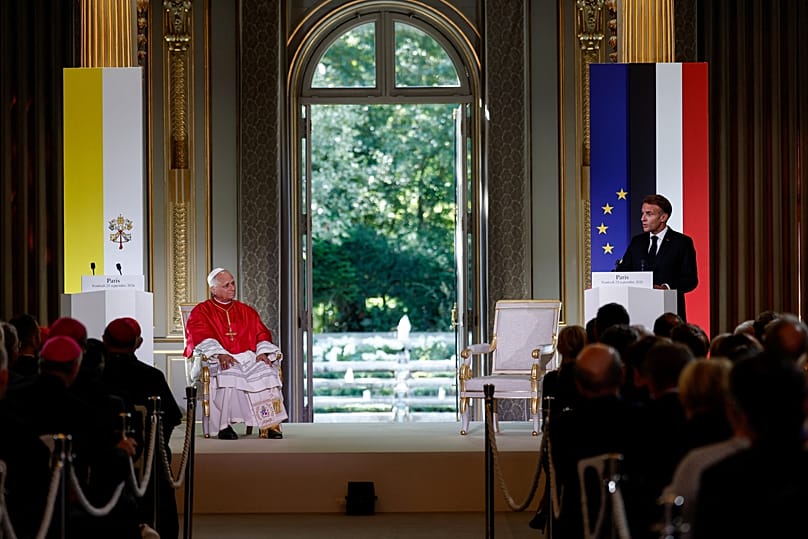
Earlier in the day, French President Emmanuel Macron welcomed the Pope to the Elysée Palace, alongside a number of figures including diplomatic authorities, firemen who intervened during the Notre-Dame-de-Paris fire and representatives from various religious authorities.
During his address, the pontiff reaffirmed the importance of the human right to life — a tense sticking point between France's Catholic Church and politicians.
France enshrined the right to abortion to its constitution in 2024 and earlier this year, a controversial law in favour of assisted dying in extreme medical situation was passed, which revived some of these tensions.
The pontiff qualified the right to life as "the indispensable foundation to every other human right."
He also addressed the global situation by reaffirming the Vatican's staunch opposition to nuclear weapons, calling out the "mistaken belief" that nuclear deterrents provide solutions.
After his UNESCO speech, the pontiff whisked away in his popemobile for a parade through Paris, before Vespers at the Notre-Dame-de-Paris cathedral and a major evening prayer vigil with young people at the Stade de France in Saint-Denis.
Emmanuel Macron and Pope Leo XIV set out clashing world views at first meeting in France
Speaking at the Elysée, the pontiff set the tone for his first visit to France; dialogue with the Republic, warnings over AI and a call for peace, while acknowledging ongoing disagreements.
French President Emmanuel Macron's meeting withPope Leo XIV gave the French leader an opportunity to revisit the fundamental principles that shape dialogue between the state and religions, while addressing the upheavals confronting contemporary societies.
In his speech, Macron placed the encounter within the framework of the traditional dialogue between France and the Holy See, while recalling the principles of the Republic.
The French president placed particular emphasis on secularism, presented not as a way of distancing society from religion, but as the framework that guarantees freedom of conscience and enables everyone to express themselves.
The meeting also comes as both interlocutors identify artificial intelligence as one of the major challenges of our time. The Élysée stresses that climate and AI were at the top of the global issues discussed during the pair's talks.
On the international stage, Emmanuel Macron defended an engaged France, standing for "peace, multilateralism and respect for international law."
"Every life is worth the same, and all peoples must be defended," said the French leader, referring to the raging wars in Ukraine and the Middle East, which he believes are central to the concerns of both Paris and the Vatican.
He also affirmed that France stands "on the side of peace, active multilateralism, respect for international law and the United Nations Charter."
'AI, peace and human dignity'
In his address, the pontiff placed human dignity at the heart of his message.
Speaking to the Pontifical Academy of Sciences on Thursday, Leo XIV had already warned of the risks linked to artificial intelligence, pursuing a reflection that has become one of the hallmarks of his pontificate.
He warned in particular against a technology liable to be used "for purposes of surveillance, manipulation and discrimination", while calling for technological progress to remain subject to human responsibility.
"The greater our power to transform the world, the greater must be our ability to discern what truly serves human dignity," he said.
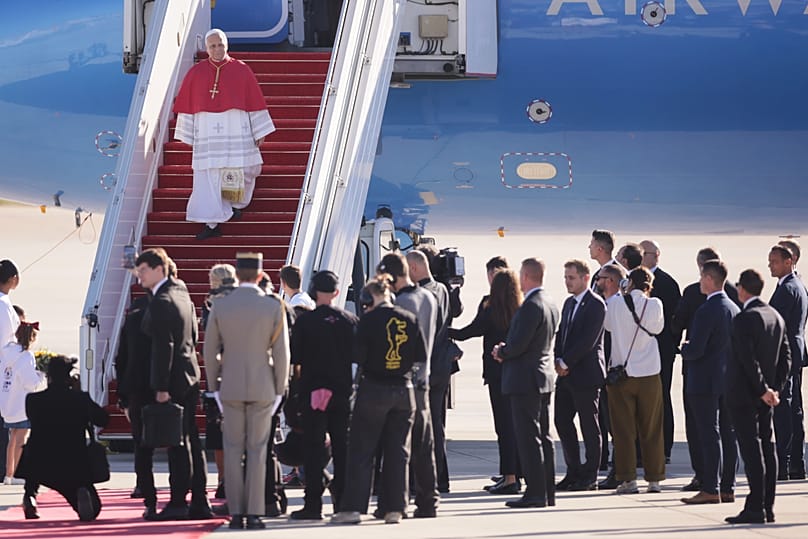
The Pope also assigned France a particular responsibility in a world marked by wars and tensions, especially within Europe.
"Faced with the sound of marching boots and the multifaceted crises shaking our world, France has the vocation to remain a tireless artisan of peace and multilateralism," he said.
He further challenged the idea that nuclear weapons constitute a security guarantee, calling for a break in the arms race and for a deeper emphasis to be placed on dialogue and justice.
On secularism, Leo XIV argued for a concept that he sees as compatible with the presence of religious convictions in the public sphere.
"True secularism does not consist in excluding religion from the public space," said the Head of the Catholic Church, as he addressed bioethical issues on which the Vatican is at odds with developments in France.
He slammed Paris' recently adopted and controversial assisted death bill, and reaffirmed his commitment to protecting every human life. He also opposed surrogacy, in a speech whose guiding thread was the defence of human dignity.
After the meeting at the Élysée, Pope Leo XIV visited the UNESCO headquarters in the French capital, where he will deliver an address on artificial intelligence, youth, peace and interreligious dialogue.
He is then due to celebrate vespers at Notre-Dame cathedral before leading a prayer vigil with young people at the Stade de France.
On Saturday, the Pope will visit the Bakhita House, dedicated to support and social integration, before a Mass at Place de la Concorde ahead of his departure for Lourdes. There, he will celebrate Mass on Sunday and meet bishops, locals and the faithful.
Finally, on Monday Leo XIV will travel to Metz for an interreligious meeting and a session devoted to the "roots of Europe for peace and unity", before a final Mass at Saint-Étienne Cathedral.

No comments:
Post a Comment