Nuclear Stocks Soar on Stargate AI Infrastructure Announcement
Nuclear energy stocks are experiencing a resurgence due to increased demand from AI and data centers.
The Trump administration's $500 billion AI infrastructure venture further boosted nuclear stocks.
Nuclear power is seen as a solution to meet the growing energy demands of AI and data centers while reducing greenhouse gas emissions.
Over the past couple of years, the nuclear energy sector has enjoyed a renaissance in the U.S. and many western countries thanks to the global energy crisis triggered by Russia’s war in Ukraine, high power demand and nuclear’s status as a low-carbon energy source. Uranium demand has soared thanks to a series of policy "U-turns" with governments from Japan to Germany revising plans to phase out nuclear power. Uranium spot prices hit an all-time high of $81.32 per pound in February, double the level 12 months prior. According to the World Nuclear Association, demand from reactors is expected to climb 28% by 2030, and nearly double by 2040. Not surprisingly, the sector’s popular benchmark, VanEck Uranium and Nuclear ETF (NYSEARCA:NLR), recently hit an all-time high.
However, last month, nuclear energy stocks started pulling back sharply, mostly because the sector was seriously overheating. One of the biggest losers was NuScale Power Corp. (NYSE:SMR), with the stock crashing nearly 30% in a matter of weeks. The selloff kicked off after the company disclosed an agreement with several brokerage firms in which the company may offer and sell from time to time as much as $200M in common stock. NuScale says proceeds from the sale will be used for general corporate purposes, including operating expenses, capital expenditures, R&D costs and working capital. NuScale is a developer of modular light water reactor nuclear power plants. Small modular nuclear reactors (SMRs) are advanced nuclear reactors with power capacities that range from 50-300 MW(e) per unit, compared to 700+ MW(e) per unit for traditional nuclear power reactors.
Thankfully, nuclear stocks are on fire again after President Donald Trump on Tuesday announced a $500 billion joint venture with Oracle Corp. (NYSE:ORCL), OpenAI, and SoftBank (OTCPK:SFTBY) to build AI infrastructure in the U.S. The companies have pledged to commit $100 billion to start, and as much as $500 billion over the next four years toward the initiative, with Trump calling it “largest AI infrastructure project in history.” OpenAI, ChatGPT maker, said it expects the project, called Stargate, to help support American leadership in AI, and that it could create "hundreds of thousands" of jobs in the U.S. Other tech giants including Nvidia Corp.(NASDAQ:NVDA) Microsoft (NASDAQ:MSFT)) and Arm Holdings (NASDAQ:ARM) are also expected to be technology partners in the project.
NuScale stock has rocketed 1,175% over the past 12 months; Oklo Inc. (NYSE:OKLO), which is backed by OpenAI CEO Sam Altman, has surged 299%, Vistra Corp. (NYSE:VST) has soared 386% while Centrus Energy (NYSE:LEU) has jumped 73% over the timeframe.
Meanwhile, shares of Nano Nuclear Energy (NASDAQ:NNE) have jumped 1,017% since its May 2024 IPO. The shares made further gains on Thursday after the company was awarded patents related to its designs for a modular transportable nuclear generator. Nano Nuclear is developing ZEUS, a solid core battery reactor, and ODIN, a low-pressure salt coolant reactor.
Yet another big mover is Baltimore, Maryland-based Constellation Energy Corporation (NASDAQ:CEG), a power utility that sells natural gas, energy-related products, and sustainable solutions. CEG shares have soared 200% over the past 52 weeks. The company owns approximately 33,094 megawatts of generating capacity consisting of nuclear, wind, solar, natural gas, and hydroelectric assets.
Long-Term Bullish
The big nuclear rally kicked off last year after NuScale signed an agreement with Standard Power to supply the data center provider with SMRs. Standard Power--a developer of modular data centers–will use NuScale Power's power solutions at two separate sites, where up to 12 SMRs (at each site) would be used to provide power for new data centers. Suddenly, the market took note of SMRs as a viable solution for data centers struggling to keep up with surging power demands by artificial intelligence (AI) computing. The International Energy Agency has projected that global data center electricity consumption will jump from 460 terawatt-hours in 2022 to 1,000 terawatt-hours in 2026.
The long-term outlook for the nuclear sector remains bullish, with nuclear power expected to meet surging AI demand and lower greenhouse gas emissions. According to Goldman Sachs, escalating electricity needs from running AI data centers will generate downstream investment opportunities that will benefit utilities, renewable energy generation, and industrial sectors. The investment bank has forecast that data center power demand will grow at 15% compound annual growth rate from 2023-2030, with data centers consuming 8% of total U.S. electricity output at the end of the forecast period compared to ~3% currently. Analysts estimate that ~47 GW of additional power generation capacity will be required to meet the growth in U.S. data center power demand by 2030.
Last year, a total of 34 countries, including the U.S., pledged to increasingly deploy nuclear power to reduce reliance on fossil fuels. According to the International Energy Agency's (IEA) report Electricity 2024, nuclear power generation is forecast to reach an all-time high globally in 2025, exceeding the previous record set in 2021 as new reactors begin commercial operations in multiple markets, including China, India, South Korea, and Europe; output from France climbs and several plants in Japan are restarted.
By Alex Kimani for Oilprice.com
OPG awards major contract for Pickering refurbishment
Ontario Power Generation has awarded a contract for works associated with the refurbishment of four units at its Pickering plant to a joint venture of AtkinsRéalis company Candu Energy Inc and Aecon Group Inc.
_74925.jpg)
The contract for works associated with the Pickering Nuclear Generating Station Retube, Feeder and Boiler Replacement project covers professional engineering services, procurement of long-lead components, and construction and execution planning for the refurbishment of Pickering units 5-8. The mandates are worth around CAD1.1 billion (USD767 million) to the joint venture for early works and CAD1 billion for the definition phase. Early works are already under way.
Aecon and AtkinsRéalis have successfully completed the refurbishment of three of the Darlington units ahead of schedule. That project is now more than 85% complete. The Pickering award "builds on the success of our joint venture on the Darlington Refurbishment Project and signifies OPG’s continued confidence in our team to refurbish their reactor fleet on-time, within budget and with an unwavering commitment to safety and quality”, Aecon President and CEO Jean-Louis Servranckx said.
AtkinsRéalis is the original equipment manufacturer of the CANDU reactor technology: the pressurised heavy water reactor design was developed by federal Crown corporation Atomic Energy of Canada Ltd which sold its reactor division to SNC-Lavalin's Candu Energy subsidiary in 2011 (SNC-Lavalin Group Inc rebranded to AtkinsRéalis in 2023).
With Ontario's Independent Electricity System Operator forecasting a 75% increase in electricity demand by 2050, nuclear capacity features in the province's plans which include new capacity as well as life extensions of existing units. In addition to the plans to refurbish Pickering units 5-8, which were announced in January 2024, major life extension programmes are under way at the Bruce and Darlington nuclear plants. Four small modular reactor units are planned at Darlington, new nuclear reactors totalling 4,800 MW are planned at Bruce Power’s site, and OPG recently announced it is exploring the suitability of three of its sites in southern Ontario to host new energy generation including new nuclear power.
The Pickering life-extension project will not only sustain current jobs but also create new employment opportunities for a highly skilled and well-paying engineering, skilled trades, and manufacturing workforce, AtkinsRéalis said.
"Refurbishing Pickering secures decades more of the low carbon reliable baseload electricity Ontario needs to meet forecasted soaring demand,” said Nicolle Butcher, OPG President and CEO. “Drawing on our shared experience on the on-time, on-budget Darlington Refurbishment Project, working with trusted partners like AtkinsRéalis and Aecon sets the stage for similar project excellence as we refurbish Units 5-8 at the Pickering Nuclear Generating Station.”
UK opts for disposal of plutonium inventory
The UK government has announced that the country's stockpile of some 140 tonnes of civil plutonium - currently stored at the Sellafield site in Cumbria - will be immobilised and eventually disposed of in a geological disposal facility. The inventory arose from the reprocessing of used fuel undertaken over many decades.
_75800.jpg)
"Continued, indefinite, long-term storage leaves a burden of security risks and proliferation sensitivities for future generations to manage," Michael Shanks, Parliamentary Under-Secretary of State at the Department for Energy Security and Net Zero, said in a written statement to the House of Commons. "It is the government's objective to put this material beyond reach, into a form which both reduces the long-term safety and security burden during storage and ensures it is suitable for disposal in a Geological Disposal Facility (GDF)."
He noted that, following a public consultation in 2011, the government at the time formed a preliminary policy view to pursue reuse of plutonium as mixed-oxide (MOX) fuel but to remain open to any alternative proposals for plutonium management.
The Nuclear Decommissioning Authority (NDA) has since carried out technical, deliverability and economic analysis to identify a preferred option for a long-term disposition solution, including options for immobilisation and reuse. The outcome of this work recommended immobilisation as the preferred way forward to put the material beyond reach soonest and with greatest delivery confidence.
"Following further development work, the NDA will select a preferred technology for immobilisation of the plutonium as a product suitable for long-term storage and subsequently disposal in a GDF," Shanks said. "We expect that around the end of the decade following government approval the NDA and Sellafield will begin delivery of the major build programme of plutonium disposition infrastructure."
The NDA welcomed the decision, saying the next phase will be to seek approval for a major programme on plutonium disposition, requiring a nuclear material processing plant and interim storage capability to be built at Sellafield, "bringing major investment to the area and supporting thousands of skilled jobs for decades".
It added: "In the meantime, plutonium will continue to be stored in a suite of custom-built facilities at Sellafield that ensure its safety and security in line with regulatory requirements."
Sellafield Ltd CEO Euan Hutton said: "We have safely and securely managed plutonium at Sellafield since the 1940s, developing world leading expertise in the process. The decision to immobilise the material places Sellafield at the centre of the effort, working with the NDA, Nuclear Waste Services and our partners including the supply chain, to create a solution that delivers maximum value for all of our stakeholders."
UK to cut legal hold-ups to infrastructure projects
UK Prime Minister Keir Starmer has announced plans to limit legal challenges to major infrastructure projects - including nuclear power plants - to just one hearing in court instead of the current three hearings.
_67835.jpg)
"Current excessive rules mean unarguable cases can be brought back to the courts three times – causing years of delay and hundreds of millions of cost to projects that have been approved by democratically elected ministers, while also clogging up the courts," the government said. "Data shows that over half - 58% - of all decisions on major infrastructure were taken to court, getting in the way of the government's central mission to grow the economy, and put more money in hardworking people's pockets."
On average, it said, each legal challenge takes around a year and a half to be resolved – with many delayed for two years or more - and the courts have spent more than 10,000 working days handling these cases.
As an example, it said work on the Sizewell C nuclear power plant project in Suffolk was left uncertain for two years and legal costs increased because of a case lodged by a small group of activists, with the High Court dismissing it and describing aspects as "utterly hopeless".
The government said its new approach "will strike the right balance between ensuring ongoing access to justice and protections against genuine issues of propriety, while pushing back against a challenge culture where small pressure groups use the courts to obstruct decisions taken in the national interest".
Starmer said: "For too long, blockers have had the upper hand in legal challenges - using our court processes to frustrate growth. We're putting an end to this challenge culture by taking on the NIMBYs and a broken system that has slowed down our progress as a nation.
"The current first attempt - known as the paper permission stage - will be scrapped. And primary legislation will be changed so that where a judge in an oral hearing at the High Court deems the case Totally Without Merit, it will not be possible to ask the Court of Appeal to reconsider. To ensure ongoing access to justice, a request to appeal second attempt will be allowed for other cases."
The government has also set out reforms to end the block and delay to building homes and infrastructure from current environmental obligations. A new Nature Restoration Fund would enable developers to meet their environmental obligations more quickly and with greater impact – accelerating the building of homes and improving the environment.
EDF Energy welcomed the proposals to reform the way developers mitigate their environmental impact. The proposals for a strategic nature restoration fund, it said, could find solutions that work for both the environment and local communities, without putting vital new infrastructure at risk.
"Hinkley Point C has already designed and built significant environmental protections and its clean power will make a major impact in the fight against climate change. For example, Hinkley Point C is the first power station in the Severn to have fish protection measures in place, with a specially designed low velocity cooling water intake system and a fish return system," it said. "However, the current lengthy process to identify and implement acceptable compensation for a small remaining assessed impact on fish has the potential to delay the operation of the power station."
EDF Energy said it is still working with local communities and stakeholders to find solutions that work for both communities and the environment. "We're also reviewing the potential of any innovative technologies to see if they could help us further protect fish without risking the lives of divers in the dangerous waters of the Severn Estuary. Hinkley Point C hopes that government can establish a new framework that manages these current challenges in a more proportionate and effective manner."
TVA names contractors for Clinch River SMR project
The Tennessee Valley Authority's collaborative contractors Bechtel, Sargent & Lundy and GE Hitachi will use an integrated approach as they carry out initial planning for a potential small modular reactor at Clinch River in Tennessee.
_74615.jpg)
The contractors will work with GE Hitachi - designer of the BWRX-300 SMR - and Tennessee Valley Authority (TVA) as an integrated project team to plan, design, and potentially procure, construct and commission Clinch River Unit 1, the companies said.
The integrated project delivery approach to contracting they will use promotes integration of work processes and is a different approach to that used in previous US nuclear construction projects. TVA Clinch River Project Senior Vice President Bob Deacy said it will make the project a "true" team effort incentivising delivery on time and on budget. "We will actively work together toward a target budget and schedule - creating a significant advantage to drive nuclear innovation, share risks and reduce costs," he said.
The integrated project delivery model is best practice from the construction industry, and has been successfully used for generation projects by Ontario Power Generation (OPG) - which, along with TVA and Polish company Synthos Green Energy, is collaborating with GE Hitachi to develop a standard design for the BWRX-300. OPG is also using the integrated project delivery model for its small modular reactor (SMR) project at its Darlington site in Ontario, Canada.
The integrated project delivery team approach is also said to suit developing the potential for multiple SMRs, and the team scope will also provide preliminary plans with estimated cost reduction forecast as it relates to constructing multiple SMRs to identify innovations and to provide a progression of cost reduction for additional reactors.
Bechtel and TVA have worked together on previous nuclear projects, most recently in the completion of Watts Bar Unit 2 in 2016, and the engineering, construction, and project management company's current portfolio includes large-scale reactors such as the recently completed Vogtle units in the USA and Poland's first nuclear power plant, as well as advanced reactors including the Natrium Advanced Reactor Demonstration Project in the USA.
"We are committed to leveraging our extensive experience and expertise, utilising new tools and innovations, to construct this project. We look forward to continuing our partnership with TVA to deliver new, clean energy," Ahmet Tokpinar, general manager of Bechtel's Nuclear Power business, said.
Sargent & Lundy will lead the detailed design for the site-specific implementation of the BWRX-300 at Clinch River, continuing a 40-year relationship with TVA, Sargent & Lundy Chairman, President and CEO Victor Suchodolski said, adding that the partnership "marks a major step forward for the future of clean, carbon-free nuclear energy in the United States".
The team is now beginning the validation phase, during which TVA will collaborate with Bechtel, Sargent & Lundy and GE Hitachi to jointly develop the cost estimate and schedule for the Clinch River SMR. This is anticipated to be completed within 1-2 years.
The US Nuclear Regulatory Commission awarded TVA an early site permit for the construction of SMRs at Clinch River in 2019, certifying that the site is suitable for the construction of a nuclear power plant from the point of view of site safety, environmental impact and emergency planning, but without specifying the choice of technology. A separate licence would be required to construct and operate a plant. TVA entered an agreement with GE Hitachi in 2022 to support its planning and preliminary licensing for the potential deployment of a BWRX-300 at the site, which is near Oak Ridge.
TVA's board has yet not voted to approve an SMR at Clinch River, although in August it approved USD150 million in additional advanced funding to support the project, bringing the authority's investment since the February 2022 launch of its New Nuclear Program to USD350 million.
Earlier this month a TVA-led coalition submitted an application for USD800 million in "first mover" funding from the US Department of Energy's Generation III+ SMR programme to support deployment of SMRs. TVA President and CEO Jeff Lyash said this funding, if granted, would accelerate construction of an SMR at Clinch River by two years, with commercial operation planned for 2033.
Expansion of Swedish repository under way
Blasting work 45 metres below ground has begun, marking the start of the expansion of Sweden's existing SFR final repository for low and intermediate-level waste at Forsmark. The extension - expected to take six years to complete - will triple the capacity of the repository.
_78823.jpg)
The SFR repository is situated 60 metres below the bottom of the Baltic Sea and began operations in 1988. The facility comprises four 160-metre-long rock vaults and a chamber in the bedrock with a 50-metre-high concrete silo for the most radioactive waste. Two parallel kilometre-long access tunnels link the facility to the surface. The facility currently has a total final disposal capacity of about 63,000 cubic metres of waste.
Most of the short-lived waste deposited in the SFR comes from Swedish nuclear power plants, but radioactive waste from hospitals, veterinary medicine, research and industry is also deposited within it.
Sweden's radioactive waste management company Svensk Kärnbränslehantering AB (SKB) is extending the repository so that it can accommodate waste from the decommissioning and dismantling of the country's nuclear power plants. This will include reactor components, concrete and other building materials.
The plan is that the repository, when extended, will have six new rock vaults, 240-275 metres long. The intention is to construct the extension at a depth of 120-140 metres, level with the lowest part of the current SFR repository. On completion the facility will have a total storage capacity of approximately 180,000 cubic metres.
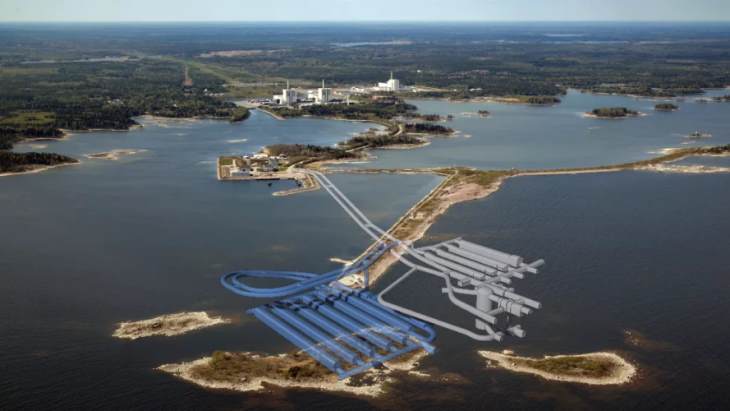
The blue area shows where SKB plans to extend the existing SFR repository (Image: SKB)
Rock construction work got under way in December 2024, and on 23 January the official launch of blasting took place together with construction firm Skanska, which is delivering the extension project in collaboration with SKB.
SKB CEO Stefan Engdahl, together with Ida Tjerngren, project manager for the extension, Skanska Sweden CEO Magnus Persson, Fabian Sjöberg, Municipal Commissioner of Östhammar and Daniel Westlén, State Secretary to the Minister for Climate and Environment, jointly pressed the button to initiate one of the first explosive charges, which symbolised the start of work on the extension.
"It feels really good that we've now started rock excavation in Forsmark," Engdahl said. "The extension of SFR is an important precondition for fossil-free electricity production at the nuclear power plants, now and in the future."
SKB signed a collaboration agreement with Skanska in July 2023 regarding the expansion of the SFR repository.
"That Skanska is involved in contributing to societal development with this truly unique project is a prestigious honour," Persson said. "We have a close collaboration with SKB, and this project is a great example of how successful things can be when we share expertise, experiences, and knowledge with one another."
Czech minister says KHNP contract timetable still on track
Minister of Industry and Trade Lukáš Vlček said he had discussed with Korea Hydro & Nuclear Power CEO Joo-ho Whang about finalising the EPC contract and the involvement of Czech companies in the country's new nuclear project.
According to a statement from the Czech Republic's trade ministry, they also discussed the recent agreement between KHNP and Westinghouse, with Vlček saying it had eliminated one possible risk to the project, adding: "We were assured by the Korean side that the results of these agreements should not have negative impacts on the project schedule and budget or on the expected involvement of domestic companies."
On that last point, he also said: "Czech companies have cutting-edge technologies and expertise. We want them to be involved in the project from the beginning and to have the highest possible share in its implementation. Localisation is a key issue for the Czech Republic, and therefore we expect further concrete steps before the signing of the EPC contract."
He also said that "everything regarding the contract is going according to schedule" with the signing still expected to take place at the end of March.
The ministry said it would undertake further negotiations with the Czech Chamber of Commerce "with the aim of supporting the project and ensuring related activities, specifying the scope of cooperation and ensuring effective transfer of technology and know-how to Czech industry".
Background
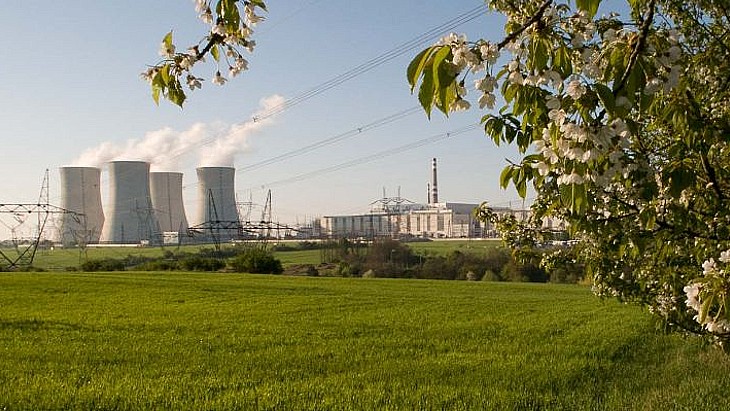
The Czech Republic currently gets about one-third of its electricity from the four VVER-440 units at Dukovany, which began operating between 1985 and 1987, and the two VVER-1000 units in operation at Temelín, which came into operation in 2000 and 2002.
In October 2023, Westinghouse, EDF and KHNP submitted binding bids for a fifth unit at the Dukovany nuclear power plant, and non-binding offers for up to three more units - another one at Dukovany and two at the Temelin nuclear power plant. Westinghouse was proposing its AP1000, EDF was proposing its EPR1200 reactor, KHNP was proposing its APR1000. But in February the Czech government announced it was changing the tender to be binding offers for four new units, with Westinghouse not included because it "did not meet the necessary conditions".
Prime Minister Petr Fiala explained at the time that the decision to switch to binding offers for all four units was the result of the original tender suggesting that contracting for four units, rather than having separate processes, could have a 25% benefit in terms of costs.
In July, he announced KHNP as the preferred bidder, with contract negotiations to begin with the aim of signing contracts for the initial unit by the end of March 2025 - the target for test operation of the first new unit is 2036 with commercial operation in 2038. He said the winning tender "based on the evaluation of experts, offered better conditions in most of the evaluated criteria, including the price". The KHNP bid was for a cost of around CZK200 billion (USD8.6 billion) per unit, if two units were contracted.
Last week Westinghouse and KHNP and KEPCO reached an agreement on their long-running intellectual property dispute and to collaborate on the deployment of new nuclear reactors around the world.
Rostov's first unit set for 30-year life extension
The first unit at Rostov nuclear power plant was launched in 2001 and its operating licence is due to expire in 2030. A large-scale work programme has been approved as part of plans for a 30-year life extension.
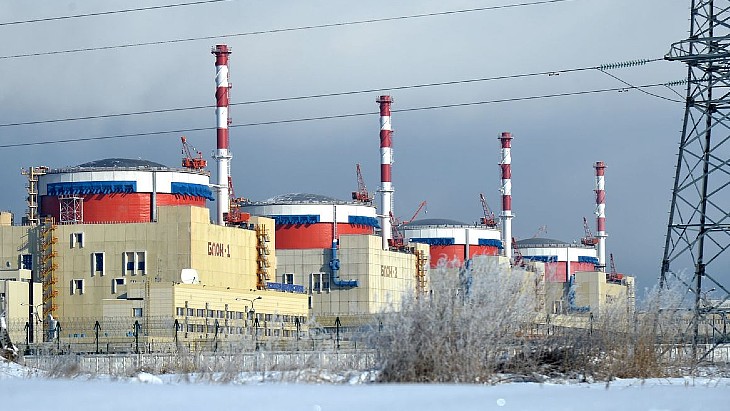
The Rostov plant features four VVER-1000 units and is about 13 kilometres from the city of Volgodonsk in southwest Russia. It is part of Rosatom's plant operating division Rosenergoatom, which carried out modernisation work at all four units during 2024.
The most extensive work was carried out on the first unit, with the control system, uninterruptible power supply and electric motors of the pump units modernised, while the reinforcement cables of the protective shell, neutron flux control equipment and parts of the ventilation system were replaced.
Andrey Salnikov, Rostov NPP Director, said: "The modernisation of the first power unit in 2024 launched a large-scale project to extend its service life by another 30 years. The document (the life extension project plan) was approved by the Rosatom state corporation and is designed to last until 2029."
Rosatom said that after the completion of the modernisation, "which is being carried out with the aim of increasing the operational reliability and safety of the power unit", its service life will be extended for another 30 years.
Since it entered operation in 2001 Rostov 1 has supplied 171.66 terawatt hours of electricity.

No comments:
Post a Comment