José Martí: April 10 and 11
By Luis Toledo Sande
On July 6, 1878, when the Pact of Zanjón was still near, and he was far from the leadership he would achieve in the Cuban national liberation movement, José Martí wrote to Manuel Mercado: "Must I tell you how much superb purpose, how powerful a powerful outburst boils in my soul? That I carry my unhappy people in my head, and that it seems to me that their freedom will depend on a breath of mine in one day?"
He already sensed – or was aware of it – the growing importance that his revolutionary work would have. With it he achieved the recognition of his compatriots and the unity, never before achieved at that height, with which the patriotic movement arrived at the feat of 1895. Máximo Gómez called it "Martí's war", which speaks of the renewing organizational and conceptual character, with profound implications for then and for the future, that Martí imprinted on the conflict from his preparations.
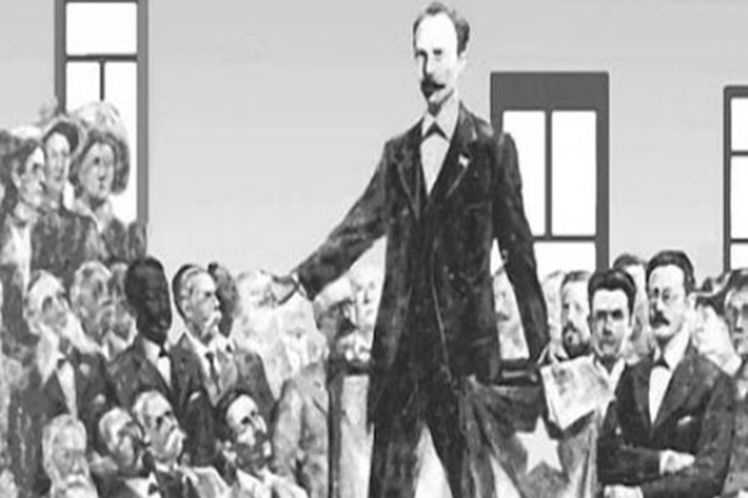
On this path he created the Cuban Revolutionary Party, not only to lead the preparation of the armed struggle. In the Bases of that organization he expressed his conviction that it was urgent to give the independence movement a perspective that would lay the foundations for what he proposed with the desire to liberate and transform Cuba: to found in it "a new people and of sincere democracy."
Such a goal implied a thorough rethinking of the reality that he had known in a wide and representative portion of the world: from Spain, through several countries of our America, to the United States, where he spent the final years, about fifteen, of his life. All that experience grew and deepened with his study of the history of the world.
In the United States, which not a few had as a model of a democratic republic, he saw, in addition to the dangers that his voracity represented for our America, the irruption of a Caesarean and invasive republic, with serious consequences for the planet in general and even for the American people.
Freeing Cuba from such dangers required unity in the patriotic movement, beset by obstacles that included various conflicts, such as the antagonism between the political strands called militarism and civilism. It was urgent to reverse what the Party Bases characterized as "a society composed for slavery." That scourge continued to be "the great sorrow of the world," as Martí wrote in Simple Verses, when traditional slavery had already been abolished in Cuba.
The clashes between militarism and civilism would create confusion, and some would think that he was inclined to civilist positions, when what he was doing was forging a superior political solution. His purpose was to prevent both the militarist hypertrophies, akin to the caudillismo that continued to do so much damage in our America, and the legalism with which the Republic constituted in Guáimaro had hindered the action of the Liberation Army. But, to prevent such extremes, it would be healthy to keep alive the best heritage of the Republic of 1869, not to forget it.
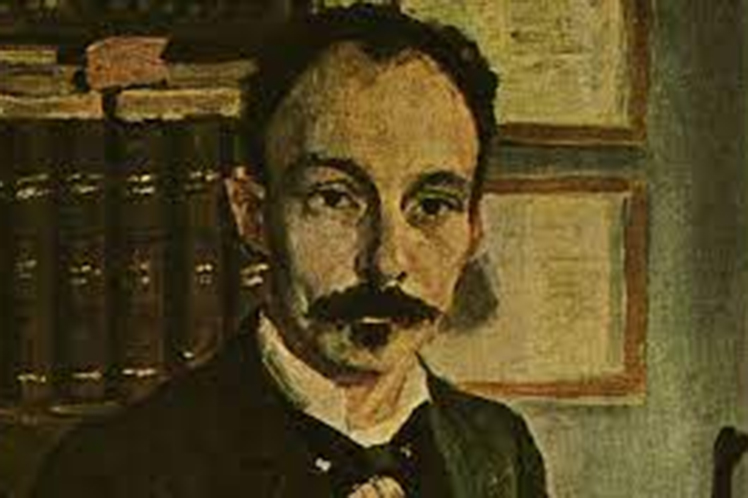
Contingencies may have influenced the election of April 10 to proclaim the constitution of the Party in 1892. But Martí assumed it as an expression of homage to a Republic of which the independent Cuba, for which it was fought, deserved and should prolong the virtues embodied in a radical independence vocation and a democratic will that paid for civility.
The functioning of the Party – which was organized in emigration to evade Spanish surveillance, but in functional communication with the country – ratified in fact the aspirations of sincere democracy embraced by Martí. Its structure was simple: only two leading positions at its top, that of Delegate, the name chosen by Martí for the main position, and that of Treasurer. Both would have under their direction the numerous grassroots organizations, the clubs, as they were called following the practice already familiar in the Cuban independence movement.
These organizations – and the council bodies in which they were linked in localities where there were several of them – reproduced the simplicity of the leadership, and were guided by a functioning that cultivated centralized discipline and the ease of action and thought to make the general program defended a reality.
At all levels, the leaders were elected and recallable. They were elected with a periodicity that dynamited the notions of the "democracy" prevailing then, and today, in the world: in Martí's organization, elections were annual, and at the moment when the voting mass considered it necessary to depose any of its leaders, it could do so by voting, with order – as the preparation of a war required – but without waiting for the next electoral process.
While the treasury was governed by a rigor against corruption, the general functioning of the Party sowed seeds against bureaucratism. Structure and action required the greatest care, at the height of the ends defended. Just after the war began, and with the Spanish army in front, in his posthumous letter to Mercado, dated May 18, 1895, Martí confessed to Manuel Mercado the main objective of his endeavor: to overcome the danger represented by the United States. "What I have done until today, and will do, is for that," he wrote, in fact putting in the background the significance of the immediate end of the patriotic conflict: the necessary defeat of Spain.
If in the same letter he said: "In silence it has had to be, and as if indirectly," he did so referring to that crucial point, not to justify frustrating concealments. The newspaper Patria, also his creation, began to circulate on March 14, 1892, before the Party was proclaimed. It was not born, therefore, to function as a formal organ of the Party, but with another character: "It is a great prize to be an organ of virtuous and founding patriotism." This is how Martí defined it in "Generoso deseo," an article published in the same newspaper on April 30, 1892.
The former could make the Party a stumbling block for the radicalism of the revolutionary vanguard – headed by Martí – while the latter assured it the condition of propagator of the truth, with which it fulfilled one of the mottos of the guide's ethics: "The word is not to cover up the truth, but to tell it." he wrote in "Ciegos y desleales", which also appeared in Patria, on January 28, 1893, and which begins with this statement: "Politics is the truth".
A cardinal purpose of Martí in the war was to hold an assembly that would have a place of the first order in his efforts to reach Cuba. In the aforementioned letter he wrote to Mercado: "We continue on our way, to the center of the island, to depose, in the face of the revolution that I have raised, the authority that emigration gave me, and it was complied within, and must renew in accordance with its new state, an assembly of delegates of the visible Cuban people, of the revolutionaries in arms."
In the revolutionary program he forged, this renewal would not depend on personal prerogatives: it would be the faculty of the assembly, which he conceived in the most democratic terms possible for a war. Death, which surprised him on May 19, not only prevented him from finishing the letter, but also from reaching that assembly, which, without him, would no longer be the same. Although conjectures are avoided, it is inevitable to imagine what it would have been like with the presence of the leader capable of uniting the patriotic movement as no one had done before, and in whom the Mambi masses saw a natural president.
In his texts written during the campaign, it can be seen that he rejected the title of President, not only for himself, but in general. But would he have shirked the responsibility of that position? Wouldn't he have found another name for that mission? For the maximum leader of the Party, he coined Delegate, of clear democratic intention, and was elected to that position - which he honored with his exemplarity - in all the elections made while he lived.
The challenges that the Revolution had to face and overcome were immense, and Martí could not ignore the importance of his revolutionary zeal. He had to get to Cuba, and his resolution was to do it. To do so, he left New York on January 30, 1895 and embarked on an arduous tour of the lands and seas of the Caribbean.
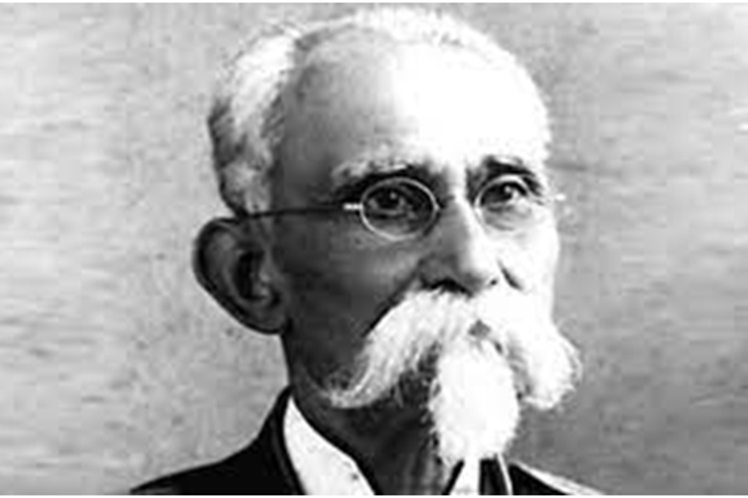
To a large extent he did so with Máximo Gómez, and both faced obstacles and dangers. But if something does not appear in the numerous texts of Martí that are known, it is that he was willing to return to emigration. If he had been, why leave New York and run the dangers he ran from then on?
That he was not present in the war could be the desire of others, for different reasons – from wanting to take care of his precious life to, in the case of those for whom his renewing verticality could be uncomfortable, to keep him away – but he knew that his place was in Cuba, within it, fighting directly for it. He wrote one of his great farewells to Federico Henríquez y Carvajal, already on his way to war, dated March 25, 1895.
When he tells him: "For me, it is time," he does not reveal a suicidal vocation that he did not have and that in him would have been an unthinkable act of irresponsibility, but his clear understanding that his presence in the war was vital for the homeland. If he had to die in the conflict, he wanted him to be "stuck to the last trunk, to the last fighter," when there was no other worthy option than death. In the meantime, as he writes to Henríquez and Carvajal, he has much to do: "I can still serve this one heart of our republics."
He did not use vain words, and neither did he in that case. He knew what was in danger, and what was urgent: "The free Antilles will save the independence of our America, and the already doubtful and wounded honor of English America, and perhaps they will accelerate and fix the balance of the world. See what we do, you with your youthful gray hair, and I, dragging myself, with my broken heart." That is why, without a hint of vanity that he never had, he added: "I will raise the world." To do this he had to be at the center of events, not far away.
A false news story – according to which he and Gómez were already in Cuba – could have served to reinforce the arguments about his decision to arrive on the island at war. But to make it depend on that contingency is, at the very least, to trivialize reality, to underestimate the resolution by which he himself had signed in New York, as Party Delegate and together with Generals Enrique Collazo and José María Rodríguez, the latter representing Gómez, the order for the uprising that gave way to the outbreak of the conflict. And the top leaders of the revolution had to reach it: he, Party Delegate, and Gómez, head of the military branch of the organization.
Martí was not guided by masks or postmodern levities, but by the frank density of the missionary sense with which he assumed existence since, as a child, he "swore to wash away with his life" – not only with the eventuality of probable death – the crime of slavery, such as the one that Cuba continued to suffer in its condition as an oppressed nation in 1895, and especially the humble suffered in it.
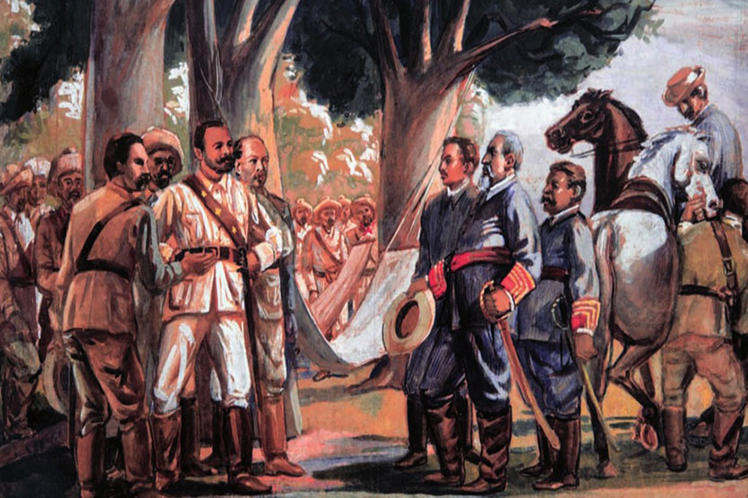
That oath guided him in his responsibilities at the head of the independence movement, with the redemptive vocation in which the proclamation of the Revolutionary Party on April 10, 1892, and his arrival in Cuba, with Gómez and four other companions, through La Playita de Cajobabo, on the 11th of that month in 1895, were inscribed.
If in the selection of the first date one can see a surpassing tribute to the Republic of Guáimaro – Martí himself referred to the Party in the Homeland of the previous April 7 as an organization already standing – the date of the arrival of the expeditionaries to Cuba depended on various events. But both anniversaries have in the history of Cuba, and in the affectivity of the homeland, a closeness that goes beyond the mere chronological contingency. The tragedy of May 19, 1895 will lead to remembering other sides of the events.
RMH/Ltd
*Taken from Cubaperiodistas

Luis Toledo Sande
Cuban writer, researcher and journalist. PhD in Philological Sciences from the University of Havana. Author of several books of different genres. He has taught at the university and has been director of the Center for Martí Studies and deputy director of the magazine Casa de las Américas. In diplomacy, he has served as cultural counselor of the Cuban Embassy in Spain. Among other recognitions, he has received the Distinction for National Culture and the Social Sciences Critics Award, the latter for his book Cesto de llamas. Biography of José Martí. (Velasco, Holguín, 1950).

No comments:
Post a Comment