18 States File Suit to Challenge Trump’s Order Pausing Wind Energy Licenses
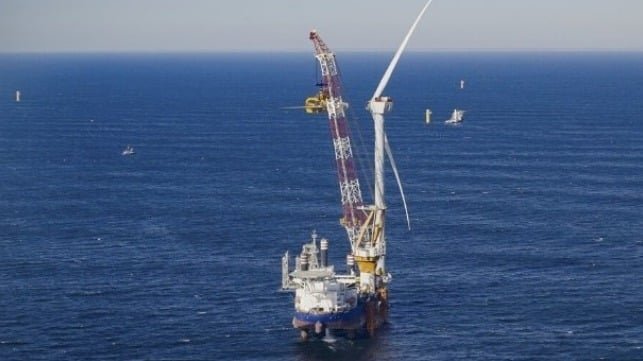
A wide-reaching coalition of states involved in offshore as well as onshore wind energy filed suit in federal district court on May 5 seeking to stop the implementation of the presidential executive order to suspend and review leasing for wind energy projects. They are calling the “blockade” on wind energy projects “unlawful,” and asked the District Court in Massachusetts to issue a preliminary injunction to immediately stop the administration from enforcing the freeze while the litigation proceeds.
“This administration is devastating one of our nation’s fastest-growing sources of clean, reliable, and affordable energy,” said New York State Attorney General Letitia James. “This arbitrary and unnecessary directive threatens the loss of thousands of good-paying jobs and billions in investments, and it is delaying our transition away from the fossil fuels that harm our health and our planet.”
According to New York State, “The administration’s indefinite blockade could leave billions of dollars in states’ clean energy investments stranded or underutilized and significantly harm their economic development.”
Associated Press got a comment from the White House calling the lawsuit “lawfare” from Democratic attorneys general and linked wind energy to the “Democrats’ radical climate agenda.” A spokesperson said it was an effort to stop a popular agenda energy and to stop unleashing American energy and lower prices.
Donald Trump signed an Executive Order on January 20 suspending all federal approvals for wind energy projects and ordering his departments to begin a review of the industry and the licensing process. Since then, the Department of the Interior ordered New York’s Empire Wind project being developed by Equinor to stop construction even though the project was fully licensed in 2024. The EPA has also revoked an air permit related to the construction of a planned offshore wind farm in New Jersey while the Bureau of Ocean Energy Management stopped reviews, and grants to a research project in Maine for floating wind turbines were suspended.
“The President’s attempts to stop homegrown wind energy development directly contradict his claims that there is a growing need for reliable domestic energy,” said Massachusetts Attorney General Andrea Joy Campbell. “My colleagues and I will continue to challenge this administration’s unlawful actions to chill investment and growth of this critical industry.”
The 101-page filing cites the hypocrisy of the president’s approach to energy pointing out that Donald Trump also signed an Executive Order declaring a “National Energy Emergency, purportedly brought on by the country’s alleged ‘insufficient energy production’.” The Executive Order called for steps to “shore up the inadequate energy supply.”
The filing says while energy, and specifically domestic energy, is a high priority the administration is threatening to undermine a critical source of clean energy and job growth. They note the years of bipartisan support for offshore and onshore wind energy projects and the efforts in Trump’s first term. They state that states have a responsibility to meet increased energy demand.
The suit contends that the president is acting outside his legal authority and has no statutory right to shut down the permitting process. They are calling the order “arbitrary and capricious” saying it is in violation of the Administrative Procedure Act.
They are asking the court to intervene and rule the approval blockade unlawful. They want the court to prevent the departments from enforcing the order and wind energy permitting process.
The coalition filing the suite includes states involved in offshore wind energy (Massachusetts, New York, California, Connecticut, Delaware, Maine, Maryland, New Jersey, Oregon, Rhode Island, and Washington) as well as other states (Arizona, Colorado, Illinois, Michigan, Minnesota, New Mexico, and the District of Columbia).
It comes as developer Equinor has also threatened to challenge in court the federal order to stop its project off New York. Others in the industry however have already pulled back on their U.S. investment plans moving their emphasis to Europe and other parts of the world which continue to adopt offshore wind energy development.
Ørsted Discontinues Planned UK Wind Farm Citing Costs and Interest Rates
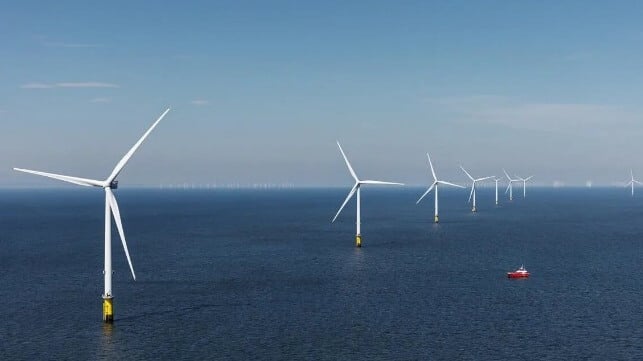
Danish renewable energy giant Ørsted has decided to discontinue efforts on the fourth phase of a major UK offshore wind energy project, which comes as a major blow to the UK’s renewable energy ambitions. The company is citing increased costs and risks despite the UK’s decision in 2024 to increase its support for the projects and the new government’s strong commitment to wind energy.
Ørsted has decided to discontinue the UK’s Hornsea 4 project in its current form, attributing the move to a combination of increased supply chain costs, higher interest rates, and increased execution risk. These factors, the company determined, have deteriorated the expected value creation from the project. It asserts that it, however, remains fully committed to the UK market.
Located approximately 40 miles off the UK coast and with a capacity to generate 2.4 GW, Hornsea 4 was the company’s fourth gigawatt-scale project in the Hornsea zone. Both Hornsea 1 and Hornsea 2, with a combined capacity of 2.5 GW, are operational, while Hornsea 3, with a 2.9 GW capacity, is currently under construction.
Ørsted was awarded the Contract for Difference (CfD) for Hornsea 4 in September last year and had planned to reach a final investment decision later this year for the wind farm that would have powered 2.6 million UK households. The CfD was at a strike price of £58.87 ($77.40) per megawatt hour (MWh), a fixed price at which the company would sell the electricity generated for the first 15 years.
However, changing dynamics in the offshore industry, the company said, forced it to abandon the project. Ørsted highlights that the new developments have increased the execution risk and deteriorated the value creation of the project, meaning it was not viable to continue with its implementation in the current form.
Taking the decision to stop further spending on Hornsea 4 and terminating the project’s supply chain contracts is resulting in material negative impacts on the company’s books. The company will incur costs of $533.4 million to $685.7 million in 2025 to shelve the project. The EBITDA impact is expected to be $475 million to $533.4 million, which includes a write-down of the offshore transmission assets and a provision for contract cancellation fees. The impacts on its books also include a write-down of between $76 million and $152.3 million in capitalized construction costs.
“Our capital allocation is based on a strict and value-focused approach, and after careful consideration, we’ve decided to discontinue the development of the Hornsea 4 project in its current form,” said Rasmus Errboe, Ørsted Group President and CEO.
Errboe, who only took over the leadership of the company in January following the ouster of Mads Nipper, added that adverse macroeconomic developments, continued supply chain challenges, and increased execution, market, and operational risks have eroded value creation from the project.
Despite putting the brakes on Hornsea 4, Ørsted says that if industry fundamentals change in the future, it might reconsider the development. While discontinuing the project is a big blow for Ørsted, the company is still reporting a solid operational performance and reaching more than 10 GW of offshore capacity during the first quarter of this year. Ørsted saw its operating profit (EBITDA) increase by 18 percent to $1.3 billion compared to $1.1 billion in the same period last year.
Despite the challenges engulfing the offshore industry, the company maintained its full-year guidance of between $3.8 billion and $4.2 billion, excluding earnings from new partnership agreements and impacts from cancellation fees. This year, the firm is also committing between $7.6 billion and $8.2 billion in capex.
Google Signs Power Agreement with Shell Extending Life of Dutch Wind Farm
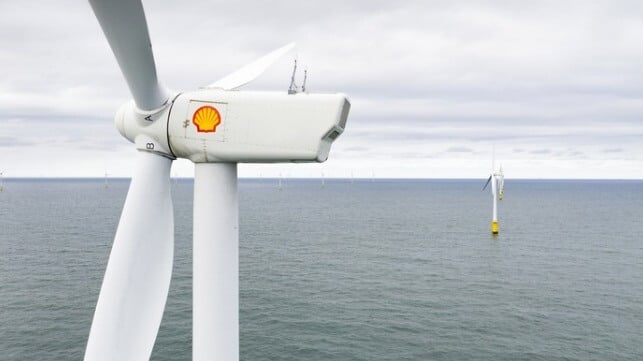
Google, which is expanding its use of renewable power for its operations, is reporting that its latest power agreement will be the first time a corporate power purchase agreement has extended the lifespan of an offshore wind farm. Google has entered into a power purchase agreement with Shell for the nearly 20-year-old Egmond aan Zee offshore wind farm taking up 100 percent of the site’s 108 MW capacity.
Egmond aan Zee was built as part of the NoordzeeWind joint venture with Vattenfall with Shell controlling a 50 percent share. The wind farm located approximately six miles from the coast began production in 2007 becoming the first large-scale commercial offshore wind farm to be built in the Dutch North Sea. Shell acquired full ownership of the wind farm in 2021.
Google’s newest power purchase agreement for the site will permit Shell to extend the lifespan of the offshore wind farm by at least four years beyond its original decommissioning date. According to Google, it permit enabled Shell to pursue permit extensions and invest in crucial upgrades.
Shell NoordzeeWind will be the first offshore wind farm to undergo a life extension in the Netherlands. Google says that it believes it is also the first that faced decommissioning and permit expirations, but will be extended through the corporate PPA.
To date, Google reports it has supported over 1 gigawatt of clean energy generation capacity in the Netherlands through PPAs. This investment in offshore wind reflects Google’s broader commitment to employ renewable energy. It hopes this effort will inspire similar partnerships giving new life to clean energy assets facing retirement.
At the beginning of 2024, Goggle reported adding over 700 MW of renewable energy agreements in Europe, including in Belgium, the Netherlands, Italy, and Poland. This included agreements with Shell and with Eneco, owners of the Crosswind & Ecowende joint ventures. Google said it would support 478 megawatts of carbon-free energy capacity with two new-to-the-grid offshore wind farms: HKN V and HKW VI.
Google last month also signed its first power purchase agreement for offshore wind energy in Taiwan and the Asia Pacific region. Google has committed to purchase renewable energy from the Fengmiao I offshore wind project being developed by Copenhagen Infrastructure Partners and due to begin generation in 2027.
North Star Delivery of 1st CSOV, the Grampian Kestrel, with Naming Ceremony
[By: North Star]
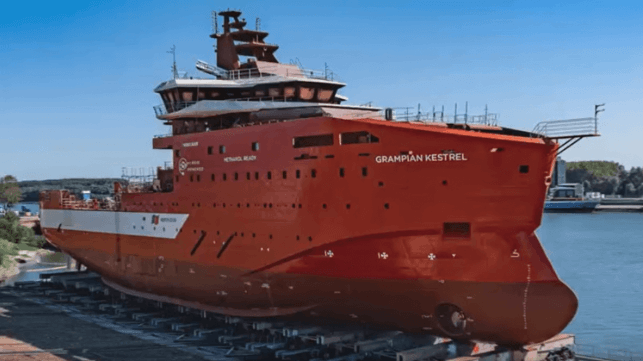
North Star has officially named its first commissioning service operation vessel (CSOV), the Grampian Kestrel. The vessel was named at a ceremony at VARD’s shipyard in Tomrefjord, Norway, Vard Langsten on Tuesday 6 May.
This milestone event reflects the organisation’s ongoing commitment to the delivery of high-quality offshore support vessels for the renewables sector. The Grampian Kestrel is the first of two CSOVs to be delivered this year, as part of the firm’s drive to support its growing portfolio of offshore wind clients with cutting-edge tonnage and exceptional service.
The new vessel, of VARD 4 22 design, will go on service with EnBW and precede the decade-long minimum charter contract the firm signed in 2024 to provide a SOV (of VARD 407 design) for the German energy utility firm’s He Dreiht wind farm in the North Sea.
A high specification vessel, the Grampian Kestrel has the ability to support all aspects of the wind farm’s life cycle, offering essential accommodation and logistics to support construction and commissioning works. Following this, it will lead EnBW’s operations and maintenance activities until the newbuild SOV is delivered in Q3 2026.
The VARD 4 22 design, has been developed in close collaboration with Vard Design in Ålesund, Norway, with new methanol ready hybrid-propulsion solutions and an increased number of single cabins, providing hotel quality accommodation for the technicians working in field. It also includes a high-performance daughter craft with space for a second to suit the clients’ operational needs.
“The Grampian Kestrel marks yet another milestone in our strategy towards making North Star a leading SOV provider in Europe,” said Gitte Gard Talmo, CEO at North Star.
“The vessel is built to service all aspects of an offshore windfarms’ lifecycle and has a competent North Star crew to ensure we deliver our services to the highest standard.
"We are proud to christen this future-ready vessel, which sets a new industry benchmark by becoming the world’s first to achieve Lloyd’s Register’s Cyber Resilience classification. This certification underscores our commitment to being a safe and reliable partner - for our employees, our clients, and the broader offshore wind industry.”
James Bradford, chief technology officer at North Star explained: “As part of its digital capabilities, North Star has made a substantial investment in the advanced automation and innovative solutions utilised across its renewables fleet, essential for monitoring performance and ensuring safe vessel operations.
“This included technologies such as digital twins, dynamic positioning software and the complex control systems connected to the Voith Schneider propulsion units, all designed to support operational safety and enhance crew wellbeing.”
Ms Gard Talmo added “This vessel and her world first accreditation were achieved in cooperation with VARD ship design. At North Star we know that industry collaboration is the key to success, and we truly look forward to delivering our services to our client, EnBW.”
Over the past three years, North Star has invested £270m in its commitment to build 40 offshore wind vessels by 2040. North Star’s offshore wind fleet now comprises eight vessels, including both delivered and in-build assets. The shipping firm has also placed 160 experienced seafarers to support its SOV fleet and will recruit a further 160 seafarers in the next three years to meet current contract charter commitments.
The Grampian Kestrel’s naming ceremony was attended by representatives from North Star, VARD, EnBW and other key stakeholders and was a celebration of the successful partnership between all parties involved and a recognition of the hard work that went into bringing the asset to life.
During the event, the godmother for the vessel was announced as Indu Vaidya, a board member at North Star and a Member of Management at Partners Group, one of the largest firms in the global private markets industry, acting on behalf of its clients. Investment from Partners Group has played a key role in North Star’s growth, with the firm implementing a transformational value creation plan to expand North Star's platform in Europe, grow its offshore wind fleet, and broaden its offering in renewables. Indu played a key role in the naming ceremony which also featured a local blessing.
VARD CEO, Cathrine K. Marti, added: “On behalf of everyone at VARD, I would like to congratulate North Star on their new cutting-edge vessel. Grampian Kestrel is a purpose-built CSOV, designed by North Star to meet North Star’s specific strategy and the demands of the offshore wind market.
“She is built for efficiency, comfort, and flexibility — and she is future-ready from day one.
“With key contributions from Vard Electro and Vard Interiors, this vessel reflects the strength of our integrated approach and our long-standing partnership with North Star. Congratulations once again. We wish Grampian Kestrel and her crew fair winds and following seas.”
The products and services herein described in this press release are not endorsed by The Maritime Executive.
DEME Completes Acquisition of Havfram to Expand Position for Offshore Wind
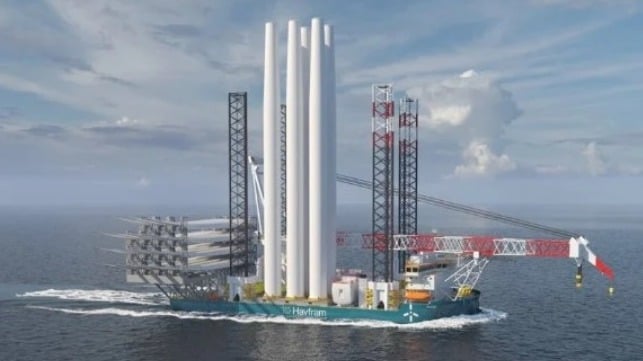
Belgium’s DEME Group which is an established leader for installations of offshore wind energy reported that it has completed the acquisition of Norway-based Havfram. The agreement to acquire the company was announced in April with DEME highlighting that it would expand its footprint in the offshore wind energy market and enhance its positioning in turbine and foundation installations.
Offshore wind energy is a fast-growing portion of DEME’s business with the company highlighting to investors in the first quarter that offshore wind and offshore energy accounted for approximately €2 billion of its revenues in 2024 or nearly half the group’s total revenues of €4.1 billion. It started in offshore wind in 2000 and says it has completed over 350 projects including for foundations, cables, turbine installation, and rock placement. It reported 37 percent growth in revenues from wind energy projects, having more than doubled in two years and a backlog of approximately €4.3 billion at the end of 2024. It however is one part of a group that has more than 100 vessels and is also active in environmental remediation, dredging, and marine infrastructure.
DEME called the acquisition of Havfram strategic citing 90 percent utilization of its assets for offshore wind energy in 2024. It is contracted to support some of the highest-profile projects both in Europe and North America, including Dominion Energy’s Coastal Virginia Wind Farm.
“DEME’s investment in Havfram underscores our unwavering belief in the immense potential of offshore wind infrastructure as a key element in the global energy transition,” said Luc Vandenbulcke, CEO of DEME on April 9 announcing the agreement. “This acquisition complements our fleet and will bolster our competitive edge in both turbine and foundation installations, enhancing our operational flexibility and interchangeability, and strengthening DEME's leadership position in the industry.”
The acquisition represented an aggregated transaction value of approximately €900 million, including the share purchase and the remaining capital expenditures needed to complete the construction of two installation vessels Havfram has on order in China. The shares were acquired from Sandbrook Capital, a private investment firm focused on climate infrastructure, and the Public Sector Pension Investment Board (PSP Investments), one of Canada’s largest pension investors.
Havfram announced in 2021 an agreement with J.P. Morgan to fund its expansion and the order of installation vessels. Two vessels were ordered from China’s CIMC Raffles using the GustoMSC NG20000X Jack-Up vessel design. The ships are reported to incorporate the latest battery hybrid drive train technology. Detailing the designs, Havfram had said the vessels would have the capability of installing offshore wind turbines with a rotor diameter of more than 300 meters, as well as XXL monopiles weighing up to 3,000 tons at water depths of up to 70 meters. Capacities were optimized for high variable deck load and the extreme lift heights expected over the next decade. The crane would have a lifting capacity of 3,250 tons.
DEME said that Havfram's state-of-the-art vessels would be seamlessly integrated with DEME's existing fleet. They are due for delivery in the fourth quarter of this year and early in 2026 with Havfram reporting it had already booked approximately €600 million in assignments between 2026 and 2030. Havfram in 2023 said it had options for two additional vessels. It had also expored building a vessel for the U.S. offshore market.
Havfram will be integrated into DEME’s Offshore Energy segment under the DEME brand. It plans to continue operations from Havfram’s current offices in Oslo, Norway. It said there would be no disruption to project planning for the Havfram’s assignments.

No comments:
Post a Comment