PAKISTAN
IFC to provide $400 million loan for Barrick's Reko Diq mine
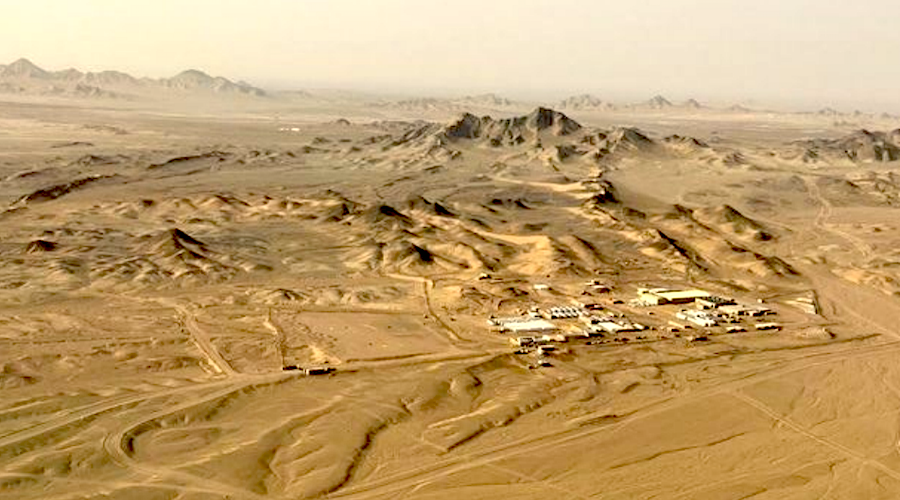
The International Finance Corporation will provide a $400 million subordinated loan for Pakistan’s Reko Diq copper-gold mine, according to an IFC disclosure on Friday.

The loan adds to a $300 million commitment announced in April, bringing IFC’s total financing for the project to $700 million. The estimated cost of the mine is $6.6 billion, to be funded through a mix of debt and equity from a consortium of lenders.
“The estimated total project cost is $6.6bn, and it will be financed using a combination of debt and equity,” the disclosure said, adding that other parallel lenders will provide the remaining debt financing.
This type of loan, known as subordinated debt, is typically repaid after other senior loans and helps absorb more risk, making it easier for other lenders to invest.
Other financiers, including the US EXIM Bank, Asian Development Bank, Export Development Canada and Japan’s JBIC, are also expected to join the financing package, project director Tim Cribb told Reuters in April. Term sheets are expected to close by early in the third quarter.
IFC chief Makhtar Diop said earlier this year that the institution was “doubling down” on Pakistan, with a focus on infrastructure, energy and natural resources.
Reko Diq, located in Balochistan, is one of the world’s largest undeveloped copper-gold deposits. It is being developed by Barrick Gold, which holds 50%, with the remainder split between Pakistan’s federal and provincial governments.
Production is expected to begin in 2028. Barrick has projected the mine will generate up to $74 billion in free cash flow over its estimated 37-year life.
(By Ariba Shahid; Editing by Louise Heavens and Matthew Lewis)
Pakistan Strikes Critical Win With Oil, Gas Wildcat Discovery

Pakistan’s state-owned Oil & Gas Development Company Limited (OGDCL) has hit a new reservoir of oil and gas at its Faakir-1 wildcat well—an onshore discovery in Sindh province that could help reverse the country’s deepening energy crisis.
Drilled to a depth of 4,185 meters, the well tested at 6.4 million cubic feet per day of gas and 55 barrels per day of condensate from the Lower Goru formation. It’s not a gusher by global standards, but it’s a critical domestic win. OGDCL called the find a “significant breakthrough” and a step forward in tapping the hydrocarbon potential of the Bitrisim block, which it operates with a 95% interest.
This comes as Pakistan stares down a widening gap between energy supply and demand, worsened by declining domestic gas production, record summer heat, and rising LNG import costs. With the country’s power grid stretched thin and foreign reserves under pressure, any indigenous hydrocarbon source is a strategic lifeline.
It’s also a rare bright spot in a high-risk environment that has long failed to attract foreign investment, despite the country's theoretical 235 trillion cubic feet of gas reserves. A 2023 auction for new blocks saw minimal interest. Security concerns, high development costs, and a lack of infrastructure have kept most global players on the sidelines.
That may change. Pakistan recently inked a deal with Turkey to jointly explore what some surveys suggest could be the world’s fourth-largest offshore oil and gas cache, located in the Makran and Indus basins. If confirmed, it could reshape Pakistan’s economy—one in four citizens lives below the poverty line—and drastically reduce its dependence on imports.
But for now, Faakir-1 is the win Pakistan needs: a homegrown find, drilled with in-house expertise, that signals there’s still life in the onshore sector—and still untapped energy under Pakistani soil.
By Julianne Geiger for Oilprice.com

No comments:
Post a Comment