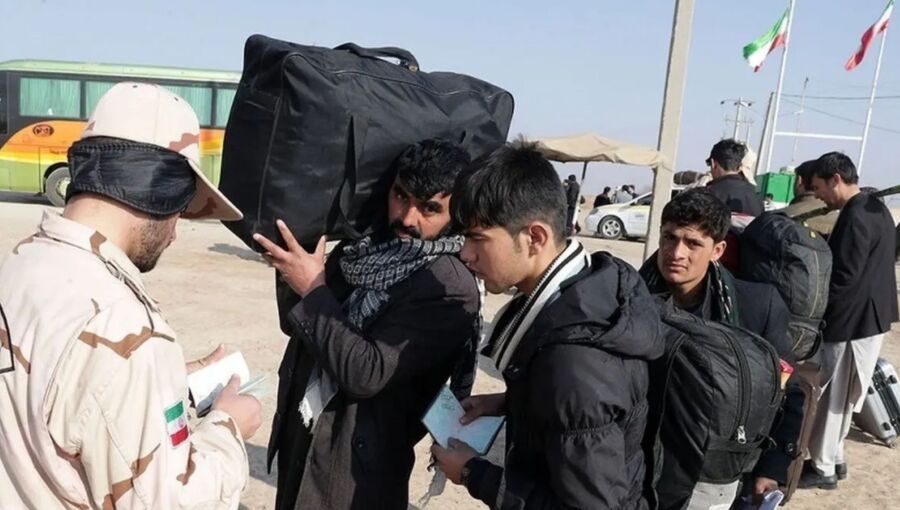
Israel’s military strikes on Iran and now Tehran’s knee-jerk expulsion of Afghan residents have created a catastrophic domino effect that threatens to unravel the Taliban’s fragile governance in Afghanistan, according to the number of people being forced across the border in recent days.
The Islamic Republic, previously reluctantly hosting an estimated 3.8mn displaced Afghans – the largest refugee population globally – has shifted from decades of relative tolerance to aggressive deportation policies in a matter of weeks. This accelerated reversal stems partly from Israel’s June 2025 strikes, which exacerbated Iran’s economic strain and fuelled the scapegoating of Afghans.
Following the Israeli strikes across Iran, Tehran is now enforcing draconian residency rules on the millions of Afghans residing in the country. Census documents granting minimal protection to 2mn Afghans were revoked in early 2025, and services like healthcare, education and property transactions are denied to undocumented migrants. The Interior Ministry explicitly ordered that only six narrow categories of Afghans may remain – primarily those with formal employment ties or political status – while all others "must leave the country."
Iran’s crackdown has triggered a humanitarian tsunami. So far, 88,000 Afghans were deported in a single week in June 2025, with border crossings such as Islam Qala processing 10,000 returnees daily. This is a prelude to the looming expulsion of up to 4mn undocumented Afghans by July 6, dwarfing the 1.3mn already deported from Pakistan. Returnees arrive destitute; Iranian authorities confiscate their savings and belongings during deportation, while Taliban officials lack even basic reception infrastructure.

The economic toll on Afghanistan – already reeling from a 30% GDP contraction since 2021 – is unsustainable. The regime cannot feed its current population, let alone absorb millions of penniless returnees. Compounding this, Iran’s abrupt termination of education for Afghan children with census documents has barred over 610,000 students from schools, including girls who fled the Taliban’s own education bans. This deliberate severing of lifelines deepens despair among families who migrated specifically for schooling or safety.
The Taliban’s legitimacy, already eroded by international isolation and internal fragmentation, faces three existential pressures from this crisis. First, the demographic deluge overwhelms its skeletal governance. With no capacity to provide food, water or shelter at border crossings, scenes of starvation and disease will shatter the regime’s religious pretensions. Secondly, security fractures as former soldiers, police and officials – targeted by the Taliban in 2021 – are forcibly returned. These groups form a natural recruitment pool for armed resistance movements like the Afghanistan Freedom Front, which warns of "chaos and instability." Thirdly, Iran’s charge that Afghans collaborated with Israel during the strikes has subjected returnees to Taliban suspicion, turning them into internal enemies.
Israel’s role in this chain reaction cannot be understated. The strikes on Iran’s nuclear and military infrastructure from June 12-24, 2025, inflicted tens of billions in damages, deepening Tehran’s economic crisis. The Islamic Republic responded by turning on the Afghan population following the sheer number of arrests of Afghans during the 12-day war with Israel. Within days of the ceasefire, Prosecutor General Mohammad Movahedi Azad explicitly linked deportations to alleged Afghan "collaboration with Israel," following reports of Israel paying Afghans a few thousand dollars each to take part in the assault, Iran claims.
The Taliban now confronts an impossible equation: Iran’s expulsions – propelled by Israeli-inflicted wounds – will flood Afghanistan with 2-4mn traumatised citizens while the regime lacks resources to support 10% of that number. Many of those returning were not even born in Afghanistan and have resided in Iran for at least two generations, when the Taliban controlled Kabul before the US invasion of the country in 2001.
As families starve in border camps and former officials potentially regroup for insurgency, the Taliban’s coercive control will disintegrate. The International Organisation for Migration’s warnings of "coercive regimes of forced returns" underscore a regional race to the bottom, with Pakistan, Turkey and Tajikistan accelerating deportations. Afghanistan’s implosion, once unthinkable, now appears inevitable within months – a grim testament to how Israel’s beef with Iran is now a ticking time bomb for the entirety of west, south and central Asia. Where the dominoes fall is anyone’s guess, but the unrecognised government in Kabul, still requesting its funds to be unfrozen, now faces the biggest challege of its short tenure.
Afghanistan: Surging Returns From Iran Overwhelm Fragile Support Systems, UN Agencies Warn
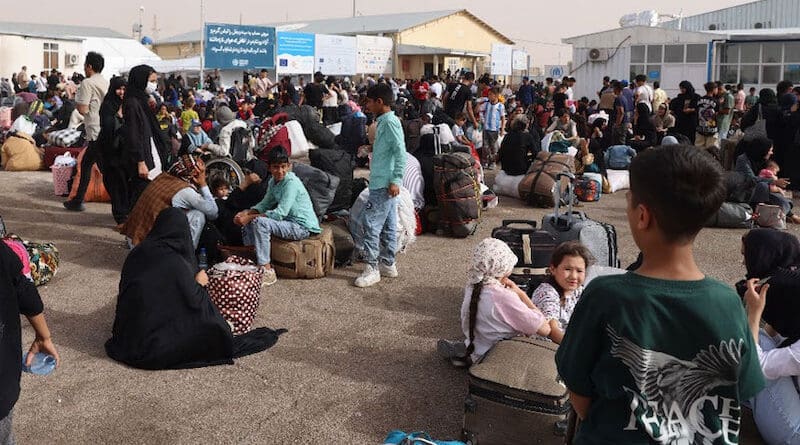
Afghans who have been deported from Iran gather at the Islam Qala border crossing in western Afghanistan. Photo Credit: UNHCR/Faramarz Barzin
By UN News
More than 700,000 Afghan migrants have returned from Iran so far this year, including 256,000 in June alone, the UN International Organization for Migration (IOM) reported on Monday, warning of immense pressures on Afghanistan’s overstretched support systems.
Ninety-nine per cent of the returnees were undocumented, and 70 per cent were forcibly returned, with a steep rise in families being deported – a shift from earlier months, when most returnees were single young men, according to the UN agency.
The rise follows a March decision by the Iranian Government requiring all undocumented Afghans to leave the country.
Conditions deteriorated further after the recent 12-day conflict between Iran and Israel, which caused the daily refugees crossings to skyrocket from about 5,000 to nearly 30,000, according to Arafat Jamal, the UN refugee agency (UNHCR) representative in Afghanistan.
“They are coming in buses and sometimes five buses arrive at one time with families and others and the people are let out of the bus and they are simply bewildered, disoriented, and tired and hungry as well,” he told UN News, describing the scene at a border crossing.
“This has been exacerbated by the war, but I must say it has been part of an underlying trend that we have seen of returns from Iran, some of which are voluntary, but a large portion were also deportations.”
Strain on aid efforts
Afghanistan, already grappling with economic collapse and chronic humanitarian crisis, is unprepared to absorb such large-scale returns.
The 2025 Humanitarian Needs and Response Plan calls for $2.42 billion in funding, but only 22.2 per cent has been secured to date.
“The scale of returns is deeply alarming and demands a stronger and more immediate international response,” said IOM Director General Amy Pope, “Afghanistan cannot manage this alone.”
Meanwhile, UNHCR alongside partners is working to address the urgent needs of those arriving – food, water, shelter, protection. However its programmes are also under severe strain due to limited funding.
The agency had to drastically reduce its cash assistance to returnee families at the border from $2,000 per family to just $156.
“We are not able to help enough women, and we are also hurting local communities,” added Mr. Jamal.
Some relief, but not enough
In response to growing crisis, the UN Central Emergency Response Fund (CERF) has allocated $1.7 million to the World Food Programme (WFP) to support drought-affected families in Faryab Province.
The funds will provide cash assistance to some 8,000 families in the region, where over a third of the rural population is already facing crisis or emergency levels of acute food insecurity.
“Acting ahead of predicted hazards to prevent or reduce humanitarian impacts on communities is more important than ever,” said Isabelle Moussard Carlsen, Head of OCHA Afghanistan, adding “when humanitarian action globally and in Afghanistan is underfunded…we must make the most of every dollar.”

No comments:
Post a Comment