Robert Reich
August 2, 2025
August 2, 2025
RAW STORY
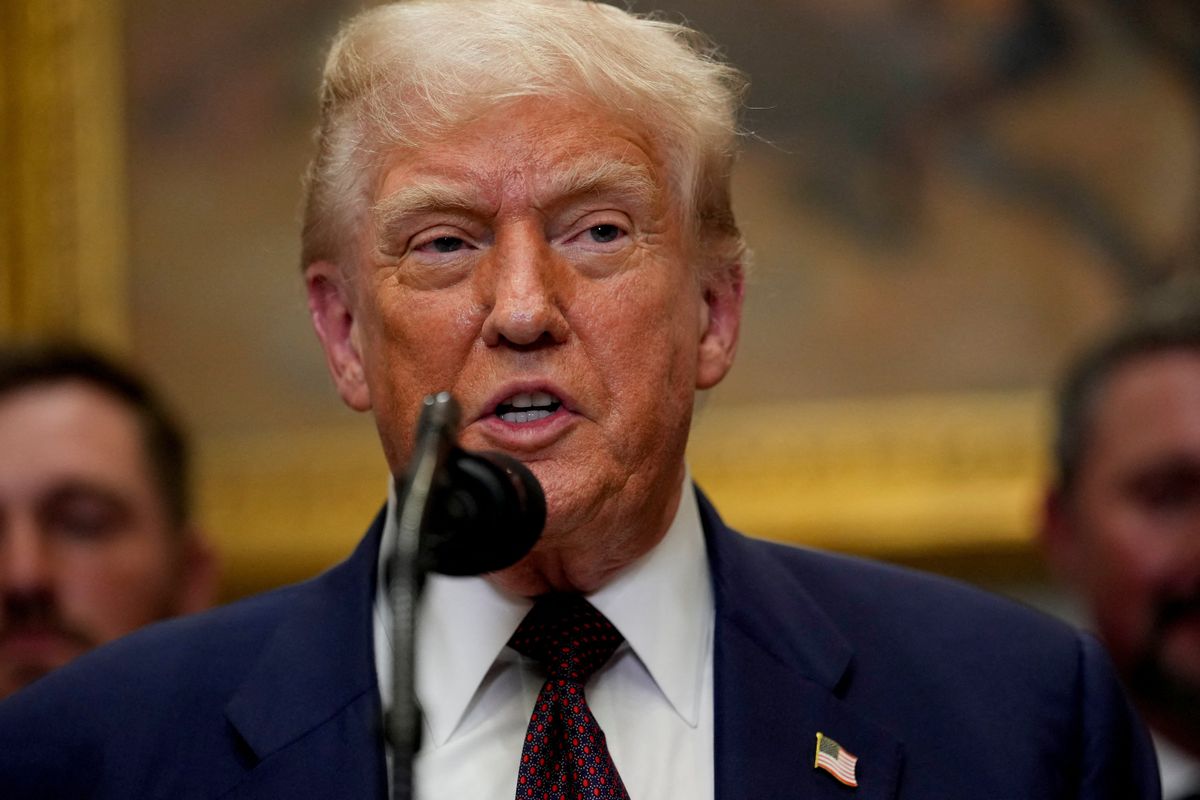
Donald Trump speaks at the White House. REUTERS/Kent Nishimura
I spent much of the 1990s as Secretary of Labor. One unit of the Labor Department is the Bureau of Labor Statistics.
I was instructed by my predecessors as well as by the White House, and by every labor economist and statistician I came in contact with, that one of my cardinal responsibilities was to guard the independence of the Bureau of Labor Statistics. Otherwise, this crown jewel of knowledge about jobs and the economy would be compromised. If politicized, it would no longer be trusted as a source of information.
So what does Trump do? With one fell swoop on Friday he destroyed the BLS.
Trump didn’t like the fact that the BLS revised downward its jobs reports for April and May.
Revisions in monthly jobs report are nothing new. They’re made when the Bureau gets more or better information over time.
Yet with no basis in fact, Trump charged that Erika McEntarfer, the Commissioner of Labor Statistics, “rigged” the data “to make the Republicans, and ME, look bad.”
Then he ordered her fired and replaced with someone else — presumably someone whose data Trump will approve of.
How can anyone in the future trust the data that emerges from the Bureau of Labor Statistics when the person in charge of the agency has to come up with data to Trump’s liking in order to stay in the job?
Answer: They cannot. Trump has destroyed the credibility of this extraordinarily important source of information.
When Trump doesn’t like the message he shoots the messenger, and replaces the messenger with someone who will come up with messages he approves of.
So we’re left without credible sources of information about what is really occurring.
Trump is in the process of trying to do the same thing with the Federal Reserve — demanding that Jerome Powell, the Fed’s chair, cut interest rates. Trump is even threatening Powell with a Trumped-up expose of Powell’s supposed extravagance in refurbishing the Fed as a means of forcing Powell to do his bidding or resign.
What happens to the Fed’s credibility if Powell give in to Trump? It loses it. In the future, we wouldn’t have confidence that the Fed is fighting inflation, as it should. And without that confidence, longer-term interest rates will spike because investors will assume that there’s no inflation cop on the beat, and therefore will demand a higher risk premium.
Trump hates facts that he disagrees with. That’s why he’s dismembering the Environmental Protection Agency, which has repeatedly shown that climate change isn’t a “hoax,” as Trump claims, but more like a national emergency.
It’s why Trump is attacking American universities, whose whose scientists are developing wind and solar energy, and whose historians have revealed America’s tragic history of racism and genocide of indigenous people.
He is killing off the Centers for Disease Control and the National Institutes of Health, which are showing the sources of sickness and disease and how we can guard against them.
This is a man and a regime that doesn’t want the public to know the truth. He is turning America into George Orwell’s dystopian 1984.
This is what fascism looks like, friends.
We must fight this with everything we have.Robert Reich is a professor emeritus of public policy at Berkeley and former secretary of labor. His writings can be found at https://robertreich.substack.com

Trump's Attack on BLS is Outrageous and Irresponsible, Union Leader Says
President has called to fire head of the Bureau of Labor Statistics over publication of employment data.
WASHINGTON - American Federation of Government Employees National President Everett Kelley today issued the following statement:
“President Trump’s attack on the Bureau of Labor Statistics and his call to fire the long-time federal worker who leads the agency over today’s publication of employment data is outrageous and irresponsible.
“The civil servants at BLS are not political actors. They are professionals committed to producing accurate, independent data, regardless of who is in power. BLS Commissioner Erika McEntarfer, who Trump now wants to fire, has worked in the federal government for more than two decades under multiple administrations.
“Presidents don’t get to blame career workers when their policies don’t deliver. That’s why America’s civil servants collect and report this data — to give the American people the truth, not to make sure the president looks good.
“AFGE stands with BLS workers and all federal employees who serve the American people with integrity.”
President has called to fire head of the Bureau of Labor Statistics over publication of employment data.
WASHINGTON - American Federation of Government Employees National President Everett Kelley today issued the following statement:
“President Trump’s attack on the Bureau of Labor Statistics and his call to fire the long-time federal worker who leads the agency over today’s publication of employment data is outrageous and irresponsible.
“The civil servants at BLS are not political actors. They are professionals committed to producing accurate, independent data, regardless of who is in power. BLS Commissioner Erika McEntarfer, who Trump now wants to fire, has worked in the federal government for more than two decades under multiple administrations.
“Presidents don’t get to blame career workers when their policies don’t deliver. That’s why America’s civil servants collect and report this data — to give the American people the truth, not to make sure the president looks good.
“AFGE stands with BLS workers and all federal employees who serve the American people with integrity.”
AFL-CIO Chief Economist on July Jobs Numbers
WASHINGTON - AFL-CIO Chief Economist Dr. Darrick Hamilton issued the following statement on the July jobs report from the Bureau of Labor Statistics:
Average job growth over the past three months has fallen to its lowest level in more than a decade. Core sectors of the economy—manufacturing, government, retail and mining—are hemorrhaging jobs. Without modest gains in the health care and social assistance sectors, we’d be facing three straight months of net job loss. And yet, in the midst of this instability, the administration has pushed through what will likely be the largest health care cut in American history. And this data doesn’t yet capture the ripple effects of mass federal layoffs or the full force of recent budget cuts.
Over the past two months, the Black unemployment rate has jumped by a full percentage point and now stands at more than 7%, nearly double the national rate of 4.2%. For Black workers, the picture is not only a reflection of persistent racial bias—it may also be a harbinger of something more ominous. This disparity isn’t new—it’s a long-standing feature of a racialized economy. But historically, sharp economic distress in Black communities has often preceded broader downturns. If that pattern holds, we’re not just looking at a crisis for Black workers—we’re staring down a warning for the entire economy.
This isn’t a neutral stagnation. It’s the product of policy choices: disinvestment in public infrastructure, attacks on the safety net and a governing strategy that protects concentrated wealth while leaving working people increasingly vulnerable.
WASHINGTON - AFL-CIO Chief Economist Dr. Darrick Hamilton issued the following statement on the July jobs report from the Bureau of Labor Statistics:
Average job growth over the past three months has fallen to its lowest level in more than a decade. Core sectors of the economy—manufacturing, government, retail and mining—are hemorrhaging jobs. Without modest gains in the health care and social assistance sectors, we’d be facing three straight months of net job loss. And yet, in the midst of this instability, the administration has pushed through what will likely be the largest health care cut in American history. And this data doesn’t yet capture the ripple effects of mass federal layoffs or the full force of recent budget cuts.
Over the past two months, the Black unemployment rate has jumped by a full percentage point and now stands at more than 7%, nearly double the national rate of 4.2%. For Black workers, the picture is not only a reflection of persistent racial bias—it may also be a harbinger of something more ominous. This disparity isn’t new—it’s a long-standing feature of a racialized economy. But historically, sharp economic distress in Black communities has often preceded broader downturns. If that pattern holds, we’re not just looking at a crisis for Black workers—we’re staring down a warning for the entire economy.
This isn’t a neutral stagnation. It’s the product of policy choices: disinvestment in public infrastructure, attacks on the safety net and a governing strategy that protects concentrated wealth while leaving working people increasingly vulnerable.
'Good question!’ Trump grilled on whether he'll keep firing people who deliver bad news
Sarah K. Burris
August 1, 2025
RAW STORY
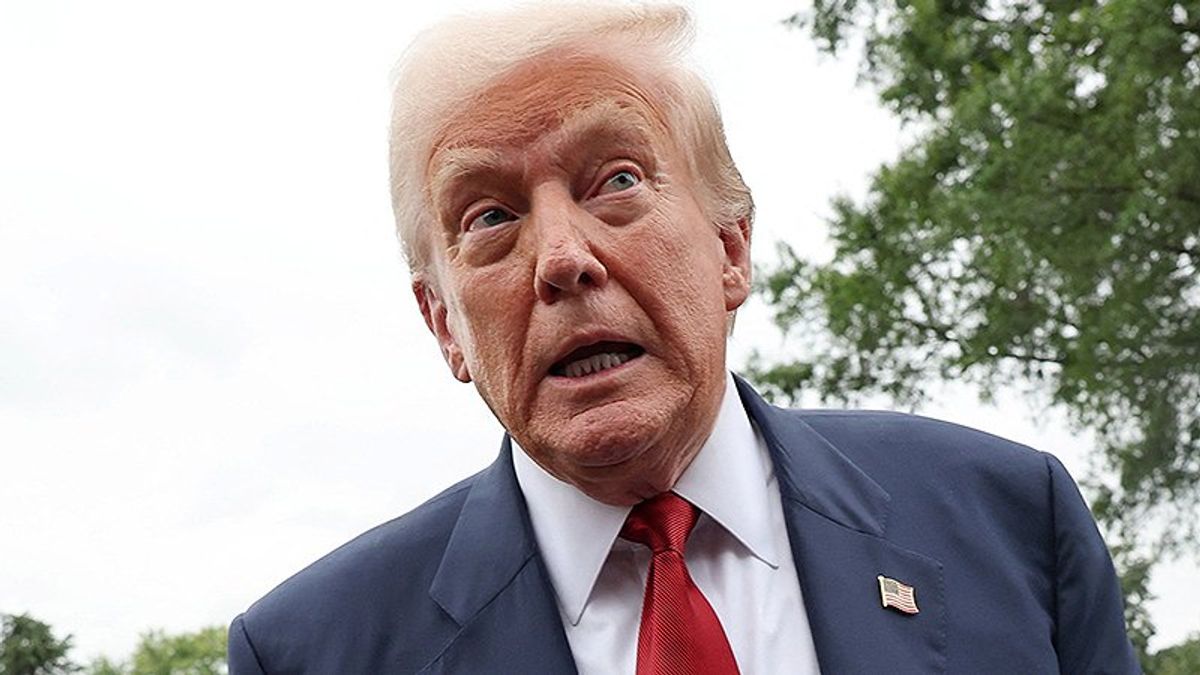
U.S. President Donald Trump speaks to reporters ahed of boarding Marine One to depart for New Jersey, at the White House in Washington, D.C., U.S., August 1, 2025. REUTERS/Jonathan Ernst
After going off on two long rants about his poor job numbers, President Donald Trump took questions from the press on his way to the helicopter en route to his Bedminster, New Jersey, country club. Among the comments he made was in agreement that no one should trust his job numbers.
The new report showed bad numbers for July, but also readjusted the May and June numbers, showing that the two were down significantly.
The first question that Trump got was about his claim that the jobs report from the Bureau of Labor Statistics was "rigged."
"Oh, yeah, I think so," Trump said as the reporter continued to ask his question. "If you look at before the election, the same kind of thing happened, and I think you'll see some very interesting information come out, but you have to have honest reports, and when you look at those numbers and you look at the numbers just before the election, they corrected it by 800,000 or 900,000 jobs."
The count was 818,000 jobs that accounted for a miscount over the year.
Among the last questions Trump took was from a reporter asking if people should fear for their jobs if they present "information or data you don't like" and whether people should trust the jobs reports in the future.
"I've always had a problem with these numbers! You know, I was thinking about it this morning. Before the numbers that came out, I said, 'Who is the person that does these numbers?' And then they gave me stats about before the election. I had a similar problem. I mean, she gave out numbers that were so good for the Democrats. It was like, unbelievable. And then right after the election, she corrected those numbers, I think, with almost 900,000 correction."
It was not an almost 900,000 correction.
"I think no one had ever seen anything like it. Well, today she did the same thing with the 253,000-whatever the number was. No, no. We need people we can trust. I mean, your question is a very good one. We need people we can trust," said Trump.
The new numbers showed glowing numbers for Trump for the first six months of his presidency, only being corrected in July.
Journalist Phil Mattingly commented earlier on Friday, "This displays an intentional ignorance toward the way economic data is collected, presented, revised, and the federal employees and appointees who do it. It's extraordinarily counterproductive and there's simply no net long game benefit to going down this path."
See the clips below or at the link here.
August 1, 2025
RAW STORY
U.S. President Donald Trump speaks to reporters ahed of boarding Marine One to depart for New Jersey, at the White House in Washington, D.C., U.S., August 1, 2025. REUTERS/Jonathan Ernst
After going off on two long rants about his poor job numbers, President Donald Trump took questions from the press on his way to the helicopter en route to his Bedminster, New Jersey, country club. Among the comments he made was in agreement that no one should trust his job numbers.
The new report showed bad numbers for July, but also readjusted the May and June numbers, showing that the two were down significantly.
The first question that Trump got was about his claim that the jobs report from the Bureau of Labor Statistics was "rigged."
"Oh, yeah, I think so," Trump said as the reporter continued to ask his question. "If you look at before the election, the same kind of thing happened, and I think you'll see some very interesting information come out, but you have to have honest reports, and when you look at those numbers and you look at the numbers just before the election, they corrected it by 800,000 or 900,000 jobs."
The count was 818,000 jobs that accounted for a miscount over the year.
Among the last questions Trump took was from a reporter asking if people should fear for their jobs if they present "information or data you don't like" and whether people should trust the jobs reports in the future.
"I've always had a problem with these numbers! You know, I was thinking about it this morning. Before the numbers that came out, I said, 'Who is the person that does these numbers?' And then they gave me stats about before the election. I had a similar problem. I mean, she gave out numbers that were so good for the Democrats. It was like, unbelievable. And then right after the election, she corrected those numbers, I think, with almost 900,000 correction."
It was not an almost 900,000 correction.
"I think no one had ever seen anything like it. Well, today she did the same thing with the 253,000-whatever the number was. No, no. We need people we can trust. I mean, your question is a very good one. We need people we can trust," said Trump.
The new numbers showed glowing numbers for Trump for the first six months of his presidency, only being corrected in July.
Journalist Phil Mattingly commented earlier on Friday, "This displays an intentional ignorance toward the way economic data is collected, presented, revised, and the federal employees and appointees who do it. It's extraordinarily counterproductive and there's simply no net long game benefit to going down this path."
See the clips below or at the link here.
'Awful': Trump’s latest move sparks fears of 'banana republic' tactics
Brad Reed,
Brad Reed,
Common Dreams
August 1, 2025
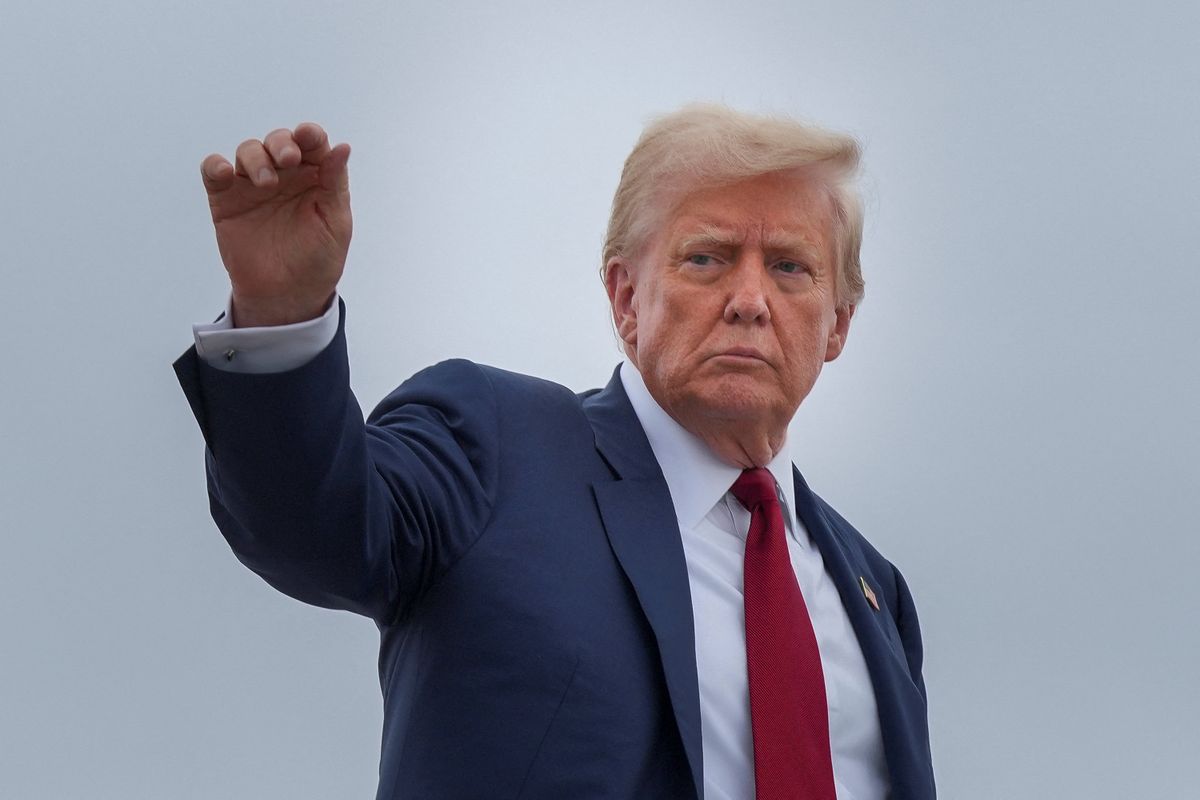
U.S. President Donald Trump boards Air Force One on his way to New Jersey from Joint Base Andrews, Maryland, U.S., August 1, 2025. REUTERS/Ken Cedeno
U.S. President Donald Trump stunned economics experts on Friday when he demanded the firing of Erika McEntarfer, the current commissioner of the Bureau of Labor Statistics.
In justifying his call to fire McEntarfer, Trump baselessly accused her of manipulating economic data to hurt him politically by releasing a report showing that the economy only added 73,000 jobs last month.
"McEntarfer said there were only 73,000 Jobs added (a shock!) but, more importantly, that a major mistake was made by them, 258,000 Jobs downward, in the prior two months," the president wrote on his Truth Social platform. "Similar things happened in the first part of the year, always to the negative."
Trump also accused a Federal Reserve committee of conspiring to help former Vice President Kamala Harris beat him last November, writing, "The Economy is BOOMING under 'TRUMP' despite a Fed that also plays games, this time with Interest Rates, where they lowered them twice, and substantially, just before the Presidential Election, I assume in the hopes of getting 'Kamala' elected."
Trump's angry rant about the purportedly rigged jobs report set off alarms among many economists who said that the president's actions would badly damage the credibility of any future numbers put out by the BLS and other agencies.
"Trump firing the BLS director for a bad jobs report—days after demanding the Smithsonian remove him from the list of impeached presidents—is banana republic stuff," remarked Jessica Riedl, an economist at the Manhattan Institute for Policy Research, a conservative think tank. "Trump just ensured that we should not trust any government data coming out of his administration. Why should we trust data from agencies in which the director's job depends on altering any bad economic news?"
Harvard University economist Jason Furman warned that Trump could be setting the stage for a major crisis if his administration really starts faking economic data.
"This is awful," he wrote on Bluesky. "Reliable economic data is a key strength of the U.S. economy. When Argentina and Greece faked economic data it contributed to major crises. I don't think Trump will be able to fake the data given the procedures. But there is now a risk plus an awful appearance."
Michael Strain, an economist at the conservative American Enterprise Institute, similarly emphasized how important it is that U.S. businesses have access to accurate economic data to make informed decisions.
"By incorrectly asserting that the data are biased, President Trump is undermining the integrity of the information that policymakers, businesses, households, and investors use to make important decisions that affect the welfare of the nation," he warned. "It is imperative that decision-makers understand that government statistics are unbiased and of the highest quality. By casting doubt on that, the president is damaging the United States."
Dean Baker, an economist at the progressive Center for Economic and Policy Research, questioned whether Trump's directive to his team to fire was a fresh sign of mental decline.
"I was thinking that someone on Trump's economic team could explain to him how the data are compiled, but I realize that they can't even explain to him that his big beautiful tariffs are taxes on us," he joked. "I guess in his current mental condition, Trump just can't learn anything new."
Baker then mused that the president's economic advisers could make "a picture book" so they can "explain to Trump how the data are collected."
Some Democratic politicians were also quick to hammer Trump for his call to fire McEntarfer simply for reporting disappointing jobs numbers.
"Instead of helping people get good jobs, Donald Trump just fired the statistician who reported bad jobs data that the wannabe king doesn't like," said Sen. Elizabeth Warren (D-Mass.).
Sen. Mark Warner (D-Va.) accused Trump of "trying to cook the books by firing the non-political career civil servant who oversees the data, because he wants to hide the truth of his failed policies from the American people."
And Senate Minority Leader Chuck Schumer (D-N.Y.) said that Trump's attack on McEntarfer was a classic sign of failed leadership.
"What does a bad leader do when they get bad news? Shoot the messenger," he said.
August 1, 2025
U.S. President Donald Trump boards Air Force One on his way to New Jersey from Joint Base Andrews, Maryland, U.S., August 1, 2025. REUTERS/Ken Cedeno
U.S. President Donald Trump stunned economics experts on Friday when he demanded the firing of Erika McEntarfer, the current commissioner of the Bureau of Labor Statistics.
In justifying his call to fire McEntarfer, Trump baselessly accused her of manipulating economic data to hurt him politically by releasing a report showing that the economy only added 73,000 jobs last month.
"McEntarfer said there were only 73,000 Jobs added (a shock!) but, more importantly, that a major mistake was made by them, 258,000 Jobs downward, in the prior two months," the president wrote on his Truth Social platform. "Similar things happened in the first part of the year, always to the negative."
Trump also accused a Federal Reserve committee of conspiring to help former Vice President Kamala Harris beat him last November, writing, "The Economy is BOOMING under 'TRUMP' despite a Fed that also plays games, this time with Interest Rates, where they lowered them twice, and substantially, just before the Presidential Election, I assume in the hopes of getting 'Kamala' elected."
Trump's angry rant about the purportedly rigged jobs report set off alarms among many economists who said that the president's actions would badly damage the credibility of any future numbers put out by the BLS and other agencies.
"Trump firing the BLS director for a bad jobs report—days after demanding the Smithsonian remove him from the list of impeached presidents—is banana republic stuff," remarked Jessica Riedl, an economist at the Manhattan Institute for Policy Research, a conservative think tank. "Trump just ensured that we should not trust any government data coming out of his administration. Why should we trust data from agencies in which the director's job depends on altering any bad economic news?"
Harvard University economist Jason Furman warned that Trump could be setting the stage for a major crisis if his administration really starts faking economic data.
"This is awful," he wrote on Bluesky. "Reliable economic data is a key strength of the U.S. economy. When Argentina and Greece faked economic data it contributed to major crises. I don't think Trump will be able to fake the data given the procedures. But there is now a risk plus an awful appearance."
Michael Strain, an economist at the conservative American Enterprise Institute, similarly emphasized how important it is that U.S. businesses have access to accurate economic data to make informed decisions.
"By incorrectly asserting that the data are biased, President Trump is undermining the integrity of the information that policymakers, businesses, households, and investors use to make important decisions that affect the welfare of the nation," he warned. "It is imperative that decision-makers understand that government statistics are unbiased and of the highest quality. By casting doubt on that, the president is damaging the United States."
Dean Baker, an economist at the progressive Center for Economic and Policy Research, questioned whether Trump's directive to his team to fire was a fresh sign of mental decline.
"I was thinking that someone on Trump's economic team could explain to him how the data are compiled, but I realize that they can't even explain to him that his big beautiful tariffs are taxes on us," he joked. "I guess in his current mental condition, Trump just can't learn anything new."
Baker then mused that the president's economic advisers could make "a picture book" so they can "explain to Trump how the data are collected."
Some Democratic politicians were also quick to hammer Trump for his call to fire McEntarfer simply for reporting disappointing jobs numbers.
"Instead of helping people get good jobs, Donald Trump just fired the statistician who reported bad jobs data that the wannabe king doesn't like," said Sen. Elizabeth Warren (D-Mass.).
Sen. Mark Warner (D-Va.) accused Trump of "trying to cook the books by firing the non-political career civil servant who oversees the data, because he wants to hide the truth of his failed policies from the American people."
And Senate Minority Leader Chuck Schumer (D-N.Y.) said that Trump's attack on McEntarfer was a classic sign of failed leadership.
"What does a bad leader do when they get bad news? Shoot the messenger," he said.
.png)

No comments:
Post a Comment