Trump's peace plan treated with 'extreme skepticism' abroad: foreign analyst
Robert Davis
September 30, 2025
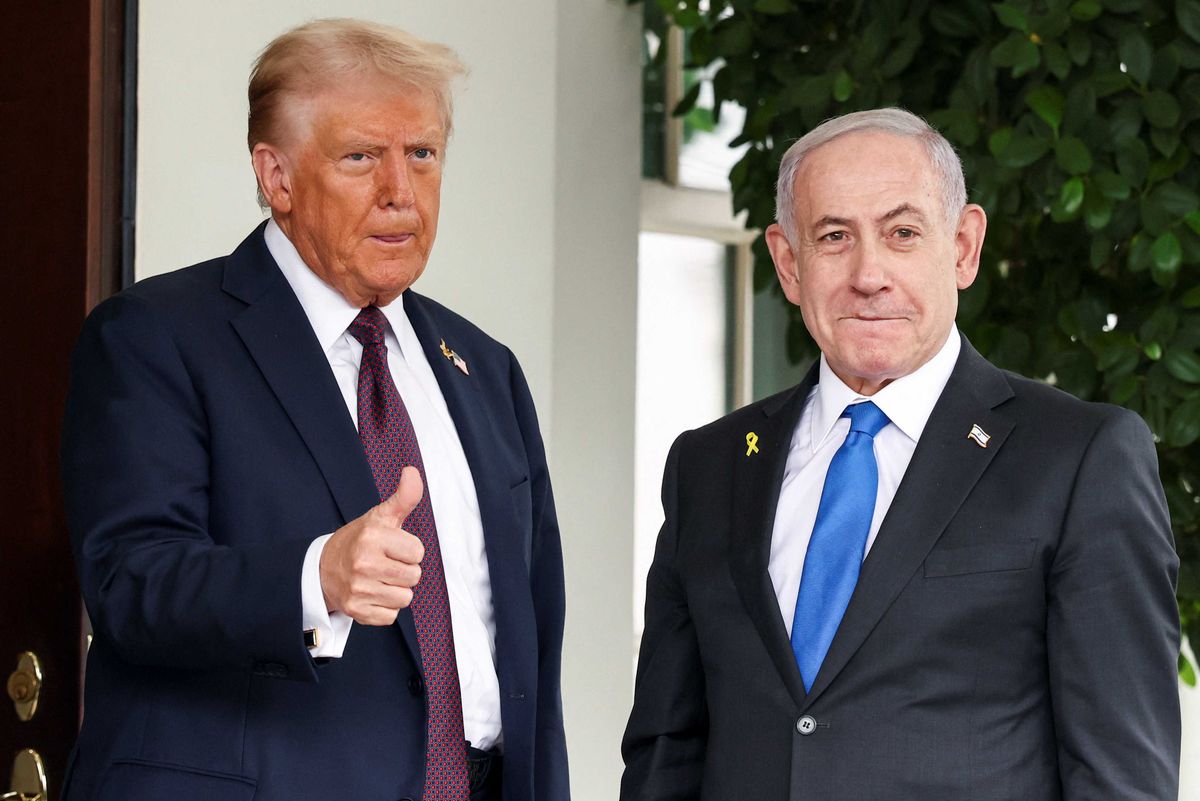
U.S. President Donald Trump gives a thumbs up as he welcomes Israeli Prime Minister Benjamin Netanyahu at the White House in Washington, D.C., U.S., September 29, 2025. REUTERS/Kevin Lamarque
President Donald Trump's peace plan for the war between Israel and Hamas is being met with "extreme skepticism" abroad, a foreign analyst revealed on Tuesday.
Jane Kinninmont, CEO at the United Nations Association, discussed Trump's peace plan during an interview on Times Radio. The plan involves creating an international peacekeeping commission headed by Trump and a complete overhaul of the Palestinian Authority, the governing body of Palestine.
She argued that while Israeli Prime Minister Benjamin Netanyahu and some Arab leaders have expressed support for Trump's "leadership" on the issue, there is still a "big divide" that needs to be crossed.
"There's certainly a lot that needs to be treated with extreme skepticism, but emphasizing that nearly the whole world does want to see an end to these daily killings, to the famine, and they want to see the hostages freed, and we need to find a way to get there," Kinninmont said.
Kinninmont added that one of the hang-ups for foreign leaders is whether the peace deal has teeth to protect a Palestinian state in a two-state solution scenario.
"Although we have seen Arab leaders come out in some numbers today to welcome the plan, if you look at what they have said carefully with a diplomat's eye to what is said and not said, they express their support for his leadership and his efforts for peace, but they also say they're ready to work with him on a full withdrawal of Israeli forces and a path to a two-state solution," Kinninmont said.
"That is very different from Netanyahu's reading of the plan, which is that it doesn't require that full Israeli withdrawal for quite a long time and that for him there will never be a Palestinian state," she continued. "So there's still a very big divide to be bridged."
Robert Davis
September 30, 2025
RAW STORY
U.S. President Donald Trump gives a thumbs up as he welcomes Israeli Prime Minister Benjamin Netanyahu at the White House in Washington, D.C., U.S., September 29, 2025. REUTERS/Kevin Lamarque
President Donald Trump's peace plan for the war between Israel and Hamas is being met with "extreme skepticism" abroad, a foreign analyst revealed on Tuesday.
Jane Kinninmont, CEO at the United Nations Association, discussed Trump's peace plan during an interview on Times Radio. The plan involves creating an international peacekeeping commission headed by Trump and a complete overhaul of the Palestinian Authority, the governing body of Palestine.
She argued that while Israeli Prime Minister Benjamin Netanyahu and some Arab leaders have expressed support for Trump's "leadership" on the issue, there is still a "big divide" that needs to be crossed.
"There's certainly a lot that needs to be treated with extreme skepticism, but emphasizing that nearly the whole world does want to see an end to these daily killings, to the famine, and they want to see the hostages freed, and we need to find a way to get there," Kinninmont said.
Kinninmont added that one of the hang-ups for foreign leaders is whether the peace deal has teeth to protect a Palestinian state in a two-state solution scenario.
"Although we have seen Arab leaders come out in some numbers today to welcome the plan, if you look at what they have said carefully with a diplomat's eye to what is said and not said, they express their support for his leadership and his efforts for peace, but they also say they're ready to work with him on a full withdrawal of Israeli forces and a path to a two-state solution," Kinninmont said.
"That is very different from Netanyahu's reading of the plan, which is that it doesn't require that full Israeli withdrawal for quite a long time and that for him there will never be a Palestinian state," she continued. "So there's still a very big divide to be bridged."
September 30, 2025

Israeli Prime Minister Benjamin Netanyahu gives opening remarks during a press conference with President Donald Trump conference in the State Dining Room of the White House in Washington, DC on September 29, 2025. [Stringer – Anadolu Agency]
Israeli Prime Minister Benjamin Netanyahu said Tuesday that a Palestinian state will not be established under US President Donald Trump’s Gaza plan, Anadolu reports.
In a video statement, Netanyahu stressed that he has not agreed to a Palestinian state in Washington talks, and it is not mentioned in the plan proposed by Trump.
“There is one thing we did say that we should strongly oppose a Palestinian state,” Netanyahu said.
The Israeli premier called his visit to the US “historic” and “excellent.”
“Instead of Hamas isolating us, we turned the tables and isolated Hamas. Now the entire world, including the Arab and Muslim world, is pressuring Hamas to accept the terms we set together with President Trump to release all our hostages, both living and deceased, while the IDF (Israeli army) remains in most of the Strip,” he said.
“On the contrary, President Trump added that if Hamas refuses, he will give Israel full backing to complete the military operation and eliminate them.”
Qatar confirmed on Tuesday that Hamas received Trump’s proposed plan from mediators late Monday.
Trump unveiled a 20-point plan on Monday to end Israel’s war on Gaza during a press conference with Netanyahu at the White House.
The plan calls for the release of all Israeli captives in exchange for dozens of Palestinian prisoners, complete disarmament of Hamas, a gradual withdrawal of Israeli forces, and the formation of a technocratic, apolitical Palestinian committee to govern the enclave.
The Israeli army has killed over 66,000 Palestinians, most of them women and children, in Gaza since October 2023. The relentless bombardment has rendered the enclave uninhabitable and led to starvation and the spread of diseases.
Why the Trump-Netanyahu ‘peace plan’ is a trap
The Trump-Netanyahu proposal lacks a clear timeline or method to enforce Israeli compliance. If Hamas rejects the plan, the U.S. says Israel can “finish the job” in Gaza. But if it accepts, it could plunge the Palestinian cause into deep uncertainty.

Hamas’s dilemma
The critical element in the plan is the endorsement from the Arab and Muslim countries, which Trump claimed to have secured. Leaders of Egypt, Jordan, Saudi Arabia, the UAE, and Turkey had met with Trump days before the plan was announced, and one of the conditions they had was for a diplomatic path to remain open for negotiating the establishment of a Palestinian state. Leaks from the meeting also said that Arab and Muslim countries would not only send forces to Gaza, but would also fund its reconstruction.
Between then and Trump’s announcement, there were several other meetings involving Netanyahu, Trump, U.S. Middle East envoy Steve Witkoff, Jared Kushner, and Israeli strategic affairs minister Ron Dermer. Israeli settler movements also sent a delegation to Washington to deliver their reservations regarding the plan to Netanyahu before his meeting with Trump.
On Tuesday, Qatar announced that it had handed Hamas the plan, and that the Arab countries were “in a state of consultation.” Late on Monday, the foreign ministers of Turkey, Jordan, Qatar, the UAE, Saudi Arabia, Indonesia, Pakistan, and Egypt released a joint statement that praised Trump’s “sincere efforts” to end the war in Gaza, adding that their countries were ready to “put the final touches” on the plan. The Palestinian Authority joined in the praise of Trump’s “sincere efforts,” without commenting on the specifics.
Meanwhile, Israeli far-right ministers Itamar Ben-Gvir and Bezalel Smotrich rejected the plan, insisting that Netanyahu has no legitimacy to end the war without “absolute victory.” Israeli opposition leader Yair Lapid offered Netanyahu a safety net in case his far-right allies withdraw from the cabinet, and captives’ families said in a statement that Trump’s plan was “the last chance” to return them home.
However, Trump’s plan doesn’t appear to be open to negotiations. On Tuesday, Trump told reporters at the White House that Hamas has three to four days to accept his plan. During his announcement on Monday, the U.S. president told Netanyahu directly that if Hamas refused the plan, he would back Israel “to finish the job.”
But the counterweight to Palestinian concerns and reservations over the plan is the reality of the ongoing devastation in Gaza, where the Israeli-induced famine has claimed the lives of over 420 Palestinians, mostly children, added to the more than 56,000 people killed by Israeli bombs.
If Hamas refuses the plan or presents reservations or amendments, both Israel and the U.S. would use it to absolve Israel of any responsibility for the coming phase of Gaza’s genocide. If it accepts, it would be walking the entire Palestinian cause into a future of uncertainty.
The Trump-Netanyahu proposal lacks a clear timeline or method to enforce Israeli compliance. If Hamas rejects the plan, the U.S. says Israel can “finish the job” in Gaza. But if it accepts, it could plunge the Palestinian cause into deep uncertainty.
September 30, 2025
MONDOWEISS
President Donald Trump and Israeli Prime Minister Benjamin Netanyahu speak in the Diplomatic Reception Room before a dinner, Monday, July 7, 2025, at the White House. (Official White House Photo by Daniel Torok)
The formula Donald Trump and Benjamin Netanyahu presented for the plan to end the war in Gaza is riddled with red flags. With the Israeli Prime Minister to his side, the U.S. President explained that his plan would include the release of all Israeli captives in Gaza, dead or alive, within the first 72 hours of the deal, while Israel would release 250 Palestinians from Israeli jails, and humanitarian aid would flow into the Strip.
That’s about the only part of the proposal that’s clear. Nothing else in the “20-point plan” has a clear timeframe or mechanism of implementation.
The plan includes a “gradual” withdrawal of Israeli forces from the Gaza Strip, leaving up to 70% of its surface under Israeli control. International and Arab forces would take over running Gaza, which would be “demilitarized,” and the “military capabilities” of Palestinian resistance factions would be destroyed. At least nominally, Palestinians would not be forcibly removed from Gaza en masse. An independent, apolitical commission would run Palestinians’ everyday lives and also run Gaza’s reconstruction.
The commission itself would be under the supervision of a “board of peace” headed by Trump himself. It would also include Palestinian and international members. Leaks that preceded the official announcement of the plan said that one of the names on the board would be former British Prime Minister Tony Blair, who reportedly participated in the drafting of the plan.
Hamas and the other Palestinian resistance factions would disarm, and those of its members who are willing to leave would be given safe passage to other countries. The factions would also be excluded from any participation in running Gaza, directly or indirectly. Most importantly, the Palestinian Authority would take no part in the administration of the Strip until it undergoes a series of “reforms.” Trump also said that Netanyahu does not accept a Palestinian state, and that Trump “understands that.”
Netanyahu, a staunch rejectionist of any end to the war that doesn’t result in unconditional surrender and total Israeli control over Gaza, announced his acceptance of the plan with visible satisfaction, adding that Trump was “the best friend” Israel has ever had.
And why wouldn’t he? The announced terms echo Netanyahu’s main conditions for ending the war — Hamas has to release the captives and disarm, a civil authority will run the strip, and Israel maintains ultimate control. The plan even appeases the right-wing Israeli demand to exclude any Palestinian political force from running the Strip, closing the door to Palestinian statehood. Yet Trump claims that the plan is meant to forever “end the conflict” in the Middle East.
On top of that, the plan’s lack of clear implementation mechanisms or time frames for anything except the release of Israeli captives brings to mind previous attempts to end the war in Gaza that Netanyahu systematically sabotaged, as recently admitted by former State Department spokesperson Mathew Miller. In January, Israel reached a ceasefire in Gaza that secured the release of most of the captives held by Hamas, including all civilian captives. Netanyahu continued to delay sending a negotiating team to Qatar or Egypt to initiate the second phase of negotiations aimed at definitively ending the war. Then, on March 18, Israel broke the ceasefire and resumed the bombing of Gaza.
The formula Donald Trump and Benjamin Netanyahu presented for the plan to end the war in Gaza is riddled with red flags. With the Israeli Prime Minister to his side, the U.S. President explained that his plan would include the release of all Israeli captives in Gaza, dead or alive, within the first 72 hours of the deal, while Israel would release 250 Palestinians from Israeli jails, and humanitarian aid would flow into the Strip.
That’s about the only part of the proposal that’s clear. Nothing else in the “20-point plan” has a clear timeframe or mechanism of implementation.
The plan includes a “gradual” withdrawal of Israeli forces from the Gaza Strip, leaving up to 70% of its surface under Israeli control. International and Arab forces would take over running Gaza, which would be “demilitarized,” and the “military capabilities” of Palestinian resistance factions would be destroyed. At least nominally, Palestinians would not be forcibly removed from Gaza en masse. An independent, apolitical commission would run Palestinians’ everyday lives and also run Gaza’s reconstruction.
The commission itself would be under the supervision of a “board of peace” headed by Trump himself. It would also include Palestinian and international members. Leaks that preceded the official announcement of the plan said that one of the names on the board would be former British Prime Minister Tony Blair, who reportedly participated in the drafting of the plan.
Hamas and the other Palestinian resistance factions would disarm, and those of its members who are willing to leave would be given safe passage to other countries. The factions would also be excluded from any participation in running Gaza, directly or indirectly. Most importantly, the Palestinian Authority would take no part in the administration of the Strip until it undergoes a series of “reforms.” Trump also said that Netanyahu does not accept a Palestinian state, and that Trump “understands that.”
Netanyahu, a staunch rejectionist of any end to the war that doesn’t result in unconditional surrender and total Israeli control over Gaza, announced his acceptance of the plan with visible satisfaction, adding that Trump was “the best friend” Israel has ever had.
And why wouldn’t he? The announced terms echo Netanyahu’s main conditions for ending the war — Hamas has to release the captives and disarm, a civil authority will run the strip, and Israel maintains ultimate control. The plan even appeases the right-wing Israeli demand to exclude any Palestinian political force from running the Strip, closing the door to Palestinian statehood. Yet Trump claims that the plan is meant to forever “end the conflict” in the Middle East.
On top of that, the plan’s lack of clear implementation mechanisms or time frames for anything except the release of Israeli captives brings to mind previous attempts to end the war in Gaza that Netanyahu systematically sabotaged, as recently admitted by former State Department spokesperson Mathew Miller. In January, Israel reached a ceasefire in Gaza that secured the release of most of the captives held by Hamas, including all civilian captives. Netanyahu continued to delay sending a negotiating team to Qatar or Egypt to initiate the second phase of negotiations aimed at definitively ending the war. Then, on March 18, Israel broke the ceasefire and resumed the bombing of Gaza.
Hamas’s dilemma
The critical element in the plan is the endorsement from the Arab and Muslim countries, which Trump claimed to have secured. Leaders of Egypt, Jordan, Saudi Arabia, the UAE, and Turkey had met with Trump days before the plan was announced, and one of the conditions they had was for a diplomatic path to remain open for negotiating the establishment of a Palestinian state. Leaks from the meeting also said that Arab and Muslim countries would not only send forces to Gaza, but would also fund its reconstruction.
Between then and Trump’s announcement, there were several other meetings involving Netanyahu, Trump, U.S. Middle East envoy Steve Witkoff, Jared Kushner, and Israeli strategic affairs minister Ron Dermer. Israeli settler movements also sent a delegation to Washington to deliver their reservations regarding the plan to Netanyahu before his meeting with Trump.
On Tuesday, Qatar announced that it had handed Hamas the plan, and that the Arab countries were “in a state of consultation.” Late on Monday, the foreign ministers of Turkey, Jordan, Qatar, the UAE, Saudi Arabia, Indonesia, Pakistan, and Egypt released a joint statement that praised Trump’s “sincere efforts” to end the war in Gaza, adding that their countries were ready to “put the final touches” on the plan. The Palestinian Authority joined in the praise of Trump’s “sincere efforts,” without commenting on the specifics.
Meanwhile, Israeli far-right ministers Itamar Ben-Gvir and Bezalel Smotrich rejected the plan, insisting that Netanyahu has no legitimacy to end the war without “absolute victory.” Israeli opposition leader Yair Lapid offered Netanyahu a safety net in case his far-right allies withdraw from the cabinet, and captives’ families said in a statement that Trump’s plan was “the last chance” to return them home.
However, Trump’s plan doesn’t appear to be open to negotiations. On Tuesday, Trump told reporters at the White House that Hamas has three to four days to accept his plan. During his announcement on Monday, the U.S. president told Netanyahu directly that if Hamas refused the plan, he would back Israel “to finish the job.”
But the counterweight to Palestinian concerns and reservations over the plan is the reality of the ongoing devastation in Gaza, where the Israeli-induced famine has claimed the lives of over 420 Palestinians, mostly children, added to the more than 56,000 people killed by Israeli bombs.
If Hamas refuses the plan or presents reservations or amendments, both Israel and the U.S. would use it to absolve Israel of any responsibility for the coming phase of Gaza’s genocide. If it accepts, it would be walking the entire Palestinian cause into a future of uncertainty.

No comments:
Post a Comment