Agricultural Modernization And Food Security In The Era Of CPEC – OpEd
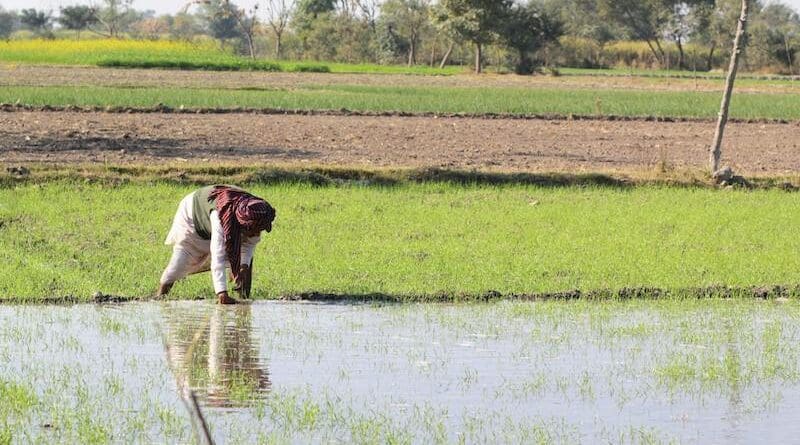
A farmer in Pakistan
By Dr. Hamza Khan
Pakistan has never experienced any other economic field other than agriculture as the primary source of its economy, and sustenance to millions of its population and also feeding an ever-growing population. Nevertheless, the industry has not been on the forefront of the world in terms of technology, productivity and sustainability decades ago.
The introduction of Phase 2 of China-Pakistan Economic Corridor (CPEC) has brought it to a crossroad now. It is one of the essential shifts of the priorities of the development of infrastructure to the industrial and agricultural development. Not only the Pakistani lands are transforming due to the partnership between China in terms of technological transfer, irrigation control, seed production and smart agriculture, but the food security policy of the country and its contribution to the world agriculture is also re-invented.
The essence of this transformation is the introduction of the modern technologies into the farming. The farmers in Pakistan have been applying the outdated ways of production that limit their production and divert their resources like water. It is changing that fact with the introduction of the Chinese knowledge in smart irrigation systems. Through precision irrigation e.g., drip and sprinkler irrigation, farmers are now able to reduce water wastage to bare minimum, and at the same time regulate crops to the brim of their water supply. This is a game changer to a nation that is water stressed like Pakistan and proper management of water can be the difference between excesses and deficits.
Along with using the agricultural irrigation, there has also been the introduction of better varieties of seeds which has brought a hope to the agricultural scene. Chinese research centres and Pakistani agricultural education institutions are active on hybrid kinds of seeds, which are even more resistant to disease, pests and climate stress. Harvest of these seeds are already being experienced: wheat, rice and cotton output per acre are growing in huge quantities. Farmers who were barely able to make ends meet are now reaping the benefits of their labour that are being compared to that of their peers in the region. Pakistan is also becoming a competitive nation in the global market particularly when it comes to its principal export like rice and cotton where the quality and quantity holds the greatest significance.
Besides the technical modernization, there are other socio-economic consequences of the modernization of agriculture with CPEC. The Chinese-Pakistani co-operative agricultural activities are not just the Chinese and Pakistani equipment and technological synergy, but turned out to be a reflection of long-term cooperation which has a beneficial impact on the two nations. China will be enjoying a stable supply of agriculture and a safe food chain in the market, whereas Pakistan will be enjoying a one trillion Chinese food market. The exports of rice, fruits and vegetables have already started to increase, and it is one of the signs that the diversified foreign exchange portfolio is starting. Agricultural produce is the sole means of getting out of the improvement of forex to any country experiencing balance-of-payments strains.
In the rural heartlands of Pakistan there is also trickle-down effects of modernization. Poverty is gradually eliminated in the rural region as farmers adopt the application of new technologies and achieve high yields. Rise in income levels will lead to more education means, healthcare, and infrastructure in villages. The transformation is not only economic, but to a large number of smallholders, the transformation is very personal. This was a region that used to be seen as a tedious and unstable source of livelihood is being reinstated to its pride and stability. The growth of the income is raising the living standards since there is a new dawn of hope among the rural communities that were left behind a long time ago.
One of the most positive transformations in this change is the increased involvement of the youth in the agribusiness in Pakistan. New entrepreneurs are infiltrating the agriculture sector with new concepts, such as digital solutions to connect farmers with markets, start-ups to offer precision tools, data analytics, and e-commerce platforms. Smart farming is no longer an abstract idea that is present in policy documents: it is being implemented. This is vital power and creativity to the existence of the industry. It is also revitalizing agriculture to be something worth to desire not as an ancient business but as a modern business worth venturing into.
Modernization does not apply to crops only. The cattle and dairy sectors which equally contribute to the Pakistani GDP are also evolving. Improved breeding, disease control programs, and advanced dairy management systems are also improving milk and meat production and most of these are of Chinese origin. Pakistan is making a step in the right direction of achieving food security to its rapidly growing population as the livestock is becoming more productive. These also help in stabilizing the prices of food such that when the demand is the highest still the basic commodities will not be denied to the poor.
The provincial cooperation can be considered another positive venue. The Sindh and Khyber Pakhtunkhwa and the state of Punjab are aligning their projects in agricultural development to a unified vision. Regional disparities are being minimized by applying concerted actions and knowledge exchange. Where Punjab is leading in regard to mechanization, Sindh in water management and KP in experimenting with high value crops and green house farming. This balance will ensure that development is not concentrated in one region but rather it will be spread uniformly all over the country.
The short run economic profit is not the only way to consider modernisation in Agriculture, but a long-term future of Pakistan. As the disruption of food supply chains and climate patterns continue to be more unpredictable in the world, a modern, robust agricultural system is emerging as a national security issue. The newly acquired technologies will make it easy to ensure that Pakistan will be in a position to feed its people, resist environmental shocks, as well as manage to compete in exports. In that aspect, modernization is not a luxury but it is a survival need.
Dr. Hamza Khan has a Ph.D. in International Relations, and focuses on contemporary issues related to Europe and is based in London, UK
Pakistan has never experienced any other economic field other than agriculture as the primary source of its economy, and sustenance to millions of its population and also feeding an ever-growing population. Nevertheless, the industry has not been on the forefront of the world in terms of technology, productivity and sustainability decades ago.
The introduction of Phase 2 of China-Pakistan Economic Corridor (CPEC) has brought it to a crossroad now. It is one of the essential shifts of the priorities of the development of infrastructure to the industrial and agricultural development. Not only the Pakistani lands are transforming due to the partnership between China in terms of technological transfer, irrigation control, seed production and smart agriculture, but the food security policy of the country and its contribution to the world agriculture is also re-invented.
The essence of this transformation is the introduction of the modern technologies into the farming. The farmers in Pakistan have been applying the outdated ways of production that limit their production and divert their resources like water. It is changing that fact with the introduction of the Chinese knowledge in smart irrigation systems. Through precision irrigation e.g., drip and sprinkler irrigation, farmers are now able to reduce water wastage to bare minimum, and at the same time regulate crops to the brim of their water supply. This is a game changer to a nation that is water stressed like Pakistan and proper management of water can be the difference between excesses and deficits.
Along with using the agricultural irrigation, there has also been the introduction of better varieties of seeds which has brought a hope to the agricultural scene. Chinese research centres and Pakistani agricultural education institutions are active on hybrid kinds of seeds, which are even more resistant to disease, pests and climate stress. Harvest of these seeds are already being experienced: wheat, rice and cotton output per acre are growing in huge quantities. Farmers who were barely able to make ends meet are now reaping the benefits of their labour that are being compared to that of their peers in the region. Pakistan is also becoming a competitive nation in the global market particularly when it comes to its principal export like rice and cotton where the quality and quantity holds the greatest significance.
Besides the technical modernization, there are other socio-economic consequences of the modernization of agriculture with CPEC. The Chinese-Pakistani co-operative agricultural activities are not just the Chinese and Pakistani equipment and technological synergy, but turned out to be a reflection of long-term cooperation which has a beneficial impact on the two nations. China will be enjoying a stable supply of agriculture and a safe food chain in the market, whereas Pakistan will be enjoying a one trillion Chinese food market. The exports of rice, fruits and vegetables have already started to increase, and it is one of the signs that the diversified foreign exchange portfolio is starting. Agricultural produce is the sole means of getting out of the improvement of forex to any country experiencing balance-of-payments strains.
In the rural heartlands of Pakistan there is also trickle-down effects of modernization. Poverty is gradually eliminated in the rural region as farmers adopt the application of new technologies and achieve high yields. Rise in income levels will lead to more education means, healthcare, and infrastructure in villages. The transformation is not only economic, but to a large number of smallholders, the transformation is very personal. This was a region that used to be seen as a tedious and unstable source of livelihood is being reinstated to its pride and stability. The growth of the income is raising the living standards since there is a new dawn of hope among the rural communities that were left behind a long time ago.
One of the most positive transformations in this change is the increased involvement of the youth in the agribusiness in Pakistan. New entrepreneurs are infiltrating the agriculture sector with new concepts, such as digital solutions to connect farmers with markets, start-ups to offer precision tools, data analytics, and e-commerce platforms. Smart farming is no longer an abstract idea that is present in policy documents: it is being implemented. This is vital power and creativity to the existence of the industry. It is also revitalizing agriculture to be something worth to desire not as an ancient business but as a modern business worth venturing into.
Modernization does not apply to crops only. The cattle and dairy sectors which equally contribute to the Pakistani GDP are also evolving. Improved breeding, disease control programs, and advanced dairy management systems are also improving milk and meat production and most of these are of Chinese origin. Pakistan is making a step in the right direction of achieving food security to its rapidly growing population as the livestock is becoming more productive. These also help in stabilizing the prices of food such that when the demand is the highest still the basic commodities will not be denied to the poor.
The provincial cooperation can be considered another positive venue. The Sindh and Khyber Pakhtunkhwa and the state of Punjab are aligning their projects in agricultural development to a unified vision. Regional disparities are being minimized by applying concerted actions and knowledge exchange. Where Punjab is leading in regard to mechanization, Sindh in water management and KP in experimenting with high value crops and green house farming. This balance will ensure that development is not concentrated in one region but rather it will be spread uniformly all over the country.
The short run economic profit is not the only way to consider modernisation in Agriculture, but a long-term future of Pakistan. As the disruption of food supply chains and climate patterns continue to be more unpredictable in the world, a modern, robust agricultural system is emerging as a national security issue. The newly acquired technologies will make it easy to ensure that Pakistan will be in a position to feed its people, resist environmental shocks, as well as manage to compete in exports. In that aspect, modernization is not a luxury but it is a survival need.
Dr. Hamza Khan has a Ph.D. in International Relations, and focuses on contemporary issues related to Europe and is based in London, UK

No comments:
Post a Comment