As Sudan’s Agony Deepens, Scrutiny Sharpens On UAE And Gold – Analysis
THE GNOMES OF ZURICH
November 6, 2025
By SwissInfo
Massacres in El-Fasher pushed Sudan’s war back into the global spotlight in Geneva. A Swiss NGO is drawing attention to the United Arab Emirates’ booming gold trade, widely seen as a key source of funding for the conflict.
By Dominique Soguel
The “tragedy unfolding in El-Fasher (in the west of Sudan) is not a surprise… it is the direct result of the international community’s inaction,” Sudan’s ambassador to the United Nations Office in Geneva, Hassan Hamid told journalists on Tuesday. He warned that “international silence has enabled genocide.”
Sudan’s war erupted in April 2023 from a power struggle between the army and the paramilitary Rapid Support Forces (RSF). The RSF, rooted in Darfur’s Janjaweed militias, which committed genocide against civilians in Darfur two decades ago, quickly drew in heavy weapons and foreign backing. The conflict has so far killed tens of thousands, displaced over 14 million people, and driven parts of the country into famine.
The most recent battle for Darfur has become one of the war’s bloodiest chapters. Last week, the RSF seized El-Fasher, the army’s last stronghold in the region, after weeks of siege and killings so vast that satellite images showed blood-stained streets visible from space. Rights groups warn of ethnic massacres and starvation echoing the atrocities of Darfur’s past.
In Geneva, the World Health Organization noted that more than 460 patients and their families were killed in a single hospital attack on October 28. The city’s maternity hospital was hit five times the same month.
“No patient or family member should fear for their lives as they seek health care, and health workers should not risk injury or death while saving lives,” WHO head of humanitarian operations Teresa Zakaria told reporters October 31. Less than half of Sudan’s health facilities remain functional.
Blood gold and the UAE
As Sudan’s war grinds on, its gold keeps glinting on global markets. Bern-based NGO Swissaid warns that profits from the country’s blood-soaked trade are still finding buyers, chiefly through the booming gold hub of the United Arab Emirates, which is alleged to back the RSF.
Sudanese envoy Hamid said, “The supplier of weapons to the Rapid Support Forces is well known. Unfortunately, it is the United Arab Emirates.”
The UAE’s involvement in Sudan’s war is complex and opaque. Abu Dhabi maintains strong economic ties with Sudan’s military-led government. Yet the Sudanese army alleges the UAE has covertly supported the rival RSF, which the United States and United Nations have accused of committing war crimes.
Data from Sudan’s central bank show the UAE imported about 90% of Sudan’s official gold exports in the first half of 2025, underscoring its deep economic influence. A recent investigation by The Sentry linked Dubai-based companies to laundering illicit Sudanese gold for RSF financiers.
The role of the Dubai gold market, one of the world’s largest, in enabling illicit financial flows contributed to the UAE’s placement on the Financial Action Task Force (FATF) grey list from 2022 to 2024. The FATF, which monitors global efforts to prevent money laundering and terrorist financing, cited weak oversight of gold trading and free zones as major vulnerabilities. The UAE was removed from the list after introducing regulations to align with OECD standards that prohibit the import of gold linked to conflict zones.
Citing UN Comtrade data, Swissaid notes the UAE imported 29 tonnes of gold directly from Sudan in 2024, up from 17 tonnes the year before, along with major volumes routed through Egypt (27 tonnes), Chad (18) and Libya (9). These flows, Swissaid says, underscore the UAE’s central role in financing Sudan’s war.
“It is conflict gold,” says Marc Ummel, head of commodities at Swissaid. “Whether it is coming from RSF or from the Sudanese Armed Forces (SAF). It’s clear that they are funding their engagement in the conflict with this trade of gold, although there are other elements, gold is the key element in Sudan.”
Since the oil collapse of the 2010s, Sudan’s political and military elites have built a war economy on gold, carving up mines and smuggling routes between rival armies. UN experts have long pointed to the gold sector as a vital source of revenue for both sides The warring parties’ economic networks are already the subject of US, EU and UN sanctions.
“The multi-billion-dollar trade of gold sustains and shapes Sudan’s conflict,” concluded the London-based think tank Chatham House in a March 2025 report.
Swissaid says its latest finding confirms “the role of the UAE as a major destination of Sudanese smuggled gold,” as documented in its African Gold Report published in May 2025. The NGO said the UAE’s 2024 data was briefly available on the UN Comtrade platform before being pulled down.
Swissinfo has reached out to the UAE and Comtrade for comment. Comtrade said the “data is being double-checked due to out of trends data in 2024”. The UAE is due for its next FATF review in 2026. It has publicly rejected allegations that it is providing arms or military support to any warring party in Sudan.
Swiss sanctions and the loophole problem
Switzerland, according to Swissaid, “is directly implicated” in Sudan’s “problematic trade,” because it imports gold from the UAE, of which the true origin is unknown. Between January and September 2025, Switzerland imported a total of 316 tonnes of gold worth CHF27 billion from the UAE. That’s more than double the annual average since 2015.
“When you look at the increase of the gold imported in Switzerland from the UAE it is really concerning,” Ummel told Swissinfo. “It is clear that we have a loophole here in the implementation of the sanctions. There is a risk that this gold has been imported in violation of the sanctions against Sudan and the Swiss authorities should investigate this.”
Switzerland has progressively updated its sanctions framework on Sudan to align with evolving UN Security Council resolutions and to tighten oversight of financial and arms-related flows.
The State Secretariat for Economic Affairs (SECO) notes that all gold importers in Switzerland are legally required to perform due diligence when sourcing from conflict-affected or high-risk areas to ensure their supply chains do not finance armed conflict.
Financial software
But SECO “cannot guarantee with certainty the origin of gold imported into Switzerland.”
Greater transparency in 2026?
Switzerland’s reporting dynamics are set to change.
The Swiss Precious Metals Association (ASMP) plans to introduce a public register in 2026 disclosing more information about the origin of metals processed here. Ummel warns the measure will have limited impact because Valcambi, a Switzerland-based refinery, which sources gold from the UAE, left the association, meaning its data won’t make the register.
Valcambin COO Simone Knobloch says the refinery has “had responsible sourcing procedures in place for decades” to prevent illegitimate gold of dubious origin from entering its supply chain, including from the UAE. The refinery only accepts shipments from two approved UAE refineries, verified annually and tracked through “a solution that allows us to store the details of subcontractors in a software that, thanks to a blockchain, ‘freezes’ the data of supplies received from approved refineries.”
All major Swiss refineries, including Valcambi and Metalor, are members of the London Bullion Market Association (LBMA). This requires compliance with OECD due diligence standards. Yet Swissaid warns that gaps in traceability, due diligence and transparency remain. The European Commission has also raised due diligence concerns over the standard.

SwissInfo
swissinfo is an enterprise of the Swiss Broadcasting Corporation (SBC). Its role is to inform Swiss living abroad about events in their homeland and to raise awareness of Switzerland in other countries. swissinfo achieves this through its nine-language internet news and information platform.
November 6, 2025
By SwissInfo
Massacres in El-Fasher pushed Sudan’s war back into the global spotlight in Geneva. A Swiss NGO is drawing attention to the United Arab Emirates’ booming gold trade, widely seen as a key source of funding for the conflict.
By Dominique Soguel
The “tragedy unfolding in El-Fasher (in the west of Sudan) is not a surprise… it is the direct result of the international community’s inaction,” Sudan’s ambassador to the United Nations Office in Geneva, Hassan Hamid told journalists on Tuesday. He warned that “international silence has enabled genocide.”
Sudan’s war erupted in April 2023 from a power struggle between the army and the paramilitary Rapid Support Forces (RSF). The RSF, rooted in Darfur’s Janjaweed militias, which committed genocide against civilians in Darfur two decades ago, quickly drew in heavy weapons and foreign backing. The conflict has so far killed tens of thousands, displaced over 14 million people, and driven parts of the country into famine.
The most recent battle for Darfur has become one of the war’s bloodiest chapters. Last week, the RSF seized El-Fasher, the army’s last stronghold in the region, after weeks of siege and killings so vast that satellite images showed blood-stained streets visible from space. Rights groups warn of ethnic massacres and starvation echoing the atrocities of Darfur’s past.
In Geneva, the World Health Organization noted that more than 460 patients and their families were killed in a single hospital attack on October 28. The city’s maternity hospital was hit five times the same month.
“No patient or family member should fear for their lives as they seek health care, and health workers should not risk injury or death while saving lives,” WHO head of humanitarian operations Teresa Zakaria told reporters October 31. Less than half of Sudan’s health facilities remain functional.
Blood gold and the UAE
As Sudan’s war grinds on, its gold keeps glinting on global markets. Bern-based NGO Swissaid warns that profits from the country’s blood-soaked trade are still finding buyers, chiefly through the booming gold hub of the United Arab Emirates, which is alleged to back the RSF.
Sudanese envoy Hamid said, “The supplier of weapons to the Rapid Support Forces is well known. Unfortunately, it is the United Arab Emirates.”
The UAE’s involvement in Sudan’s war is complex and opaque. Abu Dhabi maintains strong economic ties with Sudan’s military-led government. Yet the Sudanese army alleges the UAE has covertly supported the rival RSF, which the United States and United Nations have accused of committing war crimes.
Data from Sudan’s central bank show the UAE imported about 90% of Sudan’s official gold exports in the first half of 2025, underscoring its deep economic influence. A recent investigation by The Sentry linked Dubai-based companies to laundering illicit Sudanese gold for RSF financiers.
The role of the Dubai gold market, one of the world’s largest, in enabling illicit financial flows contributed to the UAE’s placement on the Financial Action Task Force (FATF) grey list from 2022 to 2024. The FATF, which monitors global efforts to prevent money laundering and terrorist financing, cited weak oversight of gold trading and free zones as major vulnerabilities. The UAE was removed from the list after introducing regulations to align with OECD standards that prohibit the import of gold linked to conflict zones.
Citing UN Comtrade data, Swissaid notes the UAE imported 29 tonnes of gold directly from Sudan in 2024, up from 17 tonnes the year before, along with major volumes routed through Egypt (27 tonnes), Chad (18) and Libya (9). These flows, Swissaid says, underscore the UAE’s central role in financing Sudan’s war.
“It is conflict gold,” says Marc Ummel, head of commodities at Swissaid. “Whether it is coming from RSF or from the Sudanese Armed Forces (SAF). It’s clear that they are funding their engagement in the conflict with this trade of gold, although there are other elements, gold is the key element in Sudan.”
Since the oil collapse of the 2010s, Sudan’s political and military elites have built a war economy on gold, carving up mines and smuggling routes between rival armies. UN experts have long pointed to the gold sector as a vital source of revenue for both sides The warring parties’ economic networks are already the subject of US, EU and UN sanctions.
“The multi-billion-dollar trade of gold sustains and shapes Sudan’s conflict,” concluded the London-based think tank Chatham House in a March 2025 report.
Swissaid says its latest finding confirms “the role of the UAE as a major destination of Sudanese smuggled gold,” as documented in its African Gold Report published in May 2025. The NGO said the UAE’s 2024 data was briefly available on the UN Comtrade platform before being pulled down.
Swissinfo has reached out to the UAE and Comtrade for comment. Comtrade said the “data is being double-checked due to out of trends data in 2024”. The UAE is due for its next FATF review in 2026. It has publicly rejected allegations that it is providing arms or military support to any warring party in Sudan.
Swiss sanctions and the loophole problem
Switzerland, according to Swissaid, “is directly implicated” in Sudan’s “problematic trade,” because it imports gold from the UAE, of which the true origin is unknown. Between January and September 2025, Switzerland imported a total of 316 tonnes of gold worth CHF27 billion from the UAE. That’s more than double the annual average since 2015.
“When you look at the increase of the gold imported in Switzerland from the UAE it is really concerning,” Ummel told Swissinfo. “It is clear that we have a loophole here in the implementation of the sanctions. There is a risk that this gold has been imported in violation of the sanctions against Sudan and the Swiss authorities should investigate this.”
Switzerland has progressively updated its sanctions framework on Sudan to align with evolving UN Security Council resolutions and to tighten oversight of financial and arms-related flows.
The State Secretariat for Economic Affairs (SECO) notes that all gold importers in Switzerland are legally required to perform due diligence when sourcing from conflict-affected or high-risk areas to ensure their supply chains do not finance armed conflict.
Financial software
But SECO “cannot guarantee with certainty the origin of gold imported into Switzerland.”
Greater transparency in 2026?
Switzerland’s reporting dynamics are set to change.
The Swiss Precious Metals Association (ASMP) plans to introduce a public register in 2026 disclosing more information about the origin of metals processed here. Ummel warns the measure will have limited impact because Valcambi, a Switzerland-based refinery, which sources gold from the UAE, left the association, meaning its data won’t make the register.
Valcambin COO Simone Knobloch says the refinery has “had responsible sourcing procedures in place for decades” to prevent illegitimate gold of dubious origin from entering its supply chain, including from the UAE. The refinery only accepts shipments from two approved UAE refineries, verified annually and tracked through “a solution that allows us to store the details of subcontractors in a software that, thanks to a blockchain, ‘freezes’ the data of supplies received from approved refineries.”
All major Swiss refineries, including Valcambi and Metalor, are members of the London Bullion Market Association (LBMA). This requires compliance with OECD due diligence standards. Yet Swissaid warns that gaps in traceability, due diligence and transparency remain. The European Commission has also raised due diligence concerns over the standard.
SwissInfo
swissinfo is an enterprise of the Swiss Broadcasting Corporation (SBC). Its role is to inform Swiss living abroad about events in their homeland and to raise awareness of Switzerland in other countries. swissinfo achieves this through its nine-language internet news and information platform.
How The RSF Takeover Of El-Fasher Compounded The Suffering Of Sudan’s Children – Analysis
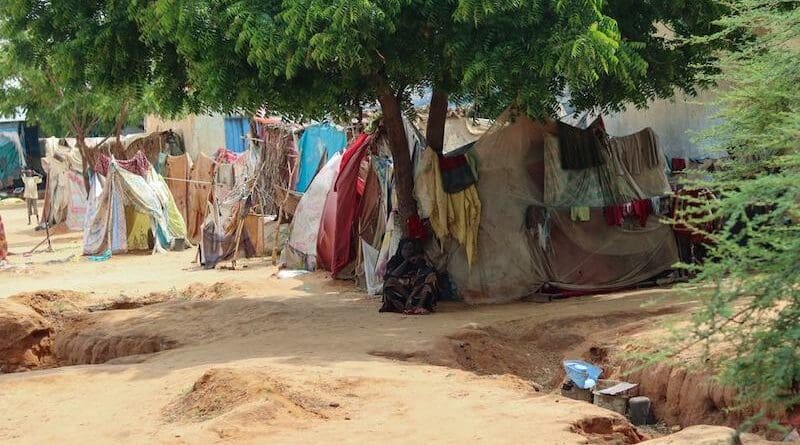
Children sit beside makeshift tents in El Fasher, North Darfur, Sudan.
Photo Credit: UNICEF
November 6, 2025
November 6, 2025
By Anan Tello
In the dust-choked streets of El-Fasher in western Sudan, children cling to the hands of younger siblings as they flee the only homes they have ever known, their eyes wide with fear and hunger, many without parents.
For nearly 18 months, El-Fasher has been under siege, trapped between the warring Rapid Support Forces and the Sudanese Armed Forces in a battle for control.
Since the RSF seized the North Darfur capital on Oct. 26, roughly 750 unaccompanied children have escaped to nearby towns, the Darfur Displaced and Refugees Coordination Committee told Saudi Arabia’s Al-Hadath TV on Nov. 3.
Their flight comes amid growing reports of atrocities and despair.
“This remains one of the worst child protection and nutrition crises in Sudan,” Dr. Aman Alawad, Sudan country director with the US-based NGO MedGlobal, told Arab News.
“The city has now fallen under the control of the Rapid Support Forces after nearly 18 months of siege and intense fighting. More than 130,000 children remain trapped in and around the city. Food, water, and health services have collapsed.”
Harrowing accounts are emerging from Darfur. Survivors told AFP on Nov. 1 that RSF fighters had separated families and killed children in front of their parents.
The UN children’s fund, UNICEF, estimates that among the 260,000 people still trapped in El-Fasher, about half — roughly 130,000 — are children. All remain “at high risk of grave rights violations,” including abduction, killing, maiming, and sexual violence.
More than 60,000 people have fled El-Fasher since its capture by the RSF, according to the UN refugee agency, UNHCR. Many are now sheltering in Tawila, about 60 kilometers west of the city. More are expected to arrive in nearby localities in the coming months.
Food insecurity has already reached catastrophic levels. Rates of severe acute malnutrition have doubled in the past year, Alawad said, while humanitarian access “remains extremely limited” amid a surge in displacement.
MedGlobal is expanding nutrition and health programs “to support newly displaced families arriving in the Northern State, where we are expecting a (steady influx) of (internally displaced persons) of up to 30,000 within the next three months.”
“We are also expanding health, water, and sanitation activities in affected localities, as we anticipate a significant rise in general acute malnutrition including both severe and moderate cases among children,” Alawad added.
The World Food Programme has warned that Sudan risks becoming the world’s largest hunger crisis in recent history, with more than one in three children facing acute malnutrition — well above the 20 percent threshold for famine.
On Nov. 3, the Integrated Food Security Phase Classification reported that more than 21 million people in Sudan were suffering from high levels of acute food insecurity as of September 2025.
Famine is already underway and expected to persist through January 2026 in El-Fasher, Kadugli, and 20 areas across Greater Darfur and Greater Kordofan.
It was first declared in El-Fasher’s Zamzam displacement camp in August 2024, one of the world’s most severe hunger emergencies. But even before the city fell to the RSF, aid groups had sounded the alarm.
On Aug. 1, 2024, Stephane Doyon, who leads Medecins Sans Frontieres’ emergency response in Sudan, said many children in El-Fasher were already “at death’s door” as paramilitary fighters blocked aid convoys outside the city.
Those still trapped face famine-like conditions, a total collapse of healthcare, and no safe escape routes. The blockade and fighting have decimated what little infrastructure remains.
“Hospitals are damaged, supplies are exhausted, and the few remaining health workers are operating without power, fuel, or essential medicines,” Alawad said.
Since the RSF takeover, he added, “there are credible reports of killings, sexual violence, and the forced recruitment of children.”
Medical services have been decimated. On Oct. 28, RSF fighters reportedly stormed the Saudi Maternity Hospital, killing more than 460 patients and companions.
Tedros Adhanom Ghebreyesus, director-general of the World Health Organization, said that before the attack, the WHO had already verified 185 assaults on health facilities since the start of the war, resulting in 1,204 deaths.
Reports of atrocities surged after the RSF captured El-Fasher, with graphic videos, allegedly filmed by RSF fighters themselves, circulating on social media.
Families attempting to flee face “grave risks,” Alawad said, with attacks reported along the main displacement routes. He called for “immediate humanitarian access and safe corridors to save lives and protect civilians.”
Although communication networks remain down, the UN says credible accounts describe summary executions, house-to-house raids, and assaults on civilians fleeing El-Fasher.
The UN human rights office said it received “distressing videos” showing dozens of unarmed men shot dead or surrounded by RSF fighters accusing them of being government soldiers. Hundreds of people have reportedly been detained while trying to flee, including a journalist.
“The risk of further large-scale, ethnically motivated violations and atrocities in El-Fasher is mounting by the day,” Volker Turk, the UN high commissioner for human rights, said in a statement, calling for “urgent and concrete action” to protect civilians.
RSF leader Mohamed Hamdan Dagalo promised on Oct. 30 to investigate what he called violations by his fighters. The next day, the RSF said several fighters accused of abuses had been arrested, AFP reported.
The prosecutor’s office of the International Criminal Court warned on Nov. 3 that atrocities committed in El-Fasher could constitute war crimes and crimes against humanity.
Those who reached safety have described harrowing journeys marked by theft, beatings, and murder. One mother of three told Save the Children: “We’ve been walking for the past four days from El-Fasher.
“A group of motorbike riders met us on the way. They took our luggage and threw our clothes and belongings onto thorn bushes, scattering everything along the road. They took my money and even my phone. I was beaten — my ear still hurts.”
She added: “They beat some people and battered them in front of us. They killed people and insulted us a lot.”
Another mother of six described how her family survived the siege. “We hid the children in trenches, and we ran into abandoned buildings during the attacks,” she said. “After that, we just ate umbaz (animal feed).”
Save the Children said women fleeing with their children to Tawila walked for days without food or water and are now entirely dependent on aid that “was already stretched before the latest escalation in violence in North Darfur.”
As the crisis deepens, relief efforts remain drastically underfunded. Sudan’s $4.2 billion humanitarian plan for 2025 is only 25 percent financed, according to UN humanitarian coordinator Denise Brown.
Local and international aid groups warn that the world’s inaction is compounding the crisis.
Sudan is experiencing what the UN calls the world’s largest child-displacement crisis, with more than 6.5 million children forced from their homes since fighting erupted in Khartoum in April 2023.
According to the International Organization for Migration, more than half of all internally displaced people are under the age of 18. Displacement has left them vulnerable to attack.
A UNICEF report released in March found that hundreds of children have been raped and sexually assaulted by armed men.
Since the beginning of last year, 221 child rape cases have been recorded across nine Sudanese states, including 16 children under 5, and four infants just a year old.
Beyond hunger and violence, millions are also losing access to education.
In September, as children elsewhere returned to school, more than three-quarters of Sudan’s school-age children remained at home or in temporary shelters — many unlikely to ever return to class, according to Save the Children.
A recent analysis by the Global Education Cluster found that about 13 million of Sudan’s 17 million school-age children are not attending classes, making it one of the world’s worst education crises.
That figure includes 7 million enrolled students unable to attend due to conflict or displacement, and 6 million who were never enrolled and risk losing the chance to learn altogether.
All 13 million have been out of school since at least April 2023, with more than two years of education lost to war.
But even before the conflict, nearly 7 million children were already out of school in a country long burdened by poverty and instability.
“Children have already missed years of critical education, with terrible consequences for their long-term well-being,” Mohamed Abdiladif, country director for Save the Children in Sudan, said in a statement in September.
“We are incredibly concerned for these children’s futures — and the future of Sudan — if this conflict doesn’t end now.”
In the dust-choked streets of El-Fasher in western Sudan, children cling to the hands of younger siblings as they flee the only homes they have ever known, their eyes wide with fear and hunger, many without parents.
For nearly 18 months, El-Fasher has been under siege, trapped between the warring Rapid Support Forces and the Sudanese Armed Forces in a battle for control.
Since the RSF seized the North Darfur capital on Oct. 26, roughly 750 unaccompanied children have escaped to nearby towns, the Darfur Displaced and Refugees Coordination Committee told Saudi Arabia’s Al-Hadath TV on Nov. 3.
Their flight comes amid growing reports of atrocities and despair.
“This remains one of the worst child protection and nutrition crises in Sudan,” Dr. Aman Alawad, Sudan country director with the US-based NGO MedGlobal, told Arab News.
“The city has now fallen under the control of the Rapid Support Forces after nearly 18 months of siege and intense fighting. More than 130,000 children remain trapped in and around the city. Food, water, and health services have collapsed.”
Harrowing accounts are emerging from Darfur. Survivors told AFP on Nov. 1 that RSF fighters had separated families and killed children in front of their parents.
The UN children’s fund, UNICEF, estimates that among the 260,000 people still trapped in El-Fasher, about half — roughly 130,000 — are children. All remain “at high risk of grave rights violations,” including abduction, killing, maiming, and sexual violence.
More than 60,000 people have fled El-Fasher since its capture by the RSF, according to the UN refugee agency, UNHCR. Many are now sheltering in Tawila, about 60 kilometers west of the city. More are expected to arrive in nearby localities in the coming months.
Food insecurity has already reached catastrophic levels. Rates of severe acute malnutrition have doubled in the past year, Alawad said, while humanitarian access “remains extremely limited” amid a surge in displacement.
MedGlobal is expanding nutrition and health programs “to support newly displaced families arriving in the Northern State, where we are expecting a (steady influx) of (internally displaced persons) of up to 30,000 within the next three months.”
“We are also expanding health, water, and sanitation activities in affected localities, as we anticipate a significant rise in general acute malnutrition including both severe and moderate cases among children,” Alawad added.
The World Food Programme has warned that Sudan risks becoming the world’s largest hunger crisis in recent history, with more than one in three children facing acute malnutrition — well above the 20 percent threshold for famine.
On Nov. 3, the Integrated Food Security Phase Classification reported that more than 21 million people in Sudan were suffering from high levels of acute food insecurity as of September 2025.
Famine is already underway and expected to persist through January 2026 in El-Fasher, Kadugli, and 20 areas across Greater Darfur and Greater Kordofan.
It was first declared in El-Fasher’s Zamzam displacement camp in August 2024, one of the world’s most severe hunger emergencies. But even before the city fell to the RSF, aid groups had sounded the alarm.
On Aug. 1, 2024, Stephane Doyon, who leads Medecins Sans Frontieres’ emergency response in Sudan, said many children in El-Fasher were already “at death’s door” as paramilitary fighters blocked aid convoys outside the city.
Those still trapped face famine-like conditions, a total collapse of healthcare, and no safe escape routes. The blockade and fighting have decimated what little infrastructure remains.
“Hospitals are damaged, supplies are exhausted, and the few remaining health workers are operating without power, fuel, or essential medicines,” Alawad said.
Since the RSF takeover, he added, “there are credible reports of killings, sexual violence, and the forced recruitment of children.”
Medical services have been decimated. On Oct. 28, RSF fighters reportedly stormed the Saudi Maternity Hospital, killing more than 460 patients and companions.
Tedros Adhanom Ghebreyesus, director-general of the World Health Organization, said that before the attack, the WHO had already verified 185 assaults on health facilities since the start of the war, resulting in 1,204 deaths.
Reports of atrocities surged after the RSF captured El-Fasher, with graphic videos, allegedly filmed by RSF fighters themselves, circulating on social media.
Families attempting to flee face “grave risks,” Alawad said, with attacks reported along the main displacement routes. He called for “immediate humanitarian access and safe corridors to save lives and protect civilians.”
Although communication networks remain down, the UN says credible accounts describe summary executions, house-to-house raids, and assaults on civilians fleeing El-Fasher.
The UN human rights office said it received “distressing videos” showing dozens of unarmed men shot dead or surrounded by RSF fighters accusing them of being government soldiers. Hundreds of people have reportedly been detained while trying to flee, including a journalist.
“The risk of further large-scale, ethnically motivated violations and atrocities in El-Fasher is mounting by the day,” Volker Turk, the UN high commissioner for human rights, said in a statement, calling for “urgent and concrete action” to protect civilians.
RSF leader Mohamed Hamdan Dagalo promised on Oct. 30 to investigate what he called violations by his fighters. The next day, the RSF said several fighters accused of abuses had been arrested, AFP reported.
The prosecutor’s office of the International Criminal Court warned on Nov. 3 that atrocities committed in El-Fasher could constitute war crimes and crimes against humanity.
Those who reached safety have described harrowing journeys marked by theft, beatings, and murder. One mother of three told Save the Children: “We’ve been walking for the past four days from El-Fasher.
“A group of motorbike riders met us on the way. They took our luggage and threw our clothes and belongings onto thorn bushes, scattering everything along the road. They took my money and even my phone. I was beaten — my ear still hurts.”
She added: “They beat some people and battered them in front of us. They killed people and insulted us a lot.”
Another mother of six described how her family survived the siege. “We hid the children in trenches, and we ran into abandoned buildings during the attacks,” she said. “After that, we just ate umbaz (animal feed).”
Save the Children said women fleeing with their children to Tawila walked for days without food or water and are now entirely dependent on aid that “was already stretched before the latest escalation in violence in North Darfur.”
As the crisis deepens, relief efforts remain drastically underfunded. Sudan’s $4.2 billion humanitarian plan for 2025 is only 25 percent financed, according to UN humanitarian coordinator Denise Brown.
Local and international aid groups warn that the world’s inaction is compounding the crisis.
Sudan is experiencing what the UN calls the world’s largest child-displacement crisis, with more than 6.5 million children forced from their homes since fighting erupted in Khartoum in April 2023.
According to the International Organization for Migration, more than half of all internally displaced people are under the age of 18. Displacement has left them vulnerable to attack.
A UNICEF report released in March found that hundreds of children have been raped and sexually assaulted by armed men.
Since the beginning of last year, 221 child rape cases have been recorded across nine Sudanese states, including 16 children under 5, and four infants just a year old.
Beyond hunger and violence, millions are also losing access to education.
In September, as children elsewhere returned to school, more than three-quarters of Sudan’s school-age children remained at home or in temporary shelters — many unlikely to ever return to class, according to Save the Children.
A recent analysis by the Global Education Cluster found that about 13 million of Sudan’s 17 million school-age children are not attending classes, making it one of the world’s worst education crises.
That figure includes 7 million enrolled students unable to attend due to conflict or displacement, and 6 million who were never enrolled and risk losing the chance to learn altogether.
All 13 million have been out of school since at least April 2023, with more than two years of education lost to war.
But even before the conflict, nearly 7 million children were already out of school in a country long burdened by poverty and instability.
“Children have already missed years of critical education, with terrible consequences for their long-term well-being,” Mohamed Abdiladif, country director for Save the Children in Sudan, said in a statement in September.
“We are incredibly concerned for these children’s futures — and the future of Sudan — if this conflict doesn’t end now.”

Arab News
Arab News is Saudi Arabia's first English-language newspaper. It was founded in 1975 by Hisham and Mohammed Ali Hafiz. Today, it is one of 29 publications produced by Saudi Research & Publishing Company (SRPC), a subsidiary of Saudi Research & Marketing Group (SRMG).

No comments:
Post a Comment