Friday, January 24, 2025


Seagrass meadows as natural climate protectors


New major project investigates potential of seagrass meadows as carbon sinks


Helmholtz Centre for Ocean Research Kiel (GEOMAR)


Seagrass meadows promote biodiversity, contribute to coastal protection by attenuating waves and improve water quality. They are also highly effective at storing carbon dioxide (CO₂), as the underwater plants sequester carbon in their leaves and roots as well as in the surrounding sediments.

The GEOMAR Helmholtz Centre for Ocean Research Kiel, in cooperation with the Kiel University (CAU) and the State Office for the Environment of Schleswig-Holstein (Landesamt für Umwelt, LfU), has launched a new project to study the role of seagrass meadows as natural carbon sinks and to develop strategies for their conservation and restoration.

The name of the project, ZOBLUC, stands for “Zostera marina as a Blue Carbon Sink in the Baltic Sea” – Zostera marina being the scientific name for seagrass. The project is funded by the German Federal Environment Ministry's Nature-based Climate Action Programme (ANK) and state funds, with a total budget of around €6 million.

Three Focus Areas for Seagrass Conservation

“Seagrass meadows are like underwater peatlands,” explains the scientific project leader, Dr Thorsten Reusch, Professor of Marine Ecology at GEOMAR. “They store carbon, which is preserved in oxygen-poor sediments for centuries.” The project will examine under which conditions seagrass meadows store the most CO₂ to find blue carbon hot spots, which in turn would be prime areas for protection. Reusch: “For example, areas with strong wave-driven erosion store less carbon than calm bays with faster sedimentation.” The research will not only quantify the carbon storage capacity of seagrass meadows but also model how it might change under different environmental conditions.

Another focus of GEOMAR is the restoration of seagrass meadows. It is crucial to ensure that restored meadows are resilient and sustainable. “There’s little point in replanting seagrass that won’t survive rising water temperatures in a few years’ time”, says Reusch. Experimental studies will expose seagrass to various stressors in order to cultivate robust, climate-resilient populations and practice ‘assisted evolution’.

Community Involvement in Underwater Gardening

The third focus is on involving local people in the restoration process. After developing training programmes and testing small-scale seagrass restoration in previous years, GEOMAR now plans to significantly expand its efforts with the help of volunteers. Reusch: “The pilot phase has been successfully completed; now we’re scaling up.”

This support is urgently needed, as the most reliable way to restore lost seagrass meadows is still to plant individual shoots manually by diving. Reusch says: “It’s important to complete the training course and only use areas that we have checked for suitability for restoration.”

Diving clubs and NGOs will use volunteer divers to plant seagrass in scientifically selected restoration sites. Observational data collected during these efforts will be analysed at GEOMAR to refine future restoration practices.

The development of other planting techniques, such as seeding, is the focus of the parallel project SeaStore II, which started last September.

Mapping with Multibeam Sonar and Drones

The first step, however, is a comprehensive mapping of the existing seagrass meadows in the Baltic Sea. Professor Natascha Oppelt and Dr Jens Schneider von Deimling from CAU and their teams, will use remote sensing methods that combine advanced optical and acoustic surveying technologies. CAU will also be responsible for monitoring the newly planted areas using drones.

Results from ZOBLUC will be shared through workshops and policy recommendations to advance the protection and restoration of seagrass meadows in the Baltic Sea.


Background: Blue Carbon

Blue Carbon is the carbon dioxide stored by marine and coastal ecosystems such as mangroves, salt marshes, and seagrass meadows. Seagrass meadows sequester carbon in the form of dead biomass and organic sediment particles that remain in the oxygen-poor seabed for centuries – much like peatlands on land.

Background: Assisted Evolution

Assisted Evolution is a technique that aims to accelerate the evolutionary adaptation of organisms to make them more resilient to environmental change. In this project, seagrass plants are exposed to experimental heat waves in GEOMAR’s climate chambers. This approach identifies potentially heat-tolerant local populations and uses advanced methods – from cellular physiological reactions (metabolomics) to genetic analysis (gene expression studies) and microbiome research – to understand the mechanisms behind plant resilience.


Microbial solutions for boosting seaweed farming and carbon capture


KeAi Communications Co., Ltd.
Illustration showing the overview of seaweed-associated microbes,  their beneficial functions functions that shape seaweed health and resilience against pathogens and environmental change. 

image: 

Illustration showing the overview of seaweed-associated microbes,  their beneficial functions functions that shape seaweed health and resilience against pathogens and environmental change. The right side of the seaweed shows the current challenges in seaweed microbiome manipulation.

view more 

Credit: Shailesh Nair


Seaweed farming has captured global attention as a potential solution to remove atmospheric carbon dioxide and offer eco-friendly alternatives to carbon-intensive food and industrial products. However, the successful expansion of seaweed farming from a regional industry into a global solution faces major hurdles due to changing oceanic conditions, increasing pathogenic diseases and nutrient limitations.

In a study published in the KeAi journal Green Carbon, researchers from the Qingdao Institute of Bioenergy and Bioprocess Technology (QIBEBT), Chinese Academy of Sciences (CAS), revealed how manipulating the microscopic life living on seaweed can contribute to developing  industrial-scale seaweed farming and boost its potential for fighting climate change.

 “A diverse community of microbes live on seaweed, much like probiotics for seaweed – specific microbes can protect seaweed from diseases, provide essential nutrients, and help them thrive in challenging conditions,” explains corresponding author Yongyu Zhang. "This is particularly important as our previous study has shown that rising ocean temperatures and acidification will likely increase seaweed pathogenic diseases.”

The research highlights the areas that need to be focused on to overcome current limitations in seaweed microbiome manipulation, such as complete knowledge regarding the total microbiome composition and timing of inoculation.

“Early life stages of seaweeds, being more susceptible to microbial colonization, present a critical window for establishing beneficial microbes that might persist throughout the seaweed's life cycle,” says first author Shailesh Nair., “Some seaweeds can even pass these beneficial microbes to their offspring, suggesting potential long-term benefits across generations.”

The researchers propose a framework for future seaweed microbiome manipulation, emphasizing the need for integration of advanced technologies like multi-omics, high-throughput isolation techniques, artificial intelligence-based tools and robust validation.

"Microbial solutions must be deployed for sustainable macroalgae farming,” adds Zhang. “By harnessing the power of beneficial microbes, farmers could potentially create more stable and productive seaweed farms, making large-scale ocean farming more feasible than ever before.”


Death is a genius—

https://www.zocalopublicsquare.org

Courtesy of Gautam Arora/Unsplash.


still a child and already so sharp, her tongue a glass knife that could cut bone. She fits right in with
our gifted program. Unlike the other precocious children in her class, however, we’ve noticed Death
doesn’t seem interested in playing the games we set out for indoor recess. Last week the teachers
encouraged her to join some of the others playing Connect 4. She swallowed the pieces whole. Then
the board. We had to send her to the nurse’s office. Not for her sake— she was entirely fine—, but
because the incident, well, it rather freaked out the other students. Death is a unique child, who
comes with unique challenges, and I want you as her mother to rest assured that we’re committed to
meeting those challenges. It’s actually your other child I’m worried about. Candidly, Beauty is a
terror. Yesterday she grabbed Death’s tongue out of her mouth, squeezed it viciously. It seemed to
be some kind of power display. Beauty’s blood all over the classroom, Death’s tongue in Beauty’s
mangled hands. We sent them both to the nurse’s office. Death herself was fine, but Beauty needed
her help walking downstairs without traipsing all that blood behind her. I’m not sure, frankly, that
there’s a place for Beauty at this school.


Sophia Bannister’s poems have most recently been published in Hole in the Head Review. She teaches and lives in New York.


This poem was selected by January poetry curator Alan Shapiro. He writes: “One of the responsibilities of poetry is to make room for what remains stubbornly unpoetic. The speaker of this weird and wonderful poem is a guidance counselor or school principal or director of a program for gifted children. The traditional use of personification, even allegory, is doubly transformed by the pitch perfect idiom of a professionally earnest bureaucrat.”

Russian Coal Miners Face Bankruptcy

Published Jan 24, 2025
Senior News Reporter
NEWSWEEK

Russia's coal industry is in crisis as mines face bankruptcy against the backdrop of low world prices, it has been reported.

Business newspaper Kommersant said the Russian government is trying to tackle the industry's plummeting exports and revenues and that state development corporation VEB.RF is poised to take control of failing assets.

Isaac Levi, from the Centre of Research on Energy and Clean Air (CREA), told Newsweek that sanctions on Russia for its invasion of Ukraine as well as dwindling sales to China have hit the country's industry hard.

Newsweek has contacted VEB.RF by email for comment.

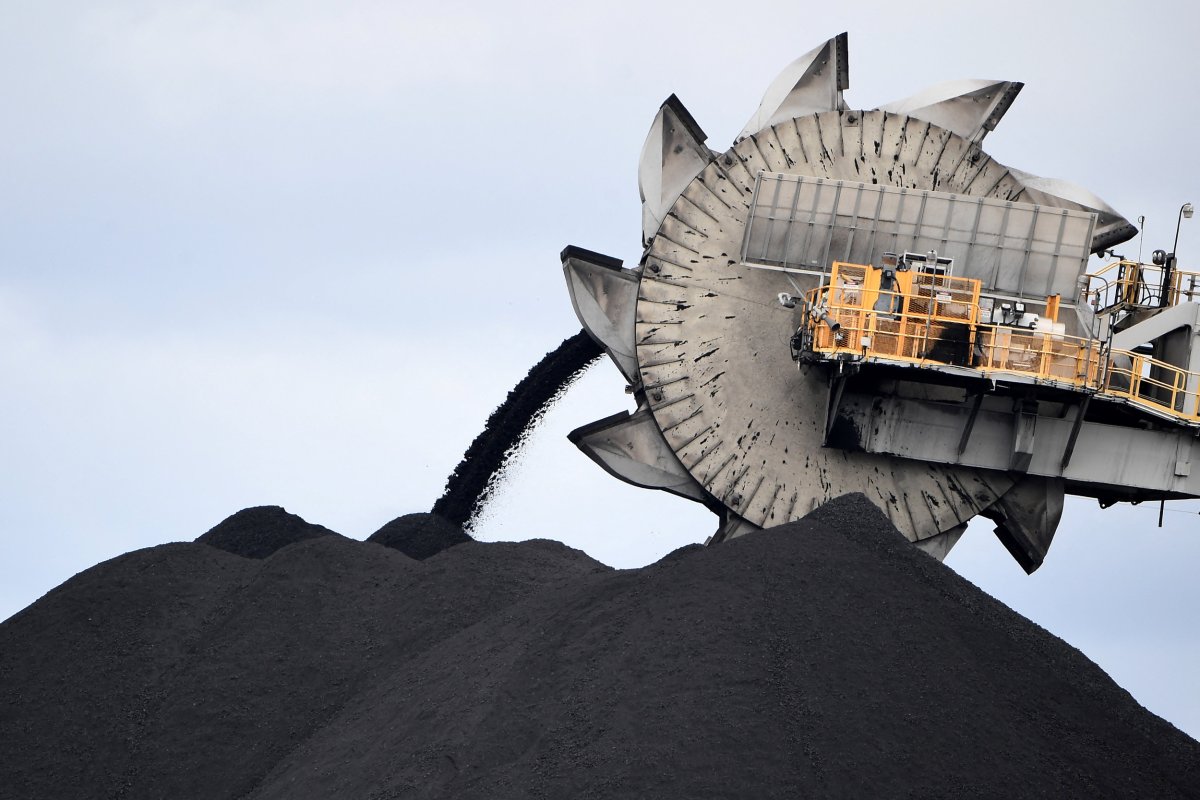
An illustrative image from November 5, 2021, showing coal mining in Newcastle, Australia. Getty Images
Why It Matters

Russia is the world's sixth biggest coal producer and the industry is critical for dozens of single industry towns that depend on the sector. While a smaller contributor to Russia's GDP than its more lucrative energy exports of oil and gas, a slump in coal exports is the latest symptom of the sanctions-hit economy.
What To Know

After Russia's invasion of Ukraine, Europe announced sanctions in April 2022 that included a ban on coal imports from Russia, dealing a severe blow to the industry.

In turn, Russia looked to other markets in China and India but both countries reduced their imports due to sanctions and a wish to diversify suppliers.

Last year, Russia's seaborne coal export revenues fell 22 percent to $24.9 billion compared with 2023's $32.2 billion. Meanwhile, export volumes dropped 15 percent in the same timeframe, according to figures from the CREA.

It also said that export volumes to China have slumped by a "drastic" one fifth (20 percent) to 16 million tonnes and fell by over a third (35 percent) to South Korea, by magnitude of 8.4 million tonnes.

Citing a coal industry source, Kommersant reported that in 2024 all companies in Russia's coal industry had reported losses and that this year, assets that are not part of the largest holdings will not be able to cope with the debt burden.

All grades of thermal coal—used to fuel turbines and electricity—have fetched below $35 per ton for a year, which is only the cost of production.

It means that only producers of more expensive metallurgical coal—used in iron and steelmaking—as well as firms closer to ports and large exporters that have their own logistics can survive, the publication said.

Revenues To China Plunge

Russia's coal industry recorded a cumulative loss of 91 billion rubles ($1 billion) from January to September 2024. Nearly half its coal enterprises are unprofitable, prompting President Vladimir Putin to order emergency support measures in December, Interfax reported.

Levi, CREA's Europe-Russia policy and energy analysis team lead, said Russia's current infrastructure is struggling to cope with current volumes of the country's coal exports. Given that all companies in the industry reported losses last year, it is no surprise there is a lack of interest in bringing new assets to the market.

With producers facing small profit margins due to a number of challenges, "As a result, Russian exporters have been compelled to scale back shipments across all routes," Levi told Newsweek.

Earlier this month it was reported that bankruptcy proceedings are underway at the Inskaya mine in the Kemerovo region at the request of the Federal Tax Service due to a debt of 230 million rubles ($2.3 million).

The government is examining bankruptcy proceedings across the sector and an assessment of the state of the industry will be presented to Deputy Prime Minister Alexander Novak, Kommersant said.

Sergey Uchitel, a partner at the Pen & Paper law firm, told Kommersant that most bankruptcy procedures in the coal industry involve liquidation rather than rehabilitation as few firms restore solvency and assets can be redistributed through a sale.
What Are People Saying

Kommersant: "(Government) ministries are working on measures to support the coal industry, which is in crisis against the backdrop of low world prices."

Levi told Newsweek: "The decline in Russian coal export volumes is attributed to significant logistical challenges, international sanctions, low global prices and high production costs, leaving many producers exporting coal with minimal or negative profit margins."

What Happens Next

Russia is losing out because its coal is too expensive and new sanctions could make exports even less attractive to China this year, which is likely to put further pressure on the industry in 2025, industry outlet mining.com reported.


Kremlin says Ukraine conflict is about national security, not oil


A view shows buildings damaged during a Russian missile attack, amid Russia's attack on Ukraine, in Zaporizhzhia, Ukraine January 23, 2025. REUTERS/Stringer/File Photo

UPDATED Jan 24, 2025, 

MOSCOW - The Ukraine war is about Russia's national security and not about oil prices, the Kremlin said on Friday after U.S. Donald Trump called for a cut in the price of oil.

Trump on Thursday said he will demand Saudi Arabia and OPEC bring down the cost of oil.

Kremlin spokesman Dmitry Peskov, responding to a question about those comments, said the issues for Russia in Ukraine were about national security, threats to Russians living there, and the refusal of the United States and Europe to listen to Russia's concerns.

Ukraine and its Western supporters reject those arguments, saying Russia launched the war as an imperial-style land grab. 

REUTERS

Amnesty International


Afghanistan: ICC Prosecutor’s application for arrest warrants against Taliban leaders is an important step towards justice for Afghan women, girls and LGBTQI persons

Responding to the application filed yesterday by the Office of the Prosecutor of the International Criminal Court (ICC) for arrest warrants against the Taliban Supreme Leader, Haibatullah Akhundzada, and the Taliban Chief Justice, Abdul Hakim Haqqani, for their suspected responsibility for the crime against humanity of gender persecution in Afghanistan, Agnès Callamard, Secretary General at Amnesty International, said:

“The announcement by the ICC Prosecutor is an important development that gives hope, inside and outside the country to Afghan women, girls, as well as those persecuted on the basis of gender identity or expression, such as members of the LGBTQI community. This is a crucial step to hold accountable all those allegedly responsible for the gender-based deprivation of fundamental rights to education, to free movement and free expression, to private and family life, to free assembly, and to physical integrity and autonomy. Amnesty International also calls on the international community to recognize gender apartheid as a crime under international law in order to strengthen efforts to combat institutionalized regimes of systematic oppression and domination imposed on the grounds of gender.

The announcement by the ICC Prosecutor is an important development that gives hope, inside and outside the country to Afghan women, girls, as well as those persecuted on the basis of gender identity or expression, such as members of the LGBTQI community.

Agnès Callamard, Secretary General at Amnesty International

“The Prosecutor has acknowledged that the charges represent only a fraction of the victimization that has occurred all over Afghanistan for more than two years and affected much of the population. It is incumbent on the ICC and the whole international community to urgently and significantly scale-up efforts to address gender persecution and other crimes under international law committed in Afghanistan as access to justice in the country remains significantly overdue.

“We strongly urge the ICC Prosecutor to also expand his investigations in Afghanistan to include all serious violations from May 2003 onwards that amount to crimes under international law, including extrajudicial killings, torture and other ill-treatment, arbitrary arrest and detention, enforced disappearance, the massacre of civilians, and the ongoing systematic and widespread attacks against the Hazara ethnic group and religious minorities by the Islamic State of Khorasan Province.

“Amnesty International also calls on the ICC Prosecutor to reconsider his 2021 decision to deprioritize investigations into war crimes allegedly committed by the US military, CIA personnel, and other international forces who had a presence in the country, and the former government security apparatus. This decision risks contributing to perceptions of a selective approach to international justice which prioritizes the interests of powerful states and their allies over the right to justice of victims of crimes under international law.

Background  

On 23 January, the Office of the Prosecutor of the ICC issued a statement announcing the applications for arrest warrants in the situation in Afghanistan. The Prosecutor’s applications for arrest warrants will be considered by ICC Pre-Trial Chamber judges, to determine whether they establish reasonable grounds to believe that the named individuals committed the alleged crimes. The Office of the Prosecutor also stated that investigations are ongoing. This means that further applications, both for other persons and alleged crimes, could still follow.

In 2023, Amnesty International published its report, The Taliban’s war on women, on the crime against humanity of gender persecution against women and girls in Afghanistan. The 2022 report, Death in Slow Motion: Women and Girls Under Taliban Rule,alsodocumented the Taliban’s widespread, systematic, and intentional attacks on the rights of women, together with the use of torture and other ill-treatment and enforced disappearance. The discriminatory restrictions on the rights of women and girls affect all spheres of their lives, and they are institutionalized through the Taliban’s policies, decisions, and laws.

Afghanistan had been under preliminary examination by the ICC Prosecutor from 2007 to 2017. In 2022, the Prosecutor resumed its investigation into the situation of Afghanistan after the Court concluded that there was no genuine investigation at the domestic level. In fact, since the Taliban returned to power, they have destroyed avenues for access to fair trial and abolished the constitution and laws that were in force prior to their return.

ING: Beyond the hydrogen hype it is all about execution

ING: Beyond the hydrogen hype it is all about execution
Hydrogen is moving from plans to projects, but there is still a long way to go until it becomes a useable fuel. The hype is over and now the pragmatic work begins to develop real hydrogen production. / bne IntelliNews
By bne IntelliNews January 24, 2025

The hydrogen sector is shifting from announcements to execution. The US leads with blue hydrogen, while Europe is focused on green hydrogen despite cost and trade challenges. Meanwhile, hydrogen demand is moving from steel to oil refining and transportation, ING said in a note.

Call 1: Beyond the hype it’s all about execution

Last year, we anticipated that 2024 would serve as a reality check for the efforts to scale up hydrogen. But expectations have fallen even more than anticipated, with new project announcements down by over 80% globally and producers scaling back earlier commitments.

This reflects the typical hype cycle of new technologies: peak optimism for hydrogen in the run-up to 2023 followed by disillusionment in 2024.

Looking ahead to 2025, we expect more realism, though from a pessimistic perspective. The focus will shift to execution and tangible progress on projects and investments. Nevertheless, the low-carbon hydrogen market remains in its infancy. Much of the growth is likely to happen from 2028 onwards when many committed and advanced projects are likely to come online. That’s why we’re not solely focusing on 2025, but also looking ahead towards 2030.

Call 2: Progress in domestic market supply amid rising costs

Government policies and targets will be the main drivers of blue and green hydrogen project development, with the US and Europe having the highest production potential thanks to strong policy support. Just over 60% of low-carbon hydrogen globally is expected to be produced in these regions by 2030, according to Bloomberg New Energy Finance.

The US hosts the most mature project pipeline globally and about 0.4mn tonnes of H2 is expected to come on line in 2025. The Donaldsonville hydrogen plant in Louisiana takes the lion's share with 0.3mn tonnes of blue hydrogen production. In addition, a couple of electrolyser projects are likely to come online and produce 0.1mn tonnes of green hydrogen in 2025. The size of current electrolysers ranges from 5 to 220 megawatts, meaning that green hydrogen projects are unable to match the scale of blue hydrogen plants.

The electrolyser pipeline in the US is small compared to Europe, which limits the deployment of green hydrogen. Furthermore, Trump is likely to favour natural gas production and Carbon Capture and Storage (CCS) over extensive support for expensive electrolysers. So blue hydrogen is likely to dominate green hydrogen, allowing the industry to grow more significantly due to the larger scale of blue hydrogen projects.


Europe, on the other hand, is focusing more on green hydrogen production by kickstarting electrolyser projects. Multiple projects are expected to come online in 2025, with Shell’s 200-megawatt project in the Netherlands being the largest. A project from Air Liquide for blue hydrogen in France is expected to start production in 2025, but this project is relatively small compared to the Donaldsonville plant in the US.

Despite solid progress, the production of low-carbon hydrogen is projected to reach only fourmn tonnes by 2030, with green hydrogen contributing 2.8mn tonnes.

This falls significantly short of the REPowerEU programme’s target of ninemn tonnes of green hydrogen production. While the market has achieved a level of realism, this has yet to happen for policy targets.

Supply side risks

The supply side outlook faces five main risks: funding, grid congestion, rising costs, a possible trade war and performance issues.

  1. Funding: Most low-carbon hydrogen projects in the EU are funded by EU sources like the Projects of Common European Interest, the EU Innovation Fund, and the European Hydrogen Bank. The first auction by the European Hydrogen Bank showed that green hydrogen production costs are the lowest in Southern and Northern Europe (€5.8 to €8.8 per kg) and highest in Germany and France (€12 to €13 per kg). Despite subsidies averaging €0.46 per kg over 10 years, producers need a price premium of €3.3 to €6.5 per kg to break even, which is not yet secured by long-term contracts. In the US, besides private investors, the Department of Energy is providing loans and loan guarantees to clean energy projects including those of hydrogen. Plug Power, for example, received a $1.66bn conditional loan guarantee to produce clean hydrogen using electrolysers. However, the new administration brings uncertainty to the loan programme. The challenge of securing offtakers has also led to funding difficulties.
  2. Grid Congestion: Some projects struggle with securing grid connections or face future grid congestion. Reinforcing grids is complex, so enhancing the flexibility of electrolysers and green hydrogen production is crucial.
  3. Cost Increases: Rising material, labour and water costs are increasing project costs. Integrating electrolysers into the energy system is also more costly than anticipated, including higher grid and transportation costs. And these system costs are expected to remain high, with less optimistic long-term cost reductions. As a result, Bloomberg New Energy Finance recently raised its forecasts for green hydrogen production costs by +35%.
  4. Trade war and geopolitical tensions: Currently, almost all installed electrolysers in the US and EU are Western-made. Cheaper Chinese electrolysers (50-60% less expensive) are tempting developers to import them to mitigate cost increases. However, this threatens the goal of building domestic electrolyser industries in Europe and the US. The introduction of import tariffs and ongoing geopolitical tensions create uncertainty around investment decisions in 2025 - not just for electrolysers, but possibly for the entire green hydrogen supply chain, including critical materials, solar panels, and wind turbines, all of which are dominated by China. Thus, the hydrogen industry faces significant policy and trade uncertainty in 2025.
  5. Performance issues: In 2024, some completed hydrogen projects, particularly those involving electrolysers, faced significant performance issues.

Both established companies and startups struggled, leading to disappointing hydrogen production and impacting project outcomes. Addressing these performance challenges is crucial for the sector to achieve solid progress in 2025.

Call 3: Lower demand expectations with a shift from steel to aviation and shipping

Demand is a key bottleneck

Demand is a significant bottleneck in scaling up low-carbon hydrogen. Hydrogen project developers have only managed to secure about 10% to 15% of planned output through binding offtake contracts, primarily due to the ‘chicken and egg problem.’ Early adopters are hesitant to commit to current high price premiums for 10 to 15 years, fearing a cost disadvantage compared to competitors who adopt a wait-and-see approach to benefit from future lower prices. Without binding targets, hydrogen users such as producers of ammonia (fertilisers), chemicals (plastics), and steel still have the luxury of waiting.

Shifting demand from steel to oil refining and transportation

The steel industry exemplifies this shift. In past years, steel has been a major driver of investment announcements, particularly through clean hydrogen projects. However, we now see steel producers reconsidering earlier commitments, especially in Europe where energy prices are high, policy focus is on costly green hydrogen, and there are concerns about the availability of high-grade iron ore pellets. These pellets, ideal for hydrogen-based steelmaking, currently constitute only 7% of the iron ore supply globally.

Demand from oil refiners and producers of e-fuels is expected to rise in 2025. According to Rystad Energy, most of the investments by oil majors in hydrogen are directed at replacing grey hydrogen operations with blue and green hydrogen to reduce emissions from their refineries. Another key segment is transportation, where hydrogen-derived fuels such as ammonia, methanol and synthetic jet fuel, provide low-carbon solutions for aviation and shipping. Oil refineries in Europe are expected to secure more clean hydrogen to comply with the REFuelEU Aviation initiative, requiring EU airports to use at least 1.2% green hydrogen-based fuel by 2030. The shipping sector also aims to use 5-10% of alternative fuel globally by 2030, though this target is not binding and also includes non-hydrogen fuel.

Boosting demand with CCfDs and clearer green standards

The German government launched the EU’s first Carbon Contracts for Difference (CCfD) auction in 2024. This benefits hydrogen in two ways. CCfDs subsidise both new installations and operational costs by covering the large difference between conventional and low-carbon production costs for a long period (15 years in Germany). Furthermore, lower-cost CCS solutions are excluded from the auction. A significant budget increase for 2025 auctions will support demand in Germany. Meanwhile, such initiatives could also inspire other countries to adopt similar measures, boosting hydrogen demand.

In 2025, we also expect progress on the definition of green industrial activities. Different sectors and regions have varying guidelines, making it difficult to standardise green credentials for commodities like steel, cement, plastics, and e-fuels. While hydrogen-based fuel can be blended with current fossil fuel, facilitating the integration of new technology into existing systems, this is less feasible for products like steel, cement, and plastics. For example, blending 5% hydrogen-based fuel with conventional fuel is straightforward, but it doesn’t make sense to produce 5% of a toy’s plastic parts from hydrogen-based plastic and the rest from fossil-based plastics. The solution lies in reaching a consensus on mass-balance methodologies, allowing sustainability goals to be met at the portfolio level rather than the product level.

2025: policy decisions make 2025 a pivotal year

Since low-carbon hydrogen remains more expensive than current fossil fuel-based practices, it won’t be business as usual for corporations. Therefore, policy decisions in 2025 will be crucial.

The European Commission is set to present its Clean Industrial Deal in 2025. This initiative aims to address the challenges faced by hard-to-abate sectors such as steel, cement, plastic and aluminium as detailed in the Draghi report. Policy must strike a fine balance of increased competitiveness in global markets while stimulating these sectors to quickly transition towards a net zero economy.

In the US, 2025 will reveal the full impact of policy risks, but hydrogen remains a viable market, despite developing at a slower pace than many have hoped. Under the new administration, we are confident that the hydrogen and CCS tax credits can survive and continue to play a crucial role in reducing costs, and there will likely be loosened eligibility criteria in claiming the credits. Nevertheless, any uncertainty around tax credit guideline finalisation, non-credit funding, and government-enabled hydrogen development programmes can slow down project development.

Therefore, 2025 will be a pivotal year, with significant developments and decisions shaping the future of low-carbon hydrogen.


Expected settlement of energy crisis in Transnistria may have a security cost

Expected settlement of energy crisis in Transnistria may have a security cost
Transnistria's President Vadim Krasnoselsky has repeatedly blamed Chisinau for the energy and humanitarian crisis in the unrecognised republic. / president.gospmr.org
By Iulian Ernst in Bucharest January 24, 2025

Moldova’s pro-Russian separatist Transnistria region has picked a natural gas trader, Cyprus-based Ozbor Enterprises managed by a former Gazprom executive, to import limited amounts of Russian natural gas through the Turkstream and Trans-Balkan pipelines after February 1.

The move appears to solve the energy crisis that hit the region after Gazprom cut gas supplies to Moldova on January 1. However, as the energy crisis seems to be ending, the security outlook is deteriorating after the Russian forces in the separatist region started drills in the so-called Security Zone without notifications, prompting protests from Chisinau. Probable financial support for the energy supplies from Moscow may be informally conditioned by a more intense military and political activism of the separatists.

The coincidence of increased military activity and the settlement of the energy crisis may reflect a more responsive attitude of the separatist authorities in Tiraspol to Russia’s demands after Transnistria has constantly avoided tensions with the constitutional authorities in Chisinau since the war started in Ukraine. In turn, the authorities in Chisinau stressed that “a long-term solution for the energy crisis in Transnistria can be reached only after the illegal Russian troops leave the region and the Russian peacekeepers are replaced with neutral forces.”

The intermediary for the Russian gas for Transnistria is an energy trader already active on the Romanian market, which should in principle address the concerns raised by the central authorities in Chisinau when a low-profile company controlled by a Moldovan businessman was initially announced as the intermediary.

Russia cut gas supplies to Moldova over a $709mn claim that was not recognised by the Moldovan authorities as a minority shareholder in Moldovagaz (the alleged debtor). Before the end of 2024, Moldova received 5.7 cubic metres (mcm) of gas per day from Gazprom, which was entirely sent to Transnistria, which in turn supplied the rest of the country with affordable electricity.

The resumption of gas supplies to Transnistria after February 1 is still not certain. “Moldovagaz JSC has already entered into negotiations with an independent European trader on this issue,” Transnistria’s foreign ministry said on January 23, implying that the contract is not yet signed. However, Ozbor Enterprises has already contracted capacity for imports through Turkstream.

The amounts envisaged for the gas imports to Transnistria, 3.1mn cubic metres (mcm) per day according to the booking contract for Turkstream, would allow the region to heat and produce electricity for its own use – but not to resume industrial activity or export electricity to the territory controlled by the constitutional authorities in Chisinau (Moldova proper).

The gas deliveries would reportedly cost $65mn per month, which is a considerable amount of money for the region that until January 1 received free gas from Russia. However, Moscow might still finance the separatist region by paying Ozbor Enterprises on behalf of the authorities in Tiraspol. In exchange, Transnistria would likely have to take a tougher position in in negotiations with Chisinau.

The rhetoric coming out of Tiraspol has already hardened, with officials accusing Chisinau of being responsible for the energy crisis. On January 23, Transnistria’s foreign ministry blamed the authorities in Chisinau for blocking the settlement of the energy crisis.

At the same time, the military drills started by Transnistria in the Security Zone indicate that the Russian troops are far from considering leaving the region. In fact, the authorities in Transnistria accused the pro-EU authorities in Chisinau of blackmail by conditioning the energy supply of the region on abandoning the Russian military support.

Speaking in a recent interview with Newsmaker, Moldovan President Maia Sandu stressed that Moldova was ready to provide immediate support to Transnistria. However, she made it clear that substantial financial assistance (with the help of Moldova’s development partners) will only be considered after the withdrawal of Russian troops from Transnistria and the replacement of the current peacekeeping mission with a civilian mission, under the supervision of either the United Nations or the European Union.

Experts look for clues as mysterious deaths grip India-administered Kashmir

Medical experts have yet to find cause of 17 deaths reported between December 7 and January 19.

24.01.2025


A woman wearing a protective face mask walks along a road in Srinagar, India-administered Jammu and Kashmir, January 15, 2025. / Photo: Reuters

Authorities in the India-administered Jammu and Kashmir region are probing the mysterious deaths of 17 people in a remote village, which has led to a lockdown.

Over the past month, 17 individuals from three connected families, including 12 children, have died in the village of Badhaal in the Rajouri district, situated along the Line of Control, the boundary between India- and Pakistan-administered parts of the disputed Kashmir region.

The deaths took place between December 7 and January 19. Around 200 people have been quarantined, while six others have been hospitalised and are in stable condition, according to officials.

Rajouri District Commissioner Abhishek Sharma declared the village a containment zone and ordered the sealing of the affected families' homes.

Sharma said an investigation is underway.

Expert teams are assessing potential causes of the deaths, he said, adding : "We have taken these precautions just to make sure that people's lives are saved and we are hopeful that the experts can find out the cause of deaths soon."


Food, water, and other necessities are being carefully monitored, he said.

While medical experts have ruled out viral or bacterial infections, there are indications that neurotoxins were present in the deceased.

Dr Amarjeet Singh Bhatia, principal of government medical college Rajouri, said: "We are yet to find out the actual cause of the deaths but so far as the postmortem reports are concerned, the findings show there are certain neurotoxins found."

Union Minister Jitendra Singh also dismissed the possibility of a viral or bacterial infection.

"As per preliminary investigation conducted … it is not any infection, viral or bacterial in nature. Toxins have been found. Now, investigation is underway to ascertain what kind of toxin it is," said Singh, who is also a medical doctor.

A special investigation team, formed by the Jammu and Kashmir administration, including police officers, pathologists and other specialists, has questioned several individuals in the village.

Initial investigations suggest that contaminated food and water may have been the cause, as villagers were advised not to drink water from a local spring after tests revealed it contained pesticides.


Mysterious deaths trigger lockdown in remote Kashmir village

Medical experts have yet to find cause of 17 deaths reported between Dec. 7 and Jan. 19 in Rajouri district along Line of Control

Nusrat Sidiq |24.01.2025 - 


SRINAGAR, Jammu and Kashmir

Authorities in the Indian-administered Jammu and Kashmir region are probing the mysterious deaths of 17 people in a remote village, which has led to a lockdown.

Over the past month, 17 individuals from three connected families, including 12 children, have died in the village of Badhaal in the Rajouri district, situated along the Line of Control, the boundary between Indian- and Pakistani-controlled parts of the disputed Kashmir region. The deaths took place between Dec. 7 and Jan. 19.

Around 200 people have been quarantined, while six others have been hospitalized and are in stable condition, according to officials.

Rajouri District Commissioner Abhishek Sharma declared the village a containment zone and ordered the sealing of the affected families' homes.

Sharma told Anadolu that an investigation is underway.

Expert teams are assessing potential causes of the deaths, he said, adding: “We have taken these precautions just to make sure that people’s lives are saved and we are hopeful that the experts can find out the cause of deaths soon.”

Food, water, and other necessities are being carefully monitored, he said.

While medical experts have ruled out viral or bacterial infections, there are indications that neurotoxins were present in the deceased.

Dr. Amarjeet Singh Bhatia, principal of government medical college Rajouri, told Anadolu: “We are yet to find out the actual cause of the deaths but so far as the postmortem reports are concerned, the findings show there are certain neurotoxins found.”

Union Minister Jitendra Singh also dismissed the possibility of a viral or bacterial infection.

"As per preliminary investigation conducted … it is not any infection, viral or bacterial in nature. Toxins have been found. Now, investigation is underway to ascertain what kind of toxin it is," said Singh, who is also a medical doctor.

A special investigation team, formed by the Jammu and Kashmir administration, including police officers, pathologists, and other specialists, has questioned several individuals in the village.

Initial investigations suggest that contaminated food and water may have been the cause, as villagers were advised not to drink water from a local spring after tests revealed it contained pesticides.
Google's 'data error' briefly removed Biden from US presidents list


The incident lasted for a few hours


By Akash Pandey
Jan 24, 2025


What's the story

In a recent incident, Google suffered a technical glitch that briefly erased former US President Joe Biden from its list of American Presidents.

The problem, which was subsequently blamed on a 'data error,' triggered a heated debate on the tech giant's capacity to manage politically sensitive information.

The incident took place on Thursday morning and continued for a few hours before Google fixed it.


Omission details

Biden's term was missing from search results

The issue came to light after users observed that Biden's term was absent from Google Search results for the list of "US Presidents."

Instead of listing Biden's tenure after Barack Obama, the list displayed both of Donald Trump's terms, giving the impression that Trump had served two consecutive terms.

The error sparked widespread speculation and concern on social media platforms.

Twitter Post
Take a look at the search results


Error correction
Google rectifies error and restores Biden's presidency


By early Thursday, Google had fixed the error and restored Biden's presidency in its search results.

In a statement to CNBC, the company said, "There was a brief data error in our knowledge graph."

The tech giant further clarified that it had identified the root cause of this issue and resolved it quickly.

Despite Google's swift resolution, the Biden presidency omission has reignited a long-standing debate about the alleged political bias of big tech companies.


Twitter Post
'US President 2020-2024' shows Trump in results


Ongoing scrutiny
Other tech platforms facing political challenges


Google's error comes at a time when tech firms are already facing intense scrutiny over their handling of political content.

TikTok was recently accused of limiting access to anti-Trump content, while Meta faced user complaints about being automatically made to follow President Donald Trump and Vice President JD Vance on Instagram and Facebook after the new administration took office.

Meanwhile, Meta's AI chatbot has struggled to recognize the leadership change. It continued to identify Joe Biden as the sitting president.
Sri Lanka cancels Adani Group's $440M power purchase deal

The deal has been canceled amid corruption allegations Gautam Adani

ByMudit Dube
Jan 24, 2025

Sri Lanka has canceled a power purchase agreement with Adani Group, amid corruption allegations against the company's founder, Gautam Adani.

The decision was taken by President Anura Kumara Dissanayake's administration, which is now reviewing the proposed wind power project.

Activists have also raised concerns over high electricity costs and possible environmental impact of this project. The proposed power project was estimated around $442 million.

Project review
Investigation into Adani's local projects

The Sri Lankan government has launched investigations into Adani Group's local projects, after corruption charges were leveled against Gautam Adani in the US last year.

A senior official from the energy ministry confirmed President Dissanayake's cabinet had decided against going ahead with the agreement.

However, he clarified that "the government has revoked the power purchase agreement, but the project is not canceled."


Project scrutiny
Adani's wind power project faces criticism and legal challenges


The deal with Adani Group, signed by the previous administration in May 2024, promised to buy electricity at $0.0826 per kilowatt from an unbuilt Adani wind power complex in northwest Sri Lanka.

Activists have criticized the deal, arguing that smaller renewable projects provide electricity at two-thirds of Adani's price.

The proposed construction of Adani's 484-megawatt wind power plant is also facing a Supreme Court challenge over environmental concerns.


Project reassessment
Sri Lankan cabinet to re-evaluate Adani's project


An official document seen by AFP confirmed that the Sri Lankan cabinet has decided to form a committee to "re-evaluate" the construction of Adani's project.

The decision is in line with President Dissanayake's anti-corruption stance, who came to power in September promising to tackle corruption and recover stolen Sri Lankan assets allegedly hidden abroad.

The current ruling party had also criticized the power purchase agreement in opposition.


Corruption allegations
Adani's corruption charges and group's response

Adani was charged in the US on November 19 for bribery and concealing these payments from US investors, New York prosecutors said.

However, the Adani Group has dismissed the allegations as "baseless."

The company has faced multiple corporate fraud allegations in the past few years that have rattled its diverse business empire from coal to airports, cement, and media.