Thursday, May 29, 2025

Political protests paralyse Bangladesh daily life

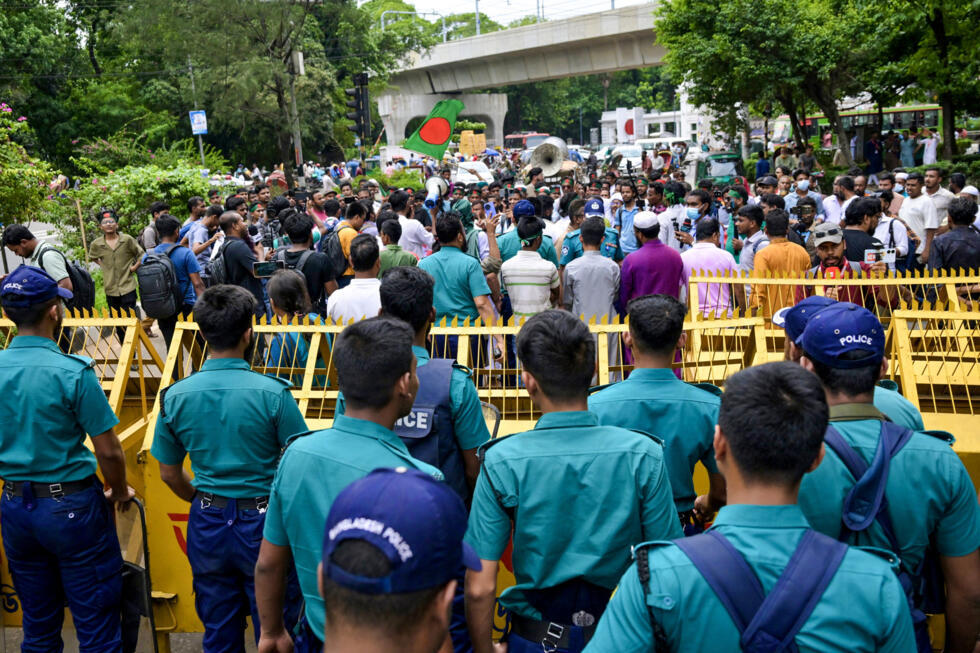
Dhaka (AFP) – Protests have become part of daily life in Bangladesh's capital, with residents either taking part as political parties jostle for power after an uprising last year -- or avoiding them.


Issued on: 28/05/2025 -

Protests have become part of daily life in Bangladesh's capital, with residents either taking part -- or avoiding them © MUNIR UZ ZAMAN / AFP


The South Asian nation of around 170 million people has been in political turmoil since former prime minister Sheikh Hasina was ousted in August 2024, fleeing by helicopter as crowds stormed her palace.

Hasina's 15-year-long authoritarian rule contained protests like a pressure cooker, until the student-led movement spearheaded a revolt that toppled her from power.

On Wednesday, at least half a dozen demonstrations were held in the sprawling megacity of Dhaka, home to more than 20 million people.

This was a typical day, with the demonstrations ranging from political rallies and counter-protests, to worker strikes and celebrations at the release of an Islamist leader from death row.

Bangladesh's Jamaat-e-Islami leader A.T.M. Azharul Islam (C) was released from prison in Dhaka on Wednesday © MUNIR UZ ZAMAN / AFP

"I got released this morning after being imprisoned for 14 years," A.T.M. Azharul Islam said, waving at thousands of supporters of the country's main Islamist party, Jamaat-e-Islami.

The tight-packed crowd cheered as the senior leader was released from a prison hospital in central Dhaka, a day after the Supreme Court overturned his death sentence and acquitted him of war crimes.

"There was no justice in the past... we expect the court will ensure that the people get justice in the coming days," Islam said.

Leftist parties say they will demonstrate in opposition to his release.

Across Ramna Park in the neighbourhood of Naya Paltan, thousands choked the streets as part of a rally in support of the Bangladesh National Party (BNP).

Political parties are readying for hugely anticipated elections which the interim government has vowed will take place by June 2026 at the latest.
'Unpredictable'

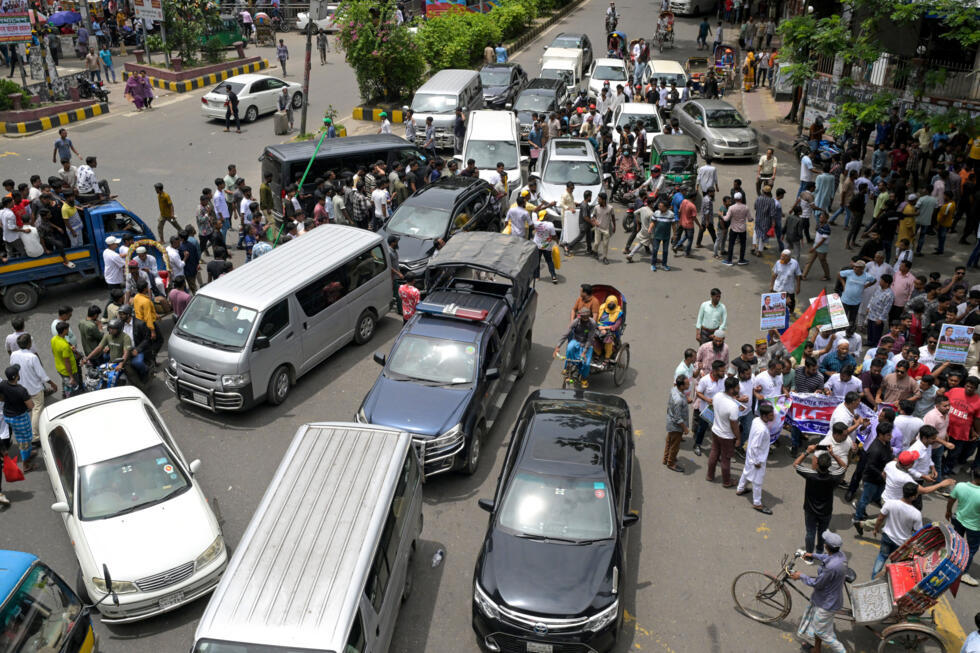
While tens of thousands gather at major intersections across Dhaka with their demands, others spend hours navigating their way through traffic-snarled streets.

"All the major roads are blocked during the day," chicken seller Zakir Hossain said Wednesday.

While tens of thousands gather at major intersections across Dhaka with their demands, others spend hours navigating their way through traffic-snarled streets © MUNIR UZ ZAMAN / AFP

"We've had to shift our schedules. I start work at midnight now, even though the law and order situation is worsening every day, and muggings have become common."

It worries many, remembering the violence last year when police tried -- and failed -- to crush the protests that toppled Hasina.

"The situation is unpredictable -- the protests can turn violent at any moment," said a 43-year-old housewife, asking not to be identified as her husband is a government employee.

"I never used to call my husband much, but now I do. If he is even a little late coming home from the office, all sorts of bad thoughts come to my mind."

Bangladesh's interim leader Muhammad Yunus, the 84-year-old Nobel Peace Prize winner who is leading the caretaker government as its chief adviser until elections are held, has called for parties to build unity and calm intense political power struggles.

The government warned on Saturday that "unreasonable demands" and obstruction had been "continuously obstructing" its work.
'A balance'

Yunus has said polls could be held as early as December but that having them later would give the government more time for reform.

The frequest protests are a worry to many, remembering the violence last year when police tried -- and failed -- to crush the uprising that toppled Hasina © MUNIR UZ ZAMAN / AFP

Rallies organised by the powerful BNP are calling for the government to set an election date, as well as a raft of other demands, including the sacking of multiple members of Yunus's cabinet.

In other protests, tax authority workers, angered at an overhaul of the body that would place it under the finance ministry's control, held a two-week partial strike.

That escalated on Sunday when security forces surrounded the national tax headquarters, before the government later backtracked on its reform.

Civil servants this week also demonstrated at the main government ministry complex to rally against orders changing employment rules -- which the government then said it will reconsider.

On the streets, the protests continue.

"Customers rarely come to the bank when they see the roads blocked," said bank manager Muhammed Sazzad.

While he supported the right to assemble, he suggested the government "could designate a specific area for protests".

Rakib Hasan Anik, a lecturer at the Bangladesh University of Professionals, said that "academic discipline is suffering", with students stuck in traffic and missing class.

"There needs to be a balance," he said. "We can only hope all sides reach a consensus that prioritises the public."

© 2025 AFP
Lee Jae-myung's rise from poverty to brink of South Korean presidency

Seoul (AFP) – Lawsuits, scandals, armed troops and a knife-wielding attacker all failed to deter Lee Jae-myung's ascendancy from sweatshop worker to the cusp of South Korea's presidency.

Issued on: 29/05/2025 -

With his rags-to-riches narrative, Lee Jae-myung has cultivated a loyal support base
 © Pedro Pardo / AFP


After losing by a gossamer thin margin in 2022, the Democratic Party candidate has returned to the ballot, and is now poised to replace the political rival he was instrumental in unseating.

Opponents decry Lee, 60, for his populist style. But his rags-to-riches personal story sets him apart from many of South Korea's political elite.

After dropping out of school to work at a factory to support his family, he suffered a disabling elbow injury in an industrial accident.

He earned a scholarship to study law and passed the bar to become an attorney.

Lee has used this origin story to cultivate a loyal support base and frame himself as understanding the struggles of the underprivileged.

"You can worry about people outside shivering in the cold while you sit in your warm living room," Lee told AFP in a 2022 interview.

"But you can never really understand their pain."

Polls suggest the margin between Lee and his closest challenger, conservative Kim Moon-soo of the People Power Party, has narrowed in recent days, with some showing a single-digit margin.

But Lee has consistently maintained his lead since the race was triggered by the impeachment of former president Yoon Suk Yeol over his brief declaration of martial law in December.
Live-streaming a crisis

South Korea has experienced a leadership vacuum since lawmakers suspended Yoon for deploying armed troops to parliament in his failed attempt to suspend civilian rule.

During the tense minutes following that move, Lee live-streamed his frantic scramble over the perimeter fence as he and other lawmakers rushed to vote down the martial law decree.

"It was a race against time," he recalled in an interview with AFP.

Lee previously served as mayor of Seongnam, south of Seoul, for eight years.

In that role, he helped shut down what had been the country's largest dog meat market -- ending a trade that had once involved 80,000 canines a year.

He later served as governor of Gyeonggi Province -- the country's most-populous region surrounding the capital -- for more than three years.

Lee lost his 2022 bid for the presidency to Yoon by one of the smallest margins in South Korean history.

And in 2024 he was stabbed in the neck by a man posing as a supporter and was airlifted to hospital for emergency surgery.

The attacker later confessed that his intention was to kill Lee to prevent him from becoming president.

If elected next week, Lee has vowed, among other things, to boost South Korea's artificial intelligence industry, with the goal of making the country one of the top three global leaders in the field.

He has also called for holding those involved in the martial law attempt accountable -- promising to "bring insurrection elements to justice".

During his early days in politics, Lee drew criticism for his confrontational attacks on political opponents.

But Kim Hye-kyung, his wife of 34 years with whom he shares two children, insists Lee speaks with "deliberation".

"He's someone who's come up from the margins, from the very bottom," she said in a 2017 interview.

"Just like how a flea has to jump to be noticed, I hope people can understand and view him in that context."
Legal troubles

Lee has been dogged by legal troubles of his own, including allegations of corruption tied to a real estate development and violations of election law through the dissemination of false information.

He has denied any wrongdoing, insisting the charges are politically motivated.

In early May, Seoul's Supreme Court overturned a lower court's acquittal of Lee on election law charges and ordered a retrial.

But with the election looming, the Seoul High Court postponed the proceedings until after the June 3 vote.

If Lee wins, legal experts say the proceedings would be suspended due to presidential immunity, and would only resume after his single five-year term ends in 2030.

Lee's opponents argue the charges are serious enough to disqualify him from running.

"With these kinds of corruption allegations, how can you seek public office?" Kim Moon-soo, his main opponent in next week's vote, said during a televised debate on Friday.

© 2025 AFP
NAKBA 2.0

Israel announces creation of 22  ILLEGAL settlements in West Bank

Jerusalem (AFP) – Israel announced on Thursday the creation of 22 new settlements in the occupied West Bank, risking further strain on relations with the international community already taxed by the war in Gaza.

Issued on: 29/05/2025 

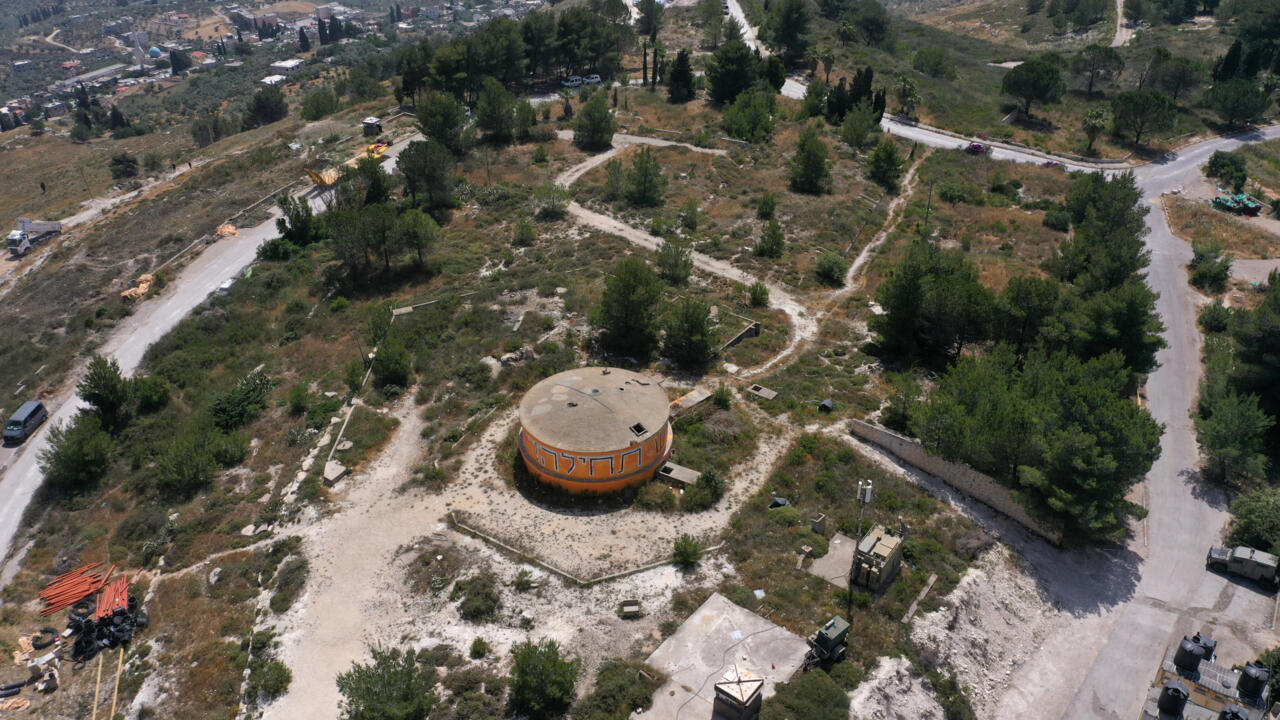
Among the new settlements in the occupied West Bank approved by Israel was the former settlement of Homesh, evacuated by Israel in 2005 alongside its evacuation of settlers from Gaza. © Menahem KAHANA / AFP/File


Israeli settlements in the West Bank are regularly condemned by the United Nations as illegal under international law, and are seen as one of the main obstacles to a lasting peace between Israelis and Palestinians.

The decision to establish more, taken by the country's security cabinet, was announced by far-right Finance Minister Bezalel Smotrich, himself a settler, and Defence Minister Israel Katz, who is in charge of managing the communities.

"We have made a historic decision for the development of settlements: 22 new communities in Judea and Samaria, renewing settlement in the north of Samaria, and reinforcing the eastern axis of the State of Israel," Smotrich said on X, using the Israeli terms for the southern and northern West Bank, which it has occupied since 1967.

"Next step: sovereignty!" he added.

Katz said the initiative "changes the face of the region and shapes the future of settlement for years to come".

In a statement, Hamas condemned the move as "further confirmation that the criminal Zionist occupation continues to impose facts on the ground by accelerating steps to Judaize Palestinian land within a clear annexation project".

"This is a blatant defiance of the international will and a grave violation of international law and United Nations resolutions," said the Palestinian militant group which rules Gaza.

Western ally Jordan too condemned the Israeli move, calling it a "flagrant violation of international law" that "undermines prospects for peace by entrenching the occupation".

The Jordanian foreign ministry warned that "such unilateral actions further erode the viability of a two-state solution by impeding the establishment of a sovereign Palestinian state".

In a statement on Telegram, the right-wing Likud party of Prime Minister Benjamin Netanyahu called the move a "once-in-a-generation decision", saying the initiative had been led by Smotrich and Katz.

"The decision also includes the establishment of four communities along the eastern border with Jordan, as part of strengthening Israel's eastern backbone, national security and strategic grip on the area," it said.

The party published a map showing the 22 sites spread across the territory.

'Heritage of our ancestors'


Two of the settlements, Homesh and Sa-Nur are particularly symbolic. Located in the north of the West Bank, they are actually resettlements, having been evacuated in 2005 as part of Israel's disengagement from Gaza, promoted by then-prime minister Ariel Sharon.

Current Prime Minister Benjamin Netanyahu's government, formed in December 2022 with the support of far-right and ultra-Orthodox parties, is the most right-wing in Israel's history.

Human rights groups and anti-settlement NGOs say a slide towards at least de facto annexation of the occupied West Bank has gathered pace, particularly since the start of the Gaza war triggered by Hamas's October 2023 attack on Israel.

"The Israeli government no longer pretends otherwise: the annexation of the occupied territories and expansion of settlements is its central goal," the Peace Now group said in a statement, adding the move "will dramatically reshape the West Bank and further entrench the occupation".

Israel's far-right Finance Minister Bezalel Smotrich, who is himself a West Bank settler, has long been an outspoken advocate of settlement expansion. © GIL COHEN-MAGEN / AFP/File

In his announcement, Smotrich offered a preemptive defence of the move, saying: "We have not taken a foreign land, but the heritage of our ancestors."

Some European governments have moved to sanction individual settlers, as did the United States under former president Joe Biden, though those measures were lifted by current President Donald Trump.

Thursday's announcement comes ahead of an international conference to be led by France and Saudi Arabia at UN headquarters in New York next month, which is meant to resurrect the idea of a two-state solution to the Israeli-Palestinian conflict.

Supporters of the blueprint, which was the basis of successive rounds of Israeli-Palestinian peace talks, say the prospects for a viable, contiguous Palestinian state alongside Israel are being undermined by the proliferation of settlements.

The announcement also comes after US envoy Steve Witkoff said Wednesday he had "very good feelings" about the prospects for a Gaza ceasefire between Israel and Hamas, adding that he expected to send out a new proposal imminently.

© 2025 AFP

Dua Lipa, public figures urge UK to end Israel arms sales

London (AFP) – Pop star Dua Lipa joined some 300 UK celebrities in signing an open letter Thursday urging Britain to halt arms sales to Israel, after similar pleas from lawyers and writers.


Issued on: 29/05/2025 -

Popstar Dua Lipa lends her voice to calls urging Britain to halt arms sales to Israel © Dia Dipasupil / GETTY IMAGES NORTH AMERICA/AFP

Actors, musicians, activists and other public figures wrote the letter calling on Prime Minister Keir Starmer to "end the UK's complicity in the horrors in Gaza".

British-Albanian pop sensation Dua Lipa has been vocal about the war in Gaza and last year criticised Israel's offensive as a "genocide".

Israel has repeatedly denied allegations of genocide and says its campaign intends to crush Hamas following the deadly October 2023 attack by the Palestinian militants.

Other signatories include actors Benedict Cumberbatch, Tilda Swinton and Riz Ahmed, and musicians Paloma Faith, Annie Lennox and Massive Attack.

"You can't call it 'intolerable' and keep sending arms," read the letter to Labour leader Starmer organised by Choose Love, a UK-based humanitarian aid and refugee advocacy charity.

Sports broadcaster Gary Lineker, who stepped down from his role at the BBC after a social media post that contained anti-Semitic imagery, also signed the letter.

Signatories urged the UK to ensure "full humanitarian access across Gaza", broker an "immediate and permanent ceasefire", and "immediately suspend" all arms sales to Israel.

"The children of Gaza cannot wait another minute. Prime Minister, what will you choose? Complicity in war crimes, or the courage to act?", the letter continued.

Earlier this month, Starmer slammed Israel's "egregious" renewed military offensive in Gaza and promised to take "further concrete actions" if it did not stop -- without detailing what the actions could be.

Last September the UK government suspended 30 out of 350 arms export licenses to Israel, saying there was a "clear risk" they could be used to breach humanitarian law.

Global outrage has grown after Israel ended a ceasefire in March and stepped up military operations this month, killing thousands of people in a span of two months according to figures by the Hamas-run health ministry.

The humanitarian situation has also sparked alarm and fears of starvation after a two-month blockade on aid entering the devastated territory.

Over 800 UK lawyers including Supreme Court justices, and some 380 British and Irish writers warned of Israel committing a "genocide" in Gaza in open letters this week.

Hamas killed 1,218 people, mostly civilians, in their October 2023 attack on Israel, according to an AFP tally based on official figures.

Militants also took 251 hostages, 57 of whom remain in Gaza, including 34 who the Israeli military says are dead.

Israel's military offensive launched in response has killed 54,084, mostly civilians, in Gaza according to its health ministry, displaced nearly the entire population and ravaged swathes of the besieged strip.

© 2025 AFP

US cancels $590 million contract with Moderna for bird flu shot

Washington (AFP) – US President Donald Trump's administration on Wednesday canceled a $590 million contract with Moderna to develop an avian flu vaccine, the US biotech company said.


Issued on: 29/05/2025 -

The Moderna, Inc. logo is displayed during the Consumer Electronics Show (CES) in Las Vegas, Nevada, on January 5, 2023 © Patrick T. Fallon / AFP/File

It marked the latest move against vaccines by Health Secretary Robert F. Kennedy Jr, who has spent decades promoting misinformation about immunization.

The contract, announced on January 17 -- three days before Trump took office -- was for an mRNA vaccine targeting the H5N1 influenza strain, which has been circulating in birds and cattle.

Experts have warned the virus could jump to humans and spark a pandemic.

American pharmaceutical and biotechnology company Moderna disclosed the news as it announced positive results from an early stage clinical trial of 300 people designed to test safety and immune response.

"While the termination of funding from HHS adds uncertainty, we are pleased by the robust immune response and safety profile observed in this interim analysis of the Phase 1/2 study of our H5 avian flu vaccine and we will explore alternative paths forward for the program," said CEO Stephane Bancel in a statement.

"These clinical data in pandemic influenza underscore the critical role mRNA technology has played as a countermeasure to emerging health threats."

The statement added Moderna would "explore alternatives" for funding the development and manufacturing of the vaccine.

Dr. Ashish Jha, a public health expert who served as former president Joe Biden's Covid-19 response coordinator, reacted with dismay.

"The attack on mRNA vaccines is beyond absurd," he posted on X. "It was President Trump's Operation Warp Speed that gave us mRNA vaccines."


© 2025 AFP
Bird flu cases spreading faster and with greater impacts - report

Avian influenza is no longer just an animal health issue, with rising mammal cases and severe ecosystem, trade, and food security impacts as outbreaks become more widespread and impact a broader range of species, a new report shows.


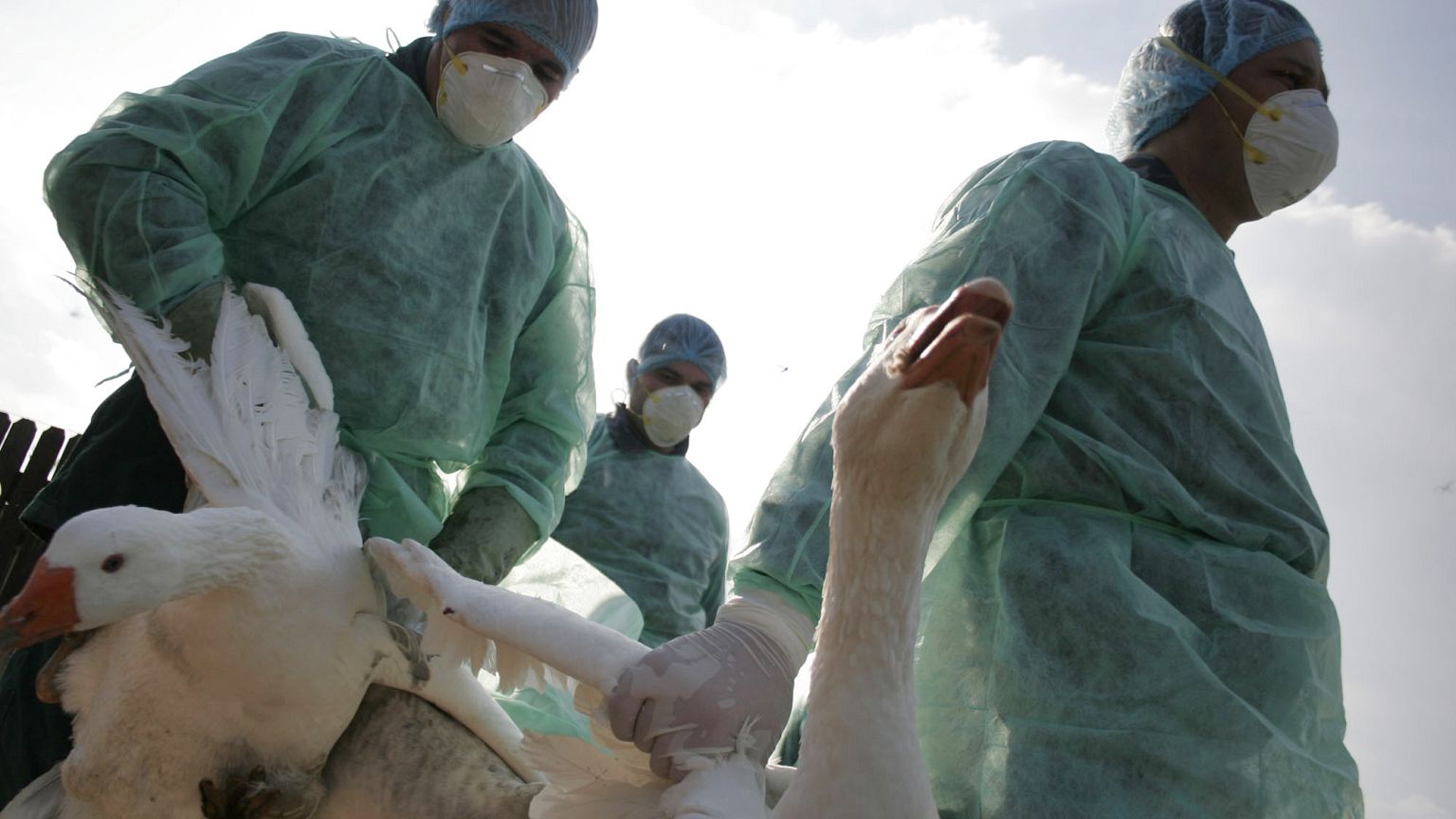
Copyright MARIUS NEMES/AP

By Marta Iraola Iribarren
Published on 23/05/2025 

Bird flu instances affecting mammals doubled in 2024 compared to the previous year - up to 1,022 outbreaks compared to 459 - and are having greater impacts, according to a new report on the global state of animal health by the World Organisation for Animal Health (WOAH).

During the same period, 943 outbreaks were reported in poultry, alongside 2,570 outbreaks in non-poultry species, including 1,548 among wild birds. These incidents led to the loss of over 82.1 million poultry.


Over the past two decades, more than 633 million birds have been lost either through infection or culling as part of efforts to contain the virus.

“A notable development in 2024 was the increase in HPAI outbreaks in mammals,” the report notes. It also highlights that avian influenza is no longer a seasonal or regional issue, as cases have been reported globally since 2022. The virus has affected new species of wild birds, domestic poultry, and an increasing number of mammal species, including livestock and pets.

WOAH warns that avian influenza has evolved beyond an animal health crisis into a global emergency, threatening agriculture, food security, trade, and ecosystems.

Risk for human health

In some cases, the virus has spilled over into humans, raising concerns about its potential to develop into a broader public health crisis.

The situation is particularly worrying in the United States, where a bird flu outbreak among poultry and dairy cattle has led to 67 confirmed human cases and one death.

In Europe, there have been no human infections and no reports of the virus in cattle. The genotype currently circulating in the US has not been detected in Europe, according to the European Centre for Disease Prevention and Control (ECDC).

While the risk of human infection remains low, the WOAH warns that as more mammalian species become infected, the likelihood of the virus adapting to enable mammal-to-mammal and potentially human transmission increases.
Broad consequences not only for birds

In addition to the devastating impact on poultry, bird flu is causing unprecedented mass die-offs in wild bird populations, disrupting ecosystems and threatening biodiversity, the report shows.

“As integral components of ecosystem stability, the loss of biodiversity causes cascading effects that compromise environmental resilience and global wildlife conservation,” it reads, adding that biodiversity alteration at this scale also affects migration patterns and food chains.

According to the animal health organisation, seabirds, raptors and waterfowl have suffered catastrophic losses, with entire breeding colonies wiped out.

Further consequences of the global spread of avian flu include disruption to international trade, as outbreaks often trigger strict commercial restrictions.

One example is the current suspension of Brazil’s poultry exports to the European Union after the country notified the WOAH of a bird flu outbreak.

As of 19 May, the country lost its status of ‘free of Highly Pathogenic Avian Influenza (HPAI)’ which means Brazilian authorities are unable to sign the animal health certificates required for exports to the EU.

Are vaccines the solution?


The WOAH’s report states that “the scale and complexity of this ongoing epizootic require urgent action beyond traditional control measures”.

What are these traditional measures? Strict biosecurity and active surveillance have been the main strategies to date. While these have been effective to some extent, the organisation warns that the virus’s relentless spread demands additional efforts.

Vaccination may offer a solution or at least serve as a valuable complement to traditional measures, as vaccines can reduce not only the spread of outbreaks but also the severity of infections.

In October 2023, France became the first EU country to roll out a nationwide vaccination campaign against bird flu in ducks, due to their key role in disease transmission.

According to the report, this initiative helped reduce the number of outbreaks from a projected 700 to just 10.

In addition to animal vaccines, some countries have started vaccination among people at risk of contracting bird flu, such as poultry farm workers.

Last year, the European Commission, purchased 665,000 pre-pandemic vaccine doses targeting avian influenza and took an option for 40 million doses over the next four years, in preparation for a potential future spread to humans.

Finland was the first country to receive the shipment after reporting becoming the first country in the world to start vaccinating humans.
Thousands to evacuate as Canada's Manitoba province declares wildfire emergency


Ottawa (AFP) – More than 17,000 people in Canada's western Manitoba province were being evacuated on Wednesday as the region experienced its worst start to a wildfire season in years.

Issued on: 29/05/2025

Earlier this month, two residents of the small community of Lac du Bonnet died after being trapped in a major wildfire northeast of Winnipeg 
© Handourt / Manitoba Government/AFP


"The Manitoba government has declared a province-wide state of emergency due to the wildfire situation," Manitoba Premier Wab Kinew told a news conference.

"This is the largest evacuation Manitoba will have seen in most people's living memory," he said.

Kinew said he asked Prime Minister Mark Carney to send in the Canadian military to help with the evacuations and firefighting.

Military aircraft, Kinew said, would be deployed "imminently" to help move people out of endangered remote northern communities to safety, along with additional firefighting resources.


The evacuations include the town of Flin Flon, where 5,000 residents were told earlier to get ready to flee on a moment's notice as a major wildfire bore down on the mining town named after a fictional character in a 1905 paperback novel.

Residents of several other remote towns and Indigenous communities have also now been told to leave.

Most of the evacuees are expected to be transported to the Manitoba capital of Winnipeg.

'Flames 121 feet high'

Evacuee Sheryl Matheson told AFP the wildfires had surrounded her small town of Sherridon, northeast of Flin Flon.

"It's been overwhelming," said the owner of a fishing lodge. "It was very smokey. You could see the fires four or five kilometers away and moving fast."

"The flames were shooting over 121 feet high and firefighters couldn't get close enough to the fire to do anything."

Elsaida Alerta told public broadcaster CBC she was having "major anxiety" as she and her family readied to leave Flin Flon, where she has lived for three years.

"Especially for somebody that lived in a big city (previously), that never had to evacuate, this is definitely nerve-wracking," she said.

The only highway out of Flin Flon still open was jammed with traffic and local petrol stations had run out of gasoline, she said.

"We basically gathered all our essential things, important documents, medications and, you know, things that our animals will need," she said.

"We're just gonna make our way and hope for the best."

'Changing climate'


Premier Kinew said the widespread nature of the fires was cause for alarm.

"For the first time, it's not a fire in one region, we have fires in every region. That is a sign of a changing climate that we are going to have to adapt to," Kinew said.

Twenty-two wildfires were active in the province.

Nearly 200,000 hectares of forests have been scorched in just the past month, or triple the annual average over the previous five years, Kirstin Hayward of the Manitoba wildfire service said.

"Manitoba has the highest fire activity in Canada so far this year, due in part to a prolonged period of warm and dry conditions," she said.

Climate change has increased the impact of extreme weather events in Canada.

About 1,000 residents of Lynn Lake and Marcel Colomb First Nation in Manitoba and 4,000 people from the northern village of Pelican Narrows and other communities in neighboring Saskatchewan had already been evacuated earlier in the week.

A firefighter was also severely injured when he was struck by a falling tree while battling blazes. He was being treated in hospital, Kinew said.

The Manitoba premier said emergency shelters were being set up and companies and communities across the province were being asked to "open your doors" to displaced residents.

Earlier this month, two residents of the small community of Lac du Bonnet died after being trapped in a major wildfire northeast of Winnipeg.

In 2023, the worst wildfire season in the country's history, the only recorded deaths were among firefighters.

There are currently 134 active fires across Canada, including in British Columbia, Alberta, Saskatchewan, Manitoba and Ontario. Half are considered out of control.


Swiss villages on high alert after glacier collapse and landslide buries Blatten

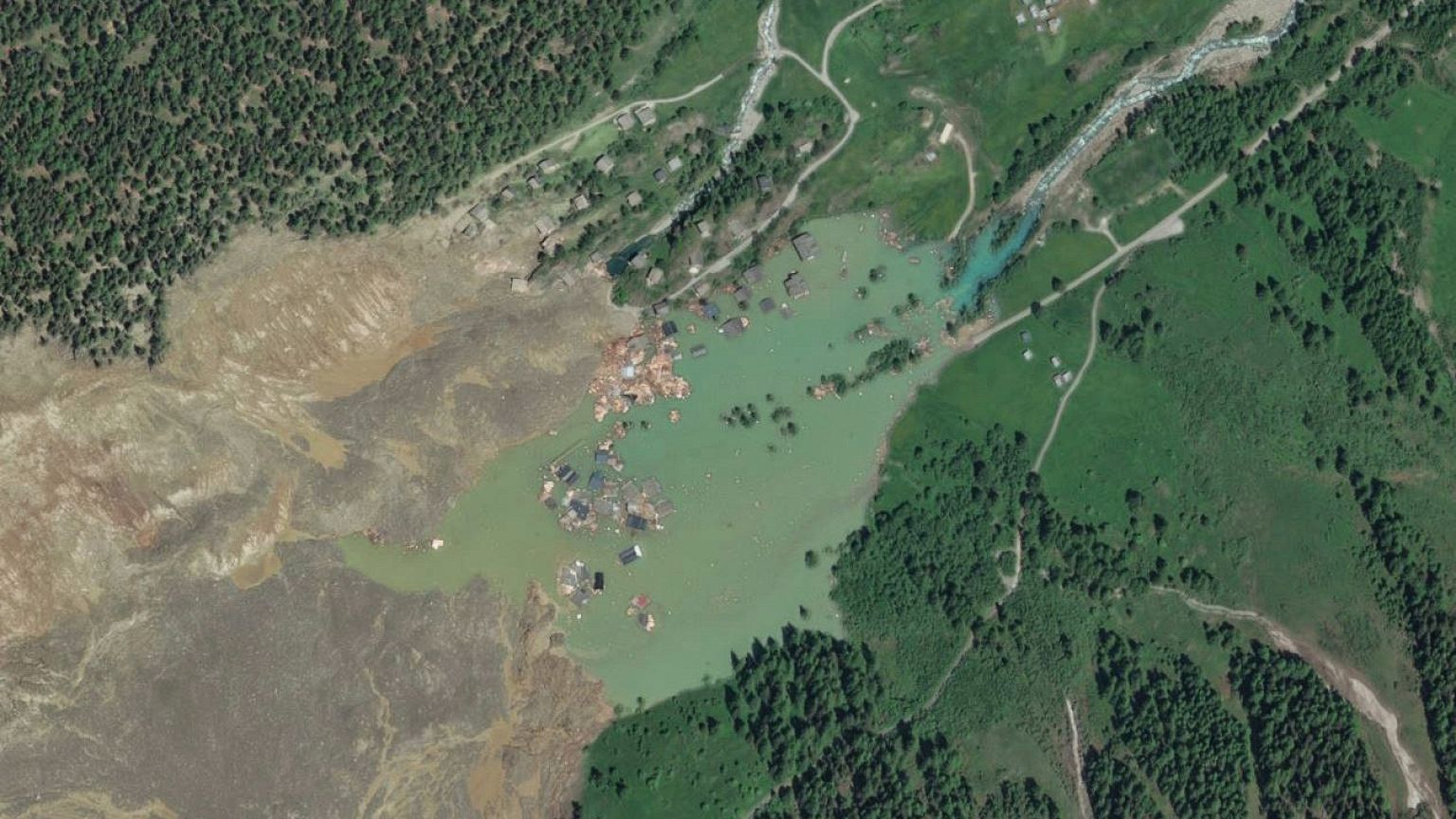
This satellite image provided by Maxar Technologies shows the aftermath of a mudslide in Blatten, 30 May, 2025
Copyright AP Photo

By Abby Chitty with AP, EBU
Published on 

Focus has now shifted to the safety of those living near the Lonza River, which the regional government warns could flood as a result of dammed water flows caused by debris.

Authorities in southern Switzerland are on high alert as concerns grow over potential flooding along the Lonza River following the collapse of the Birch Glacier earlier this week.

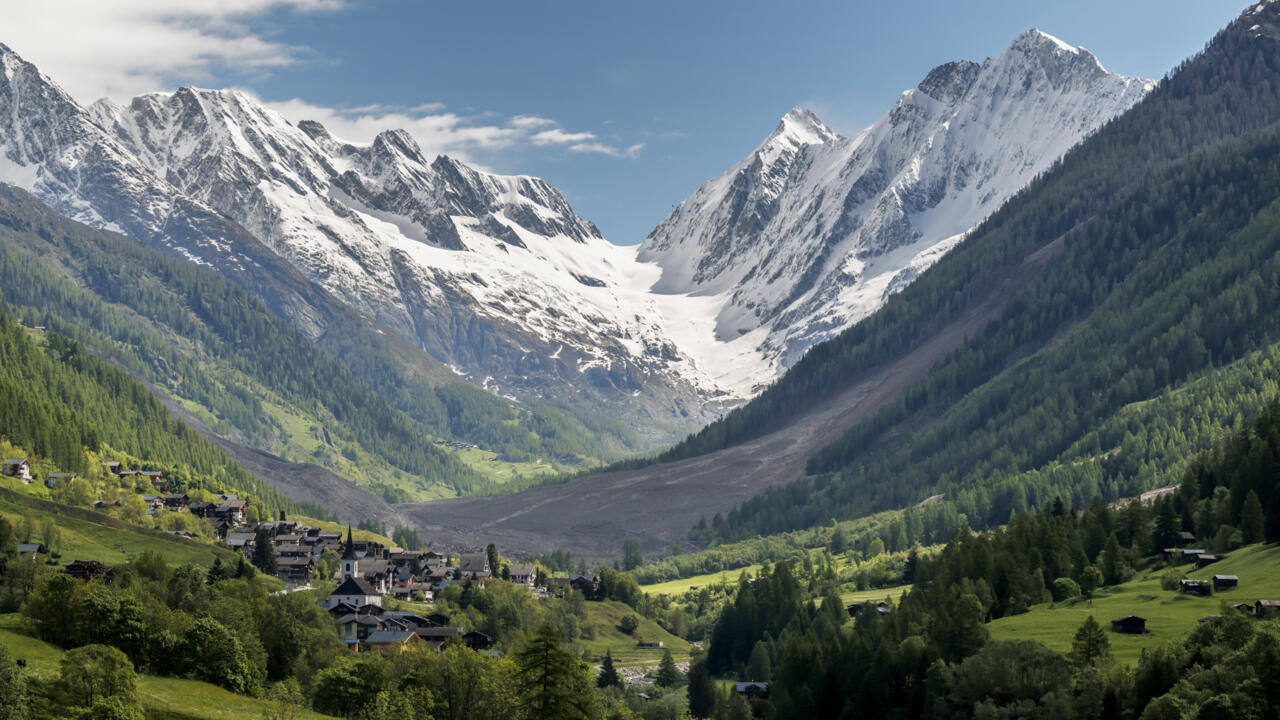
A massive avalanche of rock and ice swept down into the Lötschental valley, burying much of the Alpine village of Blatten under mud and debris. Officials report that 90% of the village has been destroyed.

The collapse caused debris to fill the bed of the Lonza River, creating a dam and causing a lake to form upstream. Officials warn that if the dam gives way, the resulting surge could flood communities downstream.

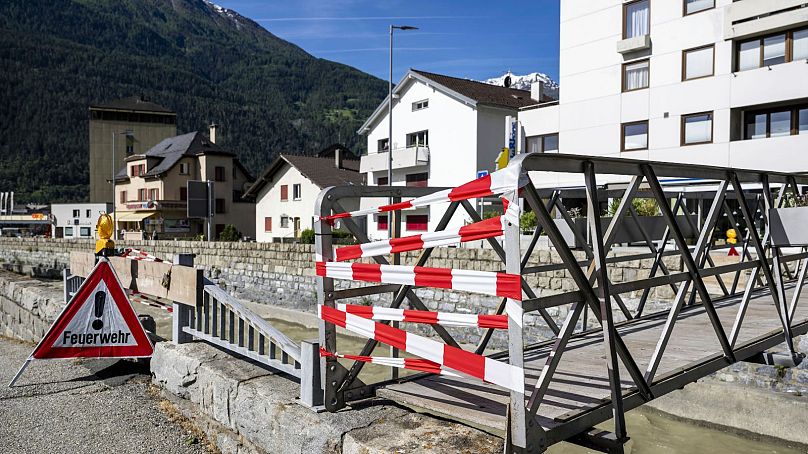
Authorities have begun dismantling pedestrian bridges and reinforcing critical infrastructure to prepare for possible flooding in Gampel and residents have been advised to arrange emergency accommodation in case of evacuation.

"I didn't sleep last night," one woman told reporters. "We were constantly waiting - if something happens, we have to go."

A pedestrian bridge preventively closed over the Lonza river after mud and rock slides, in Gampel-Steg.Jean-Christophe Bott/Keystone via AP

To mitigate the risk, authorities have emptied the Ferden dam downstream, hoping it can absorb some of the potential overflow if there is a breach.

The Swiss army has been deployed to the region but is currently unable to conduct ground operations due to ongoing instability.

In Blatten, the devastation is extensive. Aerial footage shows homes submerged in thick mud, with roads and structures either buried or swept away.

Authorities had evacuated more than 300 people, as well as livestock, from Blatten village as a precaution earlier this month, but one man remains missing following the incident.

However, local police say the search and rescue operation has been temporarily suspended because of falling debris.

President Karin Keller-Sutter visited the region earlier on Friday.


Switzerland monitoring for flood risk after huge glacier collapse

Geneva (AFP) – Swiss authorities were on Thursday monitoring for possible flood risk in a southern valley, following a massive glacier collapse that created a huge pile of debris after destroying a small village.


Issued on: 29/05/2025

Authorities warned of serious risk of an ice jam after the Birch Glacier collapsed and partially destroyed Swiss Alpine village © FABRICE COFFRINI / AFP

On Wednesday the Birch glacier in Switzerland's southern Wallis region collapsed, sending tons of rock, ice and scree hurtling down the mountain slope and into the valley below.

The barrage largely destroyed the hamlet of Blatten, which had been home to 300 people and was evacuated last week due to the impending danger.

One person, a man aged 64, believed in the affected zone at the time, remained reported missing.

On Thursday authorities declared a local state of emergency as they monitor the situation after the huge pile of glacier debris, stretching some two kilometres (1.25 miles), blocked the river Lonza.


"There is a serious risk of an ice jam that could flood the valley below," Antoine Jacquod, a military security official, told the Keystone-ATS news agency.

"We're going to try to assess its dimensions today," added Jacquod.

With the area too unstable to approach, authorities said an assessment would be made at 6:00 pm (1600 GMT) from the nearby village of Ferden.

As a precaution, 16 people were evacuated late Wednesday from two villages located downstream from the disaster area.
'Not very stable'

"It's like a mountain, and of course, it creates a small lake that gets bigger and bigger," explained Raphael Mayoraz, the cantonal official in charge of natural hazard management, Wednesday evening.

An artificial dam was preemptively emptied to receive the water pushed back by the wall of ice, earth and rubble.

Were that water to overflow from the dam, authorities would need to consider evacuating the valley.

The Valais cantonal government has meanwhile asked the army to provide clearing equipment and pumps to secure the riverbed.

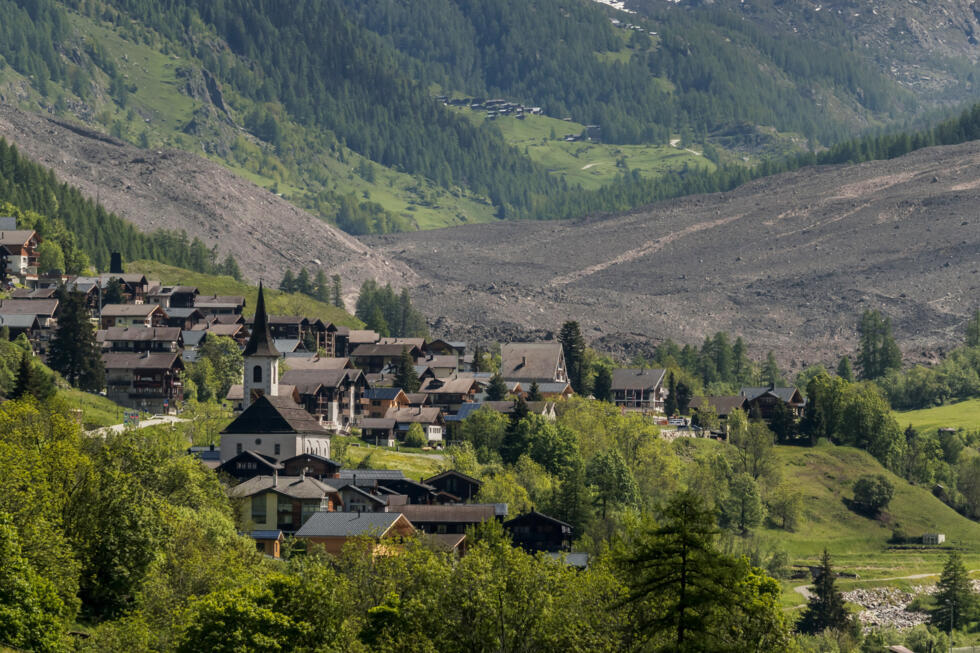
The extent of the landslip is seen from the nearby village of Ferden 
© FABRICE COFFRINI / AFP

"The deposit ... is not very stable, and debris flow is possible within the deposit itself (which) makes any intervention in the disaster area impossible for the time being," cantonal authorities stated, adding there was risk on both sides of the valley.
Seismic event

YouTube footage of the collapse showed a huge cloud of ice and rubble hurtling down the mountainside, into the valley, and partially up the mountain slope on the other side.

The force was such that Swiss monitoring stations registered the phenomenon as a seismic event.

According to Mayoraz, "three million cubic metres of rock fell suddenly onto the glacier, carrying it with them" down into the valley.

Warming temperatures have both shrunk the Alps' glaciers and have made them more unstable.

Swiss glaciers, severely impacted by climate change, melted as much in 2022 and 2023 as between 1960 and 1990, losing in total about 10 percent of their volume.

In late August 2017, approximately 3.1 million cubic meters of rock fell from Pizzo Cengalo, a mountain in the Alps in Graubuenden canton, near the Italian border, claiming the lives of eight hikers.

Some 500,000 cubic metres of rock and mud flowed as far as the town of Bondo, causing significant material damage but no casualties.

© 2025 AFP


In Switzerland, a glacier collapse destroys a village


Issued on: 29/05/2025

A huge mass of rock and ice from a glacier thundered down a Swiss Alpine mountainside on Wednesday, sending plumes of dust skyward and coating with mud nearly all of village in the valley below that authorities had evacuated earlier this month as a precaution

.


One missing as village largely destroyed in Swiss glacier collapse

Geneva (AFP) – A massive glacier collapse in the Swiss Alps on Wednesday largely destroyed the village of Blatten, with one person missing, authorities said.


Issued on: 28/05/2025 - 

Swiss glaciers melted as much in 2022 and 2023 as between 1960 and 1990 © Fabrice COFFRINI / AFP/File


The village in the Lotschental valley, home to 300 people, had been evacuated last week due to the impending danger.

The huge collapse on the Birch Glacier in Switzerland's southern Wallis region happened at around 3:30 pm.

Officials said the missing person, a 64-year-old man, was not one of the evacuated residents, and added that there were no known injuries.

"The unimaginable has happened," Blatten's president Matthias Bellwald told a press conference.

"We have lost our village, but not our hearts.

"Even though the village lies under a huge pile of rubble, we know where our homes and our church must be rebuilt," he added.

The glacier collapse had been expected for several days.

Footage posted on YouTube showed a huge cloud of ice and scree hurtling down the mountain slope and into the valley where the village is located. The mud and rockfall hit the houses.

"The worst-case scenario has occurred," said Raphael Mayoraz, head of the Wallis canton's Natural Hazards Service.

He said three million cubic metres of material had accumulated on the glacier, and then tumbled down into the valley.

"This is a very rare event," he said. "We don't know exactly what's still up there, but most of it has fallen."

Search and rescue effort

Swiss national broadcaster RTS aired drone footage showing the debris had subsumed and smashed buildings, and pushed homes into one another.

Wallis police said the missing 64-year-old man was a local resident who, according to their information, was in the area at the time of the incident.

A search and rescue operation was launched, with three rescue specialists airlifted to the scene, while a drone with a thermal imaging camera was also used.

"Despite significant efforts, the man has still not been found," police said.

Mayoraz said a blockage two kilometres long had formed in the valley floor, where the Lonza river flows, with a small lake growing behind it.

"It's like a small mountain," he said.

Though unlikely, a debris flow cannot be ruled out completely, he added.

"That's a risk we have to monitor," he said.

'Nature is stronger'

"It's terrible to lose your home. In these difficult times, my thoughts are with the residents of Blatten," Swiss President Karin Keller-Sutter wrote on X.

Two of Switzerland's seven government ministers, defence and civil protection minister Martin Pfister and environment minister Albert Rosti, went to the valley.

Pfister called it a disaster of "striking proportions".

"We assure you of our support, today and in the weeks and probably years to come," he told the press conference, adding that the army was on its way.

Rosti said the government "will do everything possible to give Blatten a future, although it will take a lot of effort and time".

"Nature is stronger than humankind, as mountain dwellers know," he added.

A significant increase in activity was observed on the glacier from Tuesday night and intensified during Wednesday.

The Alps mountain range in Europe has seen its glaciers retreat in recent years due to warming that most scientists attribute to climate change.

Swiss glaciers, severely impacted by climate change, melted as much in 2022 and 2023 as between 1960 and 1990, losing in total about 10 percent of their volume.

© 2025 AFP

CRIMINAL CAPITALI$M

Nestlé under fire as Perrier sales collapse amid water scandal

Nestlé is facing mounting pressure as Perrier water sales have taken a nosedive, while a high-profile environmental case against the Swiss company has been postponed amid growing public scrutiny.


Issued on: 27/05/2025 - RFI

The Nestlé bottled water scandal is having an impact on the group's brands - particularly Perrier - with consumption of the sparkling water brand falling by 14 percent since January 2025. Getty Images via AFP - ARTURO HOLMES

Perrier, once the sparkling jewel in Nestlé's bottled water crown, is feeling the sting of a major consumer backlash.

Following revelations of environmental misconduct by Nestlé Waters, sales of Perrier have taken a sharp dive – down 14 percent since January and a staggering 23 percent compared to this time last year.

The slump follows investigative reports by Le Monde newspaper and Radio France, which uncovered serious breaches in Nestlé’s water bottling operations.

The fallout has been swift. While the bottled water sector overall is seeing a modest rebound – up 2.5 percent in early 2025 thanks to a milder spring – Perrier’s decline is notably out of step with the rest of the market.


Consumers switching brands


“This isn’t a sector-wide crisis,” said Christophe Lekieffre, general delegate of the Syndicate of Spring and Natural Mineral Waters – SESEMN. “The market is growing again, and clearly consumers are simply switching to other brands”.

While still and sparkling water sales dipped slightly in 2024, the broader market hasn’t suffered nearly as much as Perrier.

The drop in Perrier sales – once a household staple – signals that brand loyalty is no match for environmental concerns in today’s market.

Nestlé court case post-poned

The backlash comes amid a growing legal headache for Nestlé.

A high-profile trial, where Nestlé Waters faces charges for illegal waste dumping in the Vosges region, was due to begin this week.

However, a court in Nancy has postponed proceedings to November due to late summons and an unexpectedly large list of witnesses.

Nestlé is accused of maintaining four massive illegal dumps, containing over 470,000 cubic metres of waste – roughly equivalent to 126 Olympic swimming pools.


The waste includes everything from plastic and demolition debris to vehicle parts and glass.

Prosecutors say the environmental damage is serious, with reports of microplastics contaminating surface and groundwater, harming ecosystems and potentially human health.

The company maintains that the waste predates its ownership and claims to have cleaned up most of the affected sites.

The court proceedings are expected to delve deeper into the practices highlighted in a recent Senate report, which also accused state bodies of a cover-up.

Rigged diesel cars caused 16,000 deaths in France, study says

Diesel engines fitted with illegal software to cheat pollution tests have caused 16,000 deaths in France since 2009, according to the first study to calculate the human cost of the "Dieselgate" scandal that exposed widespread fraud by car manufacturers.


Issued on: 29/05/2025 

The Dieselgate scandal erupted in the United States in 2015, when it was revealed that carmakers had fitted diesel vehicles with software that made them appear cleaner during official lab testing. AFP - FRED TANNEAU

The research comes from the Centre for Research on Energy and Clean Air (CREA), an independent group based in Finland.

It warns that another 8,000 preventable deaths could occur in France by 2040 if the affected vehicles remain on the road.

The study, published Wednesday, estimates the scandal will cost France €146 billion in healthcare, lost productivity and early deaths.

Across Europe, including Britain, CREA projects 205,000 premature deaths linked to the excess pollution, with total economic losses reaching €1.2 trillion.
l
Hidden pollution

The Dieselgate scandal erupted in the United States in 2015, when it was revealed that carmakers had fitted diesel vehicles with software that made them appear cleaner during official lab testing.

In real driving conditions, the cars emitted far higher levels of nitrogen dioxide.

The affected cars were widely sold in Europe, including France. More than 200 models sold between September 2009 and August 2019 were affected, including vehicles made by Volkswagen, Peugeot, Renault and Fiat.

According to the International Council on Clean Transportation, around 19 million of these vehicles are still on the road in Europe.

The study links the excess emissions to a rise in respiratory and cardiovascular diseases, cancer and diabetes. In France alone, CREA found the tampered engines will have caused 26,000 new cases of childhood asthma by 2040.

“These excess emissions add to ‘legal’ emissions and should never have polluted the air we breathe,” the researchers said.

Push for recalls

Anne Lassman-Trappier, who works on air quality for the environmental group France Nature Environnement, said the deaths were avoidable.

“The state must force car manufacturers to bring these vehicles up to standard,” Lassman-Trappier told France Inter.

“This is what was done in the United States as soon as the scandal broke, to save thousands of lives. We’re talking about thousands of asthma cases, hundreds of thousands of days not worked for the economy. It’s worth it. We must act.”

France Nature Environnement argues that French authorities should have required manufacturers to recall the vehicles or offer compensation.

“The government’s inaction following the Dieselgate scandal is still causing daily suffering, causing deaths and costing the economy dearly,” Lassman-Trappier said.

“Thousands of lives can still be saved and billions of euros spared if France finally forces manufacturers to bring the millions of vehicles with toxic emissions into compliance or reimburse harmed consumers.”

Legal fallout


On 26 May, four former Volkswagen executives were sentenced to prison in Germany for fraud, receiving terms of up to four and a half years.

In 2023, former Audi boss Rupert Stadler received a suspended sentence of 21 months.

The CREA study found that acting now could prevent 8,000 premature deaths, 8,000 new childhood asthma cases, 800,000 sick days and €45 billion in economic losses in France by 2040.
More killer heat and rising seas likely in next five years, UN warns

The world is heading for several more years of extreme heat, with temperatures likely to stay near or above current record levels, a report published on Wednesday by the UN’s weather agency warns.


Issued on: 28/05/2025 - RFI

There is an 80 percent chance that at least one year between 2025 and 2029 will be hotter than 2024 – the warmest year ever recorded. AP - TY ONEIL

The report, by the World Meterological Organisation (WMO) in tandem with UK’s Met Office, says global temperatures are likely to keep rising over the next five years – increasing risks for people, economies and ecosystems.

It follows a separate WMO report released in March, which found that 2024 was likely the first calendar year where the global temperature was more than 1.5C above pre-industrial levels.

“We have just experienced the 10 warmest years on record,” WMO deputy secretary-general Ko Barrett said.

Breach likely


There is an 80 percent chance that at least one year between 2025 and 2029 will be hotter than 2024 – the warmest year ever recorded.

There is also an 86 percent chance that one of those years will go above 1.5C compared to pre-industrial levels.

Across the full five-year period, there is a 70 percent chance that the average warming will exceed 1.5C. That’s up from 47 percent in last year’s forecast.

The 1.5C target in the Paris Agreement refers to a 20-year global average, so it has not yet officially been passed. But the WMO’s earlier report said 2024 saw an annual temperature of 1.55C above the pre-industrial baseline, based on observational records.

For the first time, there is now a one percent chance that a single year before 2029 could exceed 2C of warming. That risk is still low, but scientists say it is growing.

“It is shocking,” UK Met Office climate scientist Adam Scaife said. “That probability is going to rise.”

Arctic warming surges


The Arctic is heating much faster than the rest of the world. The report says winter temperatures in the region will rise by about 2.4C compared to the 1991-2020 average – more than three and a half times the global rate.

This is likely to drive further sea ice loss in the Barents, Bering and Okhotsk seas, which could affect weather patterns around the world.

From May to September over the next five years, wetter than average conditions are likely in the African Sahel, northern Europe, Alaska and northern Siberia. The Amazon could face more drought.

South Asia is also expected to stay wetter than normal, though not in every season.

Key thresholds

The WMO says the 20-year average warming from 2015 to 2034 is likely to be about 1.44C above pre-industrial levels.

The forecasts are based on more than 200 computer simulations from 15 scientific centres and were compiled by the UK’s Met Office.

Every fraction of a degree makes extreme weather more likely – including heatwaves, floods, droughts and rising seas.

The findings come ahead of this year’s COP30 climate summit, where countries are expected to present new action plans to meet the Paris Agreement goals.