Swiss villages on high alert after glacier collapse and landslide buries Blatten
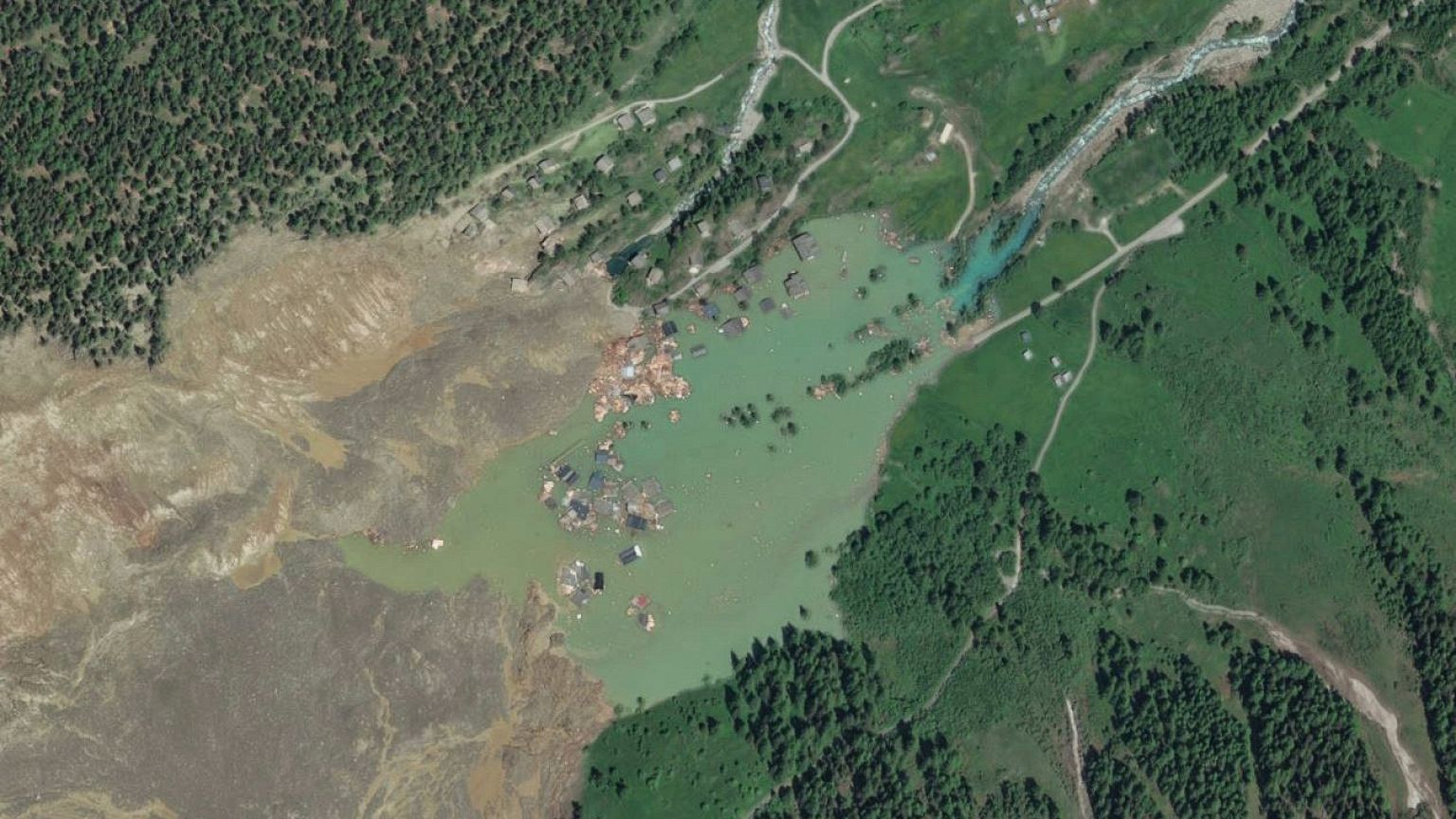
Focus has now shifted to the safety of those living near the Lonza River, which the regional government warns could flood as a result of dammed water flows caused by debris.
Authorities in southern Switzerland are on high alert as concerns grow over potential flooding along the Lonza River following the collapse of the Birch Glacier earlier this week.
A massive avalanche of rock and ice swept down into the Lötschental valley, burying much of the Alpine village of Blatten under mud and debris. Officials report that 90% of the village has been destroyed.
The collapse caused debris to fill the bed of the Lonza River, creating a dam and causing a lake to form upstream. Officials warn that if the dam gives way, the resulting surge could flood communities downstream.
Authorities have begun dismantling pedestrian bridges and reinforcing critical infrastructure to prepare for possible flooding in Gampel and residents have been advised to arrange emergency accommodation in case of evacuation.
"I didn't sleep last night," one woman told reporters. "We were constantly waiting - if something happens, we have to go."
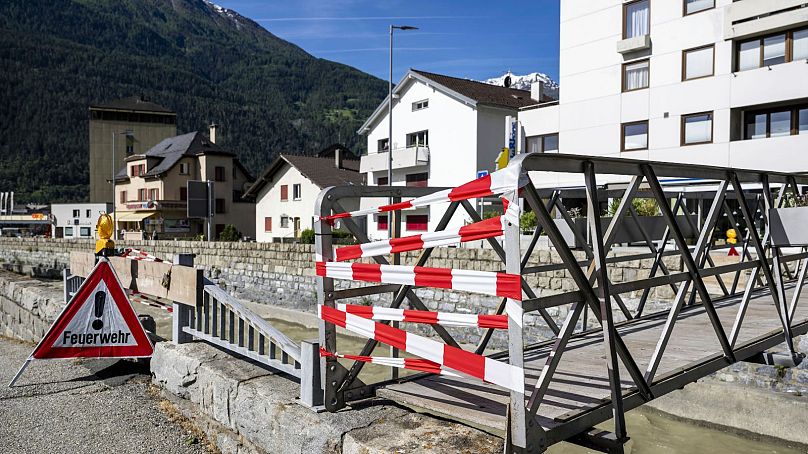
To mitigate the risk, authorities have emptied the Ferden dam downstream, hoping it can absorb some of the potential overflow if there is a breach.
The Swiss army has been deployed to the region but is currently unable to conduct ground operations due to ongoing instability.
In Blatten, the devastation is extensive. Aerial footage shows homes submerged in thick mud, with roads and structures either buried or swept away.
Authorities had evacuated more than 300 people, as well as livestock, from Blatten village as a precaution earlier this month, but one man remains missing following the incident.
However, local police say the search and rescue operation has been temporarily suspended because of falling debris.
President Karin Keller-Sutter visited the region earlier on Friday.
Geneva (AFP) – Swiss authorities were on Thursday monitoring for possible flood risk in a southern valley, following a massive glacier collapse that created a huge pile of debris after destroying a small village.
Issued on: 29/05/2025
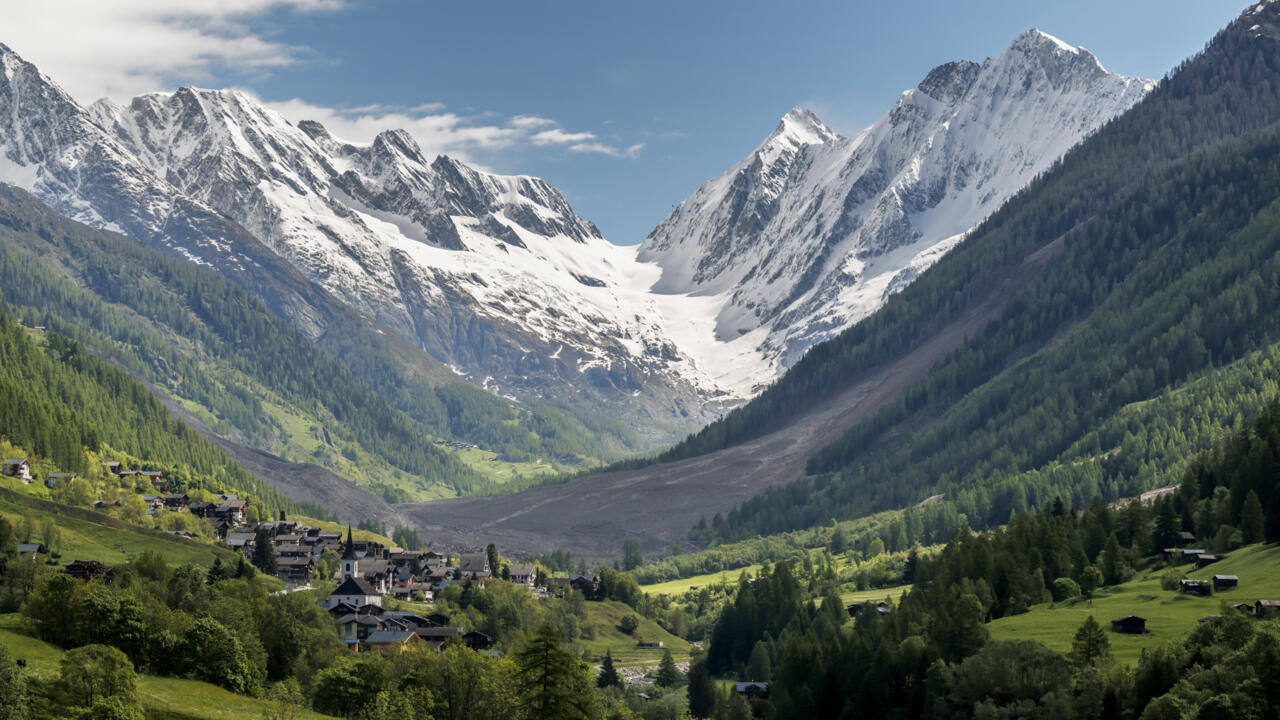
On Wednesday the Birch glacier in Switzerland's southern Wallis region collapsed, sending tons of rock, ice and scree hurtling down the mountain slope and into the valley below.
The barrage largely destroyed the hamlet of Blatten, which had been home to 300 people and was evacuated last week due to the impending danger.
One person, a man aged 64, believed in the affected zone at the time, remained reported missing.
On Thursday authorities declared a local state of emergency as they monitor the situation after the huge pile of glacier debris, stretching some two kilometres (1.25 miles), blocked the river Lonza.
"There is a serious risk of an ice jam that could flood the valley below," Antoine Jacquod, a military security official, told the Keystone-ATS news agency.
"We're going to try to assess its dimensions today," added Jacquod.
With the area too unstable to approach, authorities said an assessment would be made at 6:00 pm (1600 GMT) from the nearby village of Ferden.
As a precaution, 16 people were evacuated late Wednesday from two villages located downstream from the disaster area.
'Not very stable'
"It's like a mountain, and of course, it creates a small lake that gets bigger and bigger," explained Raphael Mayoraz, the cantonal official in charge of natural hazard management, Wednesday evening.
An artificial dam was preemptively emptied to receive the water pushed back by the wall of ice, earth and rubble.
Were that water to overflow from the dam, authorities would need to consider evacuating the valley.
The Valais cantonal government has meanwhile asked the army to provide clearing equipment and pumps to secure the riverbed.
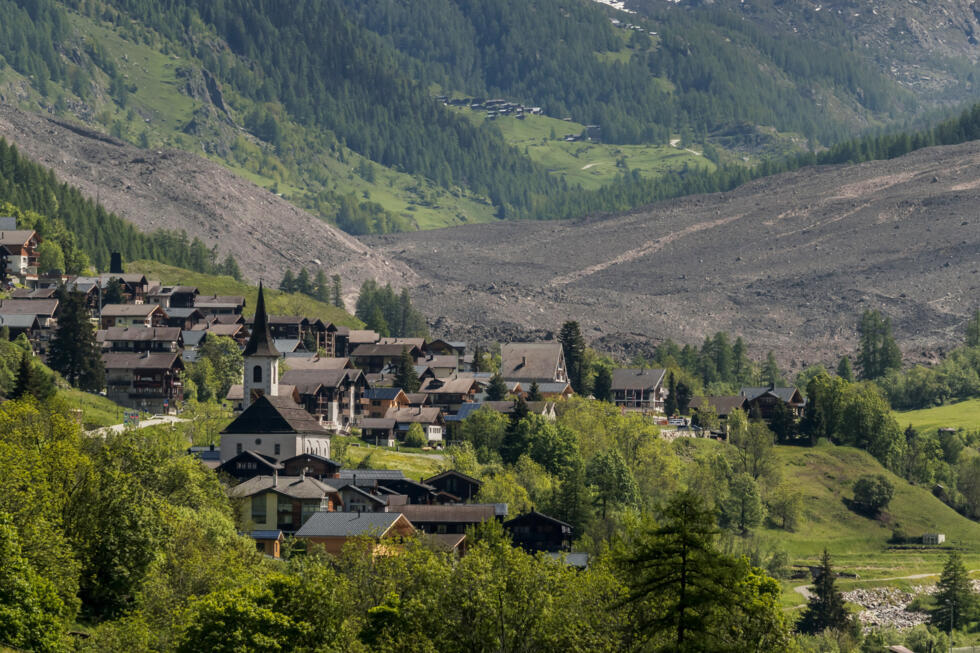
"The deposit ... is not very stable, and debris flow is possible within the deposit itself (which) makes any intervention in the disaster area impossible for the time being," cantonal authorities stated, adding there was risk on both sides of the valley.
Seismic event
YouTube footage of the collapse showed a huge cloud of ice and rubble hurtling down the mountainside, into the valley, and partially up the mountain slope on the other side.
The force was such that Swiss monitoring stations registered the phenomenon as a seismic event.
According to Mayoraz, "three million cubic metres of rock fell suddenly onto the glacier, carrying it with them" down into the valley.
Warming temperatures have both shrunk the Alps' glaciers and have made them more unstable.
Swiss glaciers, severely impacted by climate change, melted as much in 2022 and 2023 as between 1960 and 1990, losing in total about 10 percent of their volume.
In late August 2017, approximately 3.1 million cubic meters of rock fell from Pizzo Cengalo, a mountain in the Alps in Graubuenden canton, near the Italian border, claiming the lives of eight hikers.
Some 500,000 cubic metres of rock and mud flowed as far as the town of Bondo, causing significant material damage but no casualties.
© 2025 AFP
In Switzerland, a glacier collapse destroys a village
Issued on: 29/05/2025
A huge mass of rock and ice from a glacier thundered down a Swiss Alpine mountainside on Wednesday, sending plumes of dust skyward and coating with mud nearly all of village in the valley below that authorities had evacuated earlier this month as a precaution
Geneva (AFP) – A massive glacier collapse in the Swiss Alps on Wednesday largely destroyed the village of Blatten, with one person missing, authorities said.
Issued on: 28/05/2025 -

The village in the Lotschental valley, home to 300 people, had been evacuated last week due to the impending danger.
The huge collapse on the Birch Glacier in Switzerland's southern Wallis region happened at around 3:30 pm.
Officials said the missing person, a 64-year-old man, was not one of the evacuated residents, and added that there were no known injuries.
"The unimaginable has happened," Blatten's president Matthias Bellwald told a press conference.
"We have lost our village, but not our hearts.
"Even though the village lies under a huge pile of rubble, we know where our homes and our church must be rebuilt," he added.
The glacier collapse had been expected for several days.
Footage posted on YouTube showed a huge cloud of ice and scree hurtling down the mountain slope and into the valley where the village is located. The mud and rockfall hit the houses.
"The worst-case scenario has occurred," said Raphael Mayoraz, head of the Wallis canton's Natural Hazards Service.
He said three million cubic metres of material had accumulated on the glacier, and then tumbled down into the valley.
"This is a very rare event," he said. "We don't know exactly what's still up there, but most of it has fallen."
Search and rescue effort
Swiss national broadcaster RTS aired drone footage showing the debris had subsumed and smashed buildings, and pushed homes into one another.
Wallis police said the missing 64-year-old man was a local resident who, according to their information, was in the area at the time of the incident.
A search and rescue operation was launched, with three rescue specialists airlifted to the scene, while a drone with a thermal imaging camera was also used.
"Despite significant efforts, the man has still not been found," police said.
Mayoraz said a blockage two kilometres long had formed in the valley floor, where the Lonza river flows, with a small lake growing behind it.
"It's like a small mountain," he said.
Though unlikely, a debris flow cannot be ruled out completely, he added.
"That's a risk we have to monitor," he said.
'Nature is stronger'
"It's terrible to lose your home. In these difficult times, my thoughts are with the residents of Blatten," Swiss President Karin Keller-Sutter wrote on X.
Two of Switzerland's seven government ministers, defence and civil protection minister Martin Pfister and environment minister Albert Rosti, went to the valley.
Pfister called it a disaster of "striking proportions".
"We assure you of our support, today and in the weeks and probably years to come," he told the press conference, adding that the army was on its way.
Rosti said the government "will do everything possible to give Blatten a future, although it will take a lot of effort and time".
"Nature is stronger than humankind, as mountain dwellers know," he added.
A significant increase in activity was observed on the glacier from Tuesday night and intensified during Wednesday.
The Alps mountain range in Europe has seen its glaciers retreat in recent years due to warming that most scientists attribute to climate change.
Swiss glaciers, severely impacted by climate change, melted as much in 2022 and 2023 as between 1960 and 1990, losing in total about 10 percent of their volume.
© 2025 AFP

No comments:
Post a Comment