Thursday, May 29, 2025

Follow the Money? The Algorithm Follows Us to Make the Money


...Those who control the narrative, control the (fill in the blank, but hint hint, ‘world’)


…Those who control the food, control the (fill in the blank, but hint hint, ‘world’)

…Those who control the water, control the (fill in the blank, but hint hint, ‘world’)

…Those who control the money, control the (fill in the blank, but hint hint, ‘world’)

…Those who control the media, control the (fill in the blank, but hint hint, ‘world’)

…Those who control outer space, control the (fill in the blank, but hint hint, ‘world’)

…Those who control the data, control the (fill in the blank, but hint hint, ‘world’)
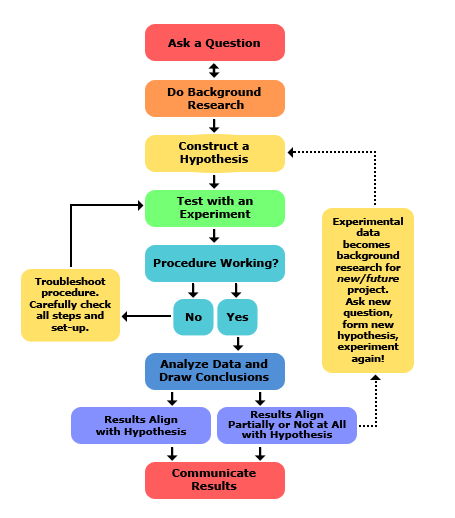
Throwing in that “Big data” fishnet just a decade ago was the big new addition to the scientific method: Try to find even the most vague or minimally-recognized studies, and then let the computer develop the patterns.

Ahh, was it David Quammen or some of the other thousands of sources I have utilized over a 45 year period that exposed me to that rare but highly interesting factoid that a woman’s daily diary entrees while living in Costa Rica allowed science to research why the birthrate had fallen and the survival rate had plummented for the golden toad.

She catalogued the changing cloud and mist and fog cover in her homeland, and over a thirty year period, she meticulously recorded all number of tidbits of observation, including that reduction in the clouds hitting the treeline.

Do the Google AI search, and nothing pops up.

It’s pure lies, these AI generated responses: Quoting below.

While the story of a woman’s diary specifically detailing the golden toad’s decline and its link to reduced mist in Costa Rica might be fictional or anecdotal, the core issue of the golden toad’s extinction and its relation to changing cloud forest conditions is well-documented.

Here’s a breakdown of how changes in mist and fog likely contributed to the golden toad’s disappearance:

1. Golden Toads and Their Cloud Forest Habitat:

  • The golden toad was endemic to a small, high-altitude region within the Monteverde Cloud Forest in Costa Rica, an environment known for its constant mist, high humidity, and a rainy season.
  • These specific conditions were crucial for the golden toad’s breeding cycle and survival.

2. Climate Change and Reduced Mist:

  • Climate change has altered weather patterns globally, and the Monteverde Cloud Forest was not spared.
  • Researchers have observed a decrease in mist and moisture levels in the cloud forest, potentially due to rising temperatures and shifting cloud patterns.
  • This reduction in mist could have made the environment drier, impacting the golden toad’s delicate skin and potentially leading to dehydration.

3. Impact on Breeding:

  • Golden toads relied on rainwater pools for breeding.
  • Reduced mist and rainfall likely led to the drying up of these crucial breeding pools, hindering the toad’s ability to reproduce successfully.

4. The Chytrid Fungus:

  • Changes in climate, including drier conditions, could have created a more favorable environment for the chytrid fungus, a deadly pathogen that affects amphibians.
  • This fungus attacks the skin of frogs and toads, disrupting their ability to absorb water and electrolytes, ultimately leading to death.

In Summary:

While a diary account remains unsubstantiated, the scientific consensus points towards climate change, leading to a reduction in mist and rainfall, as a significant factor in the golden toad’s extinction. These altered environmental conditions likely impacted the toad’s ability to breed and may have increased its vulnerability to the deadly chytrid fungus.

*****

So, my own Substacks (I have three under pseudonyms) have varying levels of so-called rant and railing and deep deep disregard for most authorities. A few hundred subscribers, and very few are paid ones.

Because I do these “news” headline “essays,” my own news feeds have been corrupted with many times the opposite sort of sources I would go to for reliable information — Israeli rags, USA mainstream, European mainstream, defense/offensive professional journals, Bloomberg and Fortuneet al.

What happens, though, is a reverse osmosis sort of play on the hourly news that gets fed to me via Bing, Yahoo, AP, UPI, CNN, and the list goes on.

It’s not exactly a deep and sophisticated exercise that might end up on Dissident Voice, but I’ll attempt one now:

1. Forgone conclusions, and this is the techno-fascist world controlling the narrative and that narrative is controlled by the oligarchs and the virus of a shifting baseline disorder and rampant disregard for a precautionary principle and the value of looking at intended and unintended (rare) negative effects of these titans of capital and their Brave Banal Evil Doers, the scientists, engineers, fabricators, technologists, et al.

Exhibit A (infinity is really that number):

Looks and sounds like a geek, such a nice sweet looking banal sort of fellow?

  • Google DeepMind CEO Demis Hassabis says in the next 5-10 years, AI will disturb more jobs
  • He urged teens to become code ninjas to deal with the AI-driven world
  • He also said that the youngest generation, Gen Alpha, must start experimenting with AI as soon as possible

As the world dashes into an AI-driven future, Google DeepMind CEO Demis Hassabis has a clear message for teens: learn now or be left behind. Hassabis leads Google DeepMind, the advanced research lab behind the company’s most high-end AI developments, including the Gemini chatbot. The lab is also spearheading Google’s efforts toward achieving artificial general intelligence (AGI) — a yet-unrealised form of AI capable of human-level reasoning. At the recent Google I/O developer conference, Hassabis said DeepMind is likely less than a decade away from building AGI. As he works in such an environment, he certainly knows what form AI will take in the near future. (India Today, of all rags I get in my feeds)

There are many many paywalls now, so anything from the NYT, well, I have to do end-arounds sometimes to read the entire pieces, but headlines and sub-headlines do the trick:

At Amazon, Some Coders Say Their Jobs Have Begun to Resemble Warehouse Work

Pushed to use artificial intelligence, software developers at the e-commerce giant say they must work faster and have less time to think. Others welcome the shift.

Go to Reddit on this one headline and you get all sorts of opinions and personal experiences with codes.

I’ve written much about Amazon, and I even organized with SEIU against Amazon’s warehouse unsafe warehouse conditions and their anti-union stance.

But the geeks and all those soccer moms and geek dads want their children not to marry cowboys but to marry coders and software engineers, or drone impresarios: A “17-year-old designed a cheaper, more efficient drone. The Department of Defense just awarded him $23,000 for it.”
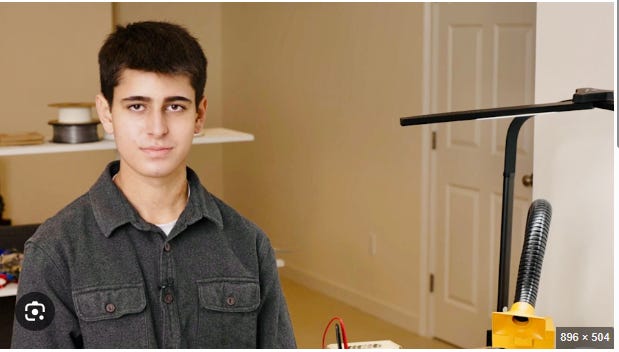
Dual Use, man, dual use which is always Capitalist Abuse and Military Murder Hardware: Cooper Taylor, 17, aims to revolutionize the drone industry with a new design.

Taylor designed a motor-tilting mechanism to lower manufacturing cost and increase efficiency.

Taylor has spent the last year optimizing a type of drone that’s being used more and more in agriculture, disaster relief, wildlife conservation, search-and-rescue efforts, and medical deliveries.

All drone technology is for murdering, in the end.
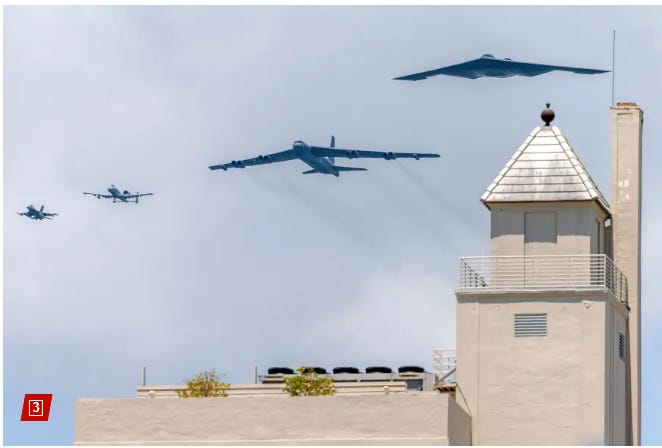
And what fuels these death machines, these genocide facilitators? Geeks in high school robotics Olympics.

A breathtaking flyover of nearly every United States Air Force fighter and bomber jet soared during a Florida air show Saturday, stunning footage of the historic aerial display showed.

Seven of the top military aircraft, called the “Freedom Flyover,” united as “one unstoppable force” for thousands of people to take in over Memorial Day weekend at the Hyundai Air and Sea Show in Miami Beach.

*****

Somehow it ALWAYS comes down for me from these feeds back to the Jewish State of Murdering Raping Starving Polluting Poisoning Occupied Palestine:

As thousands of Israeli nationalists and religious Jews on Monday marked Jerusalem Day, which celebrates Israel’s 1967 capture of east Jerusalem, some chanted “Death to Arabs” while marching through Muslim neighborhoods. Protesters, including an Israeli member of parliament, also reportedly stormed a compound belonging to the UN agency for Palestinian refugees.

[Oh, you can call these Jews in Israel Right-wing Nationalists, or pro-settler extermists, but they are in the Jewish State of Israel, and they are Jewish. Calling them Jewish is not anti-semitic, and leaving out the term “zionist” is not an error of omission.]

Last year’s procession, which came during the first year of the war in Gaza, saw ultranationalist Israelis attack a Palestinian journalist in the Old City and call for violence against Palestinians. Four years ago, the march helped set off an 11-day war in Gaza.

Tour buses carrying young ultranationalist Jews lined up near entrances to the Old City, bringing hundreds from outside Jerusalem, including settlements in the Israeli-occupied West Bank.

Police said they had detained a number of individuals, without specifying, and “acted swiftly to prevent violence, confrontations, and provocations.”

*****

And, the IOF, Israeli Occupation Forces, well, they do teach many US police departments on “crowd suppression,” pressure point holds, subbing peaceful protestors, and strong-arming old ladies and teens.
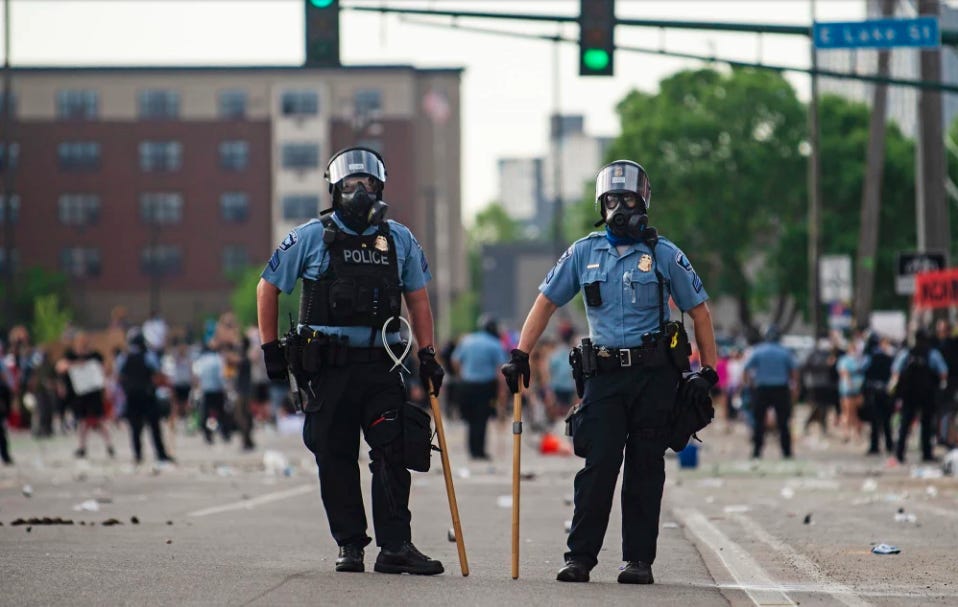
And, as always, NBC, or whichever mainstream and corporate media outfit, will always suppress the reality — Some fear excessive use of force will rise as the DOJ drops oversight of police departments.

George Floyd, Michael Brown?
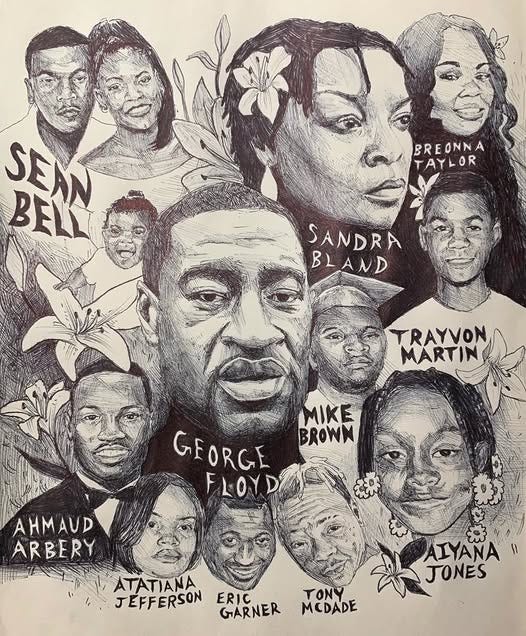
No photo description available.

“It is important to not overstate what consent decrees do,” said Jin Hee Lee with the Legal Defense Fund, referring to the power of federal courts to enforce orders. “They are very important and oftentimes necessary to force police departments to change their policies, to change their practices,” she added. “But consent decrees were never the end all, be all.”

*****

Then you get this Jewish Fervor, and who the hell wants to defend the Poison Ivy School, but you have to under the Rapist in Chief Trump and his henchman, Stephen Miller:
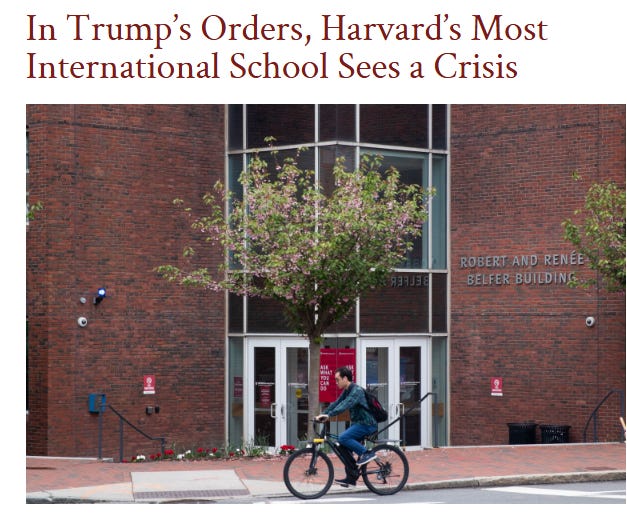
At the Harvard Kennedy School, the Trump administration’s attempt to revoke Harvard’s eligibility to enroll international students — temporarily blocked in court — could eliminate nearly 60 percent of the student body.

*****

Until the last half-decade, the majestic lesser flamingo had four African breeding sites: two salt pans in Botswana and Namibia, a soda lake in Tanzania, and an artificial dam outside South Africa’s historic diamond-mining town of Kimberley.

Now it only has three.

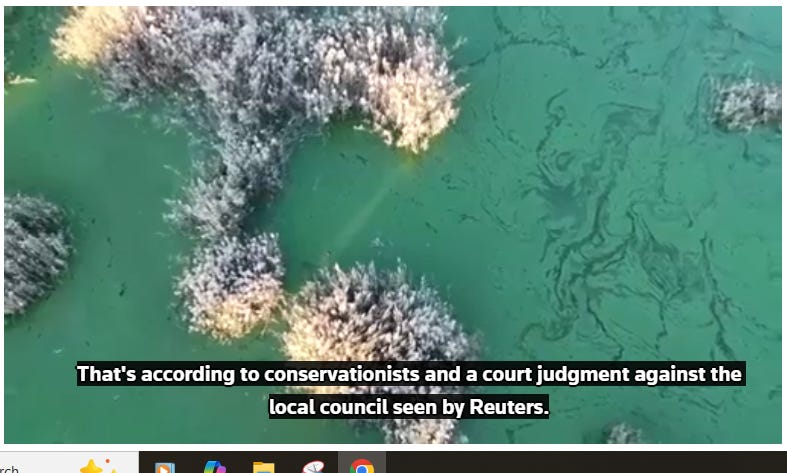
And then, I get tons of wildlife and climate news: “Lesser flamingos lose one of their only four African breeding sites to sewage.” Emblematic at how messed up the polluting Homo consumopethicus is. Sewage. Shit.
This sort of stuff, all these headlines, all these stories, seemingly disconnected, unrelated in theme, well, the common theme is clear — Capitalism is a Cancer Supported by Economic Wars and Genocide and a Mafia that is Global in Its Reach. Is that a good enough connecting headline?

*****

Thank goodness that I have writers for Substack who put it all into perspective, how this world is up shit creek illustrated by the War on People in Palestine.
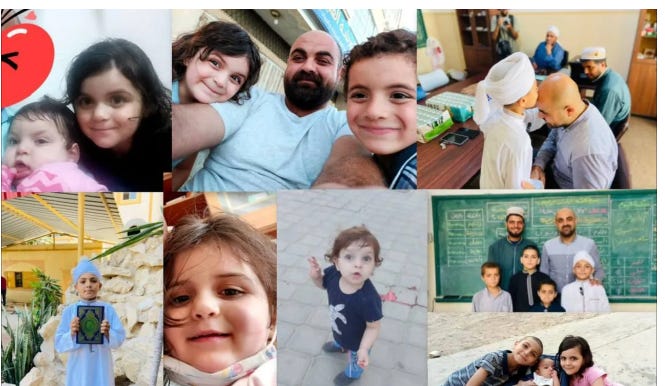
The Poem “Nine,” from Palestine Will Be Free Substack:

I tended my garden with great care —
Olives, thyme, dates, sage, and rosemary there.
Well before fajr and long after isha’s call,
No effort was spared in looking after them all.

From tiny seeds to flowers in full bloom,
I watched them glow in sun’s majestic light.
And as the first buds of the olives came to life,
Every glance, every day was an endless delight.

Wearied days would vanish at their sight
Each bloom I touched made my mornings bright
I would count my blessings: one, two, three, four…
Up to ten — then countless more.

Then came the fire that scorched it all —
Thyme, dates, sage, and rosemary gone.
One gnarly olive barely hangs by a thread;
My waking moments are soaked in tears, eyes red.

Now with every breath, a prayer escapes:
Protect my olive — please keep it safe.
It’s the last remnant of a heart so full, a life well lived,
In service of my garden, my people, and God the Esteemed.

You blessed Yaqub with a garden vast,
Only to separate him from Yusuf, the rose of his heart.
Yaqub complained, yearned, and wept till blindness veiled his eyes
You, the Merciful, answered his prayers and restored old ties.

So bless me, as You did Yaqub in the end —
Restore the coolness of my eyes, O Ibrahim’s Friend.
“For I too have the gift of song which gives me courage to complain,
But ah! ‘tis none but God Himself whom I, in sorrow, must arraign!”

Your infinite wisdom is beyond my grasp,
So, to Your rope of hope I must clasp.
“The lessons of patience I teach my heart,
As though to night’s separation I show a false part.”

*****
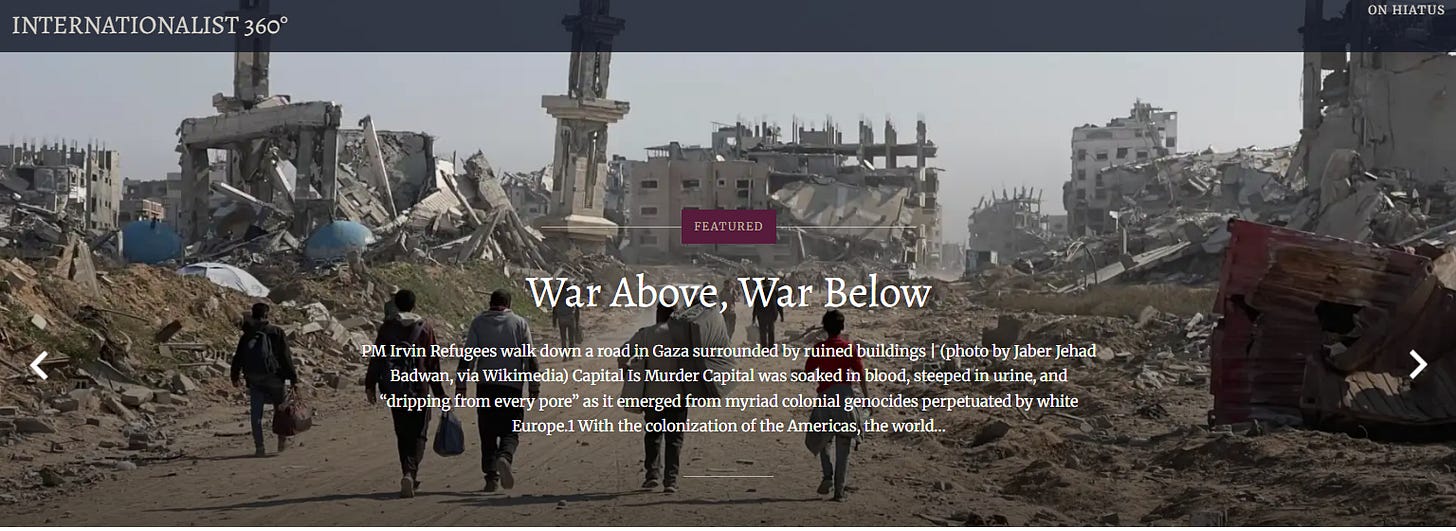
Thank goodness for International 360, with a whole lot of stories aggregated-curated: Only Total Collapse Will Rouse Humanity from Its Suicidal Sleepwalk

From BettMedia:

Only Total Collapse Will Rouse Humanity from Its Suicidal Sleepwalk

Editorial Comment:

I have been issuing warnings since the genocide began and every nation and institution failed to stop it. Not one invoked the appropriate legal mechanisms designed for such a crisis that would have ended abuse of veto, ousted Israel from the United Nations and imposed sanctions on the genocidal entity. I am pleased to see more activists understanding the extent of manipulation and deception we have all been subjected to.

Previously I said,

  • There is no hope for the world to be found in any government, institution or movement that can normalize ties with or fail to stop a genocidal oppressor.
  • There can be no faith in leaders that place interests above moral principles.
  • There is no salvation to be found standing with those too cowardly to act in the face of murderous criminality.
  • The hope of humanity rests solely on the shoulders of each awakening individual and on movements in the grassroots bases who have never lost touch with reality and are willing to defend life at all costs.

Karim has brilliantly and succinctly presented the many facets of our present dilemma in the article below.

Once we abandon fantasy and begin with these truths, realistic solutions and avenues of dissent, resistance and revolution can constellate and finally manifest.

A.V.

BettBeat Media

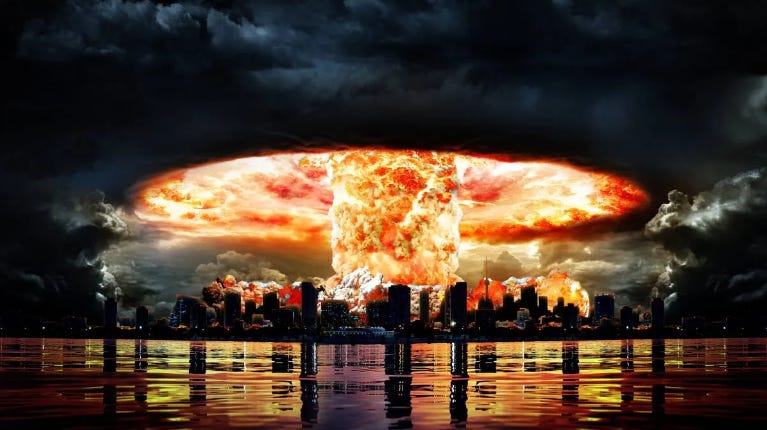
As Gaza’s children burn while the world watches, it becomes clear: only climate catastrophe, nuclear armageddon, or World War III may force humanity to abandon Western capitalism’s suicidal path.

The brutal death march of global capitalism does not pause for our lamentations. It grinds forward with mechanistic certainty, reducing human bodies to raw material and human aspirations to market commodities. We stand now at the precipice of a darkness so profound that our collective imagination fails to grasp its dimensions.

Gaza Exposed the Multipolar Fantasy

Let us dispense with comforting illusions. The mythologies we have constructed about saviors – whether BRICS nations, ‘multipolar world orders’, institutions of international law, or benevolent statesmen – have disintegrated before our eyes.

As Gaza burns and its children scream under collapsing concrete, we witness Russia making backroom deals with the architects of genocide. As Palestinian bodies pile in makeshift morgues, China issues empty declarations at the United Nations while its trade with the genocidal regime continues uninterrupted.

These are not the actions of counterweights to empire. They are the maneuvers of players within the same global system, differing perhaps in position but not in fundamental nature. They have shown themselves to be integral components of the very machinery we hoped they would dismantle.

We have watched, with desperate hope, the Palestinians stand against overwhelming military force, the Lebanese resisting occupation, Ibrahim Traore challenging neocolonial structures, Syrians and Yemenis enduring apocalyptic bombardment.

We projected onto them our desperate yearning for liberation from the imperialist hellscape spreading like wildfire across our planet. But they cannot do it alone, and our delegation of hope to others is itself a form of moral abdication.

The Frightening Truth is: It Really Comes Down to Us

The terrible truth we must confront is this: the responsibility is ours. The revolution required is not national but global, because the capitalist system has metastasized globally.

It has burrowed deep into the institutional structures of every society, captured the regulatory mechanisms that might constrain it, corrupted the informational systems that might expose it, and weaponized the technological systems that might liberate us.

Consider the grotesque spectacle of our current moment: we watch genocide in real-time on social media platforms owned by billionaires who fund that same genocide, we march in permitted protests that change nothing, we sign petitions that disappear into administrative voids. Meanwhile, the machinery of death continues unabated, and the architects of suffering retire to coastal mansions and mountain retreats after receiving fifty standing ovations for speeches that are nothing more than celebrations of mass murder.

The ruling classes have constructed a system of control so comprehensive, so technologically sophisticated, and so psychologically insidious that most cannot even perceive the depth of their enslavement. The surveillance apparatus tracks our movements and predicts our thoughts. The military-industrial complex develops weapons of terrifying precision to eliminate those who resist too effectively. The propaganda system manufactures consent with algorithmic efficiency.

All Wish to Sit at the Blood-Soaked Table of Imperialism

As vanessa beeley and Fiorella Isabel so meticulously lay out for us, Putin, for all his anti-Western rhetoric, demonstrates through his actions that he seeks merely better terms within the imperial arrangement, not its dissolution. His government works in tacit coordination with Israel while claiming to stand against Western hegemony. This is not resistance; it is negotiation for a better position at the blood-soaked table of imperialism.

And what of China? Does it dream of global equality? Let’s rephrase, do ruling elites anywhere envision a future where they stand shoulder-to-shoulder with the peasants in the villages they dominate? History speaks to us with terrible clarity. The powerful do not relinquish power voluntarily. Systems of exploitation do not reform themselves out of existence. The capitalist machine — whether neoliberal or state capitalism — will not decommission itself out of ethical awakening.

We have already weathered global catastrophes that should have taught us these lessons. World War I reduced a generation of young men to shredded flesh in muddy trenches, yet we learned nothing. World War II revealed the industrial-scale horror humans could inflict upon one another, yet we learned nothing. The grinding machinery reassembled itself, adapted, and continued its relentless accumulation.

“Humanity appears incapable of changing direction without first experiencing the catastrophic consequences of its current trajectory. We seem determined to learn only through suffering, to change only when continuation becomes impossible”

World War III

The terrifying conclusion becomes unavoidable: only the total breakdown of global society will create the conditions for fundamental transformation. This is not a wish but a recognition of historical pattern. The entrenchment is too deep, the control too complete, the psychological captivity too thorough for anything less than systemic collapse to break the spell.

What form will this breakdown take? Perhaps nuclear winter that eliminates most of humanity. Perhaps the collapse of ecological systems that sustain human life. Perhaps the return of fascistic brutality in World War III as soldiers march through our streets, rounding up our women and children to violate their dignity and take away their innocence while the men disappear into torture camps. The specific manifestation matters less than the certainty of its arrival if our course remains unchanged.

This is the darkness we must stare into without flinching. Humanity appears incapable of changing direction without first experiencing the catastrophic consequences of its current trajectory. Even high-definition genocide—burning children and prisoner rapes streamed directly to our iPhones—fails to move us to effective action. We seem determined to learn only through even more extreme suffering, to change only when our current path becomes literally impossible to continue.

Resistance

Yet within this terrible recognition lies a seed of possibility. If we understand the machinery of our destruction with unflinching clarity, if we abandon the comfortable myths that absolve us of responsibility, if we recognize that no external force will save us from ourselves – perhaps then we might begin the work of genuine resistance.

Not the performative — flag-waving, song-singing, tweet-sharing — resistance that leaves power structures intact, but the fundamental reimagining of human society. Not the delegation of hope to distant leaders, but the reclamation of our collective agency. Not the comfortable protest that returns home for dinner, but the sustained commitment to dismantling systems of death.

The machinery of global capitalism does not pause for our lamentations, but neither is it invulnerable to our determined opposition. The question remains whether we will summon the courage to oppose it before the breakdown comes, or whether we will continue sleepwalking until we awaken amid the ruins.

– Karim

Paul Haeder's been a teacher, social worker, newspaperman, environmental activist, and marginalized muckraker, union organizer. Paul's book, Reimagining Sanity: Voices Beyond the Echo Chamber (2016), looks at 10 years (now going on 17 years) of his writing at Dissident Voice. Read his musings at LA Progressive. Read (purchase) his short story collection, Wide Open Eyes: Surfacing from Vietnam now out, published by Cirque Journal. Here's his Amazon page with more published work AmazonRead other articles by Paul, or visit Paul's website.


Ballots and Bias: How the Press Framed Venezuela’s Regional and Legislative Elections


by Roger D. Harris / May 28th, 2025

The pro-government alliance achieved a sweeping victory in Venezuela’s May 25 elections, while a fractured opposition suffered losses. Western media distorted the results – spinning low turnout claims, ignoring the role of illegal US sanctions, and offering selective sympathy to elite opposition figures.

Opposition fractures, pro-government consolidates

At stake for the 54 contesting Venezuelan political parties were seats for 285 National Assembly deputies, 24 state governors, and 260 regional legislators.

The pro-government coalition won all but one of the governorships, taking three of the four states previously held by the opposition. The loss of the state of Barinas was particularly symbolic, for this was the birthplace of former President Hugo Chávez, and especially so, because the winner was Adán Chávez, the late president’s older brother.

Likewise, the Chavista alliance swept the National Assembly, securing 253 out of 285 seats. Notable exceptions were the election of opposition leaders Henrique Capriles and Henri Falcón, both of whom are former presidential candidates.

The New York Times reported the same outcomes but spun it as the “results [rather than the vote]…stripped the opposition of some of the last few positions it held,” inferring fraud.

However, this election outcome was not unexpected, as the opposition was not only divided but also had a significant portion opting to boycott the vote. The pro-government forces enjoyed a unified effort, an efficient electoral machine, and grassroots support, especially from the communal movement.

“After 32 elections, amidst blockades, criminal sanctions, fascism and violence,” Venezuelan President Nicolás Maduro affirmed, “today we showed that the Bolivarian Revolution is stronger than ever.”

Opposition self-implodes

The headline from Le Monde spun the voting thus: “Venezuela holds divisive new elections.” Contrary to what the headline suggests, the divisiveness was not the government’s doing, but due to the opposition’s perennial internecine warfare.

While the pro-government Great Patriotic Pole alliance around the ruling Socialist Party (PSUV) “works in unison,” according to opposition leader Henrique Capriles, the electoral opposition is divided into three warring camps. They, in turn, were surrounded by a circular firing squad of the far-right abstentionists, calling for a vote boycott.

The abstentionists were assembled around Maria Corina Machado. She had been pardoned for her involvement in the short-lived 2002 US-backed coup but was subsequently disqualified from running for office for constitutional offenses. Following Washington’s lead, which has not recognized a Venezuelan presidential election as legitimate since 2012, the far-right opposition rejected electoral means for achieving regime change and has even pleaded in effect for US military intervention.

Machado’s faction, which claimed that Edmund González Urrutia won the 2024 presidential election, does not recognize their country’s constitutional authority. Consequently, when summoned by the Venezuelan Supreme Court, they refused to present evidence of their victory, thereby removing any legal basis for their claimed victory to be accepted. Machado maintained that voting only “legitimizes” the government, bitterly calling those participating in the democratic process “scorpions.”

Machado spent the election in self-imposed hiding. She further dug herself into a hole, after urging even harsher punishing US sanctions on her own people, by appearing to support Trump’s sending of Venezuelan migrants to the CECOT torture prison in El Salvador.

El Pais sympathized with her as “driven by the strength of the pain of being a mother who has been separated from her three children.” The WaPo described the middle-aged divorcé from one of the wealthiest families in Venezuela as a “courageous leader” whose “three children are exiled abroad.” In fact, her adult children live comfortably in the US and Colombia.

To this manufactured sympathy for the privileged, Venezuelan-Canadian sociologist Maria Paez Victor asks, “Where are the defenders of the human rights of Venezuelans?” She excoriates the collective West for its selective concern for human rights, emphasizing the neglect of Venezuelans’ rights amid external pressures and US sanctions.

The disputed Essequibo

The headline for The New York Times’s report spun the elections with: “Venezuela is holding an election for another country’s land.” This refers to the elections for governor and legislators in Essequibo (Guayana Esequiba in Spanish), which is, in fact, a disputed land.

For nearly two centuries, Venezuelans have considered that region part of their country, having wrested it from Spanish colonialists in 1835. In the questionable Paris Arbitral Award, with the US representing Venezuela, the Essequibo was handed over to the UK in 1899 (then colonial British Guiana and now the independent nation of Guyana). Ever since, it has been contested territory.

In 1962, Venezuela formally revived its claim at the UN, asserting that the 1899 award was null and void. Not surprisingly, the Times sides with Guyana, or more precisely with what they report as “Exxon Mobil’s multibillion-dollar investments” plus “military ties with the US.”

This first-time vote for political representation in the Essequibo is seen by Venezuelans across their political spectrum as an important step to assert their claim. It follows a referendum in 2023, which affirmed popular support for the Essequibo as part of their national territory. The actual voting was held in the neighboring Bolivar state.

On cue, the western-aligned press criticized the vote on the Essequibo as a “cynical ploy” by the Maduro administration to divert attention from other pressing problems. Meanwhile, they obscure the increasing US military penetration in neighboring Guyana and in the wider region.

Yet even the NYT had to admit: “Claims to the Essequibo region are deeply ingrained among many Venezuelans… [and even] María Corina Machado, the most prominent opposition leader, visited the area by canoe in 2013 to advance Venezuela’s claim.” Venezuelan journalist Jésus Rodríguez Espinoza (pers. comm.) described the vote as “an exercise in national sovereignty.”

Illegal sanctions – the elephant in the room

WaPo opinion piece claims, “that the actual root cause of poverty has been a lack of democracy and freedom,” as if the US and its allies have not imposed sanctions deliberately designed to cripple the Venezuelan economy. These “unilateral coercive measures,” condemned by the UN, are illegal under international law because they constitute collective punishment.

But the fact that Venezuelans had to vote while being subjected to illegal coercion is completely ignored by the corporate press. That is, the existence of sanctions is recognized, but instead of exposing their illegal and coercive essence, the press normalizes them. The story untold by the press is the courage of the Venezuelan people who continue to support their government under such adverse conditions.

Disparaging the election

Washington and its aligned press cannot question the popular sweep for the Socialist Party’s alliance in Venezuela, because it is so obvious. Nonetheless, they disparage the mandate. The chorus of criticism alleges the fraudulent nature of previous elections, although it is a geopolitical reality that Washington considers any popular vote against its designated candidates illegitimate.

For this particular election, these State Department stenographers focused on the supposedly low turnout. In fact, the turnout was typical for a non-presidential election contest and fell within the same percentage range as US midterm elections.

Moreover, the pro-government slate actually garnered more votes than it had in the previous regional elections. The Chavista core of older, working class women remains solid.

When Elvis Amoroso, president of Venezuela’s authority (CNE), qualified the turnout percentages to apply to “active voters,” he meant those in-country. Due to the large number of recent out-migrations, a significant number are registered but cannot vote because they are abroad.

What was notably low was the voting for the highly divided opposition, with major factions calling for a boycott. Further, the opposition had been discredited by revelations that some had received and misused hundreds of millions of dollars from USAID. More than ever, the inept opposition has exposed itself in a negative light to the broad electorate. 

The overwhelming sentiment on the street in Venezuela is for an end to partisan conflict and for continuing the slow economic recovery. Challenges ahead include inflationary winds, a rising unofficial dollar exchange rate, and, above all, the animus of the Trump administration, which is currently in internal debate over whether to try to deal the Bolivarian Revolution a quick or a slow death. Either way, destabilization efforts continue.

To which Socialist Party leader and Interior Minister Diosdado Cabello said: “No one can stop our people. Not sanctions, nor blockades, nor persecution – because when a people decide to be free, no one can stop them.”

Roger D. Harris was an international observer for Venezuela’s 2024 presidential election. He is with the US Peace Council and the Task Force on the AmericasRead other articles by Roger.

Roads to War: The EU’s Security Action for Europe Fund


As the world was readying for the Second World War, the insightful humane Austrian author Stefan Zweig made the following glum observation: “Openly and flagrantly, certain countries express their will to expand and make preparations for war. The politics of rearmament is pursued in broad daylight and at breakneck speed; every day you read in the papers arguments in favour of armaments expansion, the idea that it reduces unemployment and provides a boost to the stock exchange.”

This is not so different from the approval by European Union countries on May 27 of a €150 billion loan program known as the Security Action for Europe (SAFE) borrowing scheme. A press release from the European Council stated that the scheme “will finance urgent and large-scale investments in the European defence technological and industrial base (EDTIB)” with the intention of boosting “production capacity, making sure defence equipment is available when needed, and to address existing capability gaps – ultimately strengthening the EU’s overall defence readiness.”

The statement also makes a central rationale clear: that SAFE will enable continued European support for Ukraine, linking its defence industry to the program. Despite not being an EU member, Kyiv will be able to participate in the scheme. Interestingly enough, the United Kingdom, despite leaving the EU, will also be able to participate via a separate agreement.

Disbursements to interested member states upon demand, considered along national plans “will take the form of competitively priced long-maturity loans, to be repaid by the beneficiary member states.”

The scheme further anticipates the types of weaponry, euphemistically titled “defence products”, that will feature. As outlined by the European Council on March 6, these will comprise two categories: the first covering, amongst others, such products as ammunition and missiles, artillery systems, ground combat capabilities with support systems; the second, air and missile defence systems, maritime surface and underwater capabilities, drones and anti-drone systems and “strategic enablers” including air-to-air refuelling, artificial intelligence and electronic warfare.

The broader militarisation agenda is confirmed by linking SAFE with broader transatlantic engagement and “complementarity with NATO.” It will “strive to enhance interoperability, continue industrial cooperation, and ensure reciprocal access to state-of-the-art technologies with trusted partners.” Significantly, the emphasis is on collaboration: a minimum of three countries must combine when requesting funding for SAFE defence projects.

There seems to be something for everyone: the militarist, the war monger and the merchants of death. Global Finance, a publication dedicated to informing “corporate financial professionals”, was already praising the SAFE proposal in April. “The initiative has the potential to transform the business models of many top European defense groups – like Saab, which has traditionally relied on contracts from the Swedish state to grow its sales.” What a delight it will be for such defence companies to move beyond the constraints on sales imposed by their limiting governments. A veritable European market of death machinery is in the offing.

The fund is intended for one, unambiguous purpose: war. The weasel word “defence” is merely the code, the cipher. Break it, and it spells out aggression and conflict, a hankering for the next great military confrontation. The reason is traditional, historic and irrational: the Oriental despotic eminence arising from the Asian steppes, people supposedly untutored in the niceties of European good manners and democracy. Not that European manners and democracy is in splendid health. A mere glance at some of the candidates suggests decline in institutional credibility and scepticism. But we can always blame the Russians for that, deviously sowing doubt with their disinformation schemes.

The initiative, and its tightening of ties with arming Ukraine, has made such critics as Hungary’s Prime Minister Viktor Orbán sound modestly sensible. “We need to invest in our own armies, but they expect us to fund Ukraine’s – with billions, for years to come,” he declared in a post on X. “We’ve made it clear: Hungary will not pay. Our duty is to protect our own people.”

The approval of the fund by the European Commission has also angered some members of the European Parliament, an institution which has been treated with near contempt by the European Commission. European Parliament Presidente Roberta Metsola warned Commission President Ursula von der Leyen earlier in May to reconsider the use of Article 122 of the EU Treaty, which should be used sparingly in emergencies in speeding up approvals with minimal parliamentary scrutiny. Bypassing Europe’s invigilating lawmakers risked “undermining democratic legitimacy by weakening Parliament’s legislative and scrutiny functions”. The Council’s resort to Article 122 potentially enlivened a process that could see a legal case taken to the European Court of Justice.

The European Parliament’s Legal Affairs Committee (JURI) has also supported a legal opinion repudiating the Commission’s cavalier approach in approving the fund. According to that tartly reasoned view, Article 122 was an inappropriate justification, as the threshold for evoking emergency powers had simply not been met.

Ironically, the rearmament surge is taking place on both sides of the Atlantic, at both the behest of the Trump administration, ever aggrieved by Europe not pulling its military weight, and Moscow, characterised and caricatured as a potential invader, the catalyst for decorating a continent with bristling weaponry. The former continues to play hide and seek with Brussels while still being very much in Europe, be it in terms of permanent garrisons and military assets; the latter remains a convenient excuse to cross the palms of the military industrial establishment with silver. How Zweig would have hated it.


Squabbling Siblings: India, Pakistan and


Operation Sindoor


On April 22, militants from The Resistance Front (TRF), a group accused by Indian authorities of being linked to the Lashkar-e-Taiba terrorist group, slaughtered 26 tourists in the resort town of Pahalgam in the Indian administered portion of Kashmir. This came as a rude shock to the Indian military establishment, which decided that rebellious sentiments in the region had declined. (In March 2025, an assessment concluded that a mere 77 active militants were busying themselves on India’s side of the border.)

The feeling of cooling tensions induced an air of complacency. Groups such as the TRF, along with a fruit salad of insurgent outfits – the Kashmir Tigers, the People’s Anti-Fascist Front, and the United Liberation Front of Kashmir – were all spawned by Prime Minister Narendra Modi’s August 2019 revocation of Article 370 of the Indian Constitution, which granted Kashmir singular autonomy. TRF has been particularly and violently opposed to the resettlement of the Kashmiri pandits, which they see as an effort to alter the region’s demography.

The murderous incident raised the obvious question: Would Modi pay lip service to the 1972 Shimla Agreement, one that divided Kashmir into two zones of administration separated by a Line of Control? (A vital feature of that agreement is an understanding that both powers resolve their disputes without the need for third parties.)

The answers came promptly enough. First came India’s suspension of the vital Indus Water Treaty, a crucial agreement governing the distribution of water from India to Pakistan. Pakistan reciprocated firmly by suspending the Shimla Agreement, expelling Indian military diplomats, halting visa exemptions for Indian citizens, and closing the Wagah border for trade.

Hindu nationalism proved particularly stirred, and Modi duly fed its cravings. On May 7, India commenced Operation Sindoor, involving what were purportedly precision missile attacks on nine militant camps in Pakistan and the Jammu and Kashmir area controlled by Islamabad. The operation itself had a scent of gendered manipulation, named after the vermillion used by married Hindu women to symbolise the durable existence of their husbands. Two female military officers – Colonel Sofiya Qureshi and Wing Commander Vyomika Singh – were tasked with managing the media pack.

The Indian briefings celebrated the accuracy of the strikes on what were said to be the sites of Lashkar-e-Taiba, Jaish-e-Mohammed, and Hizbul Mujahideen. Thirty-one suspected terrorists were said to have perished, though Pakistan insisted that civilians had been killed in this apparent feast of forensic precision. India’s Defence Minister Rajnath Singh would have none of it: Indian forces had only “struck only those who harmed our innocents”.

The next day, it was operations against Pakistan’s air defence systems in Lahore that stole the show. The inevitable Pakistani retaliation followed on May 10, with the Indian return serve against 11 Pakistani air bases. What followed is one version: Pakistan’s military broke into a sweat. A cessation of hostilities was sought and achieved. Armchair pundits on the Indian side celebrated: India had successfully targeted the terrorist cells supported by Pakistan. If one is to read Anubhav Shankar Goswami seriously, Operation Sindoor was a stroke of genius, threatening “the Pakistan Army’s strategic shield against terrorists”.

More accurately, this was a lovely little spilling of blood with weaponry between callow sibling throats, a pattern familiar since 1947. The two countries have fought four full-blown conflicts, two over Kashmir. Along the way, they have made the world a lot safer by acquiring nuclear weapons.

There was something for everyone in this retaliatory and counter-retaliatory feast. India claimed strategic proficiency, keeping censorship on the matter tight. Pakistan could claim some prowess in shooting down five Indian jets, using Chinese weaponry, including the J-10.  With pride and pomp, they could even appoint Pakistani Army chief Asim Munir to the post of Field Marshal, an absurdly ceremonial gesture that gave the impression that the army had restored its tattered pride. It was to be expected that this was ample reward for his, in the words of the government, “strategic leadership and decisive role” in defeating India.

The only ones to be notably ignored in this display of subcontinental machismo were the Kashmiris themselves, who face, in both the Pakistan and Indian administered zones, oppressive anti-terrorism laws, discriminatory practices, and suppression of dissent and free speech.

Ultimately, the bickering children were convinced to end their playground antics. The fact that the overbearing headmaster, the unlikely US President Donald Trump, eventually brought himself to bear on proceedings must have irritated them. After four days of conflict, the US role in defusing matters between the powers became evident. Kashmir, which India has long hoped to keep in museum-like storage, away from the international stage, had been enlivened.  Trump even offered his services to enable New Delhi and Islamabad a chance to reach a more enduring peace. Praise for the president followed, notably from those wishing to see the Kashmir conflict resolved.

In one sense, there seems to be little reason to worry. These are countries seemingly linked to sandpit grievances, scrapping, gouging, and complaining about their lot. Even amidst juvenile spats, they can bicker yet still sign enduring ceasefires. In February 2021, for instance, the militaries of both countries cobbled together a ceasefire which ended four months of cross-border skirmishes. A mere two violations of the agreement (how proud they must have been) was recorded for the rest of the year. In 2022, a solitary incident of violation was noted.

A needlessly florid emphasis was made on the conflict by Indian political scientist Pratap Bhanu Meta.  This was an encounter lacking a “decisive victory and no clear political end”. It merely reinstated “the India-Pakistan hyphenation”. In one sense, this element of hyphenation – the international perception of two subcontinental powers in an eternal, immature squabble – was something India seemed to be marching away from. But Prime Minister Modi, despite his grander visions for India, is a sectarian fanatic. History shows that fanaticism tends to shrink, rather than enlarge, the mind. In that sense, he is in good company with those other uniformed fanatics in uniform.

Binoy Kampmark was a Commonwealth Scholar at Selwyn College, Cambridge. He lectures at RMIT University, Melbourne. Email: bkampmark@gmail.comRead other articles by Binoy.


No One Is Safe Until Everyone Is: Humanity’s Missing Project


Fragmented by nationalism and distracted by power games, humanity stands at a turning point. We face global crises that threaten our survival, yet we remain without a common purpose rooted in solidarity and mutual care. This—our failure to recognize our shared fate—is the true crisis of our time.
Every nation clings to its sovereign right to act in its interest: to strike deals, close borders, and extract value from the global system. This is not new, but it is increasingly dangerous. The Global South strives to reclaim agency from centuries of domination. Africa seeks to shape its future free of outside interference. Asia is lifting millions from poverty through rapid development. Meanwhile, Western powers continue to exert dominance through sanctions, militarization, and economic coercion. Under the banner of a “multipolar world,” the global political order is recycling the same hegemonic logic, just under new names. Both sides of the political divide seem to believe that militarization and bullying are legitimate means to consolidate this fragmentation, all in the name of “security.”
But the realities of our time demand something radically different.
COVID-19 swept across the planet, ignoring borders, languages, and religions. Climate catastrophe looms ever closer. Unchecked corporate power fuels inequality and environmental destruction. These crises do not discriminate, and they cannot be resolved by individual nations alone.
Everything humanity has developed—language, technology, religion, agriculture—has brought us to this moment. We are now confronted with the inescapable truth of our interdependence. We exist together on this Earth. We survive together—or not at all. We have a moral obligation to transform that oneness into a living reality.
The tragedy is that we have no unifying project. No shared aim worthy of our human potential. Despite our vast knowledge and powerful tools, we have failed to answer the simplest question: Why are we here? This is where we must direct our energy.
Instead, we remain trapped in short-term self-interest, both personal and national. We protect our own at the expense of others. But if we want to survive as a species—and not just as competing nations—we must reverse course. We must stop mistaking sovereignty for strength. True strength lies in solidarity.
So what are we here for, as human beings? What could we create together if we aligned our energy with our conscience? What if the measure of sovereignty were not how fiercely we protect our borders, but how deeply we protect human dignity—everywhere?
We possess knowledge, technology, and science beyond anything our ancestors could have imagined. To move forward, we must transcend our “ego-ism,” both personal and national, and begin to imagine another future—one where solidarity, not sovereignty, leads the way.
If we want to survive as a species—and not just as nations—we must urgently ask the only question that matters:
What can we build together?
First published in Pressenza and  available in: Spanish
David Andersson is a French-American journalist, photographer, and author who has lived in New York for over 30 years. He co-directs Pressenza International Press Agency and is the author of The White-West: A Look in the Mirror, a collection of op-eds examining the dynamics of Western identity and its impact on other cultures. Read other articles by David.