It’s possible that I shall make an ass of myself. But in that case one can always get out of it with a little dialectic. I have, of course, so worded my proposition as to be right either way (K.Marx, Letter to F.Engels on the Indian Mutiny)
A team of researchers from Toho University has uncovered a potential new use for a naturally occurring compound, schisandrin A, found in the traditional Chinese medicinal plant Schisandra chinensis. The study, recently accepted for publication in the Journal of Pharmacological Sciences, demonstrates that schisandrin A can effectively relax pig coronary arteries, potentially paving the way for new treatments to prevent heart attacks caused by vascular spasms.
Understanding Coronary Spasms
Coronary artery spasms are sudden narrowings of the arteries that supply blood to the heart. These spasms can severely restrict blood flow and trigger angina or even heart attacks, particularly in people with no clear signs of artery blockage. They are often caused by chemical messengers such as acetylcholine, histamine, and serotonin.
Schisandrin A: A Natural Spasm Blocker
In laboratory tests using porcine (pig) coronary arteries, which closely resemble human arteries in function and structure, the researchers found that schisandrin A significantly reduced contractions triggered by a variety of known spasm-inducing agents. The compound worked by blocking specific calcium channels—known as L-type calcium channels—that control muscle contraction in the artery walls. In simpler terms, schisandrin A helps keep the arteries relaxed by preventing excessive calcium from entering the muscle cells.
Additionally, the compound showed mild anticholinergic properties—meaning it could also block signals from certain nerves that would otherwise cause the artery to tighten.
Relevance to Traditional Medicine
Schisandrin A is a key component of Shengmai San, a traditional Chinese herbal formula used for over 700 years to support heart health. While Shengmai San has been widely used in Asia to treat symptoms of heart disease, this study sheds new light on a possible mechanism: schisandrin A’s direct effect on artery contraction.
Moving Toward Clinical Application
Though the concentrations of schisandrin A used in this study were higher than what is typically seen in the bloodstream after oral consumption, injectable forms of Shengmai San may achieve similar levels. The researchers believe this opens the door for future studies on schisandrin A as a potential preventative agent for coronary artery spasms, especially in patients susceptible to chemically-induced vascular events.
“Our findings suggest that schisandrin A, a natural compound from traditional herbal medicine, could offer a novel approach to preventing coronary spasms,” said lead researcher Dr. Keisuke Obara. “This could ultimately contribute to reducing the risk of ischemic heart disease, still the leading cause of death globally.”
Inhibitory effects of schisandrin A on contractions induced by spasmogenic candidates in porcine coronary arteries
Article Publication Date
1-Jun-2025
Paternity leave: How much time off work do new dads get across Europe?
Paternity leave policies vary across Europe - but the UK's offer is one of the least generous
Kristian Johnson
BBC News
14 June 2025
BBC
Becoming a new dad can be significantly impacted by the amount of paternity leave available to fathers, and a report published this week suggests UK dads fare poorly compared to what's on offer elsewhere in Europe.
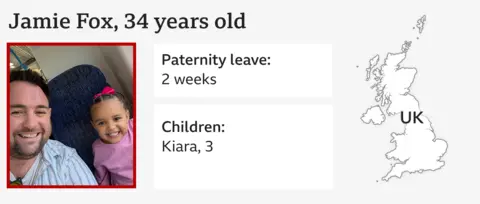
BBC News spoke to dads in different countries about how much time they can take off work after the birth of their children - and how that's changed fatherhood for them. Jamie Fox has a three-year-old daughter and is expecting his second child
When Jamie's daughter Kiara was born three years ago, he says it was "incredibly difficult".
"I had to watch my partner struggle looking after our child," Jamie says. "The biggest thing I remember was the crying. My daughter clearly needed support and my wife was noticeably struggling and exhausted."
A few weeks after Kiara was born, Jamie's mother-in-law flew from Zimbabwe to support the family, because Jamie was only entitled to statutory paternity leave.
Rules in the UK allow new fathers and second parents in full-time employment to take up to two weeks off work. That applies to all partners, regardless of gender, after the birth, surrogacy or adoption of a baby, but not those who are self-employed or dads earning less than £123 a week.
Those eligible receive £187.18 a week, or 90% of their average earnings, whichever is lower. This works out as less than half of the National Living Wage.
Jamie, from Ashford in Kent, says the statutory pay "was frankly pennies".
He and his partner are now expecting their second child, in August - something they began saving for before Jamie's wife Zanele even fell pregnant.
Jamie says his "frustration" about paternity pay led him to attend the world's first "dad strike" earlier this week, when fathers from across the country protested outside the government's Department for Business and Trade in Westminster.
"Seeing things change relatively recently in other countries... why are we not keeping up?" Jamie says.
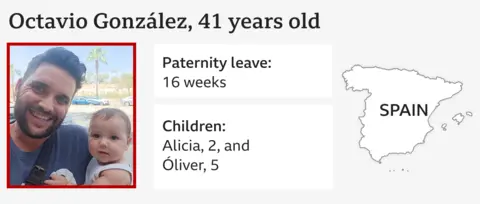
Spain has increased the amount of time off work for new dads in recent years - Octavio had eight weeks off with his first child, and four months with his second
For Octavio, spending four months at home with his daughter Alicia has made "a tremendous difference".
He split his paternity leave into two parts - six weeks - which was mandatory -immediately after Alicia was born, and the remaining 10 weeks when his wife went back to work.
"The extended quality time with Alicia allowed us to develop a strong bond that I believe wouldn't have formed as deeply otherwise," says Octavio, a computer engineer from Seville.
Over the past few years, Spain has increased the amount of time given to new fathers. In 2019, dads were entitled to five weeks off work. But from 2021, that was extended to 16 weeks at full pay, including for those who are self-employed. There is no cap on the salary paid. It means parental leave is now equal between mums and dads in Spain.
"These changes have truly made a significant difference," says Octavio.
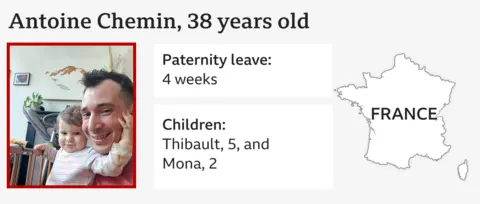
Antoine has benefitted from France's updated paternity leave laws
France has also made progressive steps on paternity leave in recent years.
Antoine is an architect who lives on the outskirts of Paris, and has benefitted from the changes. When his son Thibault was born five years ago, Antoine, who works full-time, was entitled to two weeks paternity leave.
But in September 2020 paternity leave in France doubled, meaning Antoine got four weeks off work when his second child was born in 2023.
"It allowed me to support my wife and children," he says. "Fathers should be allowed to be more present during these family life periods that enrich all relationships and allow them to fully take their place as full-time parents."
France's paternity leave rules mean dads - including those who are self-employed - must take a week off work immediately after their child is born. Pay is covered by the employer for the first three days, but after that is state-funded.
The remaining 21 days, which can be split into two chunks, are optional and can be taken anytime within the next six months. Pay is capped at €3,428 (£2,921) a month.
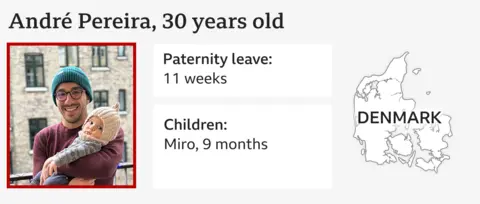
André has split his paternity leave into two
André, who was born in Portugal and spent nine years living in England, says the prominent role played by dads in Denmark was one of the first things he noticed when he moved there.
"You see dads strolling around with their kids and young babies," André says. "I was like: 'Wow, I'm not used to this.'"
Dads in Denmark, including those who are self-employed, can take up to 24 weeks off work at full pay by the state.
After eleven weeks, the remaining 13 can be transferred to the birth partner if wanted, so they can use them as extra maternity leave. One of the parents can postpone up to 13 weeks of parental until their child is aged nine.
André decided to split his parental leave - taking two weeks immediately after his baby Miro was born and saving the remaining 11 weeks - so he can look after his nine-month-old son when his partner returns to work.
"In Denmark, it's expected that the partner is more present," André says. "You're not only connecting with your child, but you want to develop the family as a whole together."
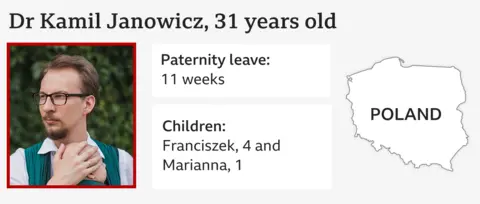
Dr Kamil Janowicz Kamil, a psychologist and post-doctoral researcher at SWPS University, says paternity leave gave him confidence as a father
Dads with full-time jobs in Poland are entitled to two weeks of paternity leave. But unlike in the UK, the salary is paid at 100%, which Kamil says was "great".
Shortly after his daughter Marianna's first birthday, Kamil took another nine weeks of non-transferable parental leave.
This extra leave can be taken before a child's sixth birthday. It is available to both parents, as long as they are employed, and is paid at 70% of a full-time salary.
"For many families, the 70% nine weeks is very low," Kamil says, "but... when I took the leave my wife started going back to work. I earned 30% less, but she started earning more, so it was beneficial for our family."
Kamil says those extra nine weeks alleviated a lot of "stress" as his wife transitioned back into work after a year off on maternity leave.
"I was confident," Kamil says. "I felt as though I was doing a good job - and my daughter felt good with me."
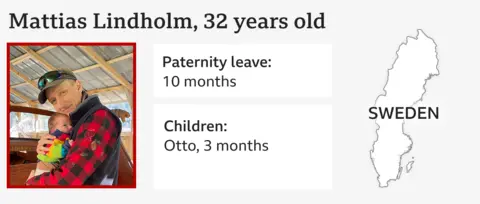
By the time he has used his full parental leave allowance, Mattias' son will be almost one
Mattias, from Stockholm, says comforting his three-month-old son is "the best feeling I've ever experienced".
Mattias is able to take advantage of one of the most generous paternity leave policies in the world. Parents in Sweden, including those who are self-employed, can share up to 480 days of parent leave, with 90 days reserved specifically for each parent.
Ringfencing time off for dads was first introduced in Sweden in 1995, with the introduction of a "daddy month" - 30 days just for fathers. This use-it-or-lose-it model increased to 60 days in 2002, and 90 days in 2016.
The first 390 days for each parent are paid at 80% by the government, up to a monthly salary cap of SEK47,750 (£3,590). After that, there's a daily statutory compensation of SEK180 (£14).
Mattias took six weeks off when Otto was born and will use another nine months of parental leave from November.
"We could share the load in the beginning when everything was new," Mattias says. "Those six weeks allowed us to be parents together - that made a huge difference. "
Paternity leave - the view from the UK
Some companies, both in the UK and abroad, pay out of their own pocket for enhanced paternity leave policies beyond the statutory minimum. But research from 2023 showed just 12% of fathers from low-income households had access to their full entitlement of employer-enhanced parental leave and pay.
Alex Lloyd-Hunter, co-founder of The Dad Shift, says "money is the single biggest barrier" to dads taking time off work and wants the government to fund better paternity leave for all dads.
A report, published this week by the Women and Equalities Committee (WEC) said statutory pay in the UK was "completely out of kilter with the cost of living". It suggested the government should consider increasing paternity pay to 90% or more and paternity leave to six weeks in a phased approach.
The report also looked at shared parental leave, introduced in 2014, which allows parents to share up to 50 weeks of leave and up to 37 weeks of pay after the birth or adoption of a child. The review found many families considered it "unnecessarily complex". It is used in fewer than 2% of all births and a report from 2023 suggests almost half (45%) of dads were not even aware shared parental leave was an option.
"We know the parental leave system needs to be improved," a spokesperson for the Department for Business and Trade said, adding the government would review maternity leave, paternity leave and shared parental leave.
They also pointed to changes which mean dads will soon no longer have to be employed by a company for 26 weeks to be entitled to statutory paternity leave.
DEI
The women at the centre of Somalia's construction boom
Fardowsa Hanshi & Anthony Irungu BBC News, Mogadishu
14 June 2025
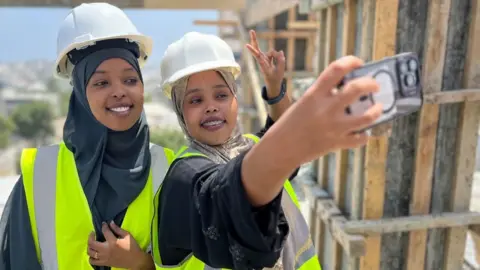
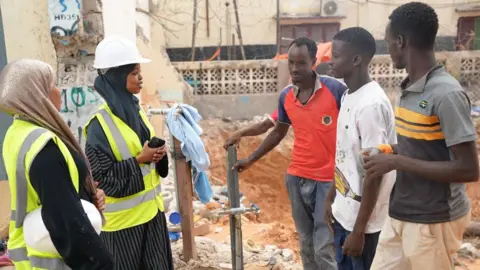
Anthony Irungu / BBC Fathi Mohamed Abdi (L) and Saadia Ahmed Omar (R) have overseen more than 30 multimillion-dollar projects
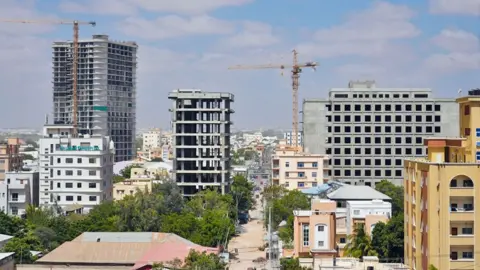
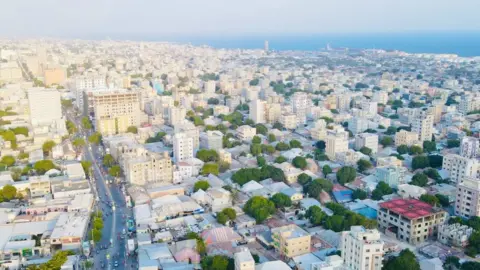
Construction is booming in Somalia's capital city and as Mogadishu literally rises from the ashes of its violent past it is also giving unexpected opportunities to women like Fathi Mohamed Abdi and Saadia Ahmed Omar.
The two young female engineers have been overseeing the construction of a 10-floor apartment complex in Taleh in the city's Hodan District.
Wearing hard hats they navigate their way through construction material, issuing instructions to a team of workers - all of whom are men.
"When I started, people doubted me," 24-year-old Ms Abdi, the chief operating officer of Arkan Engineering Services, a Somali-owned construction company, tells the BBC.
"They would ask, 'How can we trust a house built by a woman? How can I trust my money and property with a young female engineer?'"
She and her colleague Ms Omar have been practising engineers for the last five years.
"Mogadishu needs us," says Ms Omar, who is also 24. "When I was young, this city was in chaos. Now, we are part of its reconstruction."
Somalia, a former Italian colony, has experienced a prolonged period of civil war after the government of President Siad Barre collapsed in January 1991.
Even now, scars of decades of war are still visible - like in the central district of Shangani where there are bombed-out buildings. But the ruins are becoming hidden or replaced by tall office complexes and apartments, and a skyline dotted with cranes and scaffolding.
Both young women were born during the civil war and grew up witnessing their country fragmenting. While many Somalis chose to leave, they stayed, driven by a passion to rebuild, despite the fact that an insurgency was being waged by al-Shabab, a group linked to al-Qaeda.
"I think part of the reason women are getting more chances in this field is because there's so much work to do, and not enough professionals to do it. That creates space for us," Ms Omar says.
Mohamud Abdisamad / BBC Over the last five years, more than 6,000 buildings have been constructed in Mogadishu
Ibrahim Abdi Heyle, chairman of the Somali Engineers Association, agrees the high demand for skilled professionals is leading to change - even if slowly in Somalia's traditionally male-dominated society.
"With numerous ongoing infrastructure, energy, and technology projects, the workload has significantly increased. As a result, the association actively encourages greater participation from women, emphasising that they are not only welcomed but also vital in filling critical gaps in the workforce," the 34-year-old says.
"The association believes that empowering women in engineering not only helps meet the growing demand but also brings diverse perspectives and innovative solutions to the industry."
According to the office of the mayor of Mogadishu, over the last five years, more than 6,000 buildings have been constructed, marking a significant change in the city's landscape.
"Security in Mogadishu has improved, leading to an increase in high-rise and commercial buildings," says Salah Hassan Omar, the mayor's spokesperson.
Nonetheless it has not been an easy path for Ms Abdi and Ms Omar as only 5% of engineers are women - and they often find opportunities for mentorship are scarce.
"When I applied for internships, most companies rejected me," Ms Omar recalls. "They didn't think a woman could handle the physical demands of engineering. I searched for three months before someone finally gave me a chance."
Today, the two are among the most recognised female engineers in Mogadishu, having overseen more than 30 multimillion-dollar projects.
"The city is now home to taller buildings and modern infrastructure, a stark contrast to the Mogadishu of the past," Ms Abdi says proudly.
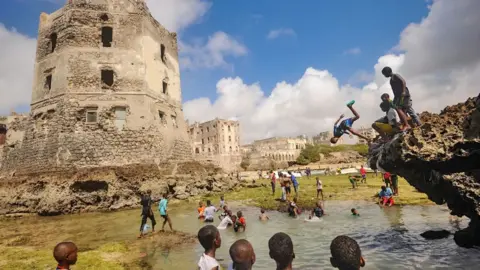
AFP / Getting Images There are fears that the classical look of old Mogadishu will be completely lost
But not everyone is pleased with the transformation. Veteran architect Siidow Cabdulle Boolaay laments the loss of the city's historical character.
"The buildings that once graced Somalia before the war were not only beautiful but also attracted attention due to their Italian-style architecture, which was rare in Africa at that time," he tells the BBC. "The urban planning of Mogadishu was highly structured."
Mr Boolaay also has safety concerns: "The sand used in Mogadishu's buildings is salty, which undermines its effectiveness."
Sand from Somalia's long coastline is often used to make cement - a practice that is generally discouraged and, in many circumstances, restricted by international building standards because the high salt content can cause the corrosion of steel.
"These tall buildings are not designed to withstand fire or heavy rain, and safety for the tenants is not considered during development. Many of these buildings lack fire extinguishers and proper electrical installations," he adds - visibly disappointed.
He is wary of the pace at which buildings are being constructed, which he says is compromising quality control.
For years, there were no regulations, leading to concerns about their structural integrity.
Mr Omar, from the mayor's office, admits this was the case until three years ago - and says nothing can be done about those buildings.
But he insists there is now "quality control and nobody will build a building without it".
"We are [also] preparing new laws that will clearly define where high-rise buildings can be constructed and where only residential houses should be built."
Yet there are worries that while regulations are in place - there are often no follow-up checks because of the speed of the building boom.
Mohamud Abdisamad / BBC It is rare to see women taking charge of a construction site in Somalia
Ms Abdi and Ms Omar, who graduated from Plasma University Mogadishu's faculty of civil engineering, say under their firm all their projects have been approved by the local authorities.
The rapid growth of construction projects has been attributed to diaspora investments as well as improved security - although Islamist militants who control large swathes of southern Somalia still target the city.
According to the World Bank, remittances made up 16.7% of the country's gross domestic product (GDP) in 2022 - something that has given opportunities to architects and engineers.
But the rapid urbanisation has also exposed Mogadishu to infrastructure challenges - it lacks a proper sewage system and unregulated borehole drilling risks depleting groundwater reserves.
Christophe Hodder, a UN climate security and environmental adviser, warns that the unchecked construction boom could lead to long-term environmental consequences.
"We need a co-ordinated approach to water management, or we risk a crisis in the future. Each new building is digging its own borehole... in a small space, there could be 10 or 20 boreholes," he told the BBC.
The government, in partnership with international organisations, is working on a new sewage system, but its implementation may require demolishing existing buildings - a controversial move that could displace residents and businesses.
Mr Hodder adds that there is a high population density in Mogadishu - people driven into the city by drought and conflict.
An increase in the urban population, especially in slum areas, might further increase poverty and social disparities, he says.
Despite these challenges, Mogadishu's future looks promising. The city is striving to implement urban development regulations, improve infrastructure and ensure sustainable growth.
Even the bombings by the Islamist armed group al-Shabab - whose fighters tend to target plush hotels often occupied by politicians - does not dent the enthusiasm of the Somali Engineers Association.
Mohamud Abdisamad / BBC The engineers hope Mogadishu will become a modern city and a model for post-conflict reconstruction
Mr Heyle admits it can be upsetting for architects and engineers whose buildings are destroyed but notes that Somalis have become resilient - especially those studying engineering.
"A lot of explosions happened; our dreams did not stop on that. Today we are reviving the engineering profession, which collapsed 30 years ago. That means there is hope."
And the ambition is that in five years, Mogadishu will not only be a modern city but also a model post-conflict reconstruction.
"I believe Mogadishu is a different city compared to the 1990s; the city has changed to a new style, and Mogadishu's development is in line with the new world," says Ms Omar.
"When I walk through the streets and see buildings I helped construct, I feel proud. We are not just building structures; we are building hope."
Ms Abdi agrees, adding: "We are proving that women can not only design buildings but also lead projects and shape the city."
The tech mogul is marrying Lauren Sanchez in a wedding with a star-studded guest, but some say they are not welcome.
Police spoke to activists and checked their identification documents before they rolled up their banner
Image: Yara Nardi/REUTERS
Greenpeace on Monday became the latest group to protest the lavish wedding Amazon owner Jeff Bezos and Lauren Sanchez have planned in Venice.
Members of the environmental organization and British group "Everyone Hates Elon" unfolded a giant banner in central St Mark's Square with a picture of Bezos laughing and a sign reading: "If you can rent Venice for your wedding, you can pay more tax."
It is the latest protest against this week's multi-day event, expected to attract some 200 guests, including US President Donald Trump's daughter, Ivanka, and son-in-law Jared Kushner, as well as celebrities like Oprah Winfrey, Kylie Jenner, and Kim Kardashian, and billionaires Eric Schmidt of Google and Bill Gates of Microsoft.
Mayor Luigi Brugnaro and regional Governor Luca Zaia believe the wedding will help local businesses by boosting the economy.
Zaia said the celebrations were expected to cost €20 to €30 million ($23-$34 million).
Why are activists protesting against the Bezos-Sanchez wedding?
Local anti-tourism activists said they were determined to disrupt the festivities, saying city bosses were prioritizing tourism over resident needs.
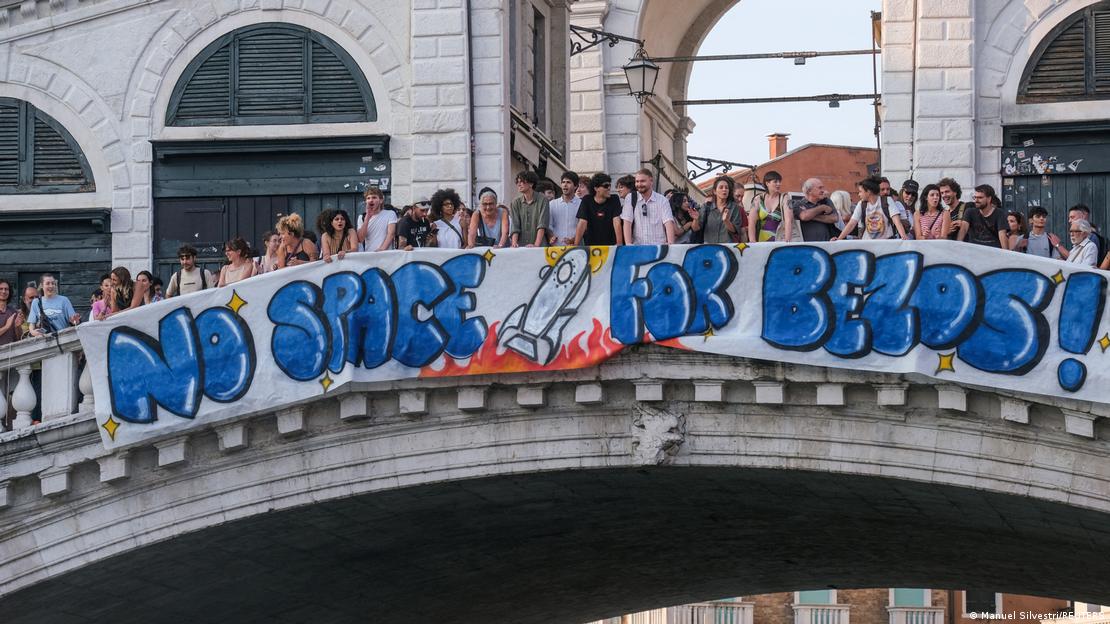
They have already hung anti-Bezos banners from the city's famous Rialto Bridge reading "No space for Bezos!"
"Bezos arrogantly believes he can take over the city and turn it into his own private party venue," said Tommaso Cacciari, from the "No space for Bezos" campaign.
In the face of early protests from residents who feared the arrival of thousands of celebrities and hangers-on, the city issued a statement clarifying that it would involve around 200 guests and would not disrupt Venetians' everyday life [FILE: June 13, 2025]Image: Manuel Silvestri/REUTERS
Greenpeace said it wanted to draw attention to the low taxes many billionaires pay, while allegedly exacerbating the climate crisis through their unsustainable lifestyles.
"The problem is not the wedding, the problem is the system. We think that one big billionaire can't rent a city for his pleasure," Simona Abbate, one of the protesters on Monday said.
Bezos-Sanchez nuptials set for later this week
According to Italian daily Corriere della Sera, more than 90 private jets carrying celebrity guests are expected to land at Venice's Marco Polo Airport in the coming days.
While the exact date of the wedding remains confidential, celebrations are expected to span three days, likely from June 26 to 28. The wedding party is reportedly set to take over the entire island of San Giorgio, located across from St. Mark's Square, where the Greenpeace protest took place. However, the specific location of the ceremony itself has not been disclosed.
It is also unclear when Bezos and Sanchez will arrive, though reports suggest they will stay at the Aman Venice, a luxury hotel on the Grand Canal where George and Amal Clooney stayed during their 2014 wedding.
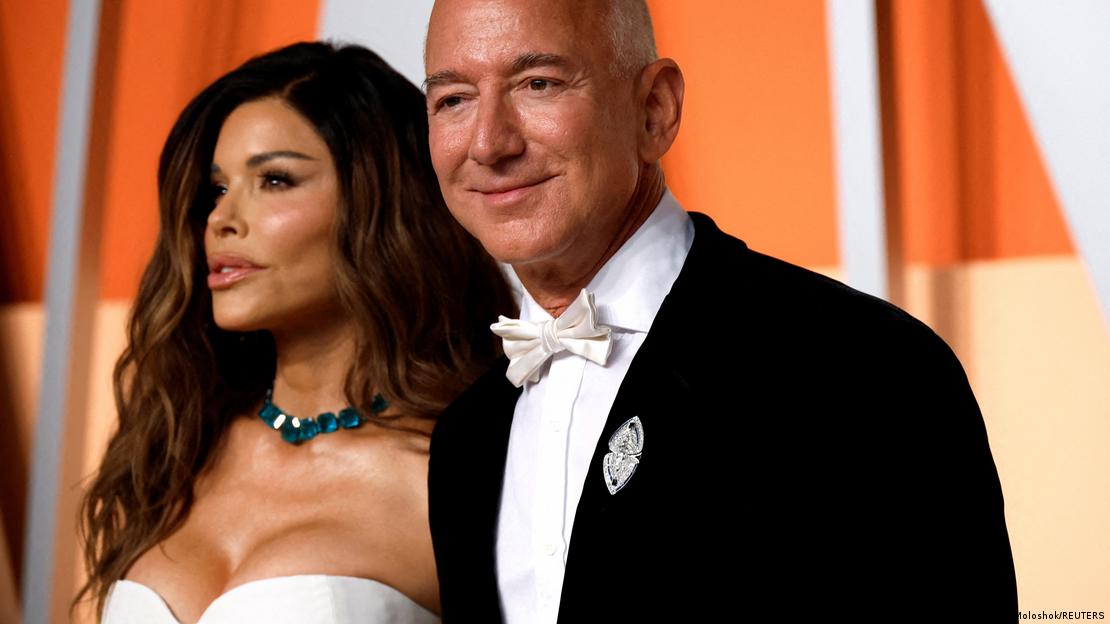
Bezos, 61, got engaged to journalist Sanchez, 55, in 2023 [FILE: March 2, 2025]Image: Danny Moloshok/REUTERS
Bezos will also make sizable charity donations, including €1 million euros for Corila, an academic consortium that studies Venice's lagoon ecosystem.
The wedding comes at the height of tourism season in the fragile city that has long been overrun with visitors.
Venice has already reintroduced an entry fee this year, which was piloted last year for day-trippers. They will have to pay between €5 and €10 to enter the city during the peak season.
About 49,000 people live in Venice's historic city center. According to various estimates, more than 20 million tourists visit the city each year.
Edited by: Saim Dušan Inayatullah Louis Oelofse DW writer and editor
Trump’s assault on Iran is a war without honour
The invasion of Iraq came robed in political poetry. This is the grand strategy of a businessman.
Photo by Carlos Barria / POOL /AFP via Getty Images
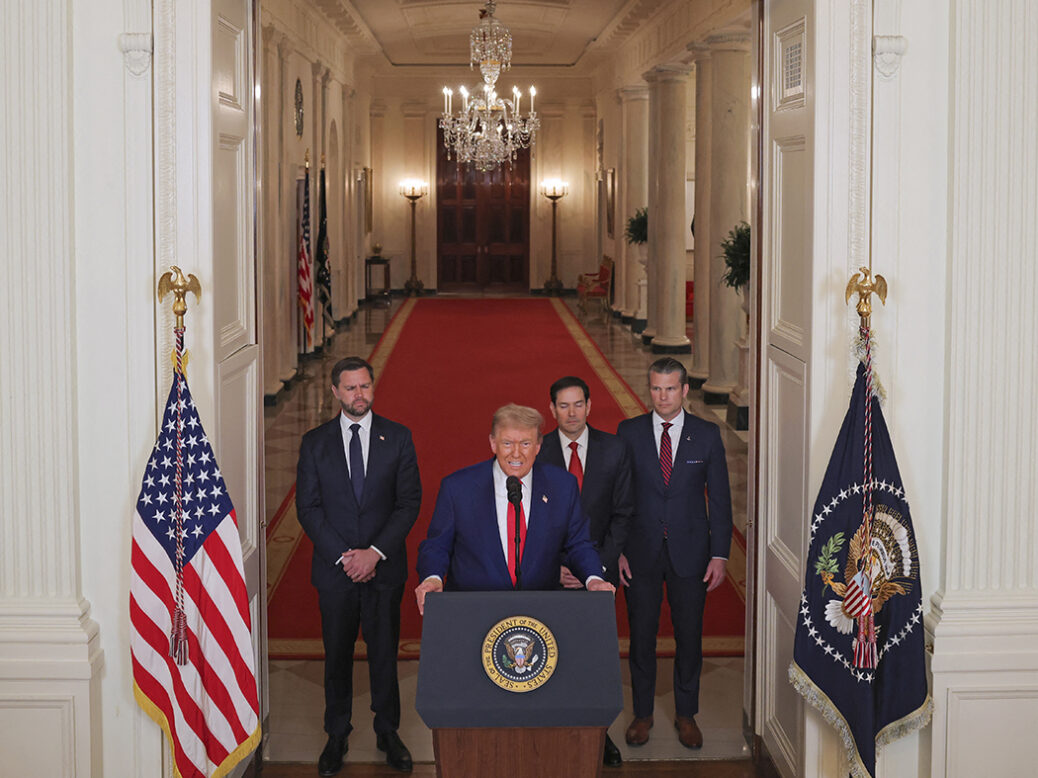
Modern nations not facing a mortal threat rarely, if ever, go to war without a high-flying moral justification. Until now. Trump’s justification for going to war with Iran is that he will not allow Iran to have a nuclear weapon. Period. No argument about the need to abolish Iran’s cruel repressive regime. Nothing about human rights. Not a syllable about the glories of exporting democracy to an undemocratic land.
Instead, Trump addressed the country after the American attacks on Iran Saturday night and weirdly “congratulated” Benjamin Netanyahu on “erasing the threat to Israel” with American help. He ended his remarks by muttering, as if receiving an Academy Award, “and I want to just thank everybody and, in particular, God. I want to just say, we love you, God.” He then declared, “God bless the Middle East, God bless Israel, God bless America.” No American president has ever led the country into war with such a lack of feeling, with such paucity of eloquence, with a piety so rote as to be transparently impious. But then again, no American president as divisive, undemocratic, criminal and inept as Trump has proven to be has ever led his country into war.
Yet the flat-footed, uninspired, no-nonsense businessman’s approach to plunging the country into armed conflict is, no doubt for many, a relief after the golden liberal claptrap that accompanied the wars in Vietnam and Iraq. The former was justified by oceans of dazzling liberal eloquence. Kennedy in his 1961 inaugural speech: “Ask not what your country can do for you, ask what you can do for your country.” He wasn’t talking about the Peace Corps. Just four months later, he began to stealthily increase the number of American troops in Vietnam.
Interventionist neoconservative foreign policy might be back in the news, but nobody does foreign intervention like the liberal elites. America might never have made war on Iraq if it had not been for the so-called liberal hawks at the time, most of whom worked in the media’s most prestigious venues, where their tides of rhetoric justifying the invasion soaked the American psyche into compliant stupefaction. Liberal politicians followed suit.
By contrast, Trump has never said that there is anything spiritually or historically exceptional about America. What is exceptional is America’s military and economic might. His heartland followers, many of whom lost loved ones to the liberals’ starry-eyed infernos in Vietnam and Iraq, are sick of being sweet-talked into oblivion, from an idealising domestic policy that excludes them, to seemingly high-minded foreign policy that amputates their limbs and gives them a medal and a pat on the back. They are being enraptured into another foolish and unnecessary war now not by hostility to Iran’s brutal regime. They are as gratified by Trump’s transactional approach to war as they are by his transactional approach to politics and society.
Trump has likely been advised to prosecute a limited assault, as America did in the first Gulf war and later in Kosovo. Unlike then, he will strike exclusively from the air, and will keep to the air even in the event of inevitable retaliation. Unless a bomb or a gunman explodes in an American city. But then Trump would simply send in federal troops. Win-win, as they say about a successfully negotiated business deal.
The idea, if Trump indeed is being instructed in it, that he can fight a limited war in Iran from the air offers the narrowest ray of hope. The vicious, self-serving idealism that enabled the country to invade and occupy Iraq in 2003 guaranteed a blinkered momentum that offered no hope. The difference between then and now is profound. There is, for one thing, no 2025 equivalent to A Problem from Hell, which was published one year before America invaded Iraq. Samantha Power’s Pulitzer-Prize-winning bestseller, written from some fantastical mental lair of easy indignation, excoriated America’s refusal to prevent various genocides, and all but called for American military intervention in such situations.
The chapter on Iraq, where Power painted a portrait of an inept and spineless US, unable to locate Saddam Hussein’s chemical weapons, had the effect of shaming liberal elites into embracing the Bush administration’s lies about the existence of “weapons of mass destruction”. Power herself was at first all for the invasion. Weeks after it began, she told the LA Times: “That’s what’s so great about the fall of Saddam Hussein. Now we can actually put our money and power where our might has been so far.” The tussle between Trump and Tulsi Gabbard, his director of national intelligence, over whether Iran’s nuclear capability was around the corner or years down the line was a ludicrous caricature of Power’s depiction of the search for Saddam’s chemical weapons, and of the later phoney hunt for weapons of mass destruction. Trump couldn’t have cared less.
Of course the most important difference between 2003 and now was the attacks on 9/11. Not only had America never been breached in such a way before, but the threat of terrorism that seemed to increase after the attacks created a universal depression and unease. Pulverising Iraq under the cover of lofty rhetoric about liberation in the name of democracy satisfied the American thirst for morally unexceptionable revenge.
Eerily there is nothing like the pretext of a 9/11 behind Trump’s bombing of Iran. But then there is also no American carnage, no invasion of “aliens”, no burning down of American cities, no antisemitic pogroms at universities. There are only Trump’s fascinating lies, one being, as he said in his brief remarks to the nation, that Iran had killed “hundreds of thousands” of people in acts of terror. Truth, the saying goes, is the first casualty of war. Peace, in Trump’s America, is now the first major casualty of the death of truth.
The Strait of Hormuz functions as the world’s vital oil chokepoint since it transports 17 to 20 million barrels per day (bpd) of crude oil and LNG, which represents nearly one-fifth of global petroleum liquids in 2025.
The closure of this narrow waterway by Iran would trigger an unmatched energy crisis while disrupting worldwide supply networks and triggering serious economic instability and immediate strategic changes throughout Gulf Arab nations and worldwide. A blockade of the Strait of Hormuz would initiate multiple crises that involve sharp price changes alongside extensive trade breakdowns and substantial adjustments in security arrangements across the region, which require immediate crisis handling and medium-term energy diversification strategies, and long-term supply-chain risk reduction.
Strategic Significance of the Strait of Hormuz
The Strait of Hormuz transports 18.5 million bpd of oil and 3 million bpd of LNG and refined products through this waterway in 2025.
– The Strait handles about 18 percent of global oil flows at 18.5 million bpd during Q1 2025.
– LNG and Refined Products: An additional 3 million bpd equivalent of LNG and refined fuels.
Geopolitical Context
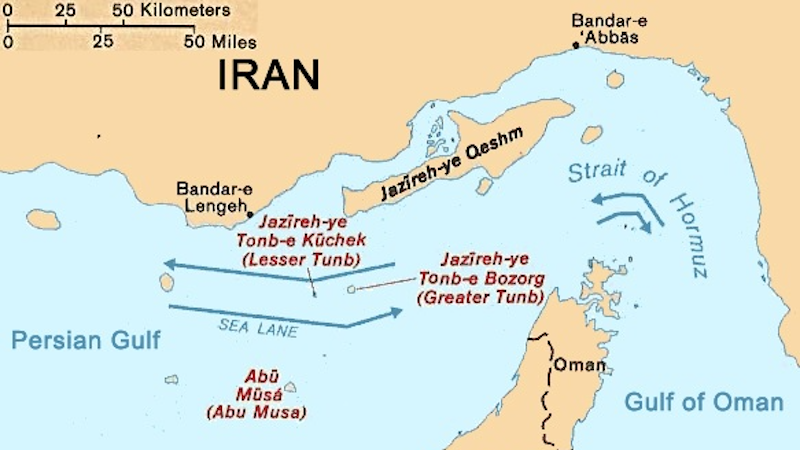
The narrow 21-mile-wide channel runs between Iran in the north and Oman in the south, while Iranian Revolutionary Guard forces patrol it, which demonstrates its exposed nature.
The closure would cut off all export pathways for Saudi Arabia and UAE, and Kuwait, as well as major LNG exporter Qatar.
Data Context: Global Energy Flows in 2025
Global crude consumption in 2025 reached 101 million bpd, while the Strait of Hormuz carried 18.5 million bpd of oil, which equated to 18.3 percent of the total world oil flow. The Hormuz waterway carried 77 billion cubic meters of LNG from Qatar, which represented 30 percent of worldwide exports. The IEA member nations hold approximately 1.5 billion barrels in their Strategic Petroleum Reserves, yet these reserves function solely as short-term supply protection. The existing East–West pipeline in Saudi Arabia and the Fujairah pipeline in the UAE provide a combined capacity of 6.8 million bpd, which remains well below the daily 20 million bpd that passes through the strait.
Problems and Challenges of a Blockade
1. Acute Energy Supply Shock
Benchmark Brent crude prices would exceed US$ $150–$200 per barrel within weeks to levels not observed since the 1970s embargo, which would push inflation above 8 percent in multiple import-dependent economies.
Sectoral Impact:
The immediate doubling of transportation fuel costs would decrease airline and shipping firm profits while forcing both industries to raise their prices.
The fuel-intensive manufacturing sector, together with the petrochemicals and fertilizers industries, would experience input cost increases that would decrease their output levels and workforce numbers.
2. Inflation and Economic Contraction
The global GDP would likely decrease by 4–6 percent in developed nations and more than 7 percent in emerging markets because of restricted financial markets and capital outflows.
Central banks must decide between two unappealing options when facing inflation: they can either increase interest rates to combat inflation but risk deeper economic decline, or keep interest rates low to maintain economic growth while allowing inflation to establish itself, which would reduce real income levels.
3. Supply Chain Disruption
The longer distance from tanker routes when using the Cape of Good Hope route results in a total 6,000 nautical miles journey that extends voyage duration to 10–14 days and causes freight rates to increase by 40–60 percent.
Just-in-Time Vulnerabilities
The discontinuation of automotive and electronics production would start when component shortages occur because assembly lines must shut down, and such a one-week shutdown would reduce output by 12 percent.
Middle Eastern countries that depend on European and Asian grain imports would experience two-week transit delays that would worsen their existing food shortages.
Arab States’ Reactions and Vulnerabilities
Map of Strait of Hormuz. Credit: CIA World Factbook, Wikipedia Commons
Saudi Arabia, together with Kuwait, faces the potential loss of US$ $100–130 billion in monthly oil exports, which would account for more than 80 percent of their total budget revenue.
The budgetary pressures would force Saudi Vision 2030 and UAE diversification plans to either suspend or terminate certain projects, which would threaten their social subsidy programs and investment commitments.
Diplomatic and Military Responses
The leaders of the GCC would issue public statements denouncing Tehran’s actions while they would pursue UNCLOS invocation and UN Security Council resolutions for strait reestablishment.
Security Posture:
– Joint naval patrols with the U.S. Fifth Fleet in Bahrain and European partners, alongside expedited deliveries of U.S. Aegis destroyers and submarines.
– Alternative export nodes (Fujairah, Yanbu) have their alert levels elevated to prevent Iranian retaliation.
Alternative Export Routes—Insufficient Band-Aid
– Pipeline Bypass: The Combined 6.8 million bpd capacity covers less than 40 percent of Hormuz flows.
– At the Fujairah storage complex, with a storage capacity of 20 million barrels, exports would only last three weeks, but the complex itself is vulnerable to aerial or missile strikes.
Alternative Export Routes—Insufficient Band-Aid
• Pipeline Bypass: Combined 6.8 million bpd capacity covers less than 40 percent of Hormuz flows.
• The storage complexes in Fujairah can store 20 million barrels but could only maintain exports for three weeks, and they are also vulnerable to aerial or missile attacks.
Recommendations for Mitigation and Resilience
Immediate Crisis Management
– The IEA members should release 200 million barrels of crude oil synchronously to temper the price increase while the U.S. SPR drawdowns are fast-tracked for approval.
– A United Nations Security Council emergency session should be convened to engage Oman and other neutral countries for shuttle diplomacy and to engage Iranian interlocutors through track two dialogues.
– A “Hormuz Maritime Security Initiative” under international law should be formalized to mandate freedom of navigation patrols with transparent rules of engagement.
Medium-Term Energy Diversification
– The acceleration of Renewables: The import-dependent Asia should increase its solar PV and wind capacity by 50 GW/year to reduce oil demand by 1.2 million bpd by 2030.
Alternative Pipelines and Shipping Hubs
– The proposed Qatar–Pakistan gas pipeline (2 billion cubic feet/day) should be fast-tracked for development, while the new oil lines through Oman’s Duqm port (up to 1 million bpd) should be accelerated.
– Floating LNG terminals should be invested in India and Southeast Asia to reduce dependence on choke points.
Long-Term Supply-Chain De-Risking
• The relocation of 25 percent of critical industries (semiconductors, pharmaceuticals) closer to end-markets should be supported by tax incentives and infrastructure grants.
• A minimum of six months’ inventory should be maintained for tier-one suppliers in the automotive and electronics sectors, while their procurement should be diversified across at least three geographic regions.
• Real-time tracking platforms using AI analytics should be deployed for disruption forecasting and automated alternative shipping instruction triggering.
Conclusion
A blockade of the Strait of Hormuz by Iran in 2025 would constitute an unprecedented attack on the global economic system, triggering an enormous energy crisis, destabilizing global financial markets, and exposing the vulnerabilities of both Gulf Arab countries and international supply chains. The Arab states, facing fiscal collapse, would gather international backing, strengthen their military positions, and use their limited alternative export routes.
The international community must take immediate action through the strategic release of petroleum reserves, powerful diplomatic efforts, and, if necessary, coordinated naval operations to restore shipping freedom. Beyond crisis management, policymakers and industry leaders must pursue medium-term energy diversification by accelerating renewables and alternative pipelines, and long-term supply-chain de-risking through reshoring, buffer stocks, and digital resilience. The security of the Strait of Hormuz goes beyond regional stability, requiring unconditional international commitment to protect the critical energy and trade routes of the world.
The opinions expressed in this article are the author’s own.
References
Reuters. “Goldman Sachs warns of oil price surge on Strait of Hormuz risks.” Reuters, 23 June 2025.
The Times. “Oil will surge above $100 a barrel if Iran blocks the Strait of Hormuz.” The Times, 23 June 2025.
EnergyNOW.com. “Shell CEO Warns of ‘Huge Impact’ If Strait of Hormuz Blocked.” EnergyNOW.com, 19 June 202
Simon Hutagalung is a retired diplomat from the Indonesian Foreign Ministry and received his master's degree in political science and comparative politics from the City University of New York. The opinions expressed in his articles are his own.


 Dr Kamil Janowicz