Wednesday, July 16, 2025

Trump Planning to Destroy Planet

When it comes to climate change, the fact that Donald Trump is distinctly a terrorist first-class should be a daily part of the headlines in our world.
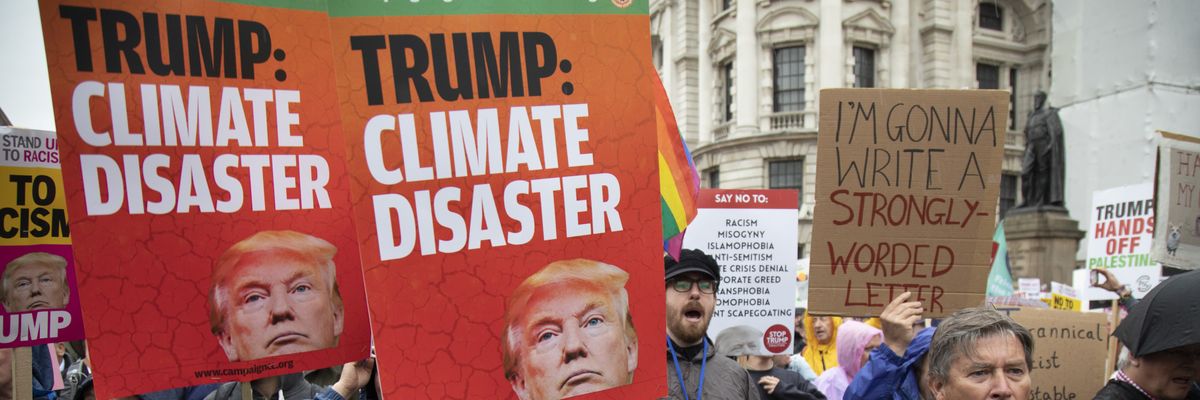

Protests continue in the rain against the state visit of U.S. President Donald Trump on June 4, 2019 in London, United Kingdom.
(Photo: Mike Kemp/In Pictures via Getty Images Images)

Tom Engelhardt
Jul 15, 2025
TomDispatch

Yes, he’s done quite a job so far and, in a way, it couldn’t be simpler to describe. Somehow he’s managed to take the greatest looming threat to humanity and put it (excuse the all-too-appropriate image) on the back burner. I’m thinking, of course, about climate change.

My guess is that you haven’t read much about it recently, despite the fact that a significant part of this country, including the city I live in, set new heat records for June. And Europe followed suit soon after with a heat hell all its own in which, at one point, the temperature in part of Spain hit an all-time record 114.8°F. And oh yes, part of Portugal hit 115.9°F as both countries recorded their hottest June ever. Facing that reality, United Nations Secretary-General António Guterres said (again all too appropriately), “Extreme heat is no longer a rare event—it has become the new normal.” The new normal, indeed! He couldn’t have been more on target!

And why am I not surprised by all this? Well, because whether you’re in the United States or Europe (or so many other places on this planet) these days, if you’ve been paying any attention at all, you’ve noticed that June is indeed the new July, and that, thanks to the ever increasing amounts of greenhouse gases that continue to flow into the atmosphere from the burning of fossil fuels, heatwaves have grown more frequent and more intense. After all, we’re now on a planet where, without a doubt, heat is at an all-time-record high. After all, 2024, was the hottest year in history and the last 10 years, the hottest decade ever known. Worse yet, in the age of Donald Trump, this is clearly just the beginning, not the end (though somewhere down the line, of course, it could indeed prove to be exactly that).

An Ongoing Act of Global Terrorism

While this old man is online constantly reading publications ranging from The Washington Post to the British Guardian, he still reads the paper New York Times. And if that isn’t old-fashioned of me, what is? Can you even believe it? And its first section of news, normally 20-odd pages long, does regularly tell me something about how climate change is (and isn’t) covered in the age of Donald Trump. Let me give you one example: On June 21, that paper’s superb environmental reporter Somini Sengupta had a piece covering the droughts that, amid the rising heat, are now circling this planet in a major fashion from Brazil to China, the U.S. to Russia. And yes, she indicated clearly in her piece that such droughts, bad as they may always have been from time to time, are becoming significantly worse thanks to the overheating of this planet from fossil fuel use. (As she put it: “Droughts are part of the natural weather cycle but are exacerbated in many parts of the world by the burning of fossil fuels, which is warming the world and exacerbating extreme weather.”)

The next day that piece appeared in the paper newspaper I read—a day when, as always, the front page was filled with Donald Trump—and where was it placed? Yep, on page 24.

And on the very day I happened to be writing this sentence, Trump was the headline figure in, or key, to 3 of the 6 front-page Times stories, including ones headlined “The Supreme Court’s Term Yields Triumphs for Trump” and “Trump’s Deal with El Salvador Guts MS-13 Fight.” On the other hand, you had to turn to page eight to read “Heat Overcoming Europe Turns Dangerous, and There’s More to Come” in which the eighth and 24th paragraphs quote experts mentioning climate change. I don’t mean to indicate that the Times never puts a climate piece on the front page. It does, but not daily like Donald Trump. Not faintly. He is invariably the page-one story of our present American world, day after day after day. Whatever he may do (or not do), he remains the story of the moment (any moment). And for the man who eternally wants to be the center of attention, consider that, after a fashion, his greatest achievement. Yet, at 79 years old, he, like this almost 81-year-old, will, in due course, leave this country and this planet behind forever. But the climate mess he’s now helping intensify in such a significant way won’t leave with him. Not for a second. Not in any foreseeable future.

Consider it an irony that the administration that wants to deny atomic weaponry to Iran on the grounds that a nuclear war would be a planetary disaster seems perfectly willing to encourage a slow-motion version of the same in the form of climate change.

In short, despite everything else he’s doing in and to this world of ours, there’s nothing more devastating (not even his bombing of Iran) than his urge to ignore anything associated with climate change, while putting fossil fuels back at the very center of our all-American world. Yes, he can no longer simply stop solar and wind power from growing rapidly on this planet of ours, but he can certainly try. And simply refusing to do anything to help is—or at least should be—considered an ongoing act of global terrorism.

And don’t think it’s just that either. For example, Trump administration cuts to the National Weather Service have already ensured that, when truly bad weather hits (and hits and hits), as it’s been doing this year, whether you’re talking about stunning flash flooding or tornadoes, there will be, as the Guardian‘s Eric Holthaus reports, ever fewer staff members committed to informing and warning Americans about what’s coming or helping them once it’s hit. Meanwhile, cuts to the government’s greenhouse gas monitoring network will ensure that we’ll know less about the effects of climate change in this country.

To put it bluntly, when it comes to climate change, the fact that Donald Trump is distinctly a terrorist first-class should be a daily part of the headlines in our world (though, if he has his way, it may not be “our” world for long). We’re talking about the president who is already doing everything he can to cut back on clean energy and ensure that this country produces more “clean, beautiful” coal, not to speak of oil and natural gas, and so send ever more greenhouse gases into the atmosphere. Meanwhile, Republicans in the House and Senate, bowing to Trump, have only recently passed a “big, beautiful bill” that would “quickly remove $7,500 consumer tax credits for buying electric cars,” among so many other things, while negating much of what the Biden administration did do in relation to climate change (even as it, too, let the American production of oil rise to record levels).


A Drill, Baby, Drill Presidency

Of course, given a president who once labeled climate change a “Chinese hoax” and “one of the greatest scams of all time,” who could be faintly surprised that his administration seems remarkably intent on sending ever more heat-trapping gases into the atmosphere? And sadly, if that reality, which was all too clear from his first term in office, had been the focus of the news last year, perhaps he wouldn’t have been voted back into the White House by 1.6% more Americans than opted for former Vice President Kamala Harris who, to give her full (dis)credit, didn’t run a campaign taking out after him in any significant fashion on the issue of climate change and planetary suicide.

So here we are distinctly in Donald Trump’s world and what a world it’s already proving to be. We’re talking, of course, about the fellow who quite literally ran his 2024 presidential campaign on the phrase “drill, baby, drill.” In a sense, he couldn’t have been blunter or, in his own fashion, more honest than that. Still, it pains me even to imagine that, for the next three and a half years, he will indeed be in control of U.S. environmental policy. After all, we’re talking about the guy whose (now wildly ill-named) Environmental Protection Agency (EPA) “plans to repeal limits on greenhouse gas emissions and other airborne pollutants from the nation’s fossil fuel-fired power plants.” Brilliant, right? And the fellow now running the EPA, Lee Zeldin, couldn’t have been more blunt about it: “Rest assured President Trump is the biggest supporter of clean, beautiful coal. EPA is helping pave the way for American energy dominance because energy development underpins economic development, which in turn strengthens national security.”

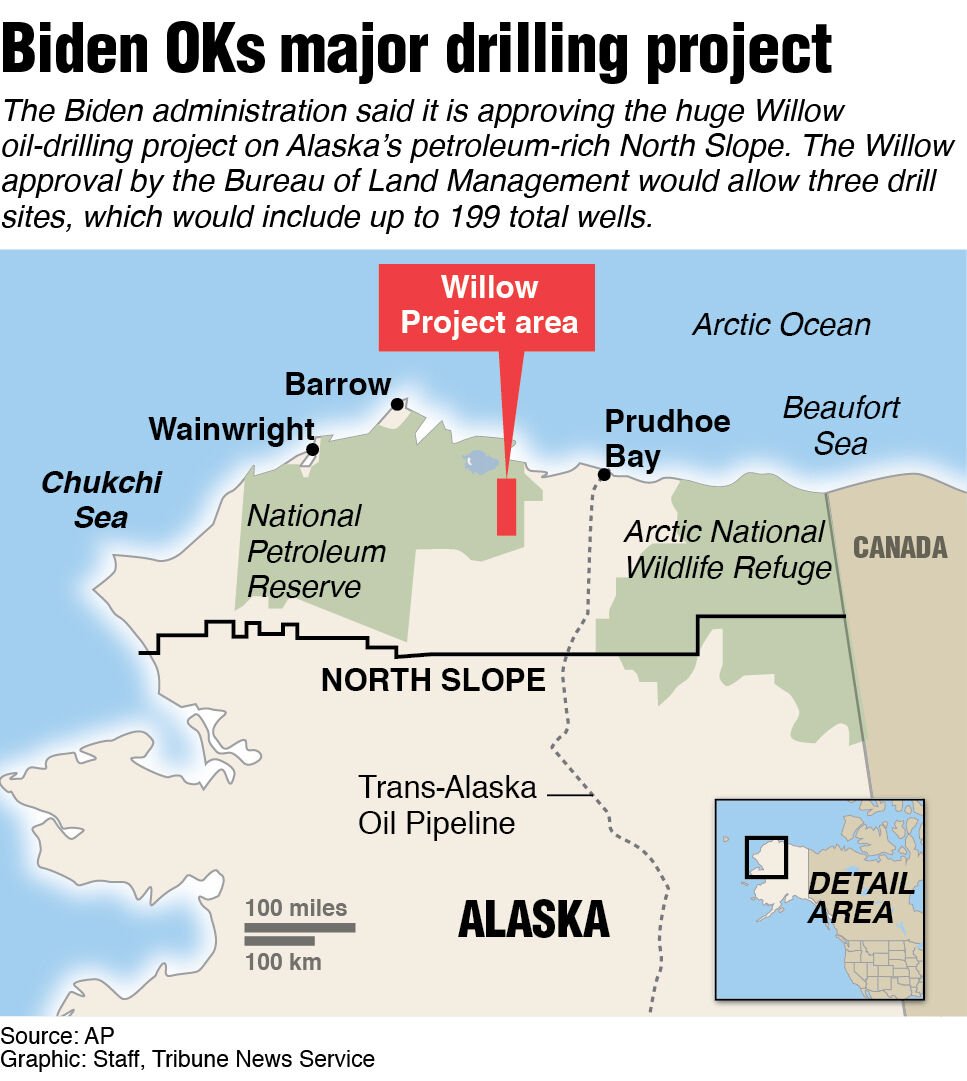
Clean, beautiful coal. Doesn’t that take the air out of the room? Or perhaps I mean, shouldn’t it? Because, sadly enough, in this Trumpian world of ours, all too few people are paying all that much attention. And yet it’s the slow-motion way that we humans have discovered to destroy this planet and ourselves. Consider it an irony that the administration that wants to deny atomic weaponry to Iran on the grounds that a nuclear war would be a planetary disaster seems perfectly willing to encourage a slow-motion version of the same in the form of climate change. After all, to take but one example, only recently it opened up millions of acres of previously protected Alaskan wilderness to oil drilling.

While President Trump and his officials essentially try to devastate this planet, a kind of self-censorship on the subject remains in operation and not just in the media, but among all the rest of us, too.

It’s not that there are no strong articles in the mainstream world about what’s happening. Check out, for instance, this article by Simmone Shah of Time Magazine on the increasing number of heat domes on this planet of ours. Or if you look away from the mainstream and, for instance, check out the work of Mark Hertzgaard at The Nation magazine considering the climate-change costs of war or environmentalist Bill McKibben at his substack writing on how Trump and crew want to create an all too literal hell on Earth, you would certainly have a stronger sense of what’s truly happening on this planet right now.

For a moment, just imagine the reaction in this country and in the media if Donald Trump suddenly started openly talking about actually using atomic weaponry. And yet, in a slow-motion fashion, that’s exactly what his officials and the president himself are doing in relation to climate change and it all continues to be eerily normalized and largely ignored amid the continuing chaos of this Trumpian moment.

Who, for instance, could imagine this headline anywhere in the media: Trump Planning to Destroy Planet. Or perhaps: American President Attempting to Create a Literal Hell on Earth. Or even how about a milder: End of World as We’ve Known It Now Underway. Or… well, you’re undoubtedly just as capable as I am of imagining more such headlines.

Instead, we increasingly live in a world where, while President Trump and his officials essentially try to devastate this planet, a kind of self-censorship on the subject remains in operation and not just in the media, but among all the rest of us, too. We lead our lives largely not imagining that our world is slowly going down the drain—or do I mean up in flames?

And in some grim sense, that reality (or perhaps irreality would be the better term) may prove to be—I was about to write “in retrospect,” but perhaps there will be no “retrospect”—Donald Trump’s greatest “triumph.” He is indeed in the process of doing in, if not us, then our children, grandchildren, and great-grandchildren, and clearly couldn’t give less of a damn about it. (If anything, it leaves him feeling distinctly on top of the world.)

Of all the wars we shouldn’t be fighting on this planet of ours from Ukraine to Gaza, Iran to Sudan, there is indeed one that we all should be fighting, including the president of the United States, and that’s the war against our destruction of this planet (as humanity has known it all these endless thousands of years) in a planetary heat hell.

If only.


© 2023 TomDispatch.com


Tom Engelhardt
Tom Engelhardt, co-founder of the American Empire Project, runs the Type Media Center's TomDispatch.com. His books include: "A Nation Unmade by War" (2018, Dispatch Books), "Shadow Government: Surveillance, Secret Wars, and a Global Security State in a Single-Superpower World" (2014, with an introduction by Glenn Greenwald), "Terminator Planet: The First History of Drone Warfare, 2001-2050"(co-authored with Nick Turse), "The United States of Fear" (2011), "The American Way of War: How Bush's Wars Became Obama's" (2010), and "The End of Victory Culture: a History of the Cold War and Beyond" (2007).
Full Bio >
\


Trump Plan to Expand Land for Arctic Drilling Is an Ecological Disaster

Trump has announced he will open millions of acres of National Petroleum Reserve in Alaska up to oil and gas companies.

A part of the Trans Alaska Pipeline System runs through boreal forest past Alaska Range mountains near Delta Junction, Alaska.

Did you know that Truthout is a nonprofit and independently funded by readers like you? If you value what we do, please support our work with a donation.

The largest tract of public land in the United States is a wild expanse of tundra and wetlands stretching across nearly 23 million acres of northern Alaska. It’s called the National Petroleum Reserve in Alaska, but despite its industrial-sounding name, the National Petroleum Reserve-Alaska, or NPR-A, is much more than a fuel depot.

Tens of thousands of caribou feed and breed in this area, which is the size of Maine. Migratory birds flock to its lakes in summer, and fish rely on the many rivers that crisscross the region.

The area is also vital for the health of the planet. However, its future is at risk.

The Trump administration announced a plan on June 17, 2025, to open nearly 82 percent of this fragile landscape to oil and gas development, including some of its most ecologically sensitive areas.

Some of the extraordinary wildlife in the wetlands around Teshekpuk Lake, a fragile “special area” in the National Petroleum Reserve-Alaska that the Trump administration would open to further drilling.

I am an ecologist, and I have been studying sensitive ecosystems and the species that depend on them for over 20 years. Disturbing this landscape and its wildlife could lead to consequences that are difficult – if not impossible – to reverse.

What is the National Petroleum Reserve-Alaska?

The National Petroleum Reserve-Alaska was originally designated in 1923 by President Warren Harding as an emergency oil supply for the U.S. Navy.

In the 1970s, its management was transferred to the Department of Interior under the Naval Petroleum Reserves Production Act. This congressional act requires that, in addition to managing the area for energy development, the secretary of the interior must ensure the “maximum protection” of “any significant subsistence, recreational, fish and wildlife, or historical or scenic value.”

The Bureau of Land Management is responsible for overseeing the reserve and identifying and protecting areas with important ecological or cultural values – aptly named “special areas.”

A map of the NPR-A shows five large areas currently set aside as
The Trump administration plans to open parts of the ‘special areas,’ shown here, that were designated to protect wildlife in the National Petroleum Reserve-Alaska, including in the fragile Colville River and Teshekpuk Lake regions. U.S. Bureau of Land Management

The Trump administration now plans to expand the amount of land available for drilling in the NPR-A from about 11.7 million acres to more than 18.5 million acres – including parts of those “special areas” – as part of its effort to increase U.S. oil drilling and reduce regulations on the industry.

I recently worked with scientists and scholars at The Wilderness Society to write a detailed report outlining many of the ecological and cultural values found across the reserve.

A Refuge for Wildlife

The reserve is a sanctuary for many Arctic wildlife, including caribou populations that have experienced sharp global declines in recent years.

The reserve’s open tundra provides critical calving, foraging, migratory and winter habitat for three of the four caribou herds on Alaska’s North Slope. These herds undertake some of the longest overland migrations on Earth. Infrastructure such as roads and industrial activity can disrupt their movement, further harming the populations’ health.

The NPR-A is also globally significant for migratory birds. Situated at the northern end of five major flyways, birds come here from all corners of the Earth, including all 50 states. It hosts some of the highest densities of breeding shorebirds anywhere on the planet.

An estimated 72% of Arctic Coastal Plain shorebirds – over 4.5 million birds – nest in the reserve. This includes the yellow-billed loon, the largest loon species in the world, with most of its U.S. breeding population concentrated in the reserve.

A black and white bird with a yellow bill sits on a nest mostly surrounded by water.
A yellow-billed loon sits on a nest in the National Petroleum Reserve-Alaska. These migratory birds, along with many other avian species, summer in the reserve. Bob Wick/BLMCC BY

Expanding oil and gas development in the National Petroleum Reserve-Alaska could threaten these birds by disrupting their habitat and adding noise to the landscape.

Many other species also depend on intact ecosystems there.

Polar bears build dens in the area, making it critical for cub survivalWolverines, which follow caribou herds, also rely on large, connected expanses of undisturbed habitat for their dens and food. Moose browse along the Colville River, the largest river on the North Slope, while peregrine falcons, gyrfalcons and rough-legged hawks nest on the cliffs above.

A large stretch of the Colville River is currently protected as a special area, but the Trump administration’s proposed plan will remove those protections. The Teshekpuk Lake special area, critical habitat for caribou and migrating birds, would also lose protection.

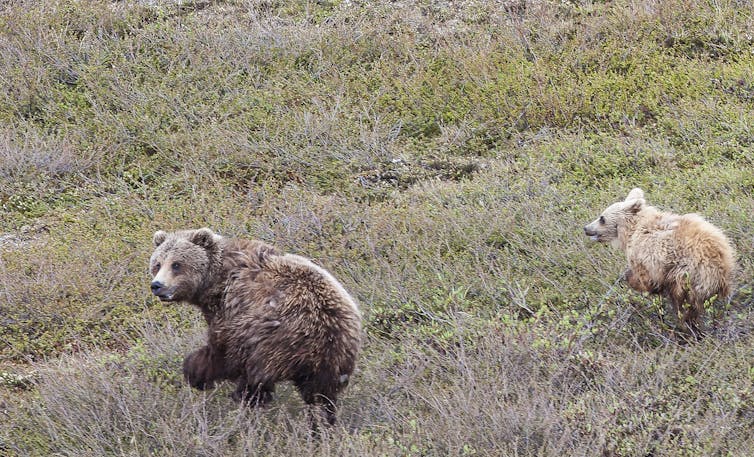
Two brown bears walk through low-level brush. The big one looks back at the camera.
Brown bears, as well as polar bears, rely on the National Petroleum Reserve-Alaska for habitat and finding food. Bob Wick/BLMCC BY

Indigenous communities in the Arctic, particularly the Iñupiat people, also depend on these lands, waters and wildlife for subsistence hunting and fishing. Their livelihoods, food security, cultural identity and spiritual practices are deeply intertwined with the health of this ecosystem.

Oil and Gas Drilling’s Impact

The National Petroleum Reserve-Alaska is vast, and drilling won’t occur across all of it. But oil and gas operations pose far-reaching risks that extend well beyond the drill sites.

Infrastructure like roads, pipelines, airstrips and gravel pads fragment and degrade the landscape. That can alter water flow and the timing of ice melt. It can also disrupt reproduction and migration routes for wildlife that rely on large, connected habitats.

Networks of winter ice roads and the way exploration equipment compacts the land can delay spring and early summer thawing patterns on the landscape. That can upset the normal pattern of meltwater, making it harder for shore birds to nest.

Caribou migrating
The Western Arctic Caribou herd population has fallen significantly in recent years. Here, some of the herd cross a river outside the NPR-A. Kyle Joly/NPS

ConocoPhillips’ Willow drilling project, approved by the Biden administration in 2023 on the eastern side of the reserve, provides some insight into the potential impact: An initial project plan, later scaled back, included up to 575 miles (925 kilometers) of ice roads for construction, an air strip, more than 300 miles (nearly 485 kilometers) of new pipeline, a processing facility, a gravel mine and barge transportation, in addition to five drilling sites.

Many animals will try to steer clear of noise, light and human activity. Roads and industrial operations can force them to alter their behavior, which can affect their health and how well they can reproduce. Research has shown that caribou mothers with new calves avoid infrastructure and that this impact does not lessen over time of exposure.

At Alaska’s Prudhoe Bay, the largest oilfield in the U.S., decades of oil development have led to pollution, including hundreds of oil spills and leaks, and habitat loss, such as flooding and shoreline erosion, extensive permafrost thaw and damage from roads, construction and gravel mining. In short, the footprint of drilling is not confined to isolated locations — it radiates outward, undermining the ecological integrity of the region. Permafrost thaw now even threatens the stability of the oil industry’s own infrastructure.

Consequences for the Climate

The National Petroleum Reserve-Alaska and the surrounding Arctic ecosystem also play an outsized role in regulating the global climate.

Vast amounts of climate-warming carbon is currently locked away in the wetlands and permafrost of the tundra, but the Arctic is warming close to three times faster than the global average.

Roads, drilling and development can increase permafrost thaw and cause coastlines to erode, releasing carbon long locked in the soil. In addition, these operations will ultimately add more carbon dioxide to the atmosphere, further warming the planet.

The decisions made today will shape the future of the Arctic – and one of the last wild ecosystems in the United States – for generations to come.

US Campuses Have Become the Newest Laboratories for Surveillance Technology

From Gaza to the US, military-grade surveillance tools are being deployed to monitor and punish student dissent.
July 10, 2025

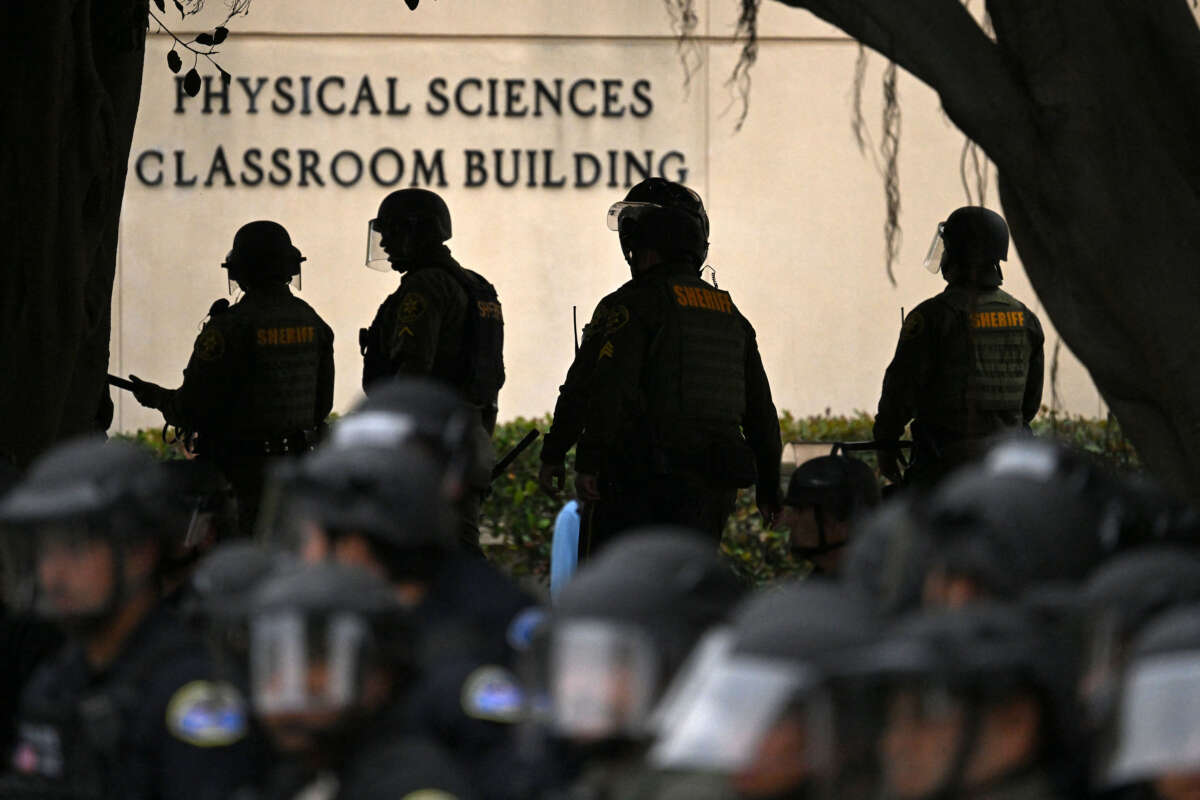
Police stand guard as they clear a pro-Palestinian encampment after students occupied the Physical Sciences Lecture Hall at the University of California, Irvine, on May 15, 2025.Patrick T. Fallon / AFP via Getty Images

In early June 2025, The Guardian revealed that the University of Michigan paid over $800,000 to Amerishield, parent company to a private security company called City Shield. It was part of a broader $3 million public‑security budget, which included surveillance of pro‑Palestinian student activists. The university hired plainclothes agents who trailed students into cafés, harassed them, and even staged confrontations, including faking a disability to falsely accuse them of theft. City Shield, a private security agency based out of Detroit, used the supposed evidence collected by their agents against these students to prosecute them and send them to jail.

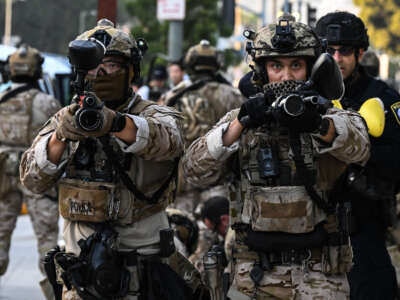
Massive Blue, a company based in New York, has created a surveillance tool called Overwatch that uses AI to monitor online spaces. Although this tool is sold and marketed as a public safety tool, the technology uses AI-generated virtual characters that infiltrate online groups, take part in conversations, and collect intelligence, particularly targeting college protesters and activists labeled as “radicalized.” These bots are created to imitate human behavior, making them very hard to detect.

The tech stack these agencies deploy is formidable: geofencing tools, license plate readers, real-time social media surveillance, predictive analytics. Even Radian6, a Salesforce product, has been linked to student protest monitoring. These tools don’t just observe behavior, they anticipate it, allowing administrators and police to intervene before a rally even begins.

This surveillance is not merely bureaucratic overreach. It is an act of intimidation, one that reflects an ideological alignment with systems of repression abroad. In Gaza, for example, humanitarian aid is increasingly distributed only through biometric registration, leaving starving Palestinians with no choice but to submit to facial and fingerprint scans to access food. Although aid agencies and occupying forces justify this as a form of “efficiency,” it can only be seen as coercive surveillance, stripping Palestinians of dignity and autonomy under the guise of relief.

Within the United States, university officials have increasingly turned to firms like ShadowDragon, Skydio, and Stellar Technologies, whose tools are capable of profiling, analyzing, and geolocating social media posts, drone-mapping encampments, and even identifying masked protestors through AI-enhanced facial recognition. These companies aren’t developing tools for student safety. They’re developing battlefield tech and students are the new targets.

Related Story

Trump Is Rapidly Expanding the Surveillance State as Protests Grow
Immigrants are only the first target of a rapidly expanding digital dragnet that can track our individual movements.  By Mike Ludwig , Truthout June 13, 2025


In April 2024, when students at Columbia University set up a peaceful encampment to protest the genocide in Gaza, few expected the administration to respond with mass arrests. Fewer still understood the extent to which military-grade surveillance technologies were already in place to track them. In the same month, Jewish Currents reported on Yale University’s use of drones, surveillance cameras, and plainclothes officers to monitor pro-Palestine student activists. Surveillance footage was used to identify students who had not violated any laws but had simply been present.

The technology uses AI-generated virtual characters that infiltrate online groups, take part in conversations, and collect intelligence.

Meanwhile, in May 2025, it was revealed that LAPD used Dataminr to track the social media activity of students organizing pro-Palestine events. Surveillance reports included screenshots of Instagram stories, private group chats, and Twitter threads. Some of this data was sourced using tools built by Dataminr and Social Sentinel, both of which specialize in identifying “emerging threats” by combing through vast amounts of social media data tools originally developed for use by law enforcement and intelligence agencies. In addition, in March 2024, it was revealed that Elon Musk’s X was also selling user data to Dataminr.

The logic is chillingly consistent: Dissent is pathologized, monitored, and neutralized while capitalists keep making money. And universities have become willing partners in this process.

In my Ph.D. research, I studied surveillance infrastructures, particularly in contexts where settler colonial regimes seek to erase dissent. What we’re seeing on U.S. campuses today mirrors repression models from places like East Turkestan (Xinjiang), where everyday resistance is quelled through predictive monitoring and data extraction. What this tells us is that surveillance isn’t about protection, it’s about power. And American universities are rapidly becoming test beds for the kind of repressive technology we associate with authoritarian states abroad.

The money behind these technologies flows through a familiar nexus of venture capital firms, defense contractors, and government agencies. ShadowDragon, for example, has been celebrated by the World Economic Forum and boasts contracts with U.S. law enforcement and military branches. Cobwebs Technologies, Xtend, and Oosto are Israeli surveillance companies whose products are now being deployed against student activists in the U.S. These firms have marketed their tools based on effectiveness in tracking Palestinians and other “high-risk” populations. Now, they are used on American campuses to monitor solidarity.

There is a historical precedent to this kind of repression. During the civil rights and antiwar movements of the 1960s and 70s, FBI programs like COINTELPRO targeted student activist groups like the Student Nonviolent Coordinating Committee (SNCC) and Students for a Democratic Society (SDS), and organizations like the Black Panther Party, with infiltration, wiretaps, and blackmail. The FBI’s targeting of student and civil rights activists through COINTELPRO is well-documented, as explored in this Yale News interview with historian Beverly Gage, who says J. Edgar Hoover’s tactics were both coercive and widely normalized. Hoover was the first director of the FBI, serving from 1924 until his death in 1972. However, the difference today is scale and automation. Rather than needing a human informant in every room, university administrators can now rely on machine learning algorithms to scan student emails, monitor group chats, and alert authorities to so-called “escalation indicators.”

This surveillance is not merely bureaucratic overreach. It is an act of intimidation.

Recently, billionaire investor Kevin O’Leary called for permanently destroying the digital lives of student protesters using AI-based doxxing campaigns. While O’Leary was widely condemned, his dystopian vision isn’t far from the reality already taking root. Companies like Babel Street and Stellar Technologies offer tools with the explicit promise of identifying individuals based on minimal data inputs like a partial image or a Twitter handle.

Tools like NesherAI claim to identify masked individuals in a crowd using behavioral and gait analysis. Corsight AI advertises facial recognition that works through masks, hoods, and sunglasses. These are not theoretical tools. They’re being piloted now, often in secret, and often in tandem with increasing police presence on campuses.

These developments must be viewed in the broader context of the militarization of civilian life. The pipeline between Gaza and Georgia Tech is not rhetorical. Technologies field-tested in war zones are refined and normalized on American campuses, where students are reduced to data points in behavioral prediction models. Israeli firms developed surveillance for use in Gaza and the West Bank are now contracted domestically.

Surveillance technologies once reserved for military and foreign operations are now being deployed on U.S. university campuses, targeting student protestors, particularly those demonstrating for Palestine. These tools are not isolated innovations. Many were tested on Palestinians and Uyghurs before being repurposed for U.S. settings. This is not a breakdown of democratic norms but their systematic redirection using universities as testbeds for next-generation policing.

University administrators often claim that surveillance is about safety. But whose safety? Lately, surveillance tools have mostly targeted the most vulnerable in our communities: Muslims, Indigenous people, undocumented immigrants, Black people, and anyone who supports Palestinian liberation and an end to the U.S.-sponsored genocide in Gaza. They claim that these tools are here to protect us, but in truth, they only serve to erase us, discipline us, and punish us.

It doesn’t have to be this way. Campuses have historically been sites of inquiry, dissent, and transformation, not laboratories for digital repression, and we must fight to keep them that way. We must reject the narrative that surveillance is inevitable. It is not. It is a political choice, made behind closed doors, mostly without consent or oversight of those who are affected the most.

Surveillance Watch is one intervention in this landscape, an attempt to shift the power back to those being watched. It is a community‑driven project that deploys interactive maps and databases to reveal the web of surveillance companies, their funders, subsidiaries, affiliations, and global operations in an effort to make opaque surveillance networks transparent. However, we need more. We need more public and legal accountability, more student organizing, more media scrutiny, and way more institutional courage. We need to say, unequivocally, that resistance is not a threat. It is a right.


This article is licensed under Creative Commons (CC BY-NC-ND 4.0), and you are free to share and republish under the terms of the license.

Elham Azad is a Ph.D. scholar and a senior research fellow with Surveillance Watch.


Trump Is Testing the Limits of Our Democracy—Will We Hold Firm?


The way we all react to these tests—from the disappearing of U.S. citizens to the threatening of judges—will determine Trump’s and the GOP’s next steps. So, what do we do?


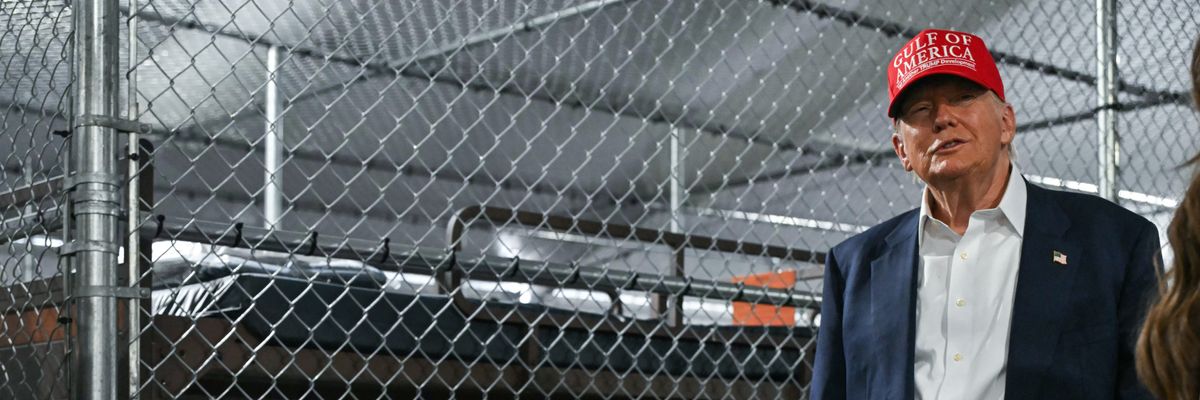
U.S. President Donald Trump tours a migrant detention center, dubbed "Alligator Alcatraz," located at the site of the Dade-Collier Training and Transition Airport in Ochopee, Florida on July 1, 2025.
(Photo: Andrew Caballero-Reynolds/AFP via Getty Images)

Thom Hartmann
Jul 15, 2025
Common Dreams


U.S. President Donald Trump’s threat to strip Rosie O’Donnell of her citizenship is a “test.”

Kids do it all the time. Throw a tantrum in the store demanding cookies and if the parents don’t remove them from the store right away, every visit will see the tantrums escalate. Testing the boundaries. When the test succeeds, the boundaries get moved and a new boundary gets tested, on and on until finally the child’s behavior is so egregious he’s stopped. Or he always gets away with everything and grows up to be Donald Trump.

We learn this early.

We’ve seen a series of these tests coming from the Trump administration, following the very specific and consistently repeated pattern that history tells us played out in the regimes of Mussolini, Hitler, Pinochet, Putin, Orbán, ErdoÄŸon, el Sisi, and pretty much every other person who took over a democracy and then, step-by-step turned it into a dictatorship.

Trump started testing racism as a political weapon when he came down the elevator at Trump Tower and spoke about “Mexican murderers and rapists” in front of what media reports said was a crowd he’d hired for $50 per person from a company that provides extras to movie and TV production companies.

While his initial goal was reportedly to get NBC to renew “Apprentice” and pay him more than Gwen Stefani, his racism test work out shockingly well; suddenly he was a serious contender for the party that had inherited the KKK vote when Democrats abandoned the South with the Civil Rights and Voting Rights acts in the 1960s.

If he can do it to Rosie—if there isn’t furious pushback (and so far, there isn’t) against this latest test—he can do it to me or you.

Another test was whether the exaggerations, distortions, and outright lies that he and his family had used to hustle real estate could work in politics.

He quickly discovered that GOP base voters—after decades of having uncritically (slavishly, even) swallowed lies about trickle-down economics, “evil union bosses,” and the “importance of small government”—were more than happy to embrace or ignore, as the occasion demanded, his prevarications.

From there, Trump tested exactly how gullible his most fervent supporters—and the media that fed them a daily diet of very profitable outrage and hate—would buy into a lie so audacious, so in defiance of both the law and common sense, so outside the bounds of normal patriotism, that they could be whipped into a murderous frenzy and kill three police officers while trying to overthrow the government of the United States of America.

The nation and our press reacted as if he’d failed that test, but when he was able to cow enough senators to avoid being convicted in his impeachment trial, he knew he’d won.

Now he’s again testing how far he can go.

George Retes is a 25-year-old Hispanic natural-born American citizen and disabled Army veteran working as a security guard at a legal marijuana operation in California. When it was raided by Immigration and Customs Enforcement (ICE), he got in his car and tried to drive away to avoid getting in the middle of what he saw as trouble.

Masked agents chased him down, smashed the window of his car and pepper-sprayed him in the face, dragged him out of his car, and disappeared him.

Testing.

Will Democrats make a stink? Will the media make it more than a one-day story? Will any Republicans break rank and stand against his excesses? Was it even mentioned on any of the Sunday shows? How far can he go next time?

So far, Trump thinks he’s winning these tests. The outrages are coming so fast and furious that it’s becoming impossible to keep track of them, just like in Germany in 1933 and Chile in 1973.

Retes wasn’t the only U.S. citizen who’s been arrested or detained by ICE; they’ve gone after a mayor, a member of Congress, and even assaulted a United States senator.

A 71-year-old grandmother was assaulted and handcuffed by masked agents. Axios documents others; as the CNN headline on the story about other U.S. citizens being snatched notes: “‘We Are Not Safe in America Today:’ These American Citizens Say They Were Detained by ICE.”

Testing.

After years of hysteria on the billionaire-owned sewer of Fox “News” about our nation’s first Black president deploying “FEMA Camps” to detain white conservatives, Stephen Paddock killed 58 people and wounded hundreds of others in Las Vegas, ranting that Federal Emergency Management Agency Camps set up after Hurricane Katrina in 2005 were “a dry run for law enforcement and military to start kickin’ down doors and... confiscating guns.”

He murdered those innocent concertgoers, he said, to “wake up the American public and get them to arm themselves,” saying, “Sometimes sacrifices have to be made.”

Now those detention facilities conservatives feared has come into being, as Republicans in Congress just funded concentration camps like “Alligator Auschwitz” in multiple states across America.

Visiting congress members claim inmates are packed over 30 to a cage, with Rep. Debbie Wasserman Schultz (D-Fla.) reporting her horror when she was shown that “they get their drinking water, and they brush their teeth, where they poop, in the same unit.”

Testing.

We recently learned via CBS News from a whistleblower and now-released texts that Trump’s former lawyer and now-nominee for a lifetime federal judgeship, Emil Bove, then working in the Justice Department, advised the administration officials to tell federal courts “fuck you” when they ordered the return of Kilmar Abrego Garcia from an El Salvadoran hellhole concentration camp.

But now—as it was in South Korea when their president tried to end democracy there last year and people poured into the streets and forced the government to act—it’s apparently going to be pretty much exclusively up to us.

For months, the administration appears to have followed his obviously unconstitutional and illegal advice. Republicans want him on the federal bench anyway.

Testing.

Kilmar Abrego Garcia—who Trump official Erez Reuveni said had been deported “in error”—described how he was treated in that El Salvadoran concentration camp, telling his attorneys and the court that he’d been repeatedly beaten, then forced to kneel from 9:00 pm to 6:00 am “with guards striking anyone who fell from exhaustion.”

He had committed no crime and was deported in open violation of a federal judge who demanded the plane either not take off or return before landing in El Salvador. The Trump administration simply and contemptibly ignored the court’s order.

Testing.

In a White House visit, Trump told the El Salvadoran president, Nayib Bukele (who refers to himself as “the world’s coolest dictator”), that he wants to send American citizens to that country’s torture centers.
“The homegrowns are next, the homegrowns,” Trump said as the two men laughed. “You’ve got to build about five more places.”


Testing.

Meanwhile, ICE detention facilities are also holding U.S. citizens like Andrea Velez, 32, who was snatched by masked agents during a raid in Los Angeles. As LA’s ABC News affiliate Channel 7 reported:
Velez, a marketing designer and Cal Poly Pomona graduate, was arrested Tuesday morning after her family dropped her off at work. According to her attorneys, Velez's sister and mother saw her being approached and grabbed by masked men with guns, so they called the Los Angeles Police Department to report a kidnapping.

Police responded to the scene near Ninth and Spring streets and realized the kidnapping call was actually a federal immigration-enforcement operation.


She’s out of the detention facility now, but on $5000 bond; ICE apparently has plans for her future.

Testing.

And now Trump is telling us he wants to strip a natural-born U.S. citizen comedienne—who’s made jokes about him that pissed him off—of her U.S. citizenship, “Because,” he says, “of the fact that Rosie O’Donnell is not in the best interests of our Great Country, I am giving serious consideration to taking away her Citizenship.”

If he can do it to Rosie—if there isn’t furious pushback (and so far, there isn’t) against this latest test—he can do it to me or you.

Hitler gained the chancellorship of Germany in January 1933; by July of that same year, a mere six months later, he’d revoked the citizenship of thousands for the crimes of being “socialists,” “communists,” Jews, or journalists and commentators who’d written or spoken ill of him. Trump appears to be just a bit behind him on that timeline.

Testing.

Trump wants NPR and PBS defunded as soon as possible, having issued an Executive Order to that effect, and has ordered his Federal Communications Commission to launch investigations that could strip major TV networks of their broadcast licenses if they continue to report on him and his activities in ways that offend him. He shut down the Voice Of America, ending America’s promotion of democracy across the world. He kicked The Associated Press out of the White House press pool.

Testing.

Trump has declared large strips of land along the southern border to be federalized territory and put the American military in charge of policing the area, in clear violation of the Posse Comitatus Act. That law prohibits the military from performing any sort of police function against civilians.

Testing.

When students spoke out on campus against Trump ally and longtime Kushner family friend Israeli Prime Minister Bibi Netanyahu’s murderous assault of Gaza and support for settlers stealing West Bank land from Palestinians, armed and masked federal agents began arresting those students, imprisoning them for their First Amendment-protected speech.

Then Trump went after their universities, bringing several to heel just as Orbán has in Hungary and Putin has in Russia.

Testing.

Yesterday, six Republicans on the Supreme Court said that Trump could wholesale mass- fire employees of the Department of Education, essentially shutting down an agency created and funded by Congress in defiance of the constitutional requirement that the president “shall take Care that the Laws be faithfully executed.” Justice Sonia Sotomayor wrote the dissent, flaming in extreme alarm at her colleagues:
This decision] hands the Executive the power to repeal statutes by firing all those necessary to carry them out... The majority is either willfully blind to the implications of its ruling or naive, but either way the threat to our Constitution’s separation of powers is grave.


Or maybe the six Republican justices on the court are just scared? After all, judges across the country are being threatened, having pizzas delivered to their homes in the middle of the night by way of saying, “We know where you live.” This after U.S. District Judge Esther Salas’ son, Daniel Anderl, was fatally shot at their New Jersey home by a gunman disguised as a pizza delivery driver. Her husband was also shot, but survived.

A few months ago, after one of Trump’s rants against judges who rule against him, Judge Salas told the press:
Hundreds of pizzas have been delivered to judges all over this country in the last few months. And in the last few weeks—judges’ children. And now Daniel’s name was being weaponized to bring fear to judges and their children. You’re saying to those judges—“You want to end up like Judge Salas? You want to end up like Judge Salas’ son?”


Testing.

What’s next? Will we see Americans who’ve spoken poorly of Trump on social media arrested like both Orbán and Putin do?

Will more students end up on the ground or in jail?

Will more judges be charged with the crime of running their own courtrooms in ways Trump and ICE dislike?

More mayors arrested?

More Democratic Senators taken to the ground and handcuffed?

Will Americans start being disappeared in numbers that can’t be ignored? Deported to El Salvador and South Sudan?

Will journalists be destroyed by massive libel suits or imprisoned for what they write?

Will more judges bend to Trump’s will because they’re either terrified or, like Clarence Thomas and Sam Alito, have apparently become radicalized by Fox “News” or other right-wing propaganda outlets?

The way we all react to these tests will determine Trump’s and the GOP’s next steps. So, what do we do?

Former President Barack Obama says Democrats need to “toughen up.” While true, it would have been nice to hear “tough” words of outrage, warning, and leadership from him and former Vice President Kamala Harris over the past six months. And former Presidents Bill Clinton and George W. Bush.

But now—as it was in South Korea when their president tried to end democracy there last year and people poured into the streets and forced the government to act—it’s apparently going to be pretty much exclusively up to us.

See you on July 17—this Thursday—for some “good trouble.”


Our work is licensed under Creative Commons (CC BY-NC-ND 3.0). Feel free to republish and share widely.


Thom Hartmann
Thom Hartmann is a talk-show host and the author of "The Hidden History of Monopolies: How Big Business Destroyed the American Dream" (2020); "The Hidden History of the Supreme Court and the Betrayal of America" (2019); and more than 25 other books in print.
Full Bio >
TWO COUPISTS;FASCISTS OF A FEATHER

Trump’s Tariffs on Brazil Are About Power and Profit

For the sake of protecting himself, oligarchs, and authoritarians, Trump is willing to make life for the average Brazilian significantly worse.


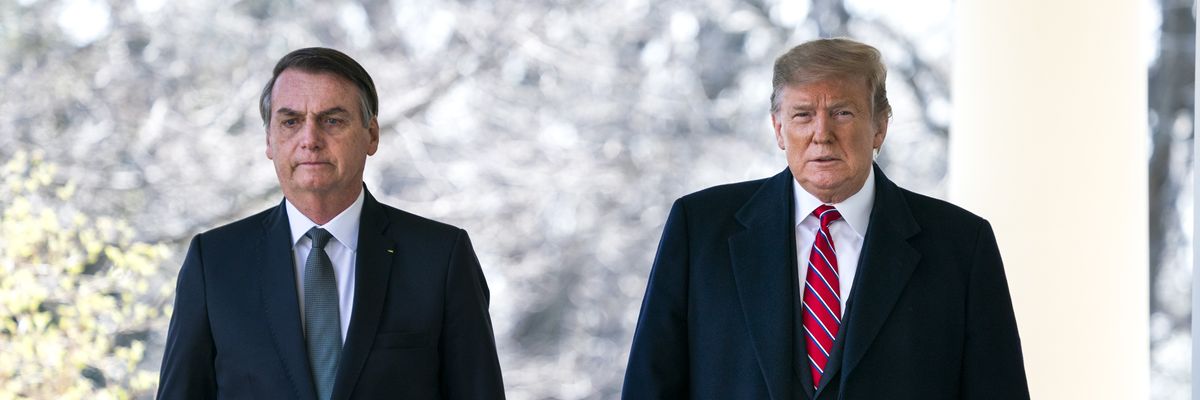
U.S. President Donald Trump (R) and then-Brazilian President Jair Bolsonaro (L) walk down the Colonnade before a press conference at the Rose Garden of the White House March 19, 2019 in Washington, D.C.
(Photo: Jim Lo Scalzo-Pool via Getty Images)


Joseph Bouchard
Jul 15, 2025
Common Dreams

U.S. President Donald Trump has announced new 50% tariffs on Brazilian imports, set to take effect this August. Trump has said these tariffs are a response to the “witch hunt” against disgraced former Brazilian President Jair Bolsonaro, on trial for his role in supporting a coup d’état.

Beyond threatening democracy and sovereignty, these tariffs are about a core of Trump’s brand: personal loyalty, elite self-preservation, and corruption. As with Trump’s overall foreign policy, whether toward Saudi Arabia, Turkey, Venezuela, Qatar, or others, his posture toward Brazil is driven not by principle but by self-interest, through private business interests, campaign donors, family friends, and alliances with authoritarian strongmen.

Bolsonaro is currently facing multiple criminal investigations, including for orchestrating a failed coup attempt on January 8, 2023, Brazil’s version of the January 6 Capitol insurrection. Bolsonaro and his acolytes, including former cabinet members and generals, allegedly would have killed leading officials, including President Luiz Inácio Lula da Silva and Supreme Court Justice Alexandre de Moraes. The trial is led by Moraes himself and has been widely televised, and is a key turning point for the nation’s path forward to democracy, or in a return to oligarchy and fascism.

Despite being a conservative himself, Moraes has become a far-right boogeyman, reviled by figures like Elon Musk, Steve Bannon, and Donald Trump. Now, with Brazil’s judiciary closing in on Bolsonaro and his allies, Trump appears willing to mobilize U.S. economic warfare to derail the legal process and protect one of his own.

By casting Bolsonaro as a victim of judicial persecution, Trump reinforces his own narrative that any kind of accountability is political persecution, protecting himself and his allies from prosecution.

Perhaps no foreign political family is as close to Trumpworld as the Bolsonaros. Eduardo Bolsonaro, Jair’s son and political heir—likely his replacement in the next presidential election—maintains a friendship with Donald Trump Jr., and has made a lot of efforts to ingratiate himself with MAGA; learning English, making frequent trips to Washington and Florida (and living in the U.S.), and now sporting a Trump hat.

His recent visit to Washington during his father’s trial was part of a broader pressure campaign, backed by right-wing U.S. politicians and Bolsonaro-linked operatives. He has been pushing for the Trump administration to take measures against Lula and his government. This is economic warfare for personal and political gain.

Among the other most vocal allies are Rep. María Elvira Salazar (R-Fla.), Bolsonaro confidant Paulo Figueiredo, and lawyer Martin De Luca.

After leaving office, Jair Bolsonaro fled to Orlando, Florida, where he lived for several months on a tourist visa while under active criminal investigation. Instead of facing consequences, he was embraced by Florida’s MAGA elite. Calls from Democratic lawmakers, including Reps. Alexandria Ocasio-Cortez (D-N.Y.) and Ilhan Omar (D-Minn.), for his visa to be revoked were ignored.

Salazar has also used her seat in Congress to target Brazil’s judiciary. In 2024, she publicly called on the U.S. State Department to revoke the visas of Brazilian Supreme Court justices, including Moraes, after they had pursued legal action against Elon Musk’s Twitter for boosting misinformation and failing to appoint legal representatives.

Salazar is deeply financially tied to this fight. Salazar receives significant campaign funding from real estate developers, private equity funds, medical PACs, and conservative pro-Israel donors, many of whom also benefit from Bolsonaro’s lax regulatory approach, support of Israel (while Lula recognizes Palestinian statehood), and are hostile to Lula’s redistributive economic policies. They have bought her loyalty.

Meanwhile, Conservative Political Action Conference (CPAC) Brasil has become a launchpad for exporting Trumpism into Latin America. Jair and Eduardo Bolsonaro have headlined several CPAC Brasil events, alongside U.S. operatives like Steve Bannon, Jason Miller, and Matt Schlapp. Bannon once publicly praised the January 8 attackers as “freedom fighters.” The Bolsonaros have also spoken at CPAC in the United States. Both Miller and Bannon were also allegedly implicated in helping organize the January 8 insurrection and promoting election misinformation in Brazil. Miller’s social media platform, Gettr, was promoted by Bolsonaro allies as a free-speech refuge after platform bans.

Paulo Figueiredo, one of Bolsonaro’s closest allies in the U.S., was an early investor in the Trump Hotel project in Rio de Janeiro. He was one of Trump’s earliest backers in 2016, especially in the business community. The deal collapsed in 2016 amid widespread corruption investigations. Figueiredo, the grandson of a former Brazilian dictator, has repeatedly praised Trump as a business icon and maintains contact with his circle, playing a key role in these recent policy developments in the second Trump term.

Another key figure, Martin De Luca of the Kobre & Kim law firm (with an office in São Paulo), acts as a legal bridge between the Trumps and Bolsonaros. He has defended Bolsonaro-linked commentators against deplatforming and advised both Trump Media and Jair Bolsonaro directly. He has been a key lobbyist for these tariffs and broader sanctions against Lula and his government, and provides close support to the Bolsonaro camp.

At the heart of this tariff attack is also Lula’s broader leftist financial and economic policy. His finance minister, Fernando Haddad, has introduced ambitious reforms aimed at reducing inequality: wealth and real estate taxes that favor the poor and middle class against the rich, corporate regulation, labor reform, and taxes on the financial system. They are all meant to inject balance into a system that has been controlled by an elite class, which has dictated Brazil’s policies for a very long time. These proposals have been fiercely opposed by Bolsonaro’s base: the big banks, media conglomerates, agribusiness, evangelicals, and the ultra-wealthy, and by Trump-aligned investors in the U.S.

Bolsonaro’s allies are openly lobbying a foreign power to impose economic pain on their own country to preserve elite impunity. By casting Bolsonaro as a victim of judicial persecution, Trump reinforces his own narrative that any kind of accountability is political persecution, protecting himself and his allies from prosecution.

This move is not only a threat to Brazil’s judiciary and democracy, but a direct attack on the country’s sovereignty, echoing Cold War-era tactics where the United States used its economic, military, and geopolitical power to punish Latin American nations (like Guatemala, Chile, Brazil, Cuba, Mexico, Bolivia, and so many others) for pursuing leftist or redistributive policies deemed contrary to the interests of its elite ruling class.

For the sake of protecting himself, oligarchs, and authoritarians, Trump is willing to make life for the average Brazilian significantly worse, while continuing to wage war on the poor at home through his destructive economic agenda.

Our work is licensed under Creative Commons (CC BY-NC-ND 3.0). Feel free to republish and share widely.


Joseph Bouchard
Joseph Bouchard is a freelance journalist from Canada and is currently based in Brazil. He has previously been published in The Diplomat, Mongabay, the Rio Times, the City Paper Bogota, among other outlets.
Full Bio >