Thursday, July 24, 2025

Europe’s hottest workers demand protection as heatwave bakes region

The cruel heat is back as southern Europe slips deeper into summer

Joseph Wilson,Derek Gatopoulos,Trisha Thomas
Thursday 24 July 2025 

The Independent 


open image in galleryStreet cleaner Raúl Rodriguez rests during a protest over the death of fellow cleaner during a recent heat wave in Barcelona, Spain, Wednesday, July 16, 2025. (AP Photo/Joan Mateu Parra, File) (Joan Mateu Parra)

Southern Europe is grappling with a brutal heatwave this summer, creating a stark divide between air-conditioned comfort and the perilous reality for outdoor workers.

Such labour can be gruelling, even deadly. Last month, a street sweeper in Barcelona died during the extreme heat, and a labour union reports 12 other city cleaners have since suffered heatstroke.

In response, powerful European unions are pushing for tougher regulations to protect the aging workforce from climate change, on what is already the world's fastest-warming continent.

Deadly heat in Barcelona


Hundreds of street cleaners and concerned citizens marched through downtown Barcelona last week to protest the death of Montse Aguilar, a 51-year-old street cleaner who worked even as the city's temperatures hit a June record.

Fellow street sweeper Antonia Rodríguez said at the protest that blistering summers have made her work “unbearable.”

“I have been doing this job for 23 years and each year the heat is worse,” said Rodríguez, 56. “Something has to be done.”

Extreme heat has fueled more than 1,000 excess deaths in Spain so far in June and July, according to the Carlos III Health Institute.

“Climate change is, above all, playing a role in extreme weather events like the heat waves we are experiencing, and is having a big impact in our country,” said Diana Gómez, who heads the institute’s daily mortality observatory.
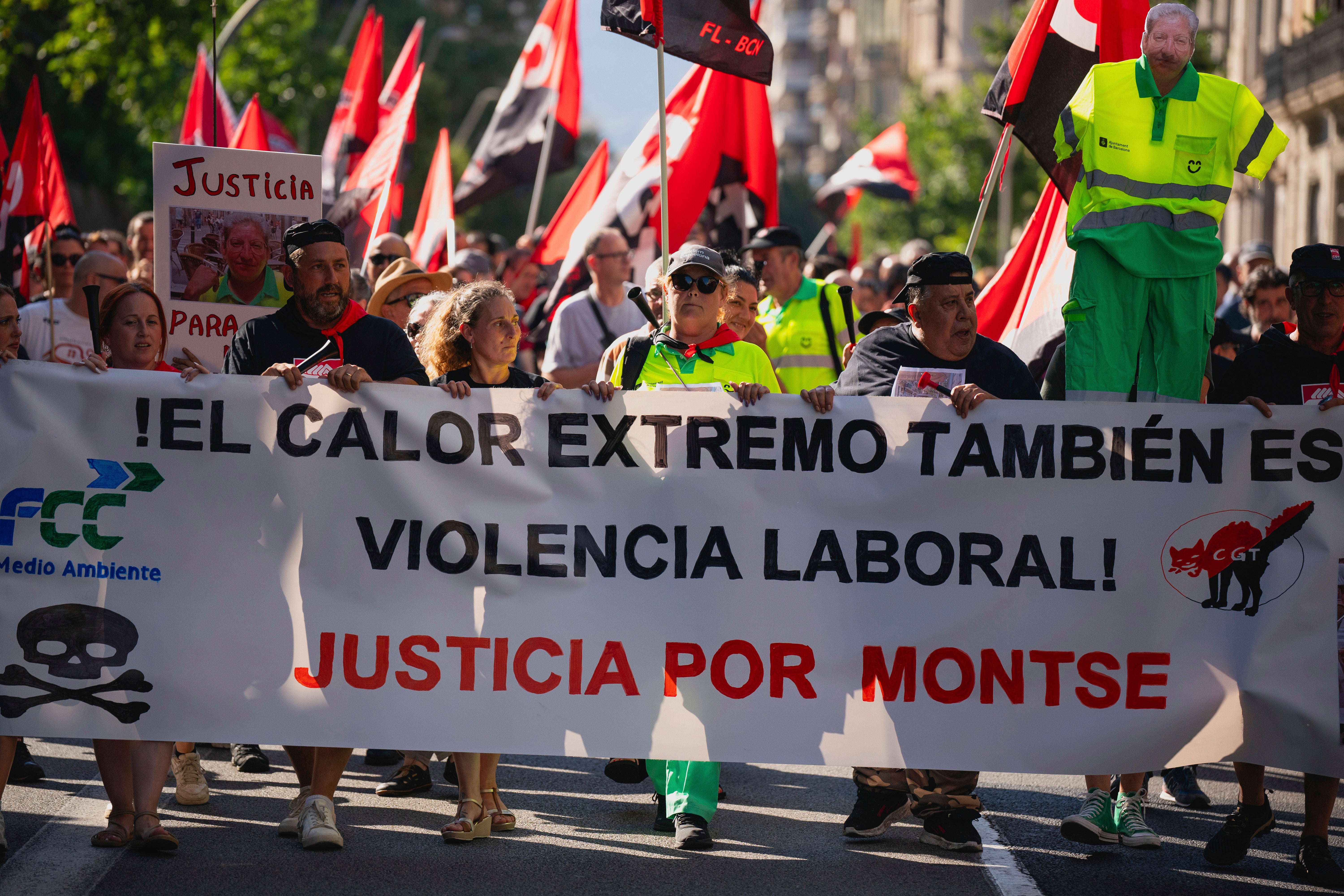

open image in galleryPeople march in Barcelona to protest the death of street cleaner Montse Aguilar during a recent heat wave in Spain, Wednesday, July 16, 2025. The banner in Spanish reads, “Extreme Heat is also Workplace Violence. Justice for Montse." (AP Photo/Joan Mateu Parra, File) (Copyright 2025 The Associated Press. All rights reserved.)

Even before the march, Barcelona’s City Hall issued new rules requiring the four companies contracted to clean its streets to give workers uniforms made of breathable material, a hat and sun cream. When temperatures reach 34 C (93 F), street cleaners now must have hourly water breaks and routes that allow time in the shade. Cleaning work will be suspended when temperatures hit 40 C (104 F).

Protesters said none of the clothing changes have been put into effect and workers are punished for allegedly slacking in the heat. They said supervisors would sanction workers when they took breaks or slowed down.


Workers marched behind a banner reading “Extreme Heat Is Also Workplace Violence!" and demanded better summer clothing and more breaks during the sweltering summers. They complained that they have to buy their own water.

FCC Medio Ambiente, the company that employed the deceased worker, declined to comment on the protesters' complaints. In a previous statement, it offered its condolences to Aguilar's family and said that it trains its staff to work in hot weather.

Emergency measures and a Greek cook


In Greece, regulations for outdoor labor such as construction work and food delivery includes mandatory breaks. Employers are also advised — but not mandated — to adjust shifts to keep workers out of the midday sun.


open image in galleryGrill cook Thomas Siamandas makes traditional souvlaki in a restaurant in the central Monastiraki district during a hot day in Athens on Wednesday, July 16, 2025. (AP Photo/Petros Giannakouris) (Copyright 2025 The Associated Press. All rights reserved)

Greece requires heat-safety inspections during hotter months but the country's largest labor union, the GSEE, is calling for year-round monitoring.

European labor unions and the United Nations’ International Labor Organization are also pushing for a more coordinated international approach to handling the impact of rising temperatures on workers.

"Heat stress is an invisible killer,” the ILO said in a report last year on how heat hurts workers.

It called for countries to increase worker heat protections, saying Europe and Central Asia have experienced the largest spike in excessive worker heat exposure this century.

In Athens, grill cook Thomas Siamandas shaves meat from a spit in the threshold of the famed Bairaktaris Restaurant. He is out of the sun, but the 38 C (100.4 F) temperature recorded on July 16 was even tougher to endure while standing in front of souvlaki burners.

Grill cooks step into air-conditioned rooms when possible and always keep water within reach. Working with a fan pointed at his feet, the 32-year-old said staying cool means knowing when to take a break, before the heat overwhelms you.

“It’s tough, but we take precautions: We sit down when we can, take frequent breaks and stay hydrated. We drink plenty of water — really a lot,” said Siamandas, who has worked at the restaurant for eight years. “You have to find a way to adjust to the conditions.”

The blazing sun in Rome


Massimo De Filippis spends hours in the blazing sun each day sharing the history of vestal virgins, dueling gladiators and powerful emperors as tourists shuffle through Rome’s Colosseum and Forum.

“Honestly, it is tough. I am not going to lie,” the 45-year-old De Filippis said as he wiped sweat from his face. “Many times it is actually dangerous to go into the Roman Forum between noon and 3:30 p.m.”
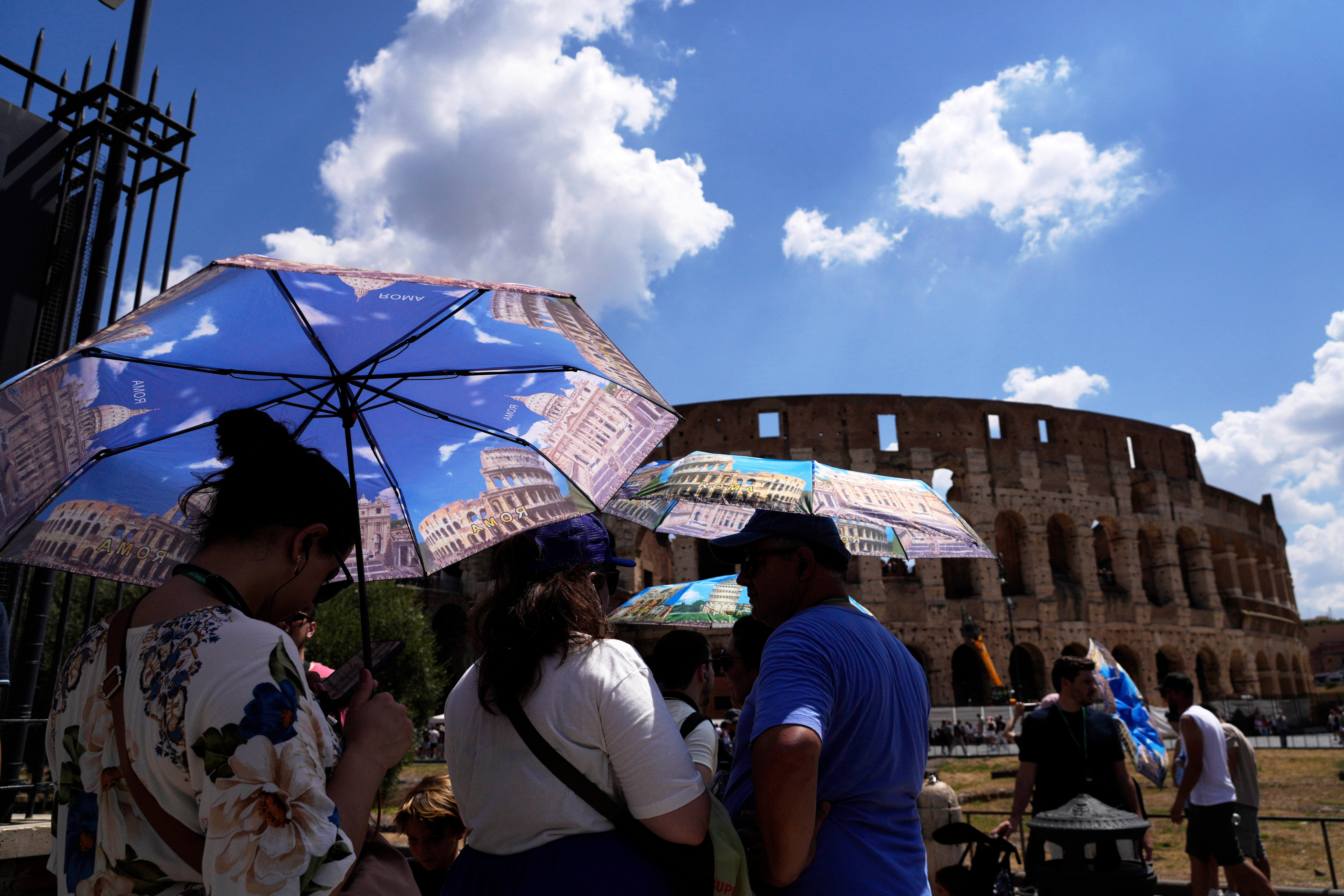

open image in galleryTourists use umbrellas to shelter from the heat as they line up for a tour of the Forum in Rome, on Tuesday, July 22, 2025. (AP Photo/Gregorio Borgia) (Copyright 2025 The Associated Press. All rights reserved.)

At midday on July 22, he led his group down the Forum’s Via Sacra, the central road in ancient Rome. They paused at a fountain to rinse their faces and fill their bottles.

Dehydrated tourists often pass out here in the summer heat, said Francesca Duimich, who represents 300 Roman tour guides in Italy’s national federation, Federagit.

“The Forum is a pit; There is no shade, there is no wind,” Duimich said. “Being there at 1 p.m. or 2 p.m. in the summer heat means you will feel unwell.”


This year, guides have bombarded her with complaints about the heat. In recent weeks, Federagit requested that the state’s Colosseum Archaeological Park, which oversees the Forum, open an hour earlier so tours can get a jump-start before the heat becomes punishing. The request has been to no avail, so far.

The park’s press office said that administrators are working to move the opening up by 30 minutes and will soon schedule visits after sunset.

Scorching heat, drought: A new normal for British summers?

‘It’s hard to say this summer has been typical so far when we look at statistics,’ says national meteorological service scientist

Aysu Bicer |24.07.2025 - TRT/AA
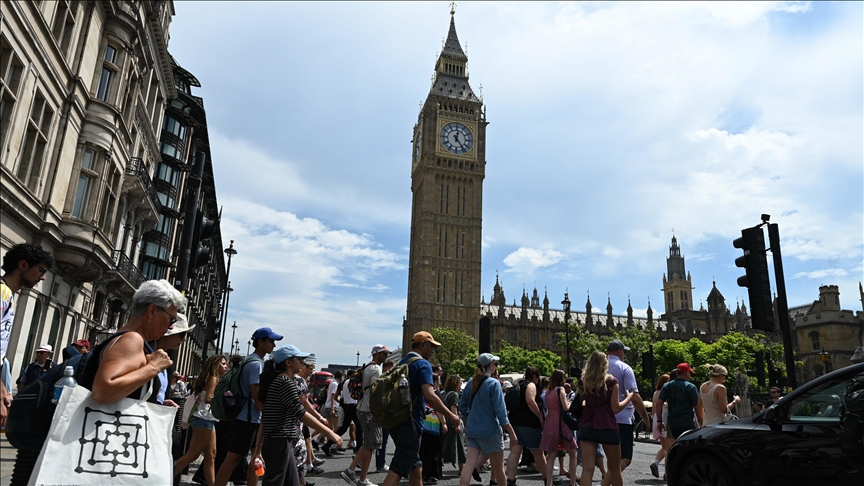
United Kingdom (Photo byRasid Necati Aslım)

LONDON

With record-breaking temperatures, severe drought and a surge in wildfires, the summer of 2025 is shaping up as one of the most extreme in UK history.

After an exceptional spring and a sweltering June, this summer’s first half has underscored a shifting pattern: hotter days, longer dry spells and recurring heat waves are no longer rare outliers but part of the landscape.

“Spring 2025 was exceptional, going down as the UK’s warmest and sunniest on record,” the UK Met Office, the national meteorological service, said.

That heat carried into June, which became the warmest ever in England, and the second warmest for the UK overall in records dating back to 1884.

As of 15 July, the UK’s mean summer temperature was running 1.14C (2.1F) above the long-term average — with England even higher at 1.58C (2.8F). Maximums in England were 2.14C (3.85F) above average.

While the country hasn’t reached its all-time high of 40.3C (104.5F) set in July 2022, the heat has still been punishing. On 1 July, Faversham in Kent recorded the year’s top temperature at 35.8C (96.4F), while London hit 34.7C (94.5F).

“It’s hard to say this summer has been typical so far when we look at the statistics,” said Emily Carlisle, a Met Office climate scientist, in a statement. “Warmth has continued into July, with three heat waves so far this summer and temperatures rising again later this week. There is, of course, still a month-and-a-half of meteorological summer to go, so plenty of time for things to change.”

The dry conditions are just as extreme. England saw its driest January-to-June stretch since 1976, triggering drought alerts in multiple regions.

Wildfire risk has soared. The London Fire Brigade has responded to more than 30 wildfires this year, putting 2025 on track to be the busiest fire season since 2022.

National Resilience data revealed a sharp rise in wildfire incidents across England and Wales — 564 between January and mid-June, a 717% increase from the same period in 2024, and more than double 2022’s count at that time, which ended as the UK’s worst wildfire year on record.

A clear pattern

The UK’s changing climate is charted in the latest State of the UK Climate report, published in the International Journal of Climatology by the Royal Meteorological Society.

The data show steady warming since the 1980s, with extreme temperature days becoming more frequent. The hottest summer days and coldest winter nights are warming at twice the pace of average seasonal temperatures in some regions.

The Met Office said 2024 was the fourth warmest year since 1884 – and 2025 is already on track to surpass it in several categories.

A recent Met Office study found there’s now a 50% chance of the UK hitting 40C (104F) again within the next 12 years — a sharp jump in probability.

With three heat waves already recorded and another warm surge on the way, summer 2025 could become a defining chapter in Britain’s climate history.


Will contractor disgust bring down Israel's 'hunger games' in Gaza?

Another disenchanted American comes forward bearing horror stories at GHF distribution sites

Analysis | RESPONSIBLE STATECRAFT
quincyinst.org

Another American contractor has reportedly come forward with horror stories about his time working for the Global Humanitarian Foundation, the outfit responsible for food distribution in Gaza.

The operation has been likened to the "Hunger Games" as the Israeli military has been accused of shooting and killing hundreds of Palestinians, reportedly for not straying out of the lines and other supposed transgressions, if for any reason at all, as they scramble and claw their way desperately for food.

U.S. security contractors hired to work with GHF have been accused of joining in with the lethal and non-lethal crowd control, with reports of live ammunition, stun grenades, and the use of pepper spray. Last week at least 20 were killed in a stampede; the UN says over 1,050 people have been killed trying to get to food since May, over 700 of them at these increasingly violent aid centers.

Last month two contractors from UG Solutions, one of the U.S.-based companies (the other is Safe Reach Solutions), told the Associated Press that fellow Americans were shooting into the crowds with live ammo. Now another has come forward. He claims to be a military veteran who has deployed to multiple conflict zones but “never in my entire military career... have I been a part of, allowed...the use of force against unarmed innocent civilians. Ever. And I’m not going to do it now."

“There is no fixing this. Put an end to it,” the man said in the report, first given to Israel news Channel 12. His identity is not verified and the company he supposedly works for, UG Solutions, has denied earlier reports of lethal tactics by its operators at the sites.

The contractor, his voice and image distorted, told Channel 12: “There was a man who was on the ground. He was on his hands and knees and he was picking up individual noodles. This guy wasn’t armed. He wasn’t a threat. This UG contractor sprayed an entire can of pepper spray on to this guy's face. That’s lethal.”

In another case, he claimed he was standing next to a Palestinian woman hit by a stun grenade. “She collapsed, fell to the ground. That was the moment I knew I couldn’t continue.”

The man also insisted that U.S. contractors were firing live rounds at Palestinians after they had gathered their food.

These kinds of stories are all but corroborated by IDF soldiers who told Haaretz reporters in June that they were ordered to shoot unarmed civilians at the sites even when there was no threat presented. The Wall Street Journal reported Sunday that IDF soldiers had shot into a crowd of Palestinians holding white flags because they crossed a "red line."

American contractors, many who are former U.S. military, have been working in Gaza since April. They are being paid, reportedly, $1500 a day for the work. That may not be enough to stomach what they are witnessing. As more come forward, it may be that the Israeli government made a big mistake thinking it would put an American face on its barbaric food scheme in Gaza. Those outsiders might eventually help bring the whole thing down.


Kelley Beaucar Vlahos is the Editorial Director of Responsible Statecraft.
The views expressed by authors on Responsible Statecraft do not necessarily reflect those of the Quincy Institute or its associates.


Opinion...


Beyond Gaza’s shadow: The unseen war for the West Bank’s future


July 24, 2025 
MEMO

An Israeli soldier stands guard as demolition vehicles operate in the Al-Jawaya area of Yatta, south of Hebron, West Bank, on May 28, 2025. [Photo by MOSAB SHAWER/AFP via Getty Images]

by Dr Ramzy Baroud

Israel is meticulously following a textbook model of instigating unrest in the occupied West Bank. The latest such provocations consisted of stripping the Palestinian-run Hebron (Al-Khalil) municipality of its administrative powers over the venerable Ibrahimi Mosque. Worse, according to Israel Hayom, it granted these powers to the religious council of the Kiryat Arba Jewish settlement, an extremist settler body.

Though all Jewish settlers in occupied Palestine can be qualified as extremists, the approximately 7,500 inhabitants of Kiryat Arba represent a more virulent category. This settlement, established in 1972, serves as a strategic foothold to justify subjecting Hebron to stricter military control than virtually any other part of the West Bank.

Kiryat Arba is infamously linked to Baruch Goldstein, the US-Israeli settler who, in February 1994, unleashed a horrific attack. He opened fire at Muslim worshipers kneeling for dawn prayer at the Ibrahimi Mosque, mercilessly killing 29. This bloodbath was swiftly followed by another, where the Israeli army brutally cracked down on Palestinian protesters in Hebron and across the West Bank, murdering an additional 25 Palestinians.

Yet, the Israeli Shamgar Commission, tasked with investigating the massacre, resolved in 1994 that the Palestinian mosque, a site of profound religious significance, was to be grotesquely divided: 63 per cent allocated to Jewish worshipers and a mere 37 per cent to Palestinian Muslims.

Since that calamitous decision, oppressive restrictions have been systematically imposed. These include pervasive surveillance and, at times, unjustifiable, extended closures of the site, solely for exclusive settler use.

The latest decision, described by Israel Hayom as “historic and unprecedented,” is profoundly dangerous. It places the fate of this historic Palestinian mosque directly into the hands of those fanatically keen on acquiring the holy site in its entirety.

But the Ibrahimi Mosque is merely a microcosm of something far more sinister underway across the West Bank. Israel has exploited its war in Gaza to dramatically escalate its violence, carry out mass arrests, confiscate vast tracts of land, systematically destroy Palestinian farms and orchards, and aggressively expand illegal settlements.

Though the West Bank, previously largely subdued by joint Israeli military pressures and Palestinian Authority crackdowns, was not a direct party to the 7 October 2023, assault nor the ongoing Israeli genocide in Gaza, it has inexplicably become a major focus for Israeli military measures.

READ: Deadly malnutrition among children in Gaza is reaching catastrophic level: UN

In the first year of the war, over 10,400 Palestinians were detained in Israeli army crackdowns, with thousands held without charge. Furthermore, hundreds of Palestinians have been forcibly ethnically cleansed, largely from the northern West Bank, where entire refugee camps and towns have been systematically destroyed in protracted Israeli military campaigns.

Israel’s overarching aim remains the strangulation of the West Bank. This is achieved by severing communities using ubiquitous military checkpoints, imposing total closures of vast regions, and the cruel suspension of work permits for Palestinian laborers, who are almost entirely dependent on the Israeli work market for survival.

This insidious plan also explicitly targeted all Palestinian holy sites, including the revered Al-Aqsa Mosque compound in occupied East Jerusalem, and the Ibrahimi Mosque. Even when these shrines were nominally accessible, age restrictions and suffocating military checkpoints make it difficult, at times utterly impossible, for Palestinians to worship there.

In August 2024, Prime Minister Benjamin Netanyahu asserted that his relentless violent campaign against the West Bank was part of confronting the “broader Iran terror axis.” Practically, this statement served as a green light for the Israeli army to treat the West Bank as an extension of the ongoing Israeli genocide on Gaza. By mid-July 2025, over 900 Palestinians had been killed by the Israeli army in the West Bank, while at least 15 were murdered by settlers.

As Palestinians were pushed further against the wall, with no centralised strategy by their leadership to meaningfully resist, Israel exponentially increased its illegal settlement constructions and the brazen legalization of numerous outposts, many built illegally even by Israeli government standards.

Israel’s actions in the West Bank were not a sudden deviation but consistent with a long-standing, insidious scheme. This includes a plan solidified by the Israeli Knesset in 2020 that allowed Israel to officially annex the West Bank. Israel’s ultimate goal has always been to confine the majority of Palestinians into Bantustan-like enclaves, while asserting full control over the vast majority of the region.

In August 2023, extremist National Security Minister Itamar Ben-Gvir articulated this sinister vision: “My right, the right of my wife and my children to move around Judea and Samaria (the occupied West Bank) is more important than freedom of movement for the Arabs.”

More coercive measures swiftly followed, including Knesset laws to significantly curtail UNRWA operations, and further legislation to entrench de facto annexation. Last May, Smotrich audaciously announced 22 more settlements. On 2 July 14 Israeli ministers made a public call on Netanyahu to immediately annex the West Bank.

In fact, every action Israel has undertaken, especially since the commencement of its devastating genocide in Gaza, has been carefully calculated to culminate in the irreversible annexation of the West Bank – a process that would inevitably be followed by declaring native inhabitants persona non grata in their own homeland.

This level of systemic pressure and oppression will ultimately lead to a popular explosion. Though suppressed by the brutality of the Israeli army, the terror of armed settlers, and the suppressive actions of the Palestinian Authority, the breaking point is fast approaching.

Those in the West who preach hollow calls for calm and de-escalation must understand the region is hurtling towards the brink. Neither diplomatic platitudes nor sterile press releases will suffice to avert the catastrophe. They are advised to act decisively against Israel’s destructive policies, and they must act immediately.

The views expressed in this article belong to the author and do not necessarily reflect the editorial policy of Middle East Monitor.


Gaza facing man-made 'mass starvation" says Dr. Graeme Groom

Dr. Graeme Groom, a British trauma and orthopaedic surgeon recently returned from Gaza, is our guest.


Israel’s Knesset extends law allowing detention of Gazans without charges or legal counsel

Critics say law strips Palestinian detainees of due process, as Israel expands indefinite detentions following Gaza war

Abdel Raouf Arnaout and Tarek Chouiref |24.07.2025 - TRT/AA

Israeli Knesset


JERUSALEM/ISTANBUL

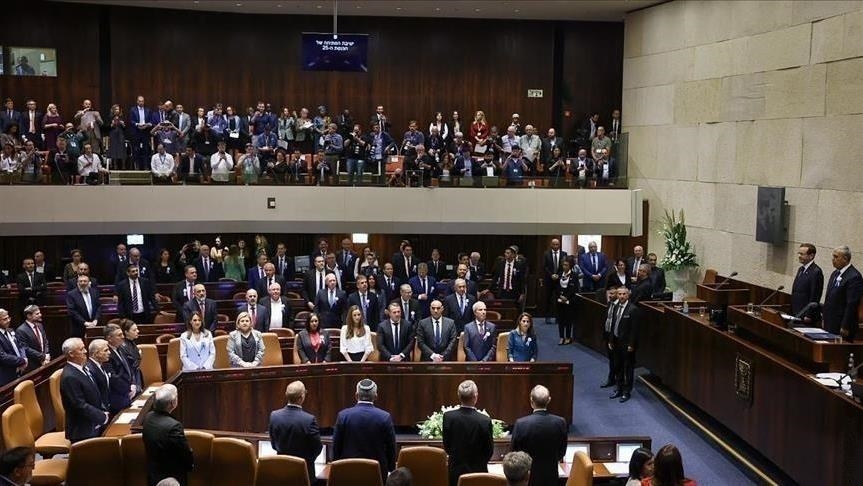
The Israeli Knesset (parliament) on Thursday approved the extension of a law that permits the military to detain Palestinians from the Gaza Strip without filing formal charges or allowing them to meet with lawyers.

Known as the “Unlawful Combatants Law,” the measure applies to individuals arrested in Gaza since Oct. 7, 2023, and grants the Israeli authorities broad powers to hold them under administrative detention.

The legislation passed its second and third readings with 30 lawmakers voting in favor and six against, according to a Knesset statement. The extension brings the law into force until Dec. 31, 2025.

Under the revised provisions, authorities can continue to hold detainees for extended periods without trial, delay court reviews of their cases, and block access to legal representation for a set duration.

As of early July, Israel was holding 2,454 Palestinians from Gaza under this designation — nearly a quarter of the 10,762 Palestinians currently in Israeli custody, figures released by the Israel Prison Service showed.

Several detainees from Gaza have reportedly died in Israeli prisons due to torture, starvation, and medical neglect, according to Israeli and Palestinian rights groups and media reports.

Israel has killed more than 59,200 Palestinians, most of them women and children, in the Gaza Strip since October 2023. The military campaign has devastated the enclave, collapsed the health system, and led to severe food shortages.

Last November, the International Criminal Court issued arrest warrants for Israeli Prime Minister Benjamin Netanyahu and his former Defense Minister Yoav Gallant for war crimes and crimes against humanity in Gaza.
Israel also faces a genocide case at the International Court of Justice for its war on the enclave.


The Stark Reality Of How Israel Treats Its Own Druze Citizens – Analysis


By 

By Yossi Mekelberg


Israel mounted a bombing campaign across Syria last week with the stated objective of protecting the Druze community of Sweida from attack by Bedouin fighters amid a recent upsurge in sectarian violence.

Yet, this purported humanitarian intervention on behalf of a vulnerable religious minority has drawn attention to the disparity in Israel’s treatment of its own Druze citizens, prompting accusations of double standards.

For centuries, the Druze — an enigmatic religious community whose origins in the Levant date back to the 11th century — have guarded their beliefs and customs behind a veil of secrecy.

Today, amid mounting regional upheaval and intensifying sectarian conflict, the fate of this small group — whose numbers are dwarfed by those of their neighbors — has become a critical test case for questions of loyalty, identity, and equal citizenship within modern nation states.

Nowhere are these tensions more apparent than in Israel, where the Druze have forged a uniquely complex relationship with the Jewish majority, one marked by military partnership and shared sacrifice, yet also by persistent inequality and simmering frustration.


As a result of their opposition to conversion and discouragement of intermarriage, the Druze community remained small in number and vulnerable, constantly maneuvering politically for their own survival among more powerful forces.

Still, when push comes to shove, they can prove to be fearless warriors.

The special relationship between the Jewish and Druze communities already existed in Mandatory Palestine. This relationship grew closer and stronger after Israel declared its independence, although it remains rather complex.

One of the tenets of Druze philosophy — some might call it a survival mechanism — is loyalty to the state where they reside. In this sense, Israel is no exception.

In 1956, at the request of the Druze community’s leaders, Druze men became subject to the military draft upon turning 18, just like their Jewish compatriots.

This created a covenant written in blood between the Jewish and Druze communities, with more than 430 having lost their lives serving in the Israeli security forces — a substantial number for a small community of 143,000, which is less than 1.6 percent of Israel’s population.

But despite this sacrifice and the generally positive perception of the Druze among Jewish Israelis — unlike attitudes toward other Arab communities — they are not spared discrimination. Consequently, there are forces among their youth who oppose continued military service.

The recent wave of deadly sectarian clashes that rocked southern Syria exposed the country’s fragility, as the new government proved either incapable or unwilling to impose law and order, leading to a failure to protect the Druze.

The response by the Druze in Israel highlighted another strong tenet in the community’s philosophy: mutual responsibility. In a Pew Research Center survey, nine in 10 said that they had a strong sense of belonging to the Druze community and were proud to be part of it.

Roughly two-thirds expressed that they feel a special responsibility to care for Druze in need around the world.

Over the last week, this manifested in community leaders exerting pressure on the Israeli government to intervene on behalf of the Druze in their clashes with Bedouin militias.

Translating intentions into action, around 1,000 community members — including two members of the Knesset, Afef Abed and Hamad Amar from the right-wing parties Likud and Yisrael Beytenu, respectively — crossed the border from the Israeli-occupied side of the Golan Heights to support their brethren on the other side, expressing outrage over what they described as the massacre of their relatives in Suwaida.

Israeli Prime Minister Benjamin Netanyahu addressed the Druze community in Israel and the Golan Heights in a video statement, urging them to show restraint and avoid crossing into Syria amid the ongoing clashes.

Instead, Israel took the extreme measure of striking the Syrian Defense Ministry in Damascus and government forces in southern Syria, with Netanyahu announcing that Israel was “working to save our Druze brothers.”

Israel’s immediate reaction to the fall of the Bashar Assad regime in December of last year was to “temporarily” take over additional territory on the Syrian side of the Golan Heights — a move that increasingly looks permanent — and to carry out hundreds of airstrikes on military targets across Syria.

With this in mind, Israel’s use of force again last week raises questions about whether the strikes were solely in defense of the Druze or intended to send a broader message to the government of Ahmed Al-Sharaa about the power balance between the two countries.

Another factor raises suspicion over Israel’s purported commitment to the Druze in Syria. Despite the total loyalty of the Druze to the state of Israel, it does not appear that the Jewish state is equally loyal to them.

For all their years of sacrifice and devotion, the Druze still do not enjoy the same equal rights as the Jewish population. Although attitudes toward the Druze in Israel may be more favorable than toward Palestinian citizens, they are still far from being treated as equals.

Some researchers of the Druze community in Israel suggest that they represent something of an in-between group, comprising “individuals who simultaneously belong to social categories that are often seen as mutually exclusive, while maintaining their distinct group identity.”

The Druze are ethnically Arab and share that Arab identity with the Arab-Palestinian minority in Israel, but, at the same time, identify with the Jewish Israeli state.

In recent years, there has been an awakening among young Druze that, despite their sacrifices, they are institutionally and socially discriminated against as individuals and as a community.

In a protest last year, community leaders stated: “The covenants of blood and life have become superficial and false slogans.” They demanded that budgets allocated to their towns and villages be equal to those of their Jewish neighbors.

This discrimination is visible not only in the underinvestment in their communities, but also in the confiscation of their land for the Judaization of the Galilee and in house demolitions — not to mention having to contend with poor electricity networks, sewage systems, and roads.

Many residents in the 16 Druze towns and villages of Israel find it almost impossible to obtain planning permission, leaving them under constant threat of demolition orders or hefty fines.

A piece of legislation dating back to 2017, the Kaminitz Law, gives authorities the power to issue penalties — such as demolition and stop-work orders, the confiscation of building equipment and vehicles, and arrests — all without referring these cases to the judicial system.

Generally, the law is seen as targeting Arab communities, where building permits are almost impossible to secure, resulting in illegal construction followed by fines and threats of demolition by the government, despite a growing population and need for additional accommodation.

A request to put in place a 5-year plan to support local authorities of Druze communities has not been approved despite protests by community leaders.

The final straw for many Druze in Israel was likely the 2018 Nation State Law, which made many feel that despite their loyalty and sacrifice for the country, they are not rewarded in kind.

The law explicitly states that Jews have a unique right to national self-determination in Israel, and it relegated Arabic from being one of the two official languages, alongside Hebrew, to one with “special status.”

Describing Israel as “the national home of the Jewish people” was effectively a way of defining everyone else as unequal in their political, human, and civil rights.

Despite repeated promises from the Israeli government to promote a Basic Law for the Druze community, which aims to anchor the important status of the Druze community in Israel, this still has not happened.

This has instilled among the community an oft-quoted sentiment: “Druze enter the army as an Israeli and leave as an Arab.”

For the Druze, there is a sense that the community has the rawest of deals — one in which they are loyal and prepared to sacrifice their lives for the country but are still treated as second-class citizens.


Arab News

Arab News is Saudi Arabia's first English-language newspaper. It was founded in 1975 by Hisham and Mohammed Ali Hafiz. Today, it is one of 29 publications produced by Saudi Research & Publishing Company (SRPC), a subsidiary of Saudi Research & Marketing Group (SRMG).


Brazil to join South Africa's genocide case against Israel at ICJ

Brazil to join South Africa's genocide case against Israel at ICJ
The case accuses Israel of displacing populations, indiscriminately attacking civilians in Gaza, and imposing starvation conditions on Palestinians in the territory.
By bne IntelliNews July 23, 2025

Brazil will formally request to intervene in South Africa's genocide case against Israel at the International Court of Justice, in a move likely to ratchet up international legal pressure on Tel Aviv over the Gaza conflict, Folha de Sao Paulo reported.

The Foreign Ministry is expected to announce the formal intervention on July 23, joining Spain, Turkey, and Colombia in supporting the case filed by South Africa in 2023. The case asks the ICJ to declare that Israel has breached its obligations under the 1948 Genocide Convention in its military operations against Hamas in Gaza.

According to diplomatic sources, Israel's repeated attacks on civilians, not only in Gaza but also in the occupied West Bank, served as "the last straw" in accelerating the Brazilian government's decision to formally endorse the action. The diplomat noted that Hamas, which attacked Israel in October 2023, does not operate in the West Bank, yet Palestinians there continue to face attacks from Israeli soldiers.

The decision comes amid mounting international concern over the humanitarian crisis in the besieged Palestinian enclave. More than 100 humanitarian and human rights organisations issued a statement on July 22 calling for immediate government action against the spreading famine in Gaza, demanding an immediate and permanent ceasefire and the suspension of all Israeli restrictions on humanitarian aid.

The joint statement, signed by 111 organisations including Médecins Sans Frontières, the Norwegian Refugee Council, and Refugees International, warned that "mass starvation" is spreading throughout the territory. The groups highlighted that tonnes of food, clean water, medical supplies, and other essential items remain untouched around Gaza's perimeter, as humanitarian organisations are prevented from accessing or delivering them.

Foreign Minister Mauro Vieira had previously indicated Brazil's intentions during the BRICS summit opening earlier this month.

The case accuses Israel of displacing populations, indiscriminately attacking civilians in Gaza, and imposing starvation conditions on Palestinians in the territory. Israel maintains that it attempts to spare civilian lives wherever possible and justifies its operations by asserting that Hamas uses the population as human shields to protect its members. The country says it has the right to defend itself against the terrorist group.

Brazil's decision comes against a backdrop of escalating international diplomatic pressure on Israel. Last week in Bogotá, more than 30 countries participated in a meeting organised by The Hague Group – an eight-nation alliance committed to cutting military ties with Israel – which resulted in the strongest coordinated action yet against Israeli operations in Gaza. Two dozen countries agreed to impose an arms embargo and review public contracts with companies that could benefit from Israel's actions.

The Bogotá gathering, which drew delegations from Latin America, Africa, Asia, and the Middle East, including officials from Palestine, represented a significant mobilisation of Global South sentiment. Francesca Albanese, the UN's special rapporteur on human rights in the occupied Palestinian territories recently sanctioned by the US over her criticism of Israel, told attendees that "the events in Gaza meet the legal definition of genocide," adding that "this is not just a legal matter — it is a moral one."

Additionally, earlier this week, foreign ministers from 30 countries, including major European powers and close US allies, broke ranks with Washington, issuing a joint statement demanding an immediate end to the Gaza conflict. The signatories, including the UK, France, Italy, Canada, and Australia, condemned what they described as the "drip feeding of aid and the inhumane killing of civilians, including children, seeking to meet their most basic needs of water and food."

The statement denounced that over 800 Palestinians have been killed whilst seeking aid, with the ministers declaring Israel's aid delivery model "dangerous" and calling it a violation of human dignity. The foreign ministers also condemned Hamas's continued detention of hostages taken on October 7, 2023, calling for their "immediate and unconditional release."

Significantly, the diplomatic coalition warned against any territorial changes in the occupied Palestinian territories, specifically condemning Israel's highly controversial “E1” settlement plan, which they argued would "divide a Palestinian state in two" and represent "a flagrant breach of international law." The ministers noted that settlement construction has accelerated across the West Bank, including East Jerusalem, whilst settler violence against Palestinians has intensified.

The intervention by Brazil, Latin America's largest nation, adds considerable diplomatic weight to the ICJ proceedings at The Hague. The original case was filed by South Africa, whose government emerged from the apartheid regime and has drawn parallels between its historical experience and the current Palestinian situation.

The convergence of legal action at the ICJ and coordinated diplomatic pressure from dozens of nations represents one of the most significant international challenges facing the Israeli government of Prime Minister Benjamin Netanyahu over its conduct in Gaza, reflecting deepening global concerns about the humanitarian crisis and long-term regional stability.

Preah Vihear Temple row EXPLAINED: The Hindu Shiva temple at the heart of Thailand-Cambodia border dispute

The Prasat Preah Vihear or Preah Vihear Temple is located within Cambodia, the International Court of Justice has ruled but Thailand refused to stand down due to political pressure


Updated: July 24, 2025
INDIA

The Preah Vihear Temple, also known as Prasat Preah Vihear | X

At least 12 lives have been lost, including a soldier and a child, after armed clashes erupted on Thursday between Thailand and Cambodia in long-disputed border areas, rapidly escalating months of tension. This marked the second armed confrontation since a Cambodian soldier was shot dead in May and represented a major escalation, occurring hours after the two countries downgraded diplomatic relations following a landmine explosion that injured Thai soldiers.

At the heart of the conflict between the two neighbours is an 11th-century Shiva temple -- the Prasat Preah Vihear. Both countries lay claim to the temple, which is the root cause of the standoff. Over the years, clashes stemming from this issue have resulted in civilian and military casualties on both sides.

Following the killing of a Cambodian soldier in May, Thai-Cambodian bilateral relations plummeted to their lowest point in over a decade.


In the past two months, the world has witnessed Cambodia banning imports from Thailand, according to the BBC. Both countries have also sent additional forces to the border. As the region fears the conflict escalating, here is what you need to know about the temple:


The Preah Vihear Temple and UNESCO


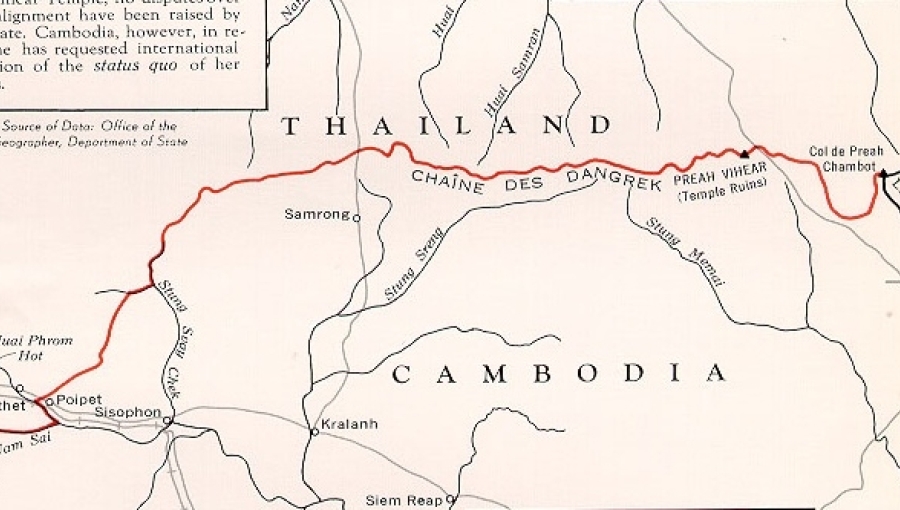
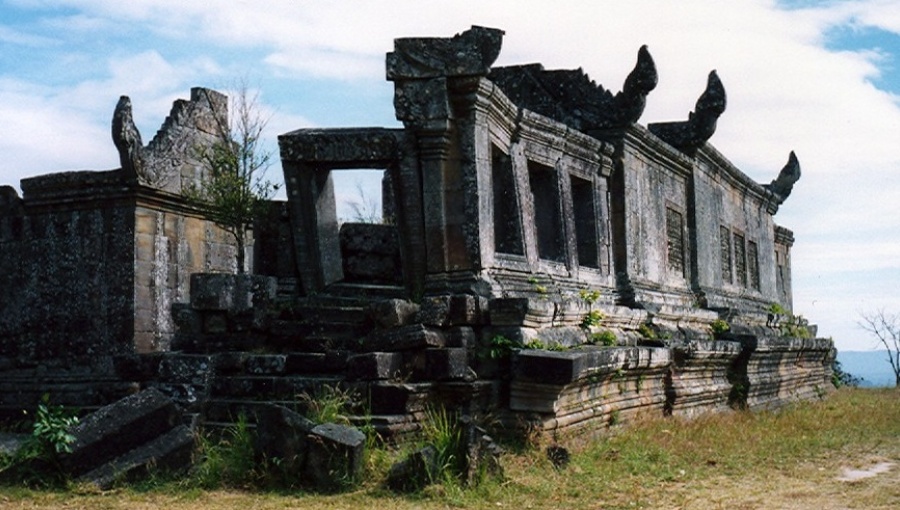
The Preah Vihear Temple, also known as Prasat Preah Vihear, was built during the Khmer Empire by King Udayadityavarman II. This Shiva temple is located atop a cliff on the Cambodia–Thailand border in the Dângrêk Mountains.

The borders of the two nations were drawn after the French occupation of Cambodia, which ended on 9 November 1953. However, the dispute between the two countries thus dates back more than a century.

During those times, Cambodia was French Indochina, and Thailand was Siam. While the demarcation by colonial masters placed the temple on the Cambodian side, Thailand began claiming sovereignty over the land around it over the years. When the matter reached the International Court of Justice (ICJ) in 1962, the ruling favoured Cambodia. Thailand was ordered to withdraw its forces from the temple's vicinity. This led to Bangkok changing its stance to dispute the exact demarcation of the 4.6 square kilometres surrounding the temple, rather than the monument itself.

Things took an ugly turn in 2008 when Cambodia attempted to register an 11th-century temple located in the disputed area as a UNESCO World Heritage Site – a move that was met with heated protest from Thailand.

In 2013, Cambodia secured another ICJ ruling in its favour, clarifying that the country had sovereignty over the entire promontory of Preah Vihear, including the contested area. However, by that time, their attempt to get UNESCO heritage site status had already been exploited by Thai nationalists and the right-wing as a political weapon against the then-incumbent government, according to reports. This resulted in recurring armed clashes from 2008 to 2013 (until the second ICJ order was issued) along the temple border area, particularly over the disputed 4.6 square kilometres.
Thailand-Cambodia conflict

"Fighting must first stop between Thailand and Cambodia before there can be negotiations," Thailand's acting premier said on Thursday. Caretaker Prime Minister Phumtham Wechayachai told a press conference that there had been no declaration of war and the conflict was not spreading into more provinces. He added that Cambodia had fired heavy weapons into Thailand without any specific targets, resulting in civilian deaths.

Cambodian residents voice fears amid ongoing conflict with Thailand at Ta Moan Thom temple

Cambodian residents voice fears amid ongoing conflict with Thailand at Ta Moan Thom temple
The Cambodia - Thai border area / UD Dept. of State - PD

By bno - Phnom Penh Office
 July 24, 2025

The outbreak of armed clashes near Ta Moan Thom temple has prompted several residents in Oddar Meanchey province to flee their homes in search of safety. Others living in nearby border areas remain on alert and are prepared to evacuate should the situation escalate further, according to Kiripost

Following the recent exchange of fire between Cambodian and Thai troops at Ta Moan Thom temple, some families in the border zones, particularly in Oddar Meanchey, have begun relocating to safer areas. Meanwhile, many locals have expressed growing anxiety over the violence and say they are ready to leave at a moment’s notice if necessary.

Yem Phalla, a 50-year-old entrepreneur based in Banteay Meanchey province, told Kiripost, “My brother lives near O’ Smach, close to Ta Moan temple, where he sells goods to soldiers and Chinese workers. Since the fighting broke out, he’s been making preparations to leave for somewhere safer.”

Phalla noted that others in the community have already relocated, with some heading to Siem Reap province for refuge.

Efforts by Kiripost to obtain a comment from Oddar Meanchey Governor Mean Chanyada were unsuccessful, as he stated he was currently unavailable to speak with the media.

In Banteay Meanchey province, particularly in areas surrounding the Poipet International Border Gate, residents also expressed apprehension. “I’ve already asked my wife to pack a few essentials,” Phalla added. “If the situation turns critical, we’ll have to leave,  though I’m not yet sure where we’ll go.”

Ben Choeum, a soldier stationed near the Malai border crossing in the same province, reported that while his immediate area remains calm, other zones are more volatile. He has been instructed to remain on standby to secure the crossing point.

“Although the Malai area is currently quiet, the situation near Ta Moan is far more dangerous,” he said. “If all troops are deployed to the front lines, who will guard the crossing?”

Former Prime Minister Hun Sen confirmed that Thai artillery units have been shelling locations within Oddar Meanchey and Preah Vihear provinces. He appealed to the public to stay calm and maintain normalcy across the country, except in the border regions currently under attack.

Yem Dany, a resident of Preah Vihear province, told Kiripost she had heard the sound of fighting earlier but said her village has since returned to a state of calm.

“Everything seems back to normal now,” she said. “People are continuing with their daily routines, some have even resumed farming.”

Kim Sokhum, a migrant worker who recently returned from Thailand due to the growing tension, expressed concern for her husband, who remains in Thailand for work. She also recounted receiving a troubling call from her sister, who lives in Kok Thom, Oddar Meanchey province.

“My sister phoned me in a panic, saying she was fleeing gunfire,” Sokhum shared. “I was terrified. While we were talking, I could actually hear the gunshots in the background. She said authorities were evacuating people from the area for their safety.”

Sokhum added that she felt helpless hearing the fear in her sister’s voice. “It broke my heart. She said she had narrowly escaped, and I could still hear the shooting as we spoke. Thankfully, local officials are helping relocate residents to safer locations.”

Conflict breaks out along Cambodia - Thailand border, clashes reported

Conflict breaks out along Cambodia - Thailand border, clashes reported
Temple of Preah Vihear / Detlef Garbrecht - selbst aufgenommen - WIki - PD


By bno - Malai Yatt - Phnom Penh Office July 24, 2025

Clashes broke out this morning, July 24, along the Thailand-Cambodia border at several key flashpoints, including the Ta Mone Thom and Ta Krabey temples, the Mom Bei area, and near the Preah Vihear Temple, according to the Phnom Penh Post.

Cambodian authorities have said Thai military forces initiated hostilities, following a Thai army's announcement yesterday regarding the activation of the “Chakraphong Phuvanaat military strategy”.

Prime Minister Hun Manet confirmed that Thai troops had launched coordinated assaults on Cambodian military positions located at Ta Mone Thom and Ta Krabey, both situated in Oddar Meanchey province. The offensive was reportedly extended to the Mom Bei region.

“Cambodia has consistently pursued peaceful means of resolving disputes, but in light of this armed aggression, we are left with no alternative but to respond with force,” the Prime Minister stated via his official social media channel.

He went on to say that the Royal Government of Cambodia, together with relevant ministries, provincial administrations and the country’s armed forces, is actively engaged in defending national sovereignty and territorial integrity. He also emphasised that efforts are being made to support civilians impacted by the conflict, both through military operations and diplomatic channels.

Senate President Hun Sen corroborated the account, indicating that the Thai military's actions followed their order, issued on July 24, to shut access to the Ta Mone Thom Temple on July 24, a move that preceded their attacks on Cambodian positions.

“Our armed forces are compelled to defend and retaliate. I call on our citizens not to panic, stockpile rice or other essentials, or drive up prices. Daily life should continue as normal across the country, apart from the border zones of Oddar Meanchey and Preah Vihear, which remain under Thai assault,” Hun Sen wrote on social media.

Both Hun Manet and Hun Sen urged the public to place their trust in the Cambodian government and its armed forces.

“Remain calm and maintain your daily routines,” Hun Sen advised.

Meanwhile, Thai PBS World reported that the Thai military has formally launched the “Chakraphong Phuvanaat strategy” in response to tensions with Cambodia, citing a recent incident in which a Thai soldier lost a leg due to a landmine explosion in the Chong An Ma pass.

The strategy, originally employed during the border clashes from 2008 to 2011 centred around Preah Vihear Temple, appears to have been reactivated in the wake of renewed hostilities.

Cambodian journalist Soy Sopheap, reporting from the conflict zone, stated that Thailand deployed six F-16 fighter jets to conduct airstrikes. He also reported claims from the Cambodian military that one of the jets was successfully shot down.