Tuesday, August 05, 2025


By 

By RFE/RL’s 

Siberia.Realities and Current Time


(RFE/RL) — The Russian government, facing mounting losses in Ukraine, appears to be intensifying its coercive recruitment tactics targeting prisoners, conscripts, and ethnic minorities from remote regions and Central Asian migrant communities to bolster its depleted forces.

According to testimonies collected by RFE/RL’s Siberia.Realities, male inmates across prisons in the Volga region, including Tatarstan and Bashkortostan, as well as parts of Siberia, describe routine beatings, psychological torture, and threats aimed at forcing them into military service.

Such prisoners are being funneled into the military’s notorious Storm-Z assault units, often deployed on suicide missions at the front, according to Olga Romanova, head of the Russia Behind Bars foundation.

The once-overcrowded penal system is now being hollowed out. Transfers from pretrial detention centers have plummeted.

According to prison rights activist Romanova, “many suspects never make it to court or prison.”


“Police are now authorized — and incentivized — to offer military contracts to people accused of even petty crimes,” she told Current Time.

Since it launched its full-scale invasion of Ukraine in February 2022, Russia has sent tens of thousands of soldiers to the front lines.

Heavy fighting into its fourth year has taken a grim toll on both sides.

Moscow has keep its casualty count a closely guarded secret since the start of the war, though several groups have used public sources to try and estimate the number.

The British Defense Ministry in June said its estimate had reached 1 million dead or injured, similar to a report by the US-based Center for Strategic and International Studies (CSIS) that put the number at around 950,000.

If the estimates prove close to true, the war will have cost Russia in manpower terms about 15 times more that its war in Afghanistan, which lasted a decade.

Such a toll has put pressure on authorities to come up with ways to replace soldiers on the front line — from taking in thousands of North Korean soldiers to trawling the country’s prisons.

Romanova said that part of the scheme sees police officers paid bonuses for each recruit.

In 2023, it was 10,000 rubles. Now it’s 100,000 rubles ($1,125). “For context, the average monthly salary for a provincial police officer is about 40,000 rubles,” she said, “So you can imagine the pressure.”

She added that since 2023, 90 prisons across Russia have shut down as convicts were sent to war en masse.

In October 2024, President Vladimir Putin signed a law allowing individuals to sign military contracts before their trials, formally legalizing forced recruitment from detention cells.

‘They Beat The Entire Prison’

One woman, who identified herself as Svetlana, told RFE/RL that her boyfriend, currently held in a Volga-region prison, was among those brutally beaten.

“They brought in over 100 riot police who beat every inmate indiscriminately until they signed. My boyfriend saw people dragged out with broken ribs and fractured limbs. Some were taken to the front with those injuries.”

She added: “Those who refused were threatened with mutilation during transfer to another facility.”

Officials have not commented on the allegations.

The inmates who resist face horrifying consequences. Phones are confiscated, visits are denied.

In the Siberian region of Kemerovo, Natalya, the mother of an inmate serving time for a drug offense, said her son held out for years before finally agreeing under duress.

“He told me, ‘They twisted my arms until I cracked.’ Then he vanished. He was due for release in two years,” she said. “Now he’s gone.”

Between 2022 and 2023, Russia’s Federal Penitentiary Service reported a record 58,000 prisoners who were unaccounted for. Initially recruited by the once-notorious Wagner Group, they are now absorbed by the Defense Ministry’s own shadow battalions.

Romanova said this includes women. In one case, a state TV journalist from Channel One visited a women’s prison in Siberia to film a propaganda piece, while also recruiting. Dozens of women reportedly signed up and were sent to the front as part of the military unit Esmeralda after talking to the reporter.

From Barracks To Body Bags

Following Russia’s legal reform in 2023, conscripts can now be forced to sign military contracts on the first day of service. Despite Putin’s 2022 assurances that draftees wouldn’t be sent to the war, thousands have been deployed — and many never return.

On July 23, three Russian conscripts, Daniyar Kereibaev, Yury Vitsinets, and Denis Mozhaitsev, aged 18–19, recorded a video on YouTube stating they were tricked into signing indefinite military contracts.

After arriving at the 37th Separate Motorized Rifle Brigade, military unit 69647, in the city of Kyakhta, they said their platoon commander began threatening conscripts with deployment to the front — describing a destroyed transport full of recruits and claiming a 30 percent casualty rate in the Kursk region — implying they were unlikely to survive unless they signed military contracts.

During Ukraine’s counteroffensive into Kursk in August 2024, conscripts, many aged 18 to 20, suffered heavy casualties. Journalists identified over 100 conscripts killed, captured, or listed as missing.

One chilling case is that of Artyom Antonov, a 19-year-old conscript from Tatarstan, who was shot in the head at a base in the Far Eastern city of Ussuriisk after refusing to sign a contract.

“Artyom didn’t want to fight,” said his friend Igor. “They made a concentration camp out of the army.”

His death was no anomaly. Dozens of conscripts from rural, impoverished ethnic republics — including Tatarstan, Bashkortostan, Daghestan, Tuva, Kalmykia, Udmurtia, and Buryatia — have been reported dead after similar coercion.

Some conscripts say they were unaware they had even signed contracts. Others, like 10 soldiers who rioted in the Siberian city of Novosibirsk in November, resisted deployment and were immediately branded deserters.

Ethnic Targeting: First In Line

Multiple reports confirm that ethnic minorities are among the first to be coerced. Relatives of an inmate in the Tula region told RFE/RL that 15 non-Russian prisoners were forced to sign contracts under threat of additional extremism charges.

Some imprisoned migrants from Central Asia and the Caucasus are also recruited with promises of clemency, Russian citizenship, and money. Often, they receive nothing.

“Ethnicity plays a role,” one prison insider said. “The authorities view these groups as expendable.”

Written by Merhat Sharipzhanov based on reporting on Current Time and RFE/RL’s Siberia.Realities

  • Siberia.Realities is a regional news outlet of RFE/RL’s Russian Service

  • Current Time is the Russian-language TV and digital network run by RFE/RL.


RFE RL

RFE/RL journalists report the news in 21 countries where a free press is banned by the government or not fully established.

Arctic Frontlines: Energy, Strategy, And Security In A Melting Geopolitical Core – Analysis

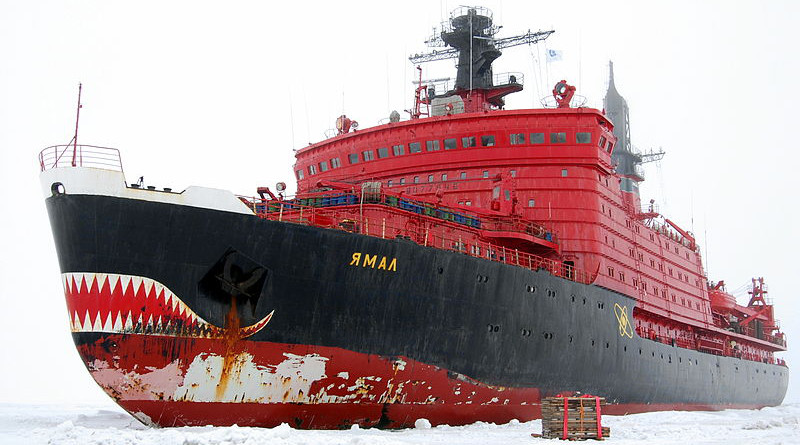
Russia's nuclear icebreaker Yamal. Photo Credit: Pink floyd88, Wikipedia Commons

By 

The Arctic has shifted from being a remote frontier to a vital component of international power politics. As global temperatures rise and ice recedes, the region’s strategic and economic potential has become impossible to ignore.


Long regarded as an inaccessible periphery, the Arctic now offers vast reserves of hydrocarbons, shorter trade routes, and a landscape where military postures can evolve under the radar. Within this changing framework, Russia’s actions—particularly around Kola Bay—exemplify the region’s transformation into a theater of energy ambition, strategic calculation, and hardened security infrastructure.

Much of the renewed interest in the Arctic stems from its energy promise. Estimates suggest that the Arctic holds roughly 22% of the world’s undiscovered oil and natural gas resources, making it one of the largest remaining energy frontiers. As Charles Emmerson observed in The Future History of the Arctic, this wealth has begun to reorder state priorities, especially for countries like Russia whose Arctic coastline is unrivaled in length. The Northern Sea Route (NSR), once blocked by thick ice most of the year, now remains navigable for longer periods, offering a faster link between European and Asian markets. Russia has responded by expanding infrastructure along this corridor—Sabetta, Murmansk, and Arkhangelsk have seen significant investment. In Murmansk, which sits along Kola Bay, Russia has not only built up commercial shipping facilities but also integrated military installations, turning the area into a dual-use hub.

This blend of energy and military infrastructure is a recurring theme in the modern Arctic. As Katarzyna Zysk noted in Russia’s Arctic Strategy, Russia treats the Arctic as a strategic bastion where economic and defense objectives overlap. Kola Bay, home to Russia’s Northern Fleet, demonstrates this convergence. On one hand, it provides deep-water access to global markets. On the other, it houses nuclear submarines and icebreakers critical to Russia’s second-strike capability. These submarines, many powered by nuclear reactors, are capable of remaining under the ice for months, protected by harsh conditions that render detection difficult. The ice, once a barrier, now serves as a veil.

The military logic underpinning this posture is not new. The so-called “bastion strategy”—an idea inherited from Soviet naval thinking—revolves around creating a defensive maritime zone where nuclear submarines can operate securely. As explained in Lassi Heininen’s edited volume Geopolitics and Security in the Arctic, such zones are layered with anti-air, anti-ship, and anti-submarine systems. Kola Bay, again, illustrates how geography is made to serve doctrine: the surrounding airfields, missile defenses, and sensor networks create a bubble of protection for assets Russia considers non-negotiable in strategic value.

Icebreakers play a central role in operationalizing both commercial and military aims. In Global Maritime Transport and the Arctic, Frédéric Lasserre argued that Russia’s dominance in polar icebreaker fleets—nearly 40 vessels, many nuclear-powered—provides not just access but influence. These ships clear pathways for energy exports and patrol trade routes while also being capable of reconnaissance and even armed engagement. While the United States operates only a few functional icebreakers, Russia’s fleet is diverse, modernizing, and increasingly militarized.


This asymmetry has not gone unnoticed. NATO states have begun reassessing Arctic policy and defense investment. As Elana Wilson Rowe noted in Arctic Governance: Power in Cross-Border Cooperation, Arctic cooperation once emphasized environmental protection and indigenous rights. That consensus is now fraying. The militarization seen around Russian Arctic bases—especially in Kola Bay—is prompting countermeasures. Nordic countries are expanding surveillance capacities; Canada is revisiting the strategic relevance of the Northwest Passage. The U.S., for its part, has revived discussions around fleet modernization, while expressing renewed interest in Greenland and northern Alaska.

At the same time, economic and security dynamics in the Arctic are increasingly shaped by global rivalries. Russia’s partnership with China exemplifies this shift. While the two countries have historically been cautious collaborators, mutual isolation from the West has accelerated joint Arctic initiatives. As Marlene Laruelle detailed in Russia’s Arctic Strategies and the Future of the Far North, Beijing has positioned itself as a “near-Arctic state,” funding research stations and infrastructure in ways that deepen dependence while demanding influence. Russia, wary of losing control over its northern flank, continues to walk a tightrope—welcoming Chinese investment in energy and transport, but resisting joint military initiatives that could undermine its autonomy in the Arctic.

The situation is further complicated by sanctions and resource nationalism. Since 2014, and more sharply after 2022, Western sanctions have restricted Russia’s access to Arctic technology and capital. In response, Russia has turned inward, attempting to develop domestic alternatives and seek non-Western partnerships. Amy Swanson’s recent work on Arctic logistics highlights how infrastructure projects—particularly ports and rail links around the NSR—are increasingly shaped by eastward-looking economic geography. From Kola Bay, coal and gas shipments now bypass Europe altogether, heading instead to Chinese and Indian ports.

Amid these tensions, one question remains open: will the Arctic remain a zone of managed competition or become a flashpoint for wider confrontation? Analysts such as Heather Conley, in her work with the Center for Strategic and International Studies, warn of a “slow-burning crisis”—not a dramatic clash, but an incremental erosion of trust and cooperation. The Arctic, once protected by its inaccessibility, now feels vulnerable to spillover from conflicts elsewhere. It is no longer seen as neutral ground.

Ultimately, the Arctic is emerging not only as a storehouse of resources but as a barometer of great power behavior. Kola Bay stands out not because it is unique, but because it so clearly encapsulates the larger logic at play: a region where energy extraction, strategic deterrence, and national defense are inseparable. The infrastructure built here is not merely to export fuel or patrol ice lanes—it is to shape the future balance of power.

As the ice melts, the barriers that once kept conflict at bay are also dissolving. What rises in their place is a new geopolitical frontier, where commercial ambition, climate transformation, and security anxiety meet. And in that frontier, the Arctic is no longer a backdrop—it is the stage.


Syed Raiyan Amir

Syed Raiyan Amir is a Senior Research Associate at The KRF Center for Bangladesh and Global Affairs (CBGA).

Current Food Delivery Model In China May Only Last For A Decade – Analysis


 china city traffic food delivery motorcycles

By 

By Zhao Zhijiang


In the first half of 2025, China’s food delivery industry continued to expand, with the overall market size reaching RMB 1.5 trillion, marking significant growth compared to 2024. Within the food and beverage (F&B) industry, sales through delivery channels now account for 26%, nearly double that of 2019. Statistics also show that China has 545 million online food delivery users, and the market size for food delivery alone is approximately RMB 1.2 trillion. On average, people spend nearly RMB 3.3 billion per day on food delivery. These booming figures seem to indicate that the food delivery and instant logistics sectors are currently in a phase of rapid growth.

However, a deeper look into the foundation, cost, and labor structure of the food delivery industry in the country reveals that it may soon decline from its peak and enter a downward trajectory.

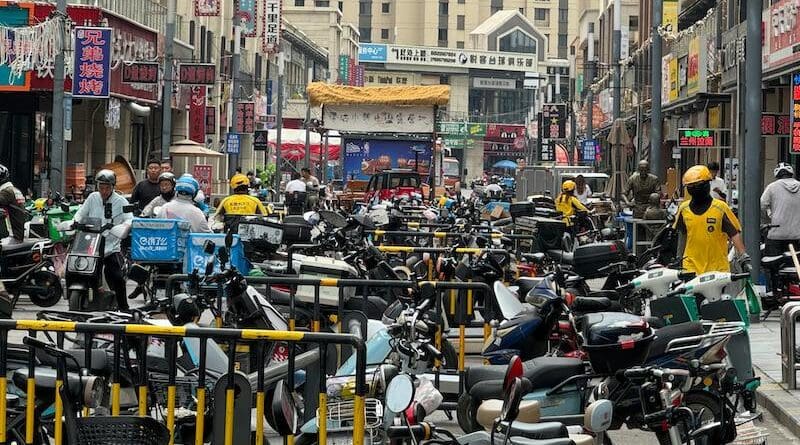
A senior researcher at ANBOUND recently conducted field research in a sub-center of a certain Chinese city and took time to observe food delivery riders working on the streets. These delivery riders constantly checked their phones and hurried to deliver orders in the sweltering summer heat. The researcher predicts that, given the current form of delivery logistics, the food delivery industry may have only about a decade of viability left.

Firstly, from a labor force perspective, the majority of food delivery riders are currently concentrated in the under-40 age group. According to the Research Report on the Living Conditions of Food Delivery Riders, compiled by a research team from the School of Sociology at Nankai University based on 41,000 sample responses, 95.56% of riders are male, with women making up less than 5%. The average age is 33, and nearly 80% of riders fall within the 21 to 40 age range. This is because food delivery places extremely high demands on physical fitness as it requires weaving through traffic during peak hours, and enduring extreme heat, cold waves, and severe weather conditions to complete time-sensitive deliveries. Once a rider is over 40, most find it difficult to keep up with the physical intensity required for the job. In other words, this is not a career one can realistically sustain for ten or twenty years. Therefore, with China’s declining birthrate and younger generations increasingly unwilling to take on high-risk and intensive work, the future supply of food delivery riders is likely to face structural tightening.

Secondly, beyond age demographics, climate factors will also become a major variable affecting the food delivery rider industry over the next decade. Scientific studies have already pointed out that the global average temperature is rising at a rate of 0.2–0.3°C per year. By around 2035, many regions in China are expected to experience over 40°C as the regular temperature during summers, with an increase in the frequency of heavy rainfall and typhoons in certain areas. This means that the threshold for performing high-intensity outdoor work will rise significantly. The safety risks and health burdens brought on by extreme weather will further deter existing workers from staying in the field. This represents an irreversible and severely underestimated structural challenge, posing a substantial threat to the current delivery model that relies heavily on large numbers of outdoor riders.


Finally, there is the issue of rising costs. Estimates show that in 2024, the total gross merchandise value (GMV) of the national food delivery market reached RMB 1.6 trillion, with total rider-related costs ranging between RMB 80 billion to RMB 100 billion, accounting for 10% to 15% of the total. In terms of per-order pricing, the national average order value currently sits between RMB 50 to RMB 65, while the rider cost per order is around RMB 7 to RMB 9, making up 14% to 18% of the order value. Notably, starting in 2025, local governments across China have been gradually implementing policies to include delivery riders in the social insurance system. Although a full “employee model” has yet to be adopted, most platforms are already contributing partially to social insurance for their core riders, increasing the per-order labor cost by an additional RMB 0.3 to RMB 0.5. If in the future this expands to full coverage of social insurance, commercial insurance, and even housing provident fund contributions, the unit labor cost for platforms will rise further. Should delivery service costs eventually account for 40% of the order price, the entire business model would become unsustainable and collapse.

The above-mentioned senior researcher at ANBOUND predicts that by around 2030, the proportion of rider costs could rise further to 40%–60%. This means that if a consumer currently places a food delivery order priced at RMB 30, the platform may need to raise that price to RMB 45– RMB 50 or more to maintain its profit structure. What consumers are paying for is not better service or higher product quality, but merely the basic delivery cost needed to keep the platform running. Once prices continue to rise without a corresponding increase in perceived value, consumers may start opting for other forms of consumption instead.

Therefore, the high growth of food delivery business in China is, in fact, unlikely to last, as this is simply not a sustainable industry.

What then, will the direction of this sector be? ANBOUND’s team believes there are two possible scenarios.

The first is the revival of street-level commerce. Business will shift from being in the background to once again taking a front-facing role, at least partially returning to traditional street-based retail. When food delivery is no longer cost-effective, consumers will naturally prefer to opt for dine-in. This implies that convenience stores, neighborhood shops, and street-level businesses will see new opportunities for revitalized growth. From an urban planning perspective, the commercial ecosystem previously dominated by “platforms + warehousing + traffic portals” will need to be rethought to allocate more space and value to street-facing commercial zones.

The second possible direction is technological substitution, such as drone delivery, smart robots, and other innovations that have been frequently discussed in recent years. While these solutions have a certain level of technical feasibility, their actual implementation across society faces significant systemic challenges. This is not a task that any single unicorn company can accomplish on its own, since it involves a wide range of systems engineering, including traffic management, infrastructure development, legal compliance, logistics redistribution, and energy consumption coordination. Over the next decade, this type of delivery method is likely to be limited to small-scale pilots within a few industrial parks or gated communities, hence insufficient to support a full industry-wide transformation.

Therefore, between the two possibilities, the revival of street-level commerce appears to be the more likely direction.

It is worth noting that in recent years, platform-based economies, flexible employment, and new forms of consumption have become key areas of policy support, largely driven by the need to counter the impact of the pandemic, boost consumption, and stabilize employment. However, as the effects of the pandemic gradually fade, some of the deeper issues within the food delivery industry are starting to surface. Recently, while the intense subsidy battles between food delivery platforms may have excited consumers, they have also caused concern in capital markets. Chinese state media have also published articles criticizing the industry’s intense competition, noting that the surge in orders is fueled by irrational consumption and shrinking profit margins per order, while riders are overworked, ultimately impacting the quality of both goods and delivery service. The central message of these articles is that such a price war leaves no winners, and the true future potential lies in competition through innovation.

All in all, whether the current development model of the food delivery industry in China is truly sustainable in the long term is a question well worth deep reflection. On one hand, food delivery does meet consumers’ demand for convenience. On the other hand, a business model that heavily relies on labor-intensive delivery may need to innovate and find a new balance as it faces challenges such as rising labor costs and increasingly frequent extreme weather conditions.

Of course, the food delivery industry in the country will not disappear entirely. It will continue to exist in certain cities and specific scenarios, such as office districts or communities with elderly residents. However, the industry may shift from being a broadly covered, low-cost, high-frequency, platform-dominated urban infrastructure to becoming an optional service rather than an essential one.

Final analysis conclusion:

Despite being branded as part of the “new employment” wave and often associated with technological advancement, the food delivery industry in China remains, at its core, a labor-intensive sector. No amount of policy support can fundamentally alter that reality. Its growth today may be a temporary shift in form rather than substance, one that, within the next decade, could very well fade and return to its original state.

  • Zhijiang Zhao is a Research Fellow for Geopolitical Strategy programme at ANBOUND, an independent think tank.


Anbound

Anbound Consulting (Anbound) is an independent Think Tank with the headquarter based in Beijing. Established in 1993, Anbound specializes in public policy research, and enjoys a professional reputation in the areas of strategic forecasting, policy solutions and risk analysis. Anbound's research findings are widely recognized and create a deep interest within public media, academics and experts who are also providing consulting service to the State Council of China.

Tariffs And Trade Deals: Deconstructing The US Approach – Analysis


By 

By Jhanvi Tripathi


Over a whirlwind week, India has gone from the euphoria of signing one of its most comprehensive and progressive trade deals with the United Kingdom (UK) on 24 July 2025 to quiet resignation at a Truth Social announcement from the President of the United States (US).

The post announced 25 percent across-the-board tariffs on the country as well as pending future penalties. This is presumably due to the failure of the US and Indian trade teams to reach a deal before the 1 August 2025 deadline, and irritation at India’s continued defence and oil imports from Russia. The other thorn in the US Administration’s side is, of course, India’s continued participation in BRICS (Brazil, Russia, India, China, and South Africa) and its upcoming BRICS presidency, as articulated by the US Trade Representative Howard Lutnick.

The Executive Order announced on 31 July 2025 has a revised list of tariffs based on deals that have been signed, and even for countries that which the US is still negotiating. The entry into force is scheduled for seven days from the announcement. Besides the 25 per cent rate for India, the worst hit BRICS member is South Africa with a 30 per cent rate. Brazil maintains a 10 per cent rate over the baseline rate. It is unclear if this includes the 40 per cent additional emergency tariff placed, citing Jair Bolsonaro’s wrongful prosecution. Russia and China have not been listed in the present order.

The Indian government’s measured response, stating that it remains committed to negotiations for a ‘mutually beneficial deal,’ perhaps indicates that the statement has not taken the Indian government entirely by surprise. Noteworthy are the sectors mentioned in the Indian statement—namely agriculture, entrepreneurs (likely referring to the technology pharmaceutical sector), and Micro, Small and Medium Enterprises (MSMEs). The 25 percent tariff will be implemented in addition to the baseline 10 percent tariffs and already high steel, textiles, and auto and auto components tariffs. These are sectors sensitive for the Indian economy.

Substitution and Negotiation

Pinpointing oil purchases from Russia as a reason likely hinges on the assumption that decoupling from Russian oil will eventually lead to an increase in oil purchases for the US. However, as India’s Minister for Petroleum and Natural Gas, Hardeep Singh Puri, has consistently pointed out, India’s energy demand is too high, and removing Russian crude entirely from the market will drive up prices to a prohibitive US$ 130 to 140 per barrel. Although India’s oil imports from the US in the first four months of 2025 increased by over 270 percent, the cost of oil purchases from the US is also inflated due to higher production and transportation costs from the US, which neither geographic nor industrial realities help.


In all this, the sense that President Trump represents a clear version of Washington’s trade and foreign policy expectations is evident. There is no space for caution or diplomacy. A zero-sum game does not bother a country that has several avenues to pressure the world economy. For instance, the deals made with Japan, the UK, and the European Union (EU)share an underlying commonality – a historically deep security relationship with the US.

The attitude with which the US is conducting trade is a manifestation of an old power’s way to assert itself in a multipolar world. The fact that the country has forced a renegotiation with a majority of the world’s largest trading economies is equally remarkable and alarming.

Globalisation (and Its Discontents)

The US trade administration is underestimating the country’s dependence on global supply chains, keeping prices in check for American consumers. It is also underestimating the anticipated shock to the USA’s economy, which is consumption-driven, and the pay-off will not be typical of liberal economic thinking, where domestic production will easily replace imported products.

While US consumption has increased in the past few months and the economy has registered a 3 percent increase, this growth is likely driven by importers stockpiling necessary goods before the tariffs start to make themselves felt. It is a small bubble that will nosedive as prices go up once the tariffs take effect. Unless the Federal Reserve slashes rates further from the current 4.3 percent, the economy is likely to slow down significantly once the tariffs come into effect.

The US is not dealing simply with a manufacturing slowdown. It is dealing with a skills gap created by an infamously underfunded education system from elementary to undergraduate levels, and a lack of re-skilling programmes. Manufacturing will not revive unless workers in factories are equipped with the requisite skill sets. It will also not revive without significant efforts to reduce basic production costs without eating into the profit margins that American Multinationals have gotten used to. Modern life requires far more than diet adjustments for unavailable imported food items.

The Devil in the Details

Regardless of negotiation, the idea that a reasonable deal with the current US Administration will be long-term must be abandoned. Neither can a different administration be relied on to reverse these agreements. The deals the US has ‘finalised’ seem to be dependent on how the English language is interpreted. The EU, for instance, as one American interlocutor observed, assumed that the 15 percent reciprocal tariff agreed to would be a ‘ceiling’ tariff. However, the US has stated that it reserves the right to change these tariffs in the future. Hence, these are not ‘Free Trade Agreements’ (FTAs) but interim understandings..

The danger India faces is being caught up in noise and domestic politicking over who is getting a deal from the US and who is not. Everyone is getting a temporary slip till next Washington’s irritation is evoked. The focus should not be on whether the US is, for instance, cracking a deal with Vietnam or Pakistan, but rather on the kind of deal being brought home. The India-UK FTA is a significant selling point now with its ambitious tariff reduction plan and how far it has gone on intellectual property. While domestic reservations may remain, it serves as a template to show that India is serious about doing business, which will hold it in good stead with all partners it is negotiating with, not just the US.


  • About the author: Jhanvi Tripathi is an Associate Fellow at the Observer Research Foundation.


Observer Research Foundation

ORF was established on 5 September 1990 as a private, not for profit, ’think tank’ to influence public policy formulation. The Foundation brought together, for the first time, leading Indian economists and policymakers to present An Agenda for Economic Reforms in India. The idea was to help develop a consensus in favour of economic reforms.