Wednesday, August 13, 2025


IMPERIALIST TURKIYE OUT OF SYRIA!

Syrian Kurdish YPG should stop delaying Syria integration, Turkey says

"The YPG/SDF must stop its policy of playing for time," Fidan told a joint press conference with his Syrian counterpart Asaad al-Shibani in Ankara.

KURDS, DRUZE, ALAWITES & CHRISTIANS WANT A PLURALIST DECENTRALIZED STATE


Members of Kurdish People's Protection Units (YPG) stand guard as Women’s Protection Unit (YPJ) and Kurdish internal security forces conduct a security operation in al-Roj camp, Syria, April 6, 2025
.(photo credit: REUTERS/Orhan Qereman)ByREUTERSAUGUST 13, 2025 16:18

The Kurdish YPG militia, which spearheads the US-backed Syrian Democratic Forces (SDF), should stop "playing for time" and abide by its integration agreement with the Syrian government, Turkey's Foreign Minister Hakan Fidan said on Wednesday.

NATO-member Turkey has been one of Syria's main foreign allies after the ousting of Bashar al-Assad last year, while it considers both the SDF and YPG as terrorist organizations.

The SDF, which controls much of northeast Syria, signed an agreement with Damascus in March to integrate into the Syrian state apparatus.

"The YPG/SDF must stop its policy of playing for time," Fidan told a joint press conference with his Syrian counterpart Asaad al-Shibani in Ankara.

"Just because we approach (the process) with good intentions does not mean we don't see your little ruses," Fidan said.

KURDISH FIGHTERS from the People’s Protection Units (YPG) run across a street in Raqqa, Syria in July. (credit: GORAN TOMASEVIC/REUTERS)Fidan visited Damascus last week, following clashes between the SDF and Syrian government forces in Manbij and Aleppo, and after weeks of tensions between Israel and Syria over fighting between Druze and Bedouin forces around Sweida last month.


Turkey views the YPG as an extension of the PKK"A new era has begun in the region and there's a new process in Turkey. They should benefit from those positive developments," Fidan said, referring to the Kurdistan Workers Party (PKK) militant group's decision to disarm and disband.

Turkey views the YPG as an extension of the PKK but the YPG has said the disarmament call of jailed PKK leader Abdullah Ocalan did not apply to it, contradicting Ankara's view.

"We witness some developments in Syria that we find hard to tolerate," Fidan said. "We see that members (of the YPG) who came from Turkey, Iraq and Iran have not left Syria."

Shibani criticized the SDF for holding a conference which called for a review of the constitutional declaration issued earlier this year by Syrian President Ahmed al-Sharaa and said it sought to exploit the events in Sweida. He also called the conference a violation of the agreement to integrate the SDF into state institutions.

The SDF has been in conflict with Turkey-backed Syrian armed groups in northern Syria for years. Ankara has carried out several incursions against the YPG in the past and controls swathes of territory in northern Syria.
WOTD; WORD OF THE DAY

Putin’s Valdai Residence Turns Into WWII Nazi-Style ‘Flaktürme’ Fortress With 12 Pantsir-S1 Air Defense Towers

Around Putin’s Valdai residence — and that of his alleged companion Alina Kabaeva, air defenses have expanded from 2 to 12 positions, with Pantsir-S1 systems mounted on special towers a la WW II.


by Kyiv Post | Aug. 13, 2025

Photo:x/SvobodaRadio

Around Vladimir Putin’s residence in Valdai, air defenses have been significantly reinforced: there are now 12 positions, mostly equipped with Pantsir-S1 systems mounted on special towers. By comparison, in 2023–2024 there were only two such sites.

According to Radio Svoboda, which analyzed new Yandex satellite images and photos from the Yandex.Mirror service, in Moscow and the Moscow region — home to over 20 million people — journalists counted 60 air defense positions.

Valdai is a town in Russia’s Novgorod region, located between Moscow and St. Petersburg. It lies on the shores of Lake Valdai, in the center of the Valdai Hills, approximately 350 km (about 217 miles) northwest of Moscow and about 140 km (approximately 87 miles) southeast of Veliky Novgorod.

The first Pantsir-S1 air defense system near Putin’s residence was spotted by local residents in January 2023, and another was identified by Radio Svoboda journalists in July 2024.

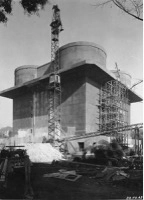
OSINT analysts joke that these new fortifications resemble “Flaktürme” — anti-aircraft towers used by the Nazis during World War II.

According to media reports, Putin’s alleged companion — Olympic champion Alina Kabaeva — often spends time in Valdai together with their children. As the Russian outlet Proekt reported in 2023, a new house was built there for Kabaeva and the children, and her assistants were given apartments near the Russian president’s residence.

Other Topics of Interest
‘Fake News!’ – Trump Blasts Media on Upcoming Alaska Meeting Coverage
In a social media update, the US president lambasted the media for its recent criticisms ahead of his meeting with Putin, following his suggestion that Kyiv’s concessions might be on the table.


“Flaktürme”: Nazi flak tower under construction in 1942. 
(Photo by Bundesarchiv, Bild 183-J16840 / CC-BY-SA 3.0, CC BY-SA 3.0 de. Wikimedia Commons.)

Next to Putin’s dacha is Kabaeva’s own mansion with an area of 1,200 square meters. Construction began in 2020 and was completed in two years. Journalists believe she is the dictator’s mistress and the mother of his three children.

Putin, Kabaeva, and the children use a separate railway line with a guarded station built in 2019. The station has a helipad from which the dictator flies to his Valdai residence.

To suggest a correction or clarification, write to us here
You can also highlight the text and press Ctrl + Enter
Contact Us

Kyiv Post
Kyiv Post is Ukraine’s first and oldest English news organization since 1995. Its international market reach of 97% outside of Ukraine makes it truly Ukraine’s Global – and most reliable – Voice.

CRIMINAL CRYPTO CAPITALI$M

Don Jr says his family got into crypto after banks refused to do business after Jan 6 ‘nonsense’

Don Jr. said his family was debanked following the Jan. 6 attacks on the U.S. Capitol.

Isabel Keane
in New York
Wednesday 13 August 2025 

The Independent


Donald Trump Jr. says his family “didn’t have a choice” but to get into crypto because banks didn’t want to do business with them after January 6, 2021, referring to the deadly attack on the U.S. Capitol as “all the nonsense.”

“We got into crypto because we didn’t have a choice,” the president’s eldest son said on Fox & Friends Wednesday morning while discussing his family’s cryptocurrency business’s $1.5 billion digital coin deal.

The Trump family’s crypto business, World Liberty Finance, announced Monday that technology firm ALT5 Sigma would make a big purchase of its digital coin, $WLFI. ALT5 said it would sell $1.5 billion worth of shares, then use that money to purchase the Trump signature digital coin, which the family founded last year.

“Every major banking institution, the people that, two weeks before we were debanked, we could’ve called and gotten a loan in five seconds. They disappeared. We were left high and dry,” he said.

“Basically, during the first term, certainly after the…let’s call it January 6… all the nonsense, it got significantly worse,” he said, referring to the deadly mob of his father’s supporters who stormed the Capitol in an attempt to overturn the 2020 presidential election results.

(Fox News)

Five people, including one police officer, died and several more were injured when the pro-Trump mob breached the Capitol building. The president granted roughly 1,500 people convicted of January 6-related crimes pardons immediately after taking office in January.

“We weren’t even early crypto guys, but we figured, if they can debank the Trump Organization, if they can debank us, who can’t they go after? And more importantly, who won’t they go after?” he continued.

Trump Jr. said that instead of going home and “go cry in a corner,” they decided to launch World Liberty Financial, which he described as the future of banking.

“What we’re doing with World Liberty Financial, I think, is going to shake up the entire banking system. It is literally the future of finance,” he said.

Joining Trump Jr. on the segment was his brother, Eric Trump, and World Liberty Financial’s co-founder and CEO Zach Witkoff, who said they were looking to “democratize” the financial system.

“Put power back in the hands of the people, instead of the big boogy man behind the curtain,” Witkoff said.

Following the Fox appearance, the three men went to ring Nasdaq’s opening bell to celebrate the closing of ALT5’s $1.5 billion offering.


Chubby face memes plague JD Vance vacation as Brit protesters go on mockery bonanza

Adam Nichols
August 13, 2025
RAW STORY


A van, displaying meme imagery of U.S. Vice President JD Vance, organised by the campaign group 'Everyone Hates Elon', travels through the town of Charlbury whilst Vance spends his holiday nearby, in Charlbury, Cotswolds, Britain, August 12, 2025. REUTERS/Toby Melville


Vice President JD Vance's English countryside getaway descended into mockery overload as protesters gathered to demand the Trump administration official "go home" from his luxury vacation spot.

The "Dance Against Vance" demonstration, organized by the Stop Trump Coalition, targeted the Vance family's stay at an 18th-century manor house in the tiny Cotswolds Hamlet of Dean, Oxfordshire. His 20-vehicle convoy and Secret Service detail have forced road closures and ID checks that have "hobbled day-to-day life" for locals.

"He's simply not welcome here," declared Sue Moon, a therapist from nearby Chipping Norton, told The Guardian. "We don't want anything to do with people like him."

The protest featured the viral meme depicting Vance as a bloated baby—the same image that got a Norwegian tourist kicked out of the U.S. earlier this year. Demonstrators brought cake decorated with the mocking image, while the group Everyone Hates Elon raised over $6,000 for a van displaying the meme to drive around the Cotswolds.

Many attendees expressed outrage over Vance's February confrontation with Ukrainian President Volodymyr Zelensky. Natasha Phillips, who traveled 70 miles to protest, carried a sign reading "JD Vance–the guy who bullied a war hero from the comfort of his couch," the Guardian reported.

"The way he treated Volodymyr Zelenskyy was disgusting," Phillips said. "The Ukrainian people are heroes."

Folk singer Dolly Mavies told the BBC she "packed up our stuff and left" when learning Vance would attend her scheduled performance, stating "morals are more important than money."

The vice president has faced similar protests during family vacations to Disneyland and Vermont ski resorts, where demonstrators previously urged him to "try Russia" instead.

‘Not welcome’: English town protests against JD Vance’s holiday


By AFP
August 12, 2025


Around 60 people gathered for the demonstration in the town of Charlbury 
- Copyright AFP BASHAR TALEB

Dozens of activists and locals protested on Tuesday against a visit by US Vice President JD Vance to an idyllic rural region of southwest England, where he is on holiday with family.

Around 60 people gathered for the demonstration in the town of Charlbury in the Cotswolds region, carrying signs including “Go Home”, “Not Welcome Party” and “Sod Off”.

UK police and US security detail dotted the usually quiet roads leading to the nearby hamlet where Vance was staying, blocking some roads and footpaths in the countryside region popular with tourists.

“The people of the Cotswolds are out here today telling JD Vance that he is not welcome here,” Jake Atkinson from the Stop Trump Coalition told AFP at the gathering.

Co-organiser Atkinson cited US President Donald Trump’s policies including on immigration and the war in Gaza for the local anger.

He said the anti-Trump coalition would also turn out against the US president, who is due in the UK for a state visit in September.

Earlier in the day, a black van bearing a meme image of Vance edited to look bald and bloated drove past the quaint cottages and winding streets of the town.

“We wanted to extend the same welcome that he extended to (Volodymyr) Zelensky from the White House,” said 75-year-old Charlbury resident Lou Johnson, referring to the cold reception Vance gave the Ukrainian leader during a press conference in Washington in February.

Vance kicked off his British holiday last week by meeting UK Foreign Secretary David Lammy, who hosted the American politician in his country retreat in Chevening in Kent, southeast of London.

Reports have also said Vance will later visit Scotland, where Trump spent five days at his golf resorts last month.


– Heightened security –


Residents said they were surprised by the heavy security around Dean, the village where Vance was staying.

“If somebody’s just in the Cotswolds on holiday, you wouldn’t imagine they’d need a 20-car motorcade and all the roads to the entire village,” said Phil Ball, 53, a local resident and cameraman.

“It’s been disruptive and quite a surprise.”

Victoria Dawson, an artist from nearby Witney, said locals were protesting “against somebody who we think is immoral… somebody who is doing terrific damage around the world along with Trump”.

“Because JD Vance is here, suddenly roads are closed everywhere, there are police everywhere,” she added. “It’s not what we expect or accept.”

Lou Johnson also complained that heightened security had been “invading everywhere” in the rural area he has called home for 50 years.

“People think it’s just a gentle little village but every now and then we do stand up for what we believe in,” said Johnson.
US Green Card processing delay at all-time high, may force out talent: Report

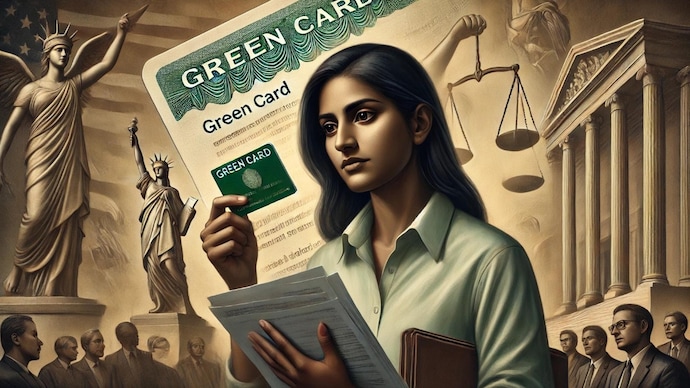
Immigrant workers seeking employer-sponsored Green Cards in the US now face record delays, averaging 3.4 years, up from 1.9 years in 2016, according to a Washington DC-based think tank. Even a premium fee is failing to speed up the delays. The Cato Institute has warned that the US may lose global talent unless its immigration system is urgently streamlined.


A growing difficulty in securing Green Cards could weaken the US's ability to attract global talent, Cato Institute has said. (Image: File)


India Today World Desk
New Delhi,
UPDATED: Aug 13, 2025 
Written By: Gaurav Kumar


Immigrant workers applying for employer-sponsored Green Cards in the US are now facing the longest processing times ever recorded, according to a report by the Cato Institute.

The Washington DC-based libertarian think tank released findings from its study on the current wait times immigrant workers encounter when applying for Green Cards.

It found that the average length had risen to 1,256 days, or 3.4 years, at the end of the second quarter of 2025 – compared to 705 days (1.9 years) in 2016, Newsweek reported, citing the think tank's analysis.
advertisement

US Citizenship and Immigration Services (USCIS) is grappling with an unprecedented backlog of immigration cases, reaching a record 11.3 million pending applications, according to another Newsweek report published in July.

The think tank warned that the increasing challenges faced by applicants in obtaining Green Cards could weaken the US' ability to attract skilled workers from around the world.

PREMIUM FEE ALSO FAILING TO SPEED UP GREEN CARD DELAYS: REPORT

According to the Cato Institute's report, even applicants who pay a "premium processing fee" wait almost two years on average before making it out of the "government's regulatory morass" – a confusing and complicated set of rules and paperwork which makes it hard for people and businesses to get things done quickly and smoothly.

These wait times come on top of the time applicants already spend trying to get a cap slot, which depends on the limits the government sets for each country and category. Applicants also have to go through several months of paperwork before they can even file their application

The Cato Institute outlined six key stages involved in the process of obtaining an employer-sponsored Green Cards in the United States, each of which has seen increased processing times since 2016.

These six stages are as follows: gathering eligibility documents, determining a fair wage, recruiting US workers, obtaining labour certification, filing an employer petition, and finally submitting the green card application, which includes background and medical checks. Each step adds to the overall delay.

According to the Cato report, the prolonged delays effectively force many workers to rely on H-1B or other temporary visas before they can even apply for a Green Card.

"America will lose the global talent competition when other countries grant Green Cards in a matter of a few weeks or months, not years," the Cato Institute said in its report cited in Newsweek.

"The US government needs to significantly simplify its legal immigration process and remove excessive, outdated requirements," the think tank added.

The US offers a Green Card, which lets people live there permanently. There are a few ways to get one, like having a family in the US, a job offer, or winning the lottery.


- Ends
Reform rabbis made to leave stage at London hostage rally after calling for end to Gaza war

Rabbis Charley Baginsky and Josh Levy also expressed support for the idea of a Palestinian state — while objecting to the U.K.’s current approach to recognizing one.


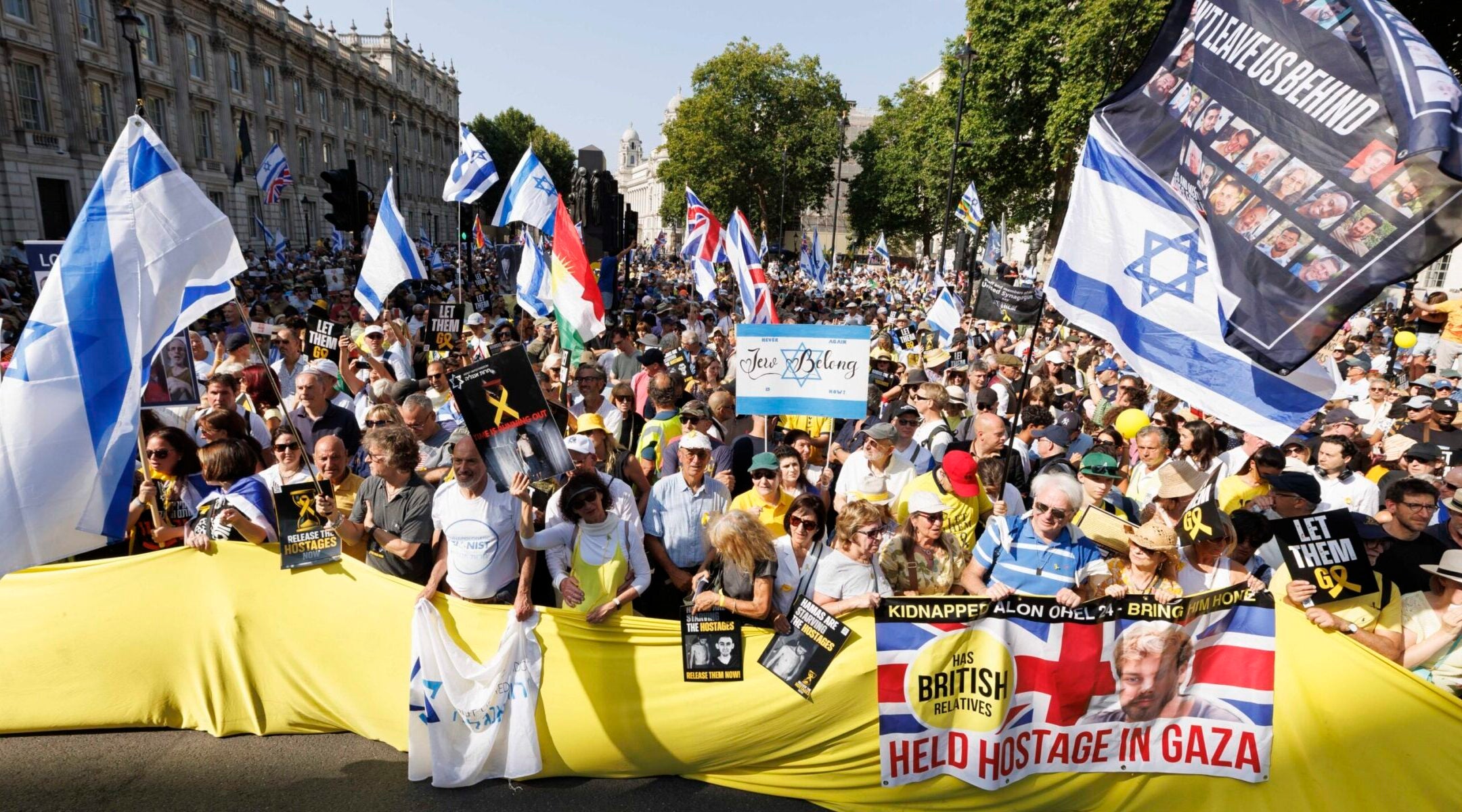
People take part in a National March for the Hostages outside Downing Street on Aug 10, 2025 in London. (Belinda Jiao/Getty Images)


By Philissa Cramer August 11, 2025 
JTA


Two rabbis were jeered off the stage at a rally in support of the Israeli hostages in Gaza on Sunday — but the jeering did not come from pro-Palestinian counter-protesters.

Instead, the leaders of Progressive Judaism, the U.K. equivalent of the Reform movement, were booed by other members of the crowd who objected to their comments calling for an end to the war in Gaza and expressing support for the idea of a Palestinian state.

Rabbi Charley Baginsky was holding the microphone and had just finished expressing mourning for the victims of Hamas’ Oct. 7, 2023, attack on Israel and soldiers killed in the subsequent war when organizers of the rally, shaking their heads, joined her and Rabbi Josh Levy on stage.

One took the microphone from Baginsky’s hand, with loud jeers audible from the crowd, silencing her as she said, “Every life is precious,” according to footage published by the Jewish News, a British publication.

Baginsky and Levy had moments earlier expressed support for the idea of a Palestinian state, though they joined the theme of the rally and Chief Rabbi Ephraim Mirvis in denouncing Prime Minister Keir Starmer’s plan to recognize a state while Hamas continues to hold 50 Israeli hostages in Gaza.

“The idea of a Palestinian state is not the problem. The Palestinian people, like the Jewish people, have the right to self-determination,” Baginsky and Levy said in their shared speech. “What we reject is a methodology that tries to force this future through violence, terror, and the suffering of civilians. Statehood cannot be built on the blood of innocents, and peace will never grow from the soil of fear.”

A comparison of the prepared remarks and video from the event shows that Baginsky, already facing boos, omitted the words “in Gaza” when she expressed mourning for “those innocent civilians in Gaza whose lives have been lost.”

The incident comes at a moment of rupture for many Jews in the Diaspora, as the unity experienced immediately after Oct. 7 has given way to sharp division over whether and how to support Israel’s continued war in Gaza. (While Israelis see “Bring Them Home,” as an anti-government call, it more often represents support for Israel in the Diaspora.) The Israeli government’s decision last week to widen the war, against the urging of the military, the majority of Israelis and world leaders including Starmer, has heightened the divides, which often fall out along denominational lines.

The National March for the Hostages, which ended outside the seat of government on Downing Street, had been designed to bridge the gap. “The ENTIRE Jewish community, alongside allies from across the UK, is uniting for a historic march,” the British Board of Deputies tweeted before the march began. “We are coming together, regardless of our differences, for one purpose: to stand for the hostages. ”

Afterwards, the group, which itself has been divided over how to respond to the war, denounced what had happened to Baginsky and Levy in a statement.

“We deplore the way a section of the crowd treated the Co-Chief Executive Rabbis of Progressive Judaism today, and that they were asked to leave the stage,” the Board of Deputies said. “Those indulging in this disgraceful behaviour should reflect that if we cannot even hear and speak to other Jews with respect then we have no chance of convincing wider society.”

Police in London said they had made two arrests for assault connected to fighting between attendees of the hostage march. (They also arrested one man who was not part of the march for “common assault and a racially aggravated public order offence.”)

Baginsky and Levy said they were distressed by their experience speaking at the rally, as well as by the immediate response.

“It was not easy to stand there,” they wrote wrote in an essay published late Sunday in the Jewish News.

“We are deeply grateful for the care of those who reached out afterwards, whether they agreed with us or not, because they cared enough to listen. That means something,” they added. “The silence from other quarters is harder to bear.”

Masorti Judaism, the British Conservative movement and a cosponsor of the rally, said it condemned “the abusive behaviour” that caused Baginsky and Levy to be removed and criticized “the clumsy way” the behavior was handled.

“Nothing they said should have earned such very troubling disrespect — and if we wish to marshal the full force of the diverse Jewish world, we cannot be encouraging divisions which only detract from the pain and anguish we all feel for the hostages and the shocking and inhumane conditions they are being kept in,” the movement said in a statement.

The Progressive rabbis said they would not be deterred from participating in community events by Sunday’s events.

“We will not retreat from cross-communal spaces,” they wrote in their essay. “If we are not there, others will shape the Jewish future without us and we will not allow that

HIGH SCHOOL POPULARITY CONTEST

Pope Leo tops Trump and Zelenskyy in Gallup world leader poll

GENDER APARTHEID

Education is a right … but Afghan girls are still shut out of schools

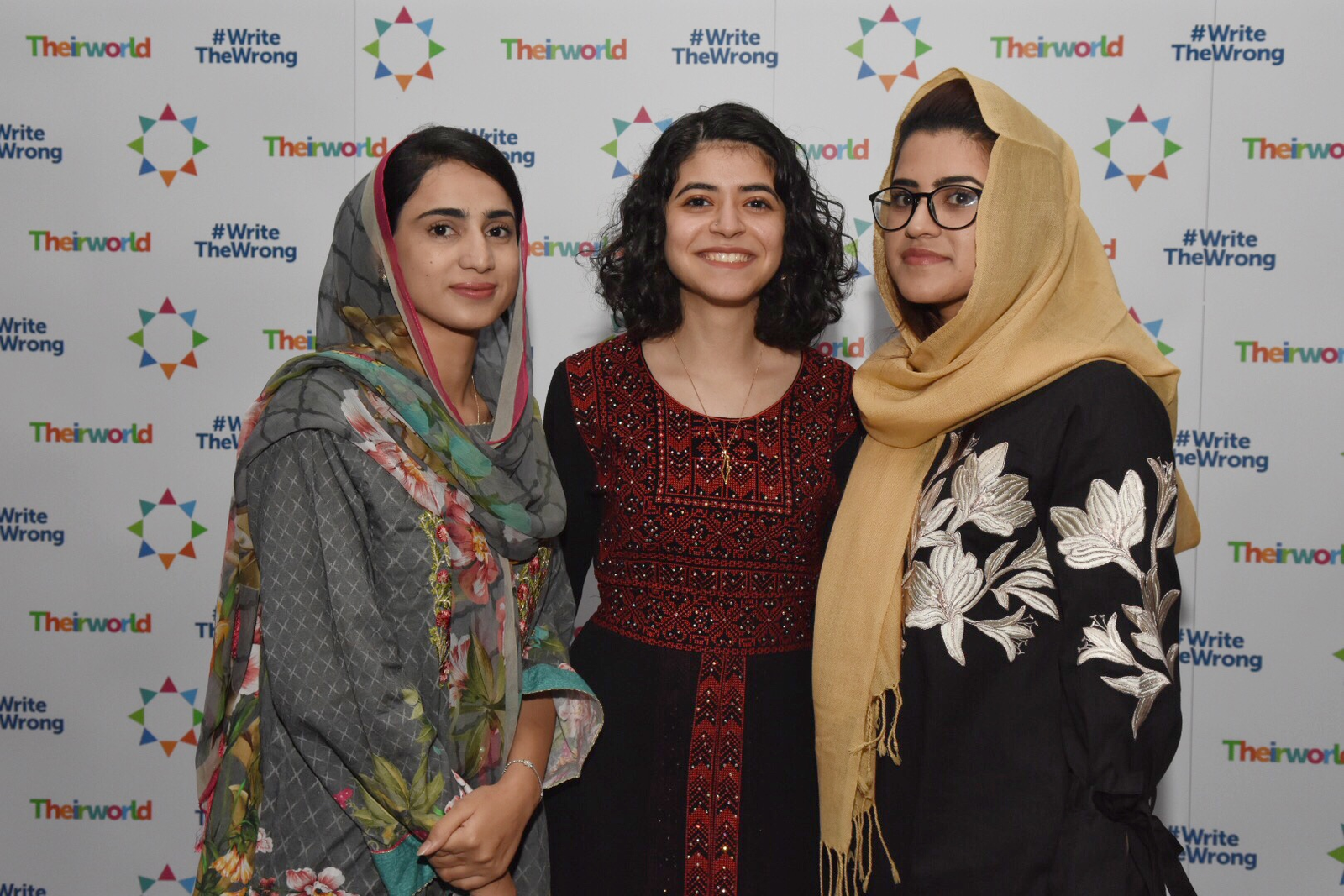
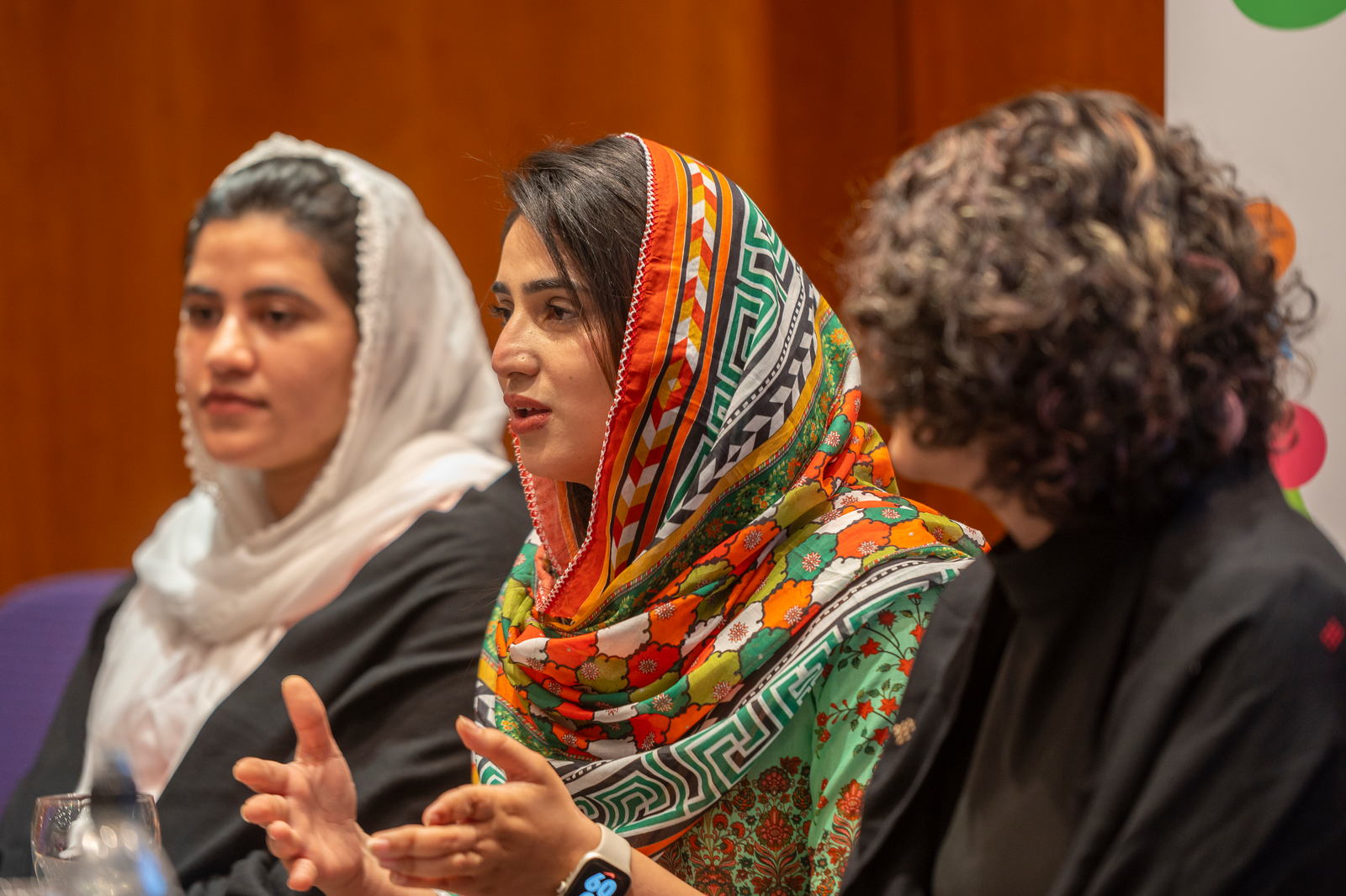
Shazia Ramzan, Yara Eid and Kainat Riaz - who were all Global Youth Ambassadors at the time - at a Theirworld event for International Women's Day (Theirworld/Geoff Crawford)

August 13, 2025
Ahead of the fourth anniversary of the ban on girls in Afghanistan going to secondary school, Shazia Ramzan - a graduate of the Theirworld Global Youth Ambassador programme and current Theirworld adviser, talks about campaigning for equal education rights.


Shazia Ramzan was on sitting on a school bus, on her way home from an exam, when her world was brutally torn apart.

The 14-year-old was with friends Malala Yousafzai and Kainat Riaz when a Taliban gunman boarded the bus and shot them. Malala was targeted because of her outspoken support for girls’ education in Pakistan’s Swat Valley.

“My life changed forever,” said Shazia, who was struck in the neck and arm. “I was shot because I was receiving an education – and because I was a girl.”

That was 13 years ago. Malala went on to win a Nobel Peace Prize for her campaigning. Shazia and Kainat moved to the United Kingdom, studied at school then university and became passionate advocates for education, joining Theirworld’s Global Youth Ambassador programme.

Girls are still being denied an education by the ruling Taliban in Pakistan’s neighbour Afghanistan. Ahead of the fourth anniversary of a ban on girls attending secondary school, Shazia has spoken about the importance of schooling for every girl in the world.
2.2 million
The number of Afghan girls who have missed out on secondary education since 2021.


Shazia said: “Education is a right. I deserve to have an education. Everyone deserves an education and nothing could have stopped me.

“I’m here today, fully educated. I have my degree from the University of Edinburgh. I realise the importance of education and want to help others all over the world access it.”

When the Afghan government collapsed on August 15, 2021, the Taliban immediately seized control of the country. Within weeks, they banned girls from education beyond primary school and women from going to university.

The ban has destroyed the hopes and dreams of millions of girls. When the new school year began in March this year, UNICEF estimated another 400,000 girls would miss out on secondary education – taking the total since 2021 to 2.2 million.

Shazia Ramzan is a passionate campaigner for the rights of girls to have a quality education (Theirworld/Phil Wilkinson)


UNICEF Executive Director Catherine Russell said: “If this ban persists until 2030, over four million girls will have been deprived of their right to education beyond primary school. If these capable, bright young girls continue to be denied an education, then the repercussions will last for generations. Afghanistan cannot leave half of its population behind.”

Theirworld President Justin van Fleet said: “The ban on girls’ education in Afghanistan is a violation of universal human rights. It deprives girls of their aspirations and dreams, and puts them in danger if they ever attempt to learn. It’s putting a generation’s entire future at risk.”

Apart from wrecking their future career prospects, depriving girls of education leaves them at risk of child marriage and early pregnancy, increased poverty and gender-based violence.

Although there has been an overall improvement in gender equality in education in recent decades, some parts of the world are falling behind. That includes Afghanistan, Pakistan and Nigeria, which have seen attacks on girls’ learning and threats to close down schools.


For me, education is like a light - without light you can’t see anythingKainat Riaz, graduate of Theirworld Global Youth Ambassador programme


The Taliban’s decision to ban education for girls after primary school dramatically unravelled decades of progress in Afghanistan. United Nations agencies and campaigners, including Theirworld, continue to advocate for Afghan girls to be allowed to return to secondary schools.

Meanwhile, Shazia amplifies the message that education unlocks opportunities for girls, allowing them to follow their dreams and fulfil their potential.

She said: “I have defeated all my thoughts, that maybe you’ll never go back to school, maybe you’ll never be anything. I have overcome them. And I want to help others who are having these thoughts know they can overcome them too.”


The Taliban are sending Afghan workers to Qatar to ease unemployment in Afghanistan


With a general view of skyline, cars arrive at the Al Hazm luxury mall, in Doha, Qatar, Wednesday, April 24, 2019. (AP Photo/Kamran Jebreili, File) 

By Associated Press - Tuesday, July 29, 2025

ISLAMABAD — The Taliban are exporting Afghan workers to fill jobs in the Gulf nation of Qatar to ease unemployment in Afghanistan, and say talks are underway to send labor to Saudi Arabia, the United Arab Emirates, Oman, Turkey, and Russia.

Registration opened Tuesday for 2,000 skilled professionals in areas including hospitality, food and beverage, and engineering to go to Qatar under the new program. Applicants from all 34 Afghan provinces can submit their work experience and credentials before being assessed for eligibility.

The registration launch follows the forced returns of at least 1.5 million Afghans from neighboring countries, notably Iran and Pakistan, at a time of significant economic and humanitarian difficulty.

Aid agencies have warned of pressure on local services, as well as dramatically reduced flows of money flowing into the country in the form of remittances from people working abroad.

Acting Labor Minister Abdul Manan Omari described the labor export program as a “significant and foundational step.” He said talks also were under way with Saudi Arabia, the United Arab Emirates, Oman, Turkey, and Russia.

“We are committed to sending skilled, semi-skilled, and professional workers to these countries in the future as well,” Omari said Monday on the social platform X. ‎

“We are committed to the protection of Afghan workers’ legal rights and safety abroad. Our goal is to prevent illegal migration and uphold the dignity and honor of Afghan workers,” Omari said.

While only Russia has recognized the Taliban as the government of Afghanistan, the other countries have diplomatic relations with Kabul.

Qatar, which hosts a major U.S. military base in the region, served as a crucial point for those fleing the Taliban in the chaotic days of the withdrawal of foreign forces from Afghanistan in 2021. It also hosts a diplomatic post for the Taliban and hosted peace talks in 2019-20 between them and the U.S. administration of then-President Donald Trump.

Abdul Ghani Baradar, the Taliban’s deputy prime minister for economic affairs, said the Qatar labor initiative would help to ease unemployment and help the economy - presumably through remittances.

Many Afghans depend on humanitarian assistance to survive. But deep funding cuts are worsening the situation, with aid agencies and nongovernmental organizations scaling back education and health care programs.

“The legal process of sending skilled and professional Afghan workers abroad will positively impact the national economy and help reduce unemployment,” Baradar said at the program’s launch on Monday.

‎He said the government had been working for four years to lower the unemployment rate through foreign and domestic investment, expanded trade relations, and infrastructure projects.

In 2023, the Taliban supreme leader Hibatullah Akhundzada met Qatari Prime Minister Sheikh Mohammed bin Abdulrahman Al Thani in Afghanistan’s southern city of Kandahar, Al Jazeera English reported. It was the first such publicly known meeting between Akhundzada and a foreign official.


The Taliban Breaks Diplomatic Isolation – Analysis


By 

Russia Officially Recognizes the Islamic Emirate of Afghanistan.


On April 17, 2025, the Supreme Court of the Russian Federation officially lifted the ban on the activities of the Taliban within Russian territory. This legal decision means that the Taliban is no longer formally designated as a terrorist organization in Russia.

Subsequently, on July 3, 2025, Russia became the first country in the world to officially recognize the Taliban as the legitimate governing authority of the Islamic Emirate of Afghanistan. As a result, the Taliban now operates within the framework of political dialogue and cooperation in its relations with Russia. The normalization of relations with Afghanistan represents a significant element of Russia’s foreign policy agenda. With these actions, Moscow not only opens a new chapter in bilateral ties but also positions itself as a trendsetter and initiator of a new era in political and diplomatic affairs—an essential attribute of a great power.

Even before the Taliban’s victory, Russian analysts had anticipated the collapse of the pro-American regime led by Ashraf Ghani. Russian experts were deeply informed about the domestic situation in Afghanistan and recognized the failures of U.S. policy in the region. There was growing and acute dissatisfaction within Afghan provinces regarding the American-backed government in Kabul. Consequently, Moscow was among the first to initiate contact with the Taliban, engaging in dialogue with the movement well before its military success.

Russia accurately predicted the withdrawal of U.S. and NATO forces and foresaw a swift Taliban victory. From a strategic standpoint, it would have been unwise not to engage. Moscow’s internal rationale was both logical and pragmatic: to establish working relations with those in power in Afghanistan. After weighing all regional developments, Russia concluded that the Taliban’s ascension was inevitable and therefore moved early to build relations.

Other major and regional powers are expected to follow Russia’s lead, which could result in the normalization of Afghanistan’s international status, a boost in investment, and the country’s integration into multilateral cooperation frameworks. While the United States is likely to continue applying pressure to sustain a policy of non-recognition, the impact of this pressure is expected to be limited, especially against the backdrop of growing engagement from China, Turkey, Central Asian republics, and Middle Eastern countries. Washington is unlikely to prevent regional powers from recognizing the Taliban. At the same time, the U.S. may seek to destabilize the Eurasian geopolitical landscape.


Russia’s Objectives in Afghanistan

What does Russia seek from its engagement with Afghanistan? What are the goals of Russian diplomacy? Moscow seeks a stable regional environment in which Eurasian powers can negotiate independently—without external interference—on the basis of consensus and mutual interest. A stable Afghanistan is crucial to this vision: one free of foreign military bases and insulated from serving as a haven for international terrorist organizations. Accordingly, Moscow will seek to support and promote the political evolution of the Taliban regime towards a more restrained and moderate governance model.

The Taliban’s grip on power is expected to endure, and the movement has demonstrated growing political functionality and rationality. Therefore, Russia is prepared to engage in constructive cooperation with both the Taliban and Afghanistan’s governing institutions. The overarching aim is to stabilize Afghan society and counter terrorism within its borders through collaboration with the Taliban authorities. A particular threat to Russian interests is posed by the Islamic State’s Afghan affiliate, ISIS-Khorasan, which is also viewed as a hostile force by the Taliban. Russia and Afghanistan are expected to cooperate closely in efforts to dismantle this organization.

Economic Cooperation as a Cornerstone of Bilateral Relations

Economic cooperation is another key dimension of the Russian-Afghan relationship. One of Afghanistan’s top leaders, Abdul Ghani Baradar, has openly invited Russian companies—particularly from the private sector—to invest in Afghanistan. A notable example of ongoing infrastructure initiatives is the proposed construction of a second highway tunnel through the Salang Pass. The first tunnel, built between 1958 and 1964 with Soviet expertise, was crucial for strategic mobility during the Afghan War and remains one of the country’s most vital transportation arteries. In addition to transportation, the development of social infrastructure—such as residential buildings, schools, and healthcare institutions—remains a high priority across Afghanistan.

Improving Afghanistan’s economic conditions is a priority for rational actors in the international system. The Taliban has expressed intent to expand economic ties with countries across Eurasia. As a result of Russia’s engagement, more nations are beginning to explore the possibility of cooperating with Afghanistan. Member states of the Shanghai Cooperation Organisation (SCO) are deepening bilateral ties with Kabul. Following Russia’s example, India has also begun efforts to normalize relations with the Taliban.

As of the end of 2024, the volume of bilateral trade between Russia and Afghanistan reached a modest USD 323 million. Russia imports limited quantities of Afghan vegetables and grapes, with future plans for pomegranate imports from the southern provinces. Afghanistan currently exports chromite, mineral concentrates, as well as precious and semi-precious stones such as rubies and emeralds to Russia. Additional imports include spices, non-alcoholic beverages (including energy drinks), and medicinal plants like lavender, thyme, and licorice.

Obstacles to Normalization and Regional Challenges

Several factors may hinder the normalization of Afghanistan’s political and diplomatic status. Chief among them is the desire of certain regional powers to maintain monopolistic influence over the Taliban. This especially concerns the Pakistani military, which historically served as both mentor and sponsor to the Taliban and the Haqqani Network. Pakistan’s doctrine of “strategic depth” has long relied on supporting radical Islamist factions to establish proxy networks throughout the region, particularly against its main strategic rival, India. Islamabad continues to back various militant groups that utilize terrorism as a political tool.

However, since their victory in 2021, the Taliban has increasingly distanced itself from Pakistani control. The movement now seeks to act as an independent and sovereign force, building equitable relations with all international actors. This aspiration has sparked tensions with the Pakistani military, leading to a rise in conflict and hostile rhetoric between the two neighbors. Another significant barrier to the Taliban’s international recognition is the persistent opposition from the United States, which continues to obstruct the normalization process.

In sum, the Taliban has successfully broken through its diplomatic isolation by securing its first official recognition. This marks a major milestone in the reconfiguration of Afghanistan’s international status. Russia, for its part, has demonstrated that it is a rational and ambitious global power, capable of shaping diplomatic and geopolitical realities in the Greater Middle East, Central Asia, and South Asia


Dr. Georgi Asatryan

Dr. Georgi Asatryan is an Associate Professor at Moscow State University, and author of "Talibanland - Paradise Under the Shadow of Sabers in Afghanistan"



Edward R. Murrow, a journalist of a different era

Who will stand up for the truth in our time?


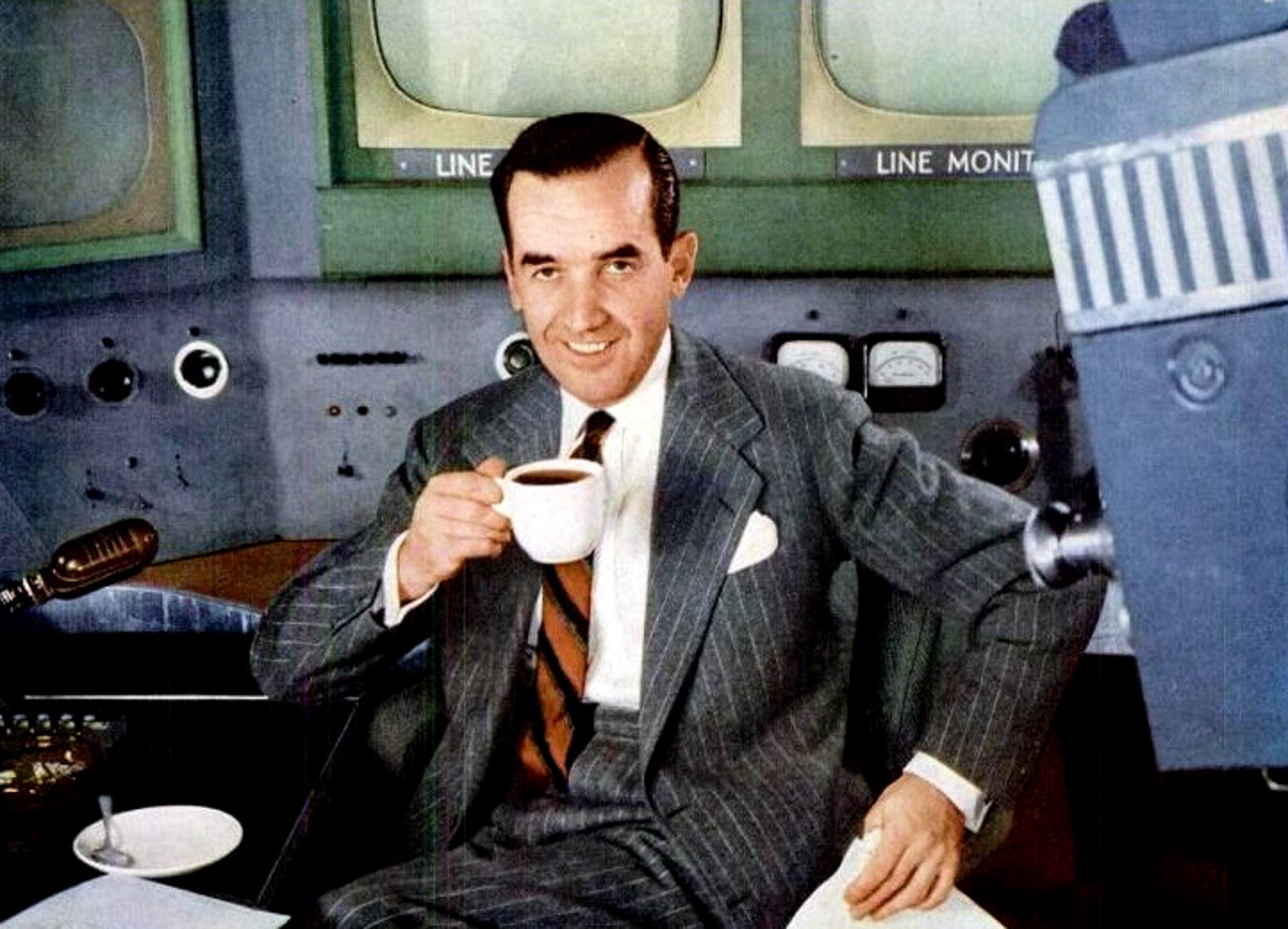
Edward R. Murrow (Wikimedia Commons)

It was one of those modern split-screen moments: one screen bubbling with the hype and excitement of a successful Broadway play, the theater packed, the applause deafening; the other screen showing a high school classroom with a dozen honor students and a teacher gathered around a visiting journalist (that’s me) who is telling a story about the play’s main character, CBS’s incomparable Edward R. Murrow.

The link between the Broadway play and the Boston classroom was coincidental, but it revealed so much about the impact of technology on American journalism and politics, focusing on the differences between Murrow’s journalism during and after World War II and the dizzying swirl of social media, which, for many, is the journalism of today.

The teacher, a young man with a broad smile that never left his face, had read about the Broadway play, “Good Night and Good Luck,” knew about Murrow’s groundbreaking role in American journalism and introduced me with the enthusiasm reserved for a Biblical scribe. After all, I was one of the few still alive who had actually worked with Murrow.

Still, one quick glance around the classroom might have told me I’d probably selected the wrong topic for my talk; it might also have told the teacher that he’d misjudged the curiosity of his honor students. The plain fact was the young faces around us were simply blank, showing not a flicker of interest in Murrow, nor in the Broadway play that had set New York aflame with scary memories of McCarthyism, uncomfortable connections to the incumbent president (name unspoken) and whispers about a possible presidential run by the Hollywood star George Clooney, who was playing the title role on stage.

At the last moment, I could have switched subjects and, because I was in Boston, plunged into my favorite baseball prediction, shared by few others, that the Red Sox would find a way to win the American League pennant; but instead I stubbornly stuck with my topic, determined somehow to convert each student into a Murrow fan.

I opened with an obvious question: “Has anyone in this room ever heard of Edward R. Murrow?”

Not a single hand went up.

“Never even heard of him?”

No, heads slowly rolled back and forth.

I changed my approach. “Ok, when you get up in the morning, how do you know what happened during the night? Where do you turn? What do you do?”

A few faces cracked into knowing smiles. One said, “I rush to catch the bus.” Another added, “I eat a quick breakfast and run to school. I don’t want to be late.”

I realized I’d asked the wrong question. Trying again, I said, “Do you have a favorite journalist?” I looked from one student to another, hoping for a meaningful response. But again I saw nothing but shaking heads, except—How could I have missed this?—they were all looking down at their cellphones, as though they might have had the answers to my questions.

Maybe they did.

I recalled a recent survey about teenage immersion in social media, youngsters between the ages of 13 and 17. Ninety percent of them rely on YouTube every day; 63 percent on TikTok; 61 percent on Instagram and 55 percent on Snapchat.

Teenagers live with social media, which has become their principal means of communication, their way of learning about the world they inhabit, like their parents, who have also come to depend on it, although not as wholeheartedly. Their numbers are lower but still meaningful.

Obviously, I needed yet another approach. I decided to tell a story. Don Hewitt, the founding director of CBS’s “60 Minutes” once told me that everyone, no matter how young or old, liked a good story; and Murrow was a very good story.

I had met him in May 1957 in a most unusual way. I was a graduate student at Harvard, deep into PhD research in Russian history, most days tucked away in a small carrel at Widener Library. One Monday morning, an elderly librarian interrupted my studies. “Marvin,” she whispered, “there’s a call for you, a man who says he’s Edward R. Murrow.”

“Hang up on him,” I shrugged. “Probably a quack. Edward R. Murrow is not calling me.” Crazy idea, I thought.

As it happened, Murrow was my hero at the time, a journalist so lofty in my imagination I could not believe he would be calling me. At 7:45 p.m., Monday through Friday, nothing could distract me from listening to CBS’s “Edward R. Murrow with the News.” He was my contact with the world, strong, reliable, accurate.

Late that afternoon, the librarian returned. “He just called again,” she whispered nervously. “It’s the same man. I think you ought to talk to him.”

I began to have second thoughts. Perhaps it was Murrow, responding to a story I had written about Soviet youth, which had appeared the day before in The New York Times Magazine. Maybe he’d read it.


Good Night, and Good Luck (2025)

I picked up the phone. “Hello?” I said.

“This is Ed Murrow. I’m sorry to bother you.”

The instant I heard his voice, I realized what a fool I had been. It was Murrow, and he was calling me twice in one day.

I erupted with apology. “I am so sorry, sir. Please forgive me. I’m sorry.”

“No problem,” he replied. “I read your piece in the Times yesterday, really good piece, and I wanted to talk to you about it.”

“Yes, sure. Thank you. Wow. Yes, of course.” My words tumbled out in no order. I was overwhelmed.

Murrow, though, quickly got to the point. “Could you possibly get to my office tomorrow morning?”

“Yes, sure, where?”

“New York, 485 Madison Avenue, 9 o’clock. Ok?”

“Yes, sir. I’ll be there.”

Thus began a relationship that inspired my career as a broadcast journalist.

That first meeting was penciled in for 30 minutes. “He’s a very busy man,” his secretary warned. The meeting lasted for more than three hours. Like a curious graduate student, Murrow asked dozens of questions about Soviet youth: their families, parents, jobs, religion, sex, patriotism, war, Stalin and the new leader, Khrushchev (I noticed Murrow took notes); and I, like a young professor hustling for tenure, tried answering every question. It was a seminar like no other.

When his secretary interrupted shortly after noon, mentioning Murrow was already late for a lunch, the famed broadcaster slowly stood up, smiled and, with an arm around my shoulder, asked, “How would you like to join CBS?” It might have taken a second or two before I answered, “Yes, sir, of course, yes, I’d be delighted.” For me, it was “Bye, bye scholarship; hello journalism!”

I had been a sports reporter for my high school and college newspapers, but never before a reporter on salary for a professional news organization. Murrow thought CBS needed a Moscow correspondent who spoke Russian and understood the complicated flow of Russian history and politics. He helped put me on a fast track, from local writer to network reporter to foreign correspondent, and, in May 1960, CBS took a chance and assigned me to Moscow. It was a gamble that came adorned with a professional dilemma Murrow himself created.

Less than a year later, after he had left CBS to join the incoming Kennedy administration as head of the United States Information Agency, he called one day and, unintentionally, placed before me a flattering but incredibly difficult proposition: Would I accept a new job as Murrow’s personal adviser on US relations with the communist world?

If I were not so deeply committed to my job as CBS’s Moscow correspondent, I would have jumped at the opportunity to help Murrow during the Cold War. He was still my hero. How could I respond in any way other than “Yes, sir, when do I start?” But after a period of intense introspection, I came to a very different decision. I would stay in Moscow for CBS. I wanted to continue to be a journalist, enjoying the freedom, challenge and satisfaction of informing the American people about what was happening in Russia. Murrow also helped, saying that if he were in my position, he’d have reached the same conclusion. He was always gracious.

He was also an extraordinary journalist, the most gifted broadcaster of his era, inventing radio news while reporting courageously on the rise of Hitler’s fascism in Germany in the 1930s, the Luftwaffe’s blitzkrieg of London in the 1940s and the spread of McCarthyite terror and fear through the United States in the 1950s. Murrow felt the need to cover the junior senator from Wisconsin not just as a compelling news story but, in his judgment, as a serious threat to American democracy.

When he returned to New York after covering World War II, Murrow believed that if Germany, a highly civilized country in central Europe, could produce such a raw, cruel, ugly evil as Hitler’s fascism, then so too could other civilized nations, including the United States, produce their own iterations of evil. And were that to happen, it would become, as he put it, the “responsibility” of every “citizen” to oppose that evil. For Murrow, McCarthyism was precisely such an evil force, and it had to be confronted.

The Cold War set the ideological framework for the famous Murrow/McCarthy confrontation on network television. The senator was riding high, conducting a personal crusade against the “communist threat” in Hollywood, the State Department and the US Army. He charged, without evidence, that such high-ranking officials as General George C. Marshall and Secretary of State Dean Acheson were somehow engaged in helping the communists in “subversive, anti-American activities.” In this way, he spread a strange fear through the country that stifled dissent and discouraged criticism.

By early 1954, McCarthy had become so powerful a national figure that, according to a Gallop poll, 46 percent of the American people “approved” of his anti-communist campaign. Among elected officials, only President Dwight D. Eisenhower enjoyed a higher approval rating, but not by much.

Murrow felt he had to exploit the power that was his, the pervasive power of radio and television, to stop McCarthyism. Teamed with the legendary producer Fred Friendly, he dug deeply into the McCarthy threat to democracy. He covered McCarthy’s hearings, speeches and interviews, in the process producing a run of revealing broadcasts that focused on the senator’s lies, exaggerations and distortions.

Finally, on March 9, 1954, Murrow broadcast a devastating point-by-point dissection of McCarthy’s rhetoric and actions. McCarthy had crossed a line of decency that had to be exposed. “We will not be driven by fear into an age of unreason,” Murrow declared, staring directly into the camera. “The actions of the junior senator from Wisconsin have caused alarm and dismay amongst our allies abroad and given considerable aid and comfort to our enemies.”

He closed his memorable broadcast by quoting Shakespeare. “Cassius was right,” he proclaimed. “The fault, dear Brutus, is not in our stars but in ourselves.” Murrow was obviously trying to wake up a frightened people.

There was a rule at CBS that reporters should stick to the facts, no editorials allowed. But in this special broadcast, Murrow was clearly presenting his own opinions, and doing so forcefully. Apparently, few other reporters and writers had the courage in those days to take on the formidable McCarthy assault on democracy. There were exceptions, of course, led by Dorothy Thompson, her husband the Nobel Prize-winning author Sinclair Lewis and columnist Drew Pearson.

McCarthy believed that the popularity of his anti-communist hysteria was untouchable, skyrocketing from one Gallop poll to the next. But he was wrong. Murrow’s broadcast put the skids under his nationwide crusade. The response was overwhelmingly positive. McCarthy’s approval rating dropped dramatically, from 46 to 32 percent, and it never recovered. The Army-McCarthy hearings, which followed a few months later, added to McCarthy’s accelerating decline. Republican senators, who had been frozen into fearful silence, never daring with few exceptions to criticize McCarthy, suddenly found their voices. They stripped him of his power to chair investigating committees, and voted their disapproval of his actions, although in very gentle language. Still, for the GOP, these were bold steps, and McCarthy, as both a politician and a movement, faded into oblivion.

By this time, the students back in the classroom were no longer silent or stoic in manner. They were alive with a new excitement, hands were raised, questions flowed, one after another. There wasn’t enough time to answer all of them, but one demanded an immediate reply.

What made Murrow feel he had to take on McCarthy?

The answer was his sense of patriotism. When he believed American democracy was in danger, he felt he had to act.

I told the students that in my conversations with Murrow, it was clear he was reluctant to talk about McCarthyism (“Let the broadcast speak for itself,” he’d say), but he had no hesitation discussing his definition of American democracy. Two pillars supported this “precious” concept, he’d explain, while stressing that words, such as “democracy” and “freedom,” have value only to the extent that people vest in them a special meaning. Otherwise, they are just words.

One pillar was what Murrow called the “sanctity of the courts,” the other “freedom of the press.” So long as both remained strong, democracy itself would, in Murrow’s view, also remain vital, relevant, worthy. But if either pillar were to become wobbly, as now seemed to be the case with both, then democracy itself would also wobble, weaken—and ultimately collapse.

In the Broadway play, a sparkling redo of the 2005 movie by the same name (also co-starring Clooney, who directed), the focus is on Murrow’s successful fight against McCarthyism in the 1950s. But everyone in the audience knew that another version of Murrow’s fight was now hovering over American democracy, namely, President Donald Trump’s assault on the free press.

He apparently believes that he is Editor-in-Chief of American journalism. He sets the rules. Journalists should write only favorable stories about him. They should not critique him or ask embarrassing questions. He reserves for himself the unquestioned right to sue journalists who violate his rules. He has already sued ABC News and CBS News. He has trimmed the venerable sails of “60 Minutes” and set the stage for ending Steven Colbert’s “The Late Show.” He has also sued The Wall Street Journal for publishing a story and photo linking Trump to the disgraced Jeffrey Epstein.

Before the students, I raised what I hoped would be a compelling question: Is there a Murrow in the world of contemporary journalism, dominated by social media, who would take on the Trump challenge and emerge as a hero of truth over lies, fact over falsehood? An awkward silence enveloped the classroom. No one could come up with a candidate, neither the honor students, nor their teacher, nor the visiting journalist. There was no Murrow in social media, nor in any network. He worked in another era of American history.

That being the case, might it suggest that journalism, as currently practiced in the United States, has trouble covering a chief executive who is accumulating unprecedented power, and that as a result the US finds itself drifting toward an authoritarian form of government? At least in that one Boston classroom, the answer was unmistakably “Yes.”


Marvin Kalb, Murrow professor emeritus at Harvard University, is a former network correspondent. His roles included chief diplomatic correspondent and Moscow bureau chief for CBS, and anchor of NBC’s “Meet the Press.” He went on to become founding director of Harvard University’s Joan Shorenstein Center on Media, Politics and Public Policy, and has published 18 books, including his most recent, A Different Russia: Khrushchev and Kennedy on a Collision Course.