MAGA'S HORST WESSEL
Republicans aren't paying a price for turning Charlie Kirk memorial into a political rally
Tucker Carlson even compared Kirk’s murder to the crucifixion of Jesus Christ.
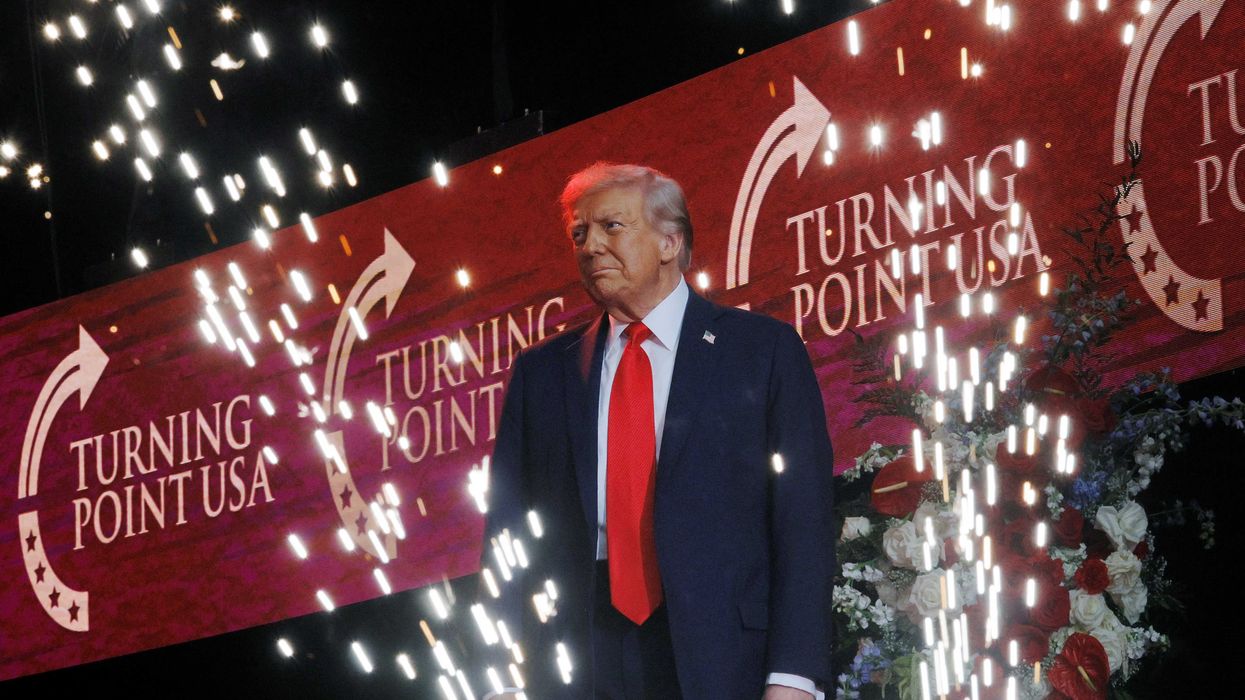
U.S. President Donald Trump takes the stage to speak at a memorial service for slain conservative commentator Charlie Kirk at State Farm Stadium in Glendale, Arizona, U.S., September 21, 2025. REUTERS/Brian Snyder
September 27, 2025
ALTERNET
The memorial services for Charlie Kirk last week and for Senator Paul Wellstone in 2002 illustrate how much our political culture has changed over the past two decades.
Both men were charismatic figures on opposite ends of the political spectrum. Wellstone died in a plane crash. Kirk was murdered on a college campus. Wellstone was an elected official. Kirk was a political agitator. They both lived interesting lives. But what’s fascinating is how their respective supporters, their opponents, and the media reacted to their deaths and, in particular, to the memorial services organized to eulogize them.
Wellstone, a former community organizer and political science professor at Carleton College, was elected to the U.S. Senate in 1990, defeating a Republican opponent with a grassroots campaign that included clever TV ads emphasizing his low-budget operation and his high-energy activism. He won reelection six years later. At the time, he was the Senate’s most progressive member (Bernie Sanders was not yet in the Senate) and was known as the “conscience of the Senate.”
On October 25, 2002, Wellstone (along with seven others, including his wife) died in a small plane crash, one week before the election in which he was running for a third term. Minnesota law required that Wellstone’s name be stricken from the ballot and replaced by the Democratic Farmer Labor Party. One day after the crash, the DFL selected former Vice President Walter Mondale as its Senate candidate.
On October 29, Wellstone’s family and friends organized a public memorial event at the Williams Arena in Minneapolis (the University of Minnesota’s basketball arena), which was broadcast live on national TV. High-profile Democrats (including former president Bill Clinton) and Republicans (including Senator Trent Lott) as well as Minnesota Gov. Jesse Ventura (an independent) attended the service, but only Wellstone’s family and close friends spoke at the event.
Their remarks were not vetted or scripted. One of the speakers was Wellstone’s close friend and former campaign treasurer, Rick Kahn. He began his speech as a conventional eulogy, but it shifted into a call to action, suggesting that the best way to honor Wellstone’s memory was to keep organizing: “We’re gonna organize, we’re gonna organize, we’re gonna organize, we’re gonna organize, we’re gonna organize, we’re gonna organize!...[T]ogether, we can and will continue to fight every one of his fights; and together we can and will achieve great victories in Paul Wellstone’s name.’’ Kahn then rallied the crowd by urging them to “keep Paul Wellstone’s legacy alive” by helping Mondale win the Senate election.
Republicans immediately attacked the Democrats for turning the memorial service into a political rally. They demanded “equal time” on TV to counter the event’s messages. Former Republican Minnesota congressman Vin Weber said, ‘‘The DFL clearly intends to exploit Wellstone’s memory totally, completely and shamelessly for political gain. To them, Wellstone’s death, apparently, was just another campaign event.
The Republicans were particularly rankled that two weeks earlier, Wellstone was among the 21 Senate Democrats (out of 50) to vote against the authorization for the use of US military force in Iraq, a key component of President George W. Bush’s rally-round-the-flag response to the 9/11 bombing. They also knew that if the GOP candidate (former St. Paul Mayor Norm Coleman) defeated Mondale, it would flip the Senate, so they orchestrated a full-scale attack on the Democrats for politicizing the Wellstone memorial event.
The media echoed the Republicans’ (as well as Ventura’s) attack on the Democrats for “politicizing” the memorial event. The orchestrated backlash worked. A poll conducted by the Minneapolis Star-Tribune a few hours before the memorial service found that Mondale was leading Coleman by eight points. But on election day, Coleman won by 2.2%. His victory ended the Democrats’ one-seat majority in the Senate. On election day, Republican Tim Pawlenty won a three-way race for Minnesota governor, while the GOP flipped one House seat and made gains in the state legislature.
Some journalists and professors began describing what occurred as the “Wellstone effect.” For example, after Senator Ted Kennedy, the key proponent of universal health insurance, died in 2009, Rush Limbaugh warned that Democrats would turn his memorial service into a “Wellstone memorial on steroids.” NBC News observed that ‘‘Anyone addressing the health care bill at the [Kennedy] service will tread a fine line between taste and politics...The dangers of politicizing a memorial event were illustrated by a 2002 memorial for Sen. Paul Wellstone.”
The memorial service for Charlie Kirk (at a football stadium in Glendale, Arizona) was obviously a political rally by MAGA Republicans to turn Kirk into a martyr for their cause, to keep his legacy and his right-wing organization Turning Point USA alive, and to exact vengeance and whip up anger against Democrats, liberals, “the left,” the media, and all those Trump views as his opponents. Kirk held no office, but he was close to Trump and Vice President JD Vance. His final speaking tour (which included the Utah event where he was killed) was clearly intended not only to build the MAGA movement but also to help Republicans win the 2026 midterm House elections that Trump is worried they could lose.
Trump used his 40-minute speech to highlight campaign talking points like tariffs, crime in Chicago, and fear-mongering about the unproven consequences of Tylenol as well as to call for revenge against his opponents.
“Charlie Kirk truly was ... he was a missionary with a noble spirit and a great, great purpose,” the president said. “He did not hate his opponents. He wanted the best for them. That’s where I disagreed with Charlie. I hate my opponent and I don’t want the best for them.”
Several speakers praised Kirk’s mission to carry out a conservative Christian vision of the United States. “We always did need less government,” said Defense Secretary Pete Hegseth. “But what Charlie understood and infused into his movement is that we also needed a lot more God.”
Tucker Carlson even compared Kirk’s murder to the crucifixion of Jesus Christ.
The most vitriolic remarks came from Stephen Miller, Trump’s key consigliere, who the previous week vowed to avenge Kirk’s death by “go[ing] after the left-leaning organizations” that, he claimed, “are promoting violence in this country.”
At Kirk’s memorial service, Miller -- a foaming-at-the-mouth fanatic -- declared: “Erika [Kirk’s widow] is the storm. We are the storm. And our enemies cannot comprehend our strength, our determination, our resolve, our passion.”
“Our lineage and our legacy hails back to Athens, to Rome, to Philadelphia, to Monticello,” Miller continued. “Our ancestors built the cities. They produced the art and architecture. They built the industry,” he said, pulling “us out of the caves and the darkness into the light.”
“We built the world that we inhabit now, generation by generation, and we will defend this world,” he added.
Addressing “the forces of wickedness and evil,” Miller thundered. “You have nothing. You are nothing. You are wickedness, you are jealousy, you are envy, you are hatred. You are nothing. You can build nothing. You can produce nothing. You can create nothing. We are the ones who build. We are the ones who create. We are the ones who lift up humanity.”
“You have no idea the dragon you have awakened,” he warned, as the MAGA movement will strive to “save this civilization, to save the west, to save this republic, because our children are strong, and our grandchildren will be strong, and our children’s children’s children will be strong. And what will you leave behind? Nothing, nothing.”
Even if one believes that Paul Wellstone’s friends and family, acting out of grief, erred in politicizing the 2002 memorial service, nothing said at that event reflected the kind of hate-mongering, venom-spewing, and demonizing of opponents that we saw at the Kirk memorial, which was like a combination of a religious revival meeting and a KKK rally. Our culture has come to accept as normal the kind of hysterical rants and raves espoused by Kirk’s friends and colleagues, including Trump, Vance, and Miller.
Moreover, after the Republicans and much of the media ganged up to condemn the Wellstone memorial, the Democrats paid dearly. In contrast, Republicans appear to be paying no price for turning the Kirk event into a right-wing, Christian nationalist, white supremacist MAGA political rally.
Unlike the Republicans’ backlash against the Wellstone memorial service, which they claimed was illegitimate and even illegal, today’s Democratic leaders, liberals, and the mainstream media seem intimidated from telling the truth about the memorial service that echoed and honored Kirk’s outrageous views, which, polls show, are strongly opposed by most Americans. The failure of current Democratic leaders and the media to challenge this apocalyptic, white supremacist, Christian nationalist fever is part of the problem.

Why Trump’s MAGA evangelicals are much worse than past 'Christian conservatives'
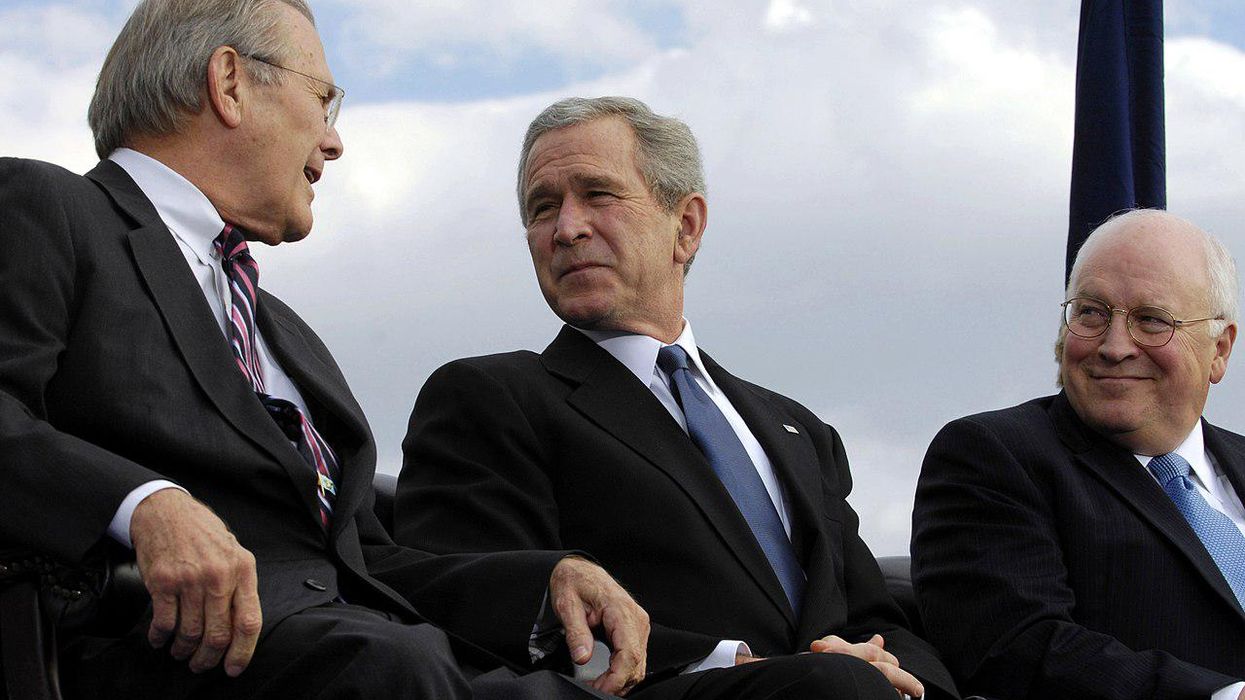
President George W. Bush, Vice President Dick Cheney and Secretary of Defense Donald Rumsfeld in 2016, Wikimedia Commons
Liberal Georgia-based journalist Zaid Jilani, who was raised Muslim, has a long history of criticizing the Religious Right. Jilani, back in the 1990s and 2000s, often argued that while there's nothing wrong with faith and religion, "theocracy" has no place in a constitutional democratic republic like the United States.
But in an op-ed published by the New York Times on September 26, Jilani lays out some reasons why he finds 2025's MAGA Christian nationalists much more troubling than the fundamentalist evangelicals he criticized in the past.
"As the George W. Bush years rolled on," Jilani recalls, "I joined my fellow liberal activists in watching documentaries like 'Jesus Camp,' which warned of an impending Christian theocracy. I argued vigorously for separation of church and state, and I waited on pins and needles for the end of a movement I viewed as stifling freedom of religion and freedom of expression. But I'm starting to miss the Christian conservatives I grew up with. Unlike the Christian Right of my childhood, today's variations — some of which see President Trump as a religious figure — seem incapable of being compassionate toward outgroups like mine."
Jilani recalls that after al-Qaeda's 9/11 terrorist attacks, then-President George W. Bush was careful to make a distinction between jihadist and non-jihadist Muslims. Bush described Islam as a "great religion," making it clear that he didn't blame all Muslims for 9/11.
"I think back to the days right after September 11, when Mr. Bush — the politician most closely associated with the 21st-Century Christian Right — visited a mosque in Washington, D.C., to emphasize that Muslims were just as American as anyone else," Jilani explains. "It's easy to laugh this off, given what happened afterward — he set off a bungling war on terrorism that included an unnecessary war in Iraq that led to the deaths of hundreds of thousands of people. Yet Mr. Bush set the tone for the millions of devout Christians who voted for him."
MAGA's "Christian nationalism," Jilani laments, "can be distinguished more by cruelty than kindness."
"These new Christian conservatives are represented by people like Matt Walsh, a popular right-wing Catholic commentator," the Georgia-based journalist warns. "Conservatives spent years working across the aisle on criminal justice reform. Mr. Walsh has floated the return of whipping and amputations as punishments and said that by resisting Mr. Trump's militarization of law enforcement in Chicago, Mayor Brandon Johnson had committed treason and should be 'given the requisite punishment for a capital offense'…. There is no issue where the current crop of Christian Right politicians departs more from the old than immigration."
Zilani, who is Pakistani-American, adds, "Christians like Mr. Bush condemned nativism. These new activists embrace it."
President George W. Bush, Vice President Dick Cheney and Secretary of Defense Donald Rumsfeld in 2016, Wikimedia Commons
September 26, 2025
ALTERNET
Liberal Georgia-based journalist Zaid Jilani, who was raised Muslim, has a long history of criticizing the Religious Right. Jilani, back in the 1990s and 2000s, often argued that while there's nothing wrong with faith and religion, "theocracy" has no place in a constitutional democratic republic like the United States.
But in an op-ed published by the New York Times on September 26, Jilani lays out some reasons why he finds 2025's MAGA Christian nationalists much more troubling than the fundamentalist evangelicals he criticized in the past.
"As the George W. Bush years rolled on," Jilani recalls, "I joined my fellow liberal activists in watching documentaries like 'Jesus Camp,' which warned of an impending Christian theocracy. I argued vigorously for separation of church and state, and I waited on pins and needles for the end of a movement I viewed as stifling freedom of religion and freedom of expression. But I'm starting to miss the Christian conservatives I grew up with. Unlike the Christian Right of my childhood, today's variations — some of which see President Trump as a religious figure — seem incapable of being compassionate toward outgroups like mine."
Jilani recalls that after al-Qaeda's 9/11 terrorist attacks, then-President George W. Bush was careful to make a distinction between jihadist and non-jihadist Muslims. Bush described Islam as a "great religion," making it clear that he didn't blame all Muslims for 9/11.
"I think back to the days right after September 11, when Mr. Bush — the politician most closely associated with the 21st-Century Christian Right — visited a mosque in Washington, D.C., to emphasize that Muslims were just as American as anyone else," Jilani explains. "It's easy to laugh this off, given what happened afterward — he set off a bungling war on terrorism that included an unnecessary war in Iraq that led to the deaths of hundreds of thousands of people. Yet Mr. Bush set the tone for the millions of devout Christians who voted for him."
MAGA's "Christian nationalism," Jilani laments, "can be distinguished more by cruelty than kindness."
"These new Christian conservatives are represented by people like Matt Walsh, a popular right-wing Catholic commentator," the Georgia-based journalist warns. "Conservatives spent years working across the aisle on criminal justice reform. Mr. Walsh has floated the return of whipping and amputations as punishments and said that by resisting Mr. Trump's militarization of law enforcement in Chicago, Mayor Brandon Johnson had committed treason and should be 'given the requisite punishment for a capital offense'…. There is no issue where the current crop of Christian Right politicians departs more from the old than immigration."
Zilani, who is Pakistani-American, adds, "Christians like Mr. Bush condemned nativism. These new activists embrace it."
Trump's 'vengeance': Conservative explains why white evangelicals may be drawn to MAGA
French told Scarborough, a former GOP congressman, "You have, on the one hand, a church that will rise and rightly applaud the incredible words of Erika Kirk and then turn around and happily go to the polls not in spite of Trump's vengeance, but because of Trump's sense of vengeance….. If you've been paying attention to American religion and American politics over the last decade, it wouldn't surprise you to see that Erika Kirk speech and to hear the applause and then to hear the Donald Trump speech and hear the laughter and applause to that as well — and realize that, in many ways, that is what politics is doing to American Christianity."
French continued, "It is creating this face of vengeance. Because Americans know he has the power to work his vengeance because of the church. It is the church that put him into office — the evangelical church — more than any other American constituency. And so, what we watched unfold in front of us — when he spoke like that, this wasn't in contradiction of what so many Christians wanted out of their president here. It is exactly why so many Christians voted for this president…. That is the frustrating complexity of what is happening in this moment."
Scarborough, who was raised Baptist in the South, argued that the vengeance theme of Trump's speech was a major contrast to what former House Speaker Nancy Pelosi (D-California) — a vehement critic of Trump — said about the U.S. president.
Scarborough told French, "This takes me back to practicing Catholic Nancy Pelosi saying that she prayed for Donald Trump every day. As Jesus commanded us in Matthew 5, you love your enemies. You pray for those who persecute you."
ARE THOSE THE 'DEVILS HORNS' ?!
THOSE ARE THE DEVILS HORNS SHE IS GIVING
( IN MEMORY OF OZZIE OSBORNE)
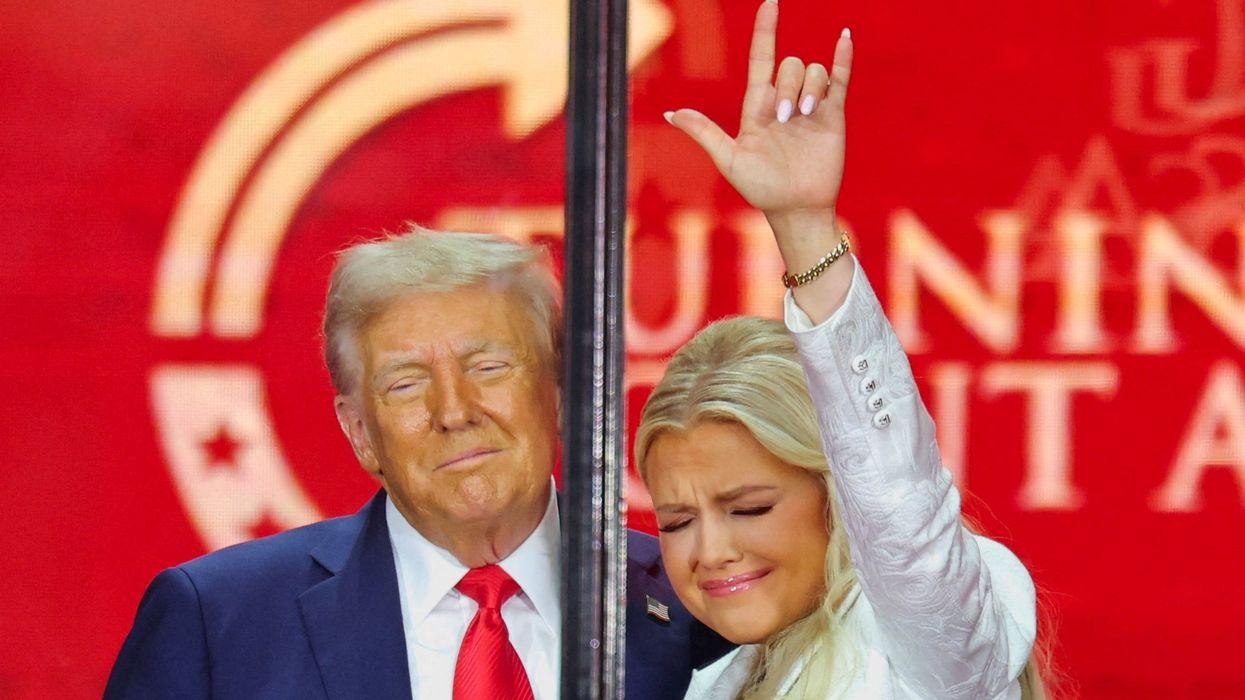
Erika Kirk, Charlie Kirk's widow, gestures next to U.S. President Donald Trump during a memorial service for slain conservative commentator Charlie Kirk at State Farm Stadium, in Glendale, Arizona, U.S., September 21, 2025. REUTERS/Daniel Cole
Erika Kirk, Charlie Kirk's widow, gestures next to U.S. President Donald Trump during a memorial service for slain conservative commentator Charlie Kirk at State Farm Stadium, in Glendale, Arizona, U.S., September 21, 2025. REUTERS/Daniel Cole
September 22, 2025
ALTERNET
During a Sunday, September 21 memorial for Turning Point USA's Charlie Kirk in Glendale, Arizona, a speech from his widow, Erika Kirk, was followed by a speech from President Donald Trump — who told attendees that unlike her, "I hate my opponents."
The following day on MSNBC's "Morning Joe," host Joe Scarborough discussed Trump's call for revenge with one of his guests: New York Times columnist and fellow Never Trump conservative David French, who warned that the obsession with revenge is one of the things white evangelical Christians like about Trump.
During a Sunday, September 21 memorial for Turning Point USA's Charlie Kirk in Glendale, Arizona, a speech from his widow, Erika Kirk, was followed by a speech from President Donald Trump — who told attendees that unlike her, "I hate my opponents."
The following day on MSNBC's "Morning Joe," host Joe Scarborough discussed Trump's call for revenge with one of his guests: New York Times columnist and fellow Never Trump conservative David French, who warned that the obsession with revenge is one of the things white evangelical Christians like about Trump.
French told Scarborough, a former GOP congressman, "You have, on the one hand, a church that will rise and rightly applaud the incredible words of Erika Kirk and then turn around and happily go to the polls not in spite of Trump's vengeance, but because of Trump's sense of vengeance….. If you've been paying attention to American religion and American politics over the last decade, it wouldn't surprise you to see that Erika Kirk speech and to hear the applause and then to hear the Donald Trump speech and hear the laughter and applause to that as well — and realize that, in many ways, that is what politics is doing to American Christianity."
French continued, "It is creating this face of vengeance. Because Americans know he has the power to work his vengeance because of the church. It is the church that put him into office — the evangelical church — more than any other American constituency. And so, what we watched unfold in front of us — when he spoke like that, this wasn't in contradiction of what so many Christians wanted out of their president here. It is exactly why so many Christians voted for this president…. That is the frustrating complexity of what is happening in this moment."
Scarborough, who was raised Baptist in the South, argued that the vengeance theme of Trump's speech was a major contrast to what former House Speaker Nancy Pelosi (D-California) — a vehement critic of Trump — said about the U.S. president.
Scarborough told French, "This takes me back to practicing Catholic Nancy Pelosi saying that she prayed for Donald Trump every day. As Jesus commanded us in Matthew 5, you love your enemies. You pray for those who persecute you."
'Thousands of Charlie Kirks': 'Martyr for Christ' dominates GOP youth conference
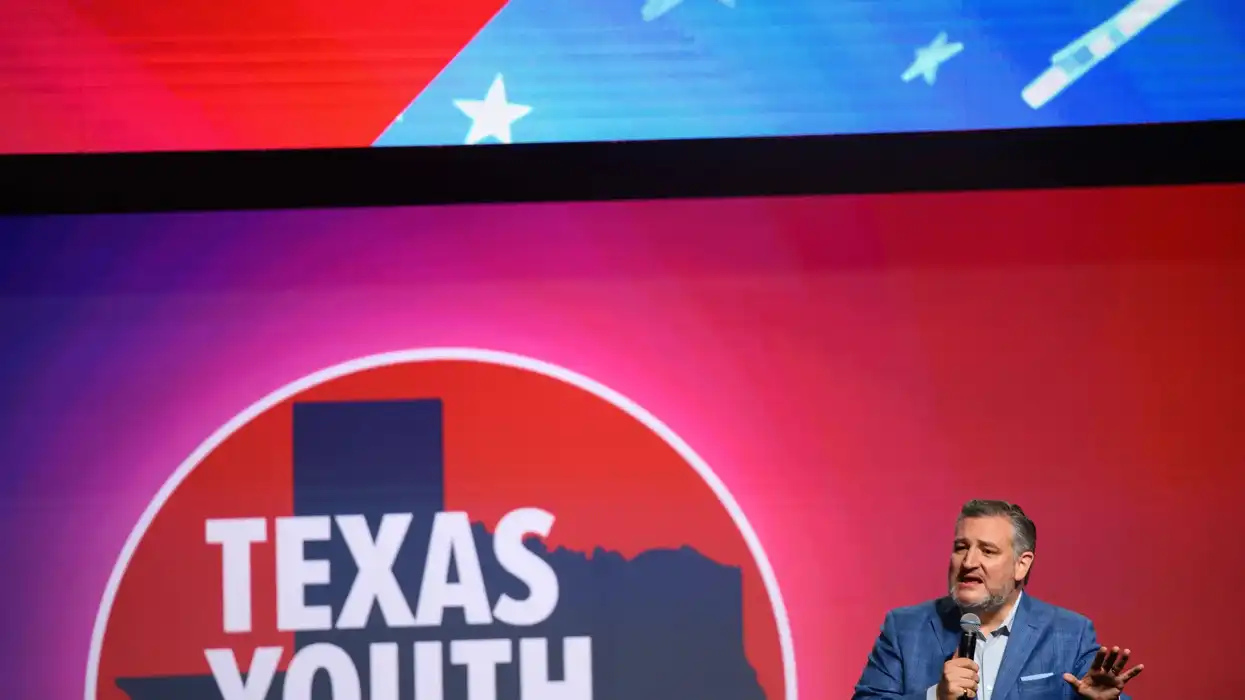
U.S. Sen. Ted Cruz, R-Texas, recounted at the Texas Youth Summit on Friday how he texted Charlie Kirk upon hearing about the shooting, asking if he was OK. Credit: Mark Felix for The Texas Tribune
U.S. Sen. Ted Cruz, R-Texas, recounted at the Texas Youth Summit on Friday how he texted Charlie Kirk upon hearing about the shooting, asking if he was OK. Credit: Mark Felix for The Texas Tribune
September 20, 2025
THE WOODLANDS — Thousands gathered Friday night to kick off a conference of young Republicans in which Charlie Kirk, the conservative activist killed last week, was memorialized as a “martyr” whose death is galvanizing youths across the nation.
Speaker after speaker, from state lawmakers to influential MAGA cultural tastemakers, shared stories at the Texas Youth Summit about how Kirk — who began rallying young conservatives as a teenager — made them and others feel like their Christian-guided views mattered and their perspectives were shared by many.
They called him a “hero,” “miracle,” and “martyr for Christ." Amid the mourning, they said that the fight Kirk had embarked on was far from over but one that could be won by the young people in attendance.
And it appeared, according to some of the speakers, that more people were learning Kirk’s name and his vision for a faith-led American future every day since his death.
The speeches caused roars of applause from the mostly young audience, some wearing white t-shirts that said “We are Charlie,” which glowed in front of bright red and blue stage lights.
“Be like Charlie,” Republican U.S. Sen. Ted Cruz, the final speaker of the night, told the crowd, which had thinned by the time he took the stage past 10 p.m. but was still several hundred strong. The state’s junior senator recounted how he texted Kirk upon hearing about the shooting, asking if he was OK.
“I’m praying for you right now,” Cruz said he texted, adding: “Obviously, I never got an answer.”
Kirk was killed Sept. 10 while speaking at a Utah university, the first stop of his group’s “The American Comeback” tour. He often debated students who disagreed with him on his tours while firing up young conservatives.
“There's a lot of value in a bunch of young conservatives coming together and (feeling) like they're not alone. Charlie created that environment — single handedly,” U.S. Rep. Dan Crenshaw, R-Houston said in a video that was played. “No one else did that kind of thing.”
The memorial was just the latest instance of Texans gathering to share their sorrow over Kirk’s death. Vigils at college campuses, town squares and churches have drawn thousands, with speakers and attendees saying Kirk changed how they viewed politics, debating and their own beliefs. Others vehemently opposed what Kirk stood for but attended the homages to condemn his killing as an unacceptable act of political violence.
“We weren’t alive for JFK or MLK, and this is the first big assassination,” said Harley Reed, one of more than 1,000 who gathered last week at Texas A&M for one such candlelight vigil. “This is the first big movement, if you will, that we’ve seen interrupted in a way.”
Also grieving publicly are the state’s leaders, including some Republicans who are set to speak at the conference on Saturday. Some have also urged a close examination of reactions to Kirk’s death from educators and students; Gov. Greg Abbott, for one, has called for the expulsion of students who publicly celebrated Kirk’s death, prompting blowback from critics who say such calls run afoul of the First Amendment’s free speech protections.
Such scrutiny has done little to slow the momentum that’s erupted among conservative youth who just became old enough to vote or will reach the threshold in time for next year’s midterms.
Turning Point USA, the group Kirk launched as an 18-year-old to organize other young conservatives, said it received an explosion of more than 50,000 requests to establish new chapters at colleges and high schools in the days after its founder’s death.
In Texas, where the GOP has dominated state government for longer than current college-age students have been alive, organizers of this weekend’s youth summit said they anticipated record-breaking attendance after getting an influx of interest leading up to the event.
“Charlie Kirk cannot be replaced,” Christian Collins, the summit’s founder and leader, said Friday night. “But what I will say is, what will happen in this community, and in this country, is thousands of Charlie Kirks will rise up.”
The event was another example of how Kirk’s death has invigorated a growing movement of young conservatives nationwide, and added fuel to efforts from Texas’ GOP leaders to turn the red state an even deeper shade of red.
State GOP leaders and lawmakers have pointed to that outburst of interest and solidarity as evidence of a Christian awakening among the state’s youth that they say will only grow stronger and usher in a new culture in America.
While the state’s leading young Republican organizations were once lukewarm on Trump, the voter bloc they represent proved crucial to Trump’s victory last year throughout the country.
The president has reportedly said that was thanks, in large part, to Kirk’s work.
This article originally appeared in The Texas Tribune at https://www.texastribune.org/2025/09/20/texas-youth-summit-republican-charlie-kirk-memorial/.
Speaker after speaker, from state lawmakers to influential MAGA cultural tastemakers, shared stories at the Texas Youth Summit about how Kirk — who began rallying young conservatives as a teenager — made them and others feel like their Christian-guided views mattered and their perspectives were shared by many.
They called him a “hero,” “miracle,” and “martyr for Christ." Amid the mourning, they said that the fight Kirk had embarked on was far from over but one that could be won by the young people in attendance.
And it appeared, according to some of the speakers, that more people were learning Kirk’s name and his vision for a faith-led American future every day since his death.
The speeches caused roars of applause from the mostly young audience, some wearing white t-shirts that said “We are Charlie,” which glowed in front of bright red and blue stage lights.
“Be like Charlie,” Republican U.S. Sen. Ted Cruz, the final speaker of the night, told the crowd, which had thinned by the time he took the stage past 10 p.m. but was still several hundred strong. The state’s junior senator recounted how he texted Kirk upon hearing about the shooting, asking if he was OK.
“I’m praying for you right now,” Cruz said he texted, adding: “Obviously, I never got an answer.”
Kirk was killed Sept. 10 while speaking at a Utah university, the first stop of his group’s “The American Comeback” tour. He often debated students who disagreed with him on his tours while firing up young conservatives.
“There's a lot of value in a bunch of young conservatives coming together and (feeling) like they're not alone. Charlie created that environment — single handedly,” U.S. Rep. Dan Crenshaw, R-Houston said in a video that was played. “No one else did that kind of thing.”
The memorial was just the latest instance of Texans gathering to share their sorrow over Kirk’s death. Vigils at college campuses, town squares and churches have drawn thousands, with speakers and attendees saying Kirk changed how they viewed politics, debating and their own beliefs. Others vehemently opposed what Kirk stood for but attended the homages to condemn his killing as an unacceptable act of political violence.
“We weren’t alive for JFK or MLK, and this is the first big assassination,” said Harley Reed, one of more than 1,000 who gathered last week at Texas A&M for one such candlelight vigil. “This is the first big movement, if you will, that we’ve seen interrupted in a way.”
Also grieving publicly are the state’s leaders, including some Republicans who are set to speak at the conference on Saturday. Some have also urged a close examination of reactions to Kirk’s death from educators and students; Gov. Greg Abbott, for one, has called for the expulsion of students who publicly celebrated Kirk’s death, prompting blowback from critics who say such calls run afoul of the First Amendment’s free speech protections.
Such scrutiny has done little to slow the momentum that’s erupted among conservative youth who just became old enough to vote or will reach the threshold in time for next year’s midterms.
Turning Point USA, the group Kirk launched as an 18-year-old to organize other young conservatives, said it received an explosion of more than 50,000 requests to establish new chapters at colleges and high schools in the days after its founder’s death.
In Texas, where the GOP has dominated state government for longer than current college-age students have been alive, organizers of this weekend’s youth summit said they anticipated record-breaking attendance after getting an influx of interest leading up to the event.
“Charlie Kirk cannot be replaced,” Christian Collins, the summit’s founder and leader, said Friday night. “But what I will say is, what will happen in this community, and in this country, is thousands of Charlie Kirks will rise up.”
The event was another example of how Kirk’s death has invigorated a growing movement of young conservatives nationwide, and added fuel to efforts from Texas’ GOP leaders to turn the red state an even deeper shade of red.
State GOP leaders and lawmakers have pointed to that outburst of interest and solidarity as evidence of a Christian awakening among the state’s youth that they say will only grow stronger and usher in a new culture in America.
While the state’s leading young Republican organizations were once lukewarm on Trump, the voter bloc they represent proved crucial to Trump’s victory last year throughout the country.
The president has reportedly said that was thanks, in large part, to Kirk’s work.
This article originally appeared in The Texas Tribune at https://www.texastribune.org/2025/09/20/texas-youth-summit-republican-charlie-kirk-memorial/.
How a far-right influencer is using religion to plunder Charlie Kirk’s 'legacy'
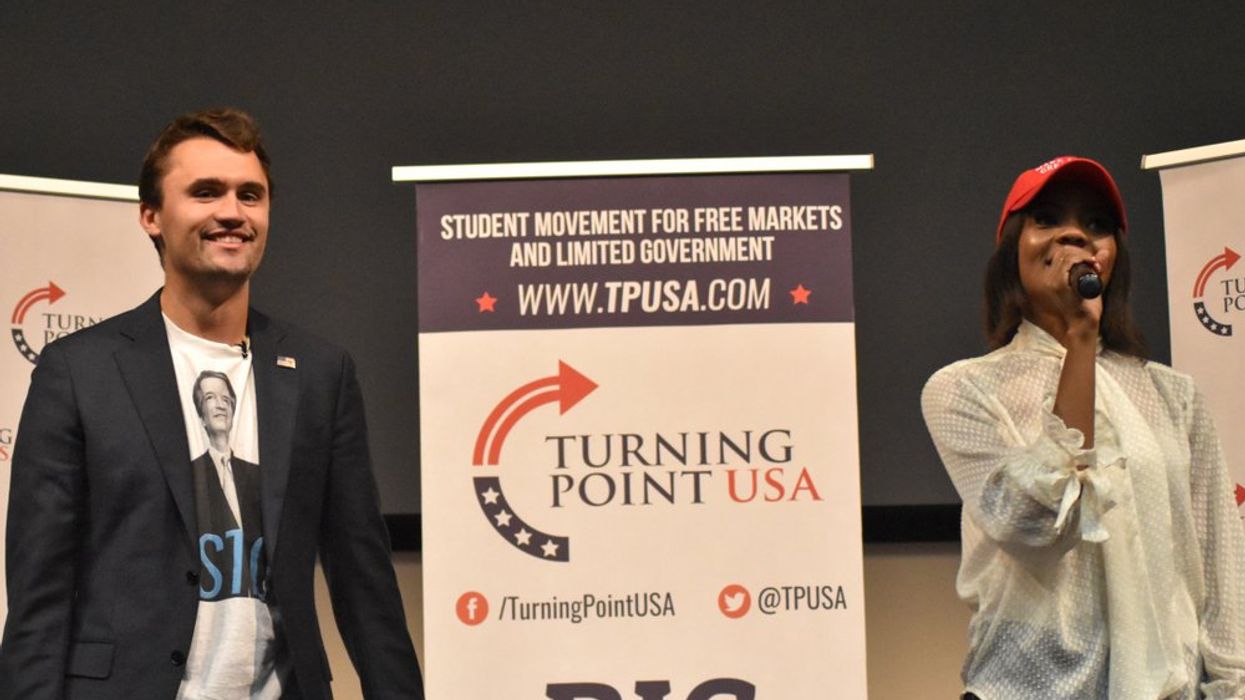
Turning Point USA founder Charlie Kirk and Candace Owens at Texas State University in San Marcos, Texas on October 24, 2018
September 19, 2025
ALTERNET
Many right-wing media figures, from Fox News' Jesse Watters to "War Room" host Steve Bannon, continue to blame liberals and progressives for the murder of MAGA activist and Turning Point USA founder Charlie Kirk — even though Rep. Alexandria Ocasio-Cortez (D-New York), former Presidents Barack Obama and Joe Biden, California Gov. Gavin Newsom, and countless other Democrats vehemently condemned the murder in no uncertain times. But among themselves, right-wing media pundits are battling over the role that Kirk played in the MAGA movement.
In a video posted by the conservative website The Bulwark on September 18, two of their writers — Sam Stein and Will Sommer — examined the role religion plays in far-right MAGA influencer Candace Owens' efforts to exploit Kirk's "legacy."
Sommer told Stein, "She puts on a pretty good face about being this, like, aggrieved friend who's going to get to the bottom of this…. The fact is that Charlie Kirk's legacy is a very valuable thing — and in particular, the political capital that can be gained from it, and the money and the donors. And so, I think she is making a claim — and Tucker Carlson — to at least a slice of that legacy."
When Stein noted that "religion gets into this in a really profound way," Sommer elaborated on that point.
Sommer told Stein, "Religion here, I think, is something that is really volatile. And I think for some people in MAGA, what Candace Owens says about Charlie's religion is actually even more important than what she said about him and Israel. Because she says: So, Charlie was an evangelical Christian, and we've seen, in the aftermath of his murder, that there's this sense of, like, people saying, 'There's going to be a religious revival. The pews are going to be packed. Everyone's going to become Christian now.' But Candace says: Well, actually, Charlie…. was on the verge of converting to Catholicism."
Stein asked Sommer if there was "any evidence" of Kirk getting ready to become Catholic — to which he responded, "I believe his wife was originally Catholic, although she said, a year ago, she no longer was."




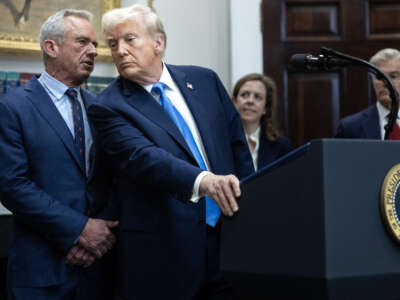
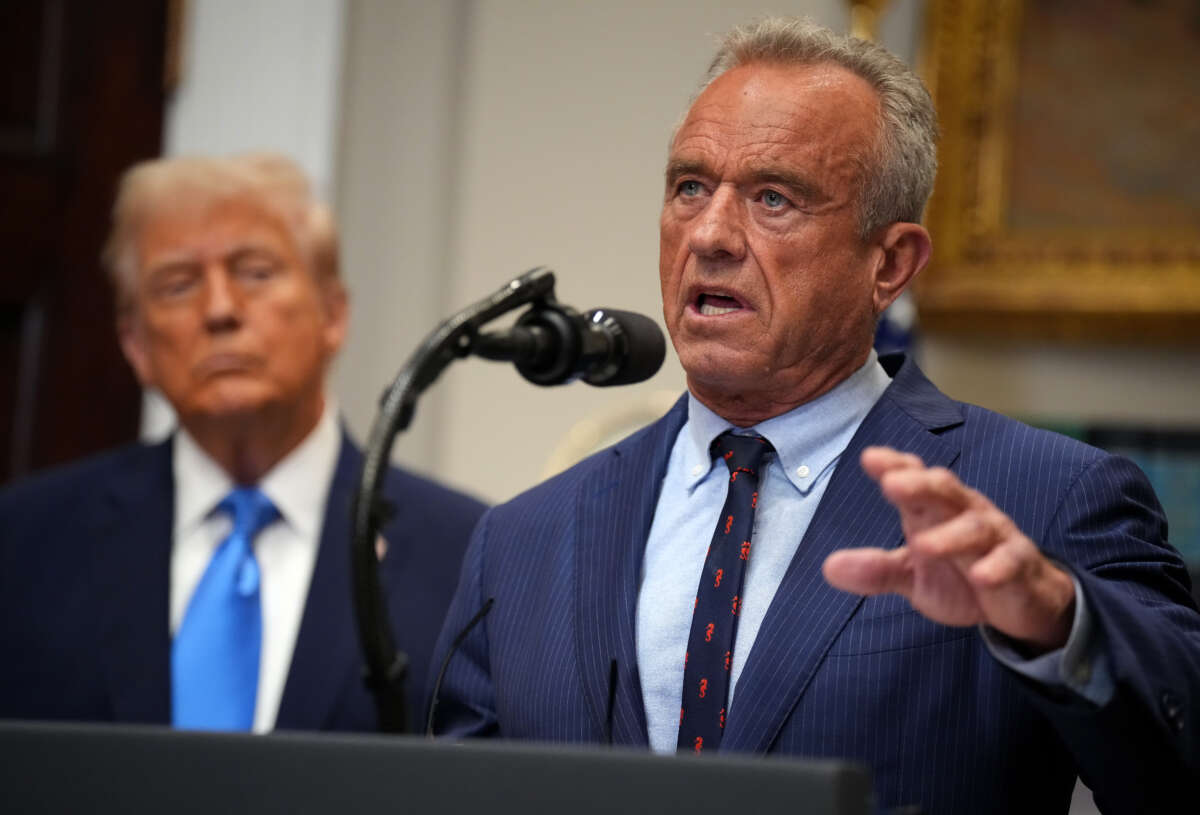 U.S. Health and Human Services Secretary Robert F. Kennedy Jr., joined by President Donald Trump, delivers an announcement in the Roosevelt Room of the White House on September 22, 2025 in Washington, D.C.Andrew Harnik / Getty Images