Monday, October 06, 2025

GREEN CAPITALI$M

Wall Street’s Hottest Clean-Energy Bet Hits a Ceiling


  • U.S. community solar installations fell 36% in H1 2025, reversing earlier boom-time expectations.

  • Trump’s OBBBA gutted clean energy tax incentives.

  • Wood Mackenzie projects community solar to shrink 12% annually through 2030, with only limited upside from favorable state policies.

A couple of years ago, a cross-section of Wall Street was highly bullish on the community solar sector, with some predicting that it was poised to become the most prevalent model of residential solar power distribution in the United States. First unveiled about two decades ago, community solar entails a small-scale solar model wherein customers purchase shares in a new solar farm in their service area, developers build the project then subscribers receive credits that cut their utility bills by ~10%. Community solar offers a viable solution to the roughly half of American households that are unable to install rooftop solar due to factors like roof shading, issues with property ownership or specific regulations. Further, these solar projects tend to offer friendlier contract terms for people with lower credit scores.

Unfortunately, the community solar boom could be over before it has even properly begun. A fresh report by global data, research, and consulting services provider, WoodMackenzie, has revealed that U.S. community solar installations dropped 36% year over year in the first half of the current year, with just 437 MW installed, thanks to Trump’s One Big Beautiful Bill Act. OBBBA gutted key tax incentives for clean energy projects, with the bill’s impact expected to get worse as the years roll on. WoodMac is now decidedly bearish on the sector, and expects community solar installations to contract 12% annually through 2030. Total U.S. community solar installations clocked in at 9.1 GW at the end of June 2025, and are projected to exceed 16 GW by 2030. Wood Mackenzie does not see much upside in the sector, and has predicted that installations could exceed the forecast figure by 1.3 GW on favorable state policy while further tax credit complications could lower the outlook by 1.2 GW.

The final bill offers a crucial four-year window for projects already under development to come online and secure the Investment Tax Credit (ITC), supporting near-term buildout,” Caitlin Connelly, senior analyst at Wood Mackenzie, told PV Magazine. “As of mid-2025, there are over 9 GW of community solar projects under development, with over 1.4 GW known to be under construction,” she added.

Related: OPEC+: Reuters Leaks on Oil Plans Again

Wood Mackenzie has attributed this year’s big decline to falling volumes in New York and in Maine, after the former program was recently overhauled. New York alone is expected to contribute nearly 30% of the U.S. decline in community solar installations in 2025. The analysts have noted that Massachusetts, Maryland and New Jersey are also facing similar problems as they transition between program iterations, adding that multiple states have generally struggled to pass new legislation.

Solar Stocks Shine

Nevertheless, solar stocks have been defying the bearish sentiment pervading the clean energy sector. Back in July, U.S. President Donald Trump signed into law ‘One Big Beautiful Bill Act’, rolling back many clean energy credits enacted by former President Joe Biden under the Inflation Reduction Act (IRA) of 2022. As widely expected, OBBBA is far from beautiful for various industries within the solar and wind energy sectors. However, the solar sector has continued to outperform, thanks in large part to robust U.S. and global solar demand as well as specific provisions within the OBBBA that favor solar manufacturing in the United States. The solar sector’s favorite benchmark, Invesco Solar ETF (NYSEARCA:TAN), has comfortably outpaced its oil and gas peers,  returning 40.5% in the year-to-date compared to 4.2% return by the oil and gas benchmark, the Energy Select Sector SPDR Fund (NYSEARCA:XLE), and 14.8% gain by the S&P 500

OBBBA favors solar manufacturing through provisions that incentivize domestic production and streamline the tax credit process, while also setting deadlines for construction and placement in service of solar projects. Specifically, it maintains and clarifies the tax credits for solar projects under Sections 48E and 45Y, while also phasing them out for wind and solar projects placed in service after December 31, 2027, unless construction began within 12 months of the Act's enactment.

First Solar (NASDAQ:FSLR) is one of the companies heavily favored by OBBBA, with the stock up 33.6% YTD. UBS recently reiterated its Buy rating and hiked its price target on FSLR to $275 from $255,  saying the company will receive a significant boost to the bottomline from OBBBA credits. According to UBS, the present value of 45X tax credits for the company is worth $75 per share, while the company is expected to grow net cash to $25 per share by the second quarter of 2026. UBS says its PT is conservative, pointing out that it did not factor in extra earnings when First Solar’s finishing factory comes online. First Solar's 3.5 GW per year manufacturing facility in Louisiana is expected to be commissioned in the second half of 2025. This facility is part of First Solar's broader strategy to scale its American manufacturing footprint to over 10 gigawatts (GW) by 2025, according to Made in Alabama. The Louisiana factory, along with a new facility in Alabama, is are key component of this expansion.

Israel-based SolarEdge (NASDAQ: SEDG) leads the sector with YTD returns of 172.4%. Regarding regulatory changes under OBBBA, SolarEdge CEO Shuki Nir says the company’s multi-year strategy of onshoring manufacturing to the U.S. will help it preserve 45X advanced manufacturing credits over the next 7 years.

Meanwhile, some residential solar companies are also defying bearish projections. California-based residential solar company Sunrun (NASDAQ:RUN) has surged 107.8% YTD thanks to the company’s robust cost efficiencies as well as a record 70% storage attachment rate in its latest quarter. Sunrun installed a record  392 MWh of storage capacity during the second quarter, good for a 48% Y/Y increase, while solar capacity installations clocked in at 227 MW, up 18% Y/Y. Meanwhile, subscriber additions grew 15%, bringing the company’s total subscribers to 941,701 as of June 30.

What’s Next for Energy Markets? 

A new conflict in the Middle East... a surprise OPEC+ decision... a massive shift in Chinese demand. Most investors only react to the headlines.

Oilprice Intelligence brings you the signals before they become front-page news. This is the same expert analysis read by veteran traders and political advisors. Get it free, twice a week, and you'll always know why the market is moving before everyone else.

You get the geopolitical intelligence, the hidden inventory data, and the market whispers that move billions—and we’ll send you $389 in premium energy intelligence, on us, just for subscribing. Join 400,000+ readers today. Get access immediately by clicking here. 

By Alex Kimani for Oilprice.com

Ecuador revokes environmental license for DPM to develop gold project

The project is located in the Azuay province of Ecuador, approximately 30 kilometres southwest of the city of Cuenca. Credit: DPM Metals

Ecuador’s government has revoked the environmental license granted to Canadian mining company DPM Metals for the development of Loma Larga, a gold project in an environmentally sensitive area, the government said on Saturday.

The decision follows strong opposition from residents and local authorities in Azuay province, where Loma Larga is located, who argue that its development would affect the Quimsacocha water reserve, posing significant health risks to local communities.

Ecuador’s Environment and Energy Ministry said in a statement the decision resulted from technical reports submitted by authorities in Cuenca and Azuay that are responsible for the area’s drinking water and irrigation systems.

“The national government reaffirms its commitment to the rights of nature, the defense of water sources, and, under the precautionary principle, the protection of the health and well-being of the people of Cuenca and Azuay,” it said.

Cuenca Mayor Cristian Zamora, one of the leading voices opposing the mine, spoke at a public event thanking the authorities for listening and revoking the license for the project that he said would seriously threaten levels of water available for local residents.

“It has been a decades-long struggle,” he said.

DPM, which acquired the project in 2021, did not immediately respond to a request for comment.

The Loma Larga project was expected to receive investments of $419 million for an average annual production of about 200,000 ounces of gold during its first five years of operation, according to DPM.

In August, the Ecuadorean government had already suspended activities related to the project until the company released an environmental management plan, despite having granted it a license a month earlier to begin construction.

Despite having significant gold and copper deposits, Ecuador has halted mining projects due to recent legal rulings and local opposition. Currently, only two mining companies operate in the country.

The Quimsacocha Reserve spans more than 3,200 hectares and encompasses the Andean “paramo” ecosystem, a type of highland moor. Its springs form one of the main water sources in the South American country.

(By Alexandra Valencia, Sarah Morland and Gabriel Araujo; Editing by Alistair Bell and Aurora Ellis)


Congo to permanently ban cobalt exporters that breach quotas, says President Tshisekedi

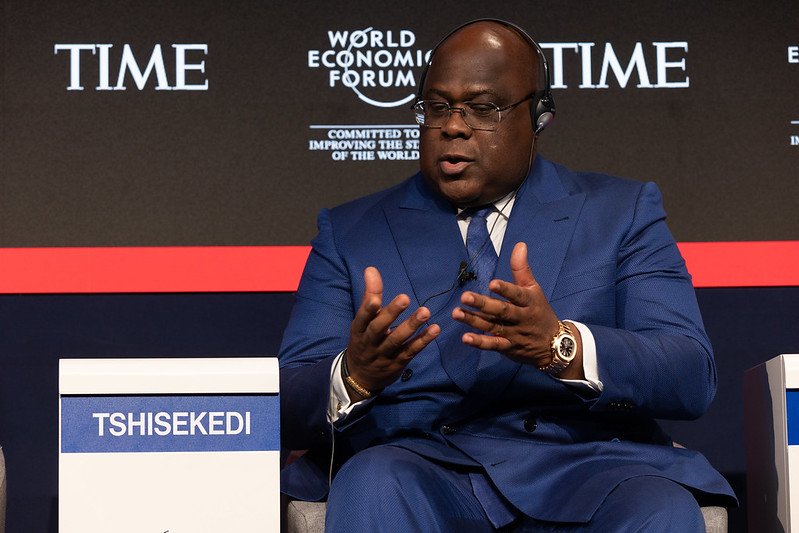
Congo President President Felix Tshisekedi. Credit: World Economic Forum under licence CC BY-SA 3.0

The Democratic Republic of Congo will permanently ban cobalt exporters that violate its new quota system, President Felix Tshisekedi has warned, as the world’s top producer tightens controls to curb fraud and stabilize prices.

Congo, which accounts for about 70% of global cobalt output, halted exports in February after prices of the critical electric battery metal hit a nine-year low.

A quota system based on historical exports will replace the ban on October 16, Congo’s state minerals regulator ARECOMS said in September. Miners will be allowed to ship up to 18,125 metric tons of cobalt for the rest of 2025, with annual caps of 96,600 tons in 2026 and 2027.

According to minutes from Friday’s cabinet meeting seen by Reuters at the weekend, Tshisekedi plans to apply “exemplary sanctions” including permanent exclusion from Congo’s new cobalt regime to any violators of the system.

Only ARECOMS is authorized to issue and revoke cobalt export quotas, including decisions on allocations, said the minutes.

The cobalt export ban which was extended in June triggered force majeure declarations from Glencore and China’s CMOC Group.

Glencore, the world’s second-largest cobalt producer, supports the quota system while CMOC, the top producer, opposes it.

Tshisekedi said at Friday’s meeting that the export freeze helped drive a 92% rebound in cobalt prices since March, calling the new system “a real lever to influence this strategic market” after years of “predatory strategies,” according to the minutes.

The crackdown comes amid escalating conflict in mineral-rich eastern Congo, where fighting between M23 rebels and the army has killed thousands and displaced hundreds of thousands.

A U.S.-backed peace effort faced a new setback on Friday when Congo and Rwanda failed to sign an accord known as a Regional Economic Integration Framework, part of a plan to make the two countries’ sectors more attractive to Western investors.

(Reporting by Ange Kasongo; Writing by Maxwell Akalaare Adombila; Editing by Robbie Corey-Boulet and Emelia Sithole-Matarise)

Barrick CEO change could trigger asset sales, takeover: analysts

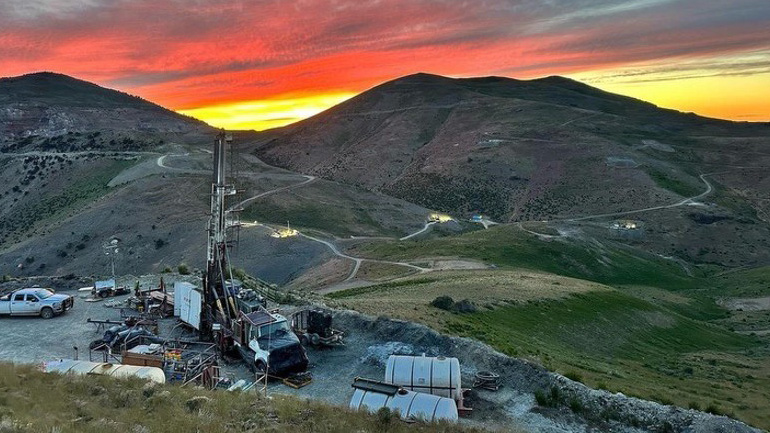
A view of the Fourmile project in Nevada. Photo credit: Barrick Mining.

Leadership changes at two of North America’s biggest miners open the door to asset sales and even a potential takeover of Barrick Mining (TSX: ABX; NYSE: B), analysts say.

On Monday before stock markets opened, Toronto-based Barrick announced the surprise resignation of president and CEO Mark Bristow, who stepped down without explanation after more than six years in charge. That same morning, larger US-based rival Newmont (NYSE: NEM) said CEO Tom Palmer would retire from his position Dec. 31 and make way for chief operating officer Natascha Viljoen. Mining analysts insist the moves are coincidental.

Bristow’s departure came less than two weeks after Barrick said its Fourmile project in Nevada has the potential to produce as much as 750,000 oz. of gold per year, which would position it as one of the most significant discoveries of the past 25 years. The disclosure, made Sept. 15, sent Barrick’s Toronto-traded shares up about 20% over the following six trading sessions.

“We see a potential shift in the company’s strategy” with Bristow’s exit, Jefferies Securities mining analyst Fahad Tariq said this week in a note. “Given the market’s recent positive reception to Barrick’s growing Fourmile deposit in Nevada, we see focus turning to that region. We would not be surprised if the company reduces exposure to geopolitically sensitive regions.”

Spokespeople for Barrick and Newmont didn’t immediately respond to e-mailed requests for comment for this story.

Barrick shares lag

Under Bristow’s leadership, Barrick’s share price has underperformed those of its global peers due to surging costs and repeated profit-target misses.

Through Thursday, Barrick’s Toronto-listed shares have increased about 2.6 times since January 2019, trailing the fourfold increase of the TSX Global Gold Index and the tripling of Newmont’s US-listed shares. Barrick fell 0.3% to C$47.24 apiece Friday afternoon in Toronto, cutting the company’s market value to about C$80 billion ($57 billion). Newmont, meanwhile, rose 0.5% to $86.90 in New York.

Bristow’s departure “was a decision of the board and may have been related to stock underperformance vs peers in recent years,” BMO Capital Markets analyst Matthew Murphy said in a note. “The market may also speculate about value-creation opportunities to offset any potential decline in multiples.”

Historic climb

The leadership changes took place during a week when gold reached yet another historic high, touching $3,895.09 per oz. on Wednesday. That boosted the yellow metal’s gain since the start of the year to about 45%.

Fueled by strong structural demand from central banks and easing from the US Federal Reserve, gold could hit $4,000 an oz. by mid-2026, Goldman Sachs forecast Tuesday. Central banks – especially those in emerging markets – have stepped up the pace of gold purchases about fivefold since 2022, and the New York-based investment bank expects them to keep accumulating bullion for three more years.

“We view this as a structural shift in reserve management behavior, and we do not expect a near-term reversal,” Goldman Sachs analyst Lina Thomas wrote.

Varied portfolio

Some investors have shunned Barrick stock due the company’s geopolitical-risk profile. This includes Barrick’s decision to operate mines in Mali and a planned multi-billion-dollar investment in the Reko Diq project in Pakistan, Tariq said.

Barrick’s asset portfolio now spans 18 countries and four continents. It includes 14 gold mines and three copper mines.

North America accounts for 46% of Barrick’s gold production, compared with 37% for African and Middle East operations and 16% for Latin America and Asia Pacific, company data show.

It’s a different story in copper, where Africa and Middle East operations make up 79% of total output, compared with 21% for Latin America and Asia Pacific.

Feats and fights

A South African national, Bristow joined Barrick in 2019 following the company’s merger with Jersey, UK-based Randgold Resources.

Key achievements on his watch include the integration of Randgold, $6.7 billion in shareholder returns and major cuts in debt.

He also leaves with the company mired in an increasingly bitter dispute with Mali over the Loulo-Gounkoto gold complex. Barrick suspended operations at the mine, its largest African asset, in January after Mali’s military government seized about three tonnes of gold over alleged unpaid taxes.

Having demanded a greater share of profits, Mali jailed four Barrick employees last November. It also issued an arrest warrant for Bristow the following month, blocked exports and placed Loulo-Gounkoto under state control. That led Barrick to book a $1 billion impairment charge in August and slash the carrying value of its 80% stake in the mine.

“As a standalone company or in a takeover, we expect that rationalization of Barrick’s portfolio would make sense, as we believe operational underperformance was a symptom of too many assets to manage,” CIBC Capital Markets analyst Anita Soni said this week.

Merger of giants?

News of the CEO change “will spark investor interest in Barrick, with Newmont potentially interested,” she added.

Colorado-based Newmont and Barrick know each other well. The companies are partners in Nevada Gold Mines, the world’s largest gold mining complex. 

Barrick owns 61.5% of the JV and is the operator, while Newmont holds the 38.5% balance. The complex contains nine underground mines, 12 open pit operations, two roaster facilities, two autoclave facilities, 1 flotation mill, two oxide mills, eight heap leach facilities, 14 ranches, two power plants and one warehouse.

While Barrick owns 100% of Fourmile, the project will eventually be rolled into the company’s Nevada Gold Mines joint venture with Newmont at fair market value if certain criteria are met.

Barrick has said it plans to advance Fourmile over the next few years. It expects to complete a feasibility study around 2029.

An updated preliminary economic assessment released last month outlined average output of about 600,000–750,000 oz. gold a year over more than 25 years on 1.5–1.8 million tonnes of mined material. Initial capital was pegged at about $1.5–1.7 billion, with a life-of-mine all-in sustaining cost of about $650–$750 per ounce, Barrick said.

Value driver

Fourmile’s future advancement “both increases the medium-term growth outlook for the company and presents a significant value driver given the high-grade nature of the deposit and proximity to existing infrastructure,” National Bank Financial analyst Shane Nagle said.

Nevada Gold Mines’ increased value “presents a more economical opportunity for Newmont to acquire Barrick ahead of more significant advancement,” Nagle added. Still, he said, “government/regulatory approvals are likely to impede any planned combination.”

None of this will be a matter for Bristow – though perhaps it will be for his immediate successor, Mark Hill, a 20-year company veteran who was named interim CEO. Hill previously oversaw the miner’s Latin American and Asia Pacific regions.

Barrick’s board is conducting a global search for a permanent successor to Bristow with the help of an external search firm. It hasn’t disclosed a timeline.


Barrick selling its stake in Tongon mine in deal worth up to US$305M


By The Canadian Press
October 06, 2025 

A logo for the Barrick Gold Corporation is seen in Toronto. 
(THE CANADIAN PRESS / Nathan Denette)

TORONTO — Barrick Mining Corp. has signed a deal to sell its stake in the Tongon gold mine as well as certain exploration properties in Ivory Coast to the Atlantic Group in an agreement worth up to US$305 million.

The miner, which holds an 89.7 per cent stake in Tongon, says proceeds from the sale will be used to strengthen its balance sheet and support returns to its shareholders.

Under the deal, Barrick will receive US$192 million in cash, including a $23 million shareholder loan repayment within six months of closing.

The agreement also includes contingent cash payments totalling up to US$113 million payable based on the price of gold over 2.5 years and resource conversions over five years.

Tongon was originally scheduled for closure in 2020, but the life of the mine as been extended through a successful exploration program.

The deal is expected to be completed later this year, subject to closing conditions, including approval by the Ivory Coast government.

This report by The Canadian Press was first published Oct. 6, 2025.


Australia’s VHM gets US interest of up to $200 million for rare earths project

The Goschen Project, located in Australia’s Victoria, is classified as a Tier 1 integrated rare earth and mineral sands project. (Image VHM)

Australia’s VHM said on Monday it has received a letter of interest from the U.S. Export-Import Bank (EXIM) for up to $200 million in funding to support development of its Goschen rare earths and mineral sands project.

Earlier in the day, shares of the rare earths miner rose 6.1% to A$0.26, their highest since September 25.

The letter of interest from EXIM, the official export credit agency of the U.S. government, proposes funding with a maximum repayment term of 12 years, as Western economies work to diversify the crucial rare earths supply chain away from top producer China.

U.S. government officials have discussed taking a stake in Critical Metals Corp, which would give Washington a direct interest in the largest rare earths project in Greenland, Reuters reported on Saturday, citing people familiar with the matter.

VHM said EXIM has identified the Goschen project as a candidate under its Supply Chain Resiliency Initiative (SCRI), which aims to support projects that strengthen secure and diversified supply chains for U.S. industries.

“VHM is well positioned to advance the Goschen Project and become a globally significant solution to the current critical minerals supply chain issues”, CEO Andrew King said.

The Goschen Project, located in Australia’s Victoria, is classified as a Tier 1 integrated rare earth and mineral sands project.

(Reporting by Nichiket Sunil in Bengaluru; Editing by Sumana Nandy and Rashmi Aich)


Trump administration mulls stake in Greenland rare earth miner

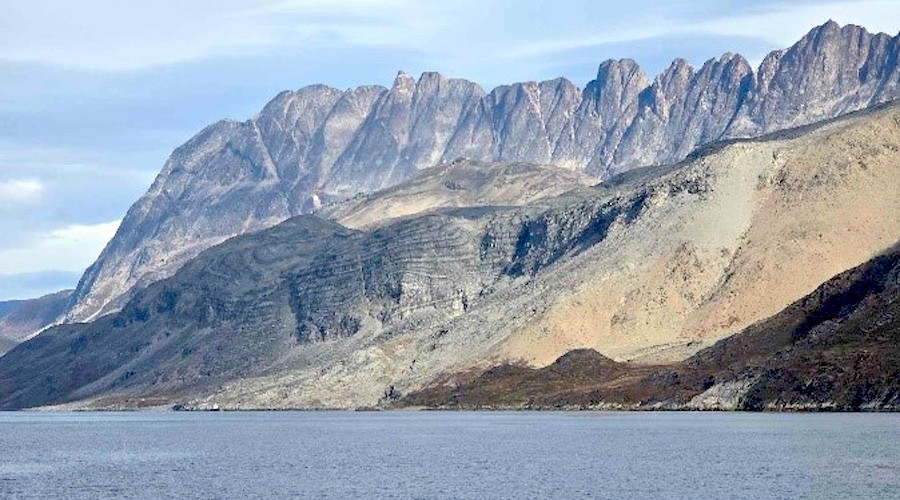
Tanbreez project orebody. (Image courtesy of Critical Metals.)

The US government is said to be interested in buying a stake in Critical Metals (NASDAQ: CRML), part of the Trump administration’s broader strategy to expand its control over the world’s supply of critical minerals, Reuters reported on Friday.

The deal, if finalized, would give Washington a direct interest in the Tanbreez project in southern Greenland, one of the largest rare earth deposits in the world. The Reuters report comes a day after Critical Metals more than doubled its interest in the project from 42% to 92.5%, effectively giving it near-control.

The reported government interest follows a series of high-profile transactions Washington made to acquire stakes in companies with projects or mines that could become key suppliers of critical minerals to the US market.

Last month, it bought a 5% stake in Lithium Americas (NYSE: LAC), whose flagship project in Nevada is slated to become the largest source of battery-grade lithium in the Western Hemisphere. Two months earlier, the US Department of Defence (now Department of War) purchased a $400 million or roughly 15% stake in MP Materials (NASDAQ: MP), the nation’s only rare earths producer.

In Critical Metals’ case, it is one of “hundreds of companies” with critical minerals projects that have approached the government for investment, a Trump official said when requested for commentary by Reuters.

One other source told Reuters that discussions have gone as long as six weeks involving the conversion of the company’s $50 million government grant, which it applied for in June, into stocks. This proposal, if accepted, would give Washington an approximate 8% stake in Critical Metals and its Tanbreeze rare earth project in southern Greenland.

Any equity investment, according to Reuters, would be separate from the $120 million loan being lined up by the US Export-Import Bank, also announced in June.

Reuters sources also said that the equity investment talks had been delayed due to the administration’s focus on the Lithium Americas deal.

Shares of the company exploded during after-hours trading on the Reuters report, rising as much as 80% over its 52-week high of $9.89. The stock closed Friday’s session at $7.98 with a market capitalization of $786.9 million.

Large rare earth project

Based on company estimates, the Tanbreez deposit has at least 45 million tonnes in total resources, hosted within a massive kakortokite unit that has largely been underexplored to date. About a third of that resource is categorized as “heavy” rare earths used widely in high-performance applications such as clean energy and defense, and are more sought after than the more common “light” rare earths.

According to Critical Metals, the Tanbreez rare earths were discovered in an orebody covering 8 km x 5 km, representing only 1% of the entire 4.7-billion-tonne host rock. Exploration is currently underway to further expand the resource in support of a bankable feasibility study.

Earlier this year, the New York-headquartered miner released a preliminary economic assessment for the Tanbreeze project based on the current resource, showing a net present value (NPV) of approximately $3 billion (approximately $2.8 billion to $3.6 billion at discount rates of 15% and 12.5%, respectively, before tax), with an internal rate of return (IRR) of 180%.

The report outlines a phased growth strategy for the Tanbreez project, with initial production of around 85,000 tonnes of rare earth oxides per annum, beginning as early as 2026, then scaled to 425,000 tonnes after modular expansion.

The company previously said that the Tanbreez project would cost $290 million to bring into commercial production, with initial work to be funded by the EXIM loan.

Greenland interest

Due to its vast endowment of resources and critical minerals, Greenland has been the subject of US economic interest dating back to the Biden administration. US officials visited Nuuk as recently as last November as part of ongoing efforts to get private investment in the island’s mineral sector.

According to Reuters, the Biden government successfully lobbied Tanbreez’s then-owner not to sell the project to a Chinese developer and instead sell it to Critical Metals for a cheaper price.

Current President Donald Trump also made no secret of his desire to “own” the Danish territory. Earlier this year, Vice President JD Vance made a quick trip to Greenland to make Trump’s pitch.

Despite growing interest, Greenland’s mining sector has seen little progress in recent years due to limited investor interest, bureaucratic challenges and environmental concerns. Currently, there are only two small mines in operation.

As for Critical Metals, the company would still have to build a processing facility, and its representatives said their goal is to process the material inside the US.