Sunday, October 19, 2025

The Biggest Threat to Mamdani’s Agenda Isn’t Hochul or Trump — It’s Wall Street


Wall Street destroyed NYC’s social welfare economy in 1975. Can mass movements stop it from defeating Mamdani’s agenda?
October 18, 2025


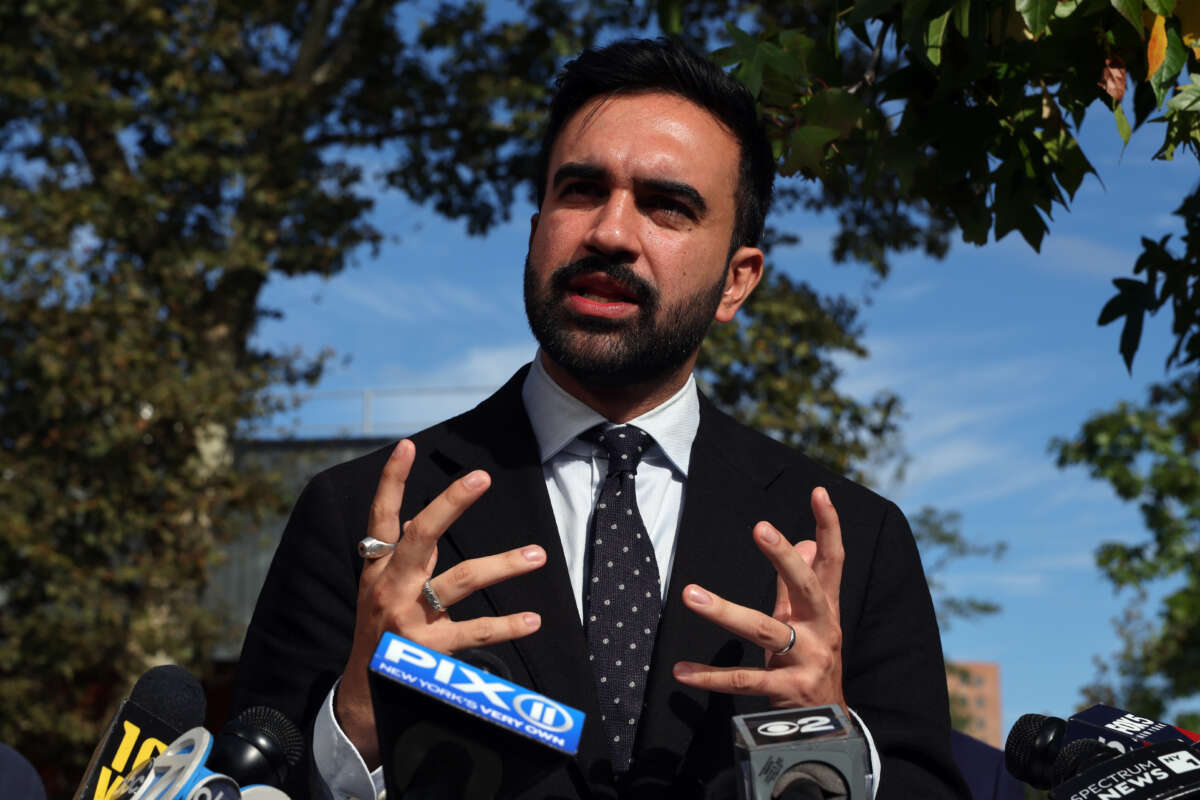
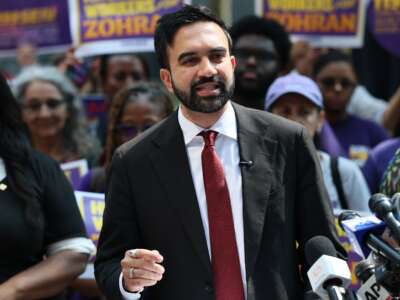
New York mayoral candidate Zohran Mamdani attends a news conference in the Bronx, on September 17, 2025, in New York City.Spencer Platt / Getty Images

If polls are to be believed, Zohran Mamdani is likely to win the mayoralty of New York City this November. An October 9 Quinnipiac University survey taken after Mayor Eric Adams dropped from the race shows Mamdani is up 13 points over his nearest competitor, disgraced former Gov. Andrew Cuomo.

Despite his youth and executive inexperience, Mamdani has all the advantages — a better ground game with tens of thousands of volunteers, a better social media campaign driven by young activists with an irreverent style, more favorable national and international media coverage, as much as four times more campaign cash on hand than Cuomo, a spate of high-profile endorsements (although not the leading officials of his own party), and other strengths.

Yet despite these electoral advantages, the deck is stacked against Mamdani’s administration. This is because the political coalition necessary to govern is quite different from that which can get him elected.

To be clear, Mamdani’s electoral game is strong. Framed around making New York affordable for everyone, Mamdani offers policies to address the cost-of-living crisis in the city. Chief among them is free universal child care that would allow residents to enroll their children in subsidized pre-K programs. This program, providing free schooling for children from 6 weeks to 5 years old, would also raise the wages of child care workers, who are notoriously underpaid.

Child care is just the beginning of the proposed reforms. Mamdani’s platform includes secure funding for libraries and the city’s municipal hospital system. It calls for a new “community safety” department to remove the burden of crisis intervention from the police. It promises free buses that run faster, a system of five city-owned grocery stores, to raise the minimum wage to $30 an hour in the next five years, to freeze the rent, and to enforce landlord regulations, among other necessary reforms.

Related Story
These Billionaires Have Already Spent $19 Million in a Bid to Defeat Mamdani
Michael Bloomberg and anti-DEI pundit Bill Ackman are just two of the many billionaires showering cash on Cuomo.  By Mike Ludwig , Truthout   August 29, 2025


If Mamdani wins in November it will demonstrate that progressive Democrats, running within the party, can win elections based on popular working class reforms — that is, if they aren’t thwarted by their own party leadership.

In the post-World War II period, this was a winning strategy. New York had a highly developed social welfare state, once considered the closest U.S. example of Scandinavian-style social democracy.

Between 1945 and 1975, New York had free public higher education and a free municipal hospital system, spent billions on public and cooperative housing, initiated rent control and job training programs, expanded welfare payments, and, famously, subsidized the transit fare, which stayed at just five cents for the first 40 years of the MTA’s existence.

This “social welfare” economy of NYC came crashing down with a punch delivered by Wall Street in the 1970s. The 1975 fiscal crisis was the result of a collapsing municipal bond market and a severe economic depression. The city lost a whopping 500,000 manufacturing jobs between 1969 and 1975 as North American manufacturers moved plants out of cities and eventually out of the country. Both the depression and the market collapse were the result of actions by the “masters of the universe,” the Wall Street investors whose funds flowed to overseas investments rather than supporting domestic industry and the cities where they were rooted.

New York was caught in this neoliberal slurry. With a declining economy, it couldn’t pay its bills. And with the municipal bond market in free fall, it couldn’t get access to credit to help it bridge the down years.

This is where Wall Street’s punch came in. The punch was a “capital strike” in which major banks refused to issue New York City bonds until the municipal government cut social programs to the satisfaction of financiers. Welfare programs, public schools, drug treatment centers, senior centers, and even police and fire stations all got the axe. The City University of New York (CUNY) imposed tuition for the first time in its 130-year history. Sydenham hospital in Harlem was shuttered. By some estimates, as many as 60,000 municipal workers lost their jobs.

With NYC municipal bonds locked out of the credit markets, Gov. Hugh Carey and Mayor Abraham Beame turned to the federal government for short-term aid. But a new Republican president, Gerald Ford, and his phalanx of neoliberal economists — most prominently Alan Greenspan (chair of the Council of Economic Advisors) and others like Treasury Secretary William Simon and the infamous Donald Rumsfeld (then chief of staff) — refused the city bridge loans. In fact, at a closed-door White House meeting where the Ford administration debated funding New York, Rumsfeld urged the president to tell the city, “Not just ‘no,’ but ‘hell no.’”

That attitude, to let the people of New York City dangle, or “drop dead” as suggested by a headline in the New York Daily News, was shared by the banks and the federal administration. So-called fiscal responsibility has been the bugaboo of social reform ever since.

In 2025, for Zohran Mamdani, these conditions remain largely unchanged — especially one: Wall Street’s stranglehold on city finances. With private financing necessary for public programs, the private sector has the ultimate veto over social policy. It can simply close the purse.

For his part, Mamdani has promised to pay for these programs through tax increases at the state and city level. His programs will add an estimated $7 billion to the city’s $116 billion annual budget. And he says he will pay for them through a series of progressive taxes that would increase income tax rates for those earning over $1 million a year and increase the state’s corporate tax rate to match that of New Jersey — 11.5 percent.

Indeed, this is how city finances were managed through the golden age of post-war growth, imposing a municipal income tax in the late 1960s, as well as maintaining a stock transfer tax and other progressive business taxes.

To get his taxes, Mamdani will have to go through Albany. The Democratic governor of New York, Kathy Hochul, has promised to block any tax increase meant to fund social programs. New York businesses and bourgeoisie are also threatening not a capital strike, but capital flight — to leave the city if Mamdani is able to increase taxes.

In short, the economic and political structures that brought an end to New York’s experiments in social democracy in the 1970s are still in place. First, the structure of the federal system makes changes at the local level very difficult. With necessary changes to improve city finances having to pass through Albany or Washington, it can be virtually impossible to develop and finance the social welfare structures that working people desperately need in the city. This is even more difficult with neoliberal and far right politicians, Hochul and Trump, holding state and federal positions.

But there is a deeper problem. When public programs are financed through the private sector, banks hold the ultimate veto power. This is what happened in the fiscal crisis of 1975, when Wall Street locked the city out of the credit market and forced New York to make cuts to the satisfaction of the banking sector. And this had happened before, in 1933, at the height of the Great Depression, when the “bankers’ agreement” closed credit markets on the city and forced austerity on municipal spending. This is the structural veto that Wall Street holds over our very democracy.

This is not to say that these obstacles are insurmountable, or that the hope of progressive reforms can never be achieved in the U.S., or at least in New York City. Indeed, Mamdani may be savvy enough, may have the popular support he needs, may benefit from an organized working population that can force through these reforms and the financing necessary to pay for them.

It is to say, however, that in a capitalist democracy, capital holds all the cards. Electing a single, lone, progressive politician is not enough to discipline the rich to pay for what all we need. That necessitates power. We would need mass movements that can threaten much bigger disruptions unless the rich capitulate. As we’ve seen with the Obama, Sanders, and other campaigns, translating an electoral coalition into a political force with popular power to govern is not always possible.

To do so would require amassing power outside of elected office, a power that can overcome the structural power of the banks and the investment class. Indeed, popular movements are always necessary to force elected officials, even ones as earnest as Zohran Mamdani, not to compromise on their promises. And there is indication that Mamdani may already be planning to do exactly that.

This kind of popular power is possible. After all, during the New Deal, the business class was chastened enough to allow the passage of major, humane, social reforms — to the benefit of working people. With the Trump administration’s assaults on the New Deal “administrative state,” that cycle seems to have run its course.

What comes next is anyone’s guess, and if Mamdani is elected, his victory would bode well for what progressives can achieve. But his plans will get nowhere without disruptive popular movements forcing these changes on the rich. At best, this will get us a sort of new, new deal — but with an old deck. This is good, but not enough. Perhaps, with movement organization and institutions of popular power, we can get to a place where it’s possible to imagine a new deck entirely, not just a new deal. And one day, we may be able to flip the table and drive the moneychangers from the people’s temple altogether.

This article is licensed under Creative Commons (CC BY-NC-ND 4.0), and you are free to share and republish under the terms of the license.

Michael Beyea Reagan is an assistant teaching professor at Rutgers University. He is the author of Intersectional Class Struggle: Theory and Practice, and a forthcoming cultural history of public finance. Find him on X/Twitter.
Mainstream Media Miss the Global Significance of Counterrevolution in Sudan

This is a war against civilians and against a truly pro-democracy revolution, says Professor Khalid Mustafa Medani.

By Daniel Falcone ,
October 17, 2025

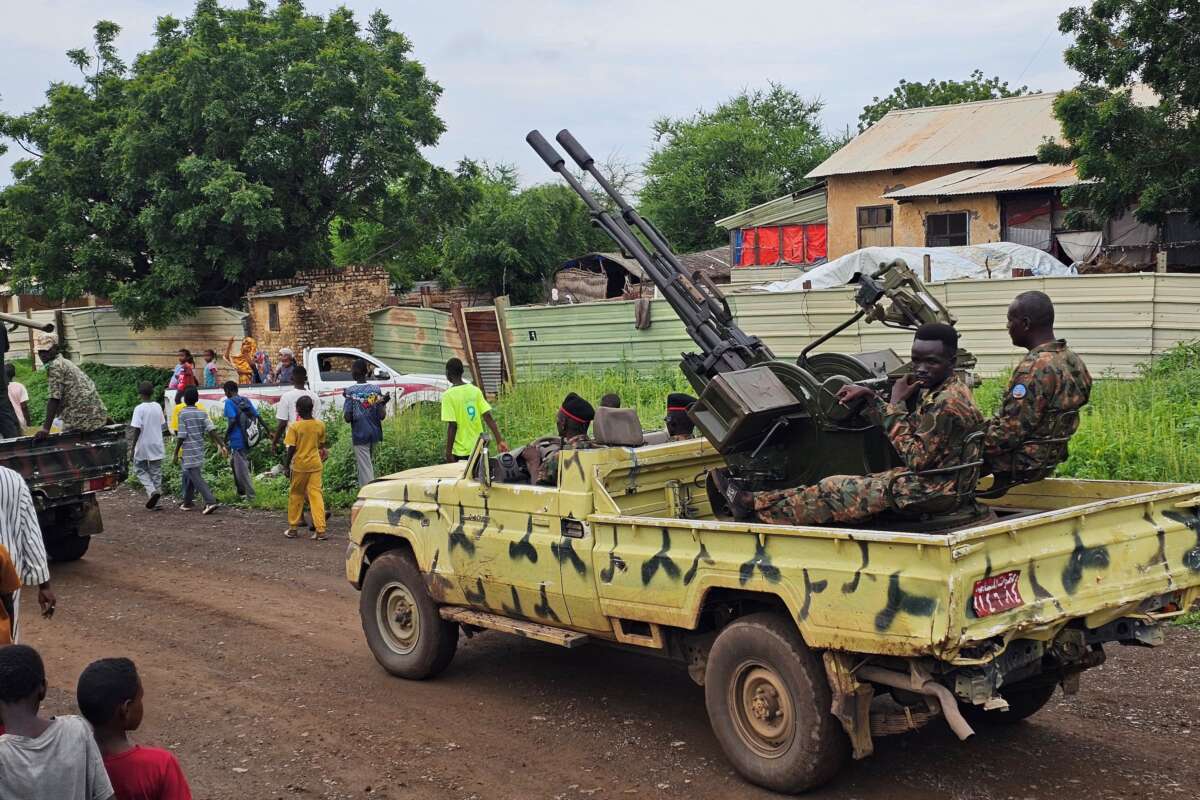
Children walk past a Sudanese army parade in the streets of Gedaref, in eastern Sudan, on August 14, 2025, marking the 71st anniversary of the formation of the Sudanese army. Since it began in April 2023, the Sudanese war between the regular army and its paramilitary rival, the Rapid Support Forces, has killed tens of thousands of people and driven millions from their homes.
AFP via Getty Images

The Rapid Support Forces, a paramilitary group, has tightened its siege of the Sudanese city of El Fasher amid their civil war with the Sudanese Armed Forces. About 260,000 people are estimated to be trapped in the city in a siege that has lasted for over 550 days, leaving the city without access to food, water, internet, and health care. The city’s plight reflects the dire situation for tens of millions of Sudanese people throughout the country who are facing mass starvation, displacement and atrocities due to the warring counterrevolution forces, who began fighting in April 2023, further thwarting a pro-democracy movement.

In this exclusive interview for Truthout, Khalid Mustafa Medani discusses the Sudanese civil war, authoritarian rule, and its political economy. He talks about how international actors factor into the conflict while challenging the idea that Sudan is geopolitically peripheral. Further, he analyzes Sudan’s popular resistance and contextualizes them as examples of humanitarian and democratic transformation.

Medani is an associate professor of Political Science and Islamic Studies at McGill University. His research focuses on African politics, political Islam, and informal economies, with an emphasis on Sudan. He is the author of Black Markets and Militants: Informal Networks in the Middle East and Africa and has advised organizations like the United Nations Development Programme and International Crisis Group. A former NBC News producer in Cairo and Khartoum, Medani is a frequent media commentator on conflict and revolution.

Daniel Falcone: Can you start by explaining the current situation in Sudan?

Khalid Mustafa Medani: It’s important to begin with the devastation of the war regarding Sudan. Since April 15, 2023, it has been disastrous on a humanitarian level with 13 million people internally displaced, hundreds of thousands killed, and targeted ethnic killings. It’s further important to highlight the complete destruction of the infrastructure, with hundreds of schools and 80 percent of hospitals in targeted areas forced to shut down.

Related Story

Interview |
Sudanese Activists Are Fighting US and UAE Complicity in Sudan’s Genocide
The US acknowledged Sudan’s genocide in January but continues to send arms to the UAE, one of the war’s main drivers. By Shireen Akram-Boshar , Truthout  February 25, 2025

Additionally, widespread diseases like cholera and other treatable diseases are devastating the country. Sexual violence and sexual assault as a weapon of war are included in a wide range of human rights violations that impact civilians. They are primary targets on the part of the protagonists, the Sudanese Armed Forces (SAF) and the Rapid Support Forces (RSF).

How do informal economic networks currently shape the power dynamics between the SAF and the RSF and how do they both perpetuate the conflict in Sudan? How did we get to this place? What role have informal economic ties and linkages and resources played starting in 1989?

Recently, in a short piece about the authoritarian legacies that led to this war, I mention authoritarian legacies built on the basis of informal economic networks. This autocratic playbook was utilized in 1989 when an Islamist-backed military under the leadership of Omar al-Bashir took over with concrete policy replicated in other authoritarian settings.

It was called empowerment (temkin, in Arabic) and publicly announced. It had four pillars that are important to emphasize. Two of those were essential to our understanding of informal economic networks but the two others were political and very familiar to people who study autocracy. The first pillar purged the bureaucracy of those not loyal to the Islamist movement. So over 600,000 were summarily dismissed from their jobs in the bureaucracy and military and replaced with loyalists that were part and parcel of the wider Islamist movement.

Here is where informal economic networks become very important. What we see here is the monopolization of informal financial networks. This is the first phase of the economy. At that point the regime and formal economy was in shambles, not just in terms of debt to international organizations like the IMF and World Bank, but in terms of corruption. This led to the downgrading of the formal economy, factories, and agriculture. In the context of the erosion of the formal economy, informal finance played a large role, as military governments can monopolize remittances and informal financial networks. It financed a loyalty, or clientelist, networks that made the government survive in the context of authoritarian rule for three decades.

Informal financial networks amounted to billions of dollars hoarded and monopolized investments in Islamic banking institutions at the same time weak military institutions in Africa and elsewhere (Middle East, Syria and Iraq) saw a rise in militias and paramilitary forces.

In the early 2000s, the insurgency took over the global headlines. It was essentially put down through a counterinsurgency that was backed by the central government. The [government in Khartoum] established a military that formed an informal network of militias. They financed and organized, as one scholar put it very effectively, a financed counterinsurgency campaign on the cheap. Basically, paramilitary militias were created to put down the insurgency. This was very important for putting down dissent. When you have a national standing army short on legitimacy, unable to protect citizens and borders you saw a proliferation of the militias. Here, these informal networks of militias were crucial in putting down dissent and uprisings.

I want to highlight these pillars involving the legacy authoritarianism that led to this war: the informal financial networks that monopolized order to finance loyalty of a select group of Islamist loyalists; the purging of the bureaucracy in order to replace people with loyalists; and, lastly, the expansion of informal paramilitary militias in order to put down counterinsurgency and dissent of a continuous cycle of popular protest.

What do the resistance committees represent today in the civil war? Have they progressed into providing a political alternative?

The resistance committees are notable for their pro-democracy and revolutionary potential. The reason they became so important in late 2018 was that they were organized informally. The reason for that was once again related to authoritarian legacies and authoritarian rule that all authoritarian governments coopt. Labor unions and civil society resisted corporatist authoritarianism. Younger people in Sudan came up with something ingenious. That was to form informal unions and informal professional associations unmonitored by the state. They were clandestine just like the terrorist organizations.

The positive aspect of social capital in informal networks can also be very important in mobilizing people for democracy. This we’ve seen throughout the North African and Arab region following revolutions in Tunisia and Egypt. Here, the resistance committee coordinates with informal professional associations through mass mobilization. It brought down the Islamist fundamentalist military regime in April of 2019 and then transformed in the context of the war. This is a war against civilians and against a truly pro-democracy revolution that encompassed millions of Sudanese for over two years across ethnic groups and different classes and regions in Sudan.

This is the primary reason the two protagonists conspired to wage a coup in October 2021 against this revolution and took over the state by military means. The resistance committees played an important role in the revolution, but they also opposed an existential threat to both protagonists. Their goal was to provide social services that were not available in the context of an expansive war economy. There are extrajudicial killings of young people working in emergency response rooms. Militias use food as a weapon as others have done in other contexts but also to make sure that they suppress this kind of resistance committee and their potential for revolutionary change. There are international calls to cut off aid to the informal economic networks and the gold smuggling that finances these wars as well as the informal weapons supplies fueling the war. There is no future without these resistance committees.

How are the United Nations, African Union, and Western governments approaching Sudan historically or in comparison to other geopolitical conflicts?

It’s important to begin by framing Sudan as far from peripheral. There is, in some places, very little coverage of Sudan, but that’s not the case in the Middle East or Europe. Sudan borders seven different countries, most importantly Libya. The United Arab Emirates, Israel, U.S., Saudi Arabia, Yemen, China, and Turkey, are all vying for a strategic and economic foothold in the Red Sea. Sudan is the fifth largest exporter of gold in Africa. It is smuggled to the Dubai markets in the United Arab Emirates and then processed to fuel global markets.

In effect, countries in the Red Sea interact based on a shifting of interests. The UAE, Saudi Arabia, Israel, and the U.S. all organize against Iran. Turkey and Iran back rival factions and China remains more neutral, although it expands its presence without direct confrontation.

The U.S. outsources its Middle East and Red Sea policy to regional allies, with Israel playing a key role, and especially in coordination with the UAE. Again, Sudan is too often misread as peripheral, when it’s part of a large geo-political web. This is why the Trump administration wanted to normalize Sudanese relations with Israel. The international community, especially the UN, is largely constrained as a result by the interests of Security Council members’ veto power.

Despite pledges from Europe and others, financial aid to Sudan has been minimal, and there’s a deep reluctance to deploy peacekeepers due to past failures like Somalia. This hesitation has contributed to the lack of recognition of the crisis in Sudan as genocide. While talks like those in Jeddah and Bahrain showed potential, they failed largely due to resistance from Islamist elements within Sudan’s military leadership.

Could you comment on the media culture regarding Sudan? How would you examine how data is utilized (propaganda or misused) and where can we find solid coverage?

I worked for NBC News and have experience with international outlets like CNN, PBS, BBC, Al Jazeera, etc. The war in Sudan is distorted in Western media. It is commonly represented as either inexplicable or inherently African, thus reinforcing racist narratives that dehumanize those affected and normalize endless conflict on the continent. This kind of “under the radar” framing would be unthinkable in coverage of wars in Ukraine or Gaza, where the geopolitical causes and human suffering are very seriously examined. We should never compare conflicts in terms of importance; instead, we need to emphasize the interconnectedness of these conflicts and the collective role of regional/global powers.

Talking with Sudanese, Sudanese American, and Sudanese Canadian diaspora populations is vital. Sudanese women activists working on critical issues like sexual violence offer authentic, informed voices from within these communities and polls show that people are more interested in alternative voices and perspectives.


This article is licensed under Creative Commons (CC BY-NC-ND 4.0), and you are free to share and republish under the terms of the license.


Daniel Falcone
Daniel Falcone is a historian specializing in the revolutions of 1848 and the political refugees who sought asylum in New York City. His academic work focuses on Giuseppe Garibaldi’s influence on New York’s local history and the politics of memory in the nineteenth and twentieth centuries. Aside from his research, he is a teacher and journalist whose work has appeared in The Journal of Contemporary Iraq & the Arab World, The Nation, Jacobin and CounterPunch. His writing and interviews intersect history with modern-day geopolitical issues.

Drones Take On Growing Role In Northern Sudan’s Conflict As Technology Advances


October 19, 2025 
By Africa Defense Forum


The Sudanese Armed Forces (SAF) have deployed a sophisticated new weapon in their fight against the paramilitary Rapid Support Forces (RSF): the locally-produced Safrouq drone, which is packed with anti-jamming technology and has a range of 600 kilometers.

The Safrouq is a response to the RSF’s employing Belarus’ Groza-S electronic warfare system to identify and jam or trick the SAF’s incoming drones.

The Safrouq represents the latest technological advancement as both sides of the conflict shift their tactics to airborne weapons and away from ground forces, which have largely reached a stalemate.

The Safrouq can be used for reconnaissance, but it was designed to be a one-way attack (OWA) vehicle, also known as a kamikaze. It is also an upgrade from modified off-the-shelf drones both sides have used for kamikaze attacks in recent months.

The Safrouq debuted in July at the International Defence Industry Fair (IDEF) in Istanbul. Turkey continues to back the SAF and Sudan’s de facto leader, Gen. Abdel Fattah al-Burhan, politically and militarily through the sale of Bayraktar TB2 and Akinci drones.

The Turkish drones proved a key component in the SAF’s ability to drive the RSF out of Khartoum this year. The RSF claims to have shot down several of the Turkish drones, including an Akinci drone taken down over West Kordofan in September.


The RSF’s success against the drones “expose the fragility of unmanned superiority in a war where foreign-supplied defenses are levelling the aerial playing field,” according to Military Africa.

The RSF has increased its own drone use from its base in Nyala, South Darfur, using Chinese-made FH-95 kamikaze drones. Many of the RSF’s drones are designed to fly long distances into SAF-held territory and loiter above potential targets waiting to strike.

The RSF used long-distance drones launched from Darfur to attack Port Sudan, targeting an airstrip where the SAF’s Bayraktar drones were based. The SAF now stores the drones underground.

In recent weeks, the RSF used its loitering drones to attack a power station in Omdurman, an oil refinery in Khartoum and a weapons factory in Yarmouk. In early October, RSF drones struck a hospital and residential neighborhoods in el-Obeid, the capital of North Kordofan.

In July, Sudanese troops shot down an RSF kamikaze drone over the cities of al-Dabbah and Merowe in Northern State, a region that has remained largely untouched by the conflict.

The RSF has been able to threaten Northern State since taking control of the Owaynat Triangle, a key trade route, that borders Libya and Egypt in northwestern Sudan. In response, the SAF has boosted defenses around military sites in the region, adding jamming equipment and antiaircraft weapons to counter a potential drone attack.

The RSF also uses drones to assassinate prominent figures. Al-Burhan survived an attempt during a military graduation in Red Sea State in 2024.

Analysts note that the shift toward drone-based aerial campaigns increases pressure on soldiers and militia members tasked with defending key locations. However, those attacks don’t necessarily translate into territorial gains by either side.

“From a strategic calculus perspective, losses suffered by one party do not necessarily lead to gains for the other,” analyst Albadawi Rahmtall wrote recently in Military Africa.

“Air superiority unlinked to the ability to exploit ground conditions and alter military geography diminishes the value of airstrikes and reduces their military and political significance,” Rahmtall added.


Africa Defense Forum

The Africa Defense Forum (ADF) magazine is a security affairs journal that focuses on all issues affecting peace, stability, and good governance in Africa. ADF is published by the U.S. Africa Command.

Get rid of leaders to stop war in South Sudan

GET RID OF LEADERS TO END WAR

Friday 17 October 2025, by Paul Martial


Through their corruption and ethnicist politics, the country’s elites are plunging South Sudan into a new abyss of violence. Since its separation from Sudan in July 2011, the country has only experienced civil wars, of varying intensity. For the past eight months, Riek Machar, the vice-president, has been appearing in court on several charges such as crimes against humanity, rebellion and treason.

A permanent war

He is accused of inciting the “white” Army, a militia reputed to be close to his organization, the Sudan People’s Liberation Movement-in Opposition (SPLM-IO), to attack the barracks of Nasir, a city in Upper Nile State, causing the death of more than 250 soldiers. Reprisal operations launched by South Sudanese President Salva Kiir have targeted civilians and caused tens of thousands of people to flee. The 2018 peace accords, which were supposed to end the civil war, were never really implemented. Clashes continued on both sides.

The trial against Riek Machar and several leaders of the SPLM-IO is considered a breach of this peace agreement, especially since it has been accompanied by violent aerial bombardments against the cantonment centres of the organisation’s troops, which were to be integrated. These fighters have dispersed across the country and now have no choice but to resume guerrilla warfare. This situation is worrying, because an alliance has been created between the SPLM-IO and another militia, Thomas Cirilo’s National Salvation Front (NSF), which risks tipping the country back into a full-blown civil war.
Ethnicism and corruption

For Salva Kiir, the goal is to get rid of the opposition. He managed to poach some leaders of the SPLM-IO to maintain the façade of a government of national unity. His concern is to ensure his succession and hand over power to Benjamin Bol Mel, a businessman crony from Kiir’s family clan, who has already been appointed vice-president. Such a policy only traps the country in a conflictual situation.

Since its creation, the elites at the head of the young state have not ceased to exploit ethnic divisions by using the community to which they belong: Riek Machar for the Nuer, Thomas Cirilo for the Bari and Salva Kiir for the Dinka. At the same time, the economic situation is disastrous. South Sudan’s oil exports are blocked because of the war in Sudan and above all the country’s funds are embezzled on a large scale.

This is according to a report by the UN Commission on Human Rights, which departs from its diplomatic language to denounce a “shameless predation”. The report declares the above-mentioned Mel to be guilty of embezzling two billion dollars intended for road infrastructure. Another example: the Ministry of Health received only 19% of its budget, or $29 million, while the budget for presidential affairs exceeded its allocation by 584%, or $557 million.

The only solution for peace is for the people, all communities combined, to get rid of these warmongers.

2 October 2025

Translated by International Viewpoint from l’Anticapitaliste.

Attached documentsget-rid-of-leaders-to-stop-war-in-south-sudan_a9219.pdf (PDF - 905 KiB)
Extraction PDF [->article9219]

South Sudan
When African dictatorships reach out to Trump
Palestine, Sudan, and the Global North’s Indifference
Peace under threat in South Sudan

Paul Martial is a correspondent for International Viewpoint. He is editor of Afriques en Lutte and a member of the Fourth International in France.

International Viewpoint is published under the responsibility of the Bureau of the Fourth International. Signed articles do not necessarily reflect editorial policy. Articles can be reprinted with acknowledgement, and a live link if possible.
War and ecology

Agent Orange, a slow violence that still kills


Saturday 18 October 2025, by Collectif Vietnam-Dioxine


The Vietnam-Dioxin Collective is part of a decolonial ecology since the cause is not only ecological but is also the result of colonial and imperialist logics and of a capitalist system that produces environmental crises (which are in fact continuous) and wars in times of crisis. We demand justice for the victims of Agent Orange, a chemical and defoliant weapon used during the US-led Imperial War in Vietnam.


Agent Orange was produced in this way by American multinationals such as Monsanto, Dow Chemical or Hercules, to maximize profits and to raze the largest possible area of forest. It was spread from 10 August 1961, then massively during Operation Ranch Hand in 1962 and until 1971. Defoliants were dumped over 10% of the surface of South Vietnam.

The term “ecocide” was used for the first time, in 1970, by the biologist Arthur Galston to describe this operation by American troops, which was toxic on two levels. On the one hand, in terms of health. The dioxin of Agent Orange causes many pathologies for the two to four million victims directly exposed to spraying. In addition to these, there is an undetermined number of victims over the long term, due to the hereditary transmission of these pathologies,

On the other hand, from an ecological point of view, because by the end of the war, 20% of South Vietnam’s forests had been destroyed by chemical means, and more than a third of the mangroves had disappeared. Currently, the presence of dioxin is still massive in the affected areas. The molecule persists in the land and water and has been contaminating spaces and living things for several decades.

It is therefore the context of the war that has allowed this humanitarian and ecological disaster. In a capitalist context, everything is done to maximize profits, even if companies were aware of the toxicity of the products.

The legal proceedings underway in France

Tran To Nga, a Franco-Vietnamese former journalist and liaison officer for the South Vietnamese Liberation Front, filed a lawsuit in 2014 against the companies that produced or marketed Agent Orange, in an effort to set a precedent for victims of Agent Orange. The trial in first instance took place in Évry in 2021 and ended with a decision of the court which declared itself incompetent to judge the case. Effectively, the defending party believes that it only obeyed the United States government despite the flexibility that the companies had. During this trial, the multinationals claimed that they “provided a public service as part of national defence.” They know that it is impossible to attack the United States internationally, as this crime was committed before the creation of the International Criminal Court (ICC), and the US does not recognize the International Court of Justice either. The Paris Court of Appeal confirmed this decision in 2024. Tran To Nga and his two lawyers, William Bourdon and Bertrand Repolt, have appealed to the Court of Cassation, whose hearing is expected to take place in 2026 at the earliest. Attacking multinationals is the only way to create a jurisprudence, even if politically, there are no illusions about this mode of action whose limits are those of bourgeois justice. However, this trial makes it possible to point out the contradictions of capitalism and a double imperialist-colonial-racial standard.

Chemical warfare in the service of imperialism and colonialism

The Organization for the Prohibition of Chemical Weapons defines a chemical weapon as a chemical that is used to cause death or other harm through its toxic action. Like nuclear weapons, they can be considered weapons of mass destruction. The 1997 Chemical Weapons Convention (CWC) prohibits their production, use and stockpiling. 193 States are signatories to this convention. Despite this, persistent violations are noted, often to the detriment of civilians and to the benefit of multinational producers.

However, chemical weapons have recently been used in Ukraine by Russia (chloropicirin), in Kurdistan by Turkey (white phosphorus), in Syria by the regime of Bashar Al-Assad (sarin gas), in Gaza by the Israeli occupation army (white phosphorus) or historically in Algeria by France (CN2D gas or napalm).

Winston Churchil said that chemical weapons would be “the right medicine for the Bolshevist.” The colonized peoples under imperialist domination have also suffered the yoke of these chemical weapons, whether they were Communists or not. Also, there is a double colonial and racist standard in the way we view the victims of Agent Orange. In 1984, U.S. veterans who were victims of Agent Orange filed a class action against the multinational producers and obtained out-of-court compensation in exchange for their silence. In 2009, the Vietnamese victims who had also filed a complaint for crimes against humanity and war crimes were dismissed by the Supreme Court, considering that Agent Orange is not a poison under international law and that there is therefore no ban on the use of a herbicide. This denial of justice and reparations for Vietnamese victims is a symptom of racism, which could be described as environmental racism, of which colonized bodies are victims. This is proof that some lives are worth less than others.

A relationship with the Earth: for an "ecology of the mangrove"


The relationship to the Earth is too often appropriated by the far right, which thus sets two traps for non-white people who would like to reappropriate it, as Myriam Bahaffou says: “Our anti-racist spaces oscillate between these poles: the naïve celebration of our lives ‘in spite of everything’, or even our success under capitalism, or the obsession with being “real”, an authentic, pure and wild self, which necessarily entails a constant policing of the remains of the ‘settler; in oneself or in others.”

Thus, either we enter the racial system, the product of racial capitalism, by integrating ourselves completely into whiteness, even if it means claiming a link to the Western land and imposing a colonial vision of the Vietnamese land; or we affirm our Asian identities at the risk of fantasizing about what does not necessarily exist or differently in each other. From our perspective, we therefore claim another identity relationship, plural, which allows us to reject these two options.

The far-right identity relationship (being attached to a land because of one’s origins, blood ties and so on) is a vertical root relationship that does not allow us to think about the complexity of our diasporas. It is possible to think of a plural and diverse, collective relationship. This is the principle of the rhizome. It is together, as a collective, that we can rediscover a relationship with Southeast Asia that is no longer predatory. Moreover, this is why we think that the collective can be an emancipatory space for many of us. The notion of “rhizome” comes to us from the writings of Gilles Deleuze and Félix Guattari. These two authors think of rhizomes — the horizontal, dynamic and multidirectional root network of the mangrove — as a counterpoint to a vertical, fixed rooting. Maryse Condé and Édouard Glissant spoke of the Caribbean environment, particularly the West Indies, violated by slavery and colonization, as the key to this new relationship to the land, to others, to the world. Initially devalued, colonized and violated lands such as mangroves and their underwater rhizomes become a fertile place from which to think about community complexity.

This anchoring is fundamental because it allows us to think about the struggle against a capitalist and colonial system, whose current contradictions feed the far right by going beyond its identity logics without neglecting our concrete situation and our aspiration to find our place. By perpetuating the legacy of our struggles while taking into account the complexity of our experiences and trajectories, we are building bridges with other struggles, such as the resistance of the Palestinian or Sahrawi people, or for example on the subject of chlordecone which was spread by France in Guadeloupe and Martinique.

Summer 2025

Translated by International Viewpoint from Revue l’Anticapitaliste.

Attached documentsagent-orange-a-slow-violence-that-still-kills_a9221.pdf (PDF - 912.8 KiB)
Extraction PDF [->article9221]


Collectif Vietnam-Dioxine  is a campaigning group in France.


International Viewpoint is published under the responsibility of the Bureau of the Fourth International. Signed articles do not necessarily reflect editorial policy. Articles can be reprinted with acknowledgement, and a live link if possible.


McGill research flags Montreal snow dump, inactive landfills as major methane polluters


Study identified more than 3,000 hotspots: ‘We need to know where these emissions are coming from to resolve them’


 News Release 
McGill University


Montreal’s methane emissions are unevenly distributed across the island, with the highest concentrations in the city’s east end, McGill researchers have found. The worst polluters include the city’s largest snow dump, which emits methane at levels comparable to the city's current and former landfills, and natural gas leaks.  

The researchers identified more than 3,000 methane hotspots throughout the four-year mobile monitoring survey. They said this is fewer than comparably dense cities, but these potent emissions must be addressed.  
 
“Though there's much less methane than carbon dioxide (CO2) in the atmosphere, every methane molecule will warm the planet by about 32 times as much as every CO2 molecule,” said Peter Douglas, Associate Professor in the Department of Earth and Planetary Sciences and study co-author. “We need to know where these emissions are coming from to resolve them.” 

Waste management, infrastructure and snow removal at issue 

Like most cities, Montreal publishes an annual emissions inventory, but the figures are only estimates. This mobile monitoring survey sought to gather robust data to help Quebec reach its goal to reduce GHG emissions by 37.5 per cent by 2030. 

Inactive landfills – including urban renewal projects like Parc Frédéric-Back, pictured above – produced the most emissions. But the researchers were surprised to discover that the Francon Quarry, site of Montreal’s largest snow dump, emits methane at a comparable rate. 

“It's as large as some of the other landfills. A ton of stuff is dumped there, stuff that’s picked up off the roads,” Douglas said. As the snow melts, it creates a lake that potentially harbours microbes capable of releasing additional methane. 

The highest methane concentrations were found in the city’s east end, which, in addition to being the site of many former landfills, is a place where natural gas leaks are more common. 

“Most gas leaks are concentrated where we use this older infrastructure,” said Douglas. “But we really focused on population density. With more people, there are more natural gas lines and more leaks.” 

Methodology 

The researchers conducted mobile surveys over four years (2019, 2022–2024) across 3,300 square kilometres of the city and at key off-island sites like the Saint-Sophie landfill. Air samples were collected using a device that measured carbon dioxide and methane levels every second.  

Three fixed routes – two in densely populated areas, and one near the Lachine Canal – were surveyed weekly for 10 weeks. The repeated surveys helped researchers track how methane emissions changed over time, revealing which hotspots were persistent and which were more short-lived. 

“We’d see an increase in concentration and then it would come back down, so we could figure out approximately how much gas was coming from that source and locate where it was, especially when we had wind data to help us triangulate the location,” Douglas said. 

Environment and Climate Change Canada conducted much of the testing by car. Local bikeshare service BIXI also contributed free memberships to help the scientists with their work. 

The ongoing project will soon track seasonal changes in methane concentrations and explore the mitigating role of surface bacteria at landfills. 

About this study 

Four years of mobile monitoring show that urban waste is the primary source of large methane emissions hotspots in Montreal, Canada,” by Regina Gonzalez Moguel, Peter M J Douglas, Jacob Asomaning, Emilie Reid, Djordje Romanic, Felix Vogel, Sebastien Ars, Lawson Gillespie and Yi Huang, was published in Environmental Research Communications on Sept. 4, 2025. It was funded by Environment and Climate Change Canada. 


Health and economic air quality co-benefits of stringent climate policies


CMCC Foundation - Euro-Mediterranean Center on Climate Change


Key Messages

  • Avoiding temperature overshoot through stringent climate policies such as net-zero could prevent 207,000 premature deaths by 2030.
  • Such policies could also avoid $2,269 billion USD in economic damages, roughly 2% of 2020 global GDP.
  • Benefits are particularly large in China and India, where air pollution and population density are high, and substantial emission reductions are predicted.

Air pollution is one of the world’s leading health risks, contributing to nearly 1 in 8 deaths globally. A new study published in Science Advances by the Euro-Mediterranean Center on Climate Change (CMCC) shows that stringent climate policies designed to avoid temporarily exceeding 1.5°C warming could prevent hundreds of thousands of premature deaths while avoiding trillions of dollars in economic damages.

The researchers used a global source-receptor air pollution model to estimate the impacts of net-zero pathways on air quality, health, and economic costs. They found that avoiding temperature overshoot could prevent 207,000 premature deaths and reduce $2,269 billion USD in damages by 2030, equivalent to roughly 2% of 2020’s global GDP. The benefits are particularly notable in regions with high population density and pollution, such as China and India.

“This work shows, in a comprehensive and robust way, that pursuing short-term temperature stabilization is worthwhile,” says CMCC scientist Lara Aleluia Reis. “Not only does it reduce climate risks, it also brings significant health benefits by improving air quality.”

The study is the first to quantify the air pollution co-benefits of limiting short-term temperature overshoot. By considering multiple scenarios, uncertainties, and regional variations, the research provides robust evidence that climate mitigation policies offer substantial dual benefits: reducing greenhouse gas emissions and saving lives through cleaner air.