Friday, December 12, 2025

Aid cuts causing ‘tragic’ rise in child deaths, Bill Gates tells AFP

By AFP
December 4, 2025


Bill Gates has warned about the effect steep foreign aid cuts will have on children in developing countries - Copyright AFP ANDREW CABALLERO-REYNOLDS


Daniel Lawler

Microsoft co-founder and philanthropist Bill Gates told AFP on Thursday it is “tragic” that child deaths will increase worldwide for the first time this century because wealthy Western countries have slashed international aid.

The United States has cut the deepest, with Gates saying fellow billionaire Elon Musk’s so-called US Department of Government Efficiency (DOGE) was “responsible for a lot of deaths”.

However Britain, France and Germany have also “disproportionately” slashed aid, Gates, a major funder of numerous global health programmes, said in a video interview from Seattle.

The cuts mean that the number of children dying before their fifth birthday is projected to increase to 4.8 million this year, up 200,000 since 2024, according to the Gates Foundation’s annual Goalkeepers report released Thursday.

Gates said it was a “tragedy” to see child mortality rise after it had steadily fallen from around 10 million annual deaths at the turn of the millenium.

Aid for developing countries has plummeted by 27 percent this year, threatening progress against a range of diseases including malaria, HIV and polio, the report said.

If global aid cuts of around 30 percent are permanent, 16 million more children could die by 2045, according to modelling by the Gates-funded Institute for Health Metrics and Evaluation.

“That’s 16 million mothers who are experiencing something that no one wants to or should have to deal with,” Gates said.


– ‘Chaotic’ DOGE cuts –


Gates criticised the “chaotic situation” earlier this year when Musk’s DOGE abruptly cut off grants from the US Agency for International Development (USAID), which has been dismantled since Donald Trump returned to the White House in January.

“I’m talking to President Trump about encouraging him to restore aid so that it is at most a modest cut — I don’t know if I’ll be successful with that,” the 70-year-old said.

Gates, a major donor of the Gavi alliance which distributes vaccines around the world, said he was disappointed the US did not renew its funding for the organisation in June.

US Health Secretary Robert F. Kennedy Jr also sent a video to the Gavi fund-raising event “that repeated his extremely debunked and misguided views that these childhood vaccines shouldn’t be used,” Gates said.

“Although the Gates Foundation works with every administration — and we find some areas of agreement with Secretary Kennedy when it comes to vaccines — we have essentially opposite views about the roles vaccines have played in the world.”


– ‘Tight’ budgets –


While acknowledging that “rich world budgets are very tight,” Gates regretted that international aid was being “disproportionately” targeted in European nations.

Gates said he had spoken about aid cuts with political leaders in France, where the budget has not yet been finalised.

“I talked to the prime minister and the president, among others, and said, please remember how important this is — but it’s a very tough budget situation.”

Gates also expressed hope that new tools such as vaccines would bring child mortality rates back down in the next five years.

He particularly pointed to new vaccines for respiratory syncytial virus (RSV) and pneumonia, as well as a groundbreaking twice-a-year HIV-prevention injection called lenacapavir that started being rolled out in South Africa this week.

The Bill and Melinda Gates Foundation launched in 2000, with Melinda French Gates departing last year after the couple’s divorce.

In May, Gates announced he would give away his more than $200 billion fortune over the next two decades, wrapping up in 2045.

Jessica Sklair, who researches elite philanthropy at the Queen Mary University of London, told AFP that Gates already wielded “an enormous influence over the world of global health”.

The aid cuts would likely increase his level of influence, she said, adding that it did not appear that private philanthropy will “step in to fill the gap”.

Other research by the Barcelona Institute for Global Health, exclusively reported by AFP last month, determined that more than 22 million people could die from preventable deaths by 2030 due to the US and European aid cuts.
After 15 years, Dutch anti-blackface group declares victory


By AFP
December 4, 2025


Santa Claus is coming to town - Copyright ANP/AFP ROB ENGELAAR


Stéphanie HAMEL

Cherished Christmas tradition for some, profoundly insulting for others, the Dutch character “Black Pete”, a servant who helps Santa Claus distribute presents, has divided opinion in The Netherlands for decades.

Until recently, Santa’s arrival on the eve of Saint Nicolas Day (December 5) — a major Yuletide celebration for the Dutch — was marked by many people dressing up as Black Pete, complete with blacked-out faces and often afro wigs, creole earrings and make-up to plump out lips.

Stung by the caricature that harks back to Dutch colonial times, Jerry Afriyie founded the “Kick Out Black Pete” (KOZP) movement in 2010 to fight racism and is now wrapping up with the battle won.

“Around this time of the year, you would pass hundreds of Black Petes (Zwarte Piet in Dutch), hundreds of white people in blackface. Today, it is different,” he told AFP.

“Even small children are correcting me. When I say ‘Zwarte Piet’, they say ‘Piet,’ added the 44-year-old poet in an interview in Amsterdam.

In 2010, Afriyie’s foundation “Nederlands Wordt Beter” (“The Netherlands is improving”) set three objectives.

They wanted Dutch colonial history, heavily dependent on slavery, taught in schools, an annual commemoration for the victims and Black Pete to get the boot.

KOZP activists organised peaceful protests whenever Santa came to town with Black Petes in tow. Some were pelted with eggs or even fireworks by Black Pete backers.

The movement hit global headlines, tarnishing the country’s reputation for tolerance, and reached new heights amid the 2020 “Black Lives Matter” protests.

Then Prime Minister Mark Rutte — who had said for years that “Black Pete is just black” — urged the tradition to end.


– ‘This is not normal’ –


Afriyie explained that Black Pete was a figment of the imagination of Jan Schenkman, who popularised the story of Santa Claus in the Netherlands.

Black Pete is “actually a black servant. He (Schenkman) himself said it. It’s a black servant serving a white master,” said Afriyie.

“And I think that in 2025, it’s uncalled for.”

The movement’s goal was to “de-normalise” Black Pete and the blackface tradition, said Afriyie.

“It was as normal as Dutch pancakes. And we felt like, hey, this is not normal. It’s hurting people. A lot of children feel insecure,” he said.

KOZP has been so successful in persuading organisers — often municipal officials — to make the Santa arrival inclusive that it held no protests this year.

According to an Ipsos survey, the percentage of Dutch wanting to maintain the tradition has dropped to 38 percent, compared to 65 percent in 2016.

Sporting a “modern Pete” outfit of a long purple wig, spangles and a face lightly dusted with soot, Gipsy Peters told AFP: “It’s good to keep traditions alive but we can adjust them a little.”

“It should be about children and not about colour or something,” said the 35-year-old, who works in a school.


– ‘It’s not about racism’ –


However, not everyone agrees and maintaining the Black Pete tradition has become a rallying cry for far-right leader Geert Wilders among others.

Several activists in a recent anti-immigration rally in The Hague dressed in the “traditional” Black Pete outfit.

Away from official celebrations, many Dutch still apply blackface as part of the costume.

Jaimy Sanders, 30, who works in a plumbing firm, told AFP: “It’s not about racism. It’s about fun for the children.”

“And I really don’t care if they’re purple, green or whatever colour. As long as we can talk about the children and not the adults who make such a big deal of it.”

Afriyie said much progress had been made, although the war against racism was not won in the Netherlands, still wrestling with its colonial past.

“You have to understand, being a black person in the Netherlands, we have seen it all,” he said.

“I think that this country has made a huge step in fighting racism. But we are not there yet.”

“And it’s good to hold the country accountable for the remaining fight that needs to be fought instead of resting it on the shoulders of a few.”
SCOTT BESSENT STILL IN THE CLOSET

Even self-loathing gay MAGA is tearing itself apart

By U.S. House Office of Photography

December 10, 2025 |


Marjorie Taylor Greene trashed Donald Trump and the GOP on “60 Minutes” this past weekend—causing Trump to erupt in anger at the network he thought he’d just co-opted—and Nancy Mace wrote an op-ed in the New York Times yesterday vilifying intransigent Republican leaders, who are just bowing to Trump.

Far right Kentucky Congressman Thomas Massie led the charge on a vote to release the Epstein files, defying Speaker Mike Johnson and Trump, forcing it down their throats. Republicans in both the House and Senate are now holding up the defense spending bill unless the Trump administration releases unedited videos of strikes conducted against boats Trump claims are drug smugglers.

And a battle raged among Republicans for weeks over Tucker Carlson’s legitimizing Holocaust-denying, Hitler-loving Nick Fuentes within the GOP, while Trump was sidelined—and, as Rolling Stone notes, Fuentes has won.

MAGA is tearing itself apart.

And that’s also occurring in that creepy, self-loathing little corner occupied by gay MAGA.

Milo Yiannopoulos—the former alt-right gay warrior who was banished from Trump World in 2017 after it was revealed just before his CPAC keynote that he apparently supported sex with teenage boys—over the weekend expanded on his outing campaign against MAGA podcaster Benny Johnson, who is vying to be the new Charlie Kirk.

And Yiannopoulos, appearing on Tim Pool’s big MAGA conspiracy podcast along with George Santos, also introduced the idea that Kirk may have been a closet case too!

That was enough to make Santos, the sociopathic convicted fraudster and gay former drag queen—newly released from prison after Trump commuted his sentence—suddenly outraged that anyone would promote…a lie.

Seriously!

Johnson, who has a huge reach and thought he had a big win when he interviewed FCC chairman Brendan Carr—who said he’d being going after Jimmy Kimmel, but lost the war in the end—has pushed ugly anti-LGBTQ garbage for years. And yet, as I wrote a few weeks ago, there’s been a lot of discussion on both the left and the right about the sexual orientation of Johnson, who obsessively shares photos of his wife and children.

Progressive podcaster Keith Edwards pointed to several things a few months ago, including queer novelist Saeed Jones remarking that he “made out” with Johnson—in a closet!—at a Christmas party when they both worked at BuzzFeed in the 2010s (before Johnson went full-blown MAGA), something Jones said, “haunts me to this day.” Jones wrote on social media, “I’m definitely not the only man Benny Johnson has made out with,” and that “men will literally become traitors to their country rather than go to therapy.”

Yiannopoulos—who, by the way, now ridiculously claims he’s “ex-gay” and called homosexuality “demonic” in an interview with Tucker Carlson last week—had asked back in March on X:
WHICH happy-go-lucky podcast host gets trashed and has sex with young boys in the latters’ hotel rooms at Turning Point conferences, leaving his wife weeping in the arms of other men downstairs amid the AIPAC leaflets and trestle tables?

It was taken as a not-so-thinly veiled claim about Johnson. Now Yiannopoulos confirmed on Pool’s show that he was pointing to Johnson, sending a suddenly dumbstruck Santos to the fainting couch.

“One of the most distinctive things about the right-wing in this country is its homosexual overtones. Benny Johnson posts pictures of his children every two days—it’s weird. And everybody knows what went on with Benny Johnson in those lobbies and those hotel rooms at SAS [Student Action Summit, at Turning Point USA]. Everybody knows,” Yiannopoulos said with conviction.

“I don’t know what you’re talking about,” Santos replied, feigning complete astonishment.

“Men, younger men. Not underage, at least I don’t know that. His wife was crying drunk in the lobby three SAS’s in a row about how her husband was upstairs with boys,” Yiannopoulos said. “Go ask her.”

“Come on,” a simply stunned Santos replied. “Come on. Come on, Milo. Aren’t you afraid of being sued?”

That obsessively scheming George Santos is thunderstruck in disbelief by someone bringing forth outlandish claims is enough to have you rolling on the floor laughing until your guts spill out.


But it gets better. Milo says that he “thinks” Charlie Kirk was gay too, and pushes a claim making the rounds of the conspiracists that Kirk and his wife were planning to divorce.

This queerifying of the recently deceased MAGA patron saint of hate—canonized by the Catholic convert JD Vance—and whose likeness has now been made into a hideous, newly unveiled monument—was just too much for Santos, who finally grabbed the smelling salts.

“Why would you even go there, to say something like that?” asked an outraged Santos. “The man’s dead!”

Yes, George Santos, convicted of wire fraud, aggravated identity theft, money laundering, and theft of public funds, having ripped off hundreds of people and the U.S. government—and who lied about his own dead mother, claiming she died in the World Trade Center on 9/11 when she wasn’t even in the country—suddenly cares about the integrity of dead people.


And, I’m sorry, but conjecturing that someone may have been gay, even if they are dead—and even if it’s not true—is not a bad thing.

Santos, newly free and anointed by Trump, seems to be having delusions about leading gay MAGA, while Yiannopoulos is trying to claw his way back from the dead—all as the MAGA mothership is crashing down.

Johnson has seemingly now threatened to sue Yiannopoulos, in a post in which he said he is “duty-bound” to defend himself—but didn’t quite mention what it was about.

But a gleeful Yiannopoulos—who also now says Nick Fuentes is gay, after the Nazi went on Piers Morgan, denigrated women and said he never had sex with a woman —-shot back and told Johnson, in a post he addressed to Johnson and his wife, that he’s got all the receipts:
Dear free speech warrior Benny, dear Kate:
A few notes for your consideration.
— I know more about defamation than any lawyer you will hire. Benny is a public figure. Malice is a nonstarter. I have receipts, and the truth is a total defense against any claim of defamation or libel. Do you want to lose a defamation case to MILO YIANNOPOULOS OF ALL PEOPLE about whether or not you are gay? Do you want to even fight one? The people who have poured money into making you a big deal are about to lose their entire investment.
— I know more about your marriage than you think I do, and I have evidence, and I have witnesses. I know who to subpoena. I know what questions to ask. About nocturnal liaisons dangereuses with chaps in assless chaps and about being caught in flagrante delicto at conferences attended by students, some of whom may have been under 18. (I guess we’ll find out!)

— Discovery will destroy your career beyond any possibility of redemption, Benny, which was never my intention and never in my heart because I believe that family is making you a better man, as I think it did Charlie Kirk, but this will be the inevitable result of your actions. I just want you to be honest because I believe that’s important and I believe that it is in the public interest to report on people who present one way and act another.


I have a feeling Johnson will not be filing a lawsuit any time soon.

Since that post, Yiannopoulos has been trolling Johnson with screenshots of stories Johnson wrote back when he was at BuzzFeed, like this one in 2014 (before he went MAGA).

It doesn’t matter how much of all this is true, by the way, though a fair amount seems so—except for the absurd notion that anyone is “ex-gay.”

The bigger takeaway is that this is another example of MAGA’s implosion, with lots of people making big and small power grabs as Trump loses his grip, with many of them tearing one another down. And I am here for it.
2025’s words of the year reflect a year of digital disillusionment

December 09, 2025


Which terms best represent 2025?


Every year, editors for publications ranging from the Oxford English Dictionary to the Macquarie Dictionary of Australian English select a “word of the year.”

Sometimes these terms are thematically related, particularly in the wake of world-altering events. “Pandemic,” “lockdown” and “coronavirus,” for example, were among the words chosen in 2020. At other times, they are a potpourri of various cultural trends, as with 2022’s “goblin mode,” “permacrisis” and “gaslighting.”

This year’s slate largely centers on digital life. But rather than reflecting the unbridled optimism about the internet of the early aughts – when words like “w00t,” “blog,” “tweet” and even “face with tears of joy” emoji (😂) were chosen – this year’s selections reflect a growing unease over how the internet has become a hotbed of artifice, manipulation and fake relationships.

When seeing isn’t believing

A committee representing the Macquarie Dictionary of Australian English settled on “AI slop” for their word of the year.

Macquarie defines the term, which was popularized in 2024 by British programmer Simon Willison and tech journalist Casey Newton, as “low-quality content created by generative AI, often containing errors, and not requested by the user.”

AI slop – which can range from a saccharine image of a young girl clinging to her little dog to career advice on LinkedIn – often goes viral, as gullible social media users share these computer-generated videos, text and graphics with others.

Images have been manipulated or altered since the dawn of photography. The technique was then improved, with an assist from AI, to create “deepfakes,” which allows existing images to be turned into video clips in surreal ways. Yes, you can now watch Hitler teaming up with Stalin to sing a 1970s hit by The Buggles.

What makes AI slop different is that images or video can be created out of whole cloth by providing a chatbot with just a prompt – no matter how bizarre the request or ensuing output.

Meet my new friend, ChatGPT

The editors of the Cambridge Dictionary chose “parasocial.” They define this as “involving or relating to a connection that someone feels between themselves and a famous person they do not know, a character in a book, film, TV series … or an artificial intelligence.”

These asymmetric relationships, according to the dictionary’s chief editor, are the result of “the public’s fascination with celebrities and their lifestyles,” and this interest “continues to reach new heights.”

As an example, Cambridge’s announcement cited the engagement of singer Taylor Swift and football player Travis Kelce, which led to a spike in online searches for the meaning of the term. Many Swifties reacted with unbridled joy, as if their best friend or sibling had just decided to tie the knot.

But the term isn’t a new one: It was coined by sociologists in 1956 to describe “the illusion” of having “a face-to-face relationship” with a performer.

However, parasocial relationships can take a bizarre or even ominous turn when the object of one’s affections is a chatbot. People are developing true feelings for these AI systems, whether they see them as a trusted friend or even a romantic partner. Young people, in particular, are now turning to generative AI for therapy.

Taking the bait

The Oxford Dictionary’s word of the year is “rage bait,” which the editors define as “online content deliberately designed to elicit anger or outrage by being frustrating, provocative, or offensive, typically posted in order to increase traffic to or engagement with a particular web page or social media content.”

This is only the latest word for forms of emotional manipulation that have plagued the online world since the days of dial-up internet. Related terms include trolling, sealioning and trashposting.

Unlike a hot take – a hasty opinion on a topic that may be poorly reasoned or articulated – rage baiting is intended to be inflammatory. And it can be seen as both a cause and a result of political polarization.

People who post rage bait have been shown to lack empathy and to regard other people’s emotions as something to be exploited or even monetized. Rage baiters, in short, reflect the dark side of the attention economy.

Meaningless meaning

Perhaps the most contentious choice in 2025 was “6-7,” chosen by Dictionary.com. In this case, the controversy has to do with the actual meaning of this bit of Gen Alpha slang. The editors of the website describe it as being “meaningless, ubiquitous, and nonsensical.”

Although its definition may be slippery, the term itself can be found in the lyrics of the rapper Skrilla, who released the single “Doot Doot (6 7)” in early 2025. It was popularized by 17-year-old basketball standout Taylen Kinney. For his part, Skrilla claimed that he “never put an actual meaning on it, and I still would not want to.”

“6-7” is sometimes accompanied by a gesture, as if one were comparing the weight of objects held in both hands. British Prime Minister Keir Starmer recently performed this hand motion during a school visit. The young students were delighted. Their teacher, however, informed Starmer that her charges weren’t allowed to use it at the school, which prompted a clumsy apology from the chastened prime minister.

Throw your hands in the air?

The common element that these words share may be an attitude best described as digital nihilism.

As online misinformation, AI-generated text and images, fake news and conspiracy theories abound, it’s increasingly difficult to know whom or what to believe or trust. Digital nihilism is, in essence, an acknowledgment of a lack of meaning and certainty in our online interactions.

This year’s crop of words might best be summed up by a single emoji: the shrug (🤷). Throwing one’s hands up, in resignation or indifference, captures the anarchy that seems to characterize our digital lives.

Roger J. Kreuz, Associate Dean and Feinstone Interdisciplinary Research Professor, University of Memphis

This article is republished from The Conversation under a Creative Commons license. Read the original article.
Forget Die Hard: Eyes Wide Shut is the ultimate Christmas film


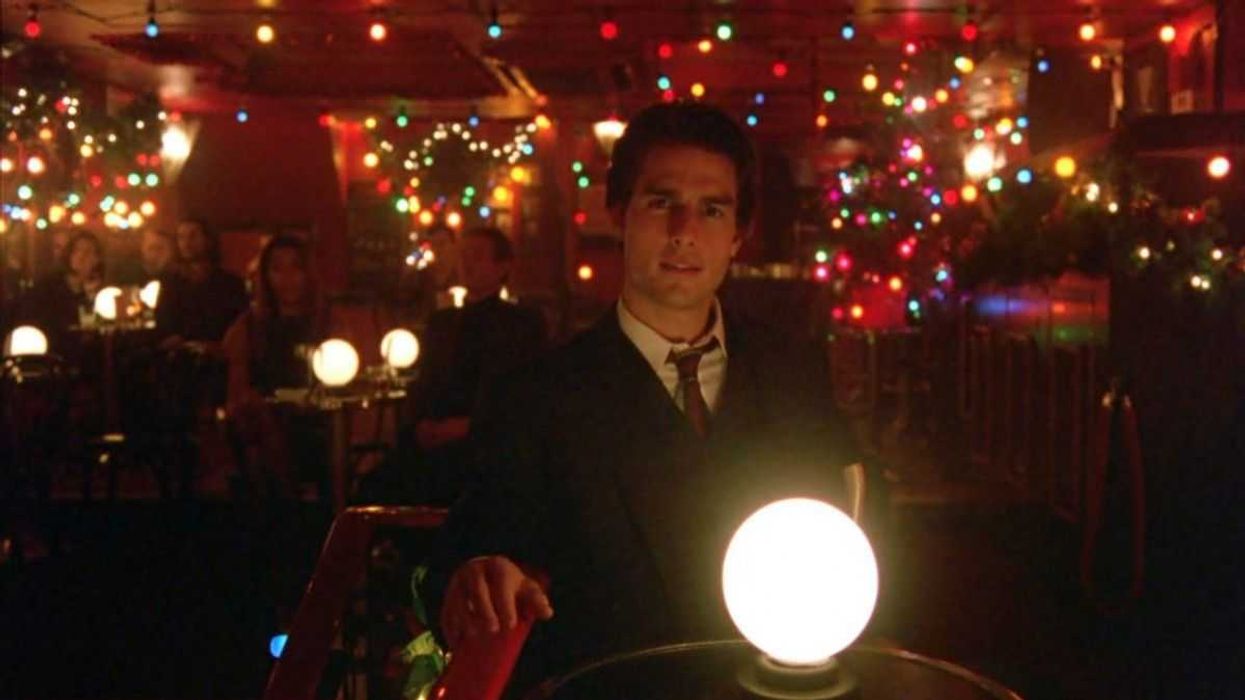
Still from Eyes Wide Shut, courtesy Warner Brothers

December 09, 2025 

Forget Die Hard, Eyes Wide Shut is really the Christmas film hiding in plain sight.

Released in 1999 and set entirely during the festive season, the film follows a doctor, Bill Harford (Tom Cruise), whose wife Alice (Nicole Kidman) admits she once considered an affair. Shaken, he becomes obsessed with pursuing his own sexual encounter and stumbles into an underground world of masked orgies and ritualised desire.

Director Stanley Kubrick chose Christmas after deciding that the original mardi gras setting from Arthur Schnitzler’s novella wouldn’t work in contemporary New York. Christmas offered the closest equivalent. After all, it’s a modern period of ritual excess, indulgence and office-party transgressions.

It’s also a season of overeating, drinking and heightened expectations, which makes it the perfect environment for exploring jealousy, deceit and desire, the film’s defining concerns.

Kubrick also uses Christmas to highlight the thin line between social and sexual ritual. Both are governed by rules, masks and secrecy, and by the privileges of those with enough power or money to ignore the rules altogether. 


Eyes Wide Shut (1999) Official Trailer.

In this, Kubrick was curiously prophetic, pointing to the predations of the likes of Jeffrey Epstein. Meanwhile, the lavishness hints at the world of Donald Trump, who, when Kubrick made the film, was just a real estate and hotel entrepreneur.

Christmas is also the season for performing middle-class normality, a performance the film slowly unravels. The festive backdrop disguises the fact that Kubrick recreated New York on London streets and soundstages, contrasting choreographed gaiety with the darker psychological terrain of the story.

The setting also serves a crucial aesthetic purpose. The near-pervasive Christmas lights and decorations suit Kubrick’s love of practical lighting. These are visible, realistic light sources that add texture and colour, contributing to its dreamlike atmosphere. The original story he adapted was called Traumnovelle (German for “dream story”).

There may have been another reason, too. As I’ve written about extensively, Bill functions as a hidden Jewish character like the protagonist of the original book. The pervasiveness of Christmas underscores his sense of being an outsider. As Kyle Broflovski sang in the TV series South Park: “It’s hard to be a Jew on Christmas.”

Eyes Wide Shut depicts the upper-middle-class and moneyed elites of Manhattan, who use those beneath them to “service” their needs. Bill is summoned for his medical expertise when a sex worker overdoses at Victor Ziegler’s lavish party. He might just as easily be a plumber called to fix a leak.

Sex workers fare worse still. In the masked ceremony, the naked participants are staged as tableaux, basically objects, even furniture, for others’ pleasure.

Christmas consumerism also frames Bill and Alice’s marital tensions. The film repeatedly places Bill in service spaces like coffee shops, boutiques, hotels and hospitals. Even the apartment of Domino, the sex worker he meets, is presented as a workplace. On her shelf sits a copy of Introducing Sociology, reinforcing the consumerist theme.

By contrast, the Harfords’ flat, modelled on Kubrick’s own 1960s New York apartment, is warm and inviting. Kubrick lingers on domestic rituals such as brushing teeth, undressing, everyday movement. But even this comfort feels modest beside Ziegler’s townhouse or the opulent mansion where the orgy takes place.

Class anxiety runs through the film. Bill is preoccupied with his status, flashing his medical ID to access restricted spaces like the morgue and a closed costume shop. But such credentials barely get him close to the elite worlds he longs to enter.

To infiltrate them, he must use disguise. Money guides him; his wallet is always full, and his very name, Bill, seems a wry nod to economic power. Affluent by ordinary standards, he is still dwarfed by Ziegler’s wealth.

His masculinity is even more under threat. Alice cuckolds him, shattering his complacent illusion of security. She revels in puncturing his smugness.

Kubrick played cleverly with Tom Cruise’s Mission Impossible persona, simultaneously using and undermining it. Bill’s most heroic act is offering a handkerchief to a model. “That’s the kind of hero I can be,” he says.

We’re not sure whether he’s being self-deprecating. He is flirting, but all his sexual encounters other than those with Alice are unconsummated. The only real act of heroism in the movie is done for him when the mysterious woman saves him at the orgy.

Why was the film so misunderstood?

When Eyes Wide Shut was released, audiences had been waiting 12 years for a new Kubrick film. If you wait 12 years for anything, you’ll probably be disappointed.

Many expected another grand narrative about war, geopolitics or technology. Instead they found a slow, dreamlike study of marital insecurity. And because the film opened in July, most critics missed its subversive Christmas commentary entirely. They didn’t connect the dots.

Kubrick spent his career making subversive films, intellectually and technologically. Eyes Wide Shut was no exception. As his final work, it stands as the ultimate counter-Christmas film, made, fittingly, by a man who knew what it meant to be a lonely Jew at Christmas.

Nathan Abrams, Professor of Film Studies, Bangor University

This article is republished from The Conversation under a Creative Commons license. Read the original article.

Tired of the same old Christmas songs? 
So were these countercultural carolers

December 09, 2025

With Mariah Carey and Wham! saturating airwaves with their holiday tunes, it’s beginning to sound a lot like Christmas.

But if all you want for Christmas is a reprieve from stereotypical Christmas music, you’re not alone.

Despite the fact that they often rebel against conformity and commercialism, many countercultural musicians have been inspired to produce holiday tracks of their own. Because the symbols of Christmas are so widely recognizable, juxtaposing them with the sounds and values of more niche musical styles can have striking effects.

Here’s how genres like roots reggae, thrash metal and pop punk have added new layers to familiar holiday tropes:

A roots reggae Christmas revival

Certain sounds elicit certain expectations.

If you hear sleigh bells and a children’s choir, lyrics about wintry fun can’t be far. If you hear off-beat reggae guitars and Jamaican accents, you’ll probably picture pot and palm trees, not Christmas.

And yet the roots reggae sound of Jacob Miller’s “We Wish You A Irie Christmas” infuses the classic “We Wish You a Merry Christmas” with Rastafarian liberation theology.

Singers of the classic carol – which some historians trace to 16th-century England – clamor for figgy pudding, a traditional British Christmas dessert. They refuse to leave until they get their sweets: “We won’t go until we get some / So bring it out here!”

By contrast, Miller’s Christmas is “irie,” which, in Jamaican Patois, roughly translates to contentment and inner peace.

In his version, Miller points out that poverty and joy are not mutually exclusive: “We rub it and dub it to the Christmas ‘pon a broke pocket this year.” He also stresses freedom from material desire: “Don’t kill nuf oneself to buy it all.”

After all, the biblical Christmas in Bethlehem had no toys – and no snow either, just like the Caribbean.

For Rastafarians like Miller, the renewal promised by Christmas was deeply personal. In the track, a word that sounds like “Ice-mas” is actually “I’s-mas.” In Rastafarianism, the “I” is the deity contained in each person. Miller’s Christmas revelers dance to their own divinity, anticipating a return to the promised land.

In doing so, Miller turns a simple, well-worn carol into an anthem of self-worth and liberation.

Thrash metal Christmas horror

Other genres can recast an innocent carol’s lyrics into a horror story.

The 19th-century German carol “Kling, Glöckchen, Klingelingeling” was written from the perspective of the “Christkind,” a Christmas gift-bringer in parts of Europe and South America. This “little Jesus” brings gifts in countries where Santa Claus isn’t part of holiday traditions.

Each stanza is framed by a melody and words that evoke the sounds of a ringing bell, which are reflected in the title. In the carol, the Christkind implores children to let it inside so it doesn’t freeze to death. Next, the Christkind promises gifts in return for being let into the living room. Finally, the Christkind asks the children to open their hearts to it.

Who could corrupt this child-friendly pitch for piety?

Enter Thomas “Angelripper” Such, a former coal miner and the front man of the German thrash metal band Sodom.

Where earlier heavy metal could be gloomy and occult, Sodom raised the temperature even more with gory, blasphemous lyrics, buzzsaw guitars and snarled screams. Sodom’s side project, Onkel Tom Angelripper, has recorded metal versions of popular German songs, including “Kling, Glöckchen, Klingelingeling.”

Without changing the lyrics, the thrash metal sound transforms the carol’s wholesomeness into horror. A twee wind arrangement is cut off by heavy, distorted guitars and a growled “Kling.” Metal musicians often use these sounds to evoke feelings of danger.

Angelripper’s caroler sounds more like a large predator who manipulates and bribes his way into a home. In this framing, the final stanza’s line – “open your hearts to me!” – sounds less like a call for communion and more like an ominous threat of mutilation. It’s a home invasion akin to that in the classic Christmas movie “Home Alone,” but it’s all terror, no humor.

This musical corruption of ambiguous lyrics lays bare the fragility of festive innocence.

Christmas grief gets the punk treatment

There’s a whole catalog of melancholic Christmas songs, from Elvis Presley’s “Blue Christmas” to Bing Crosby’s “I’ll Be Home for Christmas.”

But few touch on painful themes of substance abuse, suicide and guilt like the raw-yet-catchy “Christmas Vacation” by pop-punk pioneers the Descendents.

For better or worse, many of the Descendents’ songs are unabashedly immature, petulant and sometimes offensive. Yet their boyish bravado puts moments of vulnerability into relief.

“Christmas Vacation” is no different.

Over jangly guitars and sparse bass, front man Milo Aukerman recalls an alcoholic friend or partner who “took a vacation into oblivion.” And while this turn of events wasn’t a surprise to the narrator, that didn’t change anything: “I knew about your plans / I really did understand / But you didn’t let me know / I wasn’t invited to go.”

The lyrics portray a process of ongoing grief. What makes “Christmas Vacation” poignant is its lyrical vacillation. The narrator wonders: Did she leave forever? Will she be back? Is she to blame? Am I?

The vocal harmony in the chorus – a pop punk staple – mirrors this ambivalence. In the track, the joining of voices starts to sound like a wail. An expected feature of pop punk is transformed into a moving expression of grief and loneliness: a common, less celebrated, holiday experience.

Rather than sneer at or mock Christmas, these three tracks give voice to the complicated emotions that can accompany the holidays. Miller evokes gratitude and hope; Angelripper provokes fear and vulnerability; the Descendents dwell on grief and longing. And all three perspectives end up complementing the focus of mainstream music on food, fancy gifts, snow and family.

Florian Walch, Assistant Professor of Music Theory, West Virginia University

This article is republished from The Conversation under a Creative Commons license. Read the original article.


‘Yes’ to God, but ‘no’ to church – what religious change looks like for many Latin Americans


Photo by Ian Stauffer on Unsplash

December 09, 2025

In a region known for its tumultuous change, one idea remained remarkably consistent for centuries: Latin America is Catholic.

The region’s 500-year transformation into a Catholic stronghold seemed capped in 2013, when Jorge Mario Bergoglio of Argentina was elected as the first Latin American pope. Once a missionary outpost, Latin America is now the heart of the Catholic Church. It is home to over 575 million adherents – over 40% of all Catholics worldwide. The next-largest regions are Europe and Africa, each home to 20% of the world’s Catholics.

Yet beneath this Catholic dominance, the region’s religious landscape is changing.

First, Protestant and Pentecostal groups have experienced dramatic growth. In 1970, only 4% of Latin Americans identified as Protestant; by 2014, the share had climbed to almost 20%.

But even as Protestant ranks swelled, another trend was quietly gaining ground: a growing share of Latin Americans abandoning institutional faith altogether. And, as my research shows, the region’s religious decline shows a surprising difference from patterns elsewhere. While fewer Latin Americans are identifying with a religion or attending services, personal faith remains strong.

Women known as ‘animeras,’ who pray for the souls of the deceased, walk to a church for Day of the Dead festivities in Telembi, Ecuador. AP Photo/Carlos Noriega


Religious decline

In 2014, 8% of Latin Americans claimed no religion at all. This number is twice as high as the percentage of people who were raised without a religion, indicating that the growth is recent, coming from people who left the church as adults.

However, there had been no comprehensive study of religious change in Latin America since then. My new research, published in September 2025, draws on two decades of survey data from over 220,000 respondents in 17 Latin American countries. This data comes from the AmericasBarometer, a large, region-wide survey conducted every two years by Vanderbilt University that focuses on democracy, governance and other social issues. Because it asks the same religion questions across countries and over time, it offers an unusually clear view of changing patterns.

Overall, the number of Latin Americans reporting no religious affiliation surged from 7% in 2004 to over 18% in 2023. The share of people who say they are religiously unaffiliated grew in 15 of the 17 countries, and more than doubled in seven.

On average, 21% of people in South America say they do not have a religious affiliation, compared with 13% in Mexico and Central America. Uruguay, Chile and Argentina are the three least religious countries in the region. Guatemala, Peru and Paraguay are the most traditionally religious, with fewer than 9% who identify as unaffiliated.

Another question scholars typically use to measure religious decline is how often people go to church. From 2008 to 2023, the share of Latin Americans attending church at least once a month decreased from 67% to 60%. The percentage who never attend, meanwhile, grew from 18% to 25%.

The generational pattern is stark. Among people born in the 1940s, just over half say they attend church regularly. Each subsequent generation shows a steeper decline, dropping to just 35% for those born in the 1990s. Religious affiliation shows a similar trajectory – each generation is less affiliated than the one before.
Personal religiosity

However, in my study, I also examined a lesser-used measure of religiosity – one that tells a different story.

That measure is “religious importance”: how important people say that religion is in their daily lives. We might think of this as “personal” religiosity, as opposed to the “institutional” religiosity tied to formal congregations and denominations.

 
People attend a Mass marking the International Day against Drug Abuse and Illicit Trafficking in Buenos Aires, Argentina, on June 26, 2024. AP Photo/Rodrigo Abd

Like church attendance, overall religious importance is high in Latin America. In 2010, roughly 85% of Latin Americans in the 17 countries whose data I analyzed said religion was important in their daily lives. Sixty percent said “very,” and 25% said “somewhat.”

By 2023, the “somewhat important” group declined to 19%, while the “very important” group grew to 64%. Personal religious importance was growing, even as affiliation and church attendance were falling.

Religious importance shows the same generational pattern as affiliation and attendance: Older people tend to report higher levels than younger ones. In 2023, 68% of people born in the 1970s said religion was “very important,” compared with 60% of those born in the 1990s.

Yet when you compare people at the same age, the pattern reverses. At age 30, 55% of those born in the 1970s rated religion as very important. Compare that with 59% among Latin Americans born in the 1980s, and 62% among those born in the 1990s. If this trend continues, younger generations could eventually show greater personal religious commitment than their elders.

Affiliation vs. belief

What we are seeing in Latin America, I’d argue, is a fragmented pattern of religious decline. The authority of religious institutions is waning – fewer people claim a faith; fewer attend services. But personal belief isn’t eroding. Religious importance is holding steady, even growing.

This pattern is quite different from Europe and the United States, where institutional decline and personal belief tend to move together.

Eighty-six percent of unaffiliated people in Latin America say they believe in God or a higher power. That compares with only 30% in Europe and 69% in the United States.

Sizable proportions of unaffiliated Latin Americans also believe in angels, miracles and even that Jesus will return to Earth in their lifetime.

In other words, for many Latin Americans, leaving behind a religious label or skipping church does not mean leaving faith behind.

 
An Aymara Indigenous spiritual guide blesses a statue of baby Jesus with incense after an Epiphany Mass at a Catholic church in La Paz, Bolivia, on Jan. 6, 2025. AP Photo/Juan Karita

This distinctive pattern reflects Latin America’s unique history and culture. Since the colonial period, the region has been shaped by a mix of religious traditions. People often combine elements of Indigenous beliefs, Catholic practices and newer Protestant movements, creating personal forms of faith that don’t always fit neatly into any one church or institution.

Because priests were often scarce in rural areas, Catholicism developed in many communities with little direct oversight from the church. Home rituals, local saints’ festivals and lay leaders helped shape religious life in more independent ways.

This reality challenges how scholars typically measure religious change. Traditional frameworks for measuring religious decline, developed from Western European data, rely heavily on religious affiliation and church attendance. But this approach overlooks vibrant religiosity outside formal structures – and can lead scholars to mistaken conclusions.

In short, Latin America reminds us that faith can thrive even as institutions fade.

Matthew Blanton, PhD Candidate, Sociology and Demography, The University of Texas at Austin

This article is republished from The Conversation under a Creative Commons license. Read the original article.
This Hanukkah, learn about the holiday’s forgotten heroes


Jewish woman lights a candle for the festival of Hanukkah at the Western Wall Plaza in Jerusalem. Marco Longari/AFP via Getty Images Alan Avery-Peck, College of the Holy Cross

December 09, 2025 


The eight-day Jewish festival of Hanukkah commemorates ancient Jews’ victory over the powerful Seleucid empire, which ruled much of the Middle East from the third century B.C. to the first century A.D.

On the surface, it’s a story of male heroism. A ragtag rebel force led by a rural priest and his five sons, called the Maccabees, freed the Jews from oppressive rulers. Hanukkah, which means “rededication” in Hebrew, celebrates the Maccabees’ victory, which allowed the Jews to rededicate their temple in Jerusalem, the center of ancient Jewish worship.

But as a professor of Jewish history, I believe that seeing Hanukkah this way misses the inspiring women who were prominent in the earliest tellings of the story.

The bravery of a young widow named Judith is at the heart of an ancient book that bears her name. The heroism of a second woman, an unnamed mother of seven sons, appears in a book known as 2 Maccabees.

Saving Jerusalem

These books are not included in the Hebrew scriptures, but appear in other collections of religious texts known as the Septuagint and the Apocrypha.

According to these texts, Judith was a young Israelite widow in a town called Bethulia, strategically situated on a mountain pass into Jerusalem. To besiege Jerusalem, the Seleucid army first needed to capture Bethulia.

Facing such a formidable enemy, the townsfolk were terrified. Unless God immediately intervened, they decided, they would simply surrender. Enslavement was preferable to certain death.

But Judith scolded the local leaders for testing God, and was brave enough to take matters into her own hands. Removing her widow’s clothing, she entered the enemy camp. She beguiled the Seleucid general, Holofernes, with her beauty, and promised to give her people over to him. Hoping to seduce her, Holofernes prepared a feast. By the time his entourage left him alone with Judith, he was drunk and asleep.

Now she carried out her plan: cutting off his head and escaping back to Bethulia. The following morning, the discovery of Holofernes’ headless body left the Seleucid army trembling with fear. Soldiers fled by every available path as Bethulia’s Jews, recovering their courage, rushed in and slaughtered them. Judith’s bravery saved her town and, with it, Jerusalem.

A family’s sacrifice

The book of 2 Maccabees, Chapter 7, meanwhile, relates the story of an unnamed Jewish mother and her seven sons, who were seized by the Seleucids.

Emperor Antiochus commanded that they eat pork, which is forbidden by the Torah, to show their obedience to him. One at a time, the sons refused. An enraged Antiochus subjected them to unspeakable torture. Each son withstood the ordeal and is portrayed as a model of bravery. Resurrection awaits those who die in the service of God, they proclaimed, while for Antiochus and his followers, only death and divine punishment lay ahead.

Throughout these ordeals, their mother encouraged her sons to accept their suffering. “She reinforced her woman’s reasoning with a man’s courage,” as 2 Maccabees relates, and admonished her sons to remember their coming reward from God.

Having killed the first six brothers, Antiochus promised the youngest a fortune if only he would reject his faith. His mother told the boy, “Accept death, so that in God’s mercy I may get you back again along with your brothers.” The story in 2 Maccabees ends with the simple statement that, after her sons’ deaths, the mother also died.

Later retellings give the mother a name. Most commonly, she is called Hannah, based on a detail in the biblical book of 1 Samuel. In this section, called the “prayer of Hannah,” the prophet Samuel’s mother refers to herself as having borne seven children.

Working with God

Jewish educator and author Erica Brown has emphasized a lesson we should learn from the story of Judith, one that emerges from 2 Maccabees as well. “Just like the Hanukkah story generally, the message of these texts is that it’s not always the likely candidates who save the day,” she writes. “Sometimes salvation comes when you least expect it, from those who are least likely to deliver it.”

Three hundred years after the Maccabean revolt, Judaism’s earliest rabbis stressed a similar message. Adding a new focus to Hanukkah, they spoke of a divine miracle that occurred when the ancient Jews took back the Temple and wanted to relight the holy “eternal flame” inside. They found just one small vessel of oil, sufficient to light the flame for only one day – but it lasted eight days, giving them time to produce a new supply.

As the influential rabbi David Hartman pointed out, the Hanukkah story celebrates “our people’s strength to live without guarantees of success.” Some ordinary person, he points out, took the initiative to rekindle the eternal flame, despite how futile doing so may have seemed.

Ever since, Judaism has increasingly focused on the interaction of the human and the divine. The Hanukkah story teaches listeners that they all must play a part to repair a hurting world. Not everyone needs to be a Judith or Hannah; but, like them, we humans can’t wait for God to take care of it.

In synagogues, one of the readings for the week during Hanukkah is from the prophet Zechariah, who proclaimed, “Not by might, nor by power, but by my spirit, says the Lord of hosts.” These words succinctly capture the meaning of Hanukkah and express what Jews might think about while lighting the Hanukkah candles: our responsibility to act in the spirit of God to create the miracles the world needs to become a place of beauty, equity and freedom.

[Get the best of The Conversation’s politics, science or religion articles each week.Sign up today.]

Alan Avery-Peck, Kraft-Hiatt Professor in Judaic Studies, College of the Holy Cross

This article is republished from The Conversation under a Creative Commons license. Read the original article.


Indian festival of lights Diwali joins UNESCO heritage list


By AFP
December 10, 2025


People watch fireworks light up the sky as part of Diwali celebrations in Mumbai in October - Copyright AFP


 Odd ANDERSEN

India’s festival of lights, Diwali, was on Wednesday announced as an addition to UNESCO’s intangible cultural heritage list, sparking celebrations.

The United Nations cultural agency, meeting in the Indian capital New Delhi from Tuesday to Thursday, is examining dozens of nominations from as many as 78 countries.

The new announcements will join UNESCO’s list of cultural heritage, whose purpose is to “raise awareness of the diversity of these traditions” and protect them in future.

Indian Prime Minister Narendra Modi welcomed the announcement, saying the festival was “very closely linked to our culture and ethos”.

“It is the soul of our civilisation. It personifies illumination and righteousness,” he said in a statement on social media, adding the move “will contribute to the festival’s global popularity even further”.

The Delhi government is organising several events, including special illumination of buildings and decoration across major roads, along with a massive lamp-lighting ceremony.

As one of Hinduism’s most significant festivals, millions of Indians celebrate Diwali, also known as Deepavali, not just in India but globally.

Many people, including those from the Sikh and Jain religious communities, observe it as a five-day festival which symbolises the triumph of good over evil.

Celebrations, which happen on the new moon day in either late October or November, usually see lighting of lamps and bursting of firecrackers.

In much of north India, Diwali marks the return of Hindu Lord Rama to Ayodhya after defeating the demon king Ravana.

The festival is also strongly associated with worship of Lakshmi, the goddess of wealth and prosperity.

India’s foreign ministry said Diwali’s addition to the UNESCO list was a “joyous moment” for the country.


How Jimmy Swaggart’s rise and fall shaped the landscape of American televangelism


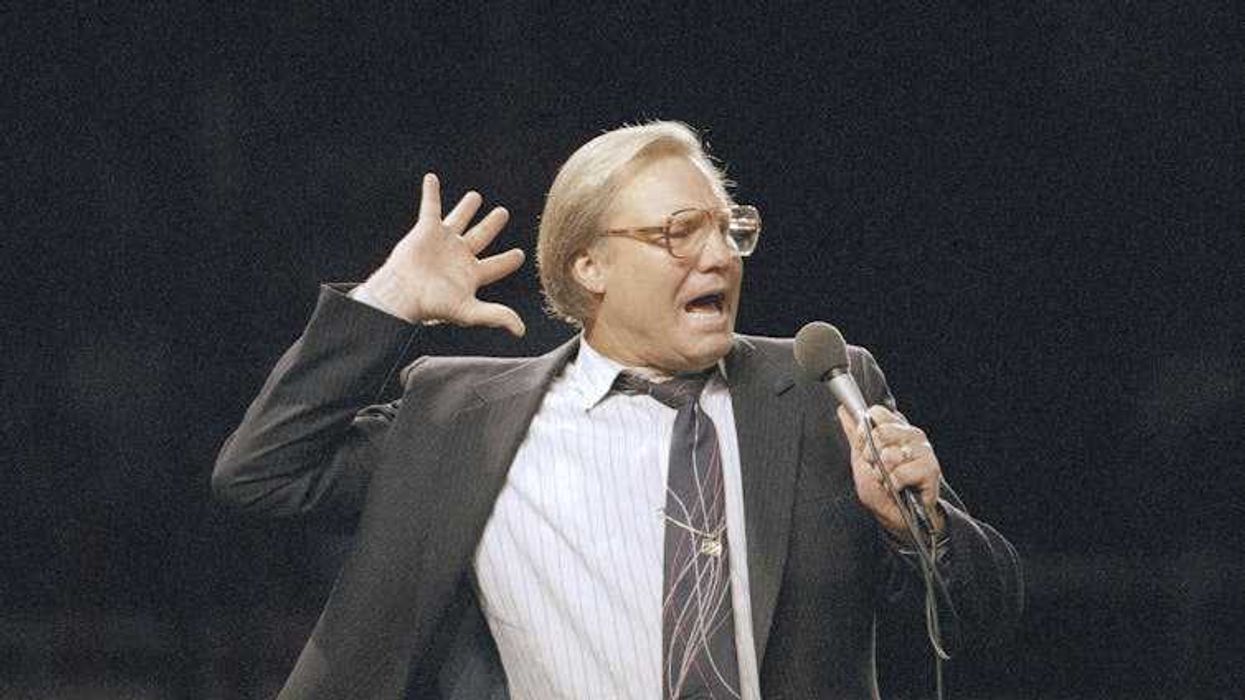
Rev. Jimmy Swaggart preaches at the Los Angeles Memorial Sports Arena on March 29, 1987. AP Photo/Mark Avery

December 09, 2025

Jimmy Swaggart, one of the most popular and enduring of the 1980s televangelists, died on July 1, 2025, but his legacy lives.


Along with Jerry Falwell and Pat Robertson, he drew an audience in the millions, amassed a personal fortune and introduced a new generation of Americans to a potent mix of religion and politics.

Swaggart was an old-time evangelist whose focus was “saving souls.” But he also preached on conservative social issues, warning followers about the evils of abortion, homosexuality and godless communism.

Swaggart also denounced what he called “false cults,” including Catholicism, Judaism and Mormonism. In fact, his denunciations of other religions, as well as his attacks on rival preachers, made him a more polarizing figure than his politicized brethren.

As a reporter, I covered Swaggart in the 1980s. Now, as a scholar of American religion, I argue that while Swaggart did not build institutions like Falwell’s Moral Majority or Robertson’s 700 Club, he helped to spread right-wing positions on social issues, such as sexual orientation and abortion, and to shape the image of televangelists in popular culture.

Swaggart’s cousins

Born into a hardscrabble life in a small Louisiana town, Swaggart grew up alongside his cousins Jerry Lee Lewis, the future rockabilly pioneer, and future country singer Mickey Gilley.

All three loved music and singing. They polished their playing on an uncle’s piano and sneaked into African American nightclubs to hear the jazz and blues forbidden by their parents.

While Gilley and Lewis turned their musical talent into recording and performing careers, Swaggart felt called to the ministry. He dropped out of high school, married at 17, began preaching at 20 and was ordained at 26.

He was licensed by the Assemblies of God, a Pentecostal denomination that believes the Holy Spirit endows believers with spiritual gifts that include speaking in tongues and faith healing.

The glory years

Pentecostals were nicknamed Holy Rollers because of their tendency to shake, quake and roll on the floor when feeling the Holy Spirit. Their preachers excelled at rousing audiences’ ardor, and Swaggart commanded the stage better than most. He paced, pounced and poured forth sweat while begging listeners to turn from sin and accept Jesus.

Starting small, he drew crowds while preaching on a flatbed trailer throughout the South. His following grew, and in 1969 he opened the Family Worship Center in Baton Rouge.

At capacity, the church held 10,000 worshippers, who represented a broad swath of America: young girls and grannies, white and Black, bankers and farmers. His sermons began calmly but built to a fever pitch. CBS newsman Dan Rather once called him the “country’s greatest speaker.”

During services, Swaggart also sang and played piano. In 1982, Newsweek magazine noted his musical chops, naming him the “King of Honky Tonk Heaven.” His music crossed gospel, country and honky-tonk – songs with a strong rhythmic beat – and he sold 17 million albums over his lifetime.

By 1975, Swaggart’s on-stage charisma powered the launch of a television ministry that would reach millions within a decade. Viewers were captivated by his soulful tunes and fire-and-brimstone sermons. At its height, Swaggart’s show was televised in 140 countries, including Peru, the Philippines and South Africa.

His ministry also became the largest mail-order business in Louisiana, selling books, tapes, T-shirts and biblical memorabilia. Thanks to the US$150 million raised annually from donations and sales, Swaggart lived in an opulent mansion, possessed a private jet previously owned by the Rockefellers, sported a yellow gold vintage Rolex and drove a Jaguar.

The downfall

Swaggart disliked competition and had a history of humiliating rival preachers. Wary of the Rev. Marvin Gorman, a Pentecostal minister whose church also was in Louisiana, Swaggart accused the man of adultery. Gorman admitted his infidelity and was defrocked.

Gorman had heard rumors about Swaggart’s own indiscretions, and he and his son decided to tail the famed evangelist. In 1988, they caught Swaggart at a motel with a prostitute, and Gorman reported the incident to Swaggart’s denomination. He also gave news outlets photos of Swaggart and the prostitute. In a tearful, televised apology, Swaggart pleaded for a second chance.

While his fans were willing, the Assemblies of God had conditions: Swaggart received the standard two-year suspension for sexual immorality. Defying the ruling, Swaggart went back to work after three months, and the denomination defrocked him.

Swaggart might have succeeded as an independent minister, but in 1991 the police stopped his car for driving on the wrong side of the road. Inside they found the preacher with a prostitute. This time, Swaggart did not ask for forgiveness. Instead, he informed his congregation, “The Lord told me it’s flat none of your business.”

Afterward, Swaggart never regained his former standing. His mail-order business dried up, donations fell, and attendance at services cratered. But up until his death, he kept on, in his own words, as an “old-fashioned, Holy Ghost-filled, shouting, weeping, soul-winning, Gospel-preaching preacher.”

Swaggart’s legacy

Swaggart, like other 1980s televangelists, brought right-wing politics into American homes. But unlike Jerry Falwell and Pat Robertson, Swaggart was less interested in winning elections than saving souls. In fact, when Robertson considered a presidential run in 1988, Swaggart initially tried to dissuade him – then changed his mind and supported him.

Swaggart’s calls for a return to conservative Christian norms live on – not just in Sunday sermons but also in today’s world of tradwives, abortion restrictions and calls to repeal gay marriage. His music lives on, too. The day before he died, the Southern Gospel Music Association Hall of Fame inducted him as a member.

But his legacy also survives in popular culture. In recent years, both reality television and scripted series have starred preachers shaped in the image of Swaggart and his peers. Most exaggerate his worst characteristics for shock and comedic effect.

Preachers of L.A.,” a 2013 reality show that profiled six Los Angeles pastors, featured blinged-out ministers whose sermons mixed hip-hop with the Bible. The fictional “Greenleaf” followed the scandals of an extended family’s Memphis megachurch, while “The Righteous Gemstones,” a dark spoof of Southern preachers, turned a family ministry into a site for sex, murder and moneymaking.

But these imitations can’t match the reality. Swaggart was a larger-than-life minister whose story – from small-town wannabe to disgraced pastor, to preaching to those who would listen – had it all: sex, politics, music and religion.

For those who want a taste of the real thing, The King of Honky Tonk Heaven lives on. You can see his old services and Bible studies streaming daily on his network.

Diane Winston, Professor and Knight Center Chair in Media & Religion, USC Annenberg School for Communication and Journalism

This article is republished from The Conversation under a Creative Commons license. Read the original article.
US Supreme Court may allow religious right to undermine First Amendment


U.S. Supreme Court Associate Justice Amy Coney Barrett on September 18, 2025 (LBJLibraryNow/Flickr)

December 11, 2025

When the U.S. Constitution's First Amendment was adopted in 1791, the Founding Fathers were clear about two things: (1) freedom of religion would a Constitutional right, and (2) government would not favor one religion over another. The First Amendment states, "Congress shall make no law respecting an establishment of religion, or prohibiting the free exercise thereof."

The First Amendment is at the heart of Oklahoma Statewide Charter School Board v. Drummond, a case that finds the Religious Right at odds with a combination of liberals, progressives, and right-wing libertarians.

At issue in the case is whether or not religious charter schools can, under the Constitution, receive taxpayer dollars. The Oklahoma Supreme Court ruled "no," but when the case went to the U.S. Supreme Court in May 2025, it was a 4-4 split decision. Right-wing Justice Amy Coney Barrett, a Donald Trump appointee, could have been a tie-breaking vote but recused herself.

But according to The New Republic's Steve Kennedy, the justices may revisit the matter.

In an article published on December 11, Kennedy notes that the High Court "left intact a ruling from the Oklahoma Supreme Court that denied what would have been the nation's first publicly funded religious charter school, St. Isidore of Seville Catholic Virtual School."

"Because the Court did not reach the underlying constitutional questions," Kennedy explains, "the door remains ajar. And as news has emerged that the same legal apparatus that set up and represented St. Isidore is now organizing a Jewish charter school in Oklahoma, many observers see it as an attempt to push the same issue — this time with a majority of conservatives ready to strike down religious public funding bans across the country."


Kennedy continues, "At issue in Drummond were two significant constitutional questions. First: Are privately run charter schools state actors if they are publicly approved and funded? And second: If they are public, does the First Amendment's Free Exercise Clause prohibit a state from excluding religious schools from its charter school program — or does the Establishment Clause require it to exclude them?"

Kennedy notes that in Drummond, U.S. Supreme Court Justice Sonia Sotomayor was clear about the need to protect the separation of church and state. During oral arguments, the Barack Obama appointee said, "The essence of the Establishment Clause was: we're not going to pay religious leaders to teach their religion."

"However, the St. Isidore attorneys argued that excluding schools solely because of their religious natures violated the Free Exercise Clause," Kennedy notes. "Drawing on recent U.S. Supreme Court cases like Espinoza v. Montana Department of Revenue and Carson v. Makin, they argued that once a state offers a generally available public benefit, it cannot flatly exclude religious applicants on the basis of religion, and they contended that charter school status was such a public benefit. The Oklahoma Supreme Court rejected that argument in 2024, and because the U.S. Supreme Court split evenly on the issue, that ruling remains in place."

Read Steve Kennedy's full article for The New Republic at this link.