Friday, May 01, 2026

The unexpected benefits of ditching social media

01.05.2026, DPA

Photo: Alicia Windzio/dpa

A digital detox can offer a plethora of advantages.

By Camilla Foster, Press Association

Many of us have toyed with the idea of a digital detox or stepping back from social media, but several countries could turn that idea into reality for many teenagers.

After Australia led the way with its age threshhold, many countries are debating a ban on teenage use of social media. We spoke to some experts about what surprising benefits stepping away from social media could offer children and families.

1. Help improve children’s attention span and focus

“The fast-moving swipe culture of social media speeds up the world, and can have a big impact on children’s attention spans, make them feel very overstimulated and can make offline content, such as reading a book, seem quite dull by comparison,” highlights Liat Hughes Joshi, author of How To Unplug Your Child.

“It’s a highly stimulating world, so to cut that from their life returns them to a simpler environment and helps slows everything down, which I think is only a good thing for children.”

Dr Hannah Sugarman, a clinical psychologist at Central Health London, agrees and adds: “There’s lots of research on what constantly switching between phones, social media and different stuff on our devices does to our sustained attention skills, and I would anticipate that training yourself out of that is going to leave you much better equipped to pay attention in a sustained way.”

2. Could help ease anxiety levels

“These algorithms are designed to keep us in loops that might be emotive in some way, and the constant comparisons on social media to other people’s curated lives tends to fuel things like anxiety,” says Sugarman. “It’s incredibly unhealthy to spend a lot of your time in that space because it’s not real, and it’s warping your view of what you should be or what other people are.”

Hughes Joshi notes that many studies highlight this association with anxiety and social media, particularly in girls.

“These anxiety levels are shaped in part by the over-stimulation of social media, but I think is also impacted by things like body image comparisons and inappropriate content that they’re seeing,” says Hughes Joshi.

They both agree that a detox from social media can have a positive impact on these feelings of anxiety.

“When we’re out in the real world, we’re getting a more balanced and healthy input from the world, which has such a huge impact on self-esteem, mood and even anxiety in children and adults,” says Sugarman.

3. Improves sleep

“Social media is addictive, so if a young person or an adult has unrestricted access to a device that wants to keep them engaged and keep their brain stimulated, they’re going to keep engaging rather than go to sleep,” reflects Sugarman.

“In addition, if someone is spending loads of time on social media throughout the day and is watching extreme, harmful content, that will fuel things like low mood and anxiety, which will all have a negative impact on sleep.”

Hughes Joshi adds: “If a child is exhausted from looking at social media, it might also impact their learning and concentration levels at school.”

Therefore, taking a break from social media is likely to improve a child’s sleep, which will have ripple effects the next day.

“I think every parent knows that a well-rested child tends to be easier to be around, and that’s true with adults too,” says Hughes Joshi.

4. Removes the pressure to ‘keep up with the Joneses”

“In some families where parents are on social media and are posting everything, it can create a feeling for children that their family life is for public show,” says Hughes Joshi.

She reflects how social media also can fuel unhealthy comparison, which affects both older kids and parents.

“I think we’ve ended up in this bizarre extreme ‘Keeping Up with the Joneses’ world of competitive parenting which is fuelled by social media, where there is constant comparisons with others of who has got the coolest trainers or who has got the flashiest birthday cake etc, which is quite unhealthy,” says Hughes Joshi.

“If you are comparing your child’s birthday party with influencers and celebrities that you see on social media, for example, you’re often going to feel like you’re short-changing your child.”

The author highlights how stepping away from this can help parents become less performative, and more present.

“If you come off social media, you may still be vaguely aware of what’s going on from general media, but it can be much less prevalent in your life and make you less conscious of comparisons with others,” says Hughes Joshi.

5. Enhances family quality time

“So much of healthy child development happens during in-person interactions between parents and their child, and a digital detox widens the opportunities for that essential in-person connection,” says Sugarman.

Hughes Joshi agrees and adds: “Having time away from social media can help make the time you have together more present, rather than your brain being half distracted by what’s going on on social media, or what you’re going to post.

“It can help provide space for better conversations which overtime is going to have a big impact on your relationships.”

The author adds it’s a good idea to think about what to replace the endless scrolling with.

“Consider what you’re going to do with some of the time you’re freeing up together as a family,” recommends Hughes Joshi. “Think about a potential activity that you can do together, such as a board game night, a family book club, or a new sport.”

Jury of the Venice Biennial resigns

01.05.2026, DPA

Photo: Robert Messer/dpa

The international jury of the Venice Art Biennale resigned on Thursday, just days before the exhibition was due to open.

There has been controversy for months over Russia’s participation in the Biennale despite its war against Ukraine. 

Furthermore, the jury came under fire last week for excluding Russia and Israel from the Biennale awards.

"As of 30 April 2026, we, the international jury selected by Koyo Kouoh, Artistic Director of the 61st edition of La Biennale di Venezia In Minor Keys, have resigned. We do so in acknowledgment of our Statement of Intention issued on 22 April 2026," the five jury members said in a joint statement.

It was signed by jury president, Solange Oliveira Farkas, an art historian from Brazil, as well as Zoe Butt, Elvira Dyangani Ose, Marta Kuzma and Giovanna Zapperi. The jury did not initially provide any further explanation.

The six-month exhibition will officially open next Saturday. Before this, the pavilions, designed by artists from various nations, will be open to the art world.

Pope Leo calls for worldwide abolition of death penalty

25.04.2026,  DPA

Photo: Vatican Media/IPA via ZUMA Press/dpa

Pope Leo XIV called for the worldwide abolition of the death penalty on Saturday, a day after the US administration mulled expanding the penalty.

"The dignity of the person is not lost even after very serious crimes are committed," Leo said in a video message marking the 15th anniversary of the abolition of the death penalty in his home state of Illinois.

"The Catholic Church has consistently taught that each human life, from the moment of conception until natural death, is sacred and deserves to be protected," said Leo, who succeeded Francis last year to become the first pontiff from the United States.

"Indeed, the right to life is the very foundation of every other human right," he argued. "For this reason, only when a society safeguards the sanctity of human life will it flourish and prosper."

Leo further offered his support "to those who advocate for the abolition of the death penalty in the United States of America and around the world."

The death penalty is permitted in more than two dozen of the 50 US states, although in several states it is no longer carried out in practice.

Leo’s video message was made public shortly after a new push for the death penalty in the US.

The Department of Justice under Acting Attorney General Todd Blanche is calling for criminals sentenced to death to be executed by firing squad at federal executions in future.

Relations between US President Donald Trump and Leo have recently become very strained.

Trump attacked Leo in several posts on his platform Truth Social, claiming the pope was "weak on crime."

Leo rejected Trump’s unusual public criticism and made it clear that he would not be intimidated. However, he later emphasized that he had no interest in a confrontation with the US president.

Survey: Fewer young people in Germany worried about climate change

01.05.2026, DPA

Photo: Sven Hoppe/dpa

Climate change has become less important to young people in Germany than it was a few years ago, according to a survey.

In 2025, only around four in 10 young people said the issue was very important to them, compared with around six in 10 in 2021, according to a survey carried out by the Sinus Institute for the health insurer Barmer and seen by dpa.

The share of respondents who said climate change was unimportant rose from 9% in 2021 to 17% in 2025.

For the study, 2,000 young people aged 14 to 17 were surveyed online across Germany between October 16 and November 20.

Strong fear of climate change has also become less common among young people. In 2025, just under a third of respondents, or 31%, said they were personally very afraid of climate change, down from 39% in 2021.

The proportion who said they were not afraid rose from 14% to 22%, while almost half, or 47%, described having mixed feelings, unchanged from 2021.

Even if the issue appears to be losing importance among young people, the situation has not eased in any way.

On the contrary, climate change is becoming increasingly visible in Europe. The continent has been warming twice as fast as the world as a whole since the 1980s, World Meteorological Organization chief Celeste Saulo said while presenting a report on the state of the climate.

Europe experienced a massive decline in snow and ice cover in 2025, as well as droughts, heatwaves, wildfires and marine warming, much of it at record levels.

Netherlands request European assistance to contain wildfires

01.05.2026, DPA

Firefighters from Germany, Belgium and France have been deployed to the Netherlands on Friday to assist in efforts to contain a number of fires that broke out on military training grounds.

This marks the first time that the Netherlands has requested foreign assistance for combating wildfires, according to local authorities.

Some 30 firefighting vehicles from France and Germany are to be mainly deployed in the south-eastern region near Eindhoven, while 67 special firefighting forces have been sent from Germany.

A major fire broke out on Wednesday at a military training ground near the town of t'Harde, some 80 kilometres east of Amsterdam. 

The flames spread quickly and are still not under control, according to police. Further fires have since broken out at other military training sites, including in the south of the country.

The cause of the fires remains unclear, with experts assuming that exercises involving explosives may have sparked the fires due to the dry conditions.

Firefighting efforts have been hampered by severe drought and unusually high temperatures, according to the authorities. So far, no one has been harmed and there is no risk to the population at present.

Income gap widens as executive pay soars, Oxfam says

01.05.2026, DPA

Photo: Marcus Brandt/dpa

Executive pay around the world has risen sharply in recent years, while all other workers have had less and less money at their disposal, according to an analysis by Oxfam released on Friday.

The 1,500 highest-paid corporate executives received an average of around $8.4 million last year, Oxfam, an international confederation of aid and development organizations, said.

Adjusted for inflation, that amounted to an 11% increase in executive pay compared with 2024 and a 54% rise compared with 2019, according to Oxfam.

The calculations were based on data from 1,500 companies in 33 countries from the S&P Capital IQ database, which contains information on listed and private companies worldwide.

By contrast, the inflation-adjusted average income of the global workforce stood at $17,156 last year, Oxfam said. That was 0.5% higher than in 2024, but 12% lower than in 2019.

The figures are based on data from the UN's International Labour Organization (ILO) and the International Monetary Fund (IMF).

Gulf crisis could push millions into poverty

The decline in the number of people living in extreme poverty despite having work has also slowed significantly in recent years.

So-called working poverty fell by an average of 7% a year between 2000 and 2019. Since 2020, that rate has more than halved to 3%.

The current crisis in the Gulf could make the situation worse, the study's authors warned.

According to the report, the UN Development Programme has warned that, in a worst-case scenario, 32 million more people could fall into poverty as a result of the Iran war.

To address the problems, Oxfam called for countries to draw up realistic, time-bound plans to reduce inequality. These should include clear targets and regular reviews.

The organization also called for taxes on the super-rich, as well as stricter rules on lobbying and the financing of political campaigns by wealthy individuals.

Greenpeace slams German fuel tax cuts as new measures take effect

01.05.2026, 

Photo: Christoph Reichwein/dpa

By Sascha Meyer, dpa

Greenpeace has strongly criticized a fuel tax cut that took effect in Germany on Friday, arguing the measure is too expensive and will boost revenue for oil companies, while consumers continue to struggle with high energy prices caused by the Iran war.

Greenpeace mobility expert Marissa Reiserer called for the €0.17 ($0.19) tax cut per litre of petrol and diesel to be reversed as "quickly as possible."

She described the cap as a step in the wrong direction as it is likely to line the pockets of oil companies and benefit commuters with "gas-guzzling cars."

Instead, Reiserer urged for fuel consumption to be brought down permanently, arguing that this could be achieved by improving public transport and boosting electric vehicles.

The tax cut, which took effect at midnight, was approved by German lawmakers last month, as part of measures to ease the burden on consumers due to the Iran war. The cap is set to last until the end of June.

Oil prices have risen sharply because of the blockade of the Strait of Hormuz off the Iranian coast, which is crucial for the global oil trade. This has caused prices at the pump to surge across the world, reaching record highs in Germany last month.

Chancellor Friedrich Merz's government subsequently passed a law to ban petrol stations from raising prices more than once a day, but the restrictions failed to bring down prices.

On the first day of the new measures on Friday, the German automobile association ADAC's petrol station app showed prices below €2 in many places early on Friday, especially for E10 and in some cases for diesel. 

It is not yet clear whether the full tax rebate of about €0.17 will be passed on to consumers. Experts expect the rebate to appear at the pumps gradually, as the tax benefit only applies to fuel that left tank farms or refineries after midnight, not to the stocks already held by petrol stations.

A similar temporary cap was introduced in Germany following the start of Russia's full-scale invasion of Ukraine, though the government at the time, which included the Green Party, also introduced a monthly €9 rail pass that could be used on local transport nationwide, in a bid to incentivize motorists to switch to public transport.

The pass garnered widespread attention and popularity even beyond Germany.

Reiserer criticized the current conservative-led government for opting against reviving the concept, and instead returning to a fuel tax cut that she said had failed before.

She also pointed to the current Deutschlandticket rail pass, which applies on the same routes as the €9 pass but, at €63 a month, is considerably more expensive.

The ticket helps to bring down car trips, eases the burden on roads and consumers, supports the climate and helps to make Germany less dependable on oil imports, according to the expert.

Armand Zorn, a senior lawmaker from the Social Democrats, which are the junior partner in Merz's coalition, called on oil companies to pass on the tax cuts to consumers and bring down prices at the pump accordingly.

"This rip-off must stop, and quickly," he said, adding that the temporary tax cut lays the groundwork for providing targeted relief to commuters and businesses.

First dots on the road map to exiting fossil fuels
DW
04/30/2026


The message from inaugural talks on exiting fossil fuels was clear. It's not if, but when and how.


Image: Ivan Valencia/AP Photo/picture alliance

After days of talks in the first-ever gathering devoted to ditching the fossil fuels that are heating the planet, ministers, climate advocates and financial experts from more than 50 countries have agreed on a set of outcomes.

Held in the Colombian coastal city of Santa Marta, the conference laid the groundwork for continued cooperation between countries that want to move to a clean-energy future, and created momentum for more talks on an issue that is politically and economically sensitive.

Maina Vakafua Talia, minister for home affairs, climate change and environment in the Pacific state of Tuvalu told delegates at the talks hosted by Colombia and the Netherlands, that they were "making history."

"Multilateralism and international cooperation are not defined by a single process, but rather by recognizing the governance gaps. (...) even our greatest challenges can be overcome, and we can reach new horizons together," he said.

Finding common ground

The issue of how to swap coal, oil and gas — which are driving global temperatures and causing extreme weather such as drought, storms and heatwaves — for more electrification and a faster rollout of renewable energy, is complex. And there is no one-size-fits-all to making the shift.

Countries exporting coal, oil and gas face different challenges to those importing fossil fuels.

Colombia is a case in point. Its economy depends on coal exports, including to Germany and other parts of Europe. So if the nation wants to wind down the sector quickly, it will have to build create alternative sources of income and employment. Vulnerable groups would be among those most affected.

Simply shuttering the industry altogether would also be difficult for legal reasons, with mining companies potentially suing the state for compensation over lost revenue.

In short, moving away from coal is a structural transfor
mation that requires money, planning and a strategy for managing social consequences.

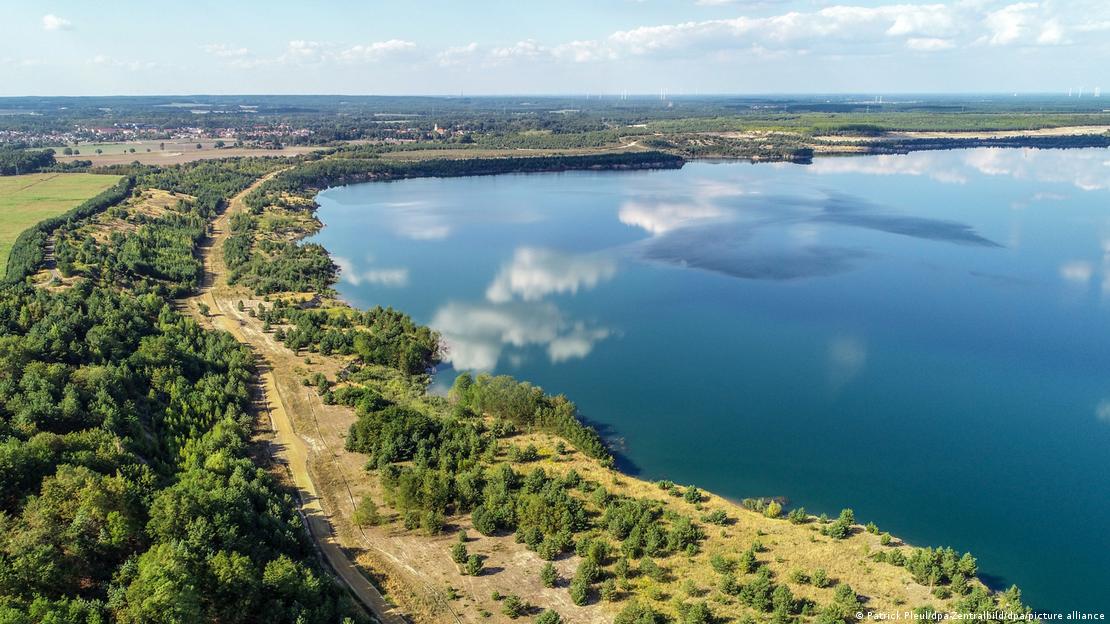
Some former lignite mines in Germany have already been transformed into lakes which also have recreational benefits
Image: Patrick Pleul/dpa-Zentralbild/dpa/picture alliance

Germany's Coal Commission could offer one model for how to get there. Established in 2019, the body brought all relevant stakeholders to the table and quickly drew up a plan to transition away from coal in a way it deemed both economically viable and socially fair. Germany plans to phase out coal-fired power generation completely by 2038.
Multilateralism under strain

Unlike the vast annual UN climate conferences which are not only attended by delegates from most countries in the world, but increasingly by fossil fuel lobbyists, the Santa Marta meeting was billed as a "coalition of the willing."

The hosts issued their invitation after last year's COP30 climate summit in Brazil saw the emergence of a broad alliance in favor of a road map to phase out fossil fuels.

The proposal was ultimately blocked by a number of countries. So those attending the talks in Santa Marta welcomed the chance to meet in a different forum.

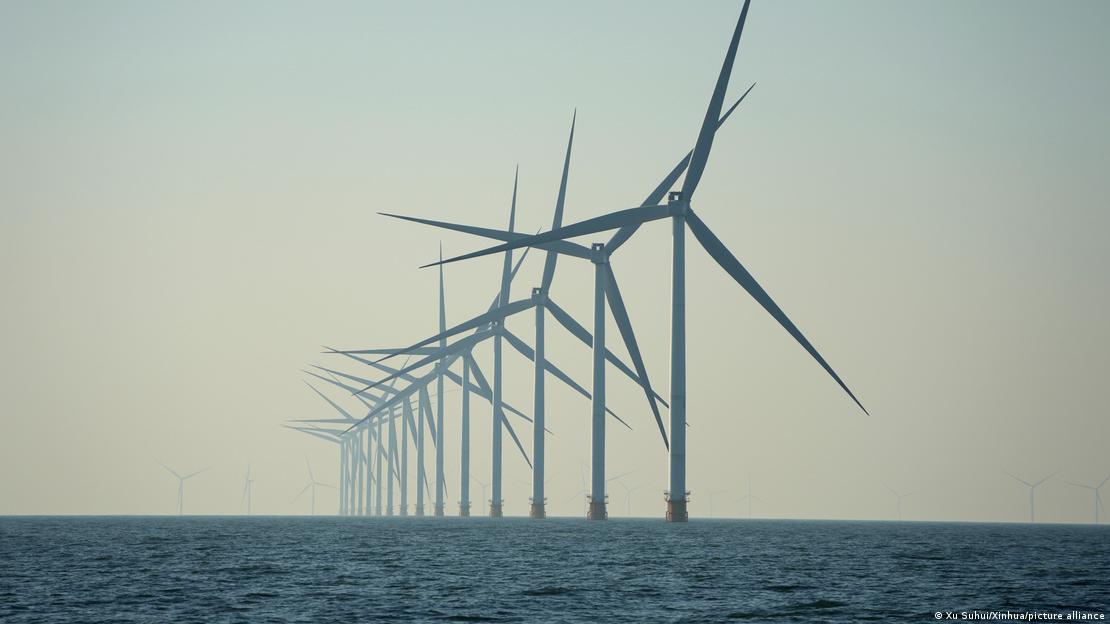
In light of the energy crisis and high fuel prices, many economists are calling for more independence from fossil fuels
Image: Xu Suhui/Xinhua/picture alliance

Former Irish President Mary Robinson, who is a prominent climate justice figure, said the talks felt more collaborative than the annual UN climate conferences.

"COPs are more formal, negotiators have their lines and they will not cross them and it's so different here," she told reporters.
Many ideas and the central question of money

France used the conference to present a detailed plan for how and when it intends to end its use of coal, oil and gas.

It is planning to reduce the share of fossil fuels in final energy consumption to 40% by 2030 and 30% by 2035. Coal is to be phased out by 2027, oil by 2045 and fossil gas by 2050. The French road map brings together existing climate and energy targets but does not contain new commitments.

NGOs have welcomed the plan but say it remains insufficient in light of the climate crisis. Last year, 91% of the planet recorded warmer than average surface air temperatures. Hotter conditions have been linked to prolonged heatwaves, wildfires, crop failure and water scarcity.

The talks in Santa Marta also made clear that financing the energy transition remains one of the central challenges, especially for developing countries facing high borrowing costs and limited access to capital.


Stientje van Veldhoven, the Dutch Minister for Climate and Green Growth, said affordable financing would be essential if the transition is to be implemented globally. The Netherlands has also called for the reduction in fossil fuel subsidies. Today, fossil fuels receive around $920 billion in subsidies worldwide.
Shoring up energy security in uncertain times

Colombia's left-wing president, Gustavo Petro, attended the talks and used the opportunity to challenge the global economic model underpinning fossil fuel consumption.

He also linked current conflicts to energy dependence, saying that "the wars we are seeing are driven by desperate geopolitical strategies around fossil resources."

Underlining the importance of the energy transition for Europe, EU climate chief Wopke Hoekstra said that "in around two months, Europe's fossil fuel import bill increased by over EUR 22 billion, without a single additional unit of energy."

He said a road map to transition away from coal, oil and gas should build on the goals agreed at the UN climate conference to triple renewable energy capacity and double energy efficiency by 2030. It should also include an end to new extraction and exploration and the decarbonization of transport, aviation and shipping.

Germany did not send a minister but was represented by Jochen Flasbarth, an experienced climate diplomat.

The German government remains divided over its path towards fossil fuel independence. While the environment ministry wants to accelerate the expansion of renewable energy, economy minister Katherina Reiche is backing policies that would prolong the role of fossil fuels.


A road map will take time


Cristian Retamal, associate researcher at Universitat Politecnica de Catalunya in Spain, said the spirit of the talks had been "quite constructive with a very positive mood," but that it is too soon to say how things will evolve.

"The real impact of this emerging coalition and envisioned efforts remain to be seen in the coming months and couple of years."

Delegates at what has also been called the TAFF conference say there will be no defining road map or treaty this year. Though some Global South countries would like to see something binding going forward.

"We need a fossil fuel treaty that creates the necessary architecture for a just transition,” said Cedric Dzelu, Ghana's technical director of the office of the minister for climate change and sustainability. "Past treaties and agreements too often fall short on policies and pledges, financing and equitable implementation."

Juan Carlos Monterrey, special representative for climate change at Panama's environment ministry said it will be a process.

"We must pave the way for a legal instrument that names what it phases out and how we finance it," he said. "The treaty will take time. We know this."

Still, he struck a determined tone.

"Economies built on fossil fuels are unraveling in real time. Fossil fuels are not just dirty. They are unreliable. They are dangerous. And they must end."

The next meeting is due to take place next year in Tuvalu. Scientists believe the small Pacific island state could disappear by 2100 as a result of rising sea levels.


Edited by: Tamsin Walker


Tim Schauenberg One of DW's climate reporters, Tim Schauenberg is based in Brussels and Münster.
Sudan's civil war: 'Genocide' in plain sight
Simone Schlindwein
DW
April 30, 2026

Experts estimate that Sudan's RSF militia may have massacred around 70,000 people in the city of el-Fasher in Darfur last October. A UN investigator told DW that the atrocities bear the hallmarks of genocide.

El-Fasher was the Sudanese army's last stronghold in Darfur. The RSF shared footage of their victory celebrations on Telegram, along with numerous videos showing the fighters' brutal actions
Image: Rapid Support Forces (RSF)/AFP

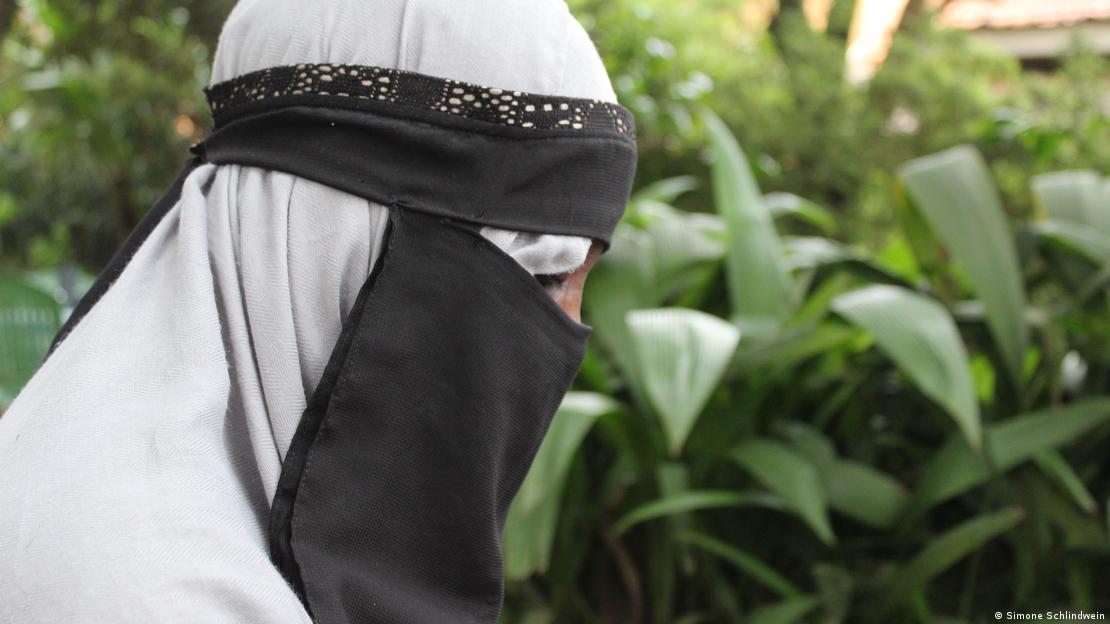
Her fingers are emaciated down to the bone. The ring she fiddles with nervously hangs loosely on her finger. Hassaina—as the 45-year-old Sudanese woman prefers to be called for security reasons—is deeply scarred, both mentally and physically.

It has been about six months since she and her four children survived the massacre in their hometown of el-Fasher in the embattled Darfur region of Sudan. They have since fled to Uganda, where they now live as refugees. The trauma runs deep: "I saw genocide with my own eyes and experienced it firsthand," Hassaina tells DW through tears.

War has been raging in Sudan for three years. Aid organizations estimate that hundreds of thousands of people have died in the fighting or as a result of the war. The violence reached a peak last October: The Rapid Support Forces (RSF) militia, which is fighting against the government army and allied militias, captured el-Fasher, the largest city in the Darfur region, after a long siege and carried out a massacre of immense proportions against the civilian population. It was a few days that completely changed Hassaina's life.

Many displaced people from Sudan, such as Hassaina, have reported atrocitiesImage: Simone Schlindwein

"The atrocities have a hallmark of genocide," concludes UN chief investigator Mohamed Chande Othman in an interview with DW. In February, after about three months of research, he presented his 30-page report to the UN Human Rights Council in Geneva and also submitted it to the International Criminal Court (ICC) in The Hague.

He based his conclusion on three key findings. "The first one is to have mass killings. Secondly, you find physical harm through torture and horrendous gender-based violence, which is really traumatic, as proven by the evidence that we have. And the third element is the long-term starvation through denial of humanitarian access, destruction of medical facilities."

The RSF siege of el-Fasher


The RSF had previously besieged el-Fasher for over 18 months. They shut down the internet and telephone networks. Not a single bean, grain of rice, or drop of gasoline got through the RSF roadblocks. And no one could escape. The reason for the siege: El-Fasher was home to the headquarters of the army's 6th Division, against which the RSF is fighting

At the start of the war, the soldiers had still managed to defend the city. Then the RSF cut off their supply lines. The population was declared the enemy. When the army units finally surrendered, the roughly 250,000 remaining residents were left defenseless at the mercy of the RSF.


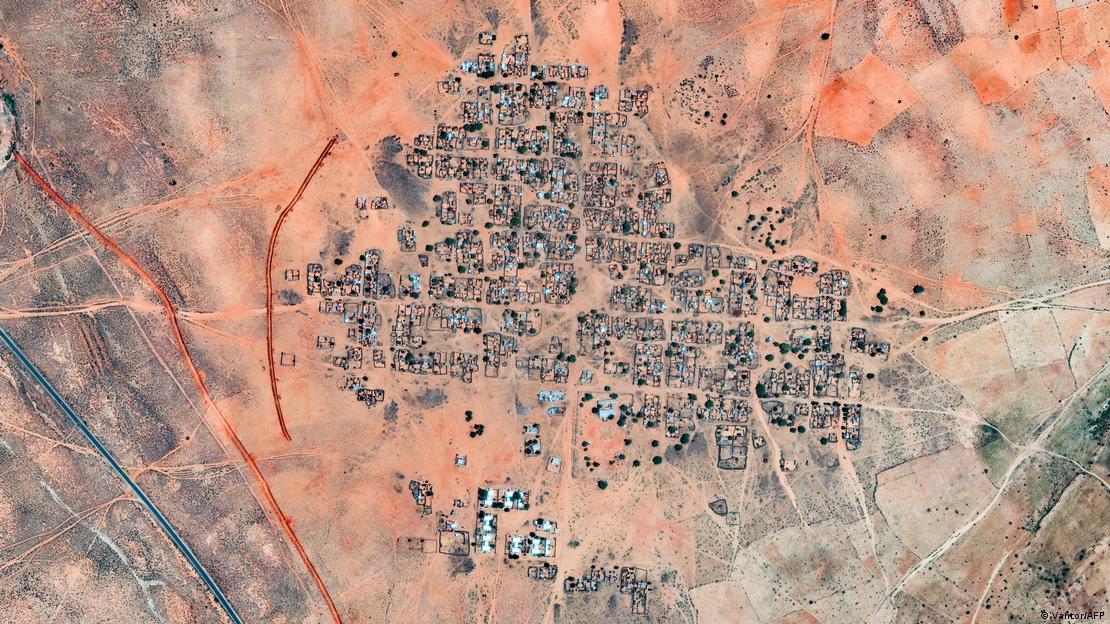
Hassaina and her family were among them. When the RSF began bombarding the city with artillery and drones on the night of October 25–26, 2025, Hassaina ran off with her teenage children; she lost sight of her husband, who had gone to organize help for an injured nephew. But the RSF fighters had previously used excavators to dig a 30-km (18-mile)-long trench around the city. Behind it, an earthen wall had been piled up—an insurmountable obstacle, Hassaina reports: "In the chaos, I fell into the trench and was buried under earth and corpses. I saw so many dead people around me."

Satellite images show how trenches have been dug around el-Fasher
Image: Vantor/AFP

In exchange for a ransom paid by a relative in Australia, Hassaina and her children finally regained their freedom and, after further twists and turns, made their way to a Ugandan refugee camp

The paramilitary group documented its crimes extensively: After the complete blackout of el-Fasher, the fighters used the internet, which they had restored, to post videos of their atrocities on their Telegram channel, accompanied by grandiose music. These videos show the militia's crimes up close: Aerial shots show off-road vehicles driving through the city. The trench is visible—as are thousands of people fleeing across the grassy landscape and being stopped by this trench: a death trap.

In one video, you can see RSF General Abu Lulu—clearly recognizable by his tousled curls, as confirmed by various media outlets and think tanks—shooting everyone in the trench who is still alive. Another video from the same day, filmed at the hospital in el-Fasher, shows fighters walking through the half-bombed building and executing everyone still alive in their beds or crouching on the floor—war crimes and crimes against humanity captured on camera.
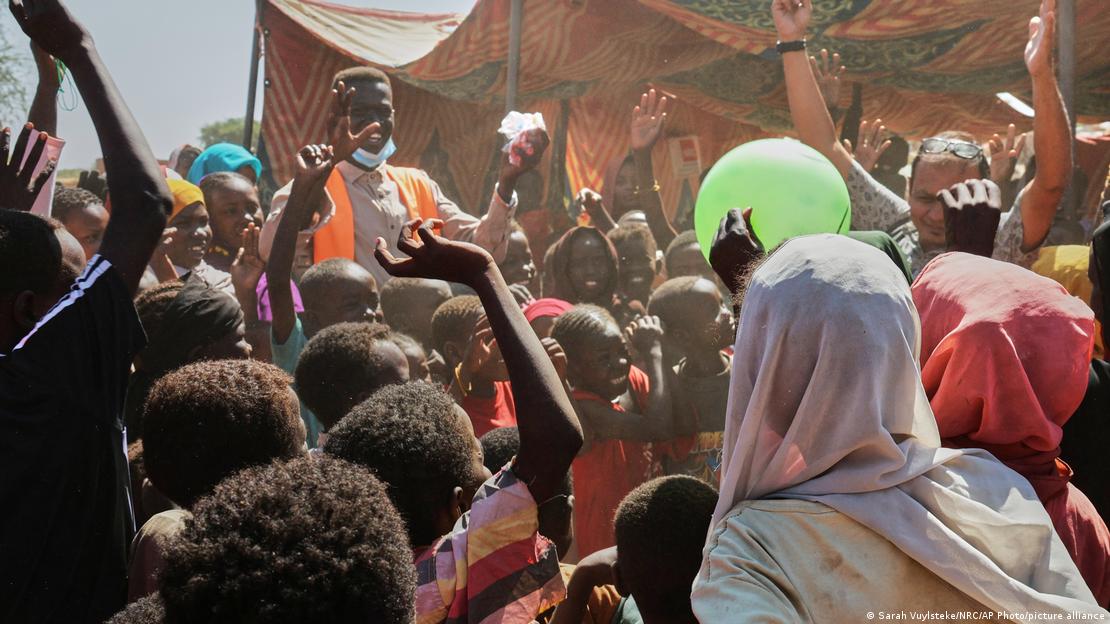
For many refugees from el-Fasher, Tawila was their first place of refuge (Photo courtesy of the Norwegian Refugee Council)
Image: Sarah Vuylsteke/NRC/AP Photo/picture alliance

Reports of mass rape


According to estimates by the International Organization for Migration (IOM), only about 100,000 people managed to flee the attacks on the day of the assault. Some, like Hassaina and her children, made it to the Tawila displacement camp 70 km to the southwest, where food.was provided.

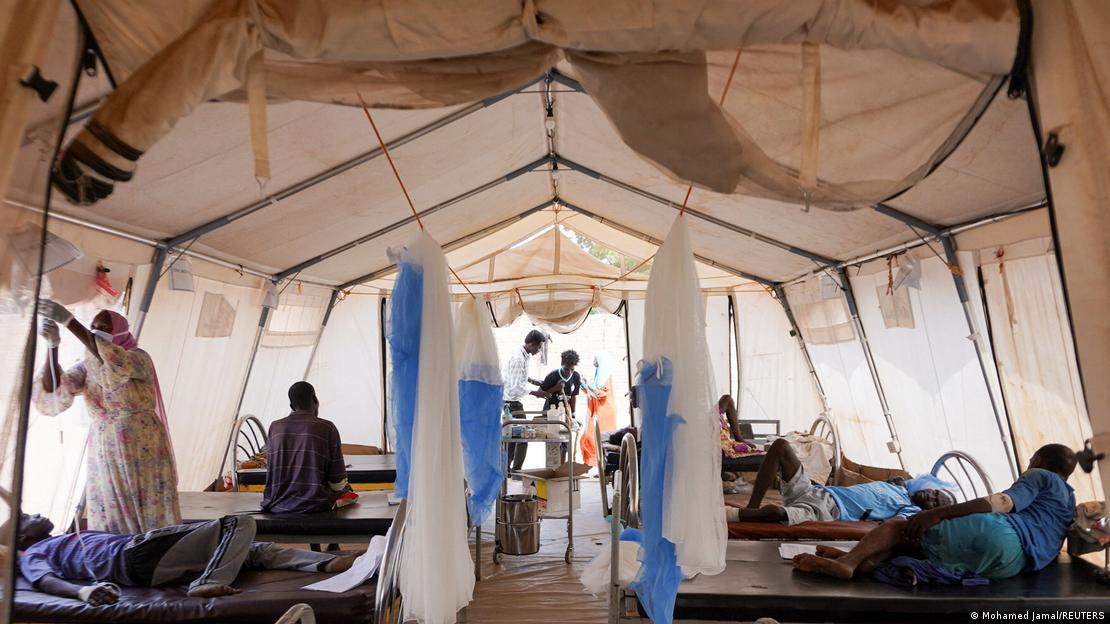
Bob Kitchen of the International Rescue Committee, one of the few aid organizations present, was also working there. The extent of the brutality inflicted on these people has deeply disturbed him. "Almost everyone that we spoke to had been raped." From infants to grandmothers, he told DW. "It was predominantly gang rape with very, very significant violence. We heard reports of tiny infants, six months old, being raped. We had very elderly women, 72, 75 years old, being raped all in front of their families. So there's very clear punishment involved in."

What took place in el-Fasher during the siege went largely unnoticed by the rest of the world. There were only sporadic reports in the media. A team of forensic scientists from the renowned Yale School of Public Health in the US tracked those events in real time using satellite imagery. In their latest analysis, the team was able to prove that the RSF had already destroyed the fields and farming villages in the surrounding area that fed the city in the run-up to the assault—and that the people were thus deliberately starved.

Many displaced people from El-Fasher had been abused and tortured
Image: Mohamed Jamal/REUTERS

From space, the forensic experts were also able to spot bodies and bloodstains on the dusty streets during those days in October when the RSF captured the city. They counted around 150 piles of bodies and numerous mass graves, according to Nathaniel Raymond of Yale University. His team is working to calculate the death toll based on estimates: "That left us with around 70,000 people presumed dead or missing," he told DW.

Following the largely overlooked siege of el-Fasher, the openly displayed massacres of October sparked an international outcry. Calls for investigations are growing. In Hassaina's eyes, the international community has made itself complicit. "The international community has let us down; it should have intervened during the siege to prevent worse from happening," she says through tears. "But nothing happened."

This article translated by Nico Fischer was originally written in German

Edited by: Chrispin Mwakideu