Monday, May 18, 2026

RFK, Jr. Still Doesn’t Care About Long COVID Patients


 May 15, 2026

Late last month, Health and Human Services (HHS) Secretary Robert F. Kennedy, Jr. testified that he was making Long COVID a top priority, noting that his own son had been “debilitated” by the disease. It is certainly terrible that Secretary Kennedy’s son is among the millions of Long COVID sufferers in the US alone. But it’s difficult to take the Secretary seriously when he asserts his commitment to helping Long COVID patients, given that he has done an awful lot to contradict that claim directly.

Long COVID is a chronic, multisystem condition that persists following an infection with SARS-CoV-2, the virus that causes COVID‑19. The condition can arise regardless of the severity of the initial illness, and symptoms may persist or emerge weeks to months following COVID-19’s acute phase. These symptoms can include, but are by no means limited to, difficulty thinking or remembering (sometimes described as “brain fog”), post-exertional malaise, shortness of breath, joint pain, chest pain, lingering cough, changes in or loss of taste and/or smell, and extreme fatigue. Surveys suggest that as many as a third of those who’ve survived COVID-19have experienced Long COVID symptoms. Researchers have drawn parallels between Long COVID’s impact and that of a stroke or Parkinson’s, and some studies suggest that Long COVID can lead to quality-of-life reductions comparable to those associated with advanced cancers.

In September 2025, we documented multiple ways by which Secretary Kennedy had shown the American people that he did not, in fact, care about Long COVID patients or about preventing future cases of Long COVID. Those actions included closing the Office of Long COVID Research and Practice without meaningfully replacing it; derailing or stalling Long COVID research and trials by cutting NIH funding; restricting access to COVID-19 vaccines, particularly for children; defunding mRNA vaccine research; stacking the Advisory Committee on Immunization Practices (ACIP) with anti-vaccine allies; weakening wastewater surveillance; and generally reducing support for chronic disease prevention and treatment.

Fast forward to today, and many of these harmful developments are still in place. Secretary Kennedy claims to care deeply for those who are suffering, but he has done little to repair the damage he has already caused. Despite assurances that the Office of Long COVID Research and Practice had been disbanded to make way for a more effective replacement, HHS appears to have replaced it with little more than a web page. With no disrespect meant to the many impactful web pages out there, this particular web page is a far cry from the coordinated infrastructure that Long COVID patients actually need. The administration is also once again seeking to eliminate the National Center for Chronic Disease Prevention and Health Promotion, after Congress prevented it from doing so in FY2026.

Additionally, while the administration ultimately (partially) reversed some specific cuts to Long COVID research, it appears to have only brought back particular grants, not the broader Long COVID infrastructure. The current five-year funding stream is smaller than the original investment that launched the program. The impacts of the previous funding disruptions have also persisted. Such abrupt cancellations, even when funding is ultimately restored, create uncertainty for investigators and patients, delay or threaten studies already underway, undermine trust in federally funded clinical research, and jeopardize the professional pipeline for new research talent.

Secretary Kennedy has also continued to deny or minimize looming Medicaid cuts, despite their relevance to the survival of disabled and chronically ill people. Working-age adults with disabilities are more likely to rely on public health insurance such as Medicaid relative to their peers without disabilities. Stringent new work requirements, enacted to offset tax cuts in the One Big Beautiful Bill Act of 2025, threaten to cut off people with Long COVID from the care they need for a condition that is often as medically complex as it is activity-limiting. Long COVID patients, in particular, may struggle to assemble the documentation required to qualify for an exemption from the work requirements, especially given how difficult it can be to obtain a diagnosis.

Kennedy’s HHS has also continued to undermine prevention efforts. Avoiding infection (including reinfection) is the best way to avoid developing Long COVID. Reinfection also poses substantial risk to those who already suffer from Long COVID, as reinfections can exacerbate existing symptoms and introduce new ones. Yet the administration has proposed further cuts to wastewater-based disease surveillance, a crucial public health tool and one of the only remaining ways to track COVID-19 case volume throughout the US. Access to COVID vaccines — which, while imperfect at preventing either infection or Long COVID, appear to at least be value-added on both fronts — also remains curtailed, especially for young children. (Long COVID has become frighteningly common among children, with uncertain implications for their long-term health and development.) The ACIP, which has traditionally played a key role in establishing vaccination guidelines, remains stacked with Secretary Kennedy’s hand-picked vaccine skeptics. Funding for mRNA research remains cut. And earlier this month, the Food and Drug Administration (which is part of HHS) reportedly intervened to block the publication of research results related to COVID and shingles vaccines, including findings that demonstrate a reassuring safety profile for COVID vaccines.

Meanwhile, under Secretary Kennedy, HHS has folded Long COVID into a broader “invisible illness” category that it asserts should be “disease agnostic”. According to the HHS site, “A new paradigm is needed to address complex chronic disease because fragmented, disease-by-disease, and organ-by-organ approaches are insufficient for understanding multisystem conditions like Long COVID.” This statement acknowledges something about which Long COVID patients have often complained (a fragmented, organ-by-organ approach) and attaches it to something more problematic (rejecting going “disease-by-disease”). Many chronic conditions do have things in common, and many preventative measures can work against multiple pathogens (e.g., use of N95 respirators and improved indoor air quality, though funding for Biden’s indoor air initiative has largely been allowed to lapse under the second Trump administration). But taken alongside the behavior of Kennedy’s HHS, one could be forgiven for wondering whether this New Paradigm is instead meant to sidestep the actual causes of Long COVID and the chronic illnesses to which Long COVID is compared on the HHS site. This would certainly explain the deemphasis of disease prevention at HHS. The new approach to preventing and treating Long COVID and other infection-associated chronic illnesses risks overlooking the specific root causes of each — namely, the infections themselves. Tackling these conditions requires dedicated funding and staffing that treats patients’ conditions with the specificity they deserve.

If Secretary Kennedy really cares about Long COVID patients, he should try showing rather than telling. He can start by reversing the damaging policies he’s already put into place. He must also fully obligate all remaining funding to avoid any risk of rescission. Until he does these things, it’s hard to see his statements about Long COVID as anything more than empty words.

This first appeared on CEPR.

Hayley Brown is a Research Associate at the Center for Economic and Policy Research.

The War Against Iran, Up Close and Personal (and All Too Far Away)


 May 15, 2026

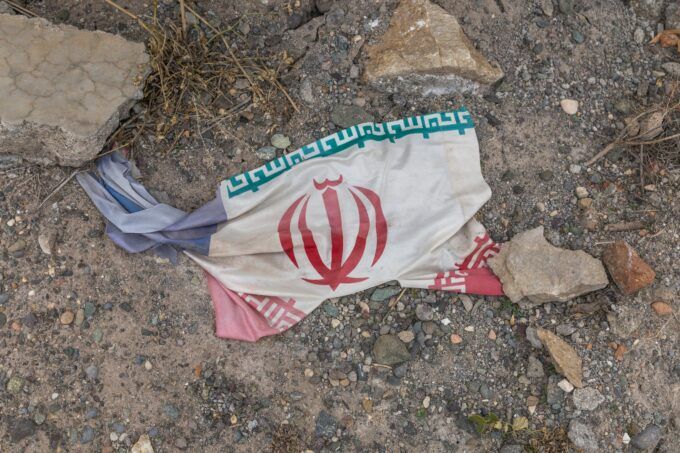
Image by Javad Esmaeili.

Guns or butter. Butter or guns. Can we have both? If not, which should come first? Consider it one of those chicken-and-egg conundrums of modern society.

“Guns” is the stand-in for a well-funded military and “butter” for all the human goods, comforts, and needs of a society.

Economists, politicians, and generals have long considered the balance of guns and butter. Wage too many wars, produce too many arms, and there won’t be enough money to keep a nation decently fed and comfortable. Produce too many consumer goods, meet everyone’s needs, and a nation might find itself ill-prepared and vulnerable in the face of a possible attack or even invasion. Everyone from Nazi propagandist Joseph Goebbels to British Prime Minister Margaret Thatcher has had something to say about the balance of guns and butter (or, more likely, the lack of it).

No surprise, but I like butter and don’t like guns. I have long been attracted to the graphics produced by groups like the National Priorities Project (NPP) and Brown University’s Costs of War Project that dramatize the opportunity costs of war investment in the United States. At some point, one of those groups created a pen that had a long scroll on a pull-out flap inside it. At parties, as you were discussing the military budget, you could take out that pen and unfurl a long bar graph comparing U.S. military spending to the budgets for education, healthcare, and infrastructure. Neat trick, right?

These days, NPP has a new factsheet that offers a breakdown of how the cost (so far) of Trump’s Iran “escapade” could have been so much better spent:

+ Covering Medicaid for all 14 million people at risk of losing their insurance,

+ AND the Supplemental Nutrition Assistance Program, or SNAP, for all four million people at risk of losing food assistance, including 3.5 million due to new work requirements for older people and caregivers,

+ AND expanding Medicaid to an additional 10.3 million people.

Those numbers are based on the Pentagon’s request for $200 billion in supplemental funding for the Iran war effort. Defense Secretary Pete Hegseth was on Capitol Hill on April 30th, supporting a lowball estimate of the war costs as a mere $25 billion (and worth every dollar!) and asking for support for an inconceivable $1.5 trillion for Trump’s war machine in fiscal year 2027. Guns vs. Butter? More like guns force-fed foie gras and caviar and sautéed in the world’s most expensive butter.

Every Warship Launched, Every Rocket Fired

If I ever got a tattoo, it would probably be of this line from President Dwight D. Eisenhower’s 1953 “Chance for Peace” speech: “Every gun that is made, every warship launched, every rocket fired signifies, in the final sense, a theft from those who hunger and are not fed, those who are cold and are not clothed.”

Eisenhower gave that speech 73 years ago (even as military budgets increased significantly while he was president) and yet the words ring truer than ever today. In reality, I’m unlikely to get a first tattoo at the age of 52, but I did see all of this up close and personal a couple of weeks ago at my Connecticut town’s school board meeting.

For months, school board members had been ringing an alarm bell about their budget. After years of scrimping and shaving, layoffs and early retirement packages, they were no longer able to economize their way to a balanced budget, and so were considering a “nuclear option”: closing one of our local schools.

Community members rallied, testified, and harangued. Busloads of kids joined our superintendent at the state capitol to ask for more support for our schools. For the last two months, everyone in my neighborhood has been talking about this, and on a Monday night a few weeks ago, the school board held a public meeting to make an ultimate decision about what to do.

I drove there over streets riddled with potholes, past new luxury apartments built as “workforce housing” for the engineers at General Dynamics Electric Boat, where a new class of nuclear submarines (12 boats for $132 billion) is now being designed. Those $2,200-a-month studio apartments overlook a gas station, train tracks, and a low block of struggling businesses in a flood zone.

A Theft from Those Who Hunger

The school budget gap (more than $7 million) is there for all the usual reasons, made more extreme because we’re living through what, in the age of President Donald J. Trump, can only be considered the cratering of imperial America globally and the volume is up to 11 on everything. In these years, the line items for staff health insurance, building utilities, and a host of other costs have skyrocketed. The contributions from the state of Connecticut aren’t even close to keeping pace. The whole enterprise is built on the backs of local property owners and our taxes are already far too high.

The place most likely to be shuttered was CB Jennings School, right up the road from my house, which has (for the rest of this school year, anyway) 338 students. All but 30 of those students qualify for free or reduced-fare lunches, meaning they come from low-income households. The school population includes 149 “multi-language learners” and 66 special-education students.

The 338 kids there would be divided between the other two elementary schools in our neighborhood. The fifth graders would all go to the local middle school (which itself was to be consolidated from two buildings into one) and the eighth graders to the local high school.

Teachers and custodians, principals and paraprofessional educators, social workers and secretaries will all be moved around, too. Routines will be broken, friendships and collegial collaborations disrupted, teaching teams split up. There will be a great jostling for parking spaces, offices with windows, and classrooms that face out of (or into) the sun. September will be stressful indeed and no one is happy.

Who bears the brunt of all this disorder? The answer: the kids who pay no taxes and make no policies. The little ones who are already deemed behind when they show up for kindergarten and need all the help the professionals there can give them. The tween ones who just want to see their friends, show off their new braids, learn to play the trumpet, and get first place in the spelling bee. The older ones who need the breakfast, lunch, and snacks that are served at school. The ones who bring the light and the joy of learning with them every day.

The lives of those little ones and their slightly bigger siblings are all soon going to be subjected to massive disruptions.

A Theft from Those Who Are Cold

Of course, those “massive disruptions” are only so in relative terms. They’re but a minor hiccup compared to what’s happening in the lives of children throughout Iran during President Trump’s war on their country.

I cry about the war against Iran every day. (Truly!) The terror and the horror buzz through my head at the weirdest times: as I run errands, work in my garden, perform my school-crossing guard duties, and greet my young walkers. All this daily predictability and precious stability, the gorgeous ho-hum of the daily grind that has been stolen from the people of Iran by our war.

I look at pictures of Iranians cleaning up around buildings reduced to rubble and trying to go about their lives amid the catastrophe and I’m filled with awe. How would I ever begin again after surviving a rocket attack? Would I be able to extract the broom from the wreckage or ever brew tea again?

I tried to put such images aside when I went into the school board meeting that fateful night. When it was my turn to speak, I had three points to make — one minor, one second-hand, and one massive. I was nervous. My first point was easy. I argued that the school at the edge of the city should close instead of Jennings, which is more centrally located. My second point was awkward. My 12-year-old had written a speech, but then refused to read it and was whispering contradictory instructions to me as I got up for my turn to speak.

Finally, I got to my third point. Facing a semicircle of board members, I tried to channel the gravitas of President Eisenhower by pointing out that the Trump White House began its war against Iran by hitting a primary school with a Tomahawk cruise missile and killing 165 civilians, most of them schoolgirls. And I pointed out that decisions like the one to start a war with Iran ripple all the way to our coastline — destabilizing our local world and stealing from our kids, too. Closing an elementary school or having a massive budget hole are not our only two options, I said. We could instead be living in a society that prioritizes keeping elementary schools open and fully funded instead of bombing schools 6,700 miles away.

I tried not to think about the room full of parents and teachers behind me, but I still felt uncomfortably out on a limb making my geopolitical points during our local school board meeting. Despite my doubts, however, I continued, noting that between February 28th — when my country started that terrible, illegal war — and March 27th, the United States had fired 850 Tomahawk missiles at targets in Iran. And mind you, each one of those missiles comes at a cost to taxpayers of more than $3 million.

My three minutes of time were running out, so I rushed through the next part, mentioning that our senator, Richard Blumenthal, estimated at the beginning of April that Trump’s war is now costing U.S. taxpayers $1 billion dollars a day! And that’s before we factor in the long-term economic consequences of oil and gas price rises, disruptions to the global supply chain, and the cratering of my country’s already teetering standing globally.

I finished up by saying that we all have to work so much harder to stop this war as well as fund our schools and that the two were connected. This budget gap would be a difficult dilemma under the best of circumstances, but against the backdrop of war and calamity, it feels indicative of a much deeper problem than a few-million-dollar local budget holes. As I concluded. I made eye contact with the school board members and thanked them for their time.

Making my way back to my seat, I noticed that I was a little sweaty and that my hands were trembling. Why was I so nervous? Why was that so hard?

The Hopes of Its Children

Eisenhower’s speech is a rhetorical master class, well worth revisiting in this age of imperial fiat by tweet. Ike went on to intone: “This world in arms is not spending money alone. It is spending the sweat of its laborers, the genius of its scientists, the hopes of its children. The cost of one modern heavy bomber is this: a modern brick school in more than 30 cities…. We pay for a single destroyer with new homes that could have housed more than 8,000 people… This is not a way of life at all, in any true sense. Under the cloud of threatening war, it is humanity hanging from a cross of iron.”

After some formalities and hearing from a handful more people, the school board voted to shutter the CB Jennings Elementary School, a remarkably modern school in the heart of our city with a new playground and a beautiful library. The vote was unanimous. The board members were sad but resigned. It was treated as an inevitable but unfortunate outcome or even as a forward-looking, resolute action. They were “doing something” in the face of a huge budget gap.

And indeed, the school budget will be back in the black — for now — once a $1.4 million shortfall is settled by cutting more positions, shaving costs, and looking for grants. Meanwhile, the local schools that remain are indeed closer to a balanced budget (at least until utility costs spike even higher and yet more global war-making costs hit home in this country).

Humanity Hanging from a Cross of Iron

The cost of the war against Iran is just one reason to be against it. The wanton violence, the indiscriminate death-dealing, the gold-plated hubris, and the gargantuan stupidity of Trump and crew, as well as the massive long-term impacts of the closing of the Strait of Hormuz, are something to try to take in.

Every war is bad, stupid, and represents a colossal failure of the imagination, but this one, with the Trump trademark on it, should be considered the ur-war to oppose, resist, and refuse to pay for. And sitting in that makeshift meeting room of the New London Board of Education, I felt like a tightly wound, somewhat muted Cassandra, requesting that people who are probably against the war, too, somehow consider it part of the reason we are being called upon to close a school and reduce the quality of our kids’ education.

We have a well-worn poster in the back hallway of our house. It’s an image of kids playing on a metal jungle gym alongside the words: “It will be a great day, when our schools get all the money they need, and the Air Force has to hold a bake sale to buy a bomber.”

A bake sale to buy a bomber? A car wash to get a Tomahawk? A dime drive for the next generation of nuclear submarines? This administration’s officials aren’t even pretending to enlist the public in support of their latest war, nor did they even try to get Congress to rubber-stamp it. They care that little for democracy, the rule of law, or even our hearts and minds. This White House grows fat on our outrage, our protest gestures, and our well-mannered critiques. They are printing money and telling lies in a frenzy of impunity that will (hopefully) finally be checked by the November elections. But there is so much violence and scapegoating and scaremongering coming out of Donald Trump’s White House and his Florida compound that many people are checking out on all of it just to carry on with their lives. But nothing now is NORMAL and we can’t allow ourselves to normalize any of it.

How do we stop this war? How do we redirect the money being wasted into the schools and health centers, bike lanes and sustainable-energy infrastructures that we all so desperately need? How do we take care of those victimized, maimed, and orphaned by our military? How do we take care of those rendered homeless, stateless, limbless by our wars?

The answer: We do something to protest, undermine, and challenge militarism every day. We work to connect those faraway wars, framed as invisible or normal or too complicated for us to grasp, to our everyday lives. We make all the awkward speeches we can. We hold up homemade antiwar signs. We refuse to pay for the wars we oppose. We continue to demand that butter, not guns, schools, not heavy bombers, homes, not destroyers be the focus of our lives.

This piece first appeared on TomDispatch.

Frida Berrigan is the author of It Runs In The Family: On Being Raised by Radicals and Growing into Rebellious Motherhood. She is a TomDispatch regular, writes occasionally for WagingNonviolence.Org, and serves on the Board of Kirkridge Retreat and Study Center. She has three children and lives in New London, Connecticut, where she is a gardener and community organizer.