Monday, May 18, 2026

Gaza Elders Who Survived The Nakba Reflect On Being Displaced By Israel Again, 78 Years Later

Source: Mondoweiss

Ismail Atiya Nasir al-Din treads cautiously through the ruins of his three-story home in the Amal neighborhood of western Khan Younis, his frail, wrinkled hands clutching the wooden cane he leans on. Slowly, he makes his way to a concrete slab that fell on the side of what little remains of his house, which Israeli missiles knocked down in the winter of 2025. Sitting down, out of breath, he raises his eyes to the sky, then whispers verses from the Quran until the grief passes enough for him to speak.

He is 91 years old, grandfather to roughly 150 grandchildren from twelve sons and daughters, and still sums up his life in the childhood years pre-1948, when Zionist militias drove him and his family out of their homeland. Today, he shares the one room left standing beneath the rubble with a son and four grandchildren. Known for his memory, his eloquence, and his habit of reaching for a line of poetry or a Quranic verse when ordinary words fall short. Nasir al-Din reaches for them often today, as he marks seventy-eight years since the Nakba in a renewed state of displacement. 

“I believed the pain of displacement and exile had ended with those days and would never return,” he says, his voice breaking. “But this has been the occupation’s plan since before the establishment of what they call Israel: to kill us, displace us, and seize our homeland. The same goals, the same tragedies — separated by 78 years.”

For the generation that survived 1948 and never left Gaza, this war carries a weight that younger Palestinians cannot fully share. Between 750,000 and one million Palestinians were expelled from their homeland by Zionist militias and the new Israeli army during Israel’s establishment in 1947–49. Many fled to Gaza, which saw its population nearly triple as refugees poured in from Jaffa, Beersheba, and beyond. Nasir al-Din was among them, and he has lived in Gaza ever since — through occupation, repeated wars, and through a blockade now in its eighteenth year. By October 2025, UNOSAT satellite imagery found approximately 81 percent of all structures in the Strip had been damaged, with more than 123,000 destroyed outright. Nearly the entire population has been displaced, many of them repeatedly. He watches the founding catastrophe repeat itself.

Born in the Mahjar Barqal area of the Jaffa district in historic Palestine, his family moved to the village of Beshit in the Ramla district in 1940. He was a child there and remembers it as a place of abundance. “Ya Allah, how beautiful those days were before the Nakba,” he says. “In our house, my mother would prepare the bath for us, feed us vegetables, and before sleep, she would tell us stories while giving us raisins, dates, and dried figs. Our home overflowed with life and hope.”

He says he had lived his life trying to recreate that same warmth for the family be built in Gaza. But the occupation prevented this from happening.

The first attack on Beshit came at midnight on March 30, 1948. Residents fought back with old rifles and drove the militia off, though six Palestinians were killed. A fiercer second attack came on the night of May 11. This time, the fighters ran out of ammunition. The militia entered, and the population fled.

“We escaped to the neighboring village of Yibna for three days, then returned to Beshit to collect some food, clothes, the donkey and the cart,” he says. “Then we moved from area to area until we reached the Gaza Strip on November 2, 1948.” He lists the villages they passed through: Yasour, al-Jaldiyya, Jisr, Samuel, Barqousiya, Dukrin, Zeita al-Khalil, Iraq al-Manshiyya, al-Faluja, al-Majdal, al-Khassas, Hirbiya. The journey took months. No food for days at a time. Months sleeping in the open. His mother placed their clothes in an oven to kill insects because there was no water to wash them. “We ate grass from the ground,” he says, clapping his palms together.

His gaze drifts, and his words begin to trace the parallels. “People have been starved. Children die of hunger and cold. Rodents swarm with infestation. Parents don’t get a chance to say goodbye to their loved ones.” He mentions briefly that he lost a son and a grandchild in an airstrike, then refuses to say more.

Ismail Atiya Nasir al-Din, 91, sits amid the rubble of his destroyed home in Gaza, displaced for a second time in his life after surviving the Nakba of 1948. (Photo courtesy of the author)

‘Multiple Nakbas’

When Nasir al-Din found himself in a tent again eighteen months ago, displaced from Khan Younis to Rafah to al-Mawasi before returning to his ruined home, the distance between 1948 and now collapsed entirely. Eight months after the October 2025 ceasefire, the humanitarian situation in Gaza remains dire, with OCHA reporting severe restrictions on aid entry and reconstruction materials, and the siege continues. Food, medicine, and cement — all remain subject to Israeli control at the crossings.

“I was struck by a shock that has not left my mind or heart,” he says. “I began to remember that tent we lived in during 1950 and 1951. It is the same tent. The same enemy that expelled us. But the material and psychological pain is many times greater.”

Israeli Agriculture Minister Avi Dichter remarked in November 2023 that the war would end with a “Gaza Nakba 2023.” For Nasir al-Din, no official statement was needed to name what he was living through. “We called what happened to us in 1948 a Nakba,” he says. “But what we have lived through in this war — no words are adequate. Perhaps it is Nakbas, plural. Something worse and more terrible than anything that happened in the year of the Nakba.”

He finished his schooling in Khan Younis in 1955 and became a teacher, one of dozens of students sharing a single textbook, walking fifteen kilometers to borrow it from a classmate. “Everyone was clinging to life and education,” he says. “We had none of the basic necessities, yet we studied. The same scenes are repeating now. Children go to school under bombardment. Secondary students sit their exams in tents or destroyed classrooms and pass and go to university.”

“My life long, I have not forgotten my village Beshit,” he says. “My children and grandchildren know every detail of it. We fled then, and we flee now — not abandoning our homeland, but escaping death. We will not leave, no matter what happens.”

‘More terrifying. More deadly.’

A few streets away, in the Katiba neighborhood of central Khan Younis, 85-year-old Fatima Ibrahim Khalfallah sits on a small rock beside a cold fireplace outside a makeshift shelter of corrugated metal and canvas pitched over the rubble of her destroyed home. She has not lit the fire in days. There is no wood, no vegetables, no meat. She eats whatever a charity kitchen provides, whenever it does. She turns the ash with a small stick.

Khalfallah was eight years old when armed Jewish Zionist militias forced her family from Beersheba in 1948. “They came and made us leave,” she says, in the plain, unhurried cadence of her Bedouin dialect. “They said: go to King Farouk. We were forced out of our homes by fear of death,” she recalls, referring to the Egyptian monarch who at the time positioned himself as the defender of Palestinians against Zionist militias. Khalfallah recalls how she and her family had lived simply: a tent of goat hair, two sheep, a camel, a donkey, wheat, barley, and onions from their own fields. All of it left behind.

Fatima Ibrahim Khalfallah, 85, a survivor of the Nakba, now lives in a tent in Gaza, displaced for the second time in her life, May 2026. (Photo courtesy of the author)

She grew up as a refugee in Gaza, beginning life in tattered tents before eventually settling in Khan Younis and building a five-room, 170-square-meter home. She never went to school, and marks time not by years but by events: she was eight when the Nakba came; her eldest son was born the year before Israel occupied Gaza. Now two of her unmarried sons live with her in the makeshift shelter: Amal, forty-seven, and Jamal, who suffers from a severe neurological illness. Her other four children are scattered.

She turns her head to cry before the words come: “Is it possible that my life began in a tent and ends in a tent? Our Nakba has fallen on no other people on earth. Must we pay twice for being Palestinian — from 1948 till now?”

Fatima Ibrahim Khalfallah, 85, a survivor of the Nakba, now lives in a tent in Gaza, displaced for the second time in her life, May 2026. (Photo courtesy of the author)

The parallel she draws is precise, not rhetorical. “Every moment I connect my life now to those years after the Nakba — sleeping outdoors, eating when food appeared, hungry most of the time, until eventually there was a tent. That same scenario has repeated during this war.” 

She has long since let go of the dream of returning to Beersheba. Her dream now is smaller and more desperate: to stay in the tent she has pitched on the ruins of her home, and not to be forced to move again. She has been displaced four times since October 2023.

She pauses, then adds: “This Nakba is more terrifying, more deadly, more destructive. The same form of displacement, the same hunger and thirst and fear — but multiplied many times over.”


This article was originally published by Mondoweiss; please consider supporting the original publication, and read the original version at the link above.
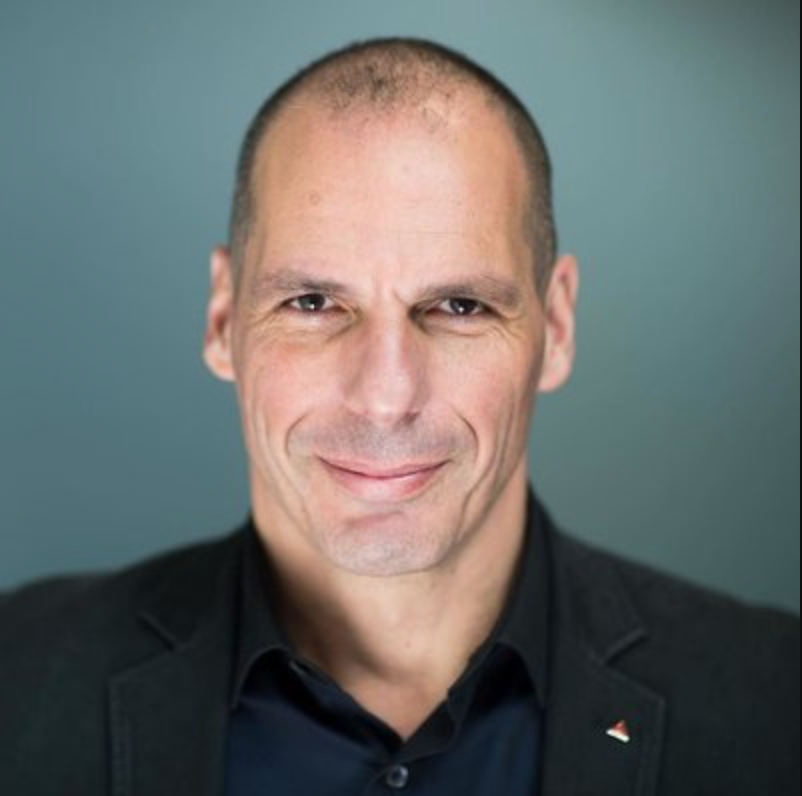
Mohamed Solaimane is a Gaza-based journalist, who is published in international outlets like Drop Site News, The Nation, El Pais and many others. He holds a PhD, which he completed from his tent in al-Mawasi.


78 Years Later, the Nakba Is Still Happening

Source: DiEM25

On the 78th anniversary of the Nakba, we remember that dispossession and exile are not mere footnotes of the past but living, ongoing realities. To speak of justice today is to name the catastrophe of 1948 and to recognise that no future can be built on forgetting. Freedom and equal rights for all, from the river to the sea, is the only vision worthy of the name. As we mark another Nakba anniversary, the genocide that started then is intensifying. What we witness in Gaza and across the occupied territories is not a war, not clash of equals, nor a tragic but inevitable conflict — it is the violent, relentless logic of white settler terra nullius colonialism, dressed in modern military hardware and sustained by western complicity. A people is being erased, deemed superfluous, their humanity denied so that their erasure may be justified. To commemorate the Nakba is to stand with the living against the coloniser’s lie that some lives are mere obstacles. It is to insist that remembrance must become resistance, and resistance is not only a prerequisite for liberty but also of existence.


This article was originally published by DiEM25; please consider supporting the original publication, and read the original version at the link above.

Israeli Tourists Have a Bad Reputation Around the World


 May 15, 2026

Photograph Source: A. C. for Unsplash+

In May, 2025, a restaurant worker in Thailand asked an Israeli tourist to remove her shoes before entering the establishment, a traditional cultural custom in the country. The tourist refused to take off her shoes, shouting, “My money helps build your country.” Everything was caught on a video which went viral.

The incident sparked a debate about the open secret of rudeness and aggression rife in Israeli tourists abroad. A discussion long forbidden, as most who even hinted at the phenomenon were tarred as antisemitic for suggesting this. But since the onset of Israel’s campaign of annihilation in Gaza, its violent pogroms in the occupied West Bank, ethnic cleansing in southern Lebanon and unprovoked war against Iran, reservations have greatly eased throughout the world.

The reality is that there are scores of reports of Israelis behaving in this manner in the countries they visit. From vandalism to disrespect of local customs to violent confrontations, from Sri Lanka to Brazil to Thailand to Chile to the Netherlands, Israelis have a bad reputation due to an enormous amount of incidents that have piled up over the years. And this has only worsened since the onset of Israel’s genocidal campaign in Gaza.

The Maccabee riots in Amsterdam in 2024 highlighted much of this backlash against these incidents. Gangs of Israeli football fans rampaged throughout the city, chanting “death to Arabs” and singing gleefully about dead children in Gaza, ripping down Palestinian flags off of private homes and businesses, and attacking people they believed were Arab or Palestinian. The Israeli government and political organizations which support the apartheid regime were quick to accuse those who protested or even talked about this aggression as being antisemitic. But the video evidence proved otherwise.

Antisemitism is an odious and dangerous social hatred. It should always be condemned. But the state of Israel and its supporters have weaponized the term by equating the nation-state of Israel and the supremacist political ideology of Zionism with the ethnic and religious identity of Judaism. Thus, any condemnation of Israel or Zionism is erroneously painted as antisemitic.

It is important to look at this phenomenon, not through the lens of Jewish identity, but the impact of colonialism, national arrogance and racist ideologies on a society. Israelis are not unique in this regard. There are other countries which have a similar bad reputation thanks to this historical context.

Americans, for example, have also become a global pariah due to the belligerent imperialism of their government, its support for genocide, and their nationalistic chauvinism. Unsurprisingly, it also has a long legacy rooted in dispossession, oppression and genocide. And visitors to the US, as well as Israel, have long reported mistreatment by customs and border agencies, further tarnishing their reputation abroad.

As Israel becomes more and more isolated and loathed in the court of public opinion, Israelis have found they are less welcome in the places they once holidayed in. The boycott of Eurovision by five European nations due to Israel’s participation is a real world consequence of this growing disgust with the crimes of that state.

But instead of grappling with the implications and facing the racist character of its state, many Israelis are defaulting to the false notion that they are hated simply because they are Jewish. Ironically, this belief in perpetual victimhood and refusal to challenge the racism rife in their society and the apartheid, ethnic cleansing and genocide perpetrated by their government, will only serve to isolate them even more.

The Fuel to My Revolutionary Optimism


 May 15, 2026

Image by Allison Saeng.

As a Palestinian born in the 21st century, I am the generational product of Nakba survivors and the trauma that came with it. As distant as it may seem, I am only two generations removed from the 1948 Catastrophe of Palestine, where over 750,000 Palestinians were displaced from their land, and thousands were massacred. Zionist militias backed by the British Empire razed Palestinian villages, killing, raping, displacing, and imprisoning anyone they could find, all to establish the brand new settler colonial project of Israel. This single day in Palestinian history would stain the soil with blood spilled and trauma gained for decades to come.

Both sets of my grandparents are older than the state of Israel, each born a few years before the Nakba. May 14th, 1948, was probably a rather normal day in my grandparents’ childhood. They would have been inside their homes with their families, or playing outside like any other day. The next day, everything changed. On May 15th, Zionist militias stormed their hometowns, slaughtered their neighbors, and destroyed entire villages. My grandparents’ childhoods were stripped away, and their entire lives uprooted.

After the Nakba, everything changed. The people of Palestine now live under the occupation of racists who despise and dehumanize them. These foreigners decided what rights they could and couldn’t have in their own homelands, and the threat of violence was always present. My great-grandfather was shot in the head by a settler. The Palestinian education system was dramatically defunded, leading my mother’s parents to leave for Europe for university. When they tried to come back home after the 1967 Naksa, foreign soldiers somehow had the authority to bar them from ever entering again. They had to move to Jordan and start a new life. They were only 2 hours away from their families, but they didn’t know if they’d ever be allowed to make the short trip back. My grandmother has only been to Palestine once since then, and my grandfather twice.

My other set of grandparents remained on the land, but now had to live a life of heavy restriction and limited movement. It’s hard for me to imagine what it was like to witness the plundering of our homeland by foreign invaders, but I can never truly understand the magnitude of seeing the gradual colonization that seemed to only get worse throughout the decades. I will never forget when my grandfather, who was a bus driver back in the day, told me that he was once able to drive to Beirut or Baghdad, and then return home on the same day. Now, such an idea is unfathomable.

Ever since I was old enough to comprehend things, I knew Palestine was my homeland and that it was being hurt by something called Israel. Israel was the reason my mom was born in Jordan instead of Palestine, the driving force that led my parents to move to the U.S. for better education and work. It is the thing that separates me from the rest of my extended family, preventing me from knowing them wholly and truly. Israel is why I only see my grandparents every few years, why I have to watch my younger cousins grow up through a phone screen. As a Palestinian who grew up in the States, I was immersed in Western culture and disconnected from my own, and Israel is the reason.

This was my norm, the reality I was born into. After a while, the daily reminders of being disenfranchised, the cruelty of it all, become something you just get used to. You begin to get settled with the unsettling feeling that this may be the fortune of a Palestinian in this world: a life of displacement and diaspora, with the occasional travesty, like the previous bombing campaigns of Gaza in 2008, 2012, and 2014. This process of desensitization is imprinted in my generational DNA; I was practically born already accustomed to the injustice of being Palestinian.

The brutal truth was that the Nakba never ended. We all instinctively knew this, but especially after the Oslo Accords’ normalization efforts, a sense of false comfort plagued the Palestinian community for the two decades following its signing. The reality before October 2023 was the occasional protest and the occasional outrage, only to be quelled by half-hearted statements of sympathetic apathy by politicians. I became involved in student organizing for Palestine in 2021, and although we were constantly working, the landscape back then was much quieter and smaller.

Then, two and a half years ago, the current stage of genocide in Gaza began. I don’t think I will ever experience life the way it happened that fall. I had gone to sleep on October 6th, where everything was relatively “normal”, then I woke up for my morning shift at 4:30 AM to my phone practically blowing up with notifications. I remember going to my barista job with headphones in the whole time, watching Al-Jazeera while I made coffee for people who had no idea what had just shifted in the world.

In the wake of October 7th, the protests became consistent, the outrage became something so eternal that you felt like it could consume you and burn you to ash. What was once a few hundred people in the streets became thousands, and in some places, millions would turn out.

It was the beginning of a period of exhaustion, having something so important to organize for every single day, to the point that my studies didn’t even matter anymore. It was tough, but what was happening to those in Gaza was far worse, and it became a matter of expending everything you have for those who have nothing. Millions felt the same all over the world, and this sparked the mass-education and mobilization of the Palestine solidarity movement we see today.

Since October 2023, the images out of Gaza resembling the Nakba have flooded our timelines. After nearly three years of the most inhumane, dehumanizing, genocidal campaign by the U.S. and Israel, one might assume that a sense of hopelessness would take hold, as it did after the 1948 Nakba. But I see this moment as the catalyst for the exact opposite to happen.

Israel believes it can continue what it has always done. It can embark on an outright genocide with the intent of wiping Palestinians off the map, then agree to multiple ceasefires only to break every single one of them. After all, you cannot cease a genocide while the genocidal entity still operates with impunity. The difference this time around is that people around the world actually know what’s going on. Israel, along with its benefactor, the U.S., has backed itself into a corner I doubt it will ever escape from.

And that’s the fuel to my revolutionary optimism. Sometimes, it’s hard to think liberation is near when faced with so much death and destruction. But it’s even harder to ignore the cracks in the facade of the U.S. and Israeli machine. They were both built on false foundations that were already rotten and cracked, and nothing built on the crushed livelihoods of millions will ever persevere. People are seeing the rot come up to the surface, and they are utterly disgusted with the state of our world that has perpetuated genocide, all held together by an ultra-wealthy ruling class, agonizing capitalism, and white supremacy.

When Israel was once known as the democracy of the Middle East, it’s now the stain, the villain that has reigned chaos, death, and destruction all over the region. When getting AIPAC money once meant you were a strong candidate, now it’s a sure death sentence in local American elections. When American institutions like the American Medical Association once deemed it acceptable to stay silent on Palestine, they are now condemned for it. When our media and news outlets operated as tools of Israeli propaganda, they are now seen as tools of war and oppression. It is our work and dedication as activists that have changed the perception of all these things that were once deemed normal.

In 1948, a time when news traveled slowly, Israel and the West believed they had conquered a territory forever. In 2026, that “forever” territory is still fighting back against years of occupation and genocide. That’s the difference: the struggle for Palestine was built on the sacrifice of our martyrs and revolutionaries, on principle, and on love for our land and people. It is a beautiful, rich foundation that can withstand whatever force attempts to tear it down.

Most of my family remains on the land, or near it in Jordan. I see this as a consistent win against the oppressor every day. As long as we keep our homes, livelihoods, and stories, the Palestinian identity will never die, and my family is fighting that battle every day. If desensitization has an imprint on my DNA, so does resilience and the steadfast faith that Palestine will be liberated soon.

Jenin M. is ​​CODEPINK’s Palestine campaign organizer. She graduated with a bachelor’s degree in Public Policy from the University of Illinois at Chicago in December of 2023. For over five years, Jenin has been a community organizer and dedicated individual focused on the Palestinian movement through advocacy, digital storytelling, and grassroots mobilization. She is a firm believer in intertwined struggle and liberation for all.