Saturday, June 06, 2026

Supporters of India's Gen Z 'cockroach' party stage first protest in New Delhi

Hundreds of mostly young Indians gathered in New Dehli on Saturday for the first street protest organised by the Cockroach Janata Party – a movement which began as an online joke but has quickly gained momentum among Indian youth disillusioned with their education, employment and economic prospects.


Issued on: 06/06/2026 - 
By: FRANCE 24
Video by: Navodita KUMARI

A person wearing a mask holds a poster which reads "I am a Cockroach" as supporters of the Cockroach Janta Party (CJP) gather in New Delhi, India on June 6, 2026. © Adnan Abidi, Reuters
01:35


Hundreds of supporters of the Cockroach Janata Party, an online joke that drew millions across India, gathered for the first time in the national capital on Saturday, taking the social media movement off screens and into its biggest real-world test yet.

The protest at Jantar Mantar in New Delhi, marks the movement’s first foray into street politics after weeks of dominating social media feeds and news headlines, attracting millions of online followers and widespread support among young Indians.

The immediate trigger for Saturday’s protest was reported irregularity in a recent exam that has dominated headlines in India, angering a large community of students.

Hundreds of mostly young Indians gathered in the heart of New Delhi’s protest zone near the parliament building, some with placards and cockroach masks.

Abhijeet Dipke, founder of the online movement, joined the protest after he landed in the capital from the US on Saturday morning. Police had laid steel barricades at arrivals at New Delhi’s international airport.


Abhijeet Dipke, head of the Cockroach Janta Party (CJP), speaks to supporters at a sit-in protest in New Delhi on June 6, 2026. © Adnan Abidi, Reuters

Dipke said in a social media post shortly after arriving that police granted permission to the Cockroach Janta Party, or CJP, to hold the protest, adding: “Cockroaches gather at Jantar Mantar.”

CJP organisers used social media to rally supporters for Saturday’s march, demanding the resignation of Education Minister Dharmendra Pradhan. The demand grew out of an exam irregularity controversy in May that quickly became a broader outlet for frustration over India’s education system and limited job opportunities.

Supporters chanted slogans including, “Cockroaches are coming, Dharmendra Pradhan is going!” One placard read: “Waiting for exams that don’t leak.”

Participants were encouraged to bring India’s national flag and a book, which organisers said symbolised the right to education and equal opportunity for all. Organisers also urged demonstrators to remain peaceful and avoid any confrontations with police.

“Time to turn this tiny joke into a revolution,” the official CJP account on X posted Friday.
India’s Cockroach Janta Party goes viral as Gen Z movement grows


© France 24
01:58


Mansi Sehgal, a 26-year-old protester, said the protests began around exam issues, but the deeper problem is that people haven’t had a space to speak up or ask questions. “CJP is doing that. So, this is literally the first thing that people can connect and ask questions,” she said.

“This is a long fight. We are seeing that’s it’s nearly a month that we are demanding (Pradhan’s) resignation,” Dipke said at the venue.

How many ultimately would join the protest remained unclear, making the event an early test of whether the movement can channel its online popularity into a broader grassroots support around growing frustration among young Indians over education, jobs and economic prospects.

The other main challenge would be how the party navigates the kind of pushback earlier protest movements have faced under Prime Minister Narendra Modi’s government.

Over the past decade, authorities have sought to stamp out protests against his government, including demonstrations against a controversial citizenship legislation and yearlong farmers’ protests. Some protest movements also have faced legal action against organisers and activist arrests, which critics say reflects a broader effort by the government under Modi to suppress dissent.

But despite challenges, protesters expressed optimism for a change.

This is a youth first movement,” said Satya Prakash Yadav, a young student. “Youth is the future and we will ensure that our future is secure.”

The CJP emerged only three weeks ago to become an unlikely outlet for discontent among supporters who proudly call themselves “cockroaches.”

India’s Chief Justice Surya Kant likened critics and some unemployed youth to cockroaches during a May hearing, sparking backlash among frustrated young Indians. Dipke, a political communications strategist and Boston University student, used the insult as inspiration for a parody political party. Weeks after launching a website and social media accounts, CJP’s Instagram page has until now amassed more than 22 million followers.

The party has turned the cockroach into a wry badge of endurance and political articulation. Videos and memes lampooning unemployment, corruption and political dysfunction have drawn millions of views online. Parody CJP accounts also have adopted the cockroach as a political symbol and use memes, mock campaign slogans and satirical commentary.

The movement’s tongue-in-cheek messaging blends self-deprecating humor with political criticism. Supporters jokingly describe themselves as unemployed, perpetually online and shut out of meaningful influence. Beneath the humour lies a broader criticism of Modi’s government. CJP supporters argue that under Modi ordinary Indians, particularly young people, have been left with fewer opportunities.

Young people in India make up more than a quarter of the population but face limited job opportunities, rising unemployment and growing disillusionment with traditional politics. Many young voters also are critical of Modi’s ruling Hindu nationalist ruling Bharatiya Janata Party, citing concerns over rising religious polarisation, widening inequality and mounting economic pressures.

The movement’s skeptics, particularly supporters of Modi’s party, dismiss the phenomenon as little more than a social-media gimmick. They argue the movement’s online popularity may not translate into street mobilisation and that its rapid rise is likely fleeting.

The group’s rise echoes a similar trend across South Asia of youth movements born out of social media playing a central role in anti-government protests, including uprisings in Sri Lanka and Bangladesh and unrest in Nepal.
French billionaire Stérin reveals far-right agenda in first public hearing

French billionaire Pierre-Edouard Stérin has used his first appearance before lawmakers to lay bare his "meta-political" campaign to bring free-market and conservative ideas into power to battle "socialism, wokism, Islamism and immigration", less than a year before France’s presidential election.


Issued on: 05/06/2026 - RFI

Protestors hold a banner reading "No to La Nuit du Bien Commun (Night of Common Good), Sterin get out" as they demonstrate against a gala for a movement co-founded by Pierre-Edouard Sterin, in Nantes, western France, on June 5, 2025. AFP - FRED TANNEAU

The self-made entrepreneur and tax exile was summoned to appear before the Senate as part of an inquiry into political finance that is investigating in part whether Stérin's organisations are abiding by regulations.

“Our aim is to spread free-market, conservative ideas as widely as possible," Sterin told senators on Thursday, describing his operation as "meta-political".

"We hope it will, in the coming months and years, bring free-market, conservative right‑wing ideas to power in France.”

Stérin, who has previously declined to appear in response to parliamentary summons, denied any wrongdoing. “There is no ongoing legal procedure, no investigation, no breach of the law,” he said.

He also asked senators to change a law dating back to Napoleon so that he can disinherit his offspring and give his fortune to charity, arguing France's inheritance rules were an attack on personal liberty.

“I would like to give my entire estate to philanthropic causes,” he said by video link. "I'm in favour of being able to do whatever you want with your patrimony.”

Pierre-Edouard Stérin attends the Senate hearing by video link on 4 June, 2026. AFP - -


Support for re-migration


Through his organisation Pericles, Sterin funds several initiatives designed to advance his agenda. Internal documents published in French newspaper L'Humanite in 2024 and confirmed by Sterin described his aims as fighting "socialism, wokism, Islamism, immigration".

Pericles co-founder Francois Durvye has since joined the leader of the far-right National Rally (RN) Jordan Bardella, as a special adviser.

Sterin, 52, a devout Catholic and father of five, lives in Belgium. During his Senate appearance he confirmed his stance on immigration.

“I am in favour of the re-migration of foreign criminals, undocumented migrants or those unemployed for more than 12 months,” he said, adding that these positions placed him "to the right of the [French ] far right".

Sterin, who made his fortune with a gift voucher company called Smartbox, described himself as a “tax exile of the François Hollande generation", in reference to the former Socialist president.

Hollande came to power in 2012 promising to slap a 75 percent tax on millionaires, prompting Sterin to Belgium that year.

While France’s Constitutional Council struck down the tax in December 2012, saying it violated equality rules, Sterin did not return to France.

Plans to introduce the high tax were scrapped altogether in 2015.

“Hollande doesn’t like the rich, and I don’t like the social‑communists,” he said.

Sterin said living abroad had allowed him to save €100,000 to €200,000 a year in taxes and redistribute far larger sums to charity projects in France.

(with Reuters)
Hungary drops charges against organisers of banned Pride marches

Budapest (AFP) – Hungarian prosecutors said Thursday they had dropped charges against organisers of last year's Pride marches, citing a landmark ruling from the EU's top court.


Issued on: 04/06/2026  RFI

The Budapest Pride parade went ahead in June 2025 in defiance of a ban © Attila KISBENEDEK / AFP

Budapest's progressive mayor, Gergely Karacsony, was charged in January for organising the city's 30th Pride parade despite an official ban ordered under the former prime minister, nationalist Viktor Orban.

But in April, the European Court of Justice found that Hungary's 2021 anti-LGBTQ legislation -- which served as the basis for the ban -- was in breach of EU rules.

Since the ban was based on "a provision that was later found to violate EU law, the facts described in the prosecutor's indictment no longer constitute a criminal offence," prosecutors said in a statement.

Charges against activist Geza Buzas-Habel, who organised Hungary's only Pride march outside the capital, have also been dismissed for the same reason.

Police told French news agency AFP last week they would allow this year's Budapest Pride to take place on 27 June as they found "no grounds for prohibiting" the event.

Hungary police say 'no grounds' to ban Budapest Pride parade

Last year more than 200,000 people took part in Budapest Pride in June, and thousands participated in the other in the university city of Pecs in October.

The record turnouts were seen as a strong rebuke of Orban's years-long clampdown on LGBTQ rights in the name of "child protection".

Budapest mayor Karacsony stepped in to co-organise the event in an effort to sidestep the regulations, but prosecutors still sought to impose a fine on him.
NGOs call for repeal

Hungarian rights groups said they were "extremely pleased" that the courage of the Pride organisers and participants "have paid off".

"The current court rulings vindicate the work and perseverance of all those who believed that the right to assembly is a fundamental right and did not allow the previous government's arbitrariness to deprive us of this right and our freedom," read a joint statement signed by four prominent NGOs, including Amnesty International.

The rights groups called on the new government to formally repeal the 2021 anti-LGBTQ law, also urging far-reaching constitutional reform to ensure equality for LGBTQ people.

Prime Minister Peter Magyar, a pro-EU conservative who ousted Orban from office after 16 years in April elections, has regularly voiced support for equality and freedom of assembly.

But he has not specifically endorsed the Pride parade, nor moved to reverse a slew of laws passed under Orban that have restricted LGBTQ rights.

(AFP)
Lebanon war reopens old divisions as fears grow for country's unity

Israel's war in southern Lebanon is reopening old wounds far beyond the battlefield. More than a million people have been displaced since Israel and Hezbollah returned to full-scale conflict in March, while political leaders remain split over the powerful Shiite movement and negotiations with Israel. As calls for federalism and even partition become louder, the war is reviving debate over Lebanon's political system, national identity and territorial unity.


Issued on: 04/06/2026 - RFI

Residents sit amid the rubble of a neighbourhood in the southern Lebanese city of Tyre after an Israeli strike on 18 April 2026. Months of war have displaced more than a million people and deepened political divisions across Lebanon. © Louisa Gouliamaki / Reuters

Months of fighting have devastated parts of southern Lebanon. Around 60 neighbourhoods have been completely destroyed, and Israel has established a de facto buffer zone covering 600 square kilometres of Lebanese territory.

Israel and Lebanon agreed on Wednesday to implement a new US-brokered ceasefire following talks in Washington. But Hezbollah, which was not part of the negotiations, rejected the deal, and Israeli officials said military operations would continue despite the agreement.

Yet the destruction has not united the country – instead deepening old rifts and reviving a debate many thought Lebanon had left behind.

Lebanon's divisions often follow sectarian lines. Supporters of Hezbollah describe its fight against Israel as a legitimate resistance movement, while opponents blame the group for dragging the country into a devastating conflict.

Those disagreements have fuelled wider arguments about Lebanon's future, including whether its sectarian power-sharing system – under which the president is a Christian, the prime minister a Sunni Muslim and the parliament speaker a Shiite Muslim – still works.

People wave Hezbollah flags and an image of late Hezbollah leader Hassan Nasrallah in Zefta, southern Lebanon, on 17 April 2026, as displaced residents return to their villages following a ceasefire between Israel and Hezbollah. © AP - Hassan Ammar

The contrast was felt last weekend in two very different parts of the country.

On Saturday, applause broke out in a restaurant in the northern Christian-majority city of Batroun after a young man voiced support for Israel's military advance.

"We hope the Israeli army reaches Batroun. Our prayers and our hearts are with the Israel Defence Forces," said Rawad Nassar, a supporter of a Christian political party represented in parliament.

A day later, dozens of people gathered in Beirut's Martyrs' Square waving Hezbollah and Lebanese flags. The crowd included Sunnis, Druze and Christians as well as supporters of the Shiite movement.

Protesters called on authorities to suspend direct negotiations with Israel, accused political leaders of failing to protect the country and voiced support for Hezbollah's "resistance" against Israeli invasion.

Two Lebanons

Rather than creating unity in the face of a common threat, the conflict has deepened existing divisions and reopened debate about Lebanon's future among citizens, political leaders and religious communities.

Most Shiites continue to view Israel as an historic enemy and reject direct negotiations or a peace agreement with the country, according to a survey last month by the Beirut-based research firm Information International.

Lebanese law prohibits normalisation and contact with Israeli citizens or institutions. Israel is officially designated as an enemy state under arrangements that followed the 1989 Taif Agreement, which ended Lebanon's civil war and shaped the country's post-war political system.

Yet some politicians have publicly expressed different views. "Israel has no territorial ambitions in Lebanon," Kataeb Party MP Elias Hankache said in a recent interview.

That claim contrasts with statements made by senior Israeli politicians in recent weeks.

On 14 May, National Security Minister Itamar Ben-Gvir spoke of "a plan to colonise Lebanon", while Finance Minister Bezalel Smotrich said in late March that Israel should "extend its border with Lebanon to the Litani River", a proposal that would push the border well north of its current position.

Hezbollah divide

The dispute now centres on Hezbollah's future role.

The movement insists it will not disarm before an Israeli withdrawal, an end to violations of Lebanese sovereignty and the release of Lebanese detainees held in Israel. Critics demand immediate and unconditional disarmament.

President Joseph Aoun and Prime Minister Nawaf Salam hold Hezbollah responsible for the current war. Both support disarming the movement and have engaged in direct negotiations with Israel under US sponsorship.

Those talks have continued while Israeli military operations have expanded, and have brought little relief on the ground. Fighting has continued despite repeated rounds of negotiations, and efforts to secure a lasting ceasefire have repeatedly faltered.

A building hit in an Israeli airstrike is seen through a shattered window of the Jabal Amel Hospital, in the southern port city of Tyre, Lebanon, on 2 June 2026. © AP Photo / Mohammed Zaatari

Parliament Speaker Nabih Berri, Lebanon's most senior Shiite state figure and leader of the Amal Movement, a powerful Shiite political party, supports indirect negotiations and says Hezbollah's weapons should be addressed through dialogue.

His position reflects a broader debate within Lebanon's Shiite community, which has borne much of the human cost of the war. Many Shiites feel abandoned by the state and betrayed by fellow citizens. The community accounts for around 35 percent of Lebanon's population.

Critics, meanwhile, accuse Hezbollah of creating a state within a state and maintaining a parallel army. Divisions have become so deep that both Lebanon's political system and its territorial unity appear to be under threat.

"Lebanon's successive crises have often taken on an existential character, if not for the country itself, then at least for one of its communities," former interior minister Ziad Baroud told RFI.

"Many times, our crises have tipped into radical change, where the country's unity was often on the agenda."

Partition debate


Warnings about possible fragmentation have come from veteran Druze leader Walid Joumblatt. In an interview with French newspaper Le Monde published on Saturday, he denounced what he described as an Israeli plan for the "Balkanisation of the entire Middle East".

"Israel's wars aim to undermine the regional order inherited from the Sykes-Picot agreements," he said, referring to the post-World War I arrangements that helped shape the modern borders of the Middle East.

A separate interview with French left-wing daily Libération carried a similar warning, with Joumblatt cautioning Lebanese citizens against the risks of "partition and fragmentation".

Baroud said Lebanon's constitution leaves little room for such ideas. "The concept of unity is strongly enshrined in Article 1 of the Constitution: 'Lebanon is an independent, unified and sovereign state'," he said.

"Unity here implies indivisibility. Lebanon is perceived and lived as a unified state, but a plural one; indivisible, but diverse."

Vatican warning

Political sources told RFI that Foreign Minister Joe Raggi, who is close to the Lebanese Forces party, discussed a federal Lebanon with Vatican Secretary of State Cardinal Pietro Parolin on 12 May.

The Vatican has long opposed any partition of Lebanon, including during the civil war.

After the meeting, Parolin stressed "the importance of preserving plurality and coexistence in Lebanon, protecting the Christian presence in the Middle East and promoting dialogue and national unity among Lebanese".

Ten days later, the Vatican recognised a miracle attributed to Maronite Patriarch Elias Howayek, who died in 1931, opening the way for his beatification.

Howayek is regarded as the founding father of Greater Lebanon, the state created after World War I, after arguing at the Versailles Conference for an independent Lebanon that would extend beyond Mount Lebanon.

The Holy See has long taken the position that partition would pose serious risks for the future of Christians in the Levant.

People await the arrival of Pope Leo XIV at De la Croix Hospital in Jal el-Dib, Lebanon, on 2 December 2025. © AP/Hassan Ammar

Demographic fears

Supporters of partition often point to demographic change.

Christians now account for no more than about 25 percent of the population, according to the most generous estimates. Exact figures are unknown because Lebanon's last census was conducted in 1932.

Despite that decline, Christians continue to hold some of the state's most senior positions, including the presidency, army command and central bank governorship.

Parity between Christians and Muslims also continues in parliament, among senior military officers and in top public administration posts.

Some Christian politicians fear the Shiite community could demand changes to the political system in exchange for Hezbollah's disarmament. One proposal discussed by critics is a system known as "three thirds", dividing power equally among Christians, Sunnis and Shiites.


Neither Hezbollah nor Berri's Amal Movement has called for such a change and both continue to support the current system established by the Taif Agreement.

Despite that, calls for a return to a smaller Lebanon have become more common, particularly in some Christian political circles.

On 27 April, Lebanese Forces communications official Charles Jabbour wrote on X: "I have never been concerned with Lebanon's area of 10,452 square kilometres. What has always concerned me, and still concerns me today, is preserving my way of life in the place where I live."

The debate also touches on Lebanon's constitutional language about coexistence.

"In times of crisis, rejecting 'the other' becomes the easiest solution, especially when there is almost no strong state capable of guaranteeing diversity within unity," Baroud said.

"Our constitution reminds us that 'no legitimacy is recognised for any authority that contradicts the formula of living together'."

This story has been adapted from the original version in French by RFI's Beirut correspondent Paul Khalifeh.
Could tackling climate change and levelling inequality go hand in hand?

The world can raise income, reduce inequality and limit global warming, according to an ambitious roadmap presented this week by economists in France. Making the case for a radical transformation of economies and lifestyles, they call on rich countries to slow growth, phase out fossil fuels and tax the wealthiest to help poorer countries fund development and mitigate the effects of climate change.


Issued on: 06/06/2026 - RFI

The Makoko shantytown in Lagos, Nigeria's commercial capital, where the gap between rich and poor is stark. © AFP - PIUS UTOMI EKPEI

Published on Thursday by the World Inequality Lab, the Global Justice Report presents a vision of a fairer world built within the planet's limits.

Based on data from around the world, it makes the case that it is possible to “reconcile planetary habitability with wellbeing for all” – but only by making deep structural changes. These include rapid decarbonisation, sharp reductions in wealth disparities and shifts in consumption patterns, particularly in high-income countries.

Co-directed by French economist Thomas Piketty, the Paris-based research group proposes a long-term scenario in which people around the world earn an average monthly income of around €5,000 by 2100. Currently, that figure ranges from roughly €290 in sub-Saharan Africa to nearly €4,600 in North America.

Under the plan, the share of global wealth held by the poorest half of the world’s population would rise from just 2 percent today to 30 percent, while the proportion held by billionaires would fall dramatically.

At the same time, the researchers argue, global warming could be limited to 1.8 degrees C – well below current trajectories that exceed 4 degrees.

A reforestation assistant measures a newly planted tree in a field damaged during illegal gold mining in Madre de Dios, Peru, on 29 March 2019. @ AP - Rodrigo Abd


They say this requires three major shifts: a rapid phase-out of fossil fuels in favour of renewable energy; rebalancing economic activity away from carbon-intensive sectors such as manufacturing and transport towards services like education and healthcare; and significant changes in diets, including cutting back on meat, to allow for large-scale reforestation.

The report also calls for a reduction in working hours in wealthier regions, alongside efforts to equalise incomes both within and between countries.

According to its authors, this would mean near-zero per capita growth in richer economies, while poorer regions would grow faster to close the gap.

Taxing the rich


To finance the transition, the economists propose the creation of a “global justice fund”, initially funded through steep taxes on the wealthiest individuals – up to 20 percent annually on billionaires’ fortunes and income tax rates of up to 90 percent.

Over time, the fund would evolve into a global sovereign wealth mechanism, redistributing resources to support both social development and climate mitigation.

Spending from the fund would average more than 10 percent of global GDP annually between 2026 and 2060, with a strong focus on the Global South. Allocations would be tied to both social and environmental conditions, with priority given to health, education and energy transitions.

Demonstrators carry banners with pictures of France's biggest billionaires during the traditional May Day march in Paris on 1 May 2021. © REUTERS - GONZALO FUENTES

With geopolitical tensions rising and international cooperation on the decline, the report's proposals may struggle to gain political traction.

The authors acknowledge resistance from wealthy individuals and governments is likely, and suggest that an initial coalition of willing countries could impose tariffs on non-participants.

They point to the dramatic reduction in inequality and working hours in 20th-century Europe as evidence that transformative change is possible.

The publication coincides with WIL's World Inequality Conference in Paris, where researchers and policymakers are set to debate the findings.

(with newswires)

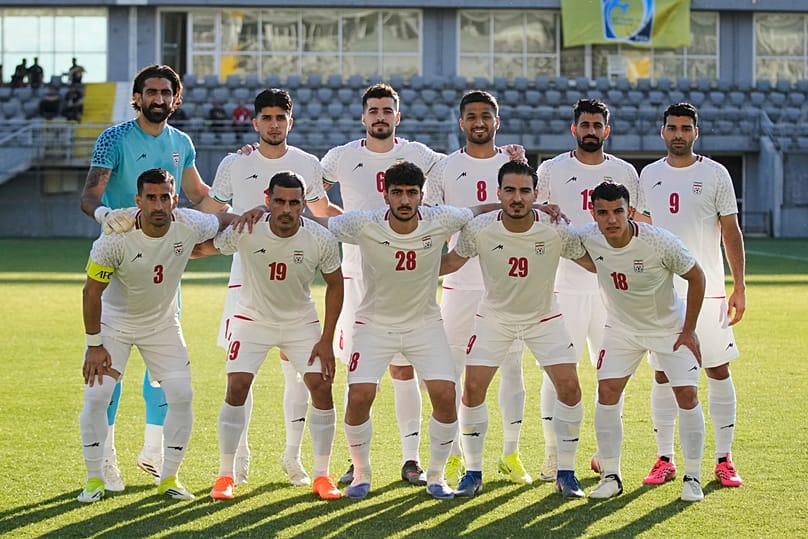
Iran football squad cleared for US entry but staff still await visas


By Simon Ormiston
Published on

Iran's players have received US visas ahead of the World Cup, but several federation officials are still awaiting clearance before the team's opening match.

Iran’s football players have been granted US visas ahead of the 2026 FIFA World Cup, although several senior officials and support staff are still awaiting clearance less than two weeks before the team’s opening match.

The visa delays have complicated preparations for Iran’s tournament campaign and prompted concerns over the delegation’s ability to travel together for the competition, which is being co-hosted by the US, Mexico and Canada.

A White House official confirmed that Iranian players had received visas to enter the US ahead of their first Group G fixture against New Zealand in Los Angeles on June 15. The confirmation came after Iran’s ambassador to Mexico, Abolfazl Pasandideh, said earlier this week that the players had not yet received the necessary documents.

The team is expected to train in Mexico at Estadio Caliente, home of Club Tijuana, during the World Cup. 29 May, 2026. AP Photo

Iranian media reported on Saturday that some members of the delegation remain without visas

. According to Iran’s Tasnim news agency, those still awaiting approval include Football Federation Secretary General Hedayat Mombini, Executive Director Mehdi Kharati and Media Director Mohsen Motamedkia.

Tasnim reported that the officials would travel to Mexico with the team while efforts continue to secure their visas before matches in the United States.

The issue comes against the backdrop of heightened tensions between Washington and Tehran following the conflict involving the United States, Israel and Iran earlier this year. U.S. Secretary of State Marco Rubio repeated to lawmakers this week that individuals linked to Iran’s Islamic Revolutionary Guard Corps would not be permitted to join the country’s World Cup delegation.

Iran has also shifted its training base from Arizona to Tijuana in neighbouring Mexico.

After facing New Zealand, Iran will also play Belgium in Los Angeles and Egypt in Seattle during the group stage.

Thousands Of Earthquakes Reveal The Razor Edge Of Alaska’s Hidden Microplate
Australian National University seismologist Meghan Miller places a temporary seismic station in south-central Alaska. CREDIT: Sarah Roeske

June 5, 2026 
By Eurasia Review

Thousands of small earthquakes, detected for the first time by a machine learning process, reveal the distinct, razor-sharp edge to the Yakutat microplate as it subducts beneath the North America plate.

The Yakutat oceanic plateau is caught in the middle of a tectonic traffic jam with the Pacific plate as it subducts beneath the North American plate. The position and structure of the plates in this congested zone play a significant role in the earthquake and volcanic landscape of south-central Alaska.

The research published by Meghan Miller of Australian National University and her colleagues in The Seismic Record now shows the edge and extent of the Yakutat plate in astonishing detail.

Using data collected by permanent and temporary seismic stations, including a temporary array deployed by the researchers from 2018 to 2021, Miller and colleagues used a machine learning workflow to develop an expanded earthquake catalog for the region.


Their analysis revealed a 250-kilometer-long linear cluster of about 1750 earthquakes running northwest to southeast — a cluster that had never been identified in previous studies.

Using ambient seismic noise data to further map the region at depth, the researchers conclude the line of earthquakes marks the edge of the Yakutat microplate as it slips shallowly and directly under the North American plate, without an intervening mantle wedge as often occurs in subduction zones.

The new extent of the Yakutat microplate places it directly below the apex of curvature of the Alaska range and the Denali fault, the major continental fault system in south-central Alaska.

In their paper, Miller and colleagues propose that seismic stress caused by the collision could propagate through the overriding North American plate up to the Denali fault, and may have been the initial cause of the 2002 magnitude 7.9 Denali Fault earthquake.

Miller said the newly defined Yakutat edge fits well with an earlier study that used a different seismic signal, called tectonic tremor, to suggest the Yakutat plate extended farther eastward than previous estimates.

“This linear feature, that no one has seen before, basically lines up exactly where the end of this tremor signal,” Miller said. “It was putting all of these different pieces together that I think makes a really convincing argument to suggest that this is the edge of the Yakutat plate.”

The combination of tremor and earthquakes could mean that the composition of the Yakutat plate differs along its extent, the researchers noted.

Tremor west of the “razor edge” indicates a rock composition that allows slow, continuous slipping where stress can’t build up to create an earthquake. The edge of the plate defined by the earthquakes suggests a different composition in that part of the Yakutat plate “that allows brittle failure,” Miller said.


The new extent of the microplate also matches with the alignment of small volcanic cones around its northern and northeastern margins, suggesting that the missing mantle wedge between the Yakutat and North American plates may have begun to reestablish itself about 1 million years ago.

The next step for researchers will be to look further back in time, prior to 2018, to identify and locate more earthquakes along the Yakutat edge, and to also examine the configuration of the congested tectonic zone farther to the south, closer to the Alaskan coast.

Miller says the machine learning aspect of the study was essential to uncovering the Yakutat edge. “There’s a lot of information hidden in the data that we’re now able to extract out that we weren’t able to see as easily with more traditional methods.”
Cameroon Cracks Down On Illegal Chinese Gold Mining


June 6, 2026
By Africa Defense Forum


Ordering a complete halt to all gold-mining activities, Cameroon recently took sweeping measures to take back control of industrial and artisanal gold mining from Chinese companies that have come to dominate the sector.

“The era of fraudulent gold mining in Cameroon is over,” the Ministry of Mines, Industry and Technological Development declared in an April 4 statement.

Before operations can resume, mining companies are required to meet minimum monthly production targets, transition to closed-circuit processing systems within six months, and pay an up-front environmental bond of more than $112,000.

“These measures aim to restructure the sector not only to control production and increase state reserves and revenue, but also to combat illegal mining, which causes significant losses to the Cameroonian economy through smuggling,” the ministry said.


For years, the Central African country has struggled to oversee the sector. Major discrepancies between Cameroon’s official gold exports and far higher import figures reported by other countries, particularly the United Arab Emirates, were revealed in a 2023 report by the Extractive Industries Transparency Initiative that was published in December 2025.

Cameroon reported 953 kilograms of gold production in 2023 but only 22.3 kilograms officially exported. Importing countries, however, reported receiving 15.2 metric tons (15,200 kilograms), which is nearly 680 times more.

“This suggests a large share of gold, especially artisanal mining, bypasses official channels and is diverted into informal networks or smuggled,” researcher Aicha Pemboura said in a March 2026 report on organized crime in Central Africa.

In February 2026, Cameroonian President Paul Biya ordered an investigation into illegal gold trafficking to identify smuggling networks, assign administrative and criminal responsibility, and propose corrective actions.

“About 200 illegal companies have been identified in the east and Adamawa regions, more than 95 percent of them foreign firms,” the Ministry of Mines said in a May 13 statement. It published a list showing that many of the companies are run by Chinese nationals.

In March, acting Minister of Mines Fuh Calistus Gentry led a team of police and Soldiers that conducted surprise inspections, seized equipment and impounded vehicles at a number of illegal mining sites that had defied the shutdown.

Several representatives of Chinese mining companies attended a meeting on April 9, during which Gentry informed the group of the new restrictions. He said his mission is to put an end to illegal operations and completely restructure the country’s semi-mechanized artisanal mining sector.

Cameroon’s crackdown is part of a shift across the continent, where governments increasingly are enforcing stricter mining regulations, particularly on foreign operations taking advantage of loosely regulated and informal segments of the sector.


While new regulations and efforts to dismantle illegal mining operations are sure to test governments’ resources and regulatory abilities, the potential payoffs are enormous for local economies and the environment.

Marcena Hunter, director of extractives with the Global Initiative against Transnational Organized Crime, said mercury pollution and poisoning have become major problems associated with gold mining.

“While deforestation may be the most well-known threat from illegal mining, threats to waterways are arguably the greater direct impact,” she said in an April 6 video. “The pollution of waterways from mercury and other chemicals from the processing of ore can be really detrimental to the environment.”
Going To Bat For Burma – OpEd


June 6, 2026 
By FEE
By Jake Scott

What connects Thailand’s surprisingly strong economic performance in the first quarter of 2026, and its simultaneous diplomatic push to reintegrate Myanmar into the Association of Southeast Asian Nations (ASEAN)? On the surface, not much: one is an economic story centered on GDP figures, exports, and growing domestic demand; the other is a tense geopolitical story involving civil war, diplomacy, and regional security. Under the surface, however—and you don’t need to scratch much to get there—the two are closely connected. Thailand’s Myanmar policy is not only about ASEAN unity, but reflects a broader effort by Bangkok to stabilize the regional environment that remains more fragile than the headline figures suggest.

In 2026 Q1, Thailand reported GDP growth of 2.8%, outperforming the expected 2.2% and offering some relief after several years of uneven recovery, “helped by higher exports, consumption and investment,” as Reuters reports. Thailand has been pursuing an ongoing supply-chain diversification away from China, which has in turn benefited parts of the manufacturing sector.

Even so, structural weaknesses remain. For instance, household debt remains among the highest in Asia at 87.2% (though this is lower than 96.6% in Q1 2021); tourism, ever a mainstay of the Thai economy, has been recovering inconsistently; and competition in the region is growing, especially from Vietnam and Indonesia.


It’s against this backdrop that Thailand’s renewed diplomatic lobbying on Myanmar’s behalfappears increasingly strategically sensible. Myanmar is nominally still a member of ASEAN, but the leaders of its military junta have been banned from attending the association’s meetings since the coup in 2021. In early 2026, Thai officials openly stated their desire to act as a facilitator between ASEAN and Myanmar’s military authorities, with Foreign Minister Sihasak Phuangketkeow saying that “Thailand wants to be a bridge connecting Myanmar back to ASEAN,” while “also urging a civil war-ravaged Myanmar, to make moves to adhere to a long-standing ASEAN plan to restore stability.”

This position is certainly geopolitical, but it’s also economic. Thailand has historically pursued a more pragmatic and less confrontational approach toward neighboring authoritarian governments than some other ASEAN members, preferring stability and managed engagement. On the economic front, Myanmar’s instability directly affects Thailand. Border trade, labor supply, energy security, and more, all along a 2,400-kilometer land border, mean that internal strife is not a distant, theoretical issue, but a pressing and immediate economic challenge.

The trade between the two nations is substantial, particularly through the Mae Sot–Myawaddy corridor, one of mainland Southeast Asia’s key overland commercial arteries, with nearly $4 billion worth of trade passing through annually. The border, including the Mae Sot–Myawaddy corridor, closes regularly, and businesses on the Thai side of the border are vulnerable to instability inside Myanmar. For this issue alone, Thailand takes an active interest in the situation inside Myanmar; but for broader regional stability’s sake, a functioning cross-border environment is essential.

This matters because Thailand increasingly sees itself as a “leading logistical hub in Southeast Asia,” and Bangkok wants to position itself as a central node connecting ASEAN supply chains, from Vietnam and Cambodia through Thailand and into South Asia. Persistent instability in Myanmar undermines this ambitious positioning, whilst affecting Thailand’s own internal economy by affecting labor dynamics, especially through migration. Migrant workers from Myanmar play a crucial role in plugging a labor gap in Thailand, especially in industries like agriculture, manufacturing, and fisheries. With an aging population, Thailand has a specific interest in ensuring that this migration can continue, but in a controlled method.

Thailand is also heavily dependent on Myanmar for its energy, with Myanmar a major supplier of natural gas to Thailand. As Thailand has made efforts to diversify its energy sources, Myanmar is still strategically significant, providing as much as 15% of Thailand’s liquid natural gas (LNG). Advocating for Myanmar to rejoin ASEAN represents Thailand’s geopolitical strategy of minimizing vulnerability, while reducing risk, especially given the underlying weaknesses of the Thai economy.

At the same time, Thailand is operating in an increasingly competitive environment, especially within ASEAN itself. Vietnam has emerged as the region’s manufacturing success story, capitalizing on the AI wave and attracting major foreign direct investment (FDI) as global firms look for dynamic alternatives to the big players in the region (such as China).

Thailand risks being squeezed out by faster-moving neighboring countries, unless it can redefine its strategic role. Advocating on behalf of Myanmar offers exactly this chance; working as a diplomatic intermediary for Myanmar allows Bangkok to reassert its regional influence, while protecting vital economic interests linked to border security and energy interdependence.

Thailand has an even greater opportunity to act as the stabilizing presence in the region. Myanmar’s crises have left ASEAN vulnerable, adopting a policy of non-interference, but confronted with the reality of a prolonged civil conflict testing this policy. The bloc has become divided and torn on the proper way forward, exposing fractures within the organization. If Thailand can bridge these gaps, it could weld back together the region’s most important international association.

The stronger-than-expected GDP figures in early 2026 provide Bangkok with some short-term relief and breathing room, but the broader economic and strategic challenges facing the country will not be dispelled so easily, and the structural problems underlying the economy remain unresolved. Stabilizing Myanmar—and by extension, ASEAN itself—will go some way to controlling the external factors that its own economy leaves it vulnerable to.


Dr Jake Scott is a political theorist specialising in populism and its relationship to political constitutionality. He has taught at multiple British universities and produced research reports for several think tanks.

Source: This article was published by FEE
Georgia Pivots From West Toward Closer Ties With Iran – Analysis


June 6, 2026 
Arab News
By Luke Coffey

When it comes to Iran’s attempts to exert influence around its neighborhood, one understandably thinks of the Middle East. Since the 1979 revolution that brought the Islamic Republic to power, Iran has funded proxy organizations and movements that have sought to undermine stability and security across the region, most notably in Lebanon, Syria, Iraq and Yemen.

One area where Iran has also been active but does not get as much attention is in the South Caucasus, specifically Georgia. Historically, Persia was active in the South Caucasus for centuries and the territories now found in countries like Armenia, Azerbaijan and Georgia were often part of the geopolitical chessboard of the 1700s and 1800s between Persia, Imperial Russia and the Ottoman Empire. Today, Iran tries to spread influence in the region, especially in countries with Shiite populations, as part of its efforts to export the ideology of the Islamic Republic beyond its borders.

In Azerbaijan, for example, the government has been very aware of Iran’s motives and has strictly and effectively prohibited Iranian attempts to influence the country. But in neighboring Georgia, which has a population of about 200,000 ethnic Azerbaijanis concentrated in one region, Iran has been more successful.

For European and American policymakers, this is particularly alarming because Georgia has traditionally been one of their closest partners in the region. But in recent years, under the current Georgian government, Tbilisi has started to shift its geopolitical alignment away from the West and closer to Moscow and Tehran. This is concerning.

The most recent example of Georgia’s turn has been the events in Iran since January. During the large and brutal crackdown by the Iranian regime against peaceful protesters, Russian strategic airplanes were allowed to transit Georgian airspace to resupplyTehran.

Then, when the US-Israeli war with Iran started and Tehran recklessly retaliated against civilian targets up and down the Gulf, the Georgian government was mealy-mouthed in its condemnation. In fact, in no public statement did the Georgian government even acknowledge that Iran was the country responsible for the drone and missile attacks in places like Saudi Arabia, Kuwait, Qatar and the UAE. Even closer to home, when Iranian drones hit a civilian airport in Azerbaijan, or when Iranian missiles were shot down over the skies of Turkiye, Tbilisi never mentioned Iran by name as the country responsible.

But the problem runs deeper than weak official statements failing to condemn Iran’s cavalier behavior. Whether through a combination of incompetence or naive acquiescence, the Georgian government has facilitated an environment ripe for the picking for malign Iranian influence.

Through quasi-educational institutions set up by Iran, such as Al-Mustafa International University, the Islamic Revolutionary Guard Corps has been able to influence and recruit Georgians to do its bidding. In December 2020, during President Donald Trump’s first term, his administration sanctioned Al-Mustafa International University for facilitating recruitment efforts by the IRGC’s Quds Force.

Perhaps most alarmingly, Iran has been able to put its recruitment and influence operations in Georgia to use. In March 2025, a Georgian citizen, Polad Omarov, was convicted for his role in an Iranian government-backed plot to assassinate Iranian American journalist and activist Masih Alinejad in New York. Omarov was sentenced to 25 years in prison last October.

In early January 2025, another Georgian national, Agil Aslanov, was arrested in Azerbaijan as part of an Iranian-linked plot to assassinate Rabbi Shneor Segal, a senior Jewish leader in the country. And in March, Greek authorities detained a Georgian national on suspicion of spying on US naval movements at Souda Bay on the Greek island of Crete, where America has a naval base.

The problem of Georgia’s perceived coziness with Iran has not gone unnoticed in Washington. This week, during a congressional hearing, Secretary of State Marco Rubio was asked about Tbilisi’s posture toward Iran. Rubio acknowledged that there has been “preexisting concern” about Georgia’s relationship with Iran and that Georgian authorities had been informed what steps needed to be taken in order to improve relations with the US.


It is unsurprising that Iran would want to extend its influence deep into the South Caucasus. After all, Georgia sits on some of the world’s most important energy transit routes, which European and other global markets rely on for oil and gas from the Caspian Sea region. The growing influence of Iran in this region, coupled with its dangerous behavior in the Strait of Hormuz, makes the South Caucasus an enticing area for Tehran to focus on if it hopes to further impact global energy markets.

The Georgian government needs to take steps to change course when it comes to Iran. It should seek advice from countries in the Middle East, Europe and the US, which are most impacted by Iran’s dangerous behavior. It should also shut down Iranian-linked influence operations on Georgian soil and ensure that Georgia is no longer used as a platform for Tehran’s malign activities abroad.

For years, Georgia’s friends in the West viewed the country as a reliable partner in a difficult neighborhood. That reputation is now at risk. If Tbilisi wants to preserve its Euro-Atlantic future, it must prove that it stands with its long-standing partners, not with the regime in Tehran.


Luke Coffey is a senior fellow at the Hudson Institute. X: @LukeDCoffey