Sunday, June 07, 2026

Israel Is Emptying Lebanon of Its People

Source: Jacobin

In 1895, Theodor Herzl wrote in his diary that the penniless population of Palestine must be “spirited across the border,” discreetly and circumspectly. In 1948, that vision became policy. With the Nakba, approximately 750,000 Palestinians were forcibly displaced, their land absorbed by the newly declared state of Israel. In 1967 came the Naksa. In 1978, 1982, 1993, 1996, 2006, it happened to southern Lebanon. Each time the world called it a “crisis”; each time it was Israeli strategy.

Since Israel’s latest assault on Lebanon began this March 2, more than 1.3 million people — nearly one in four of the entire Lebanese population — have been displaced. More than three hundred thousand of them are children. In the first weeks of the assault alone, UNICEF recorded at least nineteen thousand girls and boys forced from their homes every single day. More than 3,400 Lebanese have been killed and over ten thousand wounded, a toll that surged dramatically when Israel launched Operation Eternal Darkness — over a hundred strikes across the country in a single ten-minute window, killing at least 357 people and wounding over 1,200, with many more believed buried beneath the rubble. At least nine bridges over the Litani River have been struck, seven destroyed, fifty-five primary health care centers and hospitals have been forced to shut down, fuel depots, water stations and schools have been targeted, a systematic severing of the south from the rest of the country, cutting tens of thousands of people off from humanitarian aid.

Israel’s own Defense Minister Israel Katz explicitly described this as the “Beit Hanoun and Rafah model,” invoking the ongoing destruction of Gaza. This is not collateral damage but the same playbook; Israel is not even hiding it. And still it continues: on June 1, Israeli forces struck Tyre — the ancient Mediterranean port city and UNESCO World Heritage Site — triggering a fresh wave of mass displacement as families fled north. A ceasefire, extended for forty-five days and currently being renegotiated in Washington, has stopped nothing.

What is unfolding in Lebanon today is neither new nor an escalation but in continuity with these past offensives. Displacement is not a by-product of this war. It has always been the point. To understand what is happening today in Lebanon, we must understand Gaza. And to understand Gaza, we must go further back.

The Gaza Playbook

Displacement has been a deliberate instrument of Israeli governance since 1948. The historian Patrick Wolfe put it plainly: “Settler colonizers come to stay: invasion is a structure not an event.” Elimination, he argued, is “an organizing principle of settler-colonial society rather than a one-off occurrence,” pursued through the annexation of land, the renaming of places, the demolition of buildings and the erasure of historical heritage, all in service of building an entirely new civilization on expropriated ground. “Settler colonialism,” he wrote, “destroys to replace.”

Following the October 7, 2023, attacks, Israel’s military campaign in Gaza produced near-total displacement. By early 2024, Israel had dropped more than twenty-five thousand tons of explosives on Gaza, the equivalent, the United Nations confirmed, of two nuclear bombs. By April 2024, the total had surpassed seventy thousand tons, exceeding the combined tonnage dropped on Dresden, Hamburg, and London during World War II. By May 2024, more than 90 percent of Gaza’s population, around 1.9 million people, had been displaced at least once. Many had been displaced ten times or more.

Israel boasted of its evacuation orders as evidence of its humanitarian conduct, distributed by leaflet, SMS, QR code, and radio broadcast, and cited repeatedly at the International Court of Justice as proof that it was protecting civilians. In reality, the orders directed entire districts to relocate within impossibly short time frames, often into areas without food, water, or shelter, and often into areas that were then deliberately bombed. Forensic Architecture’s landmark investigation found that the evacuation system had produced not safety but “mass displacement and forced transfer,” with Palestinians “being bombed, shot at, executed, arrested and tortured” along the very corridors Israel designated as safe. The areas Israel told people to flee to were attacked immediately after they arrived. On July 13, 2024, Israel dropped eight two-thousand-pound bombs on the Al-Mawasi humanitarian zone it had itself created, killing at least ninety people, many of them burned alive in their tents.

Human Rights Watch concluded that these evacuations constituted the war crime of forcible transfer. B’Tselem, the Israeli human rights organization, reached the same conclusion in its report “No Place Under Heaven,” documenting that displacement was a central tool of the assault on Gaza. The report’s title comes from Finance Minister Bezalel Smotrich’s own words, spoken at a government security cabinet meeting in April 2024, calling for the “total annihilation” of Gaza’s cities: “You will blot out the remembrance of Amalek from under heaven — there’s no place under heaven.” The reference to Amalek, the nation the Hebrew Bible commands the Israelites to exterminate entirely, man, woman, and child, was not incidental. Benjamin Netanyahu had used the same comparison in the first days of the war, and it was cited by South Africa in its genocide case at the International Court of Justice as evidence of genocidal intent. Smotrich also described Gaza City as a “real estate bonanza,” stating: “The demolition, the first stage in its renewal, we have already done. Now we need to build.” This bluntly posed Israel’s agenda in the language of colonial dispossession.

From the West Bank to Lebanon

The same logic has spread beyond Gaza. Since October 2023, scholars and analysts have described the “Gazafication” of the West Bank: the extension of governance practices long characteristic of Gaza — military siege, aerial bombardment, the systematic targeting of civilian infrastructure — into the occupied territory. Armed drones carry out targeted killings, fighter jets strike densely populated areas, and homes are demolished.

More than forty thousand Palestinians were internally displaced in the West Bank in 2025, the highest annual figure since 1967. Senior Israeli ministers have called openly for annexation and the “voluntary migration” of Palestinians, language that legal scholars identify as a euphemism for ethnic cleansing. Leading Zionist figures explicitly discussed demographic transfer in the 1920s and 1930s, using terms like “transfer,” “relocation,” and “voluntary migration” — the same vocabulary in use today.

Settler violence has risen sharply alongside this rhetoric. According to data recorded jointly by the Israeli army and the Shin Bet, settler attacks increased by 27 percent in 2025, while severe attacks — shootings, arson, violent assault — rose by more than 50 percent. Accountability remains almost nonexistent. Settlement expansion has accelerated to unprecedented levels, with outposts legalized retroactively and construction advancing deep inside Palestinian territory.

In this, Lebanon is not a new front but an old one, today reopened with new ferocity.

The people in southern Lebanon have been displaced before: in 1978, when Israel first invaded; in 1982, when it laid siege to Beirut and its Palestinian refugee camps, a siege that culminated in the Sabra and Shatila massacre; in 1993, during Operation Accountability; in 1996, during Operation Grapes of Wrath, which culminated in the Qana massacre; and in 2006, when nearly one million people fled, most returning within weeks of a ceasefire. Today, those same communities are being uprooted again.

What we are witnessing is the same architecture of control applied more extensively. Evacuation orders are being issued with the same design as in Gaza, and civilian infrastructure targeted to prevent people ever returning. This means deliberately making the population precarious, unable to settle, unable to rebuild, unable to plan. Here, we see that Gaza, the West Bank, and Lebanon are not three separate crises.

European Blind Spot

And what has the international community’s response been? The International Court of Justice, in its landmark advisory opinion of July 19, 2024, concluded that Israel’s occupation of the Palestinian territories — the West Bank, East Jerusalem, and Gaza — is unlawful under international law and must be brought to an end as rapidly as possible. It has separately ruled that there is a plausible risk of genocide in Gaza. The UN General Assembly followed in September 2024, demanding Israel end its unlawful presence within twelve months. Israel has ignored both. The United Nations Security Council has been rendered structurally incapable of acting: the United States has now vetoed ceasefire resolutions seven times, each time casting the sole vote against resolutions supported by fourteen other members of the council.

Meanwhile, the United States has provided at least $21.7 billion in military aid to Israel since October 7, 2023, according to Brown University’s Costs of War project — the highest annual total of military aid to Israel ever recorded. Arms transfers from several European states have continued alongside this. The weapons that have flattened Gaza’s neighborhoods, bombed its hospitals, and burned civilians alive in tent camps have been supplied, in large part, by those same governments now expressing concern about humanitarian conditions in Lebanon.

I have spent years researching migration, borders, and displacement across the Mediterranean region. Since March, journalists across Europe have been asking me some version of the same question: Will we face a new refugee crisis? Should Europe be worried about the flows?

The question reveals everything. For most European publics and their governments, the primary concern is not what is happening to the people of Lebanon. It is how to keep those people away. How to avoid a repeat of the aftermath of the Syrian civil war and the so-called refugee crisis of 2015. During the carpet bombing of Gaza since October 2023, this anxiety was all but absent, for Gazans had nowhere to flee: they were contained inside the Strip. For some European governments, even medically evacuating critically ill children was not on the table. Denmark refused to do so despite a formal World Health Organization appeal to EU member states, and despite evacuating and treating over two hundred Ukrainian patients — citing, in a written reply to Parliament, migration concerns. In Britain, Prime Minister Keir Starmer had to reassure the public that Palestinian refugees wouldn’t be welcome in Britain under a scheme for war refugees. Europe’s fear of displacement only activates when movement becomes possible.

In May 2024, the European Commission pledged €1 billion in support to Lebanon for the period up to 2027. This package included funding for border management and anti-smuggling operations, with the first €500 million explicitly linked to reducing irregular sea departures toward Cyprus and to exploring “voluntary return” frameworks. Lebanon was positioned not only as a host country in crisis but as a frontline partner in Europe’s own strategy to contain migration flows. This is the increasingly common practice of externalization: the outsourcing of displacement management to third countries outside Europe, while the conditions producing displacement go unchallenged.

Lebanon already hosts one of the highest numbers of refugees per capita in the world, with long-standing Palestinian communities and over a million Syrians displaced since 2011. Funding this state to police its own borders in the middle of an Israeli assault that is actively producing new displacement is the same containment logic that operates in Gaza and the West Bank.

What is unfolding across Gaza, the West Bank, and southern Lebanon is not a sequence of emergencies. It is a deliberate and recurring strategy of Israeli governance, rooted in decades of settler-colonial and military control. Evacuation orders, cycles of flight and forced return, and the systematic destruction of civilian infrastructure, are today the instruments of war and Israeli expansionism.

The displacement created in Gaza and in Lebanon has been normalized precisely because the international community has consistently chosen migration management over accountability. What looks like crisis is the effect of deliberate policies, and what looks like a humanitarian response is, too often, the infrastructure of containment dressed in the language of protection.

The question is not whether Europe will face a refugee crisis. The question is whether the world will finally treat the deliberate production of displacement as what it has always been, a strategy of governance, and respond with the recognition, accountability, and rights-based redress it demands.


This article was originally published by Jacobin; please consider supporting the original publication, and read the original version at the link above.Email

Ahlam Chemlali is a migration and critical border scholar specializing in displacement and conflict. She codirects the Centre for the Study of Coercion and Accountability (CECA) at Aalborg University in Copenhagen, Denmark.


Source: Mondoweiss

The U.S.-Israeli war on Iran has for the moment turned international attention away from Gaza as Israel moves from high- to low-intensity genocide.  The genocide may be the horrific culmination of 75-plus years of Zionist settler colonialism, occupation, and apartheid, but in order to make sense of it we must analyze the radical transformations that have taken place in the Middle Eastern and global political economy in recent decades.

The impulse to genocide has always been built into the Zionist project. But that impulse has been activated by the epochal crisis of global capitalism. The Al Aqsa Flood attack of October 2023 furnished Israel with the historic opportunity for which they had been waiting for decades.  If the Zionists are still in pursuit of their elusive Eretz Israel, the United States has been heading up a much more expansive project, one that places Gaza in the very center of global capitalism and its epochal crisis.  In the game plan of the Washington-Tel Aviv axis, Gaza is now to become an experimental field for a new and deadlier phase of global capitalism.  It is this larger picture that we want to lay out in this article.

The contemporary crisis of global capitalism is multidimensional. Structurally it is a crisis of overaccumulation, which refers to a situation in which enormous amounts of capital (profits) are built up but this capital cannot find productive outlets for reinvestment.  This overaccumulation crisis generates intense pressure for expansion as transnational capitalists undertake a predatory search for where to unload massive amounts of surplus capital and open up new spaces for profit-making.  This violent expansion involves the seizure of markets and resources around the world through war, displacement, and repression.  The U.S. state and beyond it, what we will call Global Trumpism, is its out-of-control instrument in this expansionary wave.  At the core of Global Trumpism is the Washington-Tel Aviv axis.

The larger backdrop to the Israeli genocide is the transnational integration of capital over the past half century and the radical restructuring of global class relations and power blocs that capitalist globalization has brought about. Globalization in West Asia region began in the 1980s and accelerated with the 2003 U.S. invasion and occupation of Iraq that followed the establishment in 1997 of the Middle East Free Trade Area (MEFTA) and a host of related bilateral and multilateral regional and extra-regional free trade agreements, structural adjustment programs and IMF-supervised austerity.

This integration unleashed a cascade of transnational corporate and financial investment in finance, energy, high-tech, construction, infrastructure, luxury consumption, tourism and other services.  It brought Gulf capital, including trillions of dollars in sovereign wealth funds, together with capital from all around the world, involving the EU, North and Latin America, and Asia, in emerging global circuits of accumulation.  In this way, nationally-oriented Arab bourgeoisies transmorphed into transnationally-oriented bourgeoisies as the entire region became incorporated into the globally-integrated production, financial, and service system that came into being over the past half century.

Israel, far from remaining excluded, integrated into these expanding regional and transnational capitalist networks on the heels of the Oslo “peace” accords, signed in 1993, as the Israeli and Arab bourgeoisies began to develop common class interests.  In 2020 the UAE and Bahrain, along with Morocco and Sudan, signed the Abraham Accords, joining Egypt and Jordan in normalizing relations with Israeli, an opening that allowed Gulf investment groups to pour billions of dollars into the Israeli economy.  The October 2023 Al Aqsa attack and the subsequent Israeli siege placed further normalization on hold.  The new U.S.-Israeli strategy revolving around the “Board of Peace” (henceforth, Board of Genocide) seeks to bring the Arab and other states in the region back into the Abraham architecture.

Palestinians become surplus humanity

Up until globalization took off in the late twentieth century, the relationship of Israel to the Palestinians reflected classical colonialism, in which the colonial power had usurped the land and resources of the colonized and then exploited their labor. But Middle Eastern integration into the global economy helped spark the spread of mass worker and social movements and grassroots democratization pressures, reflected in the Palestinian intifadas, the labor movement across North Africa, mounting social unrest, and in the 2011 Arab Spring uprisings.

The Palestinian intifadas aggravated the historic tension that Israel faced between the drive to ethnically cleans the Jewish state and the need it had for cheap, ethnically demarcated labor. But globalization starting in the 1990s gave Israel a way out of this tension between dispossession/super-exploitation and dispossession/expulsion in favor of the latter.  Capitalist globalization has involved ongoing waves of displacement in the Global South that have generated a vast army of internal and transnational migrants, giving rise to a new system of transnational labor mobility and recruitment and making it possible for dominant groups around the world to reorganize labor markets in an effort to weaken labor and maximize the extraction of surplus value.  

While this transient migrant labor system is a worldwide phenomenon it became a particularly attractive option for Israel because it does away with the need for politically troublesome Palestinian labor.  By the 2010s, hundreds of thousands of migrant workers – by some estimates up to 600,000 – from Thailand, China, Nepal, Sri Lanka, India, Eastern Europe, the Philippines, Kenya and elsewhere came to form the predominant labor force in Israeli agribusiness, and increasingly in other sectors of the economy, under the same precarious conditions of super-exploitation and discrimination that migrant workers face around the world.

In the wake of the 2023 Hamas attack Israel deported the remaining 10,000 Gazan Palestinian workers back to Gaza.  In early 2024, even in the midst of war, thousands of Indian and other foreign workers were pouring into Israel to replace them.  The Palestinian proletariat has thus become an ever-more marginalized surplus population.  In 1993, the very year that the Oslo Accords were signed, Israel imposed its policy of “closure” – sealing off Palestinians in the occupied territories, ethnic cleansing, and a sharp escalation of settler colonialism.

As the Palestinian proletariat went from cheap labor to surplus humanity, it stood in the way not just of seizure of their land and the resources beneath their soil, but of a new round of global capitalist expansion throughout the Middle East.  In this way, genocidal pressures began to build up.  Genocide became more and more of an attractive option for the Zionist state and also for the most violent and predatory sectors of the transnational capitalist class, for whom the siege of Gaza and the West Bank constitutes a form of primitive accumulation.  

Pax Silica and the Board of Genocide

The larger meaning of the Board of Genocide now comes into focus, shining a spotlight on the emergent hegemonic complex of transnational capital that is at the center of the current worldwide maelstrom. The triangulated bloc brings together the giant tech companies, transnational finance capital, and the military-industrial-repression complex. Big Tech controls the entire ecosystem of digitalized capitalism, converting its enormous structural power into direct political control through the fascist state.  To advance its agenda the bloc has turned to ‘Global Trumpism’ – one of several morbid political symptoms emerging as the post-World War II international order crumbles.

The new digital technologies and the billionaires that control them are driving a radical new round of restructuring and transformation of the global political economy.  The leading tech corporations, most of them headquartered in the United States and China, draw investors from all over the world as they suck in immense amounts of surplus capital.  The top 20 tech firms worldwide had a combined market capitalization exceeding $20 trillion in 2025, some one-fifth of the total global stock market valuation.

Big tech and the transnational industrial and commercial capitals it brings together are in turn enmeshed with the giant global financial conglomerates that own more than half of the leading tech firms.  In 2022 there were 33 trillion and multitrillion-dollar capital investment management companies worldwide, up from just 17 in 2017.  These titans of capital controlled more than $83 trillion in combined assets, over four-fifths the value that year of the entire global GDP.  Silicon Valley and its financial backers are pivoting towards digital technologies for war and repression as they fuse with the military-industrial repression complex, completing the capital power axis, which in turn is moving into alignment with authoritarian, dictatorial and fascist states – an alignment most chillingly declared in Palantir’s 22-point manifesto posted on X in April.

This new capital complex is deeply invested in transnational systems of warfare, social control, repression and surveillance that are becoming digitalized, automated, and embedded in the global economy and society. These systems provide a major outlet for unloading accumulated surplus capital while also opening access to markets and resources.  The capital bloc is heavily invested in Israel – in its tech industry, in its war machine, and in its genocide.  The July 2025 report by the UN special rapporteur on human rights in the occupied Palestinian territories, Francesca Albanese, From the Economy of Occupation to the Economy of Genocide referenced 1,650 transnational corporations that partner with Israel’s war and occupation machine.  The list of 60 companies singled out in the report reads like a Who’s Who of the hegemonic bloc of capital.

Herein lies the key role that Israel plays in the new capital power axis.  Israel is the world’s third largest tech hub. It globalized based on a high-tech-military-security-surveillance complex, integrated in turn into the webs of transnational finance capital. Like the larger global economy of which it is a part, it feeds off of permanent local, regional, and global violence, conflict, and inequalities.  Endless rounds of destruction followed by reconstruction fuel profit-making not just for the arms industry, but for engineering, construction, and related supply firms, high-tech, energy, and numerous other sectors.

The Israeli genocide, to be followed now by the Board of Genocide are grisly laboratories for the new modality of transnational capital accumulation.  The U.S. State Department has referred to the new global dispensation driven by the hegemonic capital bloc as Pax Silica.  The Middle East has emerged as a regional corridor for Pax Silica predicated on an Israeli-Gulf state alliance that was to be cemented through the Board of Genocide inaugurated by Trump at the January 2026 World Economic Forum conclave.  

Israel is a powerhouse for both digital and military technologies, having combined both in its repression of Palestinians. The 20-point “peace” plan for Gaza unveiled in October 2025 involved the “redevelopment” of Gaza, including “modern and efficient governance conducive to attracting investment” and the establishment of a “special economic zone” – boiler plate language for opening up the Strip to transnational capitalist plunder and control.  This anticipated new cascade of investment, not just in Gaza but throughout the Middle East, hinged on first “resolving” the Gaza conflict through the ceasefire and then expanding the Abraham Accords which, in the words of U.S. vice president J.D. Vance, would pave the way “for broader alliances for Israel in the Middle East even as it renders second the Palestine question.

As Israel moves from high-intensity to low-intensity genocide in Gaza, the Board is intended to open up the Strip to its gas and oil, its beachfront real estate, and its tourist potential.  But its core mission is to convert Gaza into a hub for the public-private power axis around which tech and finance will have free reign to develop a sovereign corporate fiefdom.  Razing the Strip to the ground has been wildly profitable.  Two years of destruction is now to be followed by the bonanza – “reconstruction” led by the hegemonic capital complex.

The true magnitude of the global capitalist plan for Gaza was revealed not in the 20-point plan but in the Gaza Reconstruction, Economic Acceleration and Transformation (GREAT), a U.S. government proposal that was leaked to the press prior to the ceasefire agreement.  It is in this document that the macabre vision of a high-tech Pax Silica hub is laid out.

The GREAT plan called for a “voluntary” departure of Palestinians to another country, a string of AI-powered high-tech megacities, and some rump, unspecified Palestinian authority that would join the Abraham Accord.  Those Palestinians allowed to stay would serve as civil servants, professional and manual laborers tightly controlled through Israeli biometric surveillance, checkpoints, monitoring of purchases, and Zionist education programs promoting normalization with Israel, thus making official Israel’s occupation and its administration of the concentration camp.  In the GREAT vision, the Strip is to be converted into the staging point and gateway for what it termed a “New Abrahamic Architecture”

Gaza was the first AI war of the twenty-first century, an algorithmic genocide. If Global Trumpism gets its way, Gaza will now become the testing ground for the ruling classes to rule through technocratic authoritarianism, blood and capital.  Among the 60 countries that Trump invited at the January 2026 Davos conclave, some 25 countries initially signed on to the Board, among them Indonesia, Saudi Arabia, Egypt, Jordan, Turkey, Pakistan, Qatar, and the UAE.  Neither Russia nor China vetoed the resolution in the UN Security Council to approve the establishment of the Board.  The inclusion of Israel and Netanyahu on the Board could not be a more cynical expose of the charade.

At this time the fragile cease fire between Washington and Tehran remains shaky with no progress in negotiations.  Meanwhile, in 2025 alone, under the pretext of “security,” Israel attacked six countries, including Palestine, Iran, Lebanon, Qatar, Syria, and Yemen.  It also launched assaults on humanitarian aid flotillas heading to Gaza in the territorial waters of Tunisia, Malta, and Greece.  As it now enters the third month of its war against Iran – waged together with the United States – it is turning southern Lebanon into a second Gaza

There has also been no letup of low-intensity genocide – to the contrary, Israel is threatening to return high-intensity.  Attacks on Gaza have in fact increased by 35 percent since the Iran ceasefire.  There is no way to predict the outcome of the current regional conflict but without any doubt the whole regional and global landscape is already being radically reshaped as the global capitalist system continues to crack under the weight of its explosive contradictions.  The war on Iran and the Israeli assault on Lebanon expands the political objectives and the dynamics of the Gaza genocide to the region as a whole.  Meanwhile, Palestinians will continue to resist as they have done so over a century.


This article was originally published by Mondoweiss; please consider supporting the original publication, and read the original version at the link above.Email
avatar

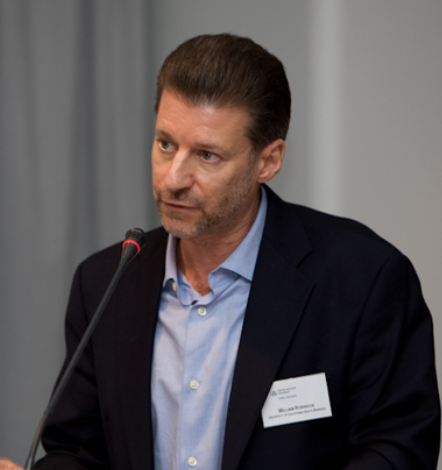
William I. Robinson is Distinguished Professor of Sociology, Global Studies, and Latin American Studies at the University of California at Santa Barbara. He is co-editor of We Will Not Be Silenced: The Academic Repression of Israel’s Critics (2018). His most recent book is Epochal Crisis: The Exhaustion of Global Capitalism (2025).


Source: Originally published by Z. Feel free to share widely.

This should not be a news flash to anyone, but the Trump Administration is out of control when it comes to war (and many other things, like ruining the economy, our judicial and electoral systems, as well as the landscape of the nation’s capital). Congress needs to do its job and reign in the executive branch. In the next few days, the House of Representatives needs to, ahem, represent the interests of the American people and vote in favor of two War Powers Resolutions, on Iran and Lebanon. 

The first should be a no brainer. Congress has come close, several times now, to passing an Iran War Powers Resolution, and it was poised to pass in the House two weeks ago, before Republican “leadership” twice postponed the vote. They can’t keep kicking the can down the road forever, with even some of Trump’s loyalists on Capitol Hill expressing increasing frustration with the illegal, deeply unpopular US-Israeli war of aggression against Iran. A vote on U.S. Rep. Gregory Meeks’s House Concurrent Resolution 86 is expected Wednesday, and it should pass, putting the House on record as opposing Trump’s and Netanyahu’s war. It would also send a strong signal of opposition to any supplemental funding bill to pay for the war. 

Two weeks ago the Senate advanced its version of an Iran War Powers Resolution, Senate Joint Resolution 185, on a procedural vote, and it may proceed to a final vote this week, and if not, it should soon. Both the House and Senate votes will likely be close, and mostly along partisan lines. Assuming they do pass, Trump would probably veto the measures, and there likely would not be anywhere near the two-thirds votes required in both chambers to override the veto. Still, Congress would be on record opposing a war it did not authorize, and representing the will of its constituents rather than weapons contractors making a killing, literally and figuratively, off these wars. 

Iin Trump’s first term, Congress passed War Powers Resolutions to stop US involvement in  the Saudi Arabia-United Arab Emirates war in Yemen. While Trump vetoed those resolutions, both the Saudi and UAE governments understood they could no longer count on the U.S. to continue its support in refueling, intelligence and targeting information, leading to a ceasefire, a sharp drop in hostilities, and an improvement in the dire humanitarian crisis in Yemen. 

Meanwhile, U.S. Reps. Rashida Tlaib (D-MI) and Delia Ramirez (D-IL) have introduced a Lebanon War Powers Resolution, House Concurrent Resolution 84, which is expected to be voted on Thursday. 

Since March 2nd, Israel has killed nearly  3,500 people and wounded over 10,000 in its air campaign and invasion of Lebanon. The United States has engaged in the command and coordination of Israel’s offensive without authorization from Congress — a violation of Section 8(c) of the War Powers Act of 1973 — including Trump directly “green lighting” or “prohibiting” Israel’s actions at different junctures. The U.S. and Israel are also deeply operationally integrated and share intelligence regarding Israel’s Lebanon campaign, raising further questions about unauthorized U.S. participation in the war. 

PLEASE TAKE ACTION – make one phone call via the Congressional switchboard at 202.224.3121 to your U.S. Representative, with these two asks:

Support H. Con. Res. 86, the Iran War Powers Resolution

Support H. Con. Res. 84, the Lebanon War Powers Resolution

Lastly, regarding Trump and Secretary of State Marco Rubio’s lust to overthrow the government of Cuba, there will be War Powers Resolutions in both Houses of Congress to prevent what would be another catastrophic, illegal war of choice. 

In all of these cases, Congress would merely be asserting its Constitutional authority, assigned to the legislature, not the executive branch, over the grave decision to send U.S. troops to war. So this should be easy, but it never is, and without pressure from voters, the war machine runs more or less on auto-pilot. We cannot let that continue. Email

Kevin Martin serves as the president of Peace Action, the country’s largest grassroots peace and disarmament organization with over 200,000 supporters nationwide. He also convenes the CeaseFire Now Grassroots Network.

The Merchant of Fear and the Buyers of War: Trump’s Middle Eastern Story

Source: Originally published by Z. Feel free to share widely.

Donald Trump is back at it again, making one of those big, dramatic statements that only he can deliver. This time, he claimed that if the United States hadn’t bombed Iran, Israel would have been wiped out by a nuclear bomb. At first, it sounds like a serious security warning. But when you look closer, it feels more like classic fear-mongering — the kind where complicated realities get boiled down to a simple Hollywood-style story: America is the hero, Israel is the helpless victim, and Iran is the ultimate villain about to unleash the end of the world.

This kind of narrative isn’t new. For decades, a big chunk of Washington’s Middle East policy has relied on hyping up existential threats. What makes Trump different isn’t that he uses fear — lots of politicians do that — but how far he takes it. He turns it into full-blown apocalyptic drama and uses it as his main political weapon.

The real problem with his recent claim isn’t just that it’s exaggerated. It’s that it clashes pretty hard with what we actually know from intelligence reports and political history. If Iran was truly seconds away from nuking Israel, why have U.S. intelligence agencies spent the last twenty years saying they have no solid evidence that Iran has even decided to build a nuclear weapon? If the threat was that urgent, why did world powers spend years negotiating the nuclear deal to monitor and limit Iran’s program? And if it was truly that dangerous, why did Trump pull the U.S. out of that very agreement?

These aren’t just minor contradictions. They point to a deeper pattern: threats are defined more by political convenience than by hard evidence. When the nuclear deal existed, Trump called it “the worst deal in history.” After he tore it up, the resulting crisis became proof that he needed to be tougher. Now, the same crisis is being repackaged as “I saved the world.”

Throughout his career, Trump has always been more of a master marketer than a traditional foreign policy thinker. He knows fear sells. In an atmosphere of fear, people ask fewer questions, overlook inconsistencies, and desperately look for someone strong to follow. The bigger you make the danger, the bigger your own role as savior appears.

In this game, security turns into a kind of political product. The scarier the threat, the more military action seems necessary. The more evil the enemy looks, the easier it becomes to justify the costs of war. And the closer the catastrophe feels, the easier it is to position yourself as the only one who can stop it.

This playbook isn’t limited to Iran. Think about Saddam’s Iraq and the phantom weapons of mass destruction, Afghanistan as the forever war on terror, or Libya as an imminent danger to the region. In each case, the threat was pumped up to justify intervention. The result? More chaos, broken states, and fresh cycles of violence — not peace and stability.

The painful irony is that many of today’s “reasons” for new interventions were actually created by previous ones. Yet in the Trumpian story, America is always the firefighter who shows up heroically — never the one who helped start the fire. History conveniently starts when Trump enters the picture.

This style of politics carries real risks for the Middle East. It kills space for diplomacy. Once you label someone an existential monster, talking to them looks like weakness. It also fuels an endless arms race of suspicion and deterrence. And perhaps worst of all, it stops people from honestly weighing the real human and financial costs of war.

The Middle East has already paid a terrible price for these fear-driven policies. This region knows better than anyone how apocalyptic talk can become a self-fulfilling prophecy. Every time a leader paints a picture of imminent doom, the policies that follow often make that doom more likely.

Trump’s claim about saving Israel from nuclear destruction should be seen in this light. It’s not really about whether the specific statement is true or false. It’s about a whole way of doing foreign policy — one that prefers dramatic gestures and personal myths over patient diplomacy and careful management of risks.

History usually isn’t very kind to these savior narratives. Leaders who cast themselves as the world’s heroes often leave behind messes far bigger than the ones they claimed to solve. The Middle East has seen this movie too many times: create a monster, declare an emergency, bomb something, and then use the new problems to justify the next round.

At the end of the day, the real question isn’t just about Iran or Israel. It’s about whether real security comes from exaggerating threats and selling fear — or from honestly managing them. Does the region need more self-proclaimed saviors, or does it need leaders willing to stop treating fear as a profitable political business?

Trump can keep telling the world he saved it. But for many people in the Middle East, he represents something much more familiar: a style of politics that creates monsters and then sells protection from them. In this market, fear always finds buyers. The ones who pay the real price, though, are Americans and the people of the region.