It’s possible that I shall make an ass of myself. But in that case one can always get out of it with a little dialectic. I have, of course, so worded my proposition as to be right either way (K.Marx, Letter to F.Engels on the Indian Mutiny)
Sunday, July 05, 2026
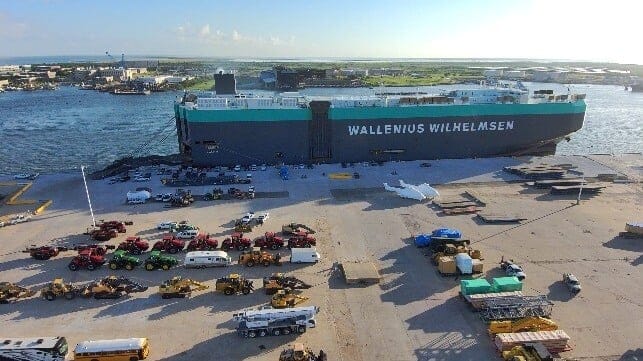
Port of Galveston Opens New Berth with 1st Cargo Vessel Call
The Port of Galveston’s new cargo berth officially opened for business July 2 with a Wallenius Wilhelmsen cargo carrier delivering roll-on/roll-off cargo at the West Port Cargo Complex.
The 656-foot-long MS Toledo offloaded hundreds of pieces of heavy construction equipment from Brazil and the Far East to be transported by truck to destinations in Texas and Middle America. Then union workers loaded heavy construction and farm equipment bound for Brazil and Australia.
The 1,410-foot-long berth at Pier 39-40 is part of the port’s $106 million cargo facility expansion project begun in 2024 and completed in 2026. Work to repair and expand the cargo area also included enclosing two outdated slips, filling one slip, repaving and repairing cargo handling areas, and demolishing a decommissioned grain elevator.
The project, which will add almost 30 acres to the previously 60-acre facility, was funded with port operating revenues and a $36 million Texas Department of Transportation (TxDOT) grant. A future phase will include filling the second slip to add another 6 acres.
Galveston Wharves Port Director and CEO Rodger Rees, said, “This is the first time in decades that the port has made a significant investment in its cargo business. Driven by cargo tenant demand, the expansion paves the way for major cargo growth to generate hundreds of new jobs and tremendous economic growth for the region. Additional land also allows us to consider other types of cargo not previously handled.”
Rees credited the Galveston Wharves Board of Trustees for its commitment to the major project and the Texas Legislature and TxDOT for jumpstarting the project with critical funding. He added that the port’s growing cruise business generated the revenues to fund the cargo area improvements.
TxDOT Maritime Division Director Geir-Eilif Kalhagen added, “This $36 million state investment added capacity and will help the Port of Galveston operate more efficiently as demand continues to grow. When the state partners with seaports on projects like this, we’re not just improving infrastructure, but strengthening the supply chain, supporting job growth, and ensuring Texas remains competitive nationally and globally.”
Located on Galveston Harbor, one of the nation’s busiest cargo waterways, the port moves 3 million tons of general and breakbulk cargos, including roll-on/roll-off (ro-ro) and giant wind turbine pieces a year. Cargo handling at public and private facilities on the harbor generates almost 20,000 jobs and a $6.5 billion economic impact statewide.
The products and services herein described in this press release are not endorsed by The Maritime Executive.
Bureau Veritas Signs Cooperation Agreement with Shenzhen Port Group
On June 29, Shenzhen Port Group and Bureau Veritas Marine & Offshore (BV) signed a strategic cooperation agreement in Shenzhen, China. The two parties engaged in in-depth discussions on strengthening collaboration across key sectors and jointly advancing the development of green shipping corridors.
Under the agreement, both parties will leverage their respective strengths and resources to deepen collaboration focused on the development of green shipping corridors and related businesses. Through resource sharing and complementary capabilities they will jointly develop green shipping projects to deliver replicable and scalable outcomes.
Bureau Veritas will provide professional technical support to Shenzhen Port Group and industry players at large, helping them navigate evolving maritime regulatory policies and translate emerging international rules into practical, implementable measures to align domestic and global industry standards. Backed by its comprehensive global business footprint, BV offers end-to-end testing, inspection and certification services covering the entire green fuel industrial chain, spanning renewable energy production to bunkering infrastructure for marine fuels. It has also built extensive hands-on experience in numerous domestic green fuel projects.
Alex Gregg-Smith, President, Bureau Veritas Marine & Offshore, said: "Global decarbonization of the shipping industry requires concerted efforts and in-depth collaboration across the entire industrial value chain. As a world-class port conglomerate, Shenzhen Port Group boasts strengths that are highly complementary to Bureau Veritas’s expertise in technical services and standard-setting. Deepening our partnership is of great significance for the green transition of the shipping sector. We hope this collaboration will serve as a catalyst to align domestic and international standards and jointly develop viable pathways for low-carbon maritime trade.”
Hu Zhaoyang, Secretary of the Party Committee and Chairman of the Board at Shenzhen Port Group, stated: “Bureau Veritas Marine & Offshore is a globally recognized authoritative body in the maritime sector, with a wealth of decarbonization solutions and practical experience for the global shipping industry. Its vision aligns perfectly with Shenzhen Port Group’s green development strategy. Building on this agreement, we will further expand all-round cooperation across relevant fields, and maximize the combined value of Shenzhen Port Group’s diverse industrial application scenarios and BV’s authoritative technical certification capabilities to achieve mutual benefit through complementary strengths."
The products and services herein described in this press release are not endorsed by The Maritime Executive.
Report: Russian Shadow Fleet Vessels Play a Role in Drone Incursions in EU
A Russian Orlan-10 medium range surveillance drone on a man-portable launcher (Mike1979 / CC BY SA 4.0)
Russia's intelligence agencies have used shadow fleet tankers to launch spy drones over Western Europe since at least 2024, but European governments have yet to field an effective response, concluded researchers at IISS in a new report.
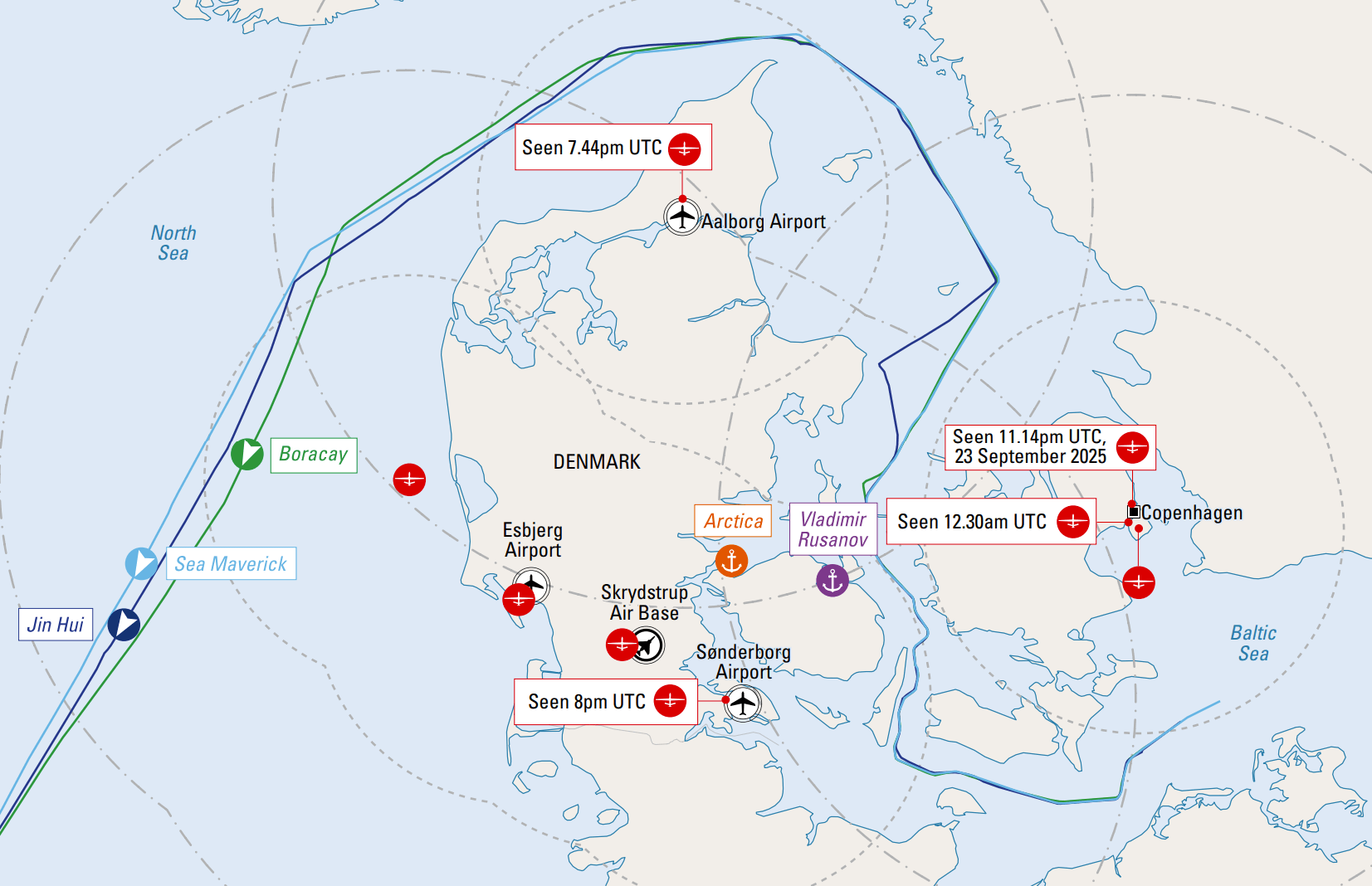
The three-person research team behind the report found that out of 144 documented incidents, a large subset were likely launched from the decks of Russia-linked vessels, based on patterns of AIS and satellite-based radar ship tracking. Other reporters have previously suggested that Russia uses sanctions-busting tankers to launch drone sorties, notably the disruptive UAV intrusions at Copenhagen's airport in 2025. French forces stopped and boarded the tanker Pushpa/Boracay shortly after this notorious series of drone incursions into Danish airspace; two deck officers from Boracay were taken in custody, and the interdiction by French commandos sent a strong message. (The Kremlin denied any knowledge of the vessel.)
The complex drone incursion suspected to be linked to the Boracay and other Russian vessels, Sept. 23-24, 2025 (IISS)
But IISS' report is a more comprehensive analysis, and it extends beyond anecdotal reports. The think tank described the campaign as a success for Moscow and a "strategic failure" for European air defenses, which were designed to deal with missiles, fighters and bombers. The absence of a response also suggests a failure of coordination and attribution, the report found.
Save for one incident involving the Russian spy ship Zhigulevsk, "[no governments] have, to date, publicly attributed a UAV sighting to Russia or gone as far as to describe a coordinated Russian UAV campaign over Western and Northern Europe," the authors noted. "One reason, European officials have suggested to us as part of our research, is that the relevant governments focused on the national response rather than connecting the dots across Europe."
By carrying out these incursions, Russia likely fulfilled several intelligence objectives, the team said. First, Russia was able to assess how quickly and effectively European militaries and civilian decisionmakers could respond to a drone incursion, useful information for planning covert attacks. Second, it could evaluate the defenses of important sites: half of the documented incursions occurred at military installations, including highly sensitive nuclear-weapons sites. Third, it caused confusion and disruption in countries that support Ukraine. And fourth, it established a routine pattern of airspace violations, habituating Europe to the presence of Russian drones. (Germany's Federal Criminal Police Office puts the number of drone incursion incidents at 1,072 events in 2025 alone).
It also revealed a vulnerability, the researchers said: Russia had to use drones to gather information because it had no better options. If it had better satellite imaging capabilities, or more intelligence agents on the ground, it would likely have used them, IISS suggested.
The trouble going forward, the report concludes, is that the EU does not have a comprehensive way to counter the incursions. It has a drone response policy now, the European Drone Defence Initiative (EDDI), but this framework does not provide a way to counter shipboard launch platforms.
"As long as Russian-linked vessels and the shadow fleet can loiter in international waters or European EEZs and launch UAVs with effective impunity, the campaign’s primary enabling mechanism remains intact. The Zhigulevsk incident demonstrated that attribution is possible. The question is whether European governments are prepared to act on it," the authors concluded.
Testing Begins for First Wing-Sail Installed on a Car Carrier
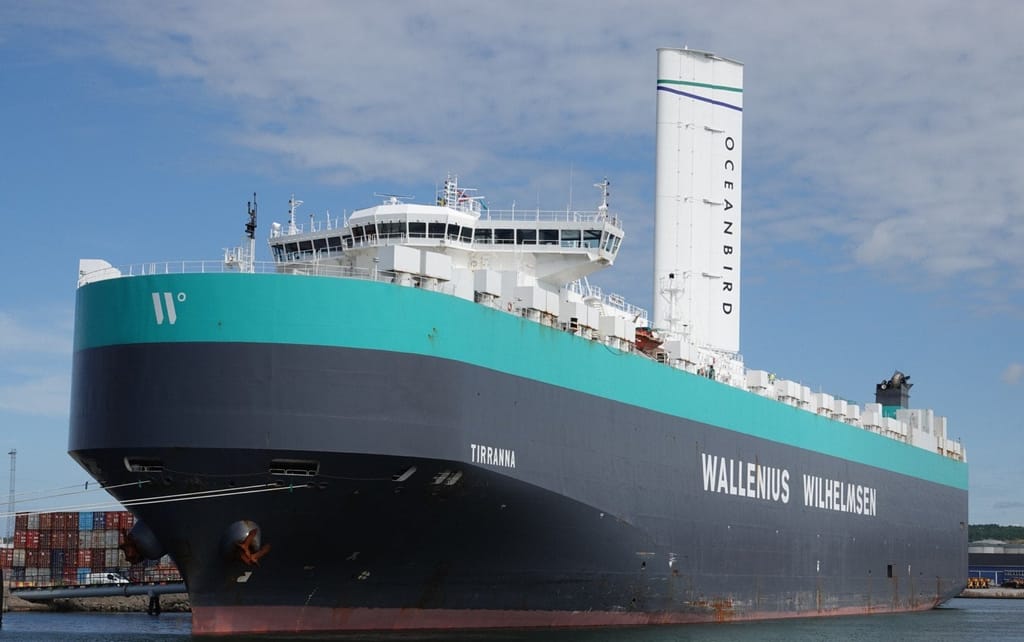
Car carrier Tirranna became the first in its class fitted for wind-assisted propulsion as Oceanbird deployed its first prototype on an in-service vessel (Oceanbird)
Oceanbird, a joint venture started by Alfa Laval and Wallenius Lines in December 2021, reached a key milestone as its prototype for a vessel received class certificates and completed its installation, extending wind-assisted propulsion for the first time to the car carrier segment.
The installation took place between June 21 and 24 at the Damen Shipyard in Rotterdam aboard Wallenius’ Tirranna. The vessel, which is 30,000 dwt and has a capacity to transport 7,620 cars, departed the yard on June 24. The harbor acceptance test and sea acceptance test have been completed as of July 1.
“This is a pivotal moment for us, and it is just the beginning,” said Oceanbird CEO, Amrit Bhullar. “We are very excited to see Wing560 perform at sea so we can prove the value of our efforts. This installation is the next step in our journey to create wind propulsion systems.”
The effort was launched as part of Wallenius’ vision to incorporate wind-propulsion to its global fleet, achieving up to 50 percent of its propulsion power. The company has also shared designs for a wind-powered car carrier and for how the rigid sail could be incorporated to other sectors of shipping.
As Oceanbird’s first onboard prototype, the sail will provide critical information to learn how the technology performs in practice. The installation is about two years after the company first announced the plan and a year after it demonstrated a sail on land.
The installation stands 46 meters (approximately 150 feet) tall and is 14 meters (46 feet) wide to contribute the surface area needed to provide thrust to such a large vessel. They report the prototype is designed to deliver around 10 percent energy efficiency gains. It also has sensors and control systems to gather data and make it a testbed to validate performance.
The installation is part of the EU-funded Orcelle Horizon project. It aims to develop a new generation of large RoRo vessels that get 50 percent of their power from wind,
Wallenius is calling this installation an important step in the commercialization of wind propulsion for its global fleet.
Oceanbird reports that a team will sail with?Tirranna?to collect performance data, monitor usage, and evaluate the wing’s efficiency under real operating conditions under a limited period.
The company says it is planning the next installation for the spring of 2027. The undisclosed vessel will receive two of its Wing 560s to expand the testing in operating conditions.
Panama Ship Registry Returns to Paris MoU “White List”
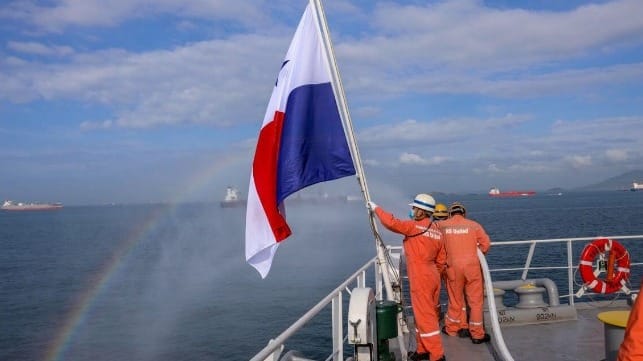
The Panama Ship Registry has returned to the Paris MoU White List due to an effort to ensure quality of the ships in the registry (Panama Maritime Authority)
Officials in Panama are highlighting the successful return of its ship registry to the Paris MoU White List after having been on the Grey List for the past several years. They are highlighting it as a confirmation of their efforts to maintain the highest standards for Panama-registered vessels.
It is a critical development for the flag and registry, which is the largest by the number of ships. It has been under pressure from competitors and criticized for substandard vessels and harboring shadow fleet tankers. The administration has made a concerted effort with the support of the government to purge the registry and enhance its administration.
The annual listing setting the standards for flags is effective as of July 1 and is based on three years of data reviewed by the Paris MoU. Flag state performance is evaluated using a rolling three-year average based on inspections and detention conducted at ports within the organization.
Panama highlights that there were 5,7312 inspections of ships under its flag between 2023 and 2025. It reports the data shows a total of 338 detentions during that period, or a rate of 5.9 percent, well below the Paris MoU standard of 7 percent to be on the White List.
Ships on the White List are recognized for operating under the highest standards. It is also reflected in their inspection routines
The Panama authorities highlight a sustained strategy to strengthen safety standards, enhance compliance with international conventions, and reinforce oversight of the Panamanian merchant fleet. The return to the White list, they report, reflects a series of initiatives over the past several years to improve performance on inspections while also raising the overall quality of the registry.
Among the steps they highlight is a strengthening of its preventative inspection program and an introduction of more rigorous mechanisms to identify and monitor vessels with a history of deficiencies during inspections. It also adopted enhanced methodologies for flag state inspections.
Other efforts included reinforcing a precheck process to ensure that only vessels meeting international standards are admitted to the Panama Ship Registry. It has also enhanced the removal process for violators and increased the number of flag cancellations.
The Panama flag, however, has been under pressure in 2026 due to the political and commercial disputes between Panama and China. China recently denied it was targeting ships with the Panama flag as a retaliation for Panama’s cancelling CK Hutchison’s operations in the port of Balboa and Cristobal. The number of Panamanian-flagged ships detained in China jumped dramatically, while China says this was due to the ships being involved in fishing boat accidents.
Venezuelan Port Remains Shuttered as Quake Response Continues
Amphib USS Fort Lauderdale arrives in La Guaira, June 28 (USMC)
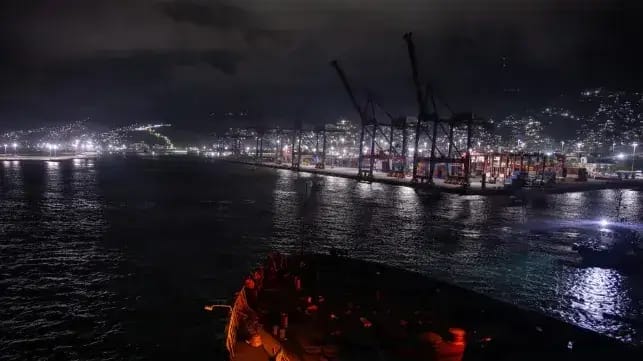
The massive quakes that destroyed thousands of buildings across Venezuela's central coastline have also disrupted the normal functioning of the port of La Guaira, prompting container lines to suspend or alter service until recovery operations are complete.
The harbor is accessible, according to the U.S. military. The amphib USS Fort Lauderdale has been allowed to enter the port and moor alongside in order to speed up delivery of humanitarian goods and services. An emergency supply vessel from the Mexican Navy is also expected soon. However, commercial port operations are shut down for the present, according to Maersk.
"Commercial operations at the Port of La Guaira have not yet been authorized to resume. As a result, import and export shipments through this terminal remain suspended until further notice," the number-two container line said in a statement.
Bookings to La Guaira from other ports in the Americas are suspended for now, but Maersk will still accept new bookings from overseas, which will arrive later and allow more time for the port's reactivation. Maersk is still running operations elsewhere in Venezuela, and is accepting returns of empties at its Puerto Cabello location instead of La Guaira.
CMA CGM reports that structural damage has rendered the La Guaira Container Terminal inoperable for the time being, citing reports from state-owned port operator Bolipuertos.
Instead of commercial activity, the quayside has been pressed into service as a temporary disaster-response hub. A temporary field hospital has been set up by charity Samaritan's Purse, and aid distribution operations are in process as well.
The port also serves another essential role. The quake's official death toll stands at about 1,700 people, but tens of thousands remain missing, and independent assessments suggest that the true number is much higher. To handle the influx of remains, responders have set up a temporary morgue on the quayside at La Guaira, where forensic specialists are working to identify the deceased. A nearby area has been set aside for family members to await news of their loved ones, according to EuroNews.
Fire Crews Battling Large Scrap Metal Fire on Bulker in Gdansk
Fireboats were aiding the fight against the scrap metal fire on a bulker (KM PSP Gda?sk)
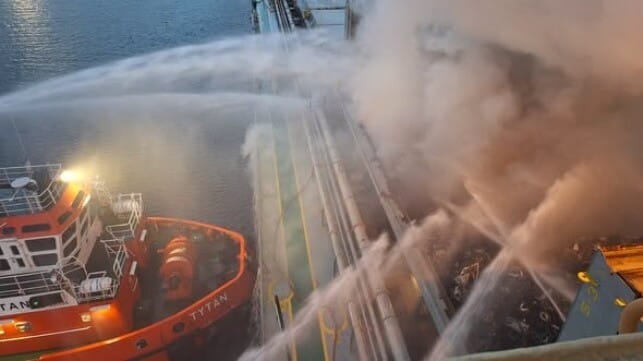
A large, smoky fire was reported aboard a bulker loading in the Port of Gdansk, Poland, on Thursday evening. There was a large ongoing response involving fireboats and crews onshore while residents complained of smoke blanketing the city.
The Panama-flagged bulker Sion Star (237,152 dwt) was loading scrap metal at the terminal when the fire was reported on Thursday evening, July 2. Crews said it was a difficult, stubborn fire because of the depth of the cargo holds and the densely packed nature of the cargo.
At its peak, the fire departments reported that around 100 firefighters and 27 fire engines were being deployed. Pictures showed fireboats alongside spraying foam on the fire. They were also cooling the ship’s fuel tanks as a precaution. They were also using a thermal camera to locate the center of the fire.
The decision was made to begin offloading some of the scrap metal to get to the center of the fire. The fire department reported by late morning on Friday that it had reached the fire, and it was not spreading. A commander from the State Fire Service said they were not sure if the source of the fire was oily scrap metal or other flammable materials aboard the ship.
By Friday afternoon, crews reported the fire had been extinguished. The offloading of material, however, was continuing.
CMA CGM, OOCL, and ONE Introduce Next-Generation Containerships
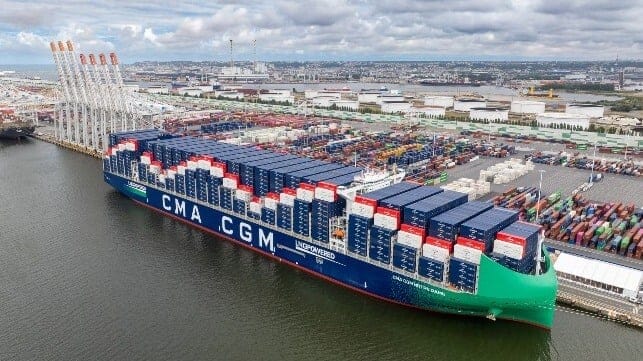
CMA CGM Notre Dame is the largest capacity LNG containership and the largest under the French flag (CMA CGM)
As the buildout of the record orderbook for new container vessels proceeds, a new generation of vessels is being introduced, incorporating new technologies. CMA CGM, Ocean Network Express (ONE), and Orient Overseas Container Line (OOCL) each marked milestones with their most recent deliveries.
CMA CGM christened its newest vessel in Le Havre, France, on July 2 at the conclusion of its first voyage from Asia. The company highlights that the CMA CGM Notre Dame is the largest capacity LNG-powered containership in the industry and the largest under the French flag.
The first of a class of 10 new ships, the CMA CGM Notre Dame is 399 meters (1,309 feet) in length. The design of the container systems, however, expands its capacity to a nominal rating of 24,212 TEU.
The CMA CGM Notre Dame is equipped with systems that enable real-time voyage optimization, improve energy efficiency, and enhance the vessel’s environmental performance. The ship is equipped with AI (Artificial Intelligence) systems, digital navigation, and energy efficiency technologies.
The company highlights the ship as part of its ongoing investment in France. It reports that the 10 new ships will require the hiring of 135 French seafarers over the next two years. By 2028, CMA CGM’s French-flag fleet will increase from 30 to 40 vessels. As the third-largest carrier, the company reports a total fleet of over 700 vessels and carried more than 24 million TEU last year.
The CMA CGM Notre Dame is remaining in Le Havre until July 4. The ship is assigned to the company’s route to the Far East, operated on a 102-day rotation. The route includes stops in China, Singapore, Rotterdam, Hamburg, and Tangier Med.
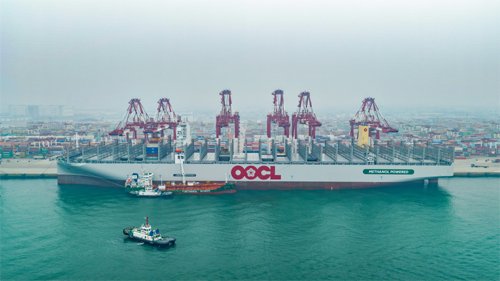
OOCL Wisdom bunkering green methanol as it prepares for its maiden voyage (OOCL)
At China’s Qingdao Port, the new OOCL Wisdom completed on July 3 the first green methanol bunkering before setting off on its maiden voyage. The vessel is reported to be the largest capacity methanol dual-container vessel.
The ship loaded 1,500 metric tons of methanol at Qingdao as well as 3,000 TEU. The ship is 225,000 dwt and has a total capacity of 21,168 TEU. OOCL highlights that it is the first of seven vessels and will be used to expand and improve the route between Asia and Northern Europe.
Ocean Network Express (ONE) is also launching a new series of mid-sized container vessels, its S-Series. The ONE Simplicity (160,200 dwt) was delivered at the end of March and was recently followed by her sister ship, One Solidarity.
Built by Imabari Shipbuilding in Japan, the vessels are designed for future fuel conversion to methanol and ammonia, and the installation of CO2 capture equipment. They measure 336 meters (1,102 feet), and the shipyard highlights that it developed an optimal hull shape that pursues high efficiency to match the frequently used ship speed and draft. In addition, by adopting energy-saving devices, a twist rudder, hull coatings that reduce friction with seawater, and a bow wind cover to reduce drag, it achieved a high fuel efficiency. Installed on the ships are a hybrid exhaust gas purification system (EGCS) and an exhaust gas recirculation system (EGR), as well as a ballast water treatment system.
ONE Solidarity has departed on its first voyage. It will be deployed on ONE’s Mediterranean Pacific South route.
Iran Threatens to Attack Ships for Using Non-Iranian Routes Through Hormuz
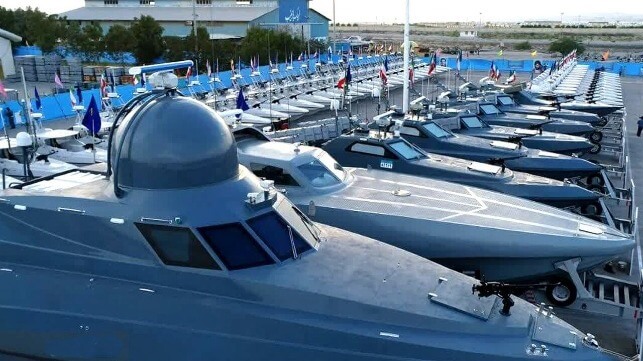
Amidst a reported disagreement within Iran's leadership over whether to prioritize control of frozen bank accounts or control of the Strait of Hormuz, the Iranian senior military command center is signaling a strong preference for the latter - and a continued willingness to use force.
On Thursday, the Khatam al-Anbiya Central Headquarters - the Iranian equivalent of the Pentagon - threatened shipowners with attacks if they attempt to transit the Strait of Hormuz without approval. "Any failure to comply, deviation from the designated route, or disregard for the navigation protocols of the Islamic Republic of Iran in the Strait of Hormuz will be met with an immediate and forceful response from the armed forces," the headquarters staff said in a statement carried by state broadcaster IRIB.
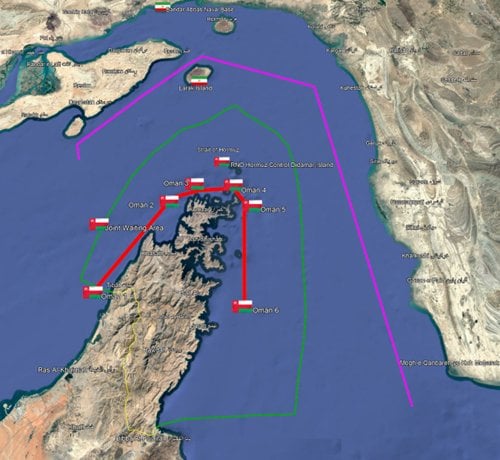
There are three general routes through the strait at present: the northern, Iranian-controlled route past Qeshm; the preexisting Traffic Separation Scheme, which is believed to be mined; and a southern route along the Omani coastline, approved by the IMO and defended by the U.S. military. All are nominally free of charge during the 60-day period of negotiations between the U.S. and Iran, and Iran has agreed to make arrangements for unobstructed passage (contingent on the rest of the agreement being met). The Iranian military wants to ensure that all unobstructed passages happen under Iranian control, within Iranian waters, facilitating a post-MOU transition to a permanent Iranian control system for the waterway.
The U.S. government has offered to unfreeze more Iranian money held in overseas accounts, in effect exchanging funding for a more compliant Iranian approach to the strait, so far without success. Officials close to the diplomatic talks told the Wall Street Journal that U.S. negotiators have offered Iran access to some of its own blocked bank accounts - worth somewhere in the range of $6 billion, three times the amount of the 2016 cash payment approved by President Barack Obama - if Tehran agrees to give up control of Hormuz and set aside its long-term ambition to charge "service fees" for vessel transits.
The access to foreign funds would be a swift and much-needed windfall for the Iranian government, whether to provide for its own citizens in a severe economic downturn or to increase military spending and rebuild its missile and drone programs. It reflects a newly pragmatic approach by the administration: while still reportedly preparing for a military option, the White House appears open to financial solutions to the Strait of Hormuz problem - though at least in public, Iran is not taking the offer. Deputy Foreign Minister Kazem Gharibabadi said Thursday that the strait remains "under Iran's command."
The short-term payment might be far less than the long-term payoff if Iran could control Hormuz permanently (which some question on practical grounds). The Iranian government hopes to earn up to $40 billion every year in fee payments for crossings, according to the Wall Street Journal.
Oman Clarifies its Stance on Hormuz as Talks with Iran Widen
Traffic is moving through the Strait of Hormuz as the talks continue over its future (IMO)
An uneasy calm appears to be prevailing in the Strait of Hormuz after the exchanges of fire between the United States and Iran, which followed the Iranian attack on the Singapore-flagged container ship Ever Lovely (IMO 9629110) on June 25. Both sides agreed on June 29 to stand down from these recent exchanges, to observe the ceasefire in a tighter manner, and also to resume technical discussions in Doha. In the background, and separate from the US-Iranian negotiations in Bürgenstock, bilateral discussions involving Iran and GCC states are taking place, with the GCC countries concerned that the talks in Switzerland will not deliver a lasting solution acceptable to all parties.
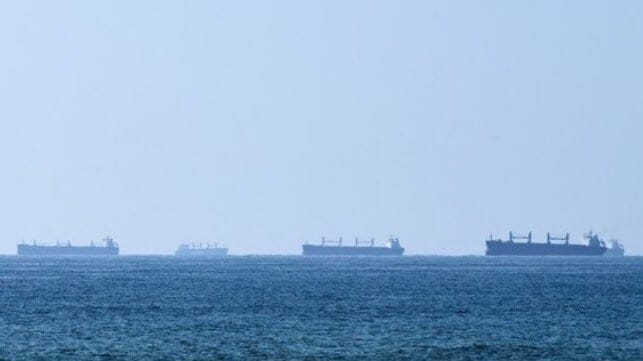
While a relative calm prevails, shipping is using both the Omani/IMO channel to the south, and a loosely-defined channel through Iranian waters to the north, with inbound and outbound shipping using the same channel, at a rate of about 60 transits a day. The volume of traffic is difficult to judge accurately, given that some ships are still traveling without switching on their AIS systems.
In the meantime, however, there had been some confusion about the Omani position regarding the Strait, attributable to poorly-sourced reporting and uncritical acceptance by the media of Iranian interpretations of the Omani position. Clarity was restored, however, when the Omani Foreign Minister, accompanying Sultan Haitham on a visit to France, gave an interview to Monte Carlo Doualiya, the French radio station broadcasting in Arabic. Sayyid Badr al Busaidi reiterated Oman’s position on Hormuz transits:
• Any bilateral understanding between Iran and Oman must fall within international law and UNCLOS.
• Oman is "not in favor of imposing transit fees. That is prohibited under international law, and we are committed to those rules."
• Oman is considering with Iran how environmental protection, navigational services, and emergency response can be improved in the Strait, drawing on the models in operation covering the Strait of Malacca and Singapore. Proposed future arrangements would be discussed and agreed upon with the international maritime community.
• Responsibility for mine clearance in the Strait rests with Iran, who should approach others for support if it was unable to fulfill its commitment to clearance of the Strait under the 14 Point MoU signed with the United States.
The statement makes it clear that while the scope and fee scale for services provided and charged for as Navigation Dues is under consideration in the discussions between Iran and Oman, charging tolls for passage, in effect creating a reconstruction fund, is not.
The statement also makes it clear that Oman will not unilaterally give permission for the European naval stabilization force to operate in the Strait. If the force is to be involved in mine clearance, then the permission of Iran needs to be sought.
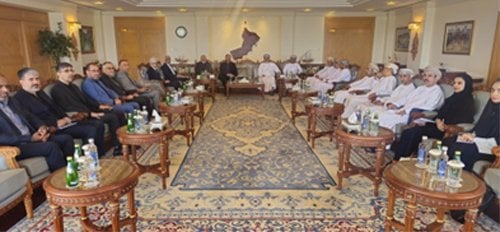
Oman and Iran have already held a series of meetings to discuss management of the Strait, and a further such meeting occurred in Muscat on June 29. The meeting was chaired jointly by Oman's Sheikh Abdulaziz bin Abdullah Al Hinai and Iran's Deputy Foreign Minister Kazem Gharibabadi, who also led Iran’s delegation at the last similar such meeting in Muscat on May 24.
The Omani-Iranian Joint Committee meeting to discuss Strait of Hormuz navigation services, held in Muscat on June 29 (Omani MoFA)
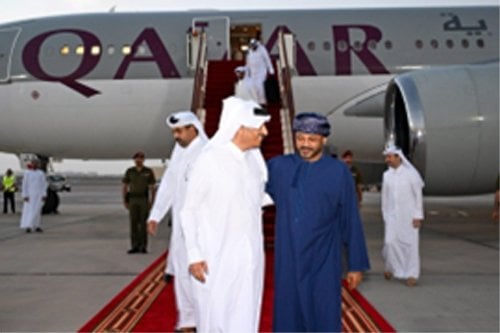
Oman is keeping other GCC states closely informed on the progress of its talks with Iran over the Strait, in an effort to avoid misunderstandings, but also in an effort to build a new consensus. The Qatari Prime Minister Sheikh Mohammed bin Abdulrahman Al Thani visited Muscat to coordinate with the Omani Foreign Minister on June 23. The Omani Chief of Staff visited his opposite number in Bahrain also as part of this continuing dialogue on June 28.
The Omani Foreign Minister greets the Qatari Prime Minister in Muscat for a coordination meeting, June 23 (Omani MOFA)
At the same time, other GCC states are also conducting bilateral conversations with the Iranians. The Qataris are doing so as a consequence of holding a seat at the US-Iranian negotiations in Bürgenstock. The Saudi Foreign Minister Prince Faisal bin Farhan and his Iranian opposite number Abbas Araghchi held telephone discussions on June 24. The Times of Israel is reporting that these bilateral discussions with Iran outside the confines of the Bürgenstock talks will culminate in a regional conference involving Iran, to be held in Saudi Arabia, where the nations of the region will aim to establish a new political climate for living alongside each other.
Both Iran and the GCC have much to gain from a new security concord. If Pax Americana is not going to deliver peace in the region, then the nations of the region must establish a new modus vivendi among themselves, a development that would be equally welcome in the Gulf as in America, which would rather focus on problems elsewhere. The maritime community will breathe a sigh of relief if peace and stability can be established, at least some dividends to a highly disruptive war.
US Forces Still Poised in the Arabian Gulf Area
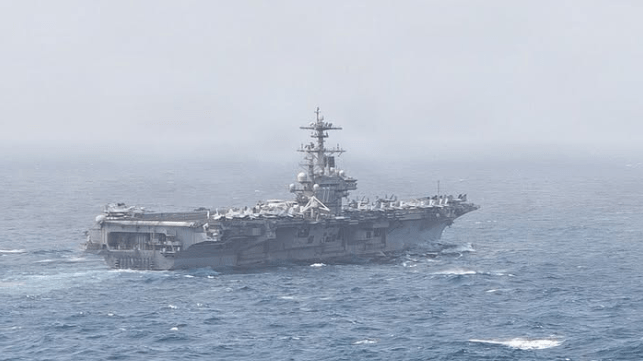
USS George H.W. Bush (CVN 77) in the Arabian Sea last week (CENTCOM)
With an uneasy ceasefire having held now for some three days, which is something of a local record in recent times, there appears to be a determination shared by both Iran and the United States that there should be no further interruptions to the negotiation process, which has now switched to Doha and which is well behind schedule.
Nonetheless, the diplomatic and political climate remains tense, particularly among parties whose interests are not being directly represented by those conducting the actual negotiations in Qatar.
In Iran, a split in the ruling political elite, in which Paydari and IRGC hardliners seem to have the support of the hologram Supreme Leader Mojtaba Khamenei, has spilled into the open. There is open criticism of President Masoud Pezeshkian, Foreign Minister Abbas Araghchi, and the lead negotiator Mohammad Bagher Ghalibaf for being willing to conciliate, even though the Supreme National Security Council has given the go-ahead for negotiations to proceed. This has not stopped the hardliners, who contend that Iran has established an ascendant position following the war, from using their influence within media organizations to drip vitriol on their domestic political opponents and to press for the Islamic Republic to exploit its advantages by further developing its regional dominance. Moreover, the Iranian negotiating team has been accorded very little flexibility, which means that the talks in Qatar are in danger of collapse as soon as substantive issues come up for discussion. For the moment, while the week-long funeral of the late Supreme Leader proceeds, divisions may be put to one side, but may emerge once again in the coming days, along possibly with a first public appearance by Ali Khamenei’s elusive son Mojtaba.
There are also divisions on the other side of the Gulf. Some GCC states, notably Qatar and Oman, believe that the reality of Iran as it is today needs to be lived with. At the other end of the scale, the UAE sees the logical end-goal of Iranian ambitions as the dismemberment of the Gulf monarchies and the establishment of Iran as a regional super-power, displacing all outside influences and by implication the embedded positions of GCC countries in the global economy. In the middle, other regional countries profoundly distrust Iran, no longer have any doubts about its malign intentions, but want somehow to avoid any nastiness in the short-term. The lack of a unified position amongst Iran’s counter-parties is again a recipe for massive instability, which Commander Central Command was evidently seeking to redress when on July 2 a conference in Bahrain assembled military commanders from Bahrain, Egypt, Jordan, Kuwait, Lebanon, Oman, Qatar, Saudi Arabia, Syria, the United Arab Emirates, and Yemen to discuss the current regional security situation and coordinate protective measures particularly in regard to air defense.
If this was not enough, Israel regards the take-down of the Islamic regime in Iran as unfinished business, and the potential threat posed by an IRGC nuclear weapons program, the IRGC’s missiles and drones, and the evident ambition to rebuild the military capabilities of its regional proxies, all of which are regarded as a long-term threat to Israel’s survival. For the moment, Israel is happy to concentrate on achieving a potential solution to the instability on its northern border. But this diversion from tackling the long-term threat posed by Iran is likely to be only temporary if the US-Iranian negotiations do not produce a permanent solution.
In these circumstances, it is no surprise to see that CENTCOM is maintaining a high readiness posture.
Some forces have been withdrawn. Notably B-52 aircraft have been pulled back from RAF Fairford, and F-16 aircraft deployed to Saudi Arabia have returned to Aviano in Italy. F-15Es and F-35As from the 48th Fighter Wing are returning to RAF Lakenheath. A-10C Warthogs have staged home to Moody Air Force Base to Georgia through RAF Lakenheath. All these aircraft could return to the Middle East very quickly, save for the Warthogs which could only re-deploy at a more sedate pace as befits their tactical flight profile.
In the meantime, should conflict erupt once again, the element of the CENTCOM force that provides the forward screen and quick reaction force remains in place, providing Commander CENTCOM with the means to respond while reinforcements are brought back into theatre. This force in place consists principally of ground-based air defenses and assets afloat. CENTCOM for obvious reasons is not posting a daily order of battle, but two carrier strike groups remain in theatre, flag-shipped by USS Abraham Lincoln (CVN-72) and USS George H. W. Bush (CVN-77); in current circumstances, only one of these two CSGs is likely to be held forward, with the duties of the forward screen in the Gulf of Oman scaled back to reflect the lifting of the blockade on Iranian shipping and ports.
USS Boxer (LHD 4), USS Portland (LPD 27) and USS Comstock (LSD 45) with 11th Marine Expeditionary Unit are now in theatre, which suggests that the Boxer Amphibious Ready Group may now be taking over front line duties from USS Tripoli (LHA 7), USS San Diego (LPD-22) and USS New Orleans (LPD-18) with F-35Bs, tactical helicopters and the 31st Marine Expeditionary Unit embarked.
A key component of the continuing CENTCOM readiness posture appears to the presence of Apache helicopters over the Strait of Hormuz, protecting and covering the movement of shipping through the Strait, particularly those moving through the southern channel who continue to use the Omani coastal route. Maintaining the free flow of commerce through the Strait of Hormuz is a key CENTCOM objective at present, and also maintenance of the capacity to respond instantaneously should there be any attempts to interdict traffic.
In summary, while US forces are being both withdrawn from the theatre and rotated within the theatre to give front-line units opportunities for rest, resupply, and recuperation, a forward posture is being maintained so that there can be an immediate response to any Iranian breaches of the ceasefire, in particular in the Strait of Hormuz.