Saturday, July 11, 2026

Opinion Top Three


I was raised as Christian pronatalist. The movement is white supremacist.


(RNS) — Yesterday's Quiverfull movement has been rebranded as today's pronatalist movement, and they're both rooted in the same white Christian patriarchal fears.
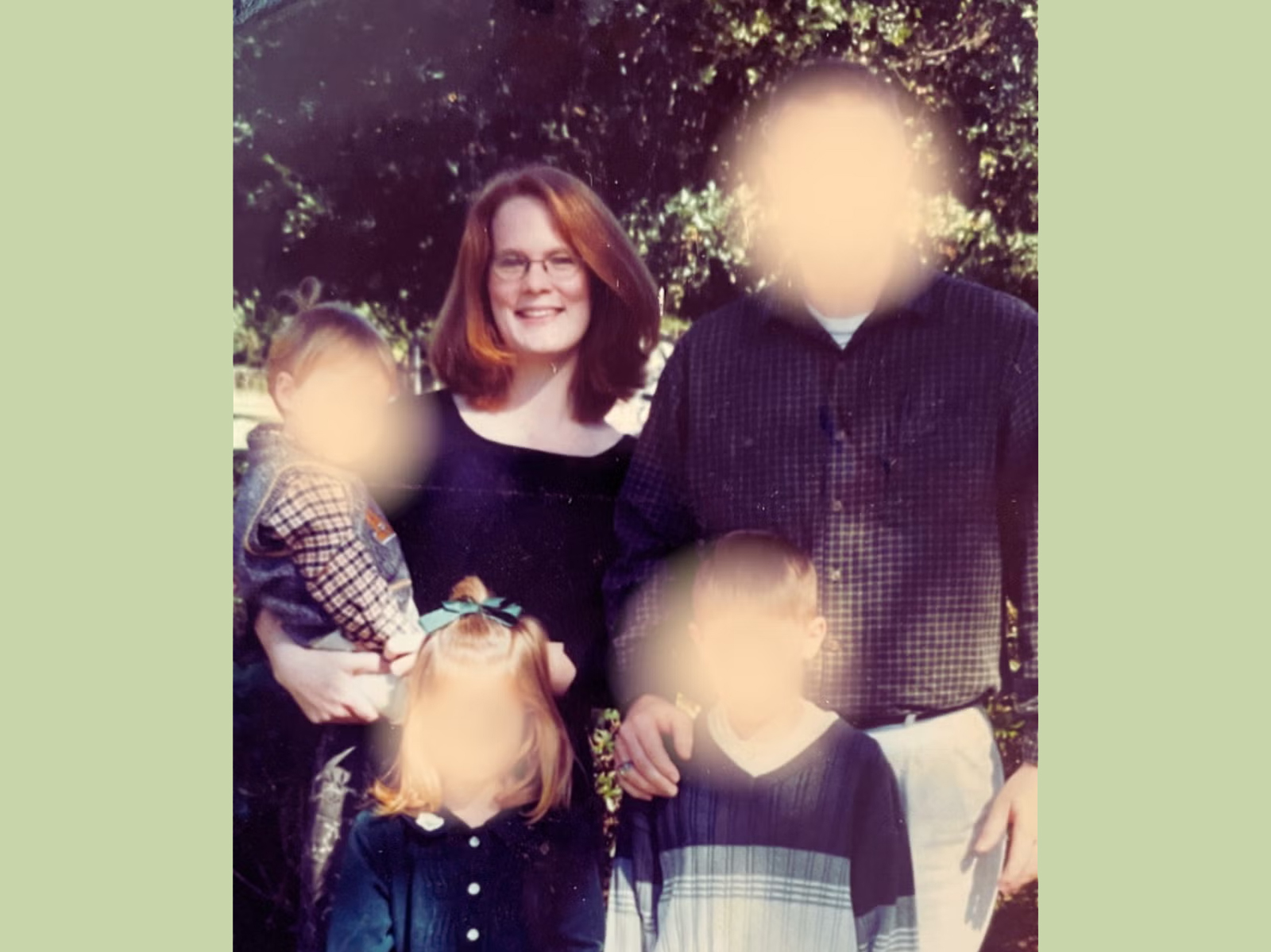

Author Tia Levings with her family during her trad wife years. (Photo courtesy of Tia Levings)
July 8, 2026 
 RNS


(RNS) — The woman in the front pew caught my attention. Her pink calico dress looked straight from the set of Little House on the Prairie. She was pregnant and holding a baby in her arms. Four other children stood next to her, end-capped by the father.

At 14, I was immediately fascinated by their cheerful courage to live a countercultural life in our church of working moms and the standard 2.5 kids. I loved Little House. I wanted to be a Christian wife and mother, and I decided then and there to be just like her. Five years later, I’d get my chance. Mentored by the calico-dressed trad wife, I would become pregnant nine times in 10 years, with five live births and four living children. I believed our lifestyle was nurturing and wholesome—devoted to God—and that when we suffered, we were aligned with Christ.

My mentor was among the first adherents of Bill Gothard’s Institute of Basic Life Principles (IBLP) at our Southern Baptist megachurch. Bill Gothard, now 91 and currently in the news again due to his recent heart attack and subsequent coma, never married or had children. But he and the Quiverfull movement he promoted had a lot to say about families, ultimately spearheading a multi-million-dollar organization that spread Christian fundamentalism across America through his stadium events, homeschool curriculum, and training academies.

Gothard often preached on the holy virtues of motherhood and procreation, teaching a patriarchal hierarchy known as the Umbrella of Authority (or Umbrella of Protection): husbands make all decisions, women submit, children obey. The hidden math was all-around us, along with sermons on the dangers of the Great Replacement—when immigrants and people of color would outpopulate whites, creating instability. White men must lead and protect; white women must provide as many godly children as possible. Our country’s salvation depended on it.
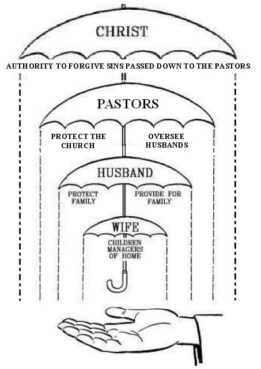


An illustration of the umbrella of authority. (Courtesy image)

The ideology manifests in every part of practical household management, from gender roles and Bible study to nutrition. Young people were simply to trust God and have babies. Refusing to do so reflected weak faith.
RELATED: Pete Hegseth mentor Doug Wilson’s vision for a Christian nation means married women can’t vote

When it came to contraception, persuasion looked like the following: Psalm 127: 4-5, “Like arrows in the hands of a warrior are children born in one’s youth. Happy is the man who has his quiver full of them.”


In short order, concerns such as maternal health, affordability, desire, mental capacity, climate impact, or maturity were swept away. Taught to obey, we did, living the realities of high-control family life with unlimited babies behind closed doors.

I escaped patriarchal domestic violence in 2007. In 2026, Gothard is old and disgraced, having resigned from leadership in 2014 following allegations of sexual abuse. But I hear echoes on repeat now.

At the 2026 CPAC conference, activist Isabel Brown urged women to “have more kids than they can afford, before they think they’re ready,” a call echoed by Erika Kirk at the TP USA conference. I shuddered to hear it. I doubt most 20-year-olds today understand the history, dangers, or context of this message.

Yesterday’s Quiverfull movement has been rebranded as today’s pronatalist movement. Pronatalists these days are not always faith-based. Silicon Valley has its own version of pronatalism, although it’s not lost on me how many tech leaders are from South Africa and their legacy of apartheid. But from what I’ve seen firsthand, I have no doubt that the fear driving much of today’s Christian pronatalism –the fear of white evangelicals becoming a minority — is the same fear that ran through so many churches in this country from the Civil War to the civil rights movement and the pews I’ve sat in.

From 1984-2000, I attended First Baptist Church in Jacksonville, Florida, which at the time was one of the largest Southern Baptist megachurches in the country. Established in 1838 on a local plantation as the Bethel Baptist Church, the congregation split along racial lines after the Civil War. White member went on to found what became First Baptist, roughly two decades after the Southern Baptist Convention formed to protect churches that supported enslavement.

The racism often came sugar-coated—Southern Christians were raised to be polite. It could seem coincidental that there were no Black leaders, and that all the trad wives and quiverfull homeschooling families were white. And yet, there were breakthrough moments where the warnings felt explicit.

Even in my 1980’s childhood, segregation still was openly supported from the pulpit. Our pastors often referred to our “sister churches” and said that “separate but equal” was kind. “Everyone is just happier this way,” I remember them saying.

The inner-city was predominantly Black. But our 11 blocks in the center were intended to be an island of wealthy, white hope. We even constructed an operational lighthouse that cast powerful beams of light into neighborhood windows until it was court-ordered to shut down. We proudly studied our church history every year and saw ourselves as a beacon. Our tagline was “sharing the love of Christ from the heart of downtown Jacksonville.”

Forced busing was a hotly contested issue in Jacksonville, Florida, and I sat through many sermons warning us about the dangers of mixed society and crime. The pastors and visiting theologians warned us of a time when whites would no longer be the majority. America would achieve racial balance between whites and non-whites by the mid 2020s, which would induce chronic instability and poverty. Other than godlessness, no other explanation was offered for this dire economic downturn, and no other solution was offered other than rapid procreation and conservative voting.

In retrospect, growing up in an affluent, white Southern evangelical church is what shaped me to accept the trad wife, quiverfull lifestyle. Now, in 2026, for the first time, white births are no longer the majority in the U.S., a study found.

While racial disparities and culture wars still top our headlines, the news can feel disconnected from the Christian trad wife and pro-natalist movements. But they’re not disconnected; they’re nesting, co-dependent ideologies, each needing the other to thrive. And they’re not new: what we’re experiencing today is less a regression and more of a rebrand, capitalizing on the same racist fears.

TP USA’s promotion of Head of Household voting is directly related to Gothard’s Umbrella of Authority, where the husband makes every decision for the home, including birth rate and vote. And, many of the same people pushing women toward bigger families also tend to support the SAVE Act, which would disenfrancise married women voters, the gutting of the Voting Rights Act and tough anti-immigration policies. Grow the white Christian patriarchal families, and shrink the electorate that can check them–I don’t think any of that is coincidental.
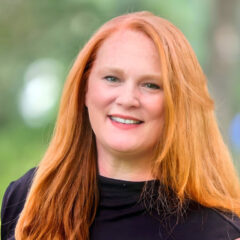

Tia Levings. (Photo by Hannah Joy Photography)

What I learned as a fundamentalist housewife in Christian patriarchy is that changing laws takes a long time; changing hearts and minds in a culture war is faster. The calico dresses may be gone. But the fear remains, and many white Christians are fighting against it by growing large white Christian families they aren’t equipped to raise or afford.


Tia Levings is the author of the New York Times bestseller, A Well-Trained Wife: My Escape from Christian Patriarchy, and I Belong to Me: A Survivor’s Guide to Recovery and Hope after Religious Trauma.

When It Reigns: White Supremacy in America
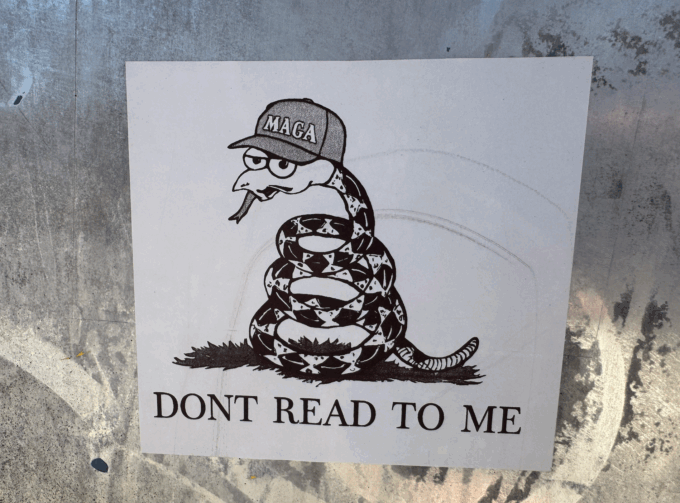

 July 10, 2026

Photograph by Nathaniel St. Clair

Let me make one thing clear at the outset. I do not hate Americans who identify as white people. To do so would in part be a form of self-hate and socially backwards. I am not a self-hater, preferring to look at social dynamics rooted in economics and politics. On that note, I do think that self-hate is connected with white supremacy, the practice and theory of human inferiority and superiority based on the policies and politics linked to one’s skin color. There’s a lot to unpack here, without question.

Political dissatisfaction and economic dislocation created the conditions for President Trump’s two terms in the Oval Office. As he openly supported white supremacist groups riding the coattails of his MAGA agenda, this movement in part gains strength from scapegoating brown and black people in a bid to normalize skin color animus. Division of the working class, the majority, is the name of this game. Divide and conquer via disunity.

Take the white supremacist group Patriot Front, masked and riding the metro in Washington DC, recently. This is a public show of white supremacy politics, continuing a toxic trend. A month shy of nine years ago a Unite the Right rally occurred in Charlottesville, Virginia. It resembled a KKK gathering of yesteryear. The Old Order of white segregationists never ended, borne of a late-stage capitalist growth industry: income and wealth inequality.

In the slow-motion unraveling of American society underway since the end of the Vietnam War (1973-1975) and the postwar economy (1945-1975), there have been dramatic changes of income and wealth distribution, thus in household dynamics. The family wage that enabled males to financially support females to stay home and rear children via unpaid caring labor disappeared.

At the time, and I came of age in the mid-1970s, such changes were beginning, though dramatically under-covered in classrooms and newsrooms. Women flooded into the labor market to compensate for the decline in male wage-income as corporate America outsourced manufacturing abroad. Automation and computerization propelled corporate globalization. As Professor Richard Wolff notes, American workers received loans not raises. The financialization of the economy spread.

Corporations waged class war, successfully, against labor unions. The working day lengthened. Real wages stagnated. Nonunion employment rose. Rent inflation and tuition for higher education grew. The incarcerated population, disproportionately black and brown, mushroomed.

The waning of stay-at-home adult female caregivers entering the labor force to help pay bills meant that children lost nurturing adult guidance. Male and female children alike suffered. For reasons, some more clear than others, male children disproportionately experienced the negative impacts of fathers and other male adults reeling from the loss of status as family breadwinners. Self-hate, blaming one’s self for losing family-wage employment, flows from the corporate restructuring of the U.S. working class.

The attainment of a middle-class lifestyle became more not less difficult. The bipartisan political perpetrators of the disappearing American Dream, building on the backlash against the Black Power and Civil Rights movements of the 1950s and 1960s, demonized African Americans as the villains, oppressing and threatening whites. A more recent version is the right wing demonization of migrants, with President Trump showing the way. His characterization of migrants as criminals and miscreants generally was and is intentional. The weakness of his anti-migrant messaging is evident in the rhetorical change to demonizing anarchists and communists as threats to his supporters. Red-baiting characterizes the narrative of Roy Cohn, the president’s mentor.

Apparently, migrants are to blame for the cost-of-living crisis. The 1,000 U.S. billionaires grabbing bigger slices of the national economic pie are blameless. Migrants are visible and politically powerless. Billionaires are politically powerful and mostly invisible.

According to a RAND Corporation report of March 5, 2026: “Since 1975, $79 trillion in wealth has been redistributed from the bottom 90% to the top 1% in the United States. This represents the cumulative cost of lost wages to workers below the 90th percentile due to rising inequality from 1975 through 2023. Average real income in the top 1% grewby 321.6 percent from 1975 through 2018, nearly three times the 118 percent growth of real per capita GDP over the same period.”

Working class division is the foundation of racial polarization. President Nixon’s racial politics of attacking minorities as threats to white Americans paved the way for California Governor Reagan’s election to the White House in 1980, riding his targeting of black, female welfare recipients as scapegoats for white voters’ economic struggles. Black, female welfare queens driving Cadillacs threatened the household budgets of whites, according to this falsification.

Meanwhile, the Democratic Party of FDR’s New Deal in the 1930s shifted to a GOP-lite political alternative under President Clinton six decades later. A Democratic president and former Arkansas governor spearheaded this anti-New Deal agenda, which President Obama perpetuated. Misnamed free-trade pacts like the 1994 NAFTA putting American factory workers into job competition with lower paid labor in the Global South took a toll stateside. So did President Obama bailing out the Big Banks that caused the Great Recession instead of working class families evicted from their homes. In brief, U.S. economic restructuring has nurtured growth in the party of non voters, and its evil twin, white supremacy, the political scapegoating of nonwhites.

The politics of resignation, non voting, are connected with the resurgence of white supremacy. Not that voting is a measure of working-class strength. As historian Howard Zinn writes, what working people do outside the voting booth is what matters. The demobilization of the working class, politically speaking, is the soil that nurtures a false ideology of white supremacy.

The ruling class is chuckling all the way to the bank. Elon Musk, a trillionaire, at least on paper, is leading this pack of capitalists. Time for a working-class movement politics?

Seth Sandronsky is a Sacramento journalist and member of the freelancers unit of the Pacific Media Workers Guild. Email sethsandronsky@gmail.com


Opinion

US sanctions are harming the Cuban Catholic Church, the island’s hope

(RNS) — If the United States truly seeks a more hopeful future for Cuba, it should pursue policies that strengthen Cuban civil society — including the Catholic Church — rather than causing suffering.


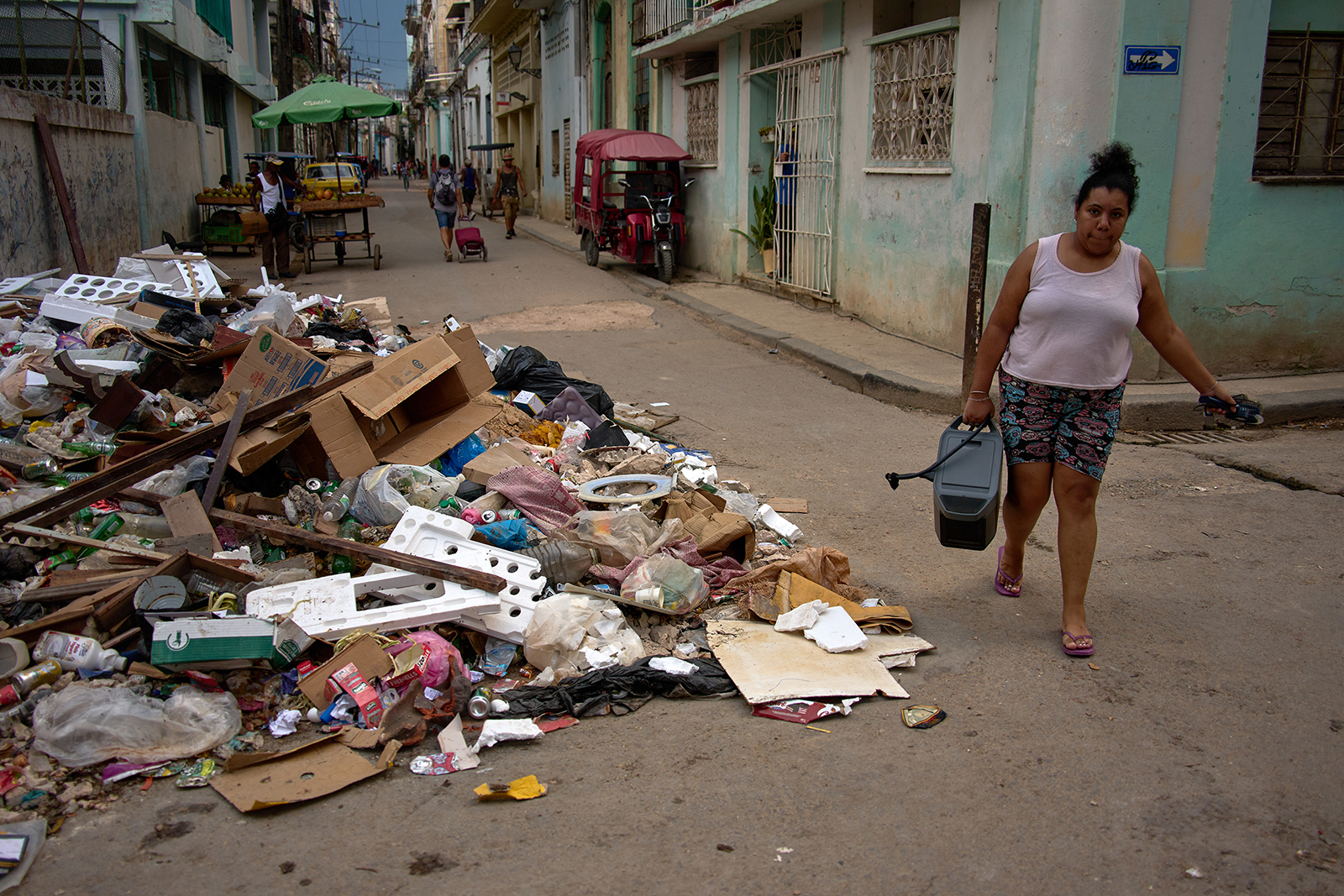
A woman carries a portable power charger during a blackout in Havana, Cuba, Monday, July 6, 2026. (AP Photo/Ramon Espinosa)

Jeffrey von Arx
July 9, 2026 
RNS


(RNS) — While there is growing awareness of the severe humanitarian crisis in Cuba, in large measure brought on by the U.S. fuel blockade, few are paying attention to the damage that decades of sanctions are inflicting on the Catholic Church’s ability to serve the Cuban people.

The United States has pressed economic sanctions on Cuba for over 60 years. Congress strengthened those sanctions through the Helms-Burton Act in 1996, extending penalties to some foreign companies doing business with Cuba. While the Obama administration partially eased sanctions, the Trump administration, particularly in its second term, reimposed sanctions even more stringently, including a prohibition on oil delivery to Cuba.

Those policies have triggered Cuba’s deep economic crisis. Not only has the United States prevented any fuel deliveries to the country — for months now — but it has also imposed such severe penalties on international businesses and aid organizations that Cuba’s entire economy is affected. The latest round of measures imposed on May 1 forced the withdrawal of the international banks through which the country does business, and forced out foreign investors in Cuba’s main industries, such as mining. Every major source of revenue to the country has now been disrupted.

As a result, the state can no longer afford to purchase the basic foods it provides to Cuban households at subsidized prices or to maintain health care or schools. The most direct cause of the acute humanitarian crisis taking place now has been the fuel embargo, which has drastically cut electricity generation in Cuba. Those cuts have caused frequent and prolonged blackouts and affected every aspect of the economy and infrastructure, especially hospitals, including of course those caring for children.

I saw a different Cuba nearly two decades ago.

In 2007, while serving as president of Fairfield University, I led an academic delegation to Cuba. Academic exchange was then one of the few legal avenues for Americans to visit the island. During our week there we met scholars at the University of Havana, journalists and medical professionals.

As a Jesuit, the most memorable part of the visit was spending time with the Jesuit community at Havana’s Church of the Sacred Heart of Jesus. Their historic downtown parish showed signs of decades of neglect — neither the Jesuits nor the archdiocese had money to maintain it — but their spirit was hopeful. They believed that dialogue with the Cuban government was gradually opening opportunities for the church to expand its pastoral ministry.


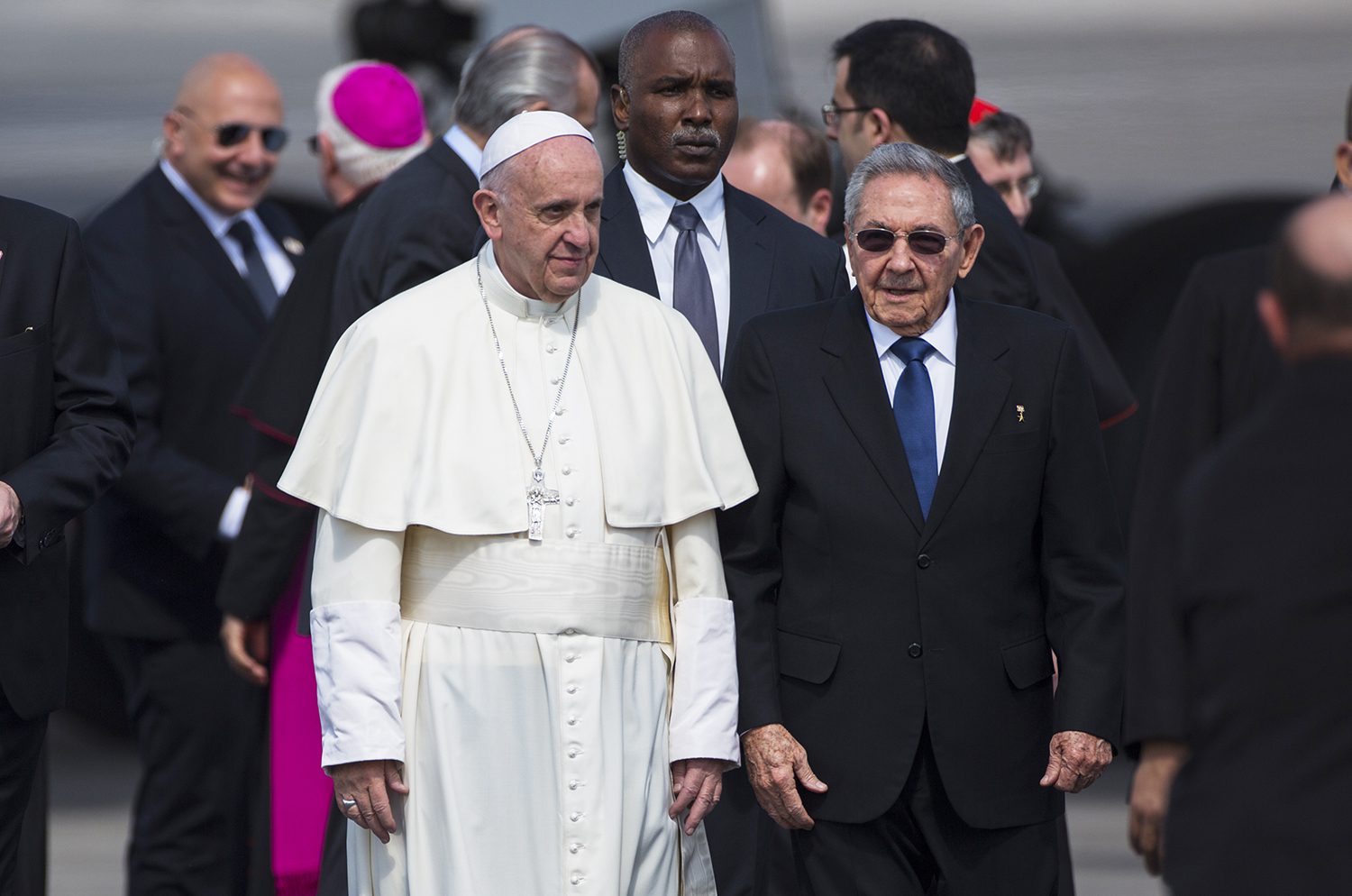
Pope Francis, left, walks next to Cuban President Raúl Castro at the José Martí International Airport in Havana, Cuba, Friday, Feb. 12, 2016. (AP Photo/Desmond Boylan)

That optimism was visible at the Pedro Arrupe Center, a newly established Jesuit retreat house — in what once had been one of Havana’s wealthier neighborhoods — that had recently been restored with international Catholic support. The Cuban Jesuits had been able to reestablish an important Jesuit spiritual ministry right in the middle of Havana. This could not have happened without the government’s knowledge and acquiescence. So despite longstanding tensions, the church and the Cuban government had begun finding limited ways to coexist.

The high point of our visit was meeting Cardinal Jaime Ortega, the archbishop of Havana. Ortega was guardedly optimistic that patient dialogue offered the best hope for expanding the church’s freedom and service. He famously facilitated the visits of three popes to Cuba: Pope John Paul II, Pope Benedict XVI and Pope Francis. He also facilitated the restoration of diplomatic relations between the United States and Cuba in 2014, acting as a go-between at the request of Pope Francis, with President Barack Obama and Cuban President Raúl Castro. During his three decades leading the Archdiocese of Havana, he oversaw the restoration of churches, strengthened the Cuban bishops’ conference and opened the first Catholic seminary building constructed in Cuba since the 1959 Cuban Revolution.

But today, those gains are under severe strain.

In January, Cuban bishops warned that worsening energy shortages and economic hardship were falling most heavily on the country’s most vulnerable people. They wrote that “Cuba needs change and the need is increasingly urgent, but it does not need more anguish or suffering,” urging governments to resolve their differences “through dialogue and diplomacy.”

In February, Pope Leo XIV echoed that appeal, calling for sincere dialogue that would avoid increasing “the suffering of the dear Cuban people.” In May, Cardinal Michael Czerny, prefect of the Dicastery for Promoting Integral Human Development and a frequent spokesperson for the pope, emphasized that lasting solutions come through dialogue, international cooperation and respect for human dignity rather than measures that deepen suffering. He said that the pope has reminded us that “no stable order can arise from the force of arms or from pressure that humiliates peoples.”

The Cuban government recently announced expansive economic reforms, lifting restrictions on investment, corporate ownership and trade by private actors. Rather than directly distributing resources to manage the economy, the state will introduce a system of taxes and incentives.

But these reforms cannot do much to mitigate the tremendous damage being done by the U.S. sanctions. No amount of greater economic efficiency within Cuba can make up for the fuel blockade, the collapse of the electrical grid and the freezing of Cuba’s trade partners. All of this affects basic necessities including food and water. Sister Noemy Ayala, a Carmelite Sister of St. Joseph living in Havana, told National Catholic Reporter, “We have to live with the uncertainty that the power could go out at any moment … and when it does, we have no water because the pump cannot get started.”

The church experiences Cuba’s hardships alongside everyone else. It has been recently reported, for example, that the sisters who bake the hosts for Holy Communion for most of the parishes in Cuba can no longer provide them because they cannot use their ovens due to lack of gas and electricity. Churches have appealed abroad for assistance simply to celebrate the Eucharist.

Meanwhile, parishioners increasingly arrive seeking not only spiritual comfort but basic necessities.

Bishop Arturo González Amador, president of the Cuban bishops’ conference, reported, “There are people who come in saying they haven’t eaten in days and don’t know who to turn to. Food cannot be preserved due to the lack of electricity, and recently there have been frequent fainting spells during (church) services because many people haven’t eaten.”

None of this means the Cuban government bears no responsibility for the country’s crisis. But it is the current U.S. policies — which quite literally reduce the country to a preindustrial condition — that are making daily life unbearable for ordinary Cubans.

We Americans must realize that when we punish Cuba, we do not punish only the government. We punish the most vulnerable: the sick, the elderly, children, the poorest of the poor. And as Catholics, we should realize that we punish our brothers and sisters in Christ, even as they try to serve those in need, and we hinder the mission of the church. And this is precisely at a time when the church is finding its way to being an agent of change for this troubled and suffering country.

The church has become one of the few institutions capable of accompanying vulnerable families, providing humanitarian assistance and creating space for dialogue. Policies that further weaken the church’s ability to carry out that mission ultimately harm the very people the United States says it wants to support.

(The Rev. Jeffrey von Arx, S.J. is president emeritus of Fairfield University. The views expressed in this commentary do not necessarily reflect those of Religion News Service.)

Cuba: ‘The blockade suffocates and kills silently’

Cuba poster

First published at Granma. Speech by the Minister of Foreign Affairs of Cuba, Bruno Rodríguez Parrilla, in the United Nations General Assembly Debate under item 38, “Necessity of ending the economic, commercial and financial blockade imposed by the United States against Cuba”

Mr. President, Your Excellencies, Permanent Representatives, Distinguished Delegates:

Against Cuba, the United States government is waging a multidimensional, unconventional war that has lasted for almost seven decades and has become more brutal and ruthless in the last seven months.

Now, the energy blockade, equivalent to a naval blockade, has been added, which is an act of war. Access to fuel supplies to Cuba, both commercial and humanitarian, is being prevented through direct threats, unilateral coercive actions, and even the harassment or intimidation of tankers by U.S. naval forces.

There have been repeated threats of military aggression from the highest levels of the U.S. government, and public sources describe war options and preparations.

In addition to the economic, commercial, and financial blockade, unprecedented and extremely extraterritorial actions are being taken, such as the use of secondary sanctions that follow the macabre plan to provoke a humanitarian crisis in Cuba and the total destabilization of the country, paving the way for or forcing a presidential order for an imperialist military intervention that would cause a bloodbath and countless losses of Cuban and American lives.

When asked if economic pressure against Cuba would continue to intensify, President Donald Trump himself responded, and I quote: “I don't think much more pressure can be exerted, short of going in and wrecking the place.”

In recent months, the humanitarian damage inflicted on our population has multiplied, with the deterioration of the quality of life, the reduction of livelihoods, the limitation of opportunities for personal, family, and social development, and the massive, flagrant, and systematic violation of the human rights of an entire people in an act of collective punishment.

These are all matters of high importance and urgency that deserve not only the attention but also the clearest pronouncement from the United Nations and its most universal and representative body, the General Assembly, by virtue of its mandate to preserve international peace and security and to ensure the enjoyment of human rights.

Cuban families, especially children and young people, and mothers, feel the suffering of prolonged and unbearable blackouts or power outages. Often, when there is no electricity, there is also no drinking water. They know the anguish of not having medicine for a sick person. They are burdened by food shortages or the high prices of basic necessities.

The infant mortality rate of 4.0 per thousand live births has increased to 9.9. This means the preventable death in other conditions, with the availability of suitable equipment, devices and treatments, of 1,780 newborns.

The number of people dying from cancer in the country has increased significantly. In the case of children and young people, survival fell from 85% to 65%. The trend coincides with the hardest moments of the US siege.

The blockage suffocates and kills silently. Addressing this ruthless crime is also a responsibility of the United Nations.

The United States government, and especially its State Department, spreads the lie that the blockade is not directed against the Cuban people, but only against the government. Ask the Cuban people if they suffer from the blockade or not. Ask even the diplomats, correspondents, and other foreigners who live in Cuba.

We have heard, in an abuse of procedure, the shameless intervention of the United States delegate. He has not addressed any of the issues I have mentioned.

This is not surprising, because he represents the government responsible for the nuclear bombings of Hiroshima and Nagasaki, the government responsible for dozens of military interventions, and the government that has supported the most brutal military dictatorships in Latin America and other regions.

This is the government complicit in the genocide taking place in Gaza, in the repression of professors and students protesting at universities. It is the government responsible for the militarization of cities for political ends, the brutal repression of immigrants, the police hunt for them, and the separation of young children.

This is not surprising, because the delegate represents the government responsible for dozens of extrajudicial killings in the Pacific, Atlantic, and Caribbean Oceans, under the pretext of combating unproven international crimes.

These are the authorities responsible for police brutality against protesters in this country and for the significant increase in deaths in custody.

It represents the government responsible for the existence of a racially segregated system that brutally discriminates against minorities, particularly African Americans and Hispanics, within the largest prison population on the planet, and within a criminal justice and prison system based on racial segregation.

It also represents the government that pays women less for the same work.

I was surprised by the violation of this Assembly's rules of procedure and by having to listen to that speech before the Assembly had agreed to hold a debate.

I don't know if we will hear another speech from the United States, which, interestingly, was the first country to sign up to speak, even though it has just objected to this debate taking place.

The cynicism of the US delegation in this chamber is fundamental. They delivered a substantive intervention filled with tired lies in an attempt to censor the Assembly's right to debate precisely these issues.

Whoever abused the rules of procedure to make substantive, albeit slanderous, accusations minutes before or even during the debate was using this as justification for preventing it from taking place.

They were trying to infringe upon the General Assembly's right to address this very topic.

They were attempting to exercise an act of censorship, which might be possible in a Green Beret camp, but not in this grand chamber.

I don't know if we will hear again in this session the worn-out argument of the U.S. government, according to which the fuel embargo against Cuba doesn't exist, that the blockade is merely a justification by the Cuban government for its problems, that the United States is only exercising its right to refuse to trade with Cuba and to apply a simple bilateral embargo.

It is a fallacy that does not withstand the slightest scrutiny, that contradicts the actions of the U.S. government with respect to Cuba and with respect to all the states you represent. It is a lie that no one believes, except for the delegate who spoke, who has even a modicum of information or decency, which he likely lacks.

The damages of the blockade — and I will give new figures — the damages of the blockade in the period between March 1st, 2025, and February 28th, 2026, at current prices, amount to a record $8.083 billion, 7% higher than the previous year. The cumulative impact since its inception reaches $178.7 billion at current prices.

Of course, these figures do not include the extreme impact of the total blockade of fuel supplies to Cuba, which began in February.

These impacts are fundamentally the result of extraterritorial coercive actions that violate the norms of international law, international trade, and freedom of navigation, as well as infringing upon the sovereign prerogatives of independent states, which you represent, in your right to engage with Cuba according to your own interests and laws.

In addition to the brutal energy blockade, other measures have been imposed throughout the year with the same objective: to force sovereign governments to comply with the illegitimate prohibitions imposed by the United States on trade with Cuba.

The United States government is forcing sovereign states, citizens, and businesses to sever their ties with Cuba, not out of self-interest, not due to commercial disadvantages, not even by mandate of their own governments, but at the behest of a foreign regime — in this case, the United States — which supposedly has no jurisdiction or authority over the activities of its citizens and businesses outside its borders.

Cuba, as a free, independent, and sovereign state, rejects the attempt to dictate from another country the form of government, the economic model, and the foreign relations that our nation must adopt.

Probably, if the United States delegation decides to repeat its intervention, we will hear the mendacious arguments that the United States government usually presents and that the delegate has already shared with us to justify the crime of genocide.

He would cite as supposed evidence figures on selective, highly regulated U.S. exports to Cuba, which depend on licenses or permits from the U.S. government, in violation of universally accepted rules of trade and freedom of navigation, and are now almost exclusively limited to the private sector, which is also restricted in its economic ties with U.S. counterparts.

These exports do nothing to help resolve the main problems that cause shortages and suffering for our people. They do not contribute, because the U.S. government does not allow it, to restoring our capacity for electricity generation or the supply of drinking water.

The United States government does not allow exports that contribute to the development of public transportation, ensure hospital services, benefit education, or even protect food supplies for the most vulnerable sectors of the population.

The delegate failed to mention that the United States government made an offer of humanitarian aid, which was immediately accepted weeks ago by the Cuban government, and that this aid has been delayed and restricted for political reasons.

Nor did he allude to the fact that the United States delegation to the World Food Programme was isolated in a vote in its attempt to block a $116 million food aid program for Cuba.

The U.S. delegation repeatedly claims, as a justification, that the Cuban government is supposedly incapable.

Anyone present here might reasonably ask, how can the problems mentioned by the distinguished delegate from the United States be attributed to the government of a country subjected to a genocidal blockade by its own government, a country that has endured this economic aggression for nearly 70 years and, despite its hardship, has developed a vast social and human development program?

How can the Cuban government be blamed for the consequences of the total deprivation of fuel and other essential supplies implemented over the past seven months? How can it not be acknowledged that, despite this, Cuba maintains stability, there is no large-scale humanitarian crisis, and the defense of our people has not wavered and will not waver?

We are comforted and encouraged by the collective solidarity, the participation and efforts of everyone, particularly women and young people in the communities, in the search for solutions, and by the intense and tireless work of the Party, the State, the Government, the local organs of People's Power, and the delegates of the people and civil society organizations.

The sovereign, truly sovereign, recent, and profound economic and social transformations adopted by our National Assembly to adapt the Cuban socialist model to today's harsh realities, including the brutal and escalating aggression of the United States, inspire hope in our people.

We are grateful for the broad international support and cooperation of numerous governments, parliaments, political forces, organizations, solidarity movements, and associations of Cubans residing abroad.

The hostility and threats that Cuba faces today are part of a worrying sequence of violations of international law and are a prelude to what could happen to any other country tomorrow.

We must ask ourselves in this Assembly whether this is the new world order toward which we are heading. We must consider whether this supposed order would be consistent with the principles and purpose of this organization, whether this is the path that will safeguard international peace and security, promote understanding among equally sovereign states, and foster cooperation, trade, development, and respect for human rights.

It is essential to prevent this behavior of domination, plunder, occupation, dispossession, and cognitive warfare from becoming integrated into an international order even worse than that of recent decades.

It is imperative to defend the founding values ​​of the United Nations, international law, and the Charter of the United Nations, and to uphold the promise to save present and future generations from the scourge of war.

There are bilateral diplomatic talks proposed by the United States government, which Cuba accepted, in accordance with its tradition and foreign policy principles, with the sincere and constructive aim of finding solutions to bilateral differences.

However, these talks show no progress, and it is unlikely they will if those leading the talks in Washington expect to treat Cuba as a defeated or conquered adversary, as a colonial possession, or as a dominion over which the United States has jurisdiction and authority.

The data confirms that this aggressive behavior does not represent the interests of the majority of U.S. citizens. According to a study completed yesterday, 98.3% of posts and comments on social media in the United States do not support the energy embargo, the blockade, or any aggression against Cuba.

This genocidal and criminal policy stems from the anti-Cuban and vindictive whims of a tiny but powerful and influential segment, concentrated primarily in South Florida, which has demonstrated the capacity to manipulate the U.S. political system and influence the current administration's actions.

I don't know if the U.S. delegation will repeat in the next few minutes the ridiculous argument that Cuba represents a threat to the national security of the world's greatest military and nuclear power — aggressive, predatory, and intent on imposing peace through force.

There is no statement from the Cuban government, no evidence, not even the slightest indication that Cuba has intended to threaten the United States. No activity can be identified in Cuba that jeopardizes the national security, the well-being of its citizens, or the competitiveness of the economy of that powerful neighbor.

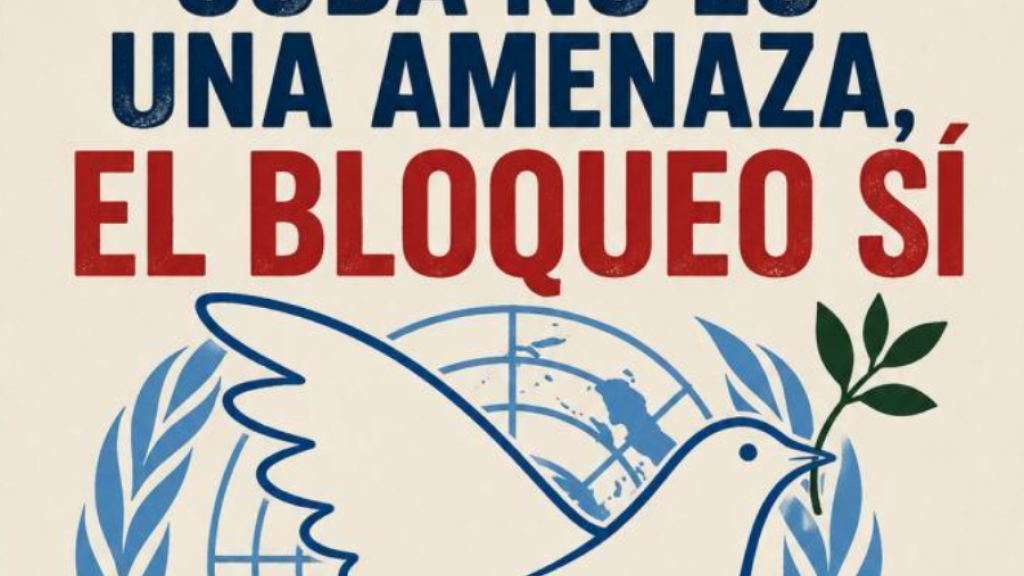
Cuba is not a threat. The embargo is. The threatened nation is Cuba.

But we are a committed nation and defender of peace, international law, multilateralism, truth and justice.

A people that has been fighting for its freedom and independence for more than 150 years and that has written pages of glory standing up to resist all attacks, will defend its independence and sovereignty at all costs.

In the year of the centenary of the historical leader of the Cuban Revolution, Commander in Chief Fidel Castro Ruz, faithful to his legacy, the decision of the Cuban people will always be: Homeland or Death. We shall overcome.


Pro-Palestinian interfaith coalition protests Christian Zionist summit

WASHINGTON (RNS) — Interfaith Action for Palestine gathered around 200 people to protest Christians United for Israel and US military support for Israel.


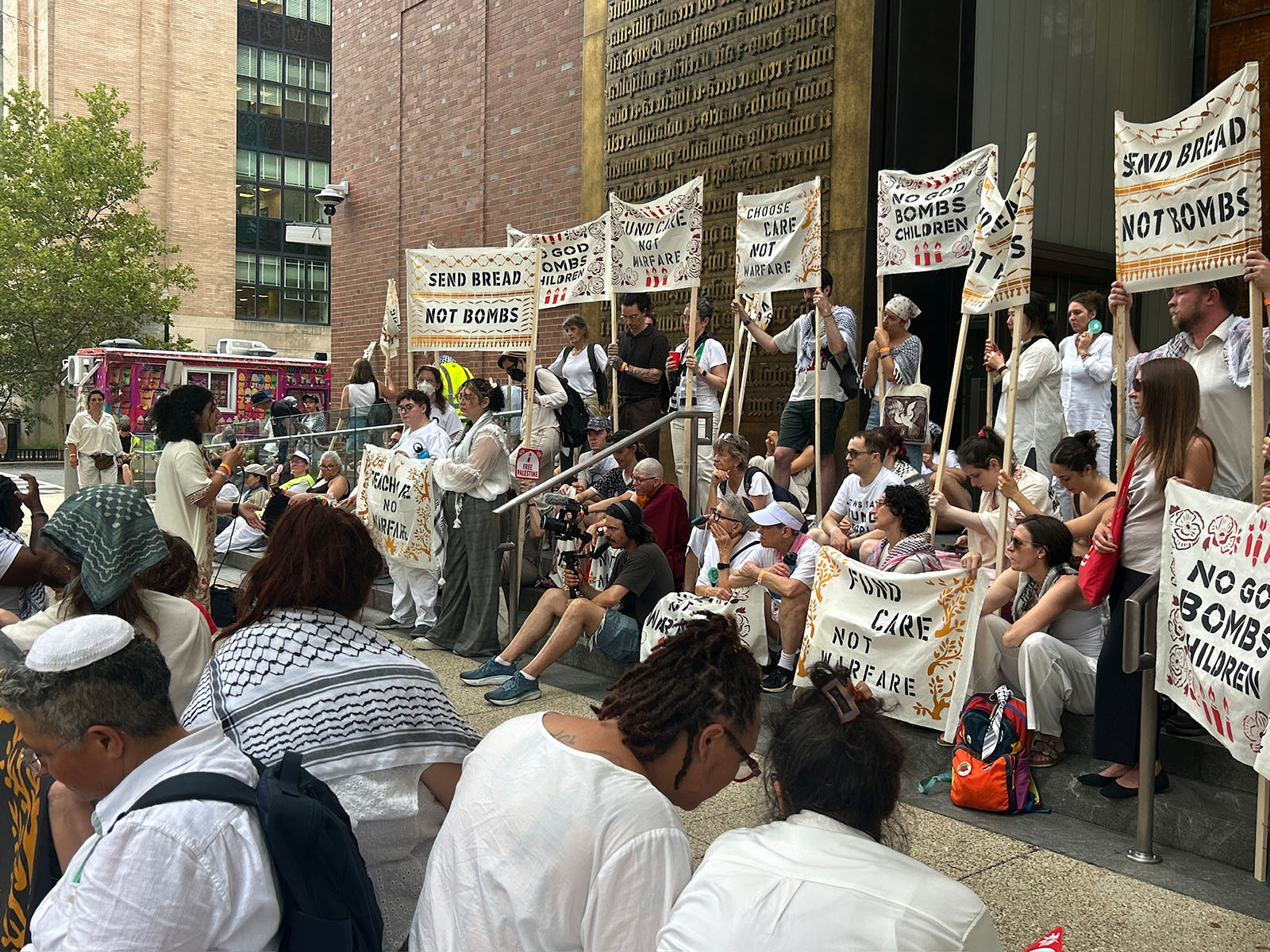
Demonstrators gather to hear speakers during a march organized by Interfaith Action for Palestine, in protest of the Christians United for Israel national summit, on Monday, July 6, 2026, outside the Museum of the Bible in Washington, D.C. (RNS photo/David Katibah)


David Katibah
July 8, 2026
RNS

WASHINGTON (RNS) — Just two days after hundreds of members of the white nationalist group Patriot Front descended on Washington, D.C., on the Fourth of July, a diverse group of about 200 protesters sporting keffiyehs and kippahs, pushing strollers and walkers, crossed those same streets with a very different message.

Marchers from a variety of religious backgrounds walked across Capitol Hill on Monday (July 6) as part of a demonstration organized by Interfaith Action for Palestine in protest of the Christians United for Israel national summit taking place at the same time. CUFI describes itself as “the largest pro-Israel organization in the United States” and boasts a membership of 10 million people, according to its website. Interfaith Action for Palestine is a coalition of 11 Christian, Jewish, Muslim and Buddhist organizations opposed to CUFI.

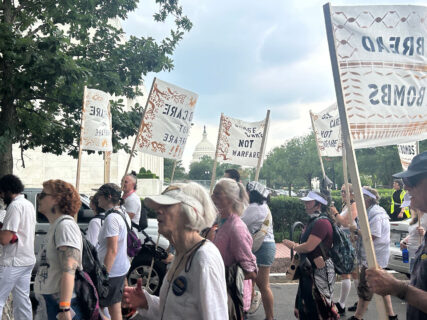
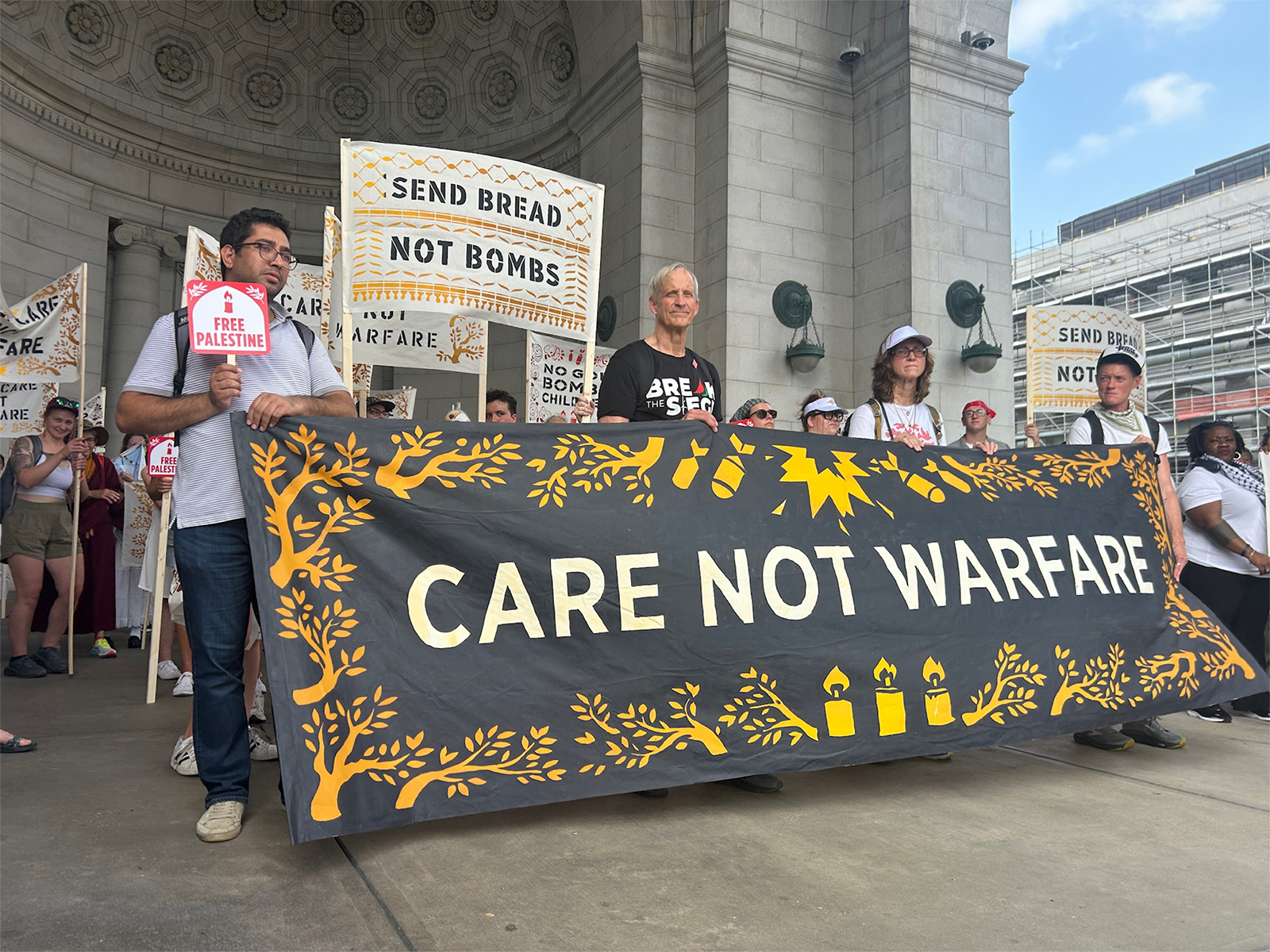
Denouncing what they called American support for “genocide in Gaza,” the marchers sought to offer an alternative vision of freedom and interfaith collaboration while demanding an end to U.S. support for the Israeli military. Protesters carried painted banners with slogans like “Fund Care Not Warfare,” “Send Bread Not Bombs” and “No God Bombs Children.”

“It’s largely about helping the public to awaken to what our role is,” said Steven Sellers Lapham of Gaithersburg, Maryland, and a board member of Unitarian Universalists for Justice in the Middle East. At 70, he marched for hours to demand an end to U.S. “diplomatic cover and funds” for Israel, which he said are used to “slaughter (Palestinian) children.”


Protesters hold an unfinished banner, a project spearheaded by Franciscan friar Brother Jacek Orzechowski, listing the names of children who have been killed in Gaza, July 6, 2026, in Washington, D.C. (RNS photo/David Katibah)

The coalition’s three-day gathering also included an interfaith worship service and in-person visits to 90% of congressional offices, according to organizers. The annual CUFI summit brings thousands of Christians and others to D.C. to lobby Congress for pro-Israel measures, such as support for the Iron Dome and counter-boycott, divestment and sanctions legislation. Previous summit speakers include former United Nations Ambassador Nikki Haley, Florida Gov. Ron DeSantis and former Vice President Mike Pence.

CUFI did not immediately respond to a request for comment on the action.

For three years now, Interfaith Action for Palestine has disrupted and protested CUFI summits.

After the Oct. 7, 2023, Hamas attacks on Israel that killed about 1,200 people, Israel’s retaliation in Gaza has killed an estimated 73,000 Palestinians, according to the Gaza Health Ministry, which doesn’t distinguish between civilian and combatant deaths. Nearly a third of the reported casualties have been children, according to a United Nations Human Rights Council investigative body.

“We are building an alternative to CUFI’s Christian supremacist, Christian-Jewish exclusive, exploitative form of interfaith work with an interfaith gathering that is built on equality, care and solidarity for all people,” said Jonathan Brenneman, who is part of the national leadership team of Christians for a Free Palestine, one of the action’s convening organizations.

This year, the group did not actively disrupt the summit — as it has in the past — as much as it aimed to provide an alternative to Christian Zionism, which the marchers described as “a theological distortion and a moral corruption,” citing Palestinian Christian theologians.

“Not all people of faith are OK with our faith and our theology being weaponized to harm God’s people,” said the Rev. Hannah Sachs, a United Church of Christ minister based in Falls Church, Virginia, who was raised supporting Christian Zionism.

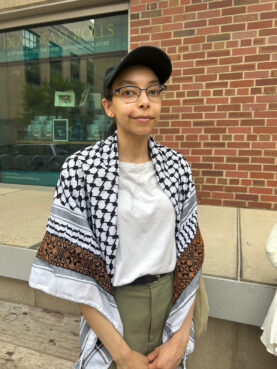
Many of the Christians RNS spoke with at the march said they decided to attend to clarify what they believed was true Christian practice. “What CUFI represents, it’s not what we represent, and I believe it’s antithetical, actually, to what Christ represents,” said Bethany George of Maryland, who described herself as Catholic
.

Marcher Bethany George, July 6, 2026, in Washington, D.C. (RNS photo/David Katibah)

Others were drawn by a desire to “build community” and “build witness,” they said. The Rev. Beth Johnson, an ordained Unitarian Universalist minister and board member of the Unitarian Universalist Advocacy Network of Illinois, said this was her third year making the trip from outside Chicago. “My voice is just one voice. But joined with other voices, we make a difference,” she said.

Many opponents to Christian Zionism argue the ideology is fixated on the return of Jews to the land of ancient Israel in order to spark the second coming of Christ. Eliana Fishman of Jewish Voice for Peace DC Metro, a Palestinian solidarity group, said this worldview is “horrifying,” as it justifies violence against Palestinians and anticipates the eventual death or conversion of the global Jewish population.

“I don’t want Palestinians to die. I don’t want Jews to die. I don’t want anyone to die,” Fishman said.

While CUFI says its support for Israel is not conditional on “theological expectation,” the Christian Zionism they promote is rooted in the Bible. Its founder, televangelist and pastor John Hagee, often cites Genesis 12:1-3 when describing why Christians should support Israel, referencing the Abrahamic covenant in which Yahweh promises to “bless those who bless” Abraham and “curse those who curse” him and his descendants. For Hagee and other Christian Zionists, this promise still rings true for America’s policy relationship to the modern nation-state of Israel.

Brenneman described Christian Zionism as being embedded in the highest levels of the U.S. government today. U.S. Ambassador to Israel Mike Huckabee, for example, has suggested Israel has a biblical right to the entire land between the Nile and the Euphrates Rivers. The prophetic imagination of Christian Zionism came under particular scrutiny in March, after reports surfaced that military leaders had informed service members the war in Iran would hasten Armageddon, though those claims have yet to be verified.

While the march and lobbying efforts centered on solidarity with Palestinians and against the devastation of Gaza, it made connections to U.S. policy. “Christian Zionism is the foreign policy of white Christian nationalism,” Brenneman said.


Protesters of CUFI march past the U.S. Capitol on July 6, 2026, in Washington, D.C. (RNS photo/David Katibah)

Another goal of the march, according to organizers, was to draw clearer connections across intersectional struggles. Between verses predicting “Palestine will be free,” marchers also demanded that “ICE get off our streets.”

The march stopped at three locations across Capitol Hill, which organizers said represent the intertwined matrix of Christian Zionism and Christian nationalism: the Heritage Foundation, a right-wing think tank; Christ Church Washington, D.C., the church of Secretary of Defense Pete Hegseth; and the Museum of the Bible.

Claire Abilmona, a Frederick County, Maryland, resident who described herself as an abolitionist and practitioner of African American spirituality, attended the march to clarify her opposition to the American carceral system as well as the “genocides happening around the world.” She brought her 6-year-old son and 5-year-old niece to the march to help them “understand the world they are growing up in.”

For a few Palestinian Christians present, the show of interfaith solidarity was especially important. Lydia El-Sayegh, a D.C. resident whose family is from Gaza and who grew up in the Baptist tradition in the U.S., said she experienced grief at her church’s silence on the suffering of her family and other Palestinians in Gaza. This event was different, she said.

“The people here today definitely show me how close Christ is and how he experiences our pain in solidarity with us,” she said. “In many ways, it’s very beautiful.”


Activists demonstrate at Union Station, Monday, July 6, 2026, in Washington, D.C. (RNS photo/David Katibah)