Saturday, July 11, 2026

Rare earth talent scramble lures 86-year-old from retirement
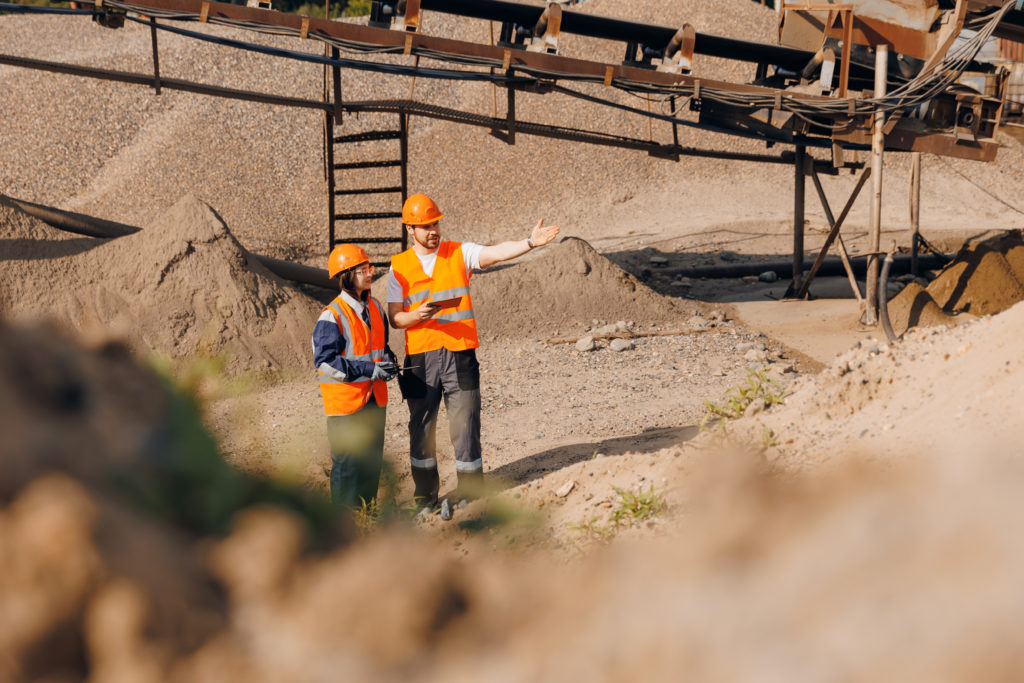

Stock image.

Jack Lifton first retired from the mining industry more than a quarter century ago. These days, at 86, he’s busier than ever.

The engineer-turned-consultant is one of the few Americans with experience processing rare earth elements, a business the US once led before it was outsourced to China. Over the past year, amid escalating trade tensions between Washington and Beijing, the Trump administration has poured billions of dollars into rebuilding domestic supply chains. That’s made Lifton a coveted repository of knowledge for mining firms racing to build plants capable of refining the niche metals essential for consumer electronics, electric vehicles and military-grade weapons.

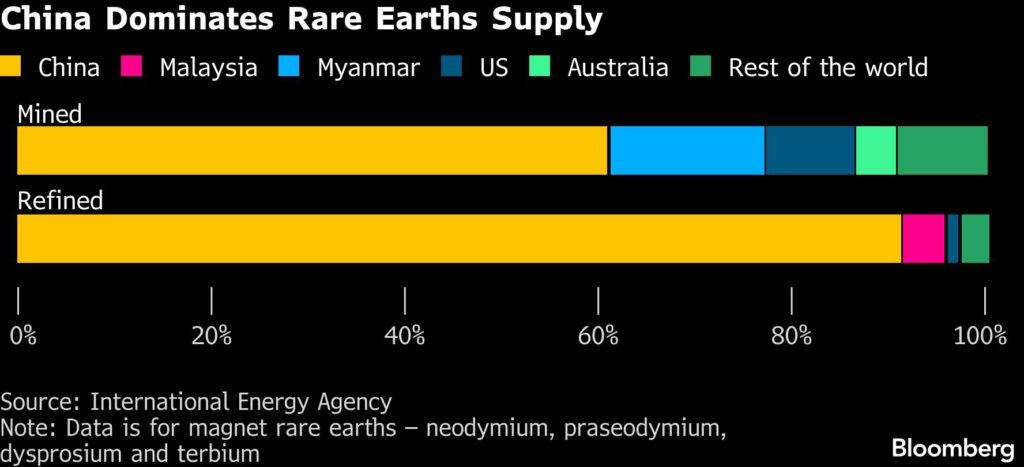
Rare earth plants are complicated and expensive to build, especially in the US where permitting timelines are far longer than mining-friendly countries in Asia and South America. But perhaps the biggest challenge is finding talent to run the facilities. Even if Western companies secure enough raw materials to reduce reliance on China — which dominates every stage of the supply chain, from mining to magnets — chemical engineers and metallurgists experienced in rare earths have nearly gone extinct in America.

“When companies ask me where to find them, I say, ‘Start with the cemeteries, then check assisted care,’” said Lifton, whose clients include Energy Fuels Inc., one of the US’s most ambitious rare earth firms. “Anyone in the US with experience is either dead or, like me, very old.”

The work is extraordinarily specialized. Lifton, who lives in Michigan, advises miners on complex metallurgy: how to isolate soft, silvery rare earths used in high-performance magnets, and where to source the technology needed to prepare them at commercial scale. Unlike commodities such as gold or copper, rare earths require an intricate refining process the US has scarcely performed in decades. Separating the 17 elements can involve dozens of extraction stages and expertise taught at only a handful of universities or acquired through years in industry. Much of that know-how has migrated to China, now the world’s primary employer of specialists.

Some US companies are partnering with universities to recruit students in engineering, metallurgy and chemistry. Others are poaching employees from rivals. At one company in France, a key team of engineers are in their 80s and, like Lifton, have been lured from retirement to help troubleshoot mineral processing plants.

The race for talent spilled into court in May, when MP Materials Corp., owner of the US’s only operating rare earth mine, sued USA Rare Earth Inc., accusing the rival of orchestrating a hiring raid by recruiting a senior engineer and seven other employees along with proprietary information related to rare earth processing and magnet manufacturing. Ramaco Resources Inc., another aspiring US producer, separately sued a former employee now working at USA Rare Earth, alleging he shared Ramaco’s proprietary research with USA Rare Earth.

This kind of competition has made companies especially protective of their engineers. “We know some of our guys have been approached about jobs,” said Ross Bhappu, the chief executive officer of Energy Fuels, which relies on workers with a background in uranium processing to help expand its rare earth facility in Utah. “It’s a scary proposition. There are just not a lot of people who study rare earth chemistry.”

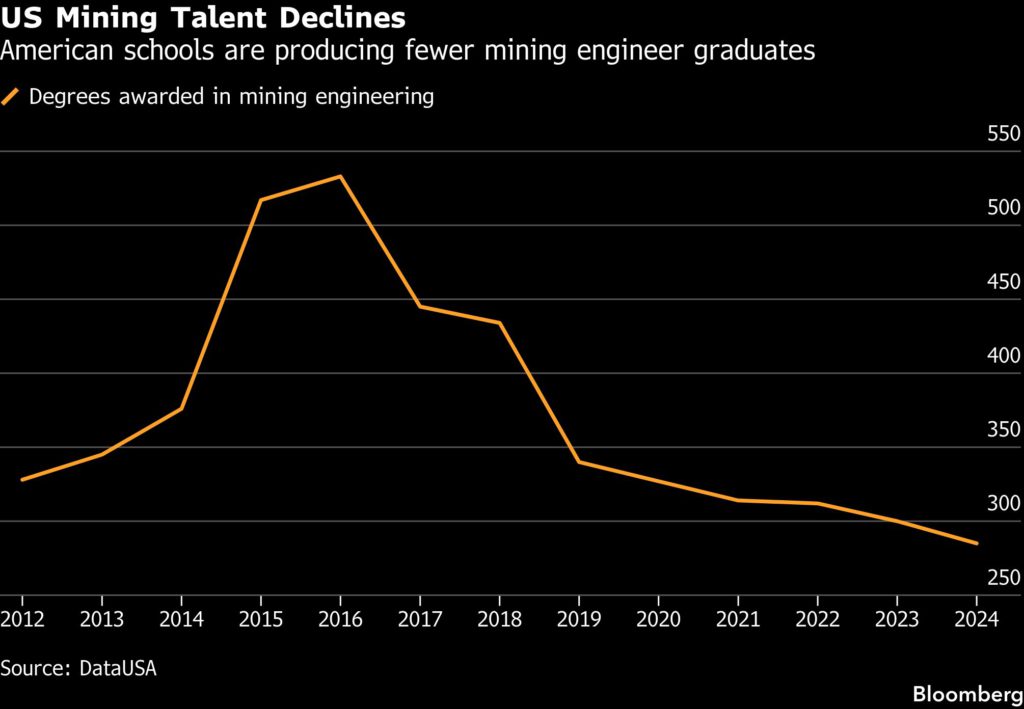
The US produces about one-fifteenth as many mining graduates as China, a figure that has declined sharply over the past decade to roughly 285 last year. Today, the country has only about a dozen accredited mining schools, less than half as many as in the early 1980s. And more than half of America’s mining workforce — about 221,000 people — is expected to retire by 2029.
The federal government is trying to rebuild the pipeline. The Department of Energy is funding workforce-development programs through Ames National Laboratory’s Critical Materials Innovation Hub. Universities including Virginia Tech and the University of Wyoming also have initiatives to train mining engineers, metallurgists and rare earth specialists.

At the University of Wyoming’s School of Energy Resources, just over two dozen students at the university currently specialize in rare earths, according to executive director Scott Quillinan. While interest in the sector is growing, most engineering graduates still gravitate toward oil and gas or industrial chemicals, where pay and career prospects are stronger, he said. Entry-level petroleum engineers earned an average of $104,051 in 2025, according to the National Association of Colleges & Employers, compared with $79,823 for mining engineers.

“Copper and gold are profitable, whereas industries for rare earths are not ready to make the amount of money that would bring in these other specialists,” Quillinan said. “So there’s an economic hurdle we have to overcome.”

Even finding instructors is challenging. “The teachers aren’t there to teach these skills, so we’re teaching the teachers,” he added. “It’s been difficult.”

One of the few recent graduates to venture into mining is Neil Hogan, a 24-year-old chemical engineer who graduated from Pennsylvania State University this year. Hogan was the only person in his class to enter the rare earth industry, recently joining Aclara Resources Inc. to help the Brazilian company develop a processing plant in Louisiana, which will produce refined forms of terbium and dysprosium.

For Hogan, the appeal wasn’t financial; he wanted to help rebuild a Western rare earth supply chain, and contribute to an industry still taking shape. “I hardly knew how to pronounce half of the minerals when I started,” he said. “But I always wanted to work somewhere that was more like a startup.”

Closing the gap with China will likely take years. Over decades, Beijing built infrastructure the US allowed to disappear: universities training specialists in rare earths, research institutes developing new processing techniques, and engineers moving between separation plants and magnet factories, building expertise across the entire supply chain.

Ramon Barua, Aclara’s chief executive officer, said the shortage of experienced workers has forced the company to rely heavily on recent graduates with no prior experience in rare earths.

“Does this guarantee that it will work on day one? Not necessarily,” he said. “But we have to work with the best tools we have at this point.”

Other firms are recruiting from the opposite end of the career ladder. French consulting and technology company Carester SAS leans on veteran specialists, some of them octogenarians, to design separation facilities and advise clients. Earlier this year, USA Rare Earth acquired a 12.5% stake in the company, gaining access not just to its technology but to some of the industry’s scarcest expertise.
Few people understand what’s been lost better than Lifton. He started his career in the 1960s as a chemical engineer in Michigan, separating europium for America’s first generation of color televisions. By the time he retired in 1999, much of the country’s rare earth industry had disappeared entirely.

“We’re looking at years and years of development problems for these companies,” said Lifton. “They all say, ‘Oh, don’t worry, we’ll be in production next quarter.’ But that’s not happening without the talent.”

(By Jacob Lorinc)


Bloom Energy criticism spotlights obscure but vital rare mineral


Scandium oxide. (Reference image. Source: Rio Tinto)

The attention of a short-selling hedge fund on US fuel-cell maker Bloom Energy Corp. has thrust one of the world’s smallest and most obscure critical-mineral markets into the spotlight.

Hunterbrook Media published a report Wednesday, alleging Bloom remains reliant on Chinese scandium despite repeated assurances to investors that it isn’t dependent on China for the material. Hunterbrook works alongside an affiliate, Hunterbrook Capital, which has a short position in Bloom. The company’s shares tumbled on the report, before recovering some of the losses Thursday.

Hunterbrook said it based its conclusion on global trade data, Chinese corporate filings, satellite imagery and conversations with Bloom’s suppliers in China. Bloom said Thursday that the report is “false and misleading.”

The dispute highlights the challenges facing US manufacturers that depend on foreign supplies of obscure minerals that aren’t easily substituted. While President Donald Trump’s White House has poured billions of dollars into rebuilding a domestic supply chain for critical minerals, China still dominates production and processing of many of the materials the US relies on for consumer electronics, vehicles, data centers and defense technology.

Bloom has seen its stock soar almost 1,000% over the past year on demand for its products to power data centers. It uses scandium to improve the performance of its fuel cells, allowing them to operate at lower temperatures and with greater durability.

Bloom says it buys scandium oxide from multiple suppliers across multiple countries. “No single supplier determines our destiny,” Chief Operating Officer Satish Chitoori said in a blog post on Tuesday. “No single country does either.”

The company hasn’t disclosed where, exactly, its scandium comes from. Chitoori said the company keeps its sourcing network confidential to protect the resilience of its supply chain.

Bloom said in a regulatory filing Thursday that it has a “sufficient supply of scandium oxide to meet our current fuel cell demand and backlog, and our supply is not dependent on China.” The company added that its supply chain can “support production of 25GW [gigawatts] of fuel cells per year, and we will continue to expand this capacity.”

Even in the world of obscure critical minerals — other examples include germanium, gallium and rare earth elements like neodymium — scandium is especially niche. It’s one of the smallest mineral markets globally, with just 30 to 40 metric tons consumed worldwide each year, according to the US Geological Survey.

Tiny amounts of scandium improve the strength of aluminum alloys, making them attractive for aerospace and defense technology. Lockheed Martin Corp. is trying to use aluminum-scandium alloys in its fighter jets and Formula One teams have experimented with the material to reduce weight without sacrificing strength.

China has spent years expanding its capacity to recover and refine scandium, and companies such as Hunan Oriental Scandium say they now supply more than half of the world’s fuel-cell-grade scandium oxide.

Its outsize importance has put it at the forefront of US-China trade tensions. Earlier this year, Beijing added scandium to a growing list of strategic minerals requiring export licenses alongside gallium, germanium and several rare earth elements.

Outside of China, production is limited. Russia and the Philippines produce small quantities, according to the US Geological Survey. Closer to the US, Rio Tinto Group has started recovering scandium from its titanium dioxide operations in Canada. Australian developer Sunrise Energy Metals Ltd. is also seeking to expand supply of the mineral. 

Bloom’s Chitoori said the company can get scandium from mining waste streams outside of China.

The Trump administration has focused its funding on rare earth elements and critical minerals like lithium and copper, but so far, little domestic funding has gone towards scandium production. Last year, the Pentagon awarded $10 million to NioCorp Developments Ltd. to produce scandium alongside minerals like niobium and titanium from a yet-to-be-developed project in Nebraska. 

Most projects are years away from significant production, and until then, China remains the leading producer of the mineral, leaving US companies reliant on the country’s supply. 

Bloom shares closed down 5.7% Wednesday at $254.29 on the Hunterbrook report and were up roughly 3.1% on Thursday. 

Ben Kallo, an analyst at Baird Equity Research, recommended buying Bloom shares on “weakness” in a note he sent to clients on Wednesday.

“We think the scandium concern the short report called out isn’t a major risk,” Kallo wrote in the note, adding that “the constraint the short report describes is one the supply chain has been actively resolving for years.”

(By Jacob Lorinc and Mark Chediak)


Op-ed: The paradigm shift in critical mineral investment –Tungsten is just the beginning.


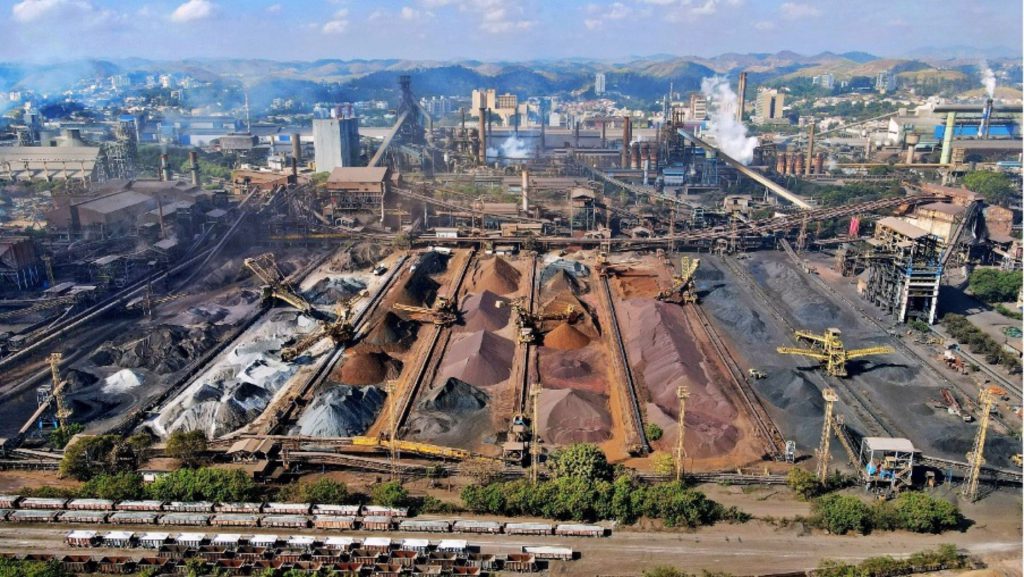
Stock image. Credit: Tulio Mattos

Every critical minerals strategy today is built on a massive, expensive assumption: If governments invest enough money into processing, refining and domestic supply chains, eventually they’ll catch up (and maybe even out-compete) with China.

I’ll say it plainly, that approach will not work.

The Ecosystem Problem

Look at the tech sector. Imagine trying to launch a new search engine to compete with Google today. Technically, it’s possible. Given enough money, engineers and infrastructure, you could probably build something just as good.

But would you? Of course not. Because Google didn’t become dominant simply by building a better search engine. It became dominant by building the ecosystem first. By the time everyone else realised how valuable that position was, the market had already evolved around it.

Yet, as logical as this sounds at face value, this is the exact strategic mistake Western governments are repeatedly making in the global race for critical raw materials (CRMs). Policymakers assume that supply chains can simply be systematically dismantled and rebuilt through diversification, reshoring and investment, failing to recognise when a race is already functionally over.

Simply put, some markets eventually reach a point where they become structurally closed. New entrants can still build capacity, but displacing them becomes progressively more expensive, less profitable and strategically less meaningful.

In other words, there comes a point where it is no longer economically rational to invest in certain midstream market, and that doing so becomes an expensive lesson in path dependency. It forces Western capital into a continuous cycle of playing catch-up, giving dominant players like China the necessary headroom to quietly monopolise the next generation of commodity value chains.

This is where much of the current debate falls short. We tend to think of processing as a collection of individual plants that can simply be replicated elsewhere. In reality, processing dominance is an ecosystem, built on decades of experience and integrated supply chain logistics. By the time a country controls most of a processing market, it has usually accumulated thousands of small competitive advantages that are extraordinarily difficult to recreate.

Calling it “critical” doesn’t make it feasible

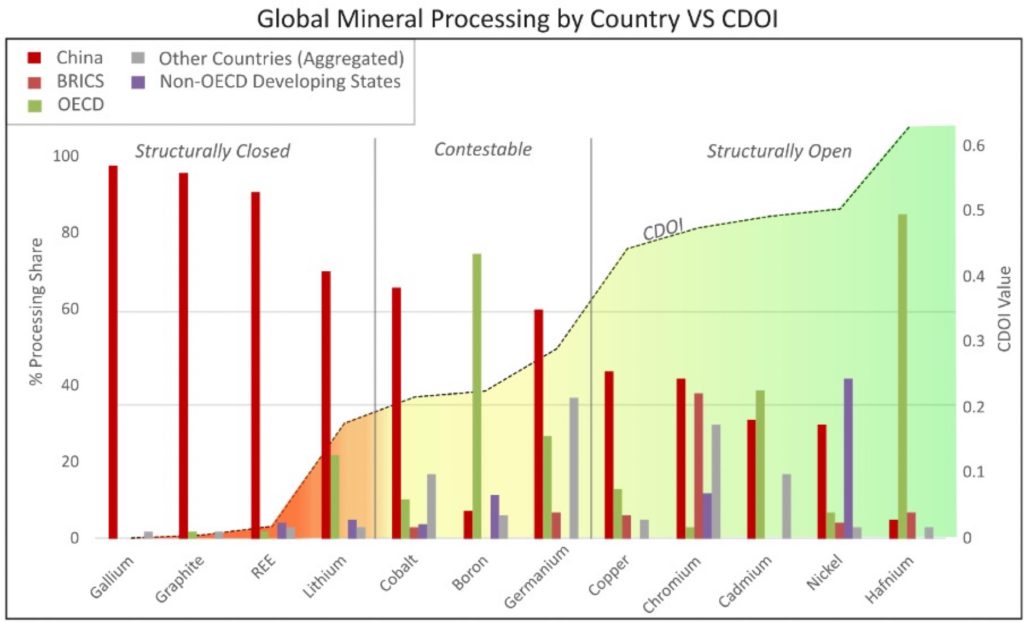
To bridge this analytical blind spot, we must look beyond current market concentration and apply a new metric. This is the Critical Dominance Opportunity Index (CDOI). Rather than taking the typical approach to investment by measuring where processing is concentrated today, it asks a different question:

How much room is actually left for new players to successfully enter a market and build strategic leverage?

When seen through this lens, the realities of the global transition become starkly visible. The processing markets for elements such as gallium, graphite, rare earth elements, and even lithium are already structurally closed. China isn’t just the largest processor, it occupies a midstream position that cannot logically be broken. Could Europe or the United States still build processing plants? Absolutely, but could they realistically overturn China’s position? That is a very different question.

Figure 1. Global mineral processing by country vs CDOI (Source: Vafeas, 2026)

On the other hand, despite having visually intimidating market shares held by single nations, the midstream markets for base metals such as copper, nickel and chromium remains comparatively open. No single global actor has yet achieved overwhelming control. The double-edged reality, however, is that whilst these markets are open to Western positioning, they are equally vulnerable to hostile monopolisation if left ignored.

Then lies the institutional blind spot, and arguably the most interesting area: a market that appears securely closed, until it suddenly isn’t. Markets like hafnium and boron appear protected because they are dominated by OECD nations, but that dominance is an illusion that is entirely dependent on institutional coordination across allied countries. Simply put, if cracks emerge within that coordination, a backdoor opens for strategic competitors to rapidly buy up control.

This distinction fundamentally shifts the paradigm. For the past decade, governments have largely obsessed with identifying which minerals are “critical”, but that is only half the story. The more important question is: which critical minerals remain strategically contestable? These are not the same. One measures today’s dependence, whilst the other measures tomorrow’s opportunity.

The €10 Billion Shift

The solution lies in how we classify “critical”. We tend to treat all critical raw materials as equally actionable. But they’re not. Some markets still have room for new dominance to emerge, and others don’t. That distinction matters.

Imagine two governments each investing €10 billion into refining capacity. One chooses gallium. The other chooses nickel. On paper, both have invested in strategic minerals. In reality, they have made completely different bets. In gallium, they are entering a market where structural dominance has already crystallised. They may improve domestic resilience, but they are unlikely to reshape global market power and remain vulnerable to market shifts beyond their control. In nickel, however, the market remains structurally contestable. The same investment has a far greater chance of creating genuine long-term strategic leverage.

That is why measuring contestability matters. It helps distinguish between investments that improve resilience and investments that can genuinely reshape future market structure. Both have value, but they should never be confused with one another.

China appears to have figured this out. We can see the risk of ignoring this logic in the tungsten market. The midstream processing market (CDOI) for tungsten is effectively closed, comparing well with graphite. But whilst Western nations have failed to recognize this, China has mapped it out perfectly, aggressively campaigning to monopolise the circularity frameworks and secondary processing of tungsten waste streams.

Why would the world’s dominant tungsten processor suddenly become interested in industrial waste? Because they recognise that when a primary processing market is structurally closed, the next contestable frontier automatically becomes secondary supply. China isn’t changing strategy. It is extending exactly the same strategy that built its original dominance. Control every remaining pathway through which future leverage can be created.

If they succeed, they will secure absolute, closed-loop control over the entire global tungsten value chain, from raw extraction to downstream recycling.

A New Architecture for Industrial Policy

This is where contemporary Western industrial policy makes its most costly mistake. Much of today’s geopolitical discussion still revolves around “catching up”. But catching up assumes the race is still being run. In many markets, it isn’t.

Pouring billions into structurally closed processing markets might improve local resilience, or create domestic jobs, but it does so at an unsustainable opportunity cost. It demands permanent capital subsidies to survive and leaves fewer resources available to compete where genuine opportunities still exist.

That doesn’t mean governments should abandon these markets. Resilience, recycling and strategic stockpiling do matter. But defensive resilience should not be mistaken for competitive advantage. There is an important difference between reducing dependence and building dominance, and successful critical minerals strategies need to recognise when each objective is appropriate.

If the US, EU, and wider OECD bloc proactively adopt a structure-aware approach, it will fundamentally transform the mining and investment landscape. The implications here are profound. If governments begin focusing capital according to contestability rather than simple criticality, today’s investment landscape changes dramatically. Projects targeting already-consolidated processing markets may continue attracting public funding for resilience, but they are less likely to reshape global market power. Meanwhile, companies positioned within still-open markets could suddenly find themselves aligned with an entirely new generation of industrial policy. In other words, the next mineral winners may not be those producing the most fashionable critical minerals, but those operating in the “dull” markets that remain open.

But to do this, we must first accept a harsh dose of realism. We must acknowledge where the race has already been lost, so we can focus capital on where the greatest gains are yet to be made. This is not an admission of defeat, but a tactical recognition of reality. If we can do this, the change will be significant. Capital will stop blindly chasing the same handful of over-saturated, “obvious” battery metals, Policy will become ruthlessly selective, and industry will pivot toward massive, currently under-recognized value chains.

Because strategy has never been about stubbornly trying to win every race, but rather about recognising which races are still worth running.

Bio

Dr. Nicholas Vafeas is an economic geologist specializing in critical raw materials, mineral value chains, and strategic resource investments.


Guardian Metal, Montana Mining Association forge US tungsten processing alliance


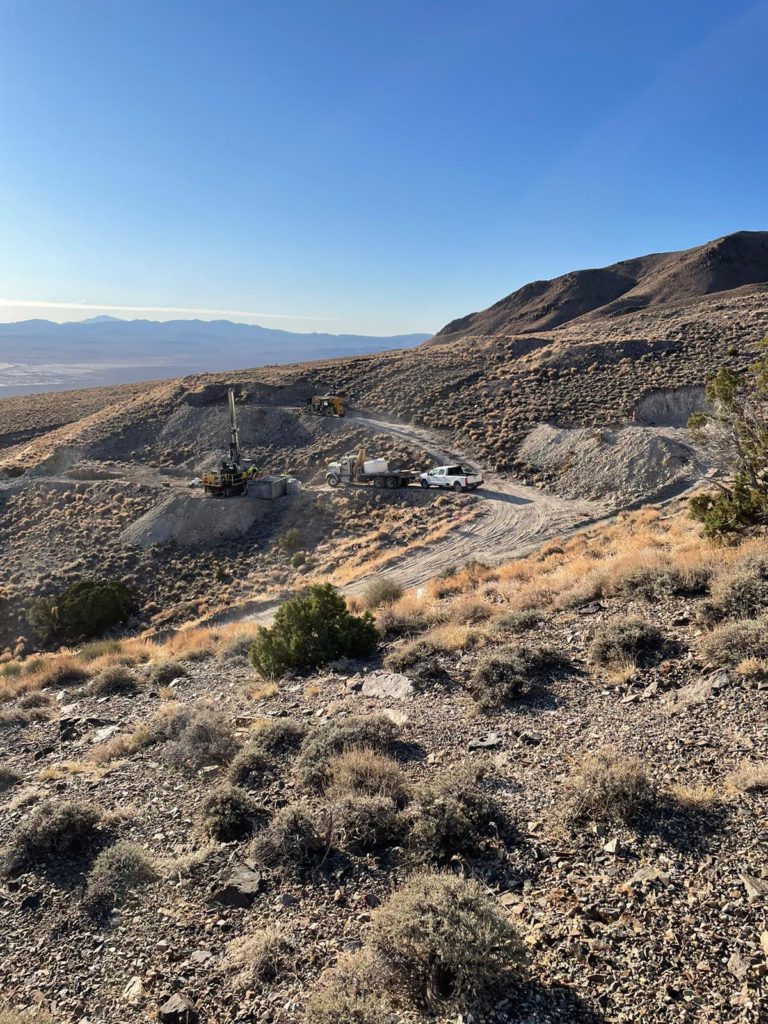
Pilot Mountain tungsten project in Nevada. Image: Guardian Metal Resources.

Guardian Metal Resources (NYSE.A: GMTL, LON: GMET) has entered a strategic partnership with the Montana Mining Association in conjunction with the Montana Technological University and the Army Research Laboratory to collaborate on a tungsten mining and recovery pilot program.  

Guardian Metal will supply stockpiled legacy ore from its Tempiute tungsten project in Nevada, selected as a US feedstock source, with an initial ~250-400 tonnes of stockpiled legacy ore to be transported from Tempiute to Philipsburg, Montana, for trial processing at the partner milling and processing facility. 

The program is focused on upscaling domestic tungsten-rich sources of historical mine tailings and legacy ore stockpiles to evaluate pathways toward commercial production of tungsten metal powder for defense-relevant applications within the U.S. 

Tempiute is a skarn-type tungsten-zinc-copper-silver project with existing infrastructure located less than 250 miles southeast of the company’s Pilot Mountain tungsten project.   

Tempiute, formerly known as the Emerson Tungsten mine, is a significant past producing tungsten mine, which was originally discovered in 1916 and most recently operated during the 1980s.  

The tungsten market had an estimated value of around $5 billion in 2023. It is the material of choice for a key defense application — penetrators — which are high-density, armour-piercing projectiles. It’s also required in US Department of Defence (DoD) contracts. As a critical defense metal, tungsten has been designated as a strategic priority by the US government.   

Guardian Metal said its mission is to advance Tempiute and Pilot Mountain as a cornerstone of U.S. tungsten supply, directly supporting national efforts to reshore production.  

In May, the company expanded its mineral rights position at Tempiute, staking 193 claims and increasing its footprint by over 375% to secure what it believes to be the full extent of the project’s tailings.    

“The selection of Tempiute as a feedstock source is a strong endorsement of the strategic significance of Guardian Metal’s entirely Nevada-based tungsten project portfolio,” Guardian Metal CEO Oliver Friesen said in a news release.  

“At a time when tungsten supply security has never been more critical to U.S. defense and industrial capability, this initiative represents a tangible step toward building an entirely domestic supply chain, free from reliance on foreign sources,” Friesen said.  

First shipments of legacy ore are expected by late summer 2026, subject to completion of metallurgical test work currently underway at partner laboratories in both the U.S. and U.K., and pilot-scale test work to be completed on-site in Montana. 

IDEX finds tungsten in Idaho copper drilling


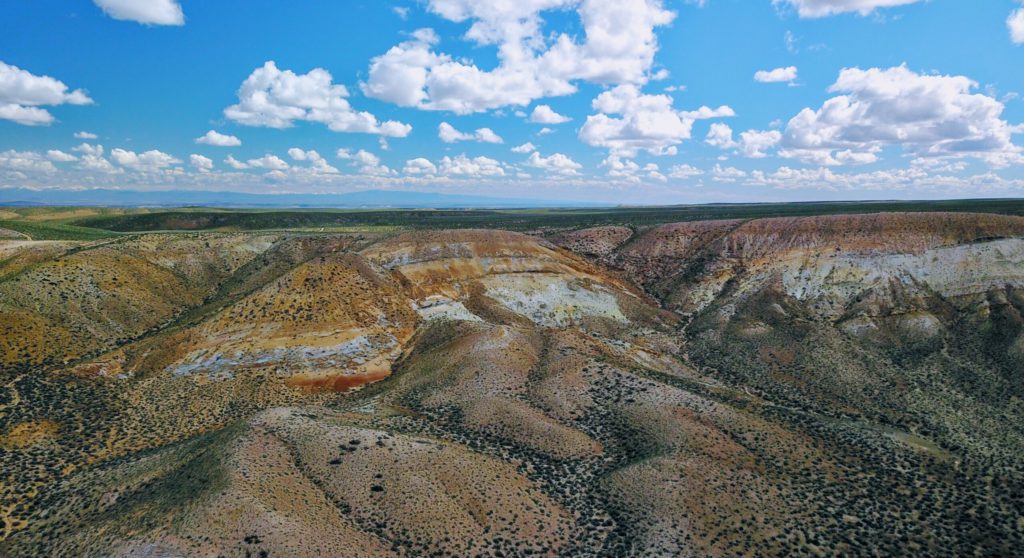
The Freeze copper project in Idaho, where IDEX Metals has confirmed broad tungsten mineralization at the Kismet target. Credit: IDEX Metals

IDEX Metals (TSXV: IDEX; US-OTC: IDXMF) has found broad tungsten mineralization at its Freeze copper project in Idaho, giving the junior a second critical-metals angle at an early-stage copper play.

Vancouver-based IDEX said two re-assayed holes at Freeze’s Kismet target returned 180.5 metres grading 0.11% tungsten trioxide (WO3) from 52 metres in hole KSMT25002. Hole KSMT25005 returned 72.2 metres at 0.13% WO3 from 182.6 metres depth. A higher-grade interval in hole KSMT25005 cut 1.21 metres at 1.55% WO3 from 213.52 metres.

Freeze, which straddles Idaho’s Washington and Adams counties, is located about 125 km north of state capital Boise.

“These tungsten re-assay results have meaningfully changed how we view the Kismet system,” CEO Clayton Fisher said in a Thursday release. “We already understood Kismet to be a robust copper-molybdenum system. Confirming broad tungsten enrichment with high-grade internal zones, supported by visible coarse scheelite, adds an entirely new and important critical-metals dimension to the property.”

Tungsten has become a supply risk in the United States, which has not mined the metal commercially since 2015 and imports more than half its needs. For IDEX, proving tungsten in more holes could broaden investor interest in Freeze as Idaho’s copper belt draws larger miners and better-funded juniors.

IDEX’s Toronto-listed shares were unchanged Friday at C37¢ apiece, giving the company a market capitalization of $28.3 million (US$20 million). They surged 7.4% Thursday.

Assay Method

IDEX picked holes KSMT25002 and KSMT25005 as test cases after crews last year logged scheelite, a tungsten-bearing mineral, in drill core. The company used sodium peroxide fusion, a lab method that breaks down scheelite more fully than the four-acid digestion used for the first round of assays.

The change mattered most in higher-grade material. Across 579 matched samples, IDEX said four-acid digestion broadly matched the new method at low to moderate grades but missed much of the tungsten in stronger samples. The highest sample returned 1,070 parts per million (ppm) tungsten under the old method and 12,300 ppm under sodium peroxide fusion, equal to 1.55% tungsten trioxide.

Early stage

The tungsten results do not yet make Freeze a tungsten project. They come from two holes, true widths are unknown and IDEX has no resource estimate at Kismet.

Still, the re-assays add a new target to a system that the company had framed mainly around copper and molybdenum. Drilling last year cut copper mineralization in all six Kismet holes, including 101 metres grading 1.02% copper from surface in KSMT25002 within a longer 420-metre interval at 0.37% copper, company materials show.

Idaho context

Freeze covers 128 sq. km, including a 115 sq. km Idaho state mineral lease, in a belt that gained market attention after Barrick Mining (TSX: ABX; NYSE: B) invested $23 million (C32.5 million) in Hercules Metals (TSXV: BIG; US-OTC: BADEF) following the Leviathan copper discovery in 2023.

Kismet forms part of a 1.8-km mineralized corridor that includes the North Breccia copper target and the Frostfall gold target farther north, IDEX says. Previous work found copper mineralization stronger near the top of the system, molybdenum increasing at depth and tungsten spread through the drilled intervals. The company has described the setting as a porphyry-style copper-molybdenum system with possible co-product metals.

Next steps

IDEX plans to re-assay the four remaining 2025 Kismet holes for tungsten using sodium peroxide fusion, then use the results and a completed 90.4-line-km induced polarization survey to hone its focus on new drill targets across Freeze.

This year’s field program has passed 500 metres of drilling. The company had collected 1,084 soil samples and 73 rock samples, while a second rig is expected to start shallow holes at Kismet soon. Another rig is testing the North Breccia copper target.


Mexico readies $4 billion in financing to back energy projects


Mexican finance officials are exploring the possibility of creating an umbrella-financing package for renewable-energy projects that could be supported by more than $4 billion from development bank Banco Nacional de Obras y Servicios Publicos, the bank’s head said.

The government is planning to invite more private sector bids to partner with the Comision Federal de Electricidad for renewable energy and storage projects given the interest from global investors in the recent, first tender of such projects by the government, said Jorge Mendoza, the chief executive officer of the bank known as Banobras.

Mexico’s Finance Ministry and Banobras are weighing options such as creating a single vehicle to finance multiple projects, Mendoza said, adding that the government is currently in talks with institutional investors, Mexican pension funds and banks to put together financing.

Mendoza said he expected most of the financing would lined up over the next 12 months, with a chunk done by December this year.

Mexican President Claudia Sheinbaum has been ramping up infrastructure projects in the country. Still, plans have been sluggish at times and a robust pipeline of projects hasn’t fully materialized.

Mendoza said the government is now set to announce more power, oil, highway and ports projects over the next six months, benefiting from the country’s push to develop new models for public-private investment efforts.

“Everything that we worked for over the last year-and-a-half, it’s going to start rolling right now,” Mendoza said in an interview from the bank’s headquarters in Mexico City. “We need to make sure that whoever wins, or partners up with the government, has the financing capacity to do so.”

Investors have been putting more money into Mexico’s struggling electricity sector after the government clarified rules earlier this year. Sheinbaum has pivoted toward welcoming private investment in power after the previous administration shuttered an opening in the state-run energy sector.

Banobras will be able to fund as much as 80 billion pesos ($4.6 billion), funneling that money either directly into projects or through the umbrella facility that’s under consideration, Mendoza said. The financing would back the roughly three dozen projects that were awarded last month to 18 companies. Most of those were for solar-energy ventures.

Mendoza said that an umbrella vehicle would reduce costs and streamline due diligence, by piggybacking on the government’s own evaluation of projects. The umbrella vehicle could combine funds from the government, banks and institutional investors, he said. 

The group could consider cheaper financing for those sourcing materials, such as machinery or components, locally to help incentivize companies to use Mexican supply chains, he said. 

Mendoza also said that Banobras was working with Mexico’s national infrastructure fund, or Fonadin, on 18 highway projects that are estimated to cost around 212 billion pesos. He said he expected to award 13 of those projects before the end of the year, with the others following in the first six months of 2027. 

The country has seen more interest in public-private projects than purely private energy ventures, he said.

“Private players are seeing it as a way to mitigate risks — regulation risk, judicial risk — if you partner up with the government,” he said. 

Mendoza said major global funds were seeing past the noise of US trade talks and geopolitical risks that have weighed on investments. There had been a drought of projects under the past administration, and now the new efforts by the government to accommodate private capital is drawing major investors back.

“They want to take the opportunity of doing things now before the risks disappear,” Mendoza said. “I’m sure that Mexico is going to end up in a much better place than many other countries in terms of trade with the US, regional integration and competitiveness. And once there’s no risks, then there’s going to be many more players coming into Mexico and then you lose the timing and advantage of being early.” 

(By Michael O’Boyle and Kelsey Butler)


ING weighs Venezuela commodity deals as client requests rise


ING Groep building in Frankfurt. Stock image.

ING Groep, one of the top financiers of commodity trading, is fielding “a lot” of calls from clients to support Venezuelan natural resource deals as the country revamps exports after years of US sanctions, its new Americas commodity finance head said.

“We’re getting a lot of requests from traders so we’re looking at it,” Remko van de Water said in an interview. But ING isn’t yet financing commodity deals in the country. “We’re considering it but it’s not part of our mandate at the moment.”

Van de Water said that ING was probably among the top three banks for trade finance in North America and has plans to grow, particularly by supporting clients focused on metals and agriculture.

Vitol Group and Trafigura Group have been joined by some smaller players in moving Venezuela’s oil out of the country. Meanwhile, Mercuria Energy Group has recently struck deals for metals and bulk commodities.

Traders rely on financing to buy, sell, store and ship goods around the world. But banks have been cautious to support flows from Venezuela, meaning firms need to use their own balance sheets to move cargoes.

In a subsequent statement, a spokesperson for ING clarified: “ING is not currently financing any commodities deals in Venezuela and does not have active plans to do so. If future opportunities to serve our clients arise, if and when the legal environment permits, then we will explore options at that time.”

Before starting in the new role, van de Water headed up ING’s metals and mining business in the region for over 15 years. His predecessor Cauê Todeschini became the bank’s global commodity finance head in March.

This year, factors ranging from the Iran war to the El Niño weather pattern have led to price volatility in oil, gas, metals and soft commodities. Those are usually the markets where traders thrive and indications are that profits at some of the biggest firms are approaching record levels.

Van de Water said 2026 was “definitely one of the better years,” for trading houses, but that it was too soon to say whether the sector would match the record profits seen in 2022-2023.

Trading houses rushed to secure additional credit facilities from banks when the US-Iran war broke out in February. Some of those short-term credit lines are due for renewal soon.

Van de Water acknowledged that with commodity prices now broadly lower, some firms would not want to pay for a lot of excess capacity that they don’t need. “But these conflicts tend to take a little bit longer,” he said.

(By Archie Hunter and Jack Farchy)


Flynn: US billions for rare earths ‘missing the mark’


General Charles Flynn (Ret.), founder and CEO of Flynn Advisors. (Image supplied.)

The US is channelling billions toward a handful of large rare earth producers while the junior miners, service providers and aging workforce that turn deposits into mines sit outside the effort, retired general Charles Flynn says.

Flynn, who commanded US Army Pacific and served as the army’s chief operating officer, wants the build-out run as a five- to 10-year industrial campaign. The gap he describes is wide: about 90% of the raw material the country mines still goes abroad for processing, and roughly half the mining workforce reaches retirement age by 2029.

Flynn compares the pattern to defence contracting, where capital concentrates on prime contractors such as Boeing, Lockheed Martin and Northrop Grumman while their subcontractors go unnoticed. 

He credits the Trump administration with bringing urgency to critical minerals, but says its money lands on the equivalent of the primes. A $200-million grant to a single company, with offtake five years away, leaves the next 18 months unanswered.

“The country needs to think in terms of industrial systems and not just a collection of announcements and grants,” Flynn said on The Northern Miner Podcast.

The pattern is already visible downstream. US-backed producers including MP Materials (NYSE: MP), Energy Fuels NYSE American: UUUU; TSX: EFR) and Phoenix Tailings continue to sell much of their output to buyers in Japan and South Korea because domestic magnet manufacturing has not expanded as quickly as upstream investment.

Three bottlenecks

Flynn identifies junior miners, service providers and the workforce as the constraints federal policy has yet to address.

Service providers run exploration, laboratory and chemistry work, pilot testing, land management and waste solutions — the work that takes a deposit to production. Flynn said their operators tell him the US looks open for business but offers no clear door to walk through. His firms, Flynn Advisors and Manifest Industries, position themselves as intermediaries between those companies and the government.

Mason jars

One factory visit illustrated the gap. At a magnet maker, Flynn was shown five mason jars, the fifth holding a finished magnet and the first four holding the materials at each stage behind it. He asked the chief executive at which jar his ownership of the material began. The answer was jar three; the contents of jars one and two were processed overseas.

“This is a magnet that goes in an F-22 or an F-35 or precision munition,” Flynn said.

The example illustrates how critical early-stage processing remains concentrated outside the US, even for products destined for advanced defence systems.

Mine forward

Flynn argues Washington should reverse how it finances critical minerals projects.

Rather than buying finished batteries, magnets or circuit boards for stockpiles, he proposes supporting projects at the deposit stage by signing letters of intent or leases with junior miners and releasing funding as projects advance from exploration through extraction and processing. In return, the government would receive a share of future production once operators prove themselves.

“The scale of funding matters less than the certainty of funding,” Flynn said. He recounted a service provider in the US southeast who told him he had no idea what he would do with a one-time cheque for $25 million or $50 million, but that $5 million or $6 million a year over five years would let him build a workforce and put mines into production inside 18 months.

Army land

Flynn also wants rare earth processing rebuilt on federal property already under government control.

He proposes modular processing plants that could be replicated across army bases and National Guard and reserve facilities in all 50 states, located near foreign trade zones to capture tax advantages while benefiting from the security and streamlined regulatory environment of military installations.

The long game

Behind the industrial argument sits a military one about staying power.

“Deterrence is not merely ships and aircraft and missiles and things that a nation possesses today,” Flynn said. “It’s really about the ability to replace losses, replenish your inventories, repair equipment, expand production, and basically sustain through a prolonged crisis.”

Flynn argues China deliberately built its rare earth dominance over more than a decade and now possesses leverage it has shown it is willing to use. He describes the US-China relationship as the defining strategic competition of the century.

He stops short of criticizing the companies receiving government backing. MP Materials and USA Rare Earth (Nasdaq: USAR) remain essential to rebuilding the supply chain, he said, but they represent only one part of an ecosystem that also depends on junior developers, suppliers and skilled workers.

“We should have started years ago, but we have to start now,” Flynn said. “And we’ve got to take a long-term view on this.”


Macquarie says copper price rally still running ahead of reality


Copper price overheated: Image: First Quantum Minerals Kansanshi smelter in Zambia 

Copper was last trading at $6.27 a pound on Thursday, equal to a little over $13,800 a tonne and up 2.6% by lunchtime in New York. Copper prices were buoyed by a fall in the oil price after Trump said Iran is back at the negotiating table and fresh tariff threats in the US. Just the Commerce Department said it plans to create a process for expanding tariffs of up to 50% to a wider range of downstream copper products by the end of the 2026 fiscal year.

In a new commodities compendium, Macquarie Strategy argues that copper remains caught between bullish investor sentiment and weakening physical fundamentals and at today’s levels the gap is wide.

The bank’s analysts in locations including London, Shanghai and Singapore in a brief called Spinning Plates to describe the current state of the market argue that the world is not short of copper and with surpluses expected over the next few years is unlikely to run out any time soon.

Visible stocks have risen by more than 870,000 tonnes since the start of 2025, with 444,000 tonnes added last year and a further 429,000 tonnes so far in 2026. LME inventories are at eight-year highs, Comex stocks are at unprecedented levels and Macquarie estimates another 550,000 tonnes is sitting off-exchange in the US.

Copper rallied from below $12,000 a tonne in late March to over well over $14,000 at the end of May before easing back. Macquarie says the move was driven more by positioning, short-covering and tariff-related trade flows than by physical tightness.

Metal has been pulled across the Atlantic by the CME-LME arbitrage as traders position around possible US copper trade measures. Macquarie says the most likely outcome is continued uncertainty rather than a clean near-term resolution, keeping metal in the US and leaving the rest of the market with an artificial sense of tightness.

Macquarie Strategy sees Chinese buyers stepping back at these high prices. China has seen a large seasonal stock build despite lower imports and higher exports, and the usual drawdown stalled early. Outside China, demand is also soft, with spot premiums well below annual contract levels.

Mine supply continues to underperform, with guidance from the 17 largest miners cut by 199,000 tonnes to 13.8 million tonnes. The largest disruptions came from Kamoa-Kakula and Grasberg, where recovery and ramp-up schedules have moved out. Ivanhoe said this week its DRC mine output will ramp in the second half of the year but kept 2026 production guidance at 290,000–330,000 (down from expectations of more than 500,000 tonnes before the May 2025 flooding). Freeport-McMoRan once targeted 771,000 tonnes of copper at Grasberg this year before the mud rush. The Phoenix-based company now expects to return to full production by end-2027.

With Kamoa-Kakula and Grasberg baked into its disruption allowance, Macquarie forecasts mine supply growth of 1.3% this year and 4.4% in 2027. It also assumes Cobre Panama restarts in the second quarter of 2027 (a timeline that would disappoint some observers of First Quantum’s ordeal in the central American nation) and ramps up over six months to 385,000 tonnes a year.

Macquarie has cut its global copper demand growth forecast for 2026 to 1.8% from 2.0%. China was reduced to 1.1%, while ex-China growth was cut to 2.6%. The bank expects demand growth to improve to 2.2% in 2027 as ex-China markets recover, but China remains a drag because of its moribund property market.

Macquarie is also sceptical about near-term AI-driven copper demand. Data centres are fuelling bullish sentiment, but project delays due to growing public opposition, grid constraints, equipment shortages and growing use of optical connectivity mean the copper impact may be smaller and slower than the market assumes.

The bank still sees copper as structurally attractive in the long run. It forecasts mine supply growth of 2.8% a year from 2025 to 2030 and refined production growth of 2.4%, against demand growth of 2.8%, driven by electrification and the energy transition. By 2030, the market should move back toward balance, meaning new projects will still be needed.

The near-term problem is the surplus. Macquarie estimates the market was already in a 600,000-tonne surplus last year and expects another 262,000-tonne surplus in 2026, even after allowing for 783,000 tonnes of disruptions. In 2027 and 2028, it expects the surplus to average more than 700,000 tonnes a year.

Macquarie has lifted its average 2026 copper price forecast to $13,165 a tonne from $12,310 a tonne, reflecting price momentum and macro support. But the bank still expects the market to correct, forecasting a price floor of $11,000 a tonne in the third quarter of 2027. It also raised its long-term copper price forecast to $10,200 a tonne in 2025 dollar terms.


Canada’s 20-year mine timeline hits multibillion-dollar wall


Highland Valley Copper (HVC) operations. (Image courtesy of Teck.)

Canada’s lengthy mine development process is putting billions of dollars in potential critical minerals investment at risk as competing jurisdictions move projects into production years faster, a new study suggests.

Canada takes about 20 years to permit and build a mine compared with 14 years in Australia, according to S&P Global Market Intelligence data cited in PwC Canada’s Mine 2026 report. 

The study argues that geology alone is no longer enough to secure investment, with policy, permitting, capital and processing capacity increasingly determining which countries capture the most value from the global critical minerals supply chain.

“Canada has world-class geology, but projects still have to move through a complex system of federal and provincial assessments and permitting requirements, as well as navigating infrastructure constraints and community engagement processes,” Monica Banting, national mining leader at PwC Canada, told MINING.COM. “That complexity creates uncertainty around timelines and costs, which makes it harder for investors to commit capital.”

Banting said projects also face financing challenges because of Canada’s relatively high-cost operating environment and the time required to secure social licence, which she described as essential to project success alongside regulatory approvals.

PwC says countries with abundant mineral resources can still leave value on the table if projects fail to secure timely permits, adequate financing and access to processing infrastructure. 

Next phase in Gov’t hands

The report argues the next phase of the critical minerals race will be decided not only by geology, but by governments’ ability to move projects efficiently from discovery to production while attracting private capital.

It points to Canada’s efforts to strengthen its position through its Critical Minerals Strategy, investment funds, infrastructure spending and international partnerships. It also notes that five mining projects have been designated nationally significant through the Major Projects Office, representing more than C$11 billion ($9 billion) in estimated capital investment. 

Between 2022 and 2024, domestic production of nine critical minerals increased 10%, according to the federal government.

Banting said Canada should focus on making project approvals more predictable without weakening environmental or social standards.

“The most impactful reforms would improve predictability while maintaining confidence that Canada’s high standards are not being weakened,” she said. “That means better federal-provincial coordination, reducing duplication between review processes, setting clear and time-bound decision deadlines, and giving proponents a single point of contact through a concierge-style model.”

She added that digital permitting tools could improve transparency and automate routine compliance, while Indigenous communities should be engaged as long-term economic partners through clearer consultation, benefit agreements, procurement opportunities, revenue sharing and equity participation where appropriate.

Geology still matters

Although permitting has become a major competitive factor, Banting said countries still need both resource endowment and effective policy to succeed.

“Geology still matters. You cannot become a trusted supplier of critical minerals without the resources in the ground,” she said. “Geology and well-functioning regulatory and permitting systems are each necessary, but not sufficient conditions for developing a successful mining sector.”

She said investors increasingly favour jurisdictions that combine high-quality deposits with a clear development pathway, supportive public policy and coordinated infrastructure planning. Countries that also control mineral processing capture a greater share of the value chain from mine to market.

The stakes extend well beyond the mining sector, according to PwC. The report says governments around the world are racing to secure supplies of critical minerals needed for electric vehicles, renewable energy, defence technologies and advanced manufacturing, making permitting speed and investment certainty strategic advantages rather than administrative issues.

Banting warned that Canada has only a limited window to strengthen its position.

“Critical minerals are an important strength as Canada faces a changing world order and the impacts of geopolitical fragmentation,” she said.

“If we cannot move from mining ambition to action, fewer Canadian projects will reach commercial production, resulting in fewer jobs created, less regional infrastructure development and less opportunity to capture value beyond extraction, including processing and value-added supply chain activity.”