Wednesday, July 29, 2026


Is A Return To Civil War In Yemen Inevitable? – Analysis


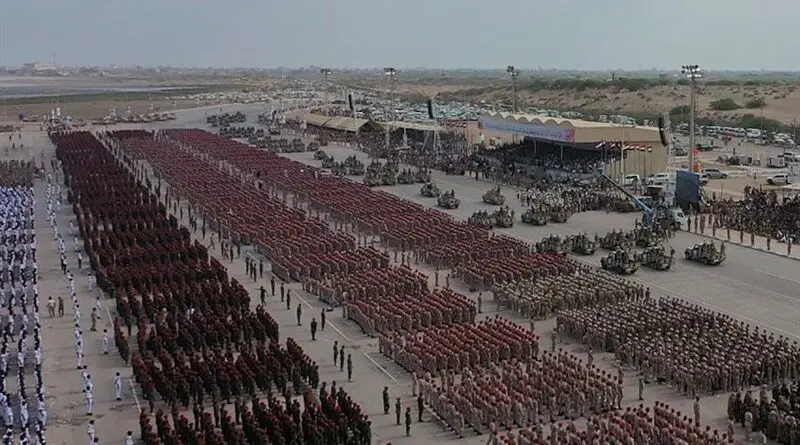
Houthi military parade. Photo Credit: Tasnim News Agency

July 29, 2026
Arab News
By Jonathan Gornall


Key Takeaways:

After nearly four years of relative calm, the Houthis have escalated by attacking Saudi targets, striking ships, and declaring a blockade on the Bab al-Mandab Strait, drawing Yemen back into the widening US-Iran conflict that has already closed the Strait of Hormuz.

Analysts see the moves as partly opportunistic support for Iran and partly driven by the Houthis’ own goals of gaining leverage, deterring Saudi Arabia, reinforcing domestic legitimacy, and positioning themselves as an indispensable regional actor.

The escalation raises the risk of reigniting Yemen’s internal war and further disrupting global oil and shipping routes, with calls for renewed Saudi-Houthi talks and a halt to the broader Iran conflict to prevent a larger regional or global crisis.


For almost four years, Yemen has been enjoying a period of relative peace. So why do the Houthi militia suddenly appear to be doing their best to provoke a return to large-scale military operations in the country?

The answer, analysts believe, is that the war in Iran, which has steadily escalated out of control, embroiling the Arab Gulf states, leading to the closure of the Strait of Hormuz and dramatically impacting global oil supplies, is now dragging Yemen into its orbit.


“The Houthis had been waiting to see whether their military involvement might be needed or called for in the conflict between the US and Iran, and had largely kept their powder dry, apart from a limited number of attacks targeting Israel,” wrote Nabeel A. Khoury, a former US deputy chief of mission at the US Embassy in Yemen, in an analysis issued by the Arab Center Washington DC.

Despite their backing for Hamas during the 2023-25 war in Gaza, he added, the Houthis had “initially kept a low profile during the war on Iran launched by Israel and the Trump administration in February 2026.”

With the signing of the June 2026 memorandum of understanding between the US and Iran, there was even “some optimism in the region that the war might be coming to an end and that the Yemen front would not be re-opened.”

The 14-point Islamabad MoU declared the immediate and permanent termination of military operations on all fronts and the reopening of the Strait of Hormuz to all traffic, pending an envisioned “final deal,” due to have been reached within 60 days.

But no sooner had the MoU been signed, than it began to unravel.


On July 7, following a series of “unwarranted, dangerous” attacks on three commercial ships in the Strait of Hormuz, US Central Command launched a series of retaliatory strikes against more than 80 targets in Iran, “to impose heavy costs for targeting and attacking commercial shipping crewed by innocent civilians in an international waterway.

For its part, Iran claimed it had struck the ships because they were attempting to navigate via a new route through the strait, which the US had been trying to open up in contravention of the provisions of the MoU.

The following day, at the NATO summit in Ankara, US President Donald Trump declared the ceasefire with Iran was over.

“I don’t want to deal with them any more … They’re sick … vicious, violent people,” he said.

In Yemen, tensions were also beginning to boil over.

On July 12, Yemeni government aircraft bombed Sanaa airport, part of the territory in the north that is controlled by the Houthi rebels.

The attack appeared to have been prompted by the return of an aircraft which had carried Houthi representatives to Tehran for the long-delayed funeral of Ali Khamenei, the supreme leader of Iran who was assassinated by an Israeli airstrike in February.

“The Houthi terrorist militia, supported by the Iranian regime, prevented Yemeni national aircraft from landing at the capital’s airport, Sanaa, and insisted that the Iranian aircraft violated Yemeni airspace,” said the Yemeni government in a statement.

“Therefore, the airport runway was targeted.”

The Houthis’ response was to fire a salvo of ballistic missiles and drones at Saudi Arabia’s Abha International Airport, 100 km from the Kingdom’s border with Yemen.


“Air defenses intercepted a ballistic missile threat launched by the terrorist Houthi militia towards the southern region,” a spokesman for the Saudi-led coalition posted on social media.

Then, on July 20, the Houthis announced that they were finally doing what many had feared they would — entering the war by imposing a blockade on the Bab Al-Mandab Strait at the southern end of the Red Sea, tightening the grip on global oil supplies already being exercised by Tehran in the Strait of Hormuz.

In a message to shipping companies, the Houthis’ Humanitarian Operations Coordination Center, warned that no voyages to or from Saudi ports on the Red Sea should be contemplated, “as any such activity would expose the violating vessels to sanctions.”

Any ships that ignored the ban “may be subject to targeting in any location within the operational reach.”

The first victim of the proposed “sanctions” was the Saudi-owned Encelia, a 250-meter oil-products tanker, which was struck by a missile late on July 22, causing a fire in the bow.

That weekend, Saudi air defense systems intercepted two ballistic missiles and a drone fired from Yemen, aimed at Aramco oil refineries in Yanbu.

On Saturday, Iran’s foreign minister, Abbas Araghchi, said developments in Yemen “cannot be attributed to Iran.”

In an interview with the state newspaper, Iran Daily, he called for dialogue and added that the clashes in and around the Bab Al-Mandab Strait were “rooted in old disputes and issues between Yemen, Saudi Arabia and the countries of the region.”

But, said Khoury, “the recent internal flare-up between the Houthis and Yemen’s internationally recognized government, as well the buildup of tensions with Saudi Arabia, point to the likelihood of a Yemeni front being opened in the renewed escalation between Iran and the US.”

On July 23, President Trump, reacting to the attacks on Saudi shipping in the Red Sea, the Houthi blockade and the subsequent climb in oil prices, issued a stern warning.

“A year ago the US attacked, very powerfully, the Houthis, for their interference with commerce and trade, by shooting at ships,” Trump wrote on Truth Social.

“Since that time, and during our conflict with Iran, they have acted very responsibly. Unfortunately, now they are starting up again, shooting at two Saudi Arabian ships last night.”

He added: “If they do this again, the US will hold Iran responsible, in that the Houthis are a Surrogate and/or Proxy of Iran, and major military punishment will be inflicted upon Iran and, of course, the Houthis, themselves, who I am very disappointed with.”

On Friday, Mohammed Al-Jaber, the Saudi ambassador to Yemen, attempted to pour diplomatic water on the fire.

“The Kingdom of Saudi Arabia has sought, and continues to seek, to support all de-escalation and peace efforts, and to back the efforts of the UN envoy to Yemen to reach a comprehensive political solution that ends the suffering of the Yemeni people,” he wrote in a post on X.


“However, the terrorist Houthi militia continues to insist on pursuing the path of escalation and violence instead of the path of de-escalation and peace, in service of external agendas that have no connection to Yemen and do not serve the interests of its people.”

Regardless, he added, “the Kingdom of Saudi Arabia will remain … a supporter of the brotherly Yemeni people throughout all of Yemen, and a backer of its legitimate government, until Yemen enjoys security, stability, and peace.”

On Monday, April Alley, an analyst who worked on Yemen’s peace process at the UN, told The New York Times there was “real concern that the internal Yemeni war could reignite.”

It was no coincidence that the Houthis were seeking to escalate conflict in Yemen precisely when Saudi Arabia was working hard to re-route oil exports via the Red Sea.

She added: “The Houthis are good at smelling blood in the water.”

Egyptian journalist Abdellatif El-Menawy told Arab News that “a return to full-scale civil war is not inevitable, but the risk is now higher than at any point since the 2022 truce.”

Renewed Houthi attacks in the Red Sea and possible Saudi retaliation “could reactivate Yemen’s internal front lines and pull the country back into a wider regional conflict.”

The Houthis, he said, wanted “more than control of northern Yemen.”

“Their objective is to secure recognition as the country’s dominant power, dictate the terms of any national settlement, and use their position near Bab Al-Mandab to establish themselves as a regional actor that cannot be ignored.”

In a recent analysis, Ahmed Nagi, a senior Yemen specialist at the International Crisis Group, proposed that “the most effective way to contain the crisis would be to reactivate the direct political track between the Saudi-led coalition and the Houthis.”

“The two sides could return to the broad understandings reached prior to the Gaza war that began in October 2023.”

But, in order to achieve “sustainable calm,” it was “imperative to bring a halt to the latest US-Iranian clashes, lest they engulf Yemen and plunge the region back into another years-long conflict to the detriment of all concerned.”

It might already be too late, feared Khoury.

With the Houthis having closed the Bab Al-Mandab Strait, “in a desperate attempt to help Iran build pressure on the world economy, an already dangerous regional conflict could metastasize into a global calamity,” he said.

According to a briefing by Chatham House, the Houthis are not simply doing Tehran’s bidding.

“The Houthis are deeply embedded within the ‘Axis of Resistance’ and reliant on Iranian military assistance,” wrote Farea Al-Muslimi, a research fellow in the think-tank’s Middle East and North Africa Programme.

“But they retain significant autonomy, particularly in pursuing domestic political objectives. Their interests frequently overlap with Tehran’s, but they do not always coincide.”


For the Houthis, he believes, “maritime disruption in the Red Sea serves several purposes besides supporting Iran.

“It provides leverage over the international community, acts as a deterrent against regional adversaries — particularly Saudi Arabia — and reinforces their domestic legitimacy by portraying the movement as capable of confronting powerful external actors.”


About Arab News
Arab News is Saudi Arabia's first English-language newspaper. It was founded in 1975 by Hisham and Mohammed Ali Hafiz. Today, it is one of 29 publications produced by Saudi Research & Publishing Company (SRPC), a subsidiary of Saudi Research & Marketing Group (SRMG).
View all posts by Arab News →

Electrifying Asia – where EVs are reshaping power demand and fuel use

Electrifying Asia – where EVs are reshaping power demand and fuel use
/ Michael Förtsch - UnsplashFacebookTwitter
By Mark Buckton in Taipei July 28, 2026

Asia’s electric vehicle revolution is no longer simply a transport story. Across much of East and Southeast Asia it is now becoming a major electricity story, altering how power is generated, accelerating investment in renewable energy and, over time, reducing the existing demand for imported oil and LNG. The shift is uneven though.

China dominates in scale, as might be expected, while countries such as Thailand, Vietnam and Indonesia are quickly emerging as manufacturing and policy hubs. Taiwan, meanwhile, has carved out its own distinctive niche through electric scooters and battery swapping technology.

The most immediate effect of EV adoption in recent years is largely straightforward. Every battery-powered car, bus or scooter replacing an internal combustion engine reduces petrol or diesel consumption. And what replaces those fuels depends on the electricity mix in any given country. Where coal still dominates, emissions savings are smaller – for obvious reasons. Where renewables are expanding rapidly, however, electrified transport increasingly runs on solar, wind or even hydropower.

China offers the clearest and by far the world’s best example. It is the world’s largest EV market by a wide margin and has simultaneously built the world’s largest solar and wind generation capacity. Beijing is increasingly shifting energy demand away from imported crude oil and towards domestically generated electricity, according to the International Energy Agency’s (IEA) Global EV Outlook 2026 and figures from China’s own National Energy Administration (NEA). That does not eliminate fossil fuels from the system. What it does though is change where they are consumed and in turn reduces the exposure to the ever volatile oil markets.

The interaction then between EVs and renewable electricity is becoming increasingly important. Vehicle charging typically occurs overnight when cars and scooters are not being used. This helps to absorb off-peak generation, while smart charging systems increasingly encourage motorists to recharge when renewable output is abundant – and in some cases when power being supplied to homes is cheaper. In the future it has been speculated that millions of vehicle batteries could even provide grid balancing services through vehicle-to-grid technology, although commercial deployment of such remains limited, the IEA says.

For LNG exporters, this matters – and hurts. Gas-fired generation has often been viewed as the natural partner for intermittent renewable energy because it can ramp output quickly. Yet rapid growth in battery storage in China and across Asia is beginning to challenge that assumption.

As battery costs fall – and they are, rapidly - utilities can increasingly pair solar farms with storage rather than relying solely on gas-fired peaking plants, according to BloombergNEF’s Energy Storage Market Outlook.

The IEA’s Southeast Asia Energy Outlook 2026 meanwhile, expects electricity to become the backbone of Southeast Asia’s energy system over the coming coming decades. EV sales in the region more than doubled during 2025 to about half a million vehicles, representing nearly 20% of all new vehicle sales. Electric two- and three-wheelers are expected to account for almost 60% of these sales figures by 2035.

And as electricity demand will continue rising rapidly, oil use in transport will grow much more slowly than vehicle ownership. One day it will start to drop.

Thailand has emerged as arguably Southeast Asia’s leading EV production centre. Generous incentives have attracted Chinese manufacturers including BYD, Great Wall Motor and Shanghai Automotive Industry Corporation (SAIC), alongside domestic investment in charging infrastructure. The country’s own expanding solar industry complements the transport transition, allowing an increasing share of vehicle charging to come from renewable electricity rather than imported oil, according to Thailand’s Board of Investment (BOI) and the IEA.

Vietnam is also following a similar path. Domestic manufacturer VinFast has driven rapid EV adoption across the country’s main cities of Ho Chi Minh, Hanoi and Da Nang, while the government continues expanding solar and wind capacity after one of the world’s fastest solar installation programmes. This combination is gradually shifting transport energy demand from imported fuels towards domestically generated electricity, according to the International Renewable Energy Agency (IRENA).

Indonesia to the south and Southeast Asia’s most populous nation, presents a different model. Rich in nickel reserves, it has positioned itself as a battery manufacturing hub rather than simply an EV market.

As such, Chinese and South Korean companies have invested heavily in battery plants and vehicle assembly. At the same time, Indonesia continues adding geothermal, hydropower and solar capacity, although coal still dominates electricity generation for now. As the power mix gradually decarbonises, however, the climate benefits of EVs will increase correspondingly, Indonesia’s Ministry of Energy and Mineral Resources states.

Neighbouring Malaysia and Singapore are pursuing complementary strategies. Singapore’s emphasis lies in charging infrastructure, smart grids and fleet electrification rather than vehicle manufacturing for which it simply does not have the space. Malaysia has focused on attracting investment into battery components and EV assembly as Kuala Lumpur expands solar generation through large-scale solar auctions, according to the Jakarta-based ASEAN Centre for Energy (ACE).

Taiwan, also limited in size, has taken a distinctive approach centred on two-wheel transport. Rather than prioritising electric cars, it has become synonymous with Gogoro’s battery-swapping ecosystem although there are others now trying to carve a niche for themselves. Millions of battery swaps occur every month across thousands of stations, allowing riders to exchange depleted batteries in seconds instead of waiting for charging. The model reduces range anxiety while providing a potentially valuable distributed energy asset, according to Gogoro’s annual sustainability and investor reports even if customers do complain of battery capacities, even when fully charged, gradually decreasing.

Similar battery-swapping concepts are now being explored elsewhere in Asia, including India, Indonesia and the Philippines, although none has yet matched Taiwan’s scale.

Electric scooters are particularly significant because two-wheelers dominate urban transport across much of Southeast Asia and into the South Asia region.

Indonesia, Vietnam and Thailand collectively have well over 200mn motorcycles. Even Taiwan with a population of around 24mn has 14mn registered scooters on the road.

Electrifying even a fraction of that fleet produces immediate reductions in petrol demand while requiring relatively modest battery capacity compared with passenger cars. Gogoro has reportedly sought partnerships in Indonesia, India and other regional markets to export its battery-swapping model.

And with renewable energy infrastructure increasingly following EV deployment, China remains the clear leader, manufacturing most of the world’s solar panels, batteries and EVs while continuing massive investment in wind and solar generation.

But with Vietnam an important solar manufacturing base, while Thailand and Indonesia are expanding both renewable generation and battery supply chains, these countries too increasingly see transport electrification and renewable power as parts of a single industrial strategy rather than separate sectors.

That does not mean LNG demand disappears or will, overnight. In many Asian electricity systems, gas remains the preferred flexible generation source capable of balancing intermittent solar and wind output. The IEA’s Southeast Asia Energy Outlook 2026 expects natural gas to continue playing an important role in regional power systems, particularly where coal is displaced. However, stronger renewable deployment combined with battery storage could moderate long-term LNG demand growth compared with earlier expectations. And much sooner than expected.

Oil on the other hand faces a more direct challenge. Every additional EV permanently removes future demand for petrol or diesel. While aviation, shipping and heavy industry will continue consuming hydrocarbons for decades, passenger road transport is steadily shifting towards electricity. According to the IEA’s Southeast Asia Energy Outlook 2026, EVs and biofuels in Asia and worldwide could eventually displace oil demand equivalent to a substantial share of the region’s crude imports under more ambitious policy scenarios.

To this end, and given that electrification, coupled with domestic renewable generation, offers greater energy security as well as lower emissions, the result is a structural shift in Asia’s energy landscape. Transport is becoming increasingly tied to electricity rather than oil, while electricity itself is becoming progressively cleaner. The winners are likely to be countries capable of building integrated ecosystems spanning renewable generation, batteries, charging networks and EV manufacturing.


Driving Influence: China’s EV Strategy In South Asia And Implications For India – Analysis



An XPeng electric car showroom at the Taikoo Li Sanlitun shopping center in Beijing, China. Photo Credit: Raysonho, Wikipedia Commons
s
July 29, 2026
Observer Research Foundation
By Aditya Gowdara Shivamurthy and Sakshi Kapoor


Key Takeaways:

China has rapidly become the dominant supplier of electric vehicles and related ecosystems (batteries, charging infrastructure, software) to South Asian countries, driven by competitive pricing, state-backed overcapacity, and alignment with local green-transition goals.

This expansion creates long-term structural dependence on Chinese technology, standards, spare parts, and critical minerals, while raising security concerns over data collection from connected vehicles and potential intelligence risks.

The trend erodes India’s traditional advantages in automobile and petroleum trade with its neighbors and challenges New Delhi’s efforts to expand its own EV manufacturing and regional influence.


In April 2026, Asia became the largest buyer of Chinese electric vehicles (EVs), as Chinese exports jumped by almost 40 percent. Within this broader trend, South Asian nations – Nepal, Bangladesh, Sri Lanka, Pakistan, Bhutan and the Maldives – are emerging as important markets. Through the export of vehicles, batteries, charging infrastructure and digital ecosystems, Beijing is steadily restructuring South Asia’s technological standards. China exports not just products but complete mobility systems designed to generate long-term structural reliance that binds importing nations to Chinese manufacturers, standards and supply chains. This will have long-term implications for the region by creating dependency and security challenges, and by eroding India’s trade advantages.
China’s Domestic EV Transformation and Global Leadership

China’s dominance of the global EV industry is the outcome of three decades of sustained state-led effort. Between 2009 and 2023, China invested over US$230.8 billion in the EV industry. Government spending has been the primary driver, accounting for 60 percent of total global spending in 2025. Schemes such as purchase tax exemptions, performance-linked incentives and scrappage schemes have accelerated adoption, while large-scale investment has enabled China to account for 80 percent of the world’s installed charging capacity. In 2025, it sold 13 million electric cars, accounting for 65 percent of global EV sales, with sales projected to reach 14 million in 2026. Chinese automobile firms – BYD, SAIC, Geely, Changan, NIO and Xpeng – have emerged as major players across the world. At the centre of this ecosystem is Contemporary Amperex Technology Co., Limited, which controls 38 percent of the global lithium-ion battery supply, exemplifying how vertical integration has solidified China’s position.


China’s drive to dominate the sector is fuelled by both ambition and vulnerability. It seeks to break the historical pattern of Western and Japanese dominance in the conventional automobile sector. EVs offer a domain in which China can set standards, shape supply chains and gain a long-term technological advantage, while reducing its exposure to oil import shocks and advancing its 2060 carbon neutralitytargets. It has built a highly integrated system spanning the mining, refining and processing of key minerals, large-scale battery and component manufacturing, and software and charging infrastructure. China controls around 70 percent of global rare earth mining, 90 percent of separation and processing, and over 80 percent of lithium-ion battery manufacturing. Additionally, China has been expanding abroad because of its overcapacity and domestic price wars amid slowing demand.

Expansion of Chinese EV Ecosystem in South Asia


South Asia has emerged as an increasingly attractive destination for China’s EV industry. The West imposes high tariffs and other non-tariff barriers on the country, whereas South Asian markets offer expanding consumer bases, favourable investment conditions and policy alignment with national green transition agendas. Nepal aims for carbon neutrality by 2045, Sri Lanka targets net-zero by 2050, Bhutan emphasises sustainability via Gross National Happiness, and Bangladesh pursues 30 percent EV deployment by 2030. Furthermore, the rising cost and risk of importing fuel, along with multiple economic shocks since COVID-19, are motivating countries to embrace this transition. This creates a window for monopolistic Chinese firms to systematically exploit South Asian markets.

Chinese EVs also stand out for their competitive pricing. In Nepal, Chinese manufacturers account for the majority of new EV sales, owing to their affordable pricing. Dealers earn higher margins on Chinese vehicles than on those of other players. A mature manufacturing supply chain, lower input costs and favourable financing conditions allow China to offer the world’s lowest battery prices. Another tool of expansion is Government-to-Government assistance. For instance, in January 2026, China donated 100 electric buses to Sri Lanka for its major Colombo-Kandy and Colombo-Galle routes; similar gestures have been extended to Nepal. Such grants build familiarity and consumer appeal, while also creating dependence on Chinese spare parts and maintenance services. Recently, Sri Lanka requested Chinese assistance in building charging stations nationwide.

Chinese firms have also pursued assembly operations in the region. In Pakistan, BYD has established a facility, but operations remain limited, with no local R&D or component manufacturing. Bangladesh shows a similar pattern. Since the 2021 National Electric Mobility Action Plan was initiated, China has continued to establish distributor networks and explore battery assembly in export zones, though investments are yet to materialise. At the same time, Bangladesh’s structural dependence on Chinese capital across sectors gives Chinese firms preferential access that Asian and European competitors lack. With supply lines and local partnerships already in place, market entry is easier for Chinese firms. This also provides a way to bundle in vehicle software and connected charging networks, and to integrate them.

There has been a significant increase in both the value and the number of Chinese EV units imported into South Asia between 2019 and 2025 (as Table 1 and Graph 1 show). The year 2019 is taken as the baseline, given the noticeable shift in EV trade that year. In Nepal and Bhutan, around 90 percent and 60 percent, respectively, of vehicles imported from China are EVs. Graph 1 shows that imports have increased significantly in Sri Lanka, and moderately in Pakistan, the Maldives and Bangladesh. The demand for EVs has fuelled an increase in total imports of Chinese vehicles since 2019, with Bangladesh as an exception. Table 2 shows that Chinese EV imports dominate the EV market in the region, with Bangladesh and the Maldives being exceptions. While Japanese vehicles and two-wheelers have dominated the Maldivian market, Bangladesh, until recently, lacked a policy framework and public appetite for EVs. This is gradually changing.

Table 1. China’s Vehicle and EV Trade with South Asia

Source: Authors’ collation from UN Comtrade and official trade statistics from respective countries’ ministries. Note: *Figures are approximate and represent average estimates, as reported values vary across sources. **Total Vehicle Imports are derived from WCO HS Code 8703: Passenger vehicles (all types), whereas EV Imports are derived from HS 870380: Battery electric vehicles (pure EVs) category.

Graph 1. China’s Share of EVs in Imports into South Asia
Source: Authors’ own


Table 2. Chinese Dominance in the South Asian EV Market
Source: Authors’ collation from UN Comtrade and trade statistics from respective countries’ official websites. Note: *Figures are approximate and represent average estimates, as reported values vary across sources. ** Total Vehicle Imports are derived from WCO HS Code 8703: Passenger vehicles (all types), whereas EV Imports are derived from HS 870380: Battery electric vehicles (pure EVs) category.


EVs as a Diplomatic Instrument and Their Strategic Implications


China’s expanding EV footprint risks creating a new form of “dependency diplomacy,” in which technological and industrial reliance translates into long-term economic influence. Sri Lanka, for example, possesses critical minerals but lacks the processing capacity to convert them into battery-grade materials. For South Asian economies, developing even parts of the full value chain requires large investment, sustained policy action and time. Furthermore, these countries depend on China for critical minerals, advanced components and chips. When batteries degrade, nations face expensive replacements or premature retirement of vehicles, owing to a lack of battery recycling capacity. Given China’s technology-transfer restrictions, assembly lines are expected to generate only logistics and retail employment. This makes it difficult for South Asian economies to develop genuine domestic manufacturing capacity.

Security concerns also persist regarding these imports. Modern, internet-enabled Chinese vehicles generate detailed location data, driving patterns and camera feeds, which are stored on cloud servers. The most advanced variants function as ‘smartphones on wheels‘, equipped with facial recognition, AI systems and over-the-air software updates. This is further complicated by China’s National Intelligence Law, which obliges individuals and companies to assist state intelligence, opening up the possibility of Chinese authorities accessing this data. In sensitive environments, this could enable the tracking of movements near ports, diplomatic sites or military installations, as well as remote interference with vehicle fleets. Such concerns have already been raised in Norway and Denmark.


The Belt and Road Initiative’s (BRI) Green Finance Agenda, which has directed US$11.8 billion into renewable infrastructure, also feeds into China’s EV expansion. Pakistan’s BYD assembly facility, linked to the China-Pakistan Economic Corridor (CPEC), illustrates how EV investments are being integrated with geopolitical objectives. Future BRI projects, especially highways, are likely to be designed with EV integration in mind. If this trajectory continues, South Asia’s transport, energy and data infrastructures will become highly vulnerable.

Finally, beyond these strategic and security challenges, Chinese dominance of the EV industry poses a significant threat to India’s trade in the region. India has traditionally been South Asia’s principal source of automobile and petroleum imports. Firms such as Tata, Mahindra, Ashok Leyland, Maruti Suzuki and TVS have built strong market positions through extensive dealer networks, joint ventures, readily available spare parts and well-established service ecosystems. As such, the growing preference for Chinese EVs is likely to affect India’s automobile and petroleum trade with all countries in the region (by 14 to 33 percent, as shown in Table 3), barring the Maldives and Pakistan.

Table 3. India’s Trade with South Asian Countries
Source: Authors’ collation from UN Comtrade and Trade Intelligence and Analytics Portal, Department of Commerce, Government of India. Note: *Total Vehicle Imports are derived from WCO HS Code 8703: Passenger vehicles (all types) **Petroleum Imports values are derived from Chapter 27 of the HS Code, which covers “Mineral fuels, mineral oils and products of their distillation; bituminous substances; mineral waxes.”

India is accelerating its EV transition to expand manufacturing and exports, and is deploying it as a foreign policy instrument — yet the scale of this expansion remains modest compared to China’s. Between 2020 and 2025, India’s EV sector attracted around US$25 billion in investment, well short of its targets, leaving China to dominate the market. At a time when India is investing significantly in energy and oil connectivity and easing trade and transit networks for its neighbours, the surge in Chinese EVs — and their potential transit through strategic regions, especially the Northeast — could add to existing economic and security risks.

China’s EV expansion in South Asia goes beyond commerce, reflecting a broader pattern of tactical economic integration. By exporting the entire EV ecosystem and offering India’s neighbours access to finance, technology and clean transport solutions, China builds leverage over them without resorting to coercion. For South Asia, affordable Chinese EVs — combined with growing climate commitments and the need to reduce dependence on imported fossil fuels — present a new set of choices. Taken together, these dynamics suggest that South Asia’s clean transport future lies as much in the realm of geopolitics as in markets and climate policy. While geography and commercial ties continue to favour India overall, these advantages alone may not be sufficient to sustain its primacy in trade.


About the authors:
Aditya Gowdara Shivamurthy is an Associate Fellow with the Strategic Studies Programme at the Observer Research Foundation.

Sakshi Kapoor is a Research Intern at the Observer Research Foundation.

Source: This article was published by the Observer Research Foundation.

Disclaimer: ChatGPT 5.5 was used to generate infographics and tables.

About Observer Research Foundation
ORF was established on 5 September 1990 as a private, not for profit, ’think tank’ to influence public policy formulation. The Foundation brought together, for the first time, leading Indian economists and policymakers to present An Agenda for Economic Reforms in India. The idea was to help develop a consensus in favour of economic reforms.

View all posts by Observer Research Foundation
Kyrgyzstan hit by highest number of mudslides in decades amid glacier melt

Kyrgyzstan hit by highest number of mudslides in decades amid glacier melt
A building in Batken Region topples in a disaster brought about by mudslides and flash floods caused by torrential rains in mid-June. / topclimate2024, social mediaFacebook
By bne IntelliNews July 29, 2026

Amid the climate crisis and glacier melt, mountainous Kyrgyzstan recorded 348 mudflows in the first half of 2026, the highest total in 30-40 years. Eight people lost their lives in the local disasters.

The number of mudslides is also nearly five times the roughly 70 recorded in the same period of 2025, according to the Ministry of Emergency Situations and state hydrometeorological service Kyrgyzhydromet. As well as the fatalities, three people were recorded as injured and damage amounting to an estimated Kyrgyzstani som (KGS) 399mn ($4.56mn) was caused

The mudflows damaged 668 hectares of farmland and prompted the evacuation of 236 people from hazardous areas. The deadliest single incident struck the Osh-Alay highway, where a mudflow swept a vehicle from the road killing six.

Batken, Jalal-Abad, Osh and Talas regions have proved the most vulnerable to mudflows, with many roads, bridges and residential buildings destroyed.

Officials linked the surge to several overlapping factors, according to The Times of Central Asia’s report on the mudflow mayhem. Those factors were outlined as intense localised downpours, earlier snow and glacier melt, settlement expansions into hazardous mountain valleys, inadequate protective infrastructure, pasture degradation and forest loss. Kyrgyzhydromet estimates the glacial area in the country has declined by around 16% in recent decades, with retreating glaciers forming new high-altitude lakes that become increasingly vulnerable to incidences of burst banks, causing floods during intense rainfall or rapid melt events.

Despite the record mudflow count, the death toll was significantly lower compared to the 25 fatalities caused by mudslides last year. The ministry attributed the fewer deaths to the provision of earlier warnings, more effective evacuations and expanded preventive measures.

Kyrgyzstan is developing AI-based forecasting tools for glacial lake-burst floods in the Tian Shan mountains with KG Labs and international partners. The ministry already operates a separate AI system monitoring high-altitude lakes.

The high-risk season for mudslides typically extends into autumn, meaning mountain communities and transport corridors will be exposed for several more months.


Record low water levels halt Danube shipping

Record low water levels halt Danube shipping
/ IntelliNewsFacebook
By IntelliNews July 29, 2026

The Danube's water level in Budapest fell to 26cm on July 28, breaking the previous record low of 33cm set in 2018 and the river’s flow rate is round 60% below its average level.

The drought affecting the broader region has brought water freight transport to a halt on much of the Danube, which is also negatively impacting tourism, business online VG.hu writes. The crisis is exposing Hungary's long-standing vulnerability to climate-driven water shortages

Authorities said the prolonged heatwave affecting both the Alps and the Carpathian Basin, combined with the lack of meaningful rainfall across the Danube and Tisza catchments, means water levels are expected to decline in the coming days. Forecasts suggest little immediate relief, as another heatwave develops over the region, with temperatures expected to reach 40 degrees in the coming days.

The Danube, one of Central Europe's most important inland transport corridors, linking Germany and Austria with the Black Sea, serves as a vital export route for Hungary's agricultural sector. Much of the country's wheat, maize and oilseed harvest is transported by barge to Romania's Port of Constanța before being shipped to global markets.

With river depths in several sections falling below navigable levels, barges carrying grain are operating with 20-40% less cargo than normal, while some vessels have been forced to reduce loads to just 10-20% of capacity. The lower utilisation has sharply increased transport costs as more voyages are required to move the same volume of goods.

Although exporters can switch to rail or road transport, these alternatives are significantly more expensive and could erode the competitiveness of Hungarian grain on international markets, Botond Szalma, chairman and CEO of logistics company Plimsoll Ltd, which specialises in international freight transport, told VG.

The situation is being compounded by broader regional pressures. Ukraine has increasingly relied on Danube shipping routes after Russia's attacks on Black Sea port infrastructure reduced the country's maritime export capacity. Restrictions at Russia's Black Sea port of Novorossiysk and ongoing security risks in the region have redirected additional freight to the Danube, further straining an already-constrained transport corridor.

Fuel logistics have also been affected. Barges carrying petroleum products from Austrian, Slovak, and downstream Danube refineries have reportedly been delayed, raising concerns that smaller fuel distributors in Hungary could face supply disruptions if low water levels persist.

Industry representatives argue the crisis highlights a structural weakness unique to Hungary. Unlike much of the upper Danube, where a network of dams and navigation locks regulates river levels, Hungary's section of the river remains undammed following the abandonment of the Bos-Nagymaros hydroelectric project after the fall of communism.

Logistics experts say this leaves the country particularly exposed during prolonged droughts, with ports becoming inaccessible and freight operations grinding to a halt whenever river levels fall sharply.

In several stretches of the river, vessels can no longer navigate safely, forcing operators to leave ships waiting for higher water levels.

Around Budapest, sightseeing boats and hydrofoil services have been running reduced schedules, while several international cruise operators have cancelled or shortened itineraries, transferring passengers by bus instead.

The worsening drought has also intensified concerns about Hungary's broader water management strategy. Opposition politicians and agricultural organisations argue that the country is no longer facing occasional droughts but a structural water crisis driven by climate change, pointing to years of below-average rainfall and declining groundwater levels across the Great Plain.

The government has acknowledged the growing challenge, establishing a National Water Coordination Centre earlier this year to coordinate drought mitigation efforts and expanding programmes aimed at retaining water in wetlands, canals and floodplains rather than allowing it to drain out of the country.

Critics argue these measures remain largely reactive and fall short of the large-scale infrastructure investments needed to adapt Hungary to increasingly frequent periods of extreme heat and prolonged water scarcity.


Taliban's homegrown drone programme outpaces Pakistan's defences

Taliban's homegrown drone programme outpaces Pakistan's defences
Afghanistan's rulers are building an air force from black-market parts, and the fallout is spreading to militant groups and Central Asia's borders alike. / bne IntelliNewsFacebook
By Ben Aris in Berlin July 28, 2026

The Afghan Taliban's growing investment in drone technology is a direct response to their lack of a conventional air force, and Pakistan's defence establishment — built around fighter jets, tanks and artillery — is struggling to keep pace, Umair Jamal of the Diplomat Risk Intelligence consultancy argued in a Central Asia-Caucasus Institute analysis published on July 28.

The build-out matters beyond Afghanistan's borders because cheap, dual-use drone technology is proving almost impossible to contain once it spreads: it is already showing up in the hands of the Pakistani Taliban (TTP), and Russia's own push to build a formal partnership with Kabul gives it a stake in the fallout. Pakistan's conventional defences are struggling to respond, fuelling a wider proliferation risk for the region, including Central Asia.

From propaganda tool to weapon

Since returning to power in August 2021, the Taliban have faced a lack of a functional air force and heavy international sanctions, turning to drones as a cost-effective substitute for surveillance in the new asymmetrical wars. According to ACLED data, the Taliban first used drones militarily in February this year, with at least 12 recorded cross-border strikes into Pakistan, some reaching deep into Pakistani territory — platforms that Jamal says began as propaganda tools before evolving into weapons.

The Taliban are also building domestic production capacity, with front companies such as Dinit Technology reportedly offering contracts to engineers and robotics experts, and recruitment drives targeting university drone projects. The Daily Mail has reported the group is using a former UK Special Air Service base in Logar province as its main test site, sourcing GPS modules, motors, flight-control systems and sensors from black markets and smuggling networks in the absence of any formal state supplier relationship. The low tech and back engineered approach to building drones has already been pioneered by Iran after the US imposed sanctions on the country several decade ago.

Facing similar isolation, Iranian engineers turned Western sanctions into an innovation engine, reverse-engineering commercial parts into the cheap, mass-producible Shahed-136 — a process IntelliNews dubbed the "bazarification of war", where cost-effective, workshop-built drones now outcompete billion-dollar conventional systems. The Taliban's black-market parts sourcing and university recruitment drives suggest the same playbook — cheap mass production defeating sophistication — is now spreading to a second sanctioned, isolated actor.

The TTP has already taken the same path

The Pakistani Taliban (TTP) formally announced its own dedicated "Air Force" unit in December 2025, reflecting an operational reality already under way: Pakistan's Inter-Services Public Relations data recorded more than 400 quadcopter and drone-related militant incidents in late 2025 alone. Commercial, suicide and quadcopter drones costing as little as $200-$1,000 per unit let the TTP run saturation attacks that overwhelm Pakistan's conventional electronic jamming and physical defences, which were built to intercept far more expensive, higher-value threats.

In Khyber Pakhtunkhwa province, police say commercial drones are now routinely used to surveil security convoys and guide suicide attacks, forcing a shift toward dedicated counter-drone units, a new drone-training school in Nowshera, and delivery of 76 AI-powered surveillance drones. Provincial police say they foiled 341 TTP drone attacks in the six months to July using this modernised approach.

Pakistan's defence doctrine and procurement have historically prioritised fighter jets, tanks and artillery, leaving a structural gap against low-cost, asymmetric drone threats. That lag has left Islamabad reliant on ad hoc measures and international partnerships for electronic warfare, radar and drone-jamming capability tailored to the current threat — a mismatch that mirrors, on a smaller scale, the drone-versus-air-defence dynamic already reshaping Russia's war in Ukraine, where cheap drones have repeatedly proved effective against better-resourced conventional forces.

A regional proliferation risk, including for Central Asia

The core difficulty, Jamal argues, is that cheap, dual-use drone technology is far easier to acquire and modify than advanced weapons systems, and international export-control regimes have limited ability to stop components moving through commercial black-market channels. If the Taliban's programme keeps advancing, expertise and parts could spread further to militant factions operating from Afghan soil, complicating counter-terrorism efforts well beyond the Pakistan border.

That risk lands directly on Russia's own regional interests: Moscow signed a military-technical cooperation agreement with the Taliban government in May, explicitly citing concern over Afghanistan's porous borders with Tajikistan, Uzbekistan and Turkmenistan and the risk of groups such as Islamic State Khorasan Province (ISKP) exploiting them. A more heavily armed, drone-capable Taliban cuts both ways for Moscow's calculus: a useful partner against ISKP, but also a less predictable neighbour to Central Asian states Russia considers its own strategic backyard.

UAE-Supplied Drones Still Target Civilians in Sudan Despite EU Condemnation

“It’s really the bare minimum to call out the actors involved … the EU should be doing a lot more,” said an expert.

By Mat Nashed , 
July 28, 2026


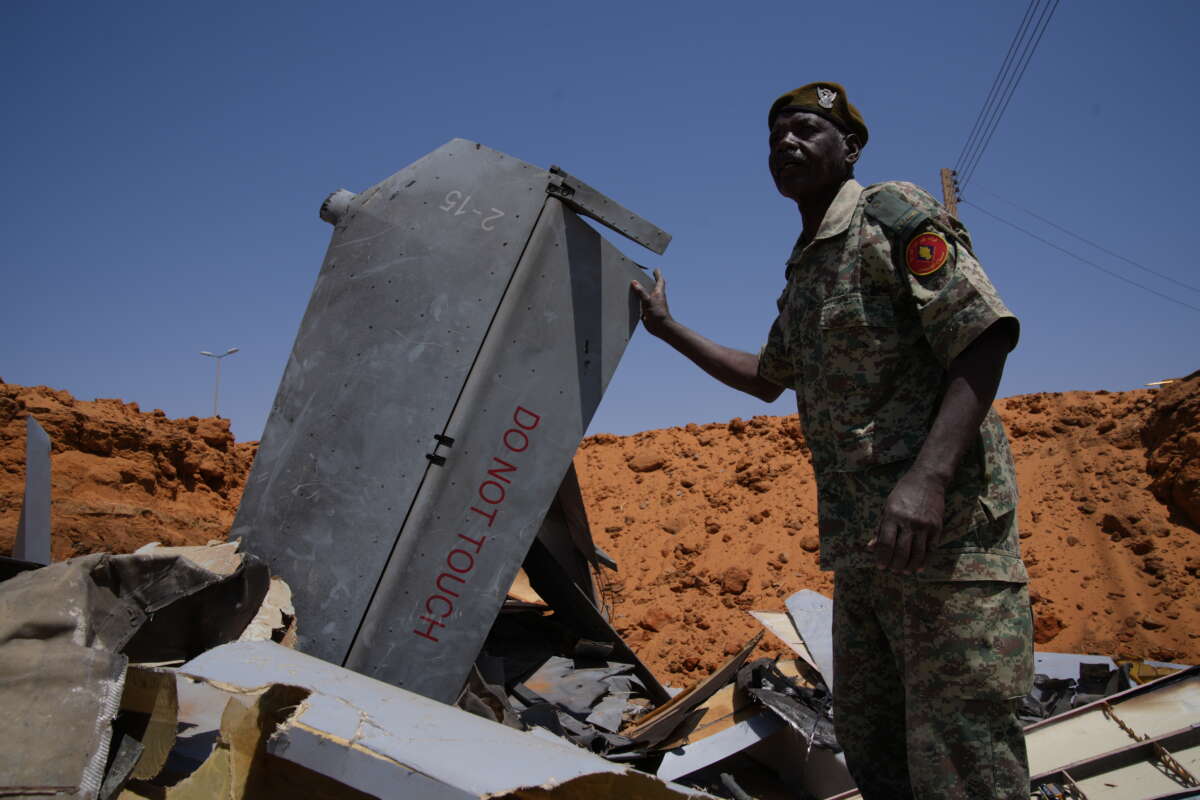
A man stands in a crater filled with drone components on March 29, 2026, in el-Obeid, Sudan.Faiz Abubakr / Los Angeles Times via Getty Images

On July 9, the European Parliament passed a resolution that condemned the United Arab Emirates (UAE) for supporting a violent Sudanese paramilitary responsible for war crimes and other atrocities.

The resolution demanded urgent action to stop the Rapid Support Forces (RSF) from invading el-Obeid, a strategic city in central Sudan at risk of mass atrocities. It called for an end to all “external interference” — singling out the UAE — including the “financing, arms supply or other support” to the RSF.

“Of course, the UAE will be annoyed,” said one European diplomat, who was not authorized to comment on the record, to Truthout. “But they are accustomed to dealing with PR issues. Over the last three years, they have been dealing with a lot of PR issues [regarding their role] in Sudan.”

Since Sudan’s civil war erupted in April 2023, the UAE has provided diplomatic and military support to the RSF, which is at war with the Sudanese Armed Forces (SAF), the national army.

Both the RSF and SAF have committed harrowing abuses such as summary executions and torture. The RSF has also subjected women and girls to systemic sexual violence and perpetrated crimes that “constitute distinct markers of genocide,” according to a recent United Nations probe.


In Sudan, Perpetrators of War Crimes Are Rewarded While Civilians Languish
War criminals, tyrants, and their enablers have rarely faced consequences, helping maintain a cycle of abuses. By Mat Nashed , Truthout June 3, 2026


Due to the RSF’s brutal violence, the UAE denies backing the group, seeking to portray itself as a regional trailblazer for progress and development. However, UN experts, human rights groups, and media outlets have documented its extensive support for the RSF, including the shipment of cheap Chinese-made drones and Chinese artillery. The UAE also uses shell companies to hire Colombian mercenaries to fight alongside the RSF.

While the EU resolution serves as another blow to the UAE’s reputation, it won’t stop the wealthy Gulf nation from supporting the RSF, say analysts and human rights advocates.

“Whenever the UAE gets called out, then they tend to double down,” said Kholood Khair, an analyst on Sudan and the founder of the Confluence Advisory think tank.
Symbolic Victory?

The resolution hasn’t changed the situation on the ground for civilians. In el-Obeid, some 500,000 civilians are living under a partial RSF siege, surrounded from the south and west.

SAF recently captured villages around el-Obeid and reopened a second vital supply line to the city.

As of now, civilians can only leave the city from the east and north, but the roads are dangerous. RSF drones threaten to hit any convoy that it believes carries material support for SAF.

The RSF launched at least 15 drones that killed 45 people over a span of three weeks in June, according to the UN Human Rights Office. The attacks have continued throughout July, hitting fuel tankers, water infrastructure, and electricity grids, and causing acute shortages of food and drinking water and widespread blackouts.

“Drones are still targeting civilians all over Sudan … what’s needed is [global] pressure to halt UAE supply lines to the RSF,” said Yahiya, a local relief worker in el-Obeid who requested a pseudonym due to the hostile security situation.

According to human rights groups and media reports, the UAE uses its financial leverage over regional partners — Chad, Libya, South Sudan, and Ethiopia — to funnel weapons and fighters to the RSF.

The EU’s latest sanctions banned all conflict gold smuggled out of Sudan. Both the RSF and the SAF financed their war efforts by selling billions of dollars’ worth of gold to the UAE, making the Emirates a key hub in Sudan’s war economy.

The UAE provides additional logistical, diplomatic, and financial support to the RSF.

Echoing Yahiya’s call, a recent report by Human Rights Watch urges the EU to take concrete steps against the UAE. Its recommendations include imposing targeted sanctions against UAE-linked companies that hire Colombian mercenaries, who are first covertly trained in the UAE and then deployed to Sudan.

Human Rights Watch also called on EU states to suspend all defense and military cooperation with the Emirates.

Yet Jonas Horner, an expert on Sudan with the European Council on Foreign Relations, said that EU members are unlikely to agree on punitive measures because some states fear jeopardizing their extensive economic ties with the UAE.

The two sides have roughly $328 billion in mutual investments. What’s more, EU foreign policy decisions require a consensus among all 27 EU member states. This makes it nearly impossible to pass punitive measures against a lucrative and strategic partner like the UAE.

“[The EU resolution] is as much a statement of the limitations of European diplomatic heft in the Gulf as it is a statement of Emirati confidence,” Horner told Truthout.
How Will the UAE React?

No evidence indicates the UAE has dialed back support to the RSF since the resolution was passed.

On July 22, local media reported that an attack believed to be carried out by the RSF killed 22 people in the town of Rahad, near el-Obeid. The group has also reportedly sent reinforcements toward the south of el-Obeid, fueling fears that it is preparing a major ground offensive that could lead to mass atrocities.

On the diplomatic level, Khair said that the Emirates may play up Iran’s relationship with SAF to win support from western capitals.

Tehran historically has links with members of Sudan’s Islamic Movement, some of whom hold powerful positions within SAF. During Sudan’s latest war, Iran restored diplomatic ties with SAF before sending weapon shipments of Mohajer-6 combat drones.

Given the U.S.-Israeli war on Iran, the Emirates could frame RSF as thwarting Iran’s regional influence. That would bestow the RSF with even more impunity to carry out atrocities.

“The regional conditions are perfect for the UAE to say that, ‘you know, what’s happening in Sudan may be bad, but it would be worse [for the West],’” Khair told Truthout.

Another possibility could see the UAE step up its lobbying efforts across European capitals. The last time the UAE went on a lobbying blitz was ahead of a European Parliament session on Sudan in November 2025.

The UAE reportedly insisted that it was playing a positive role in Sudan by claiming that it was working within established international frameworks to help mediate a ceasefire. It also claimed that its main priority was trying to help alleviate the humanitarian crisis by contributing some $784 million to the UN mission in Sudan.

The blitz worked, prompting EU ministers to omit its name from the ensuing resolution. Khair says that some ministers may have since grown fed up with Emirati officials lying in public — and private — about the UAE’s backing for the RSF.

Still, she stresses that the resolution should not be viewed as a major milestone.

“It’s really the bare minimum to call out the actors involved,” she said. “Really, the EU should be doing a lot more.”


This article is licensed under Creative Commons (CC BY-NC-ND 4.0), and you are free to share and republish under the terms of the license.


Mat Nashed

Mat Nashed is an award-nominated journalist who has covered the MENA region since the Arab Spring. He was previously the feature’s print correspondent for Al Jazeera English and has written and reported for various other platforms, including Newlines Magazine, TIME, The New Humanitarian, the Committee to Protect Journalists, the Carnegie Endowment, and many others. He has extensively covered politics and conflict in the Nile Basin and the Levant.