Thursday, July 30, 2026

Donald Trump: Killer of Arms Control and Disarmament


 July 29, 2026

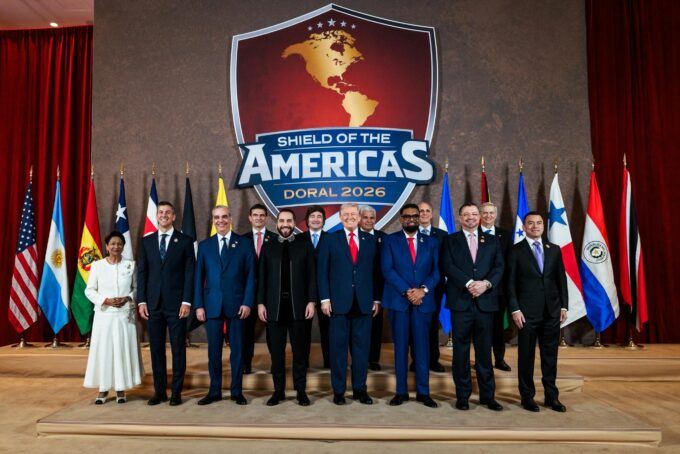
President Donald J. Trump poses for a Family Photo with world leaders at the Shield of the Americas summit at Trump National Doral, Saturday, March 7, 2026, in Miami, Florida. (Official White House Photo by Daniel Torok)

In less than two years, Donald Trump has disarmed the Congress and put the Constitution on life support.  The separation of powers has been breached, and checks and balances have been compromised.  One of Trump’s most serious victims is arms control and disarmament, a tragedy the mainstream media have virtually ignored.

Trump’s initial proposal last week to allow the sale of nuclear reactors to Saudi Arabia could spark a round of nuclear proliferation that threatens the global community.  Trump’s proposal provided a path for Saudi Arabia to eventually make its own nuclear fuel and allowed the Saudis to avoid nuclear inspections that more than 140 nations have accepted.  Such a scenario would threaten the Non-Proliferation Treaty that was signed in 1969 and could create an additional nuclear power for the first time in 20 years, when North Korea initially tested nuclear weapons.

One of the major reasons for having only nine nuclear states is the role of the NPT as well as the monitoring activities of the United States and the international arms control community.  The fact that there are so few nuclear powers is a testament to the success of the Non-Proliferation Treaty that was negotiated in the 1960s due to Soviet fears of Germany gaining access to nuclear weapons.

Less than 24 hours after the deal with Saudi Arabia was announced, Trump shifted gears and created a new condition—the Saudis would have to establish diplomatic relations with Israel before the sale of nuclear reactors could take place.  Secretary of Energy Chris Wright had already signed the agreement with the Saudi energy secretary before Trump’s new condition was announced.  The sudden reversal on Trump’s part suggests that the pro-Israeli lobby, led by Steve Wytkoff and Jared Kushner, anticipated Israeli anger at losing its nuclear monopoly in the Middle East and the Persian Gulf.

This would be sufficient for Trump to reverse himself, as he does so often on sensitive issues in his current debilitated state, and place himself in a stronger position for meeting with Israeli Prime Minister Benjamin Netanyahu who arrived in Washington this week.  It is also possible that a Trump advisor pointed out the absurdity of opening up the nuclear energy option for Saudi Arabia at the same time that the Trump administration was trying to stop the nuclear ambitions of the Islamic Revolutionary Guard Corps.

The mere suggestion of a nuclear arrangement with Saudi Arabia is the latest nail to be affixed to the coffin of arms control and disarmament.  We lost the New START Treaty earlier this year, which was a tragedy for the national security interests of the United States as well as the entire global community.  New START was the last remaining pact limiting the strategic nuclear arsenals of the United States and Russia, capping each country at 1,550 deployed strategic warheads.

The expiration of the treaty as well as the unprincipled nuclear flirtation with Saudi Arabia creates a dangerous international environment that could foster nuclear proliferation. Such non-nuclear states as Japan, South Korea, Turkey, and Poland could decide to seek their own nuclear weapons.  Even the German government is debating the possible need for a nuclear weapons component.

Clearly, nuclear weapons have returned to the international chessboard with a vengeance as the three greatest nuclear weapons states—the United States, Russia, and China—are devoting vast resources to strengthen and modernize their nuclear inventories.  There is no need for modernizing nuclear weapons, which have no utilitarian purpose outside the realm of nuclear suicide.
A nuclear race, moreover, would be taking place despite the vast overkill capabilities that the United States, Russia, and China already possess.

With the exception of George W. Bush and Donald Trump, who followed the advice of John Bolton to abrogate arms control agreements, every president over the past 80 years has recognized the value of reducing nuclear arms.  President John F. Kennedy was courageous in taking on the Pentagon and the Department of Defense in pursuing the Partial Test Ban Treaty; President Richard Nixon pursued SALT and the ABM Treaty; even Ronald Reagan appreciated the value of arms control and promoted the INF Treaty that destroyed an entire class of missile systems.  Barack Obama did his thesis at Columbia University on arms control, and considered New START one of his greatest accomplishments.

In view of the difficulty and complexity of disarmament negotiations, I cannot imagine the Trump administration being capable of dealing with arms control challenges.  We already know from Trump’s handling of our European allies and NATO that the diplomacy of international negotiations is beyond his capabilities. The fact that sensitive matters dealing with Russia and Ukraine as well as with Israel and Palestine are in the hands of two incompetent real estate billionaires—Wytkoff and Kushner—is dispositive.

The failures of Secretary of State and National Security Advisor Marco Rubio have neutralized the important roles of the Department of State and the National Security Council in dealing with sensitive international issues. Trump and his advisors created the Board of Peace for Gaza, which has not produced stability for the Palestinians.  The diplomacy that has accompanied five months of warfare with Iran has been a disaster.  An independent intelligence community is particularly needed for negotiating difficult arms control agreements, but that community has already been politicized. These are truly tragic times.


Melvin A. Goodman is a senior fellow at the Center for International Policy and a professor of government at Johns Hopkins University.  A former CIA analyst, Goodman is the author of Failure of Intelligence: The Decline and Fall of the CIA and National Insecurity: The Cost of American Militarism. and A Whistleblower at the CIA. His most recent books are “American Carnage: The Wars of Donald Trump” (Opus Publishing, 2019) and “Containing the National Security State” (Opus Publishing, 2021). Goodman is the national security columnist for counterpunch.org.

Sports Betting Giants Join Unprecedented Corporate Efforts to Buy 2026 Midterms

Democratic Rep. Summer Lee said the new spending was yet another reason “it’s time to get money out of politics.”


A close-up view of a billboard advertising DraftKings ahead of the FIFA World Cup 2026 on June 10, 2026, in Kansas City, Missouri.
(Photo by Aaron M. Sprecher/Getty Images)


Stephen Prager
Jul 29, 2026
COMMON DREAMS

As corporations spend record sums to influence this November’s elections, new campaign finance data shows a powerful new interest fueling the trend: sports gambling companies.

FanDuel, DraftKings, and others in the sports betting industry have spent $72 million seeking to influence the upcoming election cycle, according to a report from Reuters on Tuesday.

The industry’s historic spending blitz faces growing scrutiny from state and federal lawmakers, and seeks to protect its turf against rising competitors in the prediction market business, such as Polymarket and Kalshi, which are financially tied to the Trump administration.

Sports gambling companies have become the third-largest corporate election donor in the country during this cycle behind just the technology and cryptocurrency sectors, according to a June report by the consumer watchdog group Public Citizen. These two industries have spent over $100 million promoting their interests in the upcoming midterms.

That same report found that the 2026 election cycle has been influenced by more corporate money than any since 2010, when the Supreme Court’s Citizens United decision opened the floodgates for companies to spend unlimited sums promoting their preferred candidates via super political action committees (PACs).

These groups are not legally allowed to coordinate with candidates or give them money directly, but are allowed to advocate on their behalf, sometimes spending tens of millions of dollars to run ads aimed at influencing a single race.

As of last month, the report found that corporations have spent $517 million, mainly through super PACs, to influence the 2026 election, accounting for nearly one-third of all corporate election spending since 2010.


According to Reuters, major sportsbooks have channeled their money into the super PAC Win For America, which launched last year, and distributed it to affiliated PACs: the Republican-focused American Conservative Fund and the Democrat-focused American Future.

DraftKings has given at least $34 million to Win for America, FanDuel has given at least $27 million, and Fanatics and the UK-based bet365 have given $5.5 million apiece.

Separately, DraftKings, FanDuel, Fanatics, and BetMGM created the Sports Betting Alliance in 2021 to lobby Congress and state legislatures.

Since 2018, when the Supreme Court struck down a federal law barring sports betting in most states, at least 39 states, as well as the District of Columbia, have legalized it in some form.

While crypto and tech have directed more attention to federal races, the battles over sports betting are raging mostly at the state level, and that’s where most of Win for America’s focus is going.

According to Reuters:
The money’s impact is already evident in some state races.

Win for America spent more than $12 million in Georgia state races through two smaller PACs—Republican-focused American Conservative Fund and Democrat-focused American Future—as the legislature there weighs bills that would legalize gambling, state campaign finance records show.

The money went into 34 legislative races ahead of the primary. All but two of the candidates supported by the industry won, The Atlanta Journal-Constitution reported in May...

Win for America is also spending heavily on races in Pennsylvania, where there was a push to raise taxes on the online sports betting industry to boost state aid for public transportation, election records show.

Rep. Summer Lee (D-Pa.), who introduced legislation in May that would apply the same contribution limits to super PACs that already apply to direct donations, argued that the huge sums spent by the sports betting industry were yet another reason that “it’s time to get money out of politics.”

“Crypto. Big tech. Now big sports betting,” she wrote on social media Wednesday. “Another industry pouring tens of millions into our elections to protect its profits. Democracy shouldn’t be auctioned off to the highest bidder.”

Trump, Elections and Democracy: How We Can Move Beyond Electoral Fetishism


 July 29, 2026

Photograph by Nathaniel St. Clair

Donald Trump’s much ballyhooed public address on July 16 – an attempt to pressure Congress to approve his “Save America” election legislation – turned out to be a pitiful bust.  Even Sean Hannity seemed embarrassed by a speech that claimed large‑scale “election vulnerabilities,” including hundreds of thousands of alleged non‑citizen votes and Chinese hacking of voter files but offered zero evidence of fraud in the 2020 presidential election.

Evidence or no evidence, Trump can’t stop alleging that the vote for Biden was rigged – a compulsive accusation that anti-Trumpers attribute to his inability to accept defeat, his delusional tendencies, and his intention to challenge the results of the upcoming federal midterm elections.  The president’s bad motives and psychological mischigas are undeniable.  Even so, his election denialism has significant causes that most Democrats avoid mentioning, since to do so could expose their own role in provoking the madness of King Donald.

Where the election of 2020 is concerned, the president is quite crazed – but what drove him around the bend?  Most critics seem determined to forget that the original trauma in this case – the first serious allegations of a rigged election casting doubt on the authenticity of the voting process – were the charges made by Democratic leaders and pursued by various “deep state” agencies under Joe Biden that Trump and his campaign had conspired with the Russians to defeat Hilary Clinton in 2016.

How could a vulgar upstart and political amateur like Trump defeat a seasoned professional like Hilary?  It must have been a Russian plot!  Few Democrats these days have much to say about “Russiagate.”  They seem to have difficulty remembering that during the 2016 campaign the DNC hired a former British spy to compile evidence of a Trump-Russia conspiracy (the “Steele Dossier”) while encouraging F.B.I. director James Comey to begin a major investigation of his own.  The Steele dossier turned out to be weakly sourced and unreliable.  After the election Democratic-controlled congressional committees held extensive hearings on the matter, also without significant results.  And after two years more of further investigation, Special Counsel Robert Mueller issued a report stating that Russian agencies had indeed attempted to interfere with the election, but that evidence of a conspiracy implicating the Trump campaign was lacking.

All that work to “explain” Trump’s election – and with such disappointing results!  Not only was the conspiracy unproved, but there was no evidence at all that Russian interference had had a measurable impact on the 2016 election.  In that year six key industrial states that had voted for Obama four years earlier went for Trump by substantial majorities – not because of Russian trolls or hacked Clinton emails, but because so many working people felt that the Democrats had abandoned them.  Even so, the losers could not resist charging, in effect, that the election had been “rigged” by Trump and the Russians.

It seems clear, in retrospect, that the Russiagate allegations were hardly more substantial than Trump’s subsequent insistence that the election of 2020 had been stolen.  But today’s Democratic leaders take no responsibility for attempting to delegitimize a winning presidential candidate by casting doubt on the validity of the electoral process.  Nor, even if “progressives,” will they admit that any of the criminal charges brought against Trump in the Biden era were hostile exercises of prosecutorial discretion.  Anti-Trumpers tend to attribute their nemesis’s obsessiveness and vengefulness exclusively to his own defects of character.  These defects, God knows, are plentiful.  But it’s U.S. political institutions, not just Donald J. Trump’s personality, that are deformed.  And most of his adversaries don’t seem to want to deal with that reality at all.

When Trump says that elections are rigged and proposes “reforms” that would suppress voter participation, one’s impulse is to spring to the defense of the current electoral system.  There is certainly reason to suspect that the president is an authoritarian operator who would happily rig an election himself rather than surrender power. His fake reforms should be strongly opposed, of course.  But electoral fetishism is not an effective response to his election denialism.  The system as it stands is rigged in favor of candidates and policies favored by the capitalist elite: the oligarchs and their political servitors.  It does need to be changed, although surely not in the ways Trump is proposing.  Three sources of electoral corruption deserve particular notice: U.S. constitutional and legal norms, an evenly divided electorate, and Big Money.

1) The U.S. Constitution is a document that was intended to consolidate the gains of the American Revolution while preventing power from falling into the hands of the “mob.” As a result, even after enfranchising women, former slaves, and poor people, we have inherited a presidential electoral system that makes it possible to win an election by millions of popular votes but still lose the presidency.  Our senatorial voting system gives equal representation to Wyoming’s half million residents and 34.5 million Californians, while the rules of apportionment approved by the U.S. Supreme Court permit the outrageously partisan (and racist) gerrymandering of legislative electoral districts by those in power.  Meanwhile, a “winner-take-all” norm in almost all U.S. elections assures that groups constituting a voting minority will be subject for years to the dictates of those constituting a majority – even if the election was decided by a few hundred or a few thousand votes bought or coerced by powerful interests.

2) In fact, when the electorate is evenly divided, a little fraud can go a long way. Donald Trump’s partisans are unable to prove that illegal voting played a significant role in any recent election – but the idea that a relative handful of illicit votes can swing a closely fought contest is far from a paranoid fantasy.  As Tracy Campbell shows in her richly documented study, Deliver the Vote (2005), serious electoral fraud has been “an American tradition” since colonial times.  One recalls the presidential election of 1960, when John Kennedy defeated Richard Nixon in Illinois by 8,858 votes out of almost 5 million cast.  That result was confirmed only after Chicago’s mayor Richard J. Daley, who had delayed reporting the city’s vote until the downstate (mainly Republican) vote had been calculated, announced it.  Some Republicans charged fraud both in Illinois and in Texas, where the Democratic machine was also very powerful, but post-election investigations were half-hearted, no “smoking gun” proving significant wrongdoing was discovered, and Nixon – unlike Trump – was not inclined to pursue the matter after his rival was inaugurated.

3) More important than this potential for electoral fraud, however, is the permeation of American elections by Big Money: a form of legalized corruption that gives the oligarchic elite and its political representatives decisive influence over the ideas and behavior of U.S. political parties, candidates for office, and voters. Private campaign contributions have always been an outsized influence on U.S. elections, but In Citizens United and subsequent legal cases, the U.S. Supreme Court confirmed the rights of wealthy individuals and corporations to engage in a range of practices that includes creating super-PACS and funneling “dark money” into political campaigns. The floodgates opened, and in 2024 Elon Musk alone contributed around $290 million in various forms to the campaigns of Trump and other Republican candidates.

In the same election the Harris campaign outspent that of Trump by almost half a billion dollars . . . and still lost.  The moral: U.S. elections are corrupted not so much by simple vote-buying as by a system that permits an elite to establish the political and ideological ground rules which limit the choices of “acceptable” candidates and policies available to voters.  A major purpose of these rules is to keep the oligarchs’ basic “rights” to own and control great accumulations of capital from being subjected to challenge by elected officials.

The current turmoil in the United States, with President Trump’s popularity declining and many Democrats moving somewhat to the left, provides an interesting test of how the system works.  Even though the Democratic Party’s self-declared “democratic socialists” are little more than outspoken liberals, Trump and the Heritage Foundation have started to call them communists.  So far, this name-calling has not been accompanied by much repression, probably because most oligarchs understand that Bernie Sanders or AOC-style progressivism does not seriously threaten their ownership or management privileges.  If these privileges are brought into question, however, a different line is likely to be drawn, and repressive measures initiated.

Many Democrats and some Republicans want to increase taxes on the rich, provide a wider range of public welfare services to working people, regulate big corporations more effectively, and shift resources from military to peacetime uses.  Since the New Deal, the corporate elite has considered such demands negotiable rather than taboo.  But if political organizers wish to go further, say, by capping or confiscating great wealth, advocating the public ownership of key resources, greatly reducing military-industrial expenditures, or redefining management rights (including the “right” to buy political candidates), the situation is likely to change.  An oligarchy feeling genuinely threatened will define such activists as unAmerican extremists and subject them to McCarthy-style repression, or worse.

Is a mass-based anti-capitalist mobilization possible?  I think so.  Especially if the world capitalist system has entered a period of crisis that some theorists believe can only get worse, moderate reforms of the sort favored by Democratic progressives are likely to prove ineffective, and organizers proposing more radical changes could find themselves leading a mass movement.  The fear that a genuine Left could emerge in the U.S. motivates fascistic representatives of the oligarchy like Stephen Miller to propose preemptive repression — including measures intended to “fix” the electoral rules.  But the answer to such threats is not just to condemn Miller, and certainly not to sacralize the pre-Trump voting system.

For now, elements of the old system such as mail-in ballots must be protected against Trumpian vote-suppressing tactics.  But the point of doing this is to lay the groundwork for a transformation that will break the power of the oligarchy and turn elections into a genuine method (among others) of self-rule.  Our guiding aim cannot be simply to “defend” a deeply compromised democracy.  It must be to create a real one.

Russia seeks arrest of Telegram chief Durov

AFP
July 29, 2026 

Telegram is widely used across Russia, both as a messaging app and as a social media platform – Copyright AFP/File –

Russia announced on Wednesday that it was seeking the arrest of Telegram founder Pavel Durov over accusations of “complicity in terrorism”, alleging he had let the platform be used for recruitment by Ukraine’s security services.

Russian-born Durov — a serial tech founder who has lived outside Russia for years and holds French and United Arab Emirates passports — has frequently clashed with the Russian authorities as Moscow has tightened its grip on the internet.

His Telegram messenger is one of the country’s main communications platforms and officials have repeatedly tried to block access or thwart its success in a bid to pressure Durov to hand over user data or push Russians to use an unencrypted state-backed alternative.

Russia has put Telegram founder Pavel Durov on its wanted list, accusing him of ‘complicity in terrorism’ – Copyright AFP/File Giuseppe CACACE

The FSB security service said it had launched international search proceedings for Durov, who is also Telegram’s CEO.

“An international wanted notice has been issued… for the head of the Telegram administration, P. Durov,” it said in a statement.

It was unclear what kind of wanted notice Russia had issued and whether other countries or law enforcement bodies would accept or comply with it.

Lawyers for Durov, 41, declined to comment when contacted by AFP.

– Social media war –

Moscow frequently targets political enemies with charges of supporting “terrorism” or “extremism”, including those who have left the country.

The FSB alleged Telegram had been used as a recruitment platform for Ukrainian security services looking to coerce Russians to commit sabotage acts and that Durov had not removed “prohibited information”.

Russia and Ukraine have accused each other of using social media to recruit people to support them in the four-and-a-half-year war.

Durov, 41, has lived in both Dubai and France.

In 2024, he was arrested by French police on charges related to the distribution of illegal content, but was later released on bail.

He left France after authorities there lifted a travel ban.

Born in Saint Petersburg — President Vladimir Putin’s home city — Durov founded VKontakte, a social media site widely known as “Russia’s Facebook”.

He was essentially forced out of the company as it came under pressure from the authorities in the mid 2010s and founded Telegram, a social media platform and private messenger.

Telegram quickly became one of the most used online services in Russia and easily thwarted a years-long attempt by Moscow’s internet authorities to block access inside the country.

Durov — who is active on Telegram — did not immediately comment on the FSB allegations.

This year, the VKontakte social network — now controlled by the state and known as VK — has been pushing government-backed messenger Max, urging Russians to switch from Telegram and WhatsApp.

Durov has criticsed the platform as “a state-controlled app built for surveillance and political censorship”.
Rheinmetall shares surge after armsmaker reports record profit

AFP
July 29, 2026

Rheinmetall shares have soared 13-fold since before Russia’s full-scale invasion of Ukraine in February 2022 as defence spending has surged across Europe 
– Copyright AFP/File Alexandra Beier

German weapons manufacturer Rheinmetall on Wednesday reported record second-quarter core profit, beating analyst expectations, sending shares in the firm up almost nine percent.

Core profit for the three months to June came in at 562 million euros ($639.5 million), Rheinmetall said, roughly double the amount this time last year and about 20 percent above analyst expectations in a poll by Vara Research.

Revenue at 3.3 billion euros was up almost 70 precent, Rheinmetall said, with growth broad-based across the company.

“All segments contributed to this year-on-year improvement,” the tank gun maker said. “Operating metrics have thus been significantly exceeded.”

Rheinmetall shares have soared 13-fold since before Russia’s full-scale invasion of Ukraine in February 2022 as defence spending has surged across Europe.

Germany’s defence budget is planned to rise 33 percent by next year to almost 110 billion euros as Berlin rearms to face the threat from Moscow and compensate for wavering American commitment to European security.
German sports carmaker Porsche to cut 5,000 jobs by 2035

AFP
July 27, 2026

An electric version of the Macan. — © Copyright AFP HECTOR RETAMAL/File

German luxury sports carmaker Porsche, a subsidiary of the Volkswagen Group, said Monday it would cut 5,000 jobs by 2035 as part of a strategic realignment to boost competitiveness.

The maker of the 911 sports car has seen profits collapse due to plunging sales in China, where home-made electric vehicles now dominate, as well as US tariffs and a costly decision to hit the brakes on its troubled electric transition.

The new plan includes the “socially responsible reduction of a further 5,000 jobs by 2035, largely through natural attrition, demographic effects, the expansion of the special partial retirement programme and voluntary severance agreements,” the company said.

With job cuts already announced last year, the firm therefore plans to reduce its workforce of over 30,000 by 8,900 people.

Announcing what it called its “future package”, the carmaker also said it would invest a cumulative of 2.1 billion euros ($2.4 billion) by 2035 in two plants, at Zuffenhausen and Weissach near Stuttgart.

Workers there would enjoy employment and site protection until 2035, it said after negotiations with the general works council and trade unions.

“The shared objective is to strengthen the competitiveness of the sports car manufacturer and secure as many jobs as possible in the long term,” the company said in a statement.

Other cost-cutting measures were also announced, such as deferring wage increases until 2035 and having senior executives forgo base salary increases in 2027 and 2028.

Porsche is among automakers which have recently taken a hefty hit after ploughing huge sums into the electric transition, only to find demand weaker than expected.

The manufacturer announced last year it was slowing its shift to EVs, a move that dented 10-brand Volkswagen’s profits by billions of euros.

Measures included delaying the introduction of some fully electric cars, and extending the life of some combustion engine and hybrid models.
'Incredible': Erin Burnett floored as China mocks Trump to his face

PULLING A PUTIN


Matthew Chapman
July 29, 2026 
RAW STORY

China is helping Iran and then turning around and denying it to President Donald Trump's face, CNN's Erin Burnett said on Wednesday — and it's an international humiliation.

She discussed the issue with Seth Jones of the Center for Strategic and International Studies on "OutFront."

"Let's just be blunt here," said Burnett. "What is China doing to help Iran, both when it comes to weapons shipments and also other things? For example, a lot of the targeting, the specific targeting of U.S. bases, which the reporting has been very clear that both Russia and China have helped with."

Jones confirmed that "the Chinese are clearly a problem right now."

If the People's Republic is indeed "providing shoulder-launched weapons systems to the Iranians" capable of shooting down U.S. or Israeli aircraft, Jones said, combined with the rocket fuel they are providing to Iran to launch their missiles, "this is a disturbing trend."

"It's not dissimilar from what we've seen the Chinese do to the Russians in the Ukraine war, where they are now essentially bankrolling the Russian industrial base," Jones continued. The bottom line, he said, is that it's critical for Trump to "recognize that the Chinese are undermining both theaters right now."

"Yeah," said Burnett. "It's pretty incredible that China will go and tell him that they're not doing it. And he says, 'I take them at their word.' They continue to do it. In a sense, it's a mockery of the U.S. president."


Fox News host caught 'mugging' at Fauci hearing forced to eat her own words

Nicole Charky-Chami
July 29, 2026 
RAW STORY


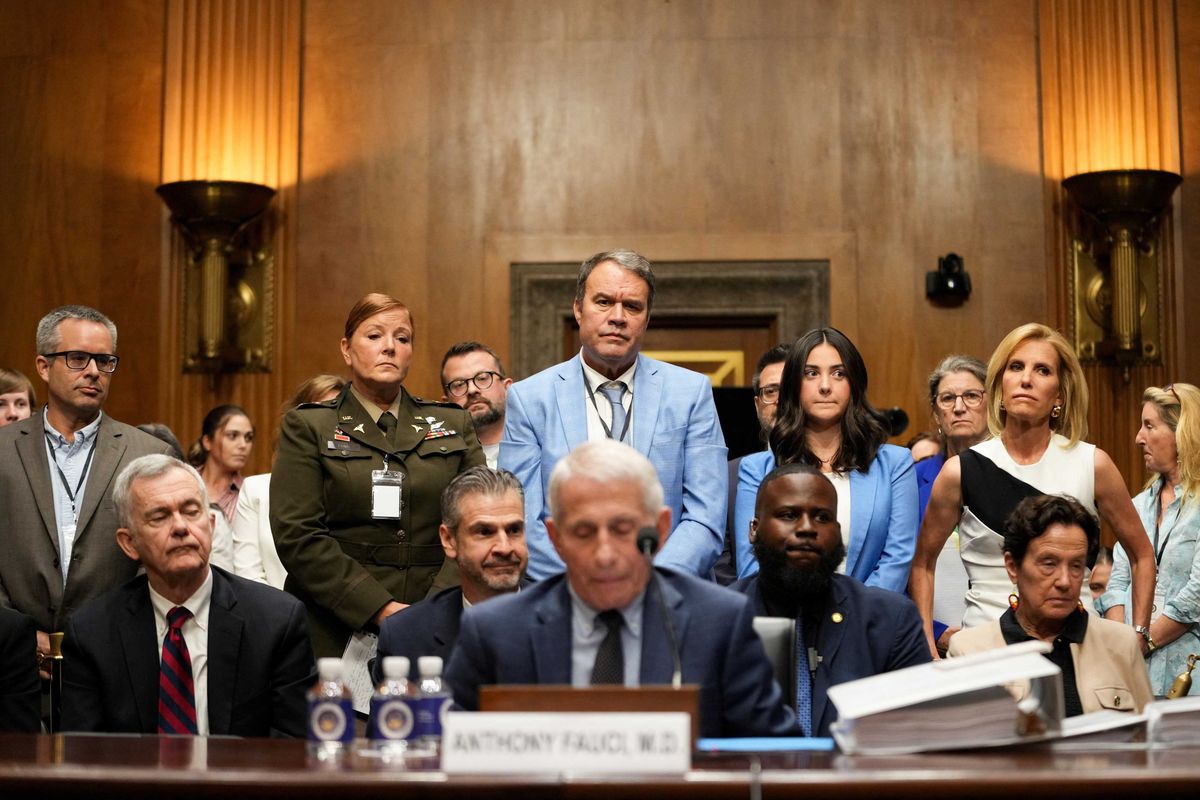
Members of the audience, who say they were negatively impacted by their skepticism to COVID-19 precautions, stand behind Anthony Fauci, the former Director of the National Institute of Allergy and Infectious Diseases and medical advisor to several U.S. presidents, at the urging of Sen. Bernie Moreno (R-OH) at a U.S. Senate Homeland Security and Governmental Affairs Committee on Capitol Hill in Washington, D.C., on July 29, 2026. REUTERS/Nathan Howard

"The Daily Show" delivered a hysterical response to Fox News host Laura Ingraham's expressions during the Senate hearing for Dr. Anthony Fauci on Wednesday.

Ingraham was sitting behind Fauci as Republicans unleashed attacks on the former director of the National Institute of Allergy and Infectious Diseases at the Senate Homeland Security and Government Affairs Committee hearing.

"The Daily Show" zoomed in on Ingraham, pairing her reactions with a montage of her own words.

"Watching Laura Ingraham make faces at Fauci's hearing while listening to Laura Ingraham complain about other people making faces," "The Daily Show" wrote on X.

In the video, Fauci responds to lawmakers and invokes the Fifth Amendment right against self-incrimination, while Ingraham appears to mock him.

"The smirking for the camera... the smirk she had on her face... shaking her... shaking her head...and she just kind of rolled her eyes, mugging for the cameras, and at certain points it almost seems like a competition for the camera," the audio played, showing footage of Ingraham shaking her head and rolling her eyes.

"Her little charade for the cameras isn't just an example of conduct that is boorish and rude, arrogant and rude, always performing for the cameras," the video continued.

"Taking a selfie like a junior high school girl" — then the video showed a shot of Ingraham taking a selfie during the hearing.

Ingraham was part of a group of people seated behind Fauci who Sen. Bernie Moreno (R-OH) referred to as "shamed" and asked to stand up if they believe they have faced backlash or negative impacts over the COVID-19 pandemic.


MAGA AG moves to investigate Fauci as Republicans vow revenge for invoking Fifth

Matthew Chapman
July 29, 2026 
RAW STORY


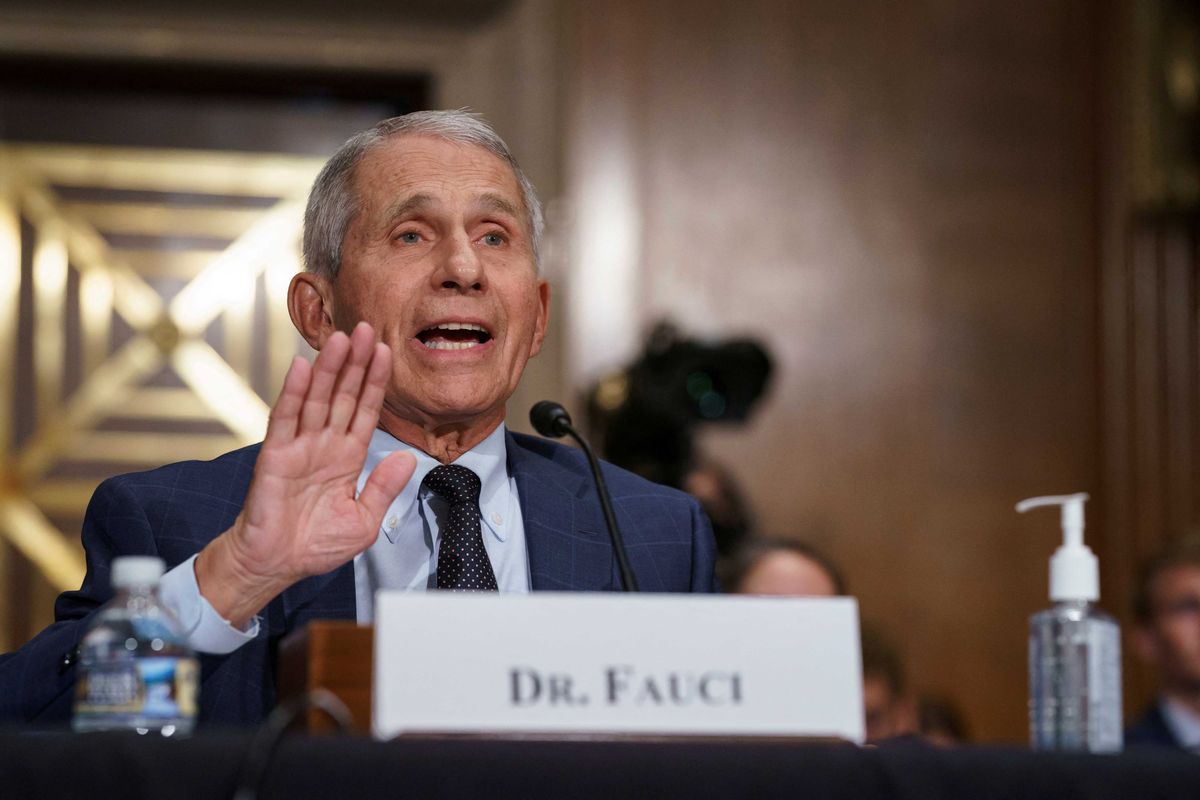
Anthony Fauci, the former Director of the National Institute of Allergy and Infectious Diseases (NIAID) and medical advisor to several U.S. presidents, attends a U.S. Senate Homeland Security and Governmental Affairs Committee on Capitol Hill in Washington, D.C., U.S., July 29, 2026. Anthony Fauci declined to answer questions, invoking his Fifth Amendment right against self-incrimination. REUTERS/Nathan Howard

Florida Attorney General James Uthmeier, a staunch supporter of President Donald Trump, is launching an investigation into former National Institutes of Health director Dr. Anthony Fauci.

According to Politico, Uthmeier's boss, Florida Gov. Ron DeSantis, has concocted a bizarre legal theory for why Fauci, who testified before a hostile GOP-dominated Senate committee on Wednesday, was not allowed to invoke his Fifth Amendment rights under questioning from Sen. Rand Paul (R-KY).

"Uthmeier has launched several investigations since he was appointed by DeSantis in February 2025, from suing health organizations over the state’s ban on transgender treatments for children to recruiting rules used by the NFL," noted the report. This follows DeSantis writing "in a Wednesday X post the former White House adviser cannot claim the Fifth Amendment since he received a preemptive pardon by Biden, and he should be held in contempt for not answering Kentucky GOP Sen. Rand Paul’s questions about U.S. funding going to a lab in a region of China where the first Covid cases were reported."

Paul has spent years pursuing the idea that Fauci-backed "gain of function" research was responsible for engineering the COVID virus, something that has never been substantiated, and has openly called for Fauci's arrest. In his testimony, Fauci explained that while he has not broken any laws, his lawyers advised him to remain silent due to Paul's eagerness for a pretext to prosecute him.

For his part, said the report, Paul "told Fauci he will face consequences for pleading the Fifth and has scheduled an Aug. 5 committee meeting to discuss whether to declare him in contempt of Congress," while Uthmeier said weeks before the hearing even took place "that he was losing sleep over thinking of ways to prosecute Fauci."

Florida became ground zero in 2020 for political leadership defiance against public health guidelines for required masking and social distancing, during the height of the pandemic. The state became a huge vector for the spread of COVID.