Wednesday, September 02, 2026

Internal revolt as 'nuts' Apple execs appease Trump: 'There is not a soul who is for it'

Tom Boggioni
September 2, 2026 
RAW STORY
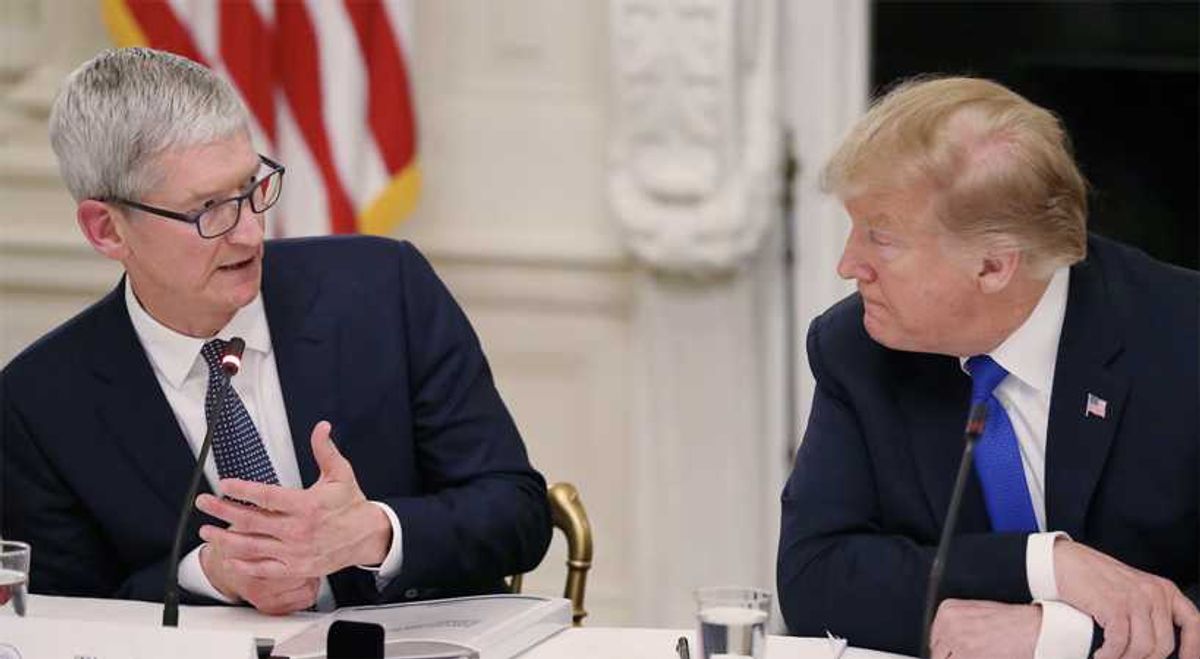

Apple executive Tim Cook speaks with Donald Trump (Photo via Leah Millis for Reuters)

Apple executives' decision to rename Lake Ontario "Lake America" on its Maps app is setting off a firestorm inside the tech giant, with employees furious that leadership caved to President Donald Trump out of fear of his wrath, according to a new report.


Employees are furious that the company is rolling over because of higher-ups' fear of the wrath of President Donald Trump who demanded the name change in an executive order, media watchdog Status reported Wednesday.

At the same time the public is rejecting the “deeply stupid” name change, which Google has also agreed to follow, Apple was late to the game and employees are not happy.

The controversy intensified after Interior Secretary Doug Burgum appeared on Fox Business on Monday, telling host Maria Bartiromo, "I know that the president reached out to Apple directly, so I'm sure that we may be seeing that change coming up soon to Lake America."

According to Oliver Darcy at Status, "While Apple had likely always planned to update its map to reflect the executive order—it had, after all, also swapped Gulf of Mexico for 'Gulf of America'—Status has learned that executives at the company were irked by Burgum’s comments. By disclosing that Trump had personally phoned Cupertino, the White House had framed any decision Apple made as one in which it 'was capitulating to the president’s demands.'"

Inside the company, Status reported it would be difficult to find a single employee who genuinely supports the change.

"There is not a soul who is for it," one person familiar with the matter told Darcy, adding that "everyone considers it f-----g nuts."

Still, Apple's leadership and most of its rank-and-file are described as "resigned" to these kinds of concessions under Trump's second term, understanding "that Trump will f--- with the company if the company doesn't do what he wants," the person said.

The dispute over Lake Ontario's name has become one of the more visible flashpoints in Trump's escalating trade dispute with Canada, whose officials have mocked the renaming effort as absurd. Like Google's version, Apple's change applies "only to Maps for users located in the United States." Canadian users and much of the rest of the world still see the lake listed under its original name.
Susan Collins' re-election bid haunted by exposed Oath-Keeper hire

Tom Boggioni
September 2, 2026 
RAW STORY


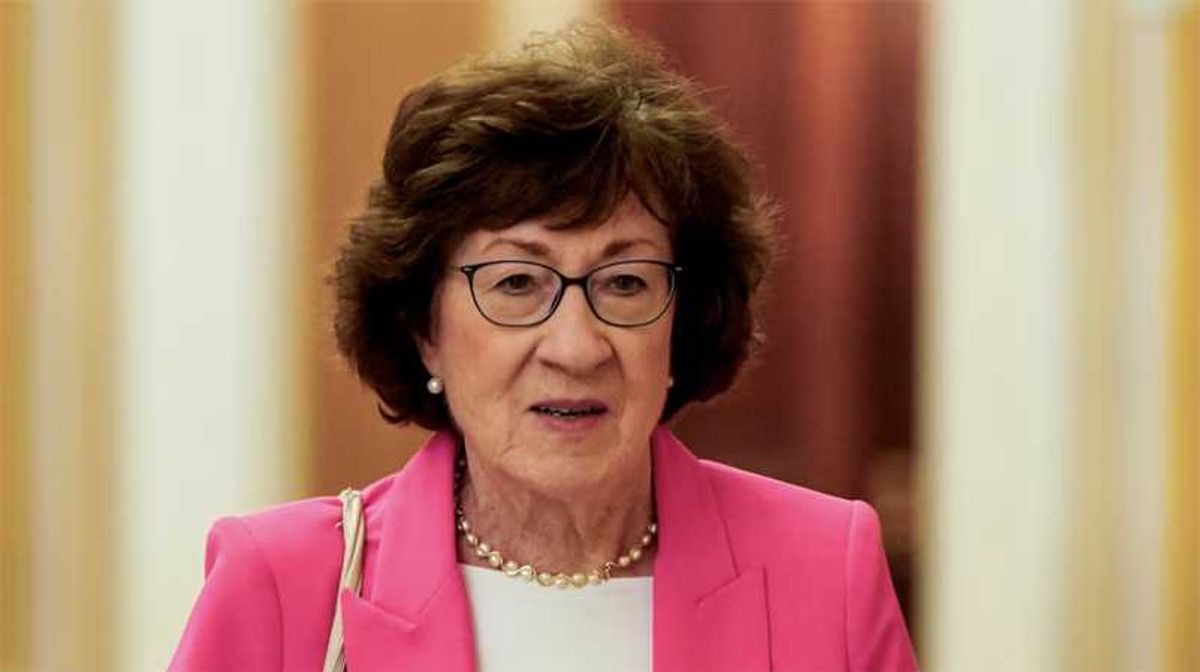
U.S. Senator Susan Collins (R-ME) walks in Capitol Hill, as Republican lawmakers struggle to pass U.S. President Donald Trump’s sweeping spending and tax bill, in Washington, D.C., U.S., June 30, 2025. REUTERS/Elizabeth Frantz

Republican Sen. Susan Collins' hold on her Maine Senate seat is slipping as Democrats pounce on her ties to a member of the far-right Oath Keepers organization.

It's been one headache after another for Collins as she fights to defend a seat targeted by Democrats for a November flip, the Daily Beast reported Wednesday.

Those headaches include billionaire donors with ties to Jeffrey Epstein, gas-money pleas to voters to fuel her re-election tour, and President Donald Trump's trade war with Canada, according to the Beast.

Now she is about to face questions about her hiring of Piscataquis County Commissioner Wayne Erkkine, 81, as her town chair in Greenville, which "puts him in charge of grassroots campaigns and voter outreach."

According to the report, Erkkinen's name popped up in the Oath Keepers' leaked membership rolls of more than 38,000 names and has been identified by the Anti-Defamation League as a member of the group behind the January 6 Capitol attack.

Erkkine told the Beast he quit "years ago," before the riot, claiming, "It wasn't what I thought it would be.

Nonetheless, his ties to the Collins campaign has reportedly given Democrats "fresh ammunition," by linking the embattled GOP lawmaker to extremists who took part in the assault on Washington, D.C., as part of a Trump-inspired insurrection.
'Palpable fear': Overlooked story flagged as Trump 'holds a gun' to federal workers' heads

Daniel Hampton
September 2, 2026 
RAW STORY


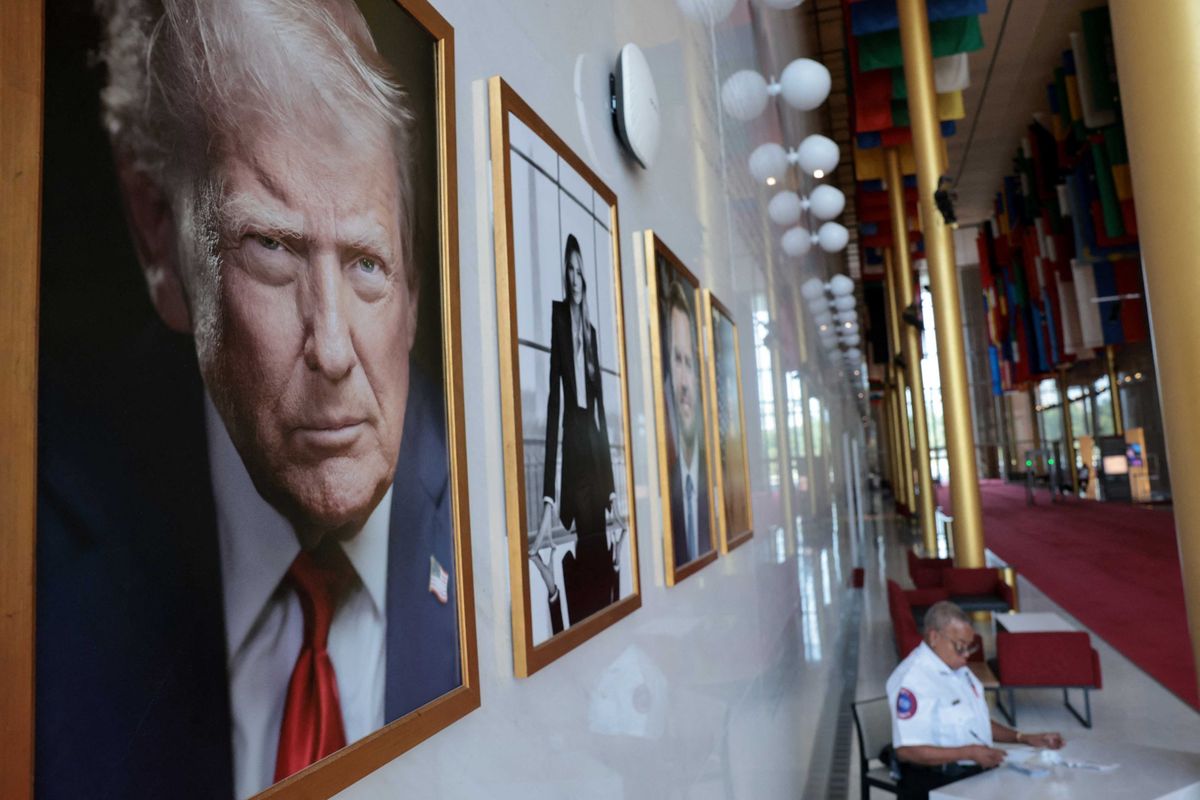
An official portrait of U.S. President Donald Trump hangs in the Hall of Nations at the Kennedy Center, which the Trump administration argued in a court filing could eventually face demolition if major repairs are not undertaken, in Washington, D.C., U.S., August 26, 2026. REUTERS/Jonathan Ernst

Fear has grown so suffocating inside federal agencies that whistleblowers now feel they have a "gun to their heads," former Trump Homeland Security official Miles Taylor warned this week, saluting a U.S. Postal Service employee who braved that climate to expose the administration's rushed effort to police the nation's mail ballots in defiance of a court order.

The complaint, released Tuesday by Sen. Richard Blumenthal (D-CT), warns that the Postal Service built an "untested" barcode system to carry out President Donald Trump's order restricting voting by mail. As designed, the whistleblower said, if a single barcode in a batch of 10,000 ballots fails to scan, the entire batch is bounced back to state officials, potentially stopping millions of ballots from reaching voters. Work began in June and continued despite a court injunction, according to the disclosure, which was prepared with Whistleblower Aid.

The revelations set off alarm among election lawyers and Democrats days ahead of mail voting for the November midterms. A federal judge has temporarily blocked Trump's order, which 23 states and Washington, D.C. are challenging in court. The White House disputed the whistleblower's account, with spokesperson Lauren Bis calling the software "neither complex nor unique," and USPS said it is "carefully reviewing" the concerns.

For Taylor, the missed story was the person who stepped forward.

"The fear is palpable inside federal agencies," he wrote in a Tuesday essay for his anti-Trump group Defiance, which has partnered with the nonprofit representing the whistleblower. He pointed to a Partnership for Public Service survey in which the share of federal employees confident they could report wrongdoing without retaliation fell from about 75% to roughly 22% since Trump returned to office. Taylor also noted the administration has fired at least 17 inspectors general and floated a governmentwide gag rule that critics have said would silence potential whistleblowers.

Taylor himself blew the whistle on Trump years ago, and said the disclosure is already bolstering the legal fight against the mail voting order.

"Somewhere out there in America, a public servant looked at a plan to sabotage your vote. Over their own self-doubt and the daunting consequences of self-sacrifice, he or she decided their oath to the Constitution mattered more than their own safety. That’s what saving a democracy actually looks like, friends. It’s rarely the famous people swinging their fists at the dictator. It’s almost always someone like this," he concluded.
Trump’s 'hilarious' new gold desk phone sparks swift backlash: ‘The dumbest stuff’

Erik De La Garza
September 2, 2026 
RAW STORY


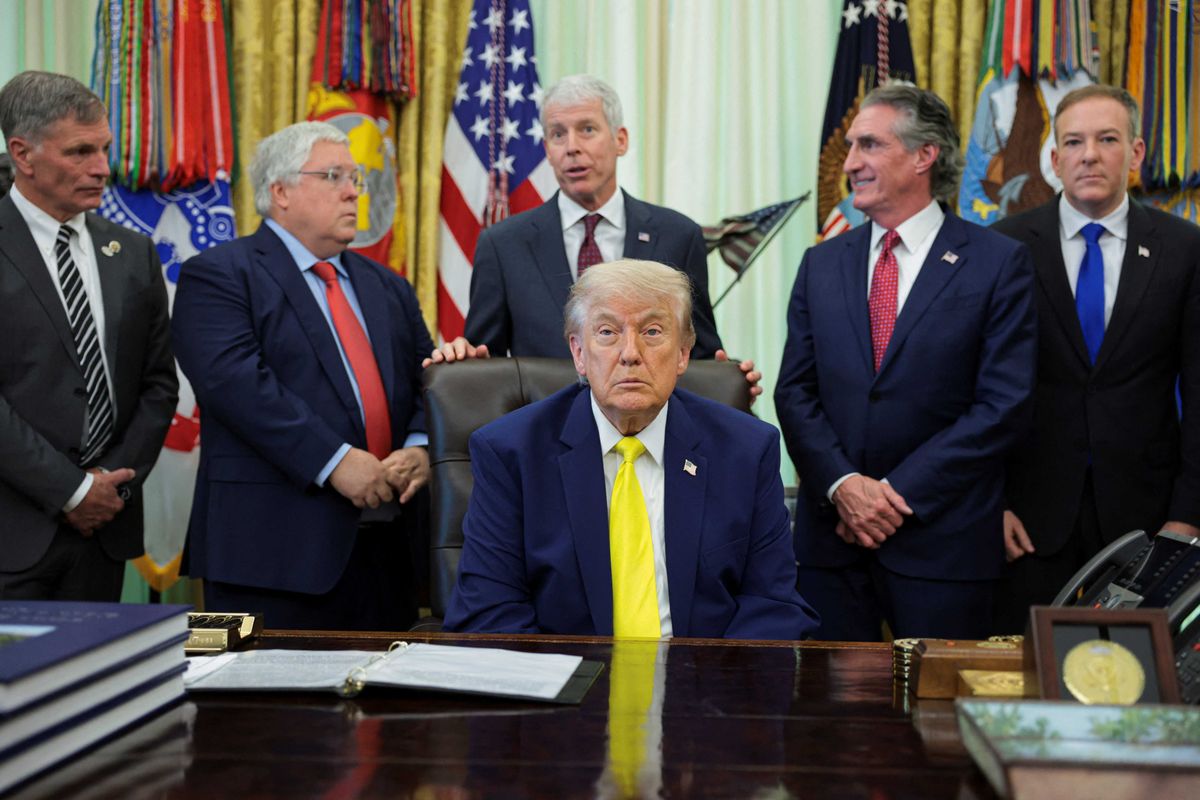
U.S. President Donald Trump looks on as U.S. Secretary of Energy Chris Wright delivers remarks to reporters about the Trump administration's support for coal energy production, flanked by West Virginia Governor Patrick Morrisey, Interior Secretary Doug Burgum and Environmental Protection Agency (EPA) Administrator Lee Zeldin, in the Oval Office at the White House in Washington, D.C., U.S., June 4, 2026. REUTERS/Jonathan Ernst

President Donald Trump’s flashy new desk phone sparked stunned and mocking reactions after it was spotted Wednesday inside the Oval Office.

CNN’s Kaitlan Collins shared a photo captured by Fox News correspondent and pool reporter Peter Doocy. The black Cisco phone features gold-colored trim, the presidential seal and an image of the White House. The words “THE PRESIDENT” appear above the keypad, while “Donald J. Trump” is written underneath.

“Our taxes are being spent on the dumbest stuff,” Vanity Fair special correspondent and “Fast Politics” host Molly Jong-Fast wrote.

British infectious disease physician Dr. Neil Stone added: “This phone is hilarious.”

“Americans can’t afford to gas up their cars, but they’re paying for the President to get a gold-plated new phone,” wrote J.J. Abbott, a Pennsylvania-based media strategist.

Other users mocked the phone's resemblance to a toy.

“Fisher-Price really knocked it out of the park with this one,” the popular X account @aintscarylarry posted to its over 100,000 followers.

“Was it made in China?” another user asked.

Democratic strategist Chris D. Jackson accused Trump of wasting money on “frivolous” items, while political commentator Kevin Walling summed up his reaction in one word: “Priorities!”

Reuters correspondent David Shepardson confirmed to his social media followers that the phone was manufactured by Cisco.

“I've asked all the major US phone companies who gave @POTUS the phone,” he wrote, later adding, “The phone companies don't make handsets -- this is from @Cisco.”


THE GRIFT

Trump becomes first sitting US president to appear on a coin as Mint releases $1 piece

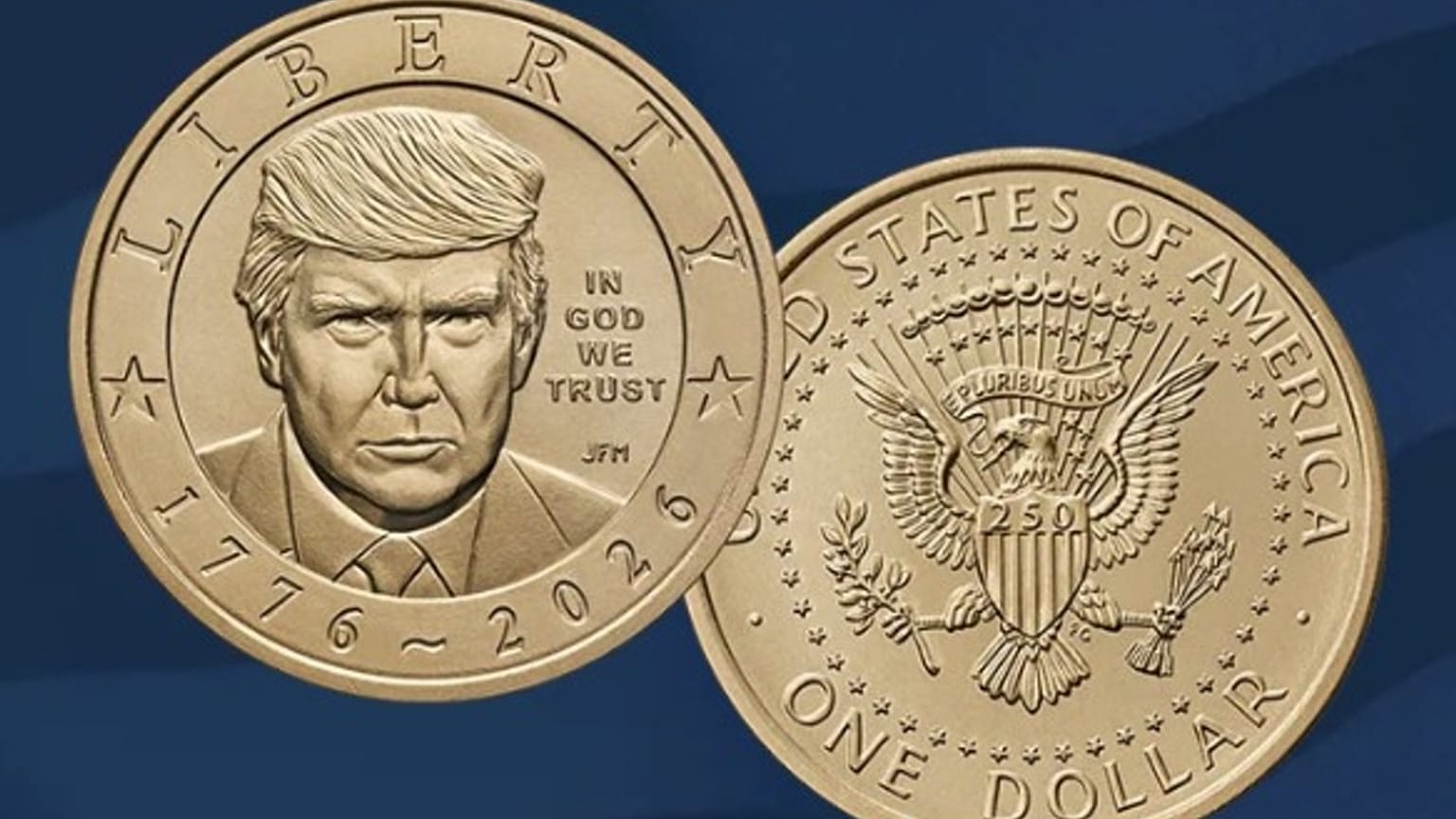
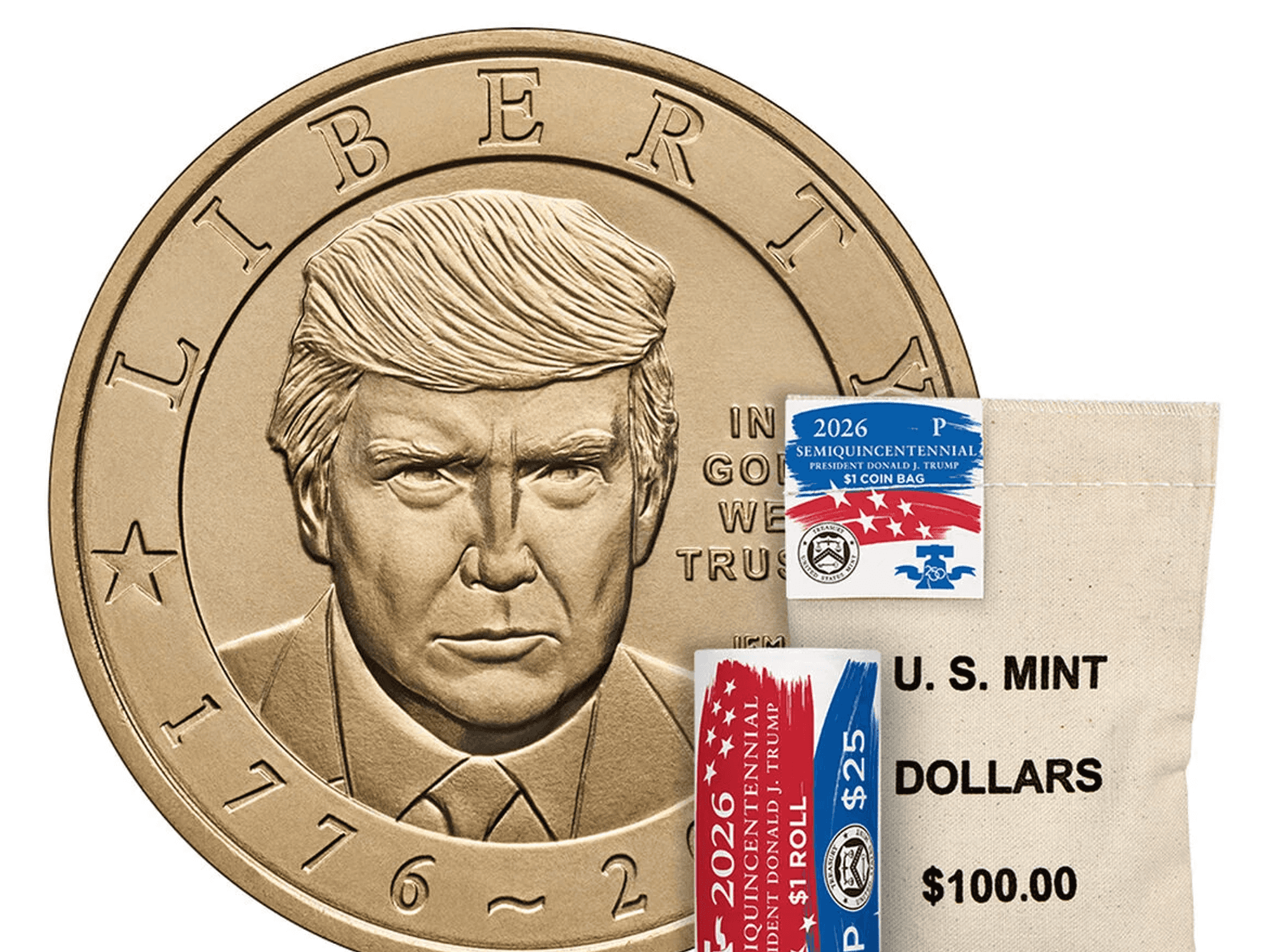
The 2026 Semiquincentennial President Donald J. Trump $1 Coin, 2 September 2026
Copyright US Mint

By Quirino Mealha
Published on

The US Mint has issued the 2026 US President Donald J. Trump $1 coin, marking the first time a serving American president has featured on a coin made for everyday use, with the Mint saying the pieces are already in circulation and rolls and bags going on sale from midday Eastern time.

American money now carries the current US president's face.

The US Mint confirmed on Thursday that the "golden dollar" featuring the likeness of US President Donald Trump has been released, urging people to check their pocket change while collectors can buy it in rolls and bags sold exclusively through its own channels.

The products are priced at $61 for a 25-coin roll and $154.50 for a 100-coin bag.

In practice, finding one in everyday change may take patience, since dollar coins have caught on widely with American shoppers and circulate far more sparsely than notes

Collectors also have another detail to chase as the US Mint struck 250,000 of the coins on 4 July carrying a special "July 4th" privy mark, dispersed through the rolls and bags.

Despite its colour, the coin contains no gold, being 88.5% copper with smaller quantities of zinc, manganese and nickel.

The coin was struck in Philadelphia and carries no mint mark.

Chief Engraver Joseph Menna designed the obverse from an official White House photograph, showing Trump facing almost directly forward beneath the inscriptions "LIBERTY", "IN GOD WE TRUST" and the dual date 1776 to 2026.

The reverse carries the Presidential Seal, originally sculpted by former chief engraver Frank Gasparro, with the numeral 250 added to the eagle's shield to mark the country's 250th anniversary.

There is one precedent for this initiative, though an imperfect one.

Calvin Coolidge appeared alongside George Washington on a 1926 half dollar marking 150 years of independence, making him the first living president on American coinage.

However, that was a commemorative issue rather than a coin intended for daily use. The legal basis for placing a Trump coin in circulation has been contested.

US law generally bars portraits of living people from coins, and the administration has relied on the Circulating Collectible Coin Redesign Act of 2020, signed by Trump during his first term, which permits $1 coins bearing designs emblematic of the anniversary throughout 2026.

The design process also drew criticism.

The US Commission of Fine Arts had recommended a profile portrait and a different eagle design, neither of which was adopted, while the Citizens Coinage Advisory Committee, which normally reviews Mint designs, declined to consider it.


Deathly design gaffe spotted as Trump coin goes on sale to deluge of derision


Daniel Hampton
September 2, 2026 
RAW STORY


(Photo courtesy of US Mint website)


The U.S. Mint began selling its new $1 coin stamped with President Donald Trump's face on Wednesday, and the internet instantly ridiculed the launch.

The coin, gold-colored but struck from base metal, sells in 25-coin rolls for $61 and 100-coin bags for $154.50 as part of the Mint's series marking America's 250th birthday. The Mint told buyers to "check your pocket change," noting the dollars are "also in circulation."

But internet detectives quickly zeroed in on the fuzzy economics of the coin, as well as the ominous implication etched into it.

"Deal of the century right here folks," wrote The Bulwark's Sam Stein. "You can purchase 25, $1 Trump coins for the price of.... $61."

The Bulwark's Catherine Rampell homed in on the "1776 ~ 2026" dual date.

"I like that this design appears to show the birth date of liberty as 1776, and its death as 2026," she quipped. Progressive media group MeidasTouch quote-posted the Mint's announcement with a one-word review: "Accurate," also pointing to the curious birth and death dates of liberty.

Rep. Ted Lieu (D-CA) used the rollout to bash the administration's economic record, ticking off rising gas, grocery and utility costs.

"[T]rump and Republicans have mismanaged the American economy," he wrote, pointing to prices at the pump and the checkout line. "So what are trump and Republicans focused on? See below. November is coming." He added a jab at the portrait: "(Also, why is trump wearing a wig)?"

Conservative writer David Frum pointed out a glaring historical comparison.

"The Caesars and Napoleon won some wars before stamping their images on the coinage of their fallen republics," he wrote.

Trump is only the second U.S. president depicted on a coin during his lifetime, after Calvin Coolidge on a 1926 commemorative half dollar. Critics have decried that the design flouts federal law barring living people from U.S. currency, but a federal court declined to block it. The administration said the 2020 law authorizing the 250th-anniversary coins makes it legal.


Trump official buried in mockery for downplaying corruption as 'minor stuff'

Travis Gettys
September 2, 2026 
RAW STORY


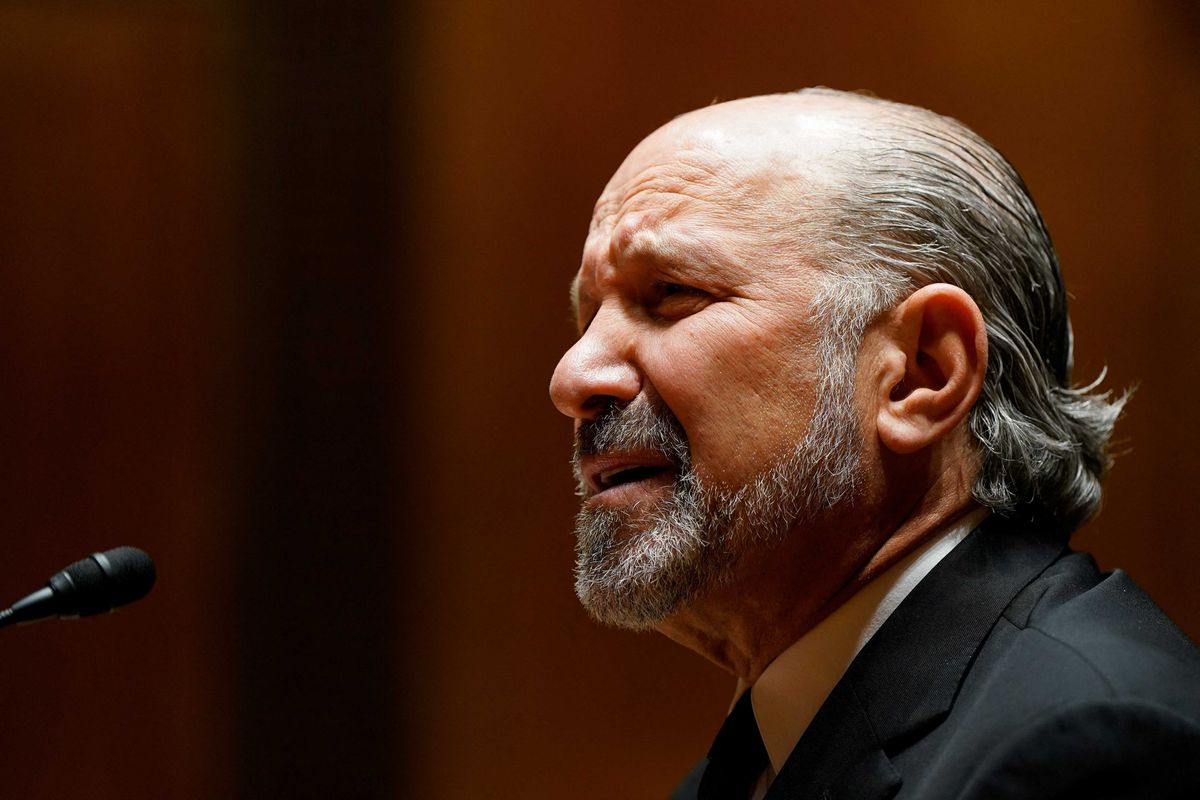
U.S. Commerce Secretary Howard Lutnick testifies before the Senate Appropriations Subcommittee on Commerce, Justice, Science, and Related Agencies hearing to examine a review of broadband deployment funding at the Department of Commerce, on Capitol Hill in Washington, D.C., U.S., February 10, 2026. REUTERS/Elizabeth Frantz

Commerce Secretary Howard Lutnick was criticized for downplaying concerns about his family's corruption as "minor stuff."

President Donald Trump's commerce secretary appeared Wednesday morning on CNBC's "Squawk Box," where host Joe Kernan pressed him to explain possible conflict-of-interest concerns involving his sons, Brandon and Kyle Lutnick, who took over top leadership roles at Cantor Fitzgerald after their father joined the cabinet.

"The perception is you're sitting at Commerce, and you're able to control what Cantor is getting in terms of fees with your sons running that company," Kernan said. "It looks like a conflict of interest. How do you respond to that?"

Lutnick insisted there was no conflict and there was no reason for concern, despite questions from Democratic lawmakers about how the firm he led for 30 years and handed off to his sons, who have since benefited from government contracts.

"I had no idea that Cantor was involved at all; it never came up to me," Lutnick said.

"I didn't put my companies in a trust," he added. "My kids bought my companies, so I'm no longer involved in my own companies at all. My kids bought it from me; they own it, and I had nothing to do with that decision, and this is minor stuff anyway."

Critics pounced on his claims and served reminders of Lutnick's ties to disgraced financier Jeffrey Epstein.

"The second term Trump presidency ranks among the biggest heists in the history of the world," argued conservative writer David Frum.

"Committing Minor Corruption is now on my bucket list," snorted popular X account PoliticsOhMyGawd.

"That's a limp answer," observed writer Bruce Wilson.

"Many such corruptions," joked writer Kirk Rudell.

"Lutnick is as crooked as a $3 bill," quipped newsman Bruno J. Navarro.

"Minor stuff," insinuated widely followed X user Jo from Jerz. "He knows all about 'minor' stuff doesn’t he?"

"Said the guy who brought his family to Epstein Island and lied about it," recalled X user Robert Boone.

"So his answer to clear conflict of interest questions is not really, not strongly that there is no conflict," noted retired journalist Andrew Meacham. "No, the only strong, passionate statement he made was, 'I don’t care.'"


Bulldozer for beloved Kennedy Center artwork amid Trump's takeover tantrum

Tom Boggioni
September 2, 2026 
RAW STORY


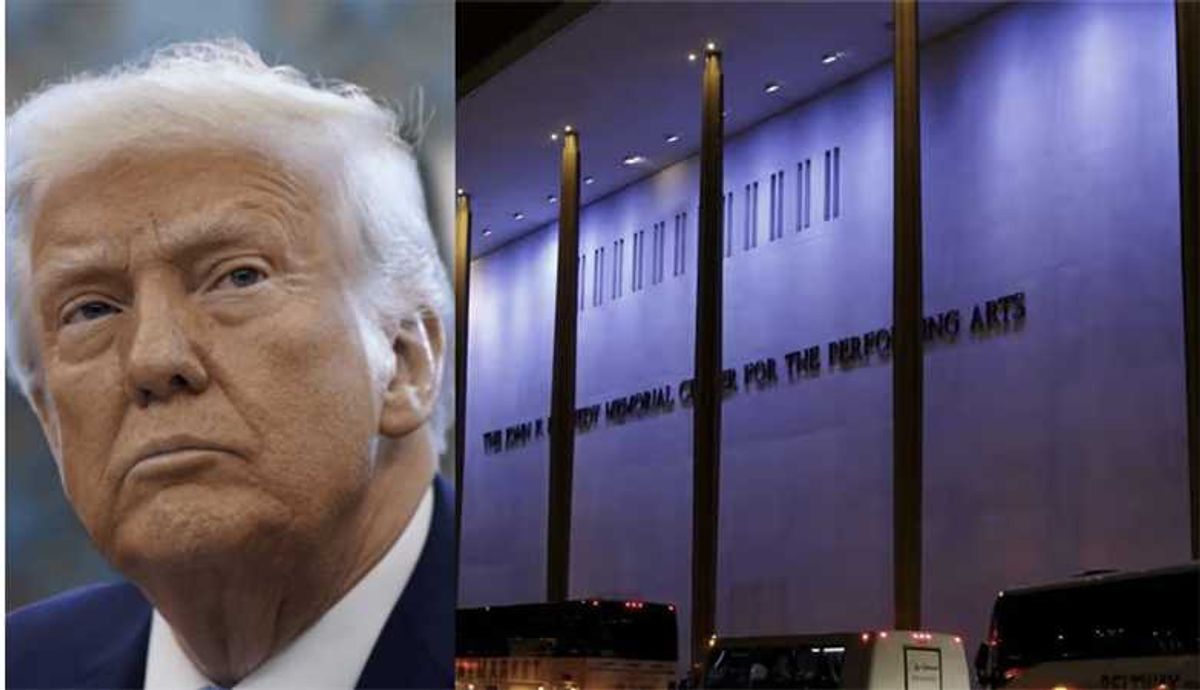
Donald Trump, Kennedy Center for the Performing Arts (Photos by Yuri Gripas, Elizabeth Frantz for Reuters)

President Donald Trump’s handpicked Kennedy Center Board has decided to remove a popular and whimsical piece of outdoor artwork without notice and explanation, according to a new report.

The towering sculpture "Blue," by artist Joel Shapiro, was removed from the Kennedy Center's grounds this week, the latest apparent move to remake the arts venue under Trump's stewardship, the Washington Post reported Wednesday.

The "cobalt-colored, stick-figure sculpture" was installed in September 2019 at the Reach expansion overlooking the Potomac River, its mid-kick pose designed to shift depending on the viewer's position. Shapiro described the piece as being "about action and risk and performance and energy" — "a celebration of possibility." He died in June 2025.

The Kennedy Center "gave no advance notice of the removal and offered no explanation," when pressed by the Post, nor did it immediately respond to requests for comment. A former curator told Artlyst that internal documents showed the work had been "earmarked for elimination" early in Trump's takeover, criticizing the secrecy around removing art "held in trust for the American people."

The sculpture's removal marks the latest controversy at the venue since Trump took it over in February 2025. His reshaped board of trustees voted to make him chairman and rename the center after him; a judge initially blocked efforts to install his name on the building, ordering the letters removed, before the board revived the plan by voting to add his name as an inscription. Ticket sales and fundraising have since collapsed, the Post has reported.

Advocacy group Hands Off the Arts, which has campaigned against the changes, responded to the sculpture's removal on social media: "First they came for the facade, and now they come for the grounds."
Trump's 'deeply stupid' stunt flops with voters — and a smirking Joe Rogan: analysis


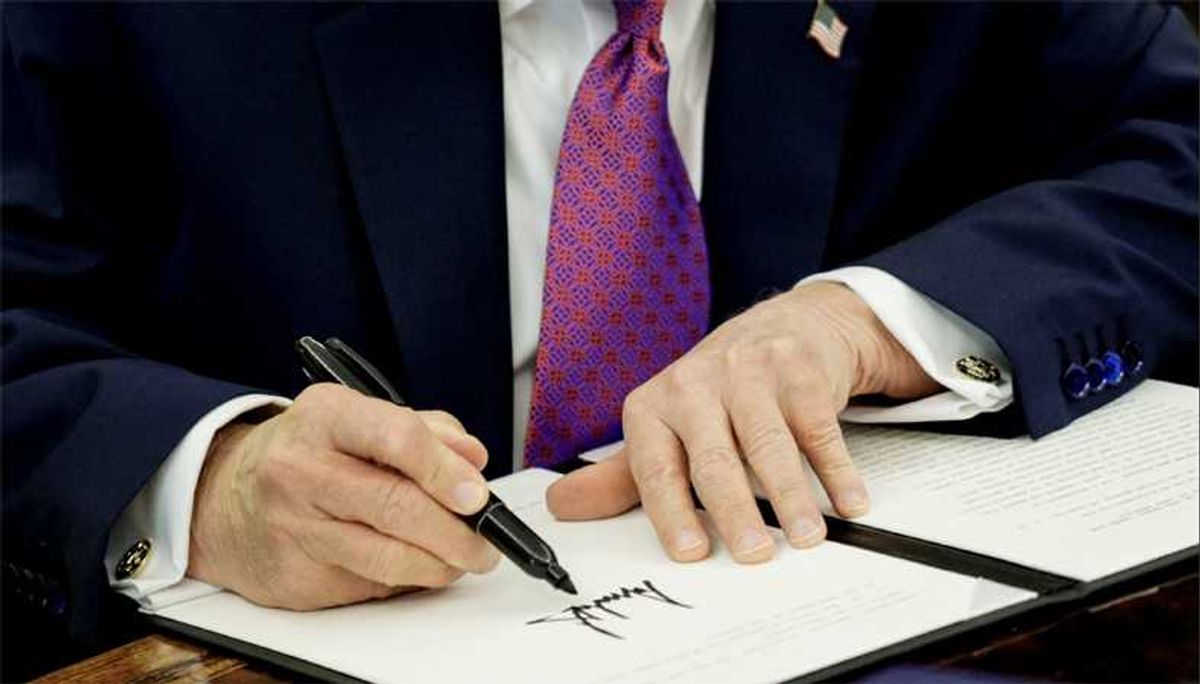
U.S. President Donald Trump signs an executive order renaming Lake Ontario as Lake America, at the Oval Office of the White House in Washington, D.C., U.S., August 27, 2026. 
REUTERS/Evan Vucci

Tom Boggio
September 2, 2026 
RAW STORY

President Donald Trump’s decision to sign an executive order renaming Lake Ontario as “Lake America” has been a spectacular flop with voters — and one very high-profile political podcaster, according to a new analysis.

Two “Morning Joe” co-hosts Wednesday morning discussed Joe Rogan's dismissal of the move as a mere 14 percent of Americans voters report support for the decision.

The segment begins with a clip of a smirking Rogan.

“It’s to distract you from the fact we are in a war we can’t win with Iran — it doesn’t make any sense,” Rogan said. “Who cares if it’s Lake Ontario? It’s a good name. We’ve had that name forever."

Co-host Jonathan Lemire and Willie Geist were quick to pile on.

Geist reported that a recent Ipsos/Reuters poll found 63 percent of respondents opposed Lake Ontario’s renaming, a mere 14 percent supported the decision and 21 percent said they weren’t sure how they feel about it.

"Perhaps because it was so, so deeply stupid,” Geist said with a laugh. "Jonathan Lemire, this again, the case of President Trump diving headfirst into an issue that apparently has no audience.”

"I don't say this a lot, but Joe Rogan? Exactly right," Lemire said. "It's meant to be a distraction; it's a culture war. And, you know, it's to get us to talk about something else. But there is a serious underbelly here, which is the fact that this trade war with Canada, as we just discussed, is going to have real political implications and not good ones for Republicans. And frankly, Willie, it also shows Trump's just running out of ideas. We already did the Gulf of America. Now it's Lake of America.”


Pentagon caught purging decades of classified docs after generals' warnings leak: WaPo

Bennito L. Kelty
September 2, 2026 
RAW STORY


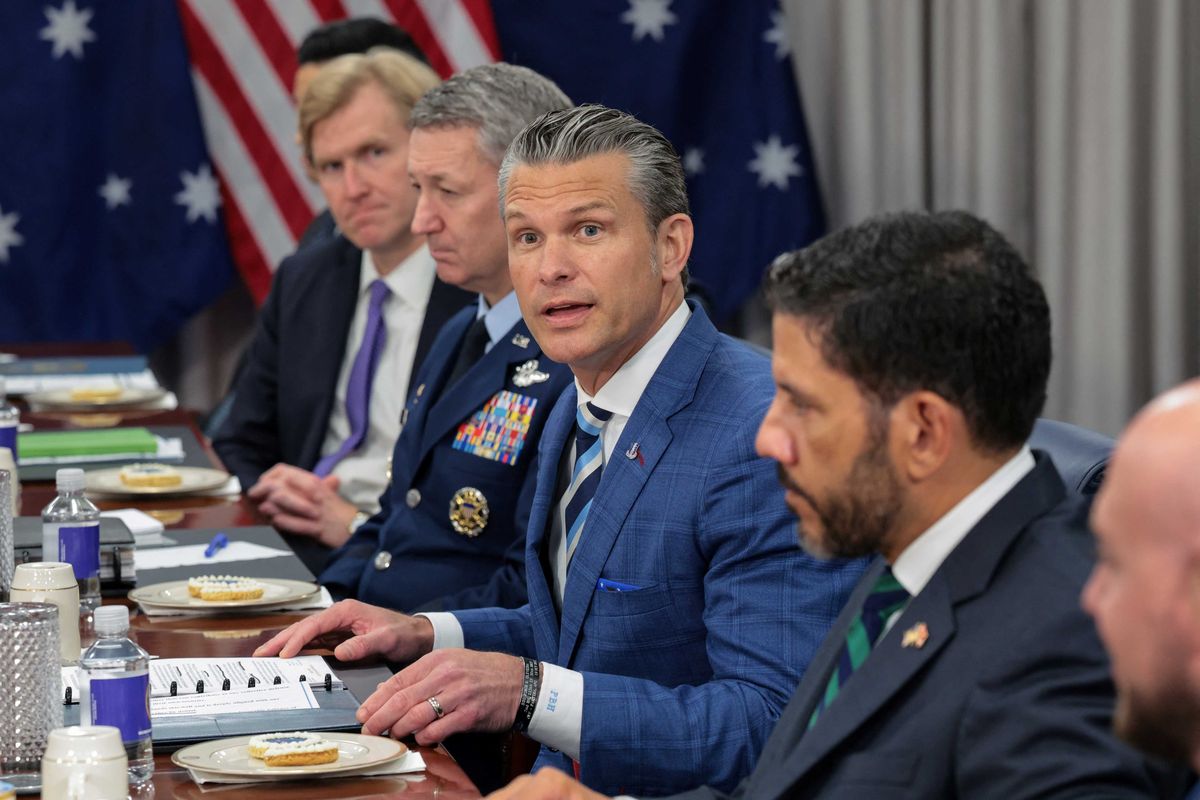
U.S. Defense Secretary Pete Hegseth speaks during a meeting with Australia’s Deputy Prime Minister and Defence Minister Richard Marles, not pictured, at the Pentagon, in Washington, D.C., U.S., September 2, 2026. REUTERS/Kylie Cooper

Anonymous insiders told The Washington Post that the Pentagon scrubbed decades of classified documents following a story about senior military officials' warnings about Iran.

In a Wednesday article, The Post revealed that the Pentagon pulled decades' worth of classified documents from a secret computer system that is commonly used by defense officials and U.S. troops. Insiders tipped The Post off following a story on Sunday about several top generals and admirals cautioning Defense Secretary Pete Hegseth about the risks of extending a war with Iran.

The documents were removed from the internal web portal on the Secret Internet Protocol Router Network (SIPRNet), according to three anonymous insiders who spoke to The Post. SIPRNet contains information that is labeled 'secret,' while top-secret information is put on other highly classified networks where fewer people have access, according to The Post.

Insiders told The Post that the documents were associated with the Secretary of Defense Orders Book (SDOB), which details the location and availability of U.S. warships, military units, weapons systems, and other resources. The SDOB also gives top generals and admirals a forum in which they can disagree with President Donald Trump and Hegseth while still carrying out their orders, The Post noted.

SDOB provides a "non-concurring" process where top generals and admirals can explain any reservations or disagreements they have with the orders or describe the detrimental effects of those orders on other military plans.

The Post noted that the SDOB became the "focus of intense discussion" after a story detailing how top generals and admirals told Hegseth that a prolonged, large-scale conflict against Iran is unsustainable. Those senior military officials also told Hegseth that operations against Iran risked weakening their ability to confront threats elsewhere.

Those warnings from senior military officials appeared in an August 14 edition of the SDOB, according to The Post.

Sean Parnell, a Pentagon spokesman, declined to discuss the removal of the classified documents with The Post, saying, "The Department of War does not publicly discuss internal operational deliberative processes," and "the success of our service members is Secretary Hegseth's top priority."

Who Has The Right To Tell Our Story: The Fight Over Cultural Heritage In The United States – OpEd


Key Takeaways:

  • The author says an Aug. 27, 2026 letter from 600+ groups opposes a rewrite of National Historic Preservation Act Section 106 that would let federal projects sidestep public comment and put historic sites in the wrecking ball’s path—developers call the old rule slow and costly; he says it is not a jobs killer and loss is permanent.

  • Heritage fights are framed as global and existential for Indigenous, local, and diasporic communities (a Mongolian herder: comforts without ceasing to be Mongolian); officials treat culture as “soft” next to extraction.

  • The rewrite is cast as narrative control, not streamlining—likened to erasing a people (ICC Timbuktu case)—and he urges taking the past back from federal whim so places can still tell who lived there.

Cultural heritage is under attack in the United States. The National Historic Preservation Act’s Section 106 regulation, which balances economic development and historic preservation, has been rewritten to leave historic places in the path of the wrecking ball at the federal government’s whim. Developers contend that a new regulation is required because the Section 106 process is too slow, too unpredictable, and too costly. They argue that locking up lands from oil and gas extraction, timber interests, and mining costs jobs and denies the country needed resources. But they’re wrong. Section 106 does not cost jobs, money, or time. Allowing the public to comment on what happens on public land is not to be deplored but celebrated. Most importantly, once destroyed, cultural and historic sites are irretrievably lost, and all of us diminished.

While currently playing out in the United States, fights about heritage are not unique to America. Battles between development and preservation play out across the globe—in countries rich and poor, autocratic and democratic, and new and old. Some of these struggles escalate into loud, contentious, take-no-prisoners pitched battles.

Economic development is often a Faustian bargain for local and affected communities. The lure of a better life must be weighed against unknowable and incalculable costs to one’s way of life. Most communities embrace the jobs, improvements, and well-being that ensue from development. What they fear is severing ties to land and places—some known and others yet to be discovered—that hold meaning and values essential for their community to persist. For local, Indigenous, and diasporic communities, severing these ties is yet another cut added to the thousands of previous cuts that continues to transform their culture in ways they do not like and that they cannot control

Many developers and government officials mistake cultural heritage as a “soft” or secondary concern for communities. They base their arguments for development on economic and material concerns, convinced that these are paramount in the minds of community members. For some, these arguments resonate. But for most, economic and infrastructure improvements are only beneficial if they do not transform society into something foreign and unrecognizable. As one Mongolian camel herder explained to me, “We would like the comforts promised by the mining companies but not at the expense of being Mongolian. We’ve been poor for a thousand years; being poor is not that big a deal. Not being nomads or having nomads in the country would be the end of our way of life and the end of Mongolia.”

On August 27, 2026, more than 600 organizations sent an open letter to Congress outlining their opposition to the proposed changes to Section 106. Why the outrage? It’s simple. Though couched as common sense reform to enable economic development, the rewrite of the Section 106 regulation is nothing less than the federal government’s attempt to usurp control over whose history counts and whose can be disregarded. If the proposed regulation is simply about the timeliness and cost of development projects, then it would not have elicited so much opposition. Many in the preservation community offered to engage in regulatory reform. But the authors of the proposed change are not interested in reform. Their objective is to control the country’s historical narrative—whose story gets told and whose story is forgotten.

History is replete with attempts to legitimize the present by destroying vestiges of the past. Ofttimes these attempts are resisted, sometimes violently. In these clashes, groups are oppressed and their material culture destroyed. Rarely are such attempts forgotten or forgiven. Remarking on the guilty verdict in the case of Ahmad Al Faqi Al Mahdi for destruction of ancient texts in Timbuktu, Mark Ellis of the International Bar Association, stated in 2016: “Politically, there will be those who will question why Bensouda [then-International Criminal Court Prosecutor Fatou Bensouda] is focusing on ancient sites rather than going after rape, torture and murder convictions, but destruction of cultural heritage is not a second-rate crime. It’s part of an atrocity to erase a people.”

We need to wrest control of the past from the federal government and give it back to the people of this country. This is not a fight we sought. But it is the fight we must win. All of us need to spread a message about why Section 106 matters and why we will not let the government destroy it. Simply put, we will not give up the right to tell who we were and what we did through the places we lived, as we want it to be known free from government censure or control.


About Jeffrey H. Altschul

Jeffrey H. Altschul is the co-president of the Coalition for Archaeological Synthesis.

View all posts by Jeffrey H. Altschul →