Saturday, October 03, 2026

Report: Pope Leo tried to halt botched US execution of Christa Pike

02.10.2026, dpa

Photo: -/IPA via ZUMA Press/dpa

Pope Leo XIV intervened to seek a halt to the execution of US death row inmate Christa Pike in Tennessee, according to a report by Italian newspaper La Repubblica, but received no response from authorities before Wednesday's botched lethal injection left her alive.

The Vatican did not initially confirm the report, published early on Friday.

Pike was due to become the first woman to be executed in Tennessee in more than 200 years on Wednesday evening, after being sentenced to death in 1996 for the murder of a 19-year-old acquaintance. She was 18 at the time of the crime.

However, after two doses of the drug pentobarbital had been administered, as required under the protocol, she remained alive, authorities said. 

The 50-year-old woman was subsequently taken to a medical facility outside the prison. Her lawyers said on Thursday that she was in critical condition. 

The Vatican opposes the death penalty. Leo - the first pope from the US - has previously called for the worldwide abolition of capital punishment. 

On the 15th anniversary of the abolition of the death penalty in the US state of Illinois in April, the head of the Catholic Church said that human dignity is not lost even after the commission of very serious crimes. Human life must be protected, he said.

Three bishops from Tennessee had also called on the state's Republican governor, Bill Lee, to grant a stay of execution. In a statement, they said they would "continue to stand as pro-life in all things, championing the human dignity that everyone possesses as a child of God."

Christa Pike's condition critical after botched execution attempt

02.10.2026, dpa

Photo: Valerie Plesch/dpa

By dpa correspondents

Christa Pike, a convicted murderer sentenced to death, who was due to be executed in the US state of Tennessee, is in critical condition after two failed lethal injections, her lawyers have said.

Pike's legal counsel say that the 50-year-old is receiving life-saving medical treatment. It remains unclear why she survived the two injections.

Meanwhile, the Italian newspaper La Repubblica reports that Pope Leo XIV had already advocated for a stay of Pike's execution in the run-up to the event. However, there was no response to the Vatican's request.

The Holy See rejects the death penalty. Leo himself has in the past spoken out in favour of the worldwide abolition of capital punishment. 

Pike receives lifesaving medical care after botched execution

No new information had emerged by Friday afternoon. It remains unclear what her prognosis is and what health consequences she might suffer.

It is also unclear whether Pike should face another execution if she recovers. Her lawyers have called for the death penalty not to be carried out on Pike and for her to be sentenced to life imprisonment without parole instead.

Pike was due to be executed by lethal injection on Wednesday evening. However, according to the authorities, after she had been administered the two doses of pentobarbital stipulated in the protocol, she remained alive. 

Witnesses reported hearing Pike continue to breathe and gasp for air for a long time. One of her lawyers later said he had even heard her speaking and singing after the first dose. Pike was eventually taken to a medical facility outside the prison.

Pike's lawyer, Randy Spivey, said on Thursday that staff had spent about an hour unsuccessfully attempting to establish an intravenous line. "I counted at least seven needles in her left arm alone, one of which appeared to be bent when it was pulled out of her arm after an unsuccessful attempt," said Spivey. 

During the execution, her right arm also turned purple; according to the defence, blisters and burns have since appeared around the injection sites.

What is known about the drug?

Pentobarbital is used in veterinary medicine in Germany, according to an article by Saarland University published in the journal Rechtsmedizin. Because the drug rapidly leads to respiratory depression in the event of an overdose, it is used, for example, in Switzerland for assisted dying or in the US for carrying out the death penalty.

In the case of Christa Pike, doctors interviewed by the New York Times consider it possible that at least some of the pentobarbital did not enter Pike's bloodstream but instead entered the surrounding tissue. This could explain why the administered dose was insufficient to bring breathing and circulation to a complete standstill.

The Tennessee Department of Corrections subsequently stated that every step of the applicable protocol had been followed. This protocol does not provide for any further measures after the second dose.

How often do such executions fail?

According to the independent Death Penalty Information Centre, there is no other known case in the modern era of capital punishment in the US in which a prisoner received the execution drugs and subsequently survived. In previous failed executions, the procedure had usually been halted beforehand, for example because a suitable venous access could not be established.

Lethal injection is the most common method of execution in the US. Since 2024, execution by nitrogen has also been permitted in several states, which in practice leads to an agonizing death struggle for the condemned.

Why was Pike sentenced to death?

Pike was sentenced to death in 1996 for the murder of 19-year-old Colleen Slemmer. She was 18 years old at the time of the crime. Slemmer was tortured over a prolonged period in Knoxville in 1995 and was eventually killed.

Bayer to invest $2.2 billion in new US production site

03.10.2026, dpa

Photo: Oliver Berg/dpa

German pharmaceutical and agrochemical company Bayer on Friday said it plans to invest $2.2 billion in a new production site in the United States.

The new facility in New Albany in the US state of Ohio will combine the manufacture of pharmaceutical active ingredients and finished medicines on a single site and is set to create about 600 highly skilled jobs.

"Bayer has long seen the United States as a key manufacturing base and innovation hub," chief executive Bill Anderson said. 

"The new site will be home to manufacturing expertise and a skilled workforce that will strengthen our ability to deliver innovative, high-quality medicines to patients both in the United States and abroad."

Bayer has invested more than $7 billion in pharmaceutical research and development as well as production in the US over the past five years.


Economist says G7 oil reserve release may offer only short-term relief

03.10.2026, dpa

Photo: Robert Michael/dpa

The decision by Group of Seven (G7) countries to release oil and diesel reserves may provide motorists with only short-term relief from high fuel prices, a German economist said.

"It can cushion the impact for a while, but the underlying problem remains," Samina Sultan of the German Economic Institute (IW) told dpa.

Sultan said the effect on motorists would also depend on how much diesel was included in the release, something the G7 statement did not specify.

Disruption in the Strait of Hormuz has restricted crude oil exports and cut important refineries off from the global market.

G7 countries agreed on Friday to release 100 million barrels of crude oil and diesel from emergency reserves over four months amid rising fuel prices. The move is part of a measure coordinated by the International Energy Agency (IEA).

The G7 also said it would discuss possible further diesel releases.

Sultan said a lasting normalization of energy prices would require the Strait of Hormuz to reopen.

Tankers have again come under fire there in recent days, according to the United Kingdom Maritime Trade Operations (UKMTO).

"If we simultaneously see a further escalation in the Strait of Hormuz ... and nothing can get through, then the reserves will only be a drop in the ocean," Sultan said.

The US government had previously called on Europe to release more diesel onto the market and had also considered restricting diesel exports.

The G7 statement, however, explicitly said its members would refrain from imposing such restrictions.

Friday, October 02, 2026

Paraguay, a tax and political haven for Brazil's far right

Issued on: 02/10/2026

Cover image: An image showing a Brazilian passport and residence papers. A feature as part of an in-depth report by our senior reporters and team of correspondents, REPORTERS © FRANCE 24

12:41 min


Over the past five years, applications for residence permits submitted by Brazilians in Paraguay have more than doubled. Many of them are Bolsonaro supporters who are afraid October's presidential election will be won by incumbent leader Lula – whom they accuse of plunging the Latin American giant into an unprecedented economic crisis. FRANCE 24's Fanny Lothaire, Valeria Saccone and Mélanie Blondeau report, with Jan Onoszko.


Brazil is holding presidential elections on October 4 and 25, but some voters have already decided to go into exile, convinced that the country will go from bad to worse if President Luiz Inacio Lula da Silva is re-elected.

These Brazilians support Bolsonaro: the father Jair, sentenced to 27 years in prison for an atttempted coup and his son Flavio, the far-right presidential candidate. Fearing the defeat of their camp, they would rather try their luck across the border in Paraguay, which has become an El Dorado for disillusioned Bolsonaro supporters.

READ MORE  Flavio Bolsonaro probed for corruption as Brazil election tightens

A small country wedged between Argentina and Brazil, Paraguay is now seen as a tax haven by Brazilians who say they can no longer tolerate the rising taxes under Lula’s government.

In 2025, Paraguay issued a record 40,600 residence permits to foreign nationals, 23,500 of them Brazilians. In 2026, this figure is expected to rise further. In the first three months of the year alone, 9,200 residence permits were issued to Brazilians.

In the far south of Brazil, the border is a hive of activity. Day and night, hundreds of cars and lorries cross the Friendship Bridge linking Brazil and Paraguay, with one objective in mind: staying for good.

Infantino loses Swiss backing for campaign to remain FIFA chief

Gianni Infantino's drive to remain boss at world football's governing body FIFA was under threat on Thursday after his own country's football association withdrew its support.


Issued on: 01/10/2026 - RFI

Gianni Infantino (right) has lost support from leading European football associations in his bid to remain as head of world football's governing body Fifa. However, he maintains the backing of the African football confederation chief Patrice Motsepe (left). © Paul Ellis / AFP


By: Paul Myers

Swiss-born Infantino was elected Fifa president in February 2016 and had been expected to sweep to a fourth and final term at elections next March, until a failed bid to allow private investment in the World Cup drew calls for reform.

The Swiss Football Association (ASF), one of Fifa's founding members in Paris in 1904, said in June that it would support Infantino.

However, it has gone back on the pledge following a meeting of its central committee on 25 September.

"From the ASF’s perspective, several events raise fundamental questions regarding leadership, governance, transparency and decision-making processes within Fifa," said a statement issued on Wednesday.

"This relates in particular to issues of clarity of rules and the integrity of competitions."
World Cup fallout

Swiss football administrators said they were concerned over the way that Fifa allowed United States President Donald Trump to interfere with the 2026 World Cup in the US, Mexico and Canada.

Trump revealed he had contacted Fifa and urged it to suspend a one-match ban on US striker Folarin Balogun for his red card during the United States' 2-0 victory over Bosnia and Herzegovina on 1 July. The penalty was lifted the day before the Americans played Belgium for a place in the quarter-finals.

The ASF also cited the way Infantino presented his plan to create a commercial company, Fifa Forward Enterprise, to run the World Cup and other events.

Under the scheme, Infantino proposed spinning off commercial and operational rights of Fifa competitions – including World Cups and Club World Cups for men and women – into a €17 billion subsidiary, with 20 percent owned by private investors including the Kushner family, which has links to Trump.

No go for Infantino: how Fifa's World Cup private investment plan imploded

"For the ASF, credibility, transparency, accountability and the effective involvement of the relevant bodies in accordance with the statutes are essential prerequisites for confidence in the governance of international football and in Fifa's integrity," the ASF added.

"In view of the developments since June 2026 and the outstanding issues, the ASF central committee considers that these conditions are no longer met."

In September, the football federations of France and Belgium withdrew their backing for Infantino.

The Belgian federation said it also wants the Balogun case to be discussed at the next meeting of the Fifa council on 15 October in Zurich, Switzerland.
Possible challengers

Both Fifa and European football's governing body Uefa are based in Switzerland.

ASF president Peter Knabel said the Swiss association expected Fifa's leadership to uphold the highest standards of transparency, accountability and institutional responsibility.

The Swiss move comes a week before top Uefa executives meet in Berlin.

They are expected to discuss the widening rift with Fifa over Infantino's leadership and possible challengers to the president, who retains support from the African and South American football federations.

He also has the backing of 2034 World Cup hosts Saudi Arabia.

Europe rights body urges Fifa to strengthen integrity of football ahead of 2030

On Tuesday, Nasser Al-Khelaifi, the president of the European champions Paris Saint-Germain, ruled himself out as a possible contender to topple Infantino.

Speaking in Copenhagen after the annual meeting of the European Football Clubs, Al-Khelaifi said: "I have zero interest in Fifa. I have zero agenda or ambition to be there.

"I don’t think I’m the right guy for this position and I don’t want to go actually. I’m enjoying what I’m doing."

Under his stewardship since 2011, PSG have harvested 43 pieces of silverware including 12 Ligue 1 titles and seven Coupe de France trophies. PSG won the Champions League for the first time in 2025 and in May became only the second team after Real Madrid to win back-to-back crowns since the Champions League morphed out of the European Cup in 1992.

Nominations for Fifa's presidential election next March must be submitted by 18 November. Infantino is the only candidate so far.
World powers gather in Pacific to chart climate battle

Wellington (AFP) – World powers are flying delegates to the Pacific to haggle over the fight against global warming, and to see the plight of island nations surrounded by a rising ocean.


Issued on: 02/10/2026 - RFI

Climate negotiators are heading to Fiji to lay the ground for global decisions on climate change. © LEON LORD, LEON LORD / AFP/File

Ministers, climate negotiators and a handful of leaders will meet in the Fijian city of Nadi for the 5-6 October talks.

They will be charting the course for a major UN-sponsored global climate summit, known as Cop31, to be held in November in Turkey's Antalya province.

For Pacific nations, hosting the preliminary talks in their region offers an opportunity to draw the world's attention to life on the frontline of climate change.

Pacific leaders are pushing for the world to stick to a target of limiting global warming to 1.5C, enhance access to climate finance, and give more attention to the impact on oceans.

The sea level is rising at a record pace, driven by warming oceans and glacier melt, according to a UN report.

Up to 1.2 billion people could be displaced by 2050, with Pacific island countries experiencing sea level rise at twice the global average, said the report released in August.

It also highlighted a financing gap, with developing countries needing US$310-US$365 billion to adapt, yet having only US$26 billion in adaptation finance available in 2023.

Top delegates to the Pacific talks will hold a one-day retreat on low-lying Tuvalu, a small island nation laying plans to relocate the population if it is consumed by the ocean.

They will be shown Tuvalu's land reclamation efforts.

The island capital Funafuti's highest point is just two metres above sea-level, and two of its nine coral atolls are already largely swamped by rising seas.

More than half of Europe exposed to extreme heat stress this summer
'Act now'

"Sea-level rise is not a future threat, it is a present reality," Tuvalu Prime Minister Feleti Teo told the UN General Assembly ahead of the climate talks.

"Tuvalu's message is clear: the world must act now decisively, collectively, and with urgency to protect the future for generations to come."

Last year, Australia bowed out of a contest with Turkey to host the Cop31 summit in a deal that let it preside over negotiations and bring the preparatory talks to the Pacific.

As leader of the climate talks, however, major coal exporter Australia has faced heat over the scale of its fossil fuel extraction.

Tuvalu is one of the most climate-threatened corners of the planet © TORSTEN BLACKWOOD / AFP/File

Chris Bowen, the country's climate minister, says Australia is rapidly expanding its renewable energy sources, which are essential for a transition away from fossil fuels.

Bowen, president of the Cop31 negotiations, also rejected media criticism that the pre-Cop talks in the Pacific had failed to lure enough world leaders.

Fewer than a dozen world leaders have so far publicly confirmed that they will attend the meetings in Fiji and Tuvalu, mostly from the Pacific.

Fiji said last month it expected the heads of state for Antigua and Barbuda, Cape Verde, Thailand, the Maldives and Timor-Leste would attend.

"It's not normally a leaders meeting," Bowen told reporters in the run-up to the talks, which are usually held at the ministerial and senior-negotiator level.


'Very, very sad'

Organisers have not released detailed figures on attendance.

Bowen said last month 4,000 people from 60 nations would attend, without providing a full breakdown.

Marine scientist Rajneel Singh – part of a team that reported large-scale coral death around Tuvalu from a 2024 marine heatwave – said he was disheartened by a perceived lack of attention to the climate challenge.

"It's very, very sad. There's no awareness of what's happening," Singh told AFP.

Nepal's foreign minister, Shisir Khanal, has confirmed he will attend the Pacific climate meeting, after the August 26 Himalayan flood disaster.

A tsunami-like wall of water and debris triggered by a glacial and rock collapse on the Nepal-China border on August 26 killed nearly 1,500 and left 5,800 missing in the two countries.

"What we're trying to convey to the world is this: these issues of climate change are not theoretical anymore," Khanal told AFP in an interview in New York.
More than half of Europe exposed to extreme heat stress this summer

A record 52 percent of the European continent was exposed to intense heat stress during the summer of 2026, according to the European Union’s Copernicus climate monitoring service. The season saw Europe experience four of its 10 worst heatwaves on record.


Issued on: 02/10/2026 - RFI

A Bombardier Dash 8 Q400 MR aircraft drops fire retardant over a wildfire near Cotignac in southeastern France on 23 July. AFP - THIBAUD MORITZ\\

Europe – the world's fastest-warming continent – endured a succession of heatwaves fuelled by climate change this summer. Beginning unusually early in the year, these extreme weather events broke temperature records and contributed to tens of thousands of excess deaths.

“One of the things that stands out for 2026 is that the heat was not only remarkable for its intensity, but also for its geographical extent,” said Samantha Burgess, climate lead at the European Centre for Medium-Range Weather Forecasts (ECMWF), which operates Copernicus.

This was Europe’s third-warmest summer on record and the hottest ever recorded in western Europe, with several countries registering all-time temperature highs.

Four of Europe’s 10 most intense heatwaves occurred during the summer of 2026, Burgess told a media briefing, although the August 2003 heatwave remains the most severe ever recorded.

Copernicus found that 52 percent of Europe was exposed to “very strong” heat stress – conditions in which the temperature feels hotter than 38C.

Around 80 percent of the continent experienced “strong” heat stress, with feels-like temperatures exceeding 32C. Such conditions had occurred on a record 41 days by the end of the summer season.

Heat stress occurs when the human body can no longer cool itself effectively. Symptoms can range from headaches and dizziness to organ failure and death.

“Summer 2026 demonstrated how heat stress is becoming both more widespread and more persistent,” Burgess said, adding that extreme heat is now the leading cause of weather-related mortality worldwide.

Summer of extremes


The heat was only one element of an unusually extreme summer in Europe.

Dry conditions pushed river flows to their lowest levels since records began in 1992 according to Copernicus, affecting freight transport and placing additional pressure on irrigation systems, hydropower production and the cooling of nuclear reactors.

Drought has become increasingly common across Europe over the past 45 years.

By the end of August, drought conditions were affecting almost half of the continent, Burgess said.

The combination of persistent heat, drought and exceptionally low river levels highlighted how several climate extremes can now unfold at the same time.

“That’s one of the defining characteristics of summer this year, that it was not a single record,” Burgess said. “It was the way that multiple records appeared together across the climate system.”

Western Europe experienced its hottest summer on record, underlining the growing exposure of densely populated regions to sustained periods of dangerous heat.

The early start to this year’s heatwaves also added to the strain, extending the period during which people, ecosystems and infrastructure were exposed to high temperatures.

Scientists have repeatedly warned that human-driven climate change is increasing the frequency and intensity of extreme heat across Europe, while warmer conditions are also making droughts more severe in many regions.
French women face growing obstacles to abortion despite constitutional right

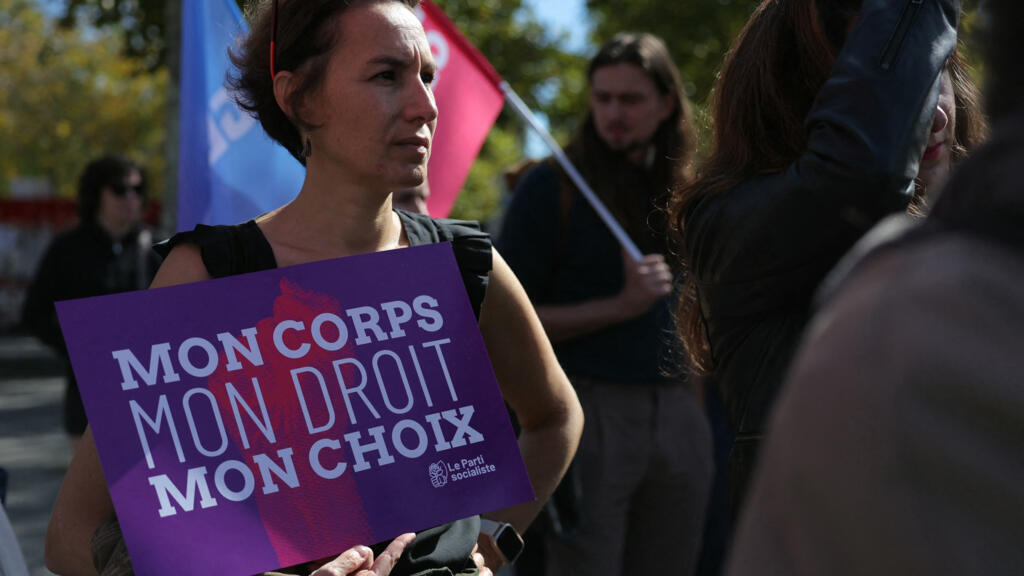
The right to terminate a pregnancy was formally enshrined in the French Constitution in 2024, but women are finding it harder to gain access due to geographical inequalities and lack of information but also rising prejudice, France's family planning movement has said.


Issued on: 28/09/2026 - RFI

A woman holds a placard reading "My body, my right, my choice" during a demonstration for the right of abortion on the occasion of International Safe Abortion Day in Paris on 28 September 2025. AFP - THOMAS SAMSON


In its survey, published on Monday for International Safe Abortion Day, Le Planning Familial (MFPF) found that a lack of trained professionals and shortages of doctors were pushing waiting times beyond France's legal period of five days.

Three out of four women who had an abortion in a health facility in 2026 waited more than seven days for an appointment, compared with 54 percent in 2024.

The right to abortion was formally enshrined in the French Constitution on 8 March 2024.

MFPF referred to "pathways full of obstacles", including refusals of support, pressure and a lack of choice over the method of abortion.

One in two women said a professional had refused to support them during the procedure, compared with 27 percent in 2024.


'Real geographical divide'

The survey identified geographical and rural inequalities as the biggest obstacle to abortion access, cited by 89 percent of those surveyed. Lack of information was the second largest obstacle (76 percent), followed by a lack of facilities or professionals (60 percent).

"When you close a maternity unit, you close an abortion centre," Sarah Durocher, the head of the movement, told France Inter public radio on Monday.

"More than 20 percent of women and people who have abortions are forced to go to another department," she said.

Durocher also pointed to the role of midwives, who "perform the majority of abortions today".

The organisation said there was a "real geographical divide", with access generally harder in rural areas and places far from major cities. This was compounded by social inequalities affecting people with fewer resources or fewer opportunities to travel.

France marks International Women's Day amid concern over rise of far right

Two thirds of women who had an abortion said they had experienced pressure or judgement during the procedure. One in five said they did not feel they had been given a full choice of abortion method.

The survey also identified difficulties in accessing information. The internet was the most common source, ahead of family and friends.

Ducrocher noted that artificial intelligence (AI), which is now also being used to search for information, was a mixed blessing.

"AI currently directs people towards the MFPF, but these are things that can change and people in France and around the world who are anti-abortion have a lot of money. Sometimes they can even have some influence over social networks," she said.

Meta accused of restricting sexual health and queer Instagram accounts
Growing concerns

France's family planning movement also surveyed 55 local associations. Some 62 percent said abortion access was not easy in their department, up from 47 percent in 2024.

About 58 percent said abortion was still viewed negatively, compared with 44 percent in 2024. And 62 percent said people seeking abortions did not always have a choice over the method used, compared with 56 percent in 2024.

Abortion was legalised in France via the 1975 Veil law, which also introduced a specific conscientious-objection clause for doctors and other health professionals to refuse to perform or assist with an abortion.

MFPF wants the special clause to be removed, since it "contributes to the stigmatisation of an act," Durocher said.

She called for "a change in culture" to "make abortion an act like any other".

The organisation is also calling for the legal time limit for abortion to be extended from 14 to 22 weeks, in line with other European countries such as Spain and the Netherlands.

Should France guarantee supply of abortion drugs by producing its own?

While the right to abortion is now protected under the constitution, Ducrocher warned it could still be threatened by rise of the far right.

"Whenever there is a rise in conservatism, the right to abortion is attacked first," she said, calling for international mobilisation.

France's far-right National Rally (RN) party won a record 14 seats in the Senate over the weekend, effectively quadrupling its number in the 348-seat chamber.

This comes just months before a presidential election which polls suggest RN leader Marine Le Pen could win.

Ducrocher warned that if "the conservative right" does come to power "abortion will obviously be attacked ... it won't be through legislation, but through access".
King Charles to evoke colonial 'darkest days' on Caribbean tour

London (AFP) – King Charles III will acknowledge the "darkest days" of colonial rule and slavery while touring Caribbean countries on a visit beginning this month, a Buckingham Palace spokesperson said Friday.


Issued on: 02/10/2026 - RFI

Britain's King Charles III will acknowledge the 'darkest days' of colonial rule and slavery while touring Caribbean countries on a visit beginning this month © Jonathan Brady / POOL/AFP
ADVERTISING


The king will first visit the Bahamas and Guyana alone, followed by a trip to Antigua and Barbuda with Queen Camilla, where Charles will give a speech at a meeting of Commonwealth heads of government, the palace said.

Charles, 77, who is still receiving treatment for cancer, will visit former colonies that are now independent from Britain and are members of the British Commonwealth.

He remains head of state in the archipelago nations of the Bahamas and Antigua and Barbuda, a role that is largely ceremonial.

The palace spokesperson told reporters the king's visit, from October 27 to November 4, would not "shy away from the 'darkest days of our past' as His Majesty has described them".

Charles used the phrase in a speech in Barbados when he attended the ceremony in which it became a republic in 2021, removing his mother, Queen Elizabeth II, as head of state.

He also said then that the "appalling atrocity of slavery" stains Britain's history.

The palace said Charles had worked to acknowledge "the wrongs of the past" and "right inequalities that endure", and on this trip would "renew his personal, wholehearted and continuing commitment to that process".

The UK government reiterated last month its rejection of calls for the payment of slavery reparations after a Jamaican delegation filed a petition addressed to Charles on the issue.

It called on the monarch to refer three questions on the legality of the transatlantic slave trade to the Caribbean island's highest court of appeal based in London.

Modern British royals have expressed remorse for the brutal slave trade that enriched their ancestors, but like the UK government have not issued an official apology for the slave trade.

The palace said discussions about the colonial legacy and the slave trade were "important" but "primarily matters for governments to address".

On a 2022 Caribbean tour, Charles's son William and his wife Kate were met with anti-monarchy protests and calls for slavery reparations.

Charles's younger brother, Prince Edward, later that year cancelled a visit to Grenada after pro-republican protests there.

In Antigua and Barbuda, a state named after its two main tropical islands, the royals will attend a parade to mark 45 years of independence.

Guyana, the only English-speaking country in South America, is a republic and so Charles will be making a state visit on the 60th anniversary of its independence from Britain.

The trip will feature plenty of meetings with local people and will focus on "the vibrant present and promising future of each country", the palace said.

The programme includes meetings with cricketing legends in Antigua and Barbuda, where the West Indies team is based, and meeting conservationists responsible for Guyana's rain forest.

© 2026 AFP


Kenya breaks ground on $16bn refinery as environmental concerns grow

East Africa is accelerating its push for greater energy independence with a new $16 billion refinery in Kenya – but the project is raising fears over the environmental cost of an expanding oil economy.

Issued on: 01/10/2026 - RFI

The ground-breaking ceremony for the Dangote East Africa oil refinery at the Port of Lamu on 30 September 2026, attended by the leaders of Kenya, Ethiopia, Uganda, Benin and Togo. © AFP - LUIS TATO


By:   David Coffey


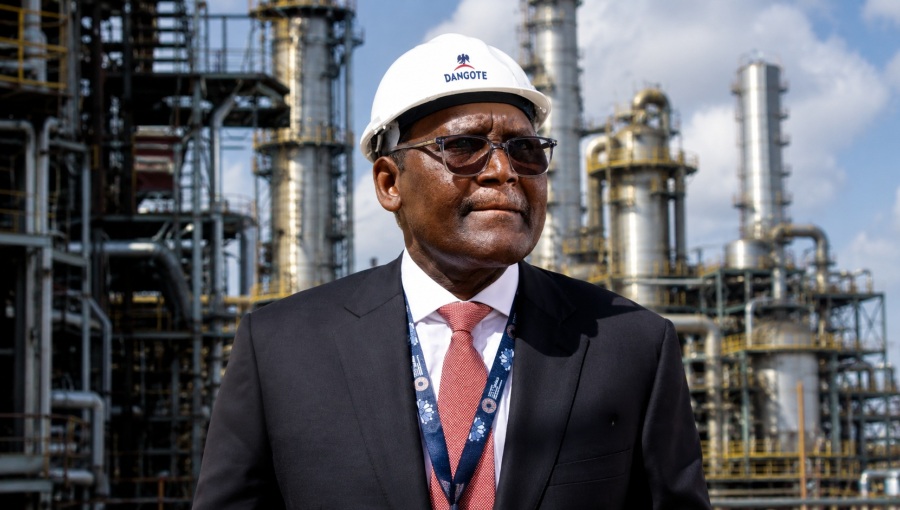
Nigerian billionaire Aliko Dangote joined Kenyan President William Ruto and several African leaders on Wednesday to break ground on the Dangote East Africa Petroleum Refinery at the Indian Ocean port of Lamu.

Once completed, the refinery is expected to process 700,000 barrels of crude oil a day, producing petrol, diesel and jet fuel for Kenya and markets across East Africa.

“This is Africa coming together to build Africa,” Dangote said. “Today we are not simply breaking ground for a refinery, we’re breaking ground for a new chapter in Africa’s industrial journey.”

Dangote, who launched Africa's largest oil refiniery in Nigeria in 2023, presented the project as part of the solution to a long-standing paradox – an oil-producing continent that exports much of its crude while importing refined products.

“For too long, our continent has actually been rich in resources but poor in value creation and addition,” he said.

“Africa cannot build lasting prosperity by exporting what it has and importing what it needs.”

Aliko Dangote, President and Chief Executive Officer of Dangote Group, at the signing ceremony for the Dangote Refinery initial public offering in Lagos, Nigeria, 7 September 2026. @ REUTERS - Sodiq Adelakun


Energy independence

Africa produced around 6.8 million barrels of crude oil a day in 2024 while consuming some 4.5 million barrels a day of refined petroleum products, according to figures cited by Ruto.

Yet refining capacity remains limited in many countries, leaving them exposed to international fuel markets and forcing governments to spend valuable foreign currency on imports.

Dangote argues increased refining capacity could allow most African countries to become self-sufficient in fuel by 2030.

Asked whether the Lamu refinery marked a turning point in East Africa’s push for greater energy independence, Victor Abuso of RFI’s Kiswahili service said the answer was “yes and no”.

On one hand, he said, speeches at Wednesday's ceremony by Ruto and Ugandan President Yoweri Museveni reflected frustration with the region’s long dependence on foreign suppliers and overseas refining.

A refinery on the scale of Lamu could begin to change that. But Kenya does not yet commercially produce enough oil to supply a refinery of this size.

Dangote said the plant would initially import crude by sea from the Middle East, the United States and elsewhere, before potentially drawing more heavily on African producers as regional production expands. Its location at a deep-water port is central to that strategy.

The complex will also include a 1,000-megawatt power facility built to supply the refinery, with excess output expected to feed into Kenya’s electricity grid.


Regional rivalry

Abuso said the Lamu project also exposed persistent divisions within the East African Community, with governments pursuing competing oil and refining strategies.

Uganda is preparing to exploit its own oil reserves and plans to build a smaller refinery in the district of Hoima, in the west of the country. Meanwhile the East African Crude Oil Pipeline, or EACOP, is being built to carry Ugandan crude more than 1,400 kilometres to the Tanzanian port of Tanga.

Uganda and Tanzania have also discussed developing a refinery and energy hub at Tanga – the same port initially considered for Dangote’s project before he opted for Lamu.

Abuso said this suggested East Africa’s emerging oil economy may be driven as much by national rivalry as regional integration.

The “economic rivalry” between Kenya and Tanzania in particular was likely to continue “for many, many years to come”, he said.

Museveni attended Wednesday’s ceremony and welcomed the Lamu project, while making clear Uganda intends to proceed with its own refinery ambitions.

The Dangote Industries oil refinery and fertilizer plant site in the Ibeju Lekki district of Lagos, Nigeria, 2 March 2026. @ REUTERS - Sodiq Adelakun


Environmental and security concerns

The region's drive for greater energy independence also comes with a potentially substantial environmental price.

EACOP has already drawn criticism over land acquisition, biodiversity, carbon emissions and its potential impact on communities along its route.

Lamu now faces many of the same questions.

The region is home to Lamu Old Town, a Unesco World Heritage site and one of the oldest surviving Swahili settlements in East Africa. Its coastline, islands and mangrove forests are a major tourist attraction, while fishing remains central to the local economy.

Abuso said environmental concerns were already growing, particularly over the mangroves and the possibility of pollution reaching the Indian Ocean.

“The biggest worry is the possibility of oil spills in the Indian Ocean,” he said.

Local fishermen fear pollution could affect their catches, Abuso said, while residents are concerned that industrial development could hurt tourism.

“A lot of people who live in Lamu depend on tourists,” he said, adding that communities wanted clearer assurances from the government about how their livelihoods would be protected.


A man inspects damage caused by an oil spill within the Niger Delta in Ogboinbiri, Nigeria, on 11 December 2024. © Sunday Alamba / AP

Land rights have also become a flashpoint. Local residents have gone to court, asking that their rights to ancestral land be recognised before the development progresses further.

According to Abuso, residents say they were “not properly informed about this project and the negative effects that could come with it”.

A court allowed Wednesday’s ground-breaking ceremony to proceed while the legal case continues. Another hearing is scheduled on 14 October.

Ruto has promised that land and environmental concerns will be dealt with “lawfully and fairly”.

Lamu also presents a security challenge. The county lies close to Kenya’s border with Somalia and has suffered attacks and abductions linked to the Al-Shabaab Islamist militant group.

Abuso said security was a “genuine concern”, with reports that Kenya could establish a dedicated military presence near the refinery to protect the facility and surrounding communities.


Dangote's $16bn Kenya refinery faces second legal challenge over state stake

Dangote's $16bn Kenya refinery faces second legal challenge over state stake
/ Dangote GroupFacebook
By bne IntelliNews October 2, 2026

Nigerian billionaire Aliko Dangote's planned $16bn oil refinery in the Kenyan port town of Lamu faces a second legal challenge after the Consumers Federation of Kenya (COFEK), a consumer-rights lobby group, petitioned for a review of the government's proposed equity stake and other state support for the project.

COFEK filed the petition with the Public Private Partnerships Petition Committee under Section 75 of the Public Private Partnerships Act, 2021, asking it to scrutinise the project's public equity, land arrangements and government support.

The filing argues that the 700,000-bpd facility violates Kenya's constitution by failing to comply with the law governing public-private partnerships, according to Bloomberg. Kenyan media describe the petition as a request for disclosure and review, and COFEK itself says the refinery's reported capacity alone does not establish consumer harm, Capital FM reported.

At issue is Kenya's proposed 10% stake in the refinery, reported to be worth about $500mn (KES65bn). President William Ruto said at the September 30 groundbreaking that the government would hold a stake. COFEK wants the government to disclose the acquisition vehicle, share class and payment terms, and to say whether the money has been budgeted, committed or disbursed. It is also seeking clarification of a reported KES21.5bn seed allocation linked to the project and of whether public land will count as part of Kenya's contribution.

COFEK secretary-general Stephen Mutoro said in an affidavit supporting the petition that he had not been given the decision authorising the project, the identity of the contracting authority or the procurement route, Kahawatungu reported.

The petition follows a separate land case. A group of 133 residents obtained temporary orders from the Malindi Environment and Land Court requiring the parties to maintain the status quo on disputed land in Lamu County, although the court declined to stop the groundbreaking, The Star reported. A hearing is set for October 14, according to a statement from the African Energy Chamber, an industry lobby group.

Dangote Group, the privately owned Nigerian conglomerate that operates a refinery in Lekki, said the land ruling would not halt the launch but might affect activities at the site. Responding to the residents' case before the groundbreaking, Dangote said: "If you want to go to court to stop the Lamu Refinery, go ahead; we are ready for you," as quoted by The Star.

Ruto and Dangote presided over the groundbreaking. A day before the ceremony, Ruto said the project would proceed despite court orders and accused "disgruntled opposition sponsors" of trying to undermine the investment, Citizen Digital reported. On October 1, he said those opposed to industrialisation were behind the court cases, according to Dawan Africa.

Opposition politician Ndindi Nyoro, leader of the People's Party of Kenya, has separately demanded that the government publish the names of all shareholders in the refinery.

The refinery is Kenya's largest-ever foreign direct investment. Most of the crude will initially have to arrive by ship, with Dangote saying he would source it from the Middle East, the United States and elsewhere. Dangote has pledged to commission the refinery within 40 months of the groundbreaking. That is in line with the 2030 completion target cited by the African Energy Chamber, which has warned that prolonged legal proceedings could affect the timeline.

COFEK is separately challenging a KES93.68bn oil storage agreement between the government and Gulf Energy, a petition the High Court has certified as urgent, Nation reported.