Saturday, October 03, 2026

Who Is Really Responsible For The Fall Of The West? – OpEd


The author treats “the West” as a racialised, colonial construct and says slogans about invasion, replacement, and “saving the West” (naming Trump, Meloni, Farage, and Musk) shift blame for unemployment, poverty, and the cost of living onto migrants.

The essay argues migrants staff hospitals, transport, care, teaching, and other services and pay taxes; it blames ruling elites, deindustrialisation, and wealth transfer—not Muslims or migrants—for the decline it describes, including Brexit conditions.

The prescribed alternative is working-class unity against what the author calls a racist, capitalist ruling order; that is a political claim, not a documented finding.


The ‘West’ or ‘Western World’ continues to be a contested conceptualisation, temporalised and impregnated with the history of uncivilised wars and territorialised in the form of countries in Western Europe, North America and Australasia, which falsely claim a cultural unity based on Christianity, colonial modernity and racialised capitalist and colonial progress with limited democracy—four core values of othering and the foundation of white supremacist ruling ideology in the contemporary Western world.

Racist bigots in politics, journalism and academia, along with reactionary commentators and half-baked right-wing intellectuals, peddle white supremacist ideology in the name of protecting Western values and society. They do so by promoting a restless, concocted and reactionary nationalist campaign across the Western world that advances ideas such as ‘the West is falling’, ‘the West is in Crisis’ or ‘the crisis of the West’, ‘threat to Western values’, ‘death of the West’, ‘failed West’, ‘liberal West’, ‘too soft west’, ‘saving the West and Western values’, ‘death of Europe’, ‘Muslim and migrant invasion’, ‘boat invaders’, ‘the great replacement’, ‘historical shift’ and ‘London is a foreign country’, etc.

Therefore, flag-waving reactionary and right wing political campaigns calling for ‘Making Britain Great Again’, ‘Making America Great Again’, ‘Europe for Europeans’, ‘Restore Europe’ and ‘Reform Britain’ are in full swing, while people in the Western world are struggling with various forms of crisis, from rising youth unemployment to child poverty, and from homelessness to debt and destitution due to the rising cost-of-living crisis. The political leadership, instead of providing solutions to these problems, outsources them by othering the non-white population in the West. Political leaders from Trump to Meloni and Nigel Farage, and corporate trillionaires like Elon Musk, spread the messages of these campaigns on an everyday basis.


But who is responsible for the fall of the West? Muslims and migrants are not responsible. They work in hospitals as doctors and nurses; sustain public transportation as bus, train and taxi drivers; work as school teachers, college lecturers and university professors. Migrants work in care homes, hotels, hospitals and educational institutions as cooks and cleaners; they pay their taxes and bills and sustain local, regional and national economies. Migrants from different parts of the world work as engineers, researchers, bankers and consultants to sustain public infrastructure and the private mobility of capital. Migrants work as workers and managers in supermarkets. Migrants run libraries, coffee shops and airports. All bed-and-breakfasts would shut down in the West without migrant workers. The West can’t survive a day without depending on the labour, skills, knowledge and creativity of migrant workers, who come from all religious, national and racial backgrounds, forming a social rainbow of a multicultural and multiethnic society in the West.

However, despite all their contributions, migrants are demonised on an everyday basis as welfare scroungers and a threat to so-called Western values—a contested and philosophically unfounded expression. So, who is responsible for the fall of the West? It is not migrants, people of colour and white working people. It is the bourgeois ruling classes and elites in the West, whose wealth comes from slavery and who therefore promote modern slavery in different forms of capitalism and exploit people and the planet on a daily basis. These governing elites promote policies that transfer wealth from working people to their secure tax havens. They promote policies for quick profit by shutting down sources of livelihood, employment and income for working people, who can then be used as a reserve army of low-paid workers defined by national minimum wages, while the superrich enjoy unlimited wealth at their disposal for leisure and pleasure.


Migrants did not destroy Western European unity, but undemocratic European Commission created conditions for referendum in Britain to exit united Brussels. Migrants did not close down the industries, factories, hospitals, train stations, mines, council housing, public parks, playgrounds, schools and universities. The Western ruling elites, with their shopkeeper mindset of making quick profit, decided to shut down the economic engines of growth based on employment and replace them with jobless growth, generating unemployment, poverty and homelessness. Migrants suffer like anyone else in the West, while ruling and non-ruling elites enjoy their lives in leisure and pleasure.

The failed ruling classes in Western world outsource their failures to migrants, who face relentless racist discrimination in offices, violence in the streets and abuse in police stations because of the anti-migrant and racist propaganda spread by reactionary, right-wing politicians and their media and other mouthpieces of power, privilege and plunder. These forces plunder public resources at the cost of working people and create propaganda that turns working people against one another, undermining their own unity and interests. These strategies of the ruling classes are not confined to the West; they are a worldwide phenomenon aimed at weakening the united struggle of the working class and its empowerment and emancipation.

The plunderous, racist, colonial, imperialist and capitalist ruling classes, their ideologies and policies are responsible for the fall of the West. It is time to expose authoritarian ruling-class propaganda and the exploitative political, economic and policy regimes that survive by exploiting people and nature. The Western ruling classes are the real scroungers; they survive on the blood, sweat, creativity and labour of working people. Blaming migrants, the working classes, the poor and the vulnerable is not an alternative. The only alternative is to start a united struggle against the ruling classes and their racist, white supremacist ideology and capitalist system which is responsible for the fall of the West and many other sufferings in the world. Working class unity and solidarity can not only revive the West but also provide the path of peace, prosperity and progress of people across the world.

About Bhabani Shankar Nayak
Bhabani Shankar Nayak works as Professor of Business Management, Guildhall School of Business and Law, London Metropolitan University, UK.
View all posts by Bhabani Shankar Nayak →

Global Life Expectancy Bounces Back To Near Pre-Pandemic Levels, WHO Says


Key Takeaways:

  • WHO Global Health Estimates put global life expectancy at 73.3 years in 2023, almost back to 73.4 in 2019; healthy life expectancy recovered more slowly, to 62.8 years, still 0.4 years below 2019.
  • Noncommunicable diseases caused 74% of deaths in 2023 (58% in 2000); in low-income countries, communicable diseases fell below half of deaths for the first time. Ischaemic heart disease alone caused about 9.5 million deaths.
  • Dementia rose from the 19th to the 5th leading cause of death since 2000, with deaths tripling; diabetes risk rose, especially in South-East Asia, and age-standardised healthy-life loss from depression and anxiety jumped about 20% and 45% between 2019 and 2023.

People around the world are living longer again, with global life expectancy almost fully recovered from the disruption of the COVID-19 pandemic, the World Health Organization (WHO) said on Friday.

According to the UN health agency’s latest Global Health Estimates, life expectancy reached 73.3 years in 2023, just shy of the 73.4 years recorded in 2019.

“Living longer is one of the great achievements of public health,” said Dr. Alain Labrique, Director of WHO’s Department of Data, Digital Health, Analytics and AI.

The estimates, which cover trends in death and disability worldwide by region and by country from 2000 to 2023, draw on various sources including national vital registration data and estimates from WHO technical programmes alongside UN partner organizations.

Healthy life expectancy – the years people live in good health – has recovered more slowly, reaching 62.8 years in 2023, still 0.4 years below its 2019 level.

“The next challenge is to ensure that those additional years are lived in good health, while health systems are equipped to respond to the changing needs of populations,” Dr. Labrique said.

Milestone for low-income countries

The estimates also point to a long-term shift in what people die from.

In 2023, for the first time, communicable diseases – one that spreads from one person or animal to another, or from a surface to a person – accounted for less than half of all deaths in low-income countries, a further step in what WHO calls the “global  epidemiological transition”

Worldwide, noncommunicable diseases (NCDs) caused 74 per cent of deaths in 2023, up from 58 per cent in 2000, and eight of the world’s 10 leading causes of death were NCDs.

Cardiovascular diseases remain the leading cause of death and disease burden. Ischaemic heart disease alone caused approximately 9.5 million deaths in 2023 and the loss of 210 million years of healthy life.

Many parts of the world have made substantial progress in reducing that burden since 2000, though individual risk increased in Western Pacific and Southeast Asia regions, highlighting persistent inequalities.

Rising burden of dementia

Other chronic conditions are becoming more prominent. Dementia rose from the 19th leading cause of death globally in 2000 to the fifth in 2023, with deaths from the condition tripling over the period. 

The risk of dying from diabetes has also risen substantially since 2000, particularly in South-East Asia.

Between 2019 and 2023, the global age-standardised rate of “healthy life” lost rose by about 20 per cent for depressive disorders and nearly 45 per cent for anxiety disorders. 

For drug use disorders, the Americas recorded the largest increases in risk of death and healthy life lost between 2000 and 2023, while the Western Pacific saw substantial declines.

Diagnosis points to cure

“The value of these estimates is not only in the numbers themselves,” Dr. Labrique said. “By showing how causes of death and disease burden are changing over time and across populations, they give countries evidence to help shape health policies and priorities.”

Will The Horn Of Africa Become The Latest Regional Battleground? – Analysis


By Gabriele Malvisi


Key Takeaways:

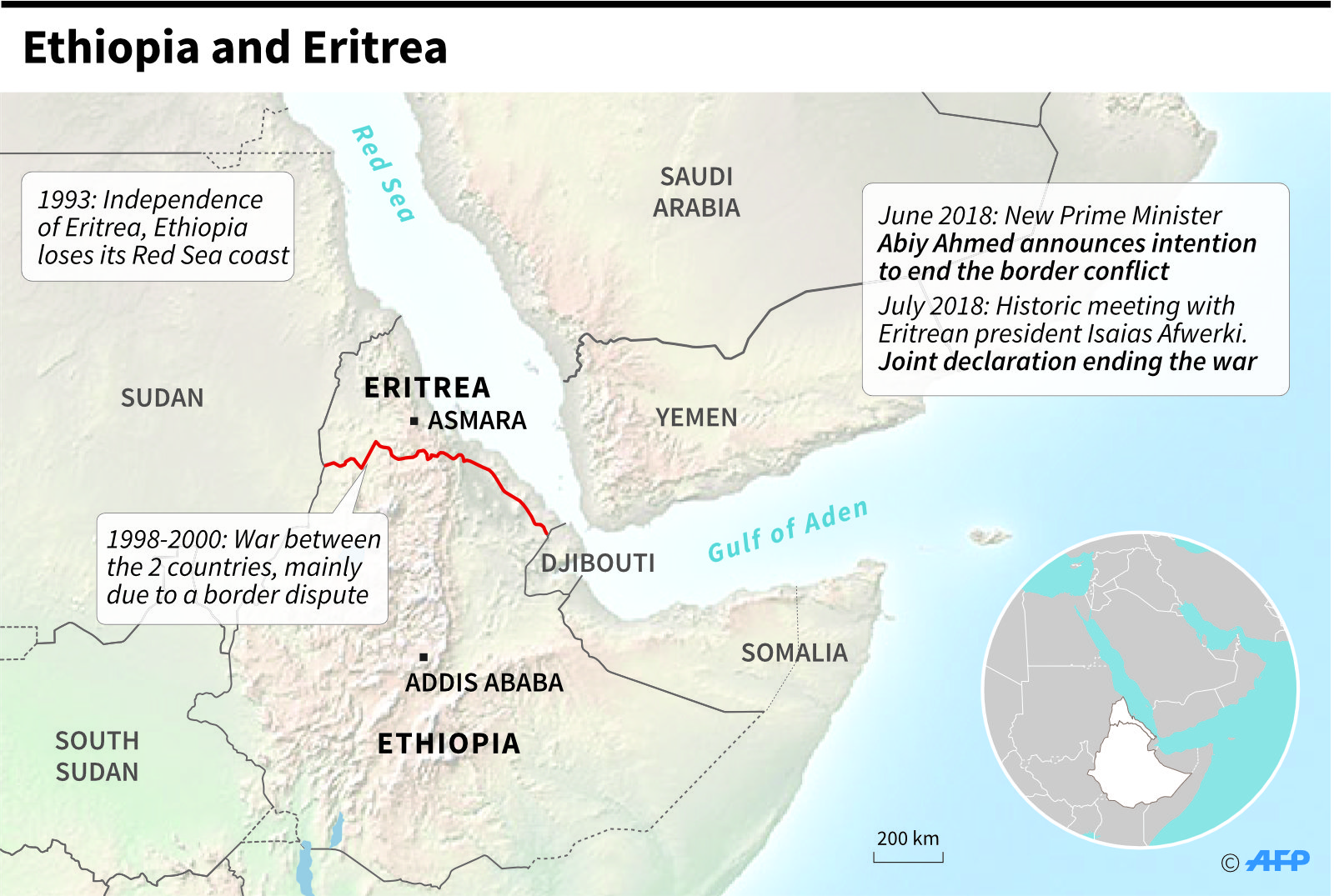
  • Ethiopia closed its Asmara embassy and gave 10 Eritrean diplomats 48 hours to leave, citing hostility; Eritrea called the move absurd and severed ties, ending the 2018 thaw that helped Abiy Ahmed win the 2019 Nobel.
  • The break followed explosions in Addis Ababa and fighting in the north with a TPLF-linked alliance; Ethiopia accuses Eritrea, Sudan, and Egypt of backing them (all deny it), while Sudan accuses Ethiopia of aiding the RSF. Analysts tie the split to sea access and Assab, not a proven Eritrean role in the latest clashes.
  • The piece links the rupture to GERD, Sudan’s war, and a strained Red Sea, and warns a wider Ethiopia–Eritrea fight could become another front from the Chad–Sudan border to Hormuz—risk, not a declared regional war.

Ethiopia on Thursday closed its embassy in the Eritrean capital, Asmara, and ordered 10 Eritrean diplomats to leave within 48 hours.

Addis Ababa accused Eritrea of “direct and indirect acts of hostility and belligerence” that pose “a direct threat to Ethiopia’s national security.”

Eritrea’s response was swift. Its foreign ministry called the move “absurd” and said that it “has no option but to reciprocate in kind and sever all diplomatic ties,” warning of “all the negative corollaries that this entails.”

The rupture ends a cold peace that had been fraying for some time. Addis Ababa frames it as a hostile campaign involving Eritrea, Sudan and Egypt. Those countries dismiss the accusations as baseless and tied to Ethiopia’s internal wars and its quest for sea access.

The standoff sits at the intersection of the Nile dispute, Sudan’s civil war and an increasingly contested Red Sea. Together they create the potential for a new front in the Horn of Africa, with implications for Arab states.

The break came hours after powerful explosions were heard overnight in Addis Ababa, including near military headquarters. It also followed a week of fighting in the north between the army and a new alliance of armed groups, which includes forces from the Tigray People’s Liberation Front, or TPLF, and allies across Tigray, Afar and Amhara.

Ethiopian Army Chief Field Marshal Birhanu Jula has accused Eritrea, Sudan and Egypt of supporting these forces. All three deny involvement. Sudan, in turn, accuses Ethiopia of backing forces hostile to Khartoum, which Addis Ababa denies.

It is a dramatic reversal from 2018, when Ethiopian Prime Minister Abiy Ahmed restored relations with Eritrea after two decades of hostility. The border reopened and separated families were reunited, with the rapprochement helping Abiy to earn the 2019 Nobel Peace Prize.

The latest hostilities are the most serious since the Pretoria agreement ended the Tigray war in 2022, in which an estimated 600,000 people died.

There is so far no evidence of an Eritrean role in the latest fighting, though experts say that it is plausible. In a statement to the BBC before ties were severed, Eritrea’s Information Minister Yemane Gebremeskel denied involvement, accusing Ethiopia’s governing Prosperity Party of blaming neighbors to divert attention from its domestic problems.

The two countries were allies in the 2020-22 war, when Eritrean troops fought alongside federal forces against the TPLF. Relations have since deteriorated, chiefly over Ethiopia’s push for direct access to the Red Sea, which it lost when Eritrea became independent in 1993.

“The 2018 thaw rested on a shared adversary more than a shared agenda,” Lesley Anne Warner, a visiting scholar at the Carnegie Endowment for International Peace and a former US State Department official, told Arab News. “Abiy and Isaias (Afwerki, president of Eritrea) normalized relations while both viewed the TPLF as a threat, and that logic held through the 2020 war, when Eritrean forces fought alongside the federal army.

“It unraveled when Pretoria excluded Eritrea from a settlement it had helped fight for, and Asmara concluded that peace in Tigray left it exposed. Red Sea access then turned a strained partnership into a strategic dispute.”

Abiy has repeatedly called sea access essential to Ethiopia’s long-term economic and security interests. He has not ruled out force, including the seizure of the Eritrean port of Assab.

“The Tigrayan offensive into Afar underscores, for the second time in under a decade, why Abiy treats sea access as existential,” Warner said. “Ethiopia’s trade runs through a single corridor to Djibouti, and that corridor crosses territory that armed actors can contest.”

Abiy has described the loss of Ethiopia’s coastline as a historical “mistake” that will be corrected. Warner said that rhetoric is widely understood in Asmara and elsewhere as aimed at Assab.

“Each time it is threatened, the case for diversifying access gets stronger,” she said, explaining that “that logic is layered on a longer grievance given the country’s’ shared history.”

For Mirette Mabrouk, a senior fellow at the Middle East Institute, access is a major demand for Abiy. “He has said repeatedly they want to have a navy and build up their naval capacity, which is kind of strange for a landlocked country,” she told Arab News.

More than 90 percent of Ethiopia’s imports and exports pass through Djibouti’s ports, at a cost of billions of dollars a year. Hence, Mabrouk said, “Eritreans are worried that (Addis Ababa) is going to try and invade their territory again.”

The Red Sea handles roughly 15 percent of global maritime commerce and nearly 30 percent of container traffic. It is already under strain after the renewal of Yemen’s civil war and the Houthis’ advance around Bab Al-Mandab, the chokepoint between the Arabian Peninsula and the Horn of Africa. That has renewed fears that conflicts on the two shores could converge.

Ethiopia has also escalated with Egypt, declaring at least one Egyptian diplomat persona non grata on Thursday and giving him 48 hours to leave. Addis Ababa accuses Cairo of backing its opponents or obstructing its Red Sea bid, and portrays Egypt as a “strategic spoiler” bent on keeping Ethiopia landlocked, linking the Grand Ethiopian Renaissance Dam — or GERD — dispute directly to Red Sea politics.

Egypt, Sudan and Ethiopia have been locked in a water-diplomacy battle for more than a decade over the Grand Ethiopian Renaissance Dam, a $5 billion project on the Blue Nile whose reservoir is roughly the size of Greater London. Ethiopia sees it as vital to its economic growth and energy sovereignty, while Egypt and Sudan view it as an existential threat to downstream flows and to Egypt’s annual Nile share of 55.5 billion cubic meters.

The dam was inaugurated in September 2025, yet the three countries still lack a binding agreement on filling and drought-release rules. Tensions rose further when Addis Ababa advanced plans for three more Blue Nile dams, Karadobi, Mandaya and Beko Abo, which Cairo says would threaten its survival if built without coordination.

Sudan’s leverage has waned during more than three years of civil war, and its army-led government under General Abdel Fattah Al-Burhan now accuses Ethiopia of backing the paramilitary Rapid Support Forces. It alleges that Addis Ababa facilitated weapons deliveries, hosted RSF training facilities and allowed strategic and kamikaze drones to be launched against Sudan.

Mabrouk was skeptical about the claims.

“There is no evidence whatsoever that Egypt is backing Ethiopian rebels,” she said. “I haven’t seen any proof that Sudan is either,” she added, citing a past Reuters investigation as the only suggestion that Addis Ababa had collaborated with the paramilitary force.

She stressed that these accusations were doing little more than “ratcheting up escalation.”

“This is how you get an escalation,” she said. “You have someone in authority coming out and mak(ing) a claim that is difficult to prove. But at the moment, one imagines that the point is not proof. The point is to provide an excuse for further escalation.”

Analysts see the flashpoints as distinct and the Tigray clashes as primarily a domestic conflict, but the number of external actors involved gives them a foreign-policy dimension.

“The longer clashes in northern Ethiopia persist, the more likely it is that we’ll see an escalating proxy contest layered over the domestic conflict,” Warner said. “Most concerning is the fact that the alignments that have fueled Sudan’s war for over three years will also shape, and perhaps join with this one,” she said.

For now the situation remains contained, but the risk is that an Ethiopia-Eritrea war would quickly intersect with the region’s other crises.

Mabrouk’s fear is that it would draw in regional actors with competing interests. “It is not simply the Horn. We now have a fairly entangled group of proxy rivalries here,” she said. “If it draws into conflict, then the situation is extremely serious.”

She also questioned Ethiopia’s timing.

“If you are going to come up against a country on your borders, Sudan, and when you already have issues with another country on your borders, Eritrea, and you are going to try and aggravate the largest military in the Middle East, that is Egypt, then you must feel that you have the appropriate backing.”

The risk, both agreed, is that the conflict could spread and further destabilize the Red Sea, complicating security around Bab Al-Mandab and the Suez Canal, disrupting shipping and driving large-scale displacement.

“Unless that dynamic is arrested,” Warner said, “the Horn will become a southern front in a Red Sea competition that runs from the Chad-Sudan border to the Strait of Hormuz.”

French investigative site says anti-Semitic messages tied to Jordan Bardella, Le Pen's ally


French investigative outlet Mediapart said on Thursday it had authenticated anti-Semitic messages allegedly sent by far-right politician Jordan Bardella in 2013. Bardella denied writing them and said he would sue for defamation and forgery. The allegations come seven months before France’s presidential election, with Marine Le Pen leading opinion polls.


Issued on: 02/10/2026 
By: FRANCE 24

President of French far-right party Rassemblement National (RN) Jordan Bardella on 27 September 2026. © Thibaud Moritz, AFP


A French investigative journalism website said Thursday it had been able to authenticate anti-Semitic messages from 2013 attributed to far-right presidential candidate Marine Le Pen's de facto deputy.

The allegations against Jordan Bardella come just seven months out from the election where voters will choose a replacement for President Emmanuel Macron, with Le Pen leading opinion polls.

Bardella, 31, has strongly denied writing the messages and on Thursday said he would file a legal case against the Mediapart outlet for defamation, as well as "forgery and use of forgeries".

Mediapart published screenshots of the anti-Semitic messages Bardella is said to have sent to another person on Facebook's Messenger chat platform in 2013.


The outlet said biographical details revealed in the conversations prove that it was the real Bardella: a mother born in Italy, mention of an interview he gave to Le Parisien in 2013, and failing the entrance exam for the prestigious Sciences Po university.

"Extracting the conversation makes it possible to date it, to certify that this conversation was not altered after the fact, and to confirm that the person on the other end is listed by Meta/Facebook under the name Jordan Bardella," Mediapart said.

"Analysing its content makes it possible to verify that it is indeed the real Jordan Bardella."

Bardella denounced what he called Mediapart's "pseudo-evidence" as "crude fabrications, obscure and easily manipulated screenshots, repeating revolting remarks that I obviously never made".
Le Pen hits back

Bardella is expected to become prime minister if Le Pen wins next year's election, and the affair threatens to damage her "de-demonisation" project to make her National Rally (RN) party more palatable to voters.


She is riding high in the polls, and the 58-year-old has strongly defended Bardella, who has helped the party make inroads among younger voters.

Rival presidential candidate and former Prime Minister Edouard Philippe said that in light of the new evidence from Mediapart "it is virtually established" that Bardella made remarks "of an obviously and scandalously antisemitic nature".

Mediapart on Monday published the contested messages, dating back to when Bardella was a young party activist.

Le Pen has voiced her "total confidence" in Bardella and denounced a "total war" against her party as she makes a fourth attempt to win the presidency.

A poll on Monday suggested she would easily lead the first round of next year's election and go on to defeat any challenger in the second round run-off.

(FRANCE 24 with AFP)


Eiffel Tower chief to step down over removal of women staff during Hindu group's visit

The head of the Eiffel Tower is set to step down in the wake of a controversy sparked by the removal of female workers during a private visit of the Paris landmark by members of the Hindu sect BAPS, which triggered a staff walkout earlier this month and sparked outrage in France.


Issued on: 29/09/2026 
By: FRANCE 24


Bochasanwasi Akshar Purushottam Swaminarayan Sanstha (BAPS) Hindu monks participate in a religious ceremony in front of the Eiffel Tower on September 3, 2026. © Kenzo Tribouillard, AFP

The operating company that runs the Eiffel Tower said Tuesday its chief would step down at the end of this year in the wake of a controversy over the removal of women staff during a visit by a Hindu religious group.

Patrick Branco Ruivo, who has been in charge of the Paris landmark since 2018, would leave his job at the end of the year after an internal probe revealed that "operational flaws and shortcomings" in organising the visit led to the "unacceptable" removal of women staff, the company SETE said in a statement.

Staff at the iconic 330-metre (1,083-foot) tower staged a walkout on September 8 in protests at management's decision days earlier to sideline female workers during a visit by members of the Bochasanwasi Shri Akshar Purushottam Swaminarayan Sanstha.

The group, known as BAPS, is a worldwide religious and civic organisation within the Swaminarayan sect, a conservative branch of Hinduism, with ties to Indian Prime Minister Narendra Modi. It had been holding celebrations to mark the inauguration of a traditional Hindu stone temple near the French capital.


The incident sparked outrage in France, prompting politicians of all stripes to denounce an attack on fundamental liberties, and attracting scrutiny of BAPS's activities.

In a statement after the incident, the Hindu group offered "sincere apologies to anyone who may have been hurt or inconvenienced by this situation".

Ariel Weil, chair of SETE, said Tuesday she had requested measures and training programmes promoting gender equality to be implemented.

(FRANCE 24 with AFP)


UK TV presenter, assisted dying campaigner Esther Rantzen dies aged 86

30.09.2026, dpa

Photo: Joel Ryan/PA Wire/dpa

British broadcaster and campaigner Esther Rantzen has died aged 86.

The former presenter, known for hosting shows such as "That’s Life!," established charities to help the young and old, and in recent years became a prominent voice in the attempt to legalize assisted dying in England and Wales.

Rantzen was “the most wonderful mother,” a “cherished grandmother,” and someone who will be remembered for “her endless capacity for joy,” her family said in a statement paying tribute.

She died surrounded by family at her home in the New Forest, a spokesperson confirmed.

Dame Esther hosted BBC consumer affairs show "That’s Life!" for 21 years from 1973 to 1994, which led to her setting up Childline in 1986, to provide counselling services for young people.

She later launched The Silver Line in 2012, which aims to tackle loneliness in older people.

In later life Rantzen became a strong proponent for assisted dying, after she was diagnosed with stage four lung cancer in 2023.

She openly discussed her plan to “buzz off to Zurich” to have an assisted death at Dignitas and criticized the “messy and cruel” law in England and Wales which would criminalize loved ones who tried to help.

But in September 2026, ahead of a vote by members of parliament (MPs) which would see efforts to legalize assisted dying defeated in the UK parliament, Rantzen shared that it was now too late for her to travel, as she had become “too physically fragile to make the journey.”

She told of her anguish at loved ones seeing her “suffering pain or indignity” while she received end-of-life care and expressed sadness when the assisted dying bill fell – branding it a “tragic day.”

Dame Esther first became a star fronting "That’s Life," the magazine show she helped devise, which featured reports on consumer affairs often blended with satire.

The show was a ratings hit and became one of the most popular programmes on British television, expanding the traditional role of the consumer programme to investigating life-and-death issues, such as a boarding school employing paedophiles and a lack of organ donors,

She founded Childline, a helpline for children in danger or distress, after a temporary helpline open for viewers impacted by a programme about a toddler who had starved to death was swamped with callers.

The calls mainly came from children suffering sexual abuse they had never been able to disclose to anyone else, giving Rantzen the idea for a specific helpline for children, open 24/7 throughout the year.

In a statement, her children Miriam, Rebecca and Joshua Wilcox said: “Our adored mother Dame Esther Rantzen died today.

“Her legacy of compassion and understanding will live on in her charities Childline and the Silverline, and through those of us who were lucky enough to love and be loved by her.

“We are grateful she is finally at rest with her beloved husband, Desmond Wilcox, but we will miss her immeasurably. She was our sunshine.

“We will always remember her endless capacity for joy, her ability to comfort every heartache, her beautiful way with words and her expert guidance in all things.

“She was the most wonderful mother to us three children and a cherished grandmother to her five treasured grandchildren. We have been so lucky for so long, no matter how much time we had with Mum it could be never be enough, but we are so grateful for our lives together.

“Mum’s work with charities and campaigning, particularly for children, older people, and the terminally ill, meant the world to her so thank you to everyone who has written to her, shared their stories with her over the years and worked alongside her.

“We hope the humour, ingenuity and audacity she brought to her work may continue to inspire you as it will do us.

“We kindly ask that we are given privacy and time to grieve.”


Macklemore ‘blown away’ after Palestine tour sells out ‘immediately’

30.09.2026, dpa

Photo: Britta Pedersen/dpa

US rapper Macklemore said he is “blown away” after tickets for all three shows for his upcoming Free Palestine tour “sold out immediately.”

The 43-year-old, real name Benjamin Haggerty, announced the concerts in London, Paris and Dublin earlier this month after he was dropped from Ed Sheeran’s Loop tour over comments he made about Gaza.

Since then, all Sheeran’s Loop tour supporting acts, including Irish singer Aaron Rowe, Grammy award-winning musician Finneas, who is Billie Eilish’s brother, and Danish singer Lukas Graham, as well as his backing band Beoga, have dropped out of the remaining dates.

Macklemore took to Instagram on Wednesday, shortly after tickets went on sale for the upcoming gigs which will bring together artists and friends to help provide humanitarian aid and support for people in Palestine.

The Grammy-winner said: “All three shows sold out immediately. I’m honestly blown away.

“We put these shows together fast and in community, believing that musicians can stand in solidarity with Palestine, use the stage to raise funds and show what collective action can look like.

“When those in power try to silence our calls for liberation, art will always be a form of resistance.”

The singer, known for tracks including "Can’t Hold Us" and "Thrift Shop," added: “The response to these shows is another reminder of how many people across the world are standing together for a free Palestine.”

Haggerty also confirmed that the line-up for the concerts will be revealed soon, and told his 9.1 million followers he “can’t wait to be together.”

The post has since been flooded with support, including from TV presenter Laura Whitmore and singer Paloma Faith, who both commented with heart emojis.

Macklemore, who was an opener on Sheeran’s tour, sparked controversy earlier this month when he told an audience he wanted people in Gaza and the West Bank to know they had not been forgotten amid the conflict with Israel.

A petition was launched demanding he be removed from Sheeran’s remaining shows and Robert Kraft, whose Kraft Group owns the Gillette Stadium in Massachusetts, was among those who contacted the British singer saying he would not be able to play the venue unless Macklemore was removed from the tour.

Sheeran said it was the promoter’s decision to remove the US rapper from the tour and not his.

At his first gig since the row, he apologized for making “mistakes” amid the furore and described the conflict in Gaza as “catastrophic and unjustifiable and disproportionate.”

Macklemore’s upcoming tour will kick off in Dublin’s 3Arena on October 26 followed by Paris’s Accor Arena on October 29 and wrap up at London’s OVO Arena Wembley on October 30.

Artist announcements as well as additional cities will be made soon – including dates in the US.

All the proceeds from the concerts will go towards a number of organizations working in support of Palestinian people with medical care, humanitarian assistance, education, community support and advocacy.

Those organizations include Anera, Glia, Gaza Soup Kitchen, Taawon, Heal Palestine, Palestinian Youth Movement, Middle East Children’s Alliance, Jewish Voice for Peace, Medical Aid for Palestinians, Institute for Middle East Understanding, Palestine Children’s Relief Fund and UNRWA USA.


Five miners killed in mine collapse in western Turkey

02.10.2026, 12:49 Uhr

Five miners have died in a collapse at a mine in western Turkey, Energy Minister Alpaslan Bayraktar said on Friday.

Bayraktar wrote on X that in total seven miners had been trapped under the rubble. 

Two were rescued alive from the mine in the Soma district of Manisa province. One remains in treatment and the other has been discharged from hospital, he said.

The accident occurred on Thursday, state news agency Anadolu reported. The cause of the collapse was not yet clear. 

Anadolu said on Friday that nine suspects, including the mine's general manager, had been detained.

Soma was the site of the deadliest disaster in Turkish mining history. In May 2014, a mine pit was engulfed in flames and carbon monoxide gas, killing 301 miners. The disaster ignited protests against the government and mine operators over lax safety measures.