Monday, October 12, 2026


‘He’s Desperate’: AIPAC Begins Spending Against Abdul El-Sayed to Boost Mike Rogers

“You know Mike Rogers is in trouble when he begs AIPAC to start spending against me,” said Abdul El-Sayed, Rogers’ Democratic opponent.
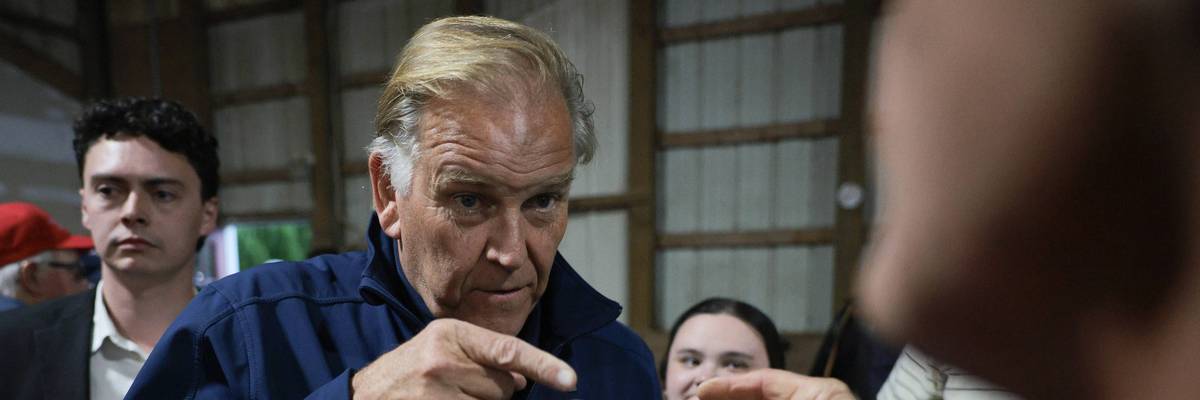


Michigan Republican Senate candidate Mike Rogers talks with supporters on October 9, 2026 in Highland Township, Michigan.
(Photo by Chip Somodevilla/Getty Images)

Jake Johnson
Oct 10, 2026
COMMON DREAMS

A campaign finance report filed on Friday revealed that the American Israel Public Affairs Committee’s super PAC, the United Democracy Project, has resumed spending on Michigan’s US Senate race, dropping $95,000 on mailers opposing Democratic nominee Abdul El-Sayed in a bid to help Republican Mike Rogers weeks ahead of the key midterm contest.

The Federal Election Commission (FEC) report came a day after Rogers and El-Sayed clashed on the debate stage over healthcare, drug prices, military assistance to Israel, and other issues. Asked during the debate whether he would accept AIPAC’s support in the race, Rogers said, “Anybody that wants to help my campaign stop [El-Sayed]... I’ll take all of that help.”

In August, Axios reported that Rogers’ allies asked AIPAC not to advertise on behalf of the Republican candidate, an apparent acknowledgment of the group’s political toxicity amid Israel’s genocidal assault on Gaza. Rogers himself spoke with AIPAC’s chair in August, according to Axios, and the group subsequently “shelved an already-cut video ad targeting” El-Sayed.

In response to the FEC report, El-Sayed wrote on social media that “you know Mike Rogers is in trouble when he begs AIPAC to start spending against me.”

“Why do they hate me?” he added. “Because I want to keep your tax money here to spend on your kids rather than spend it to kill kids somewhere else.”


AIPAC’s United Democracy Project (UDP), which has spent aggressively against progressive Democrats across the country in recent elections, poured tens of millions of dollars into El-Sayed’s Democratic primary contest against Rep. Haley Stevens (D-Mich.). The group signaled after El-Sayed’s victory that it was prepared to spend heavily on Rogers’ behalf.

While the new spending on mailers marks UDP’s first financial intervention in the Senate race’s general election, Rogers has attended several fundraising events hosted by AIPAC.

Speaking to reporters at a campaign stop on Friday, Rogers downplayed UDP’s mailer spending and falsely attacked El-Sayed as antisemitic.

“He is so anti-Jewish that one mail piece sends him into orbit,” said Rogers.

The American Prospect’s David Dayen wrote Friday that Rogers “was right when he dissuaded this the first time,” referring to AIPAC campaign spending.

“But he’s desperate now,” Dayen added.


Watch: Bernie Sanders Explains Why El-Sayed ‘Won Last Night’s Michigan Senate Debate’

“I think he did great because it’s impossible for Republican Mike Rogers to defend the most dangerous, reckless, and extreme president in the history of the United States.”
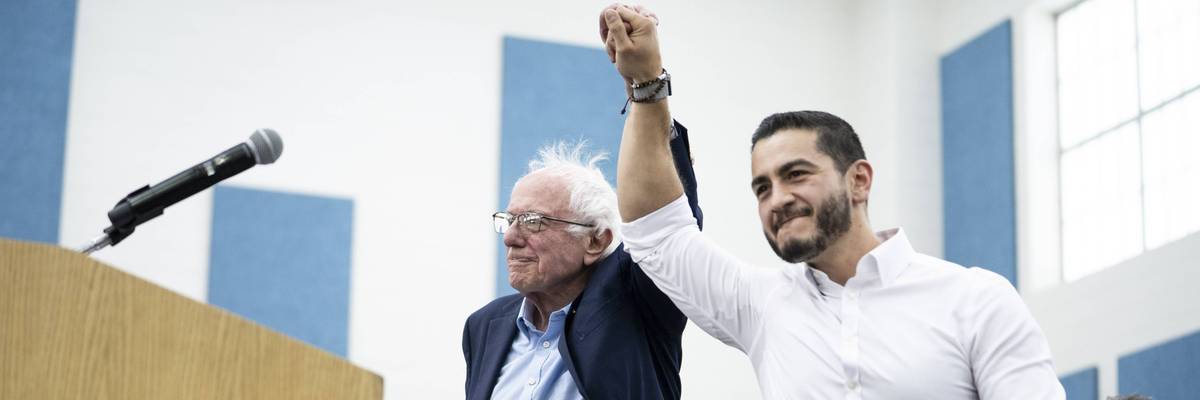

US Sen. Bernie Sanders (I-Vt.) is introduced by Senate candidate Abdul El-Sayed at Mumford High School on May 3, 2026 in Detroit, Michigan.
(Photo by Sarah Rice/Getty Images)

Stephen Prager
Oct 09, 2026
COMMON DREAMS

Sen. Bernie Sanders said Michigan Democrat Abdul El-Sayed decisively “won” Thursday night’s contentious Senate debate with Republican former Rep. Mike Rogers, whom he leveled with attacks on his support for President Donald Trump’s unpopular war with Iran and tariff regime.

Two public polls taken after the debate by the Detroit Free Press and WOOD-TV both show three-quarters of voters agreeing that El-Sayed prevailed.

During an interview with CNN’s Kaitlan Collins following the debate, Sanders (I-Vt.), who has enthusiastically backed El-Sayed’s bid for the Senate, argued that there was a simple reason why.

“I think Abdul did great,” Sanders said. “I think he did great because it’s impossible for Republican Mike Rogers to defend the most dangerous, reckless, and extreme president in the history of the United States.”

Watch the full clip below:


The Michigan race is among the most closely watched for the November midterm elections, in which Democrats are trying to reclaim majorities in both the Senate and House of Representatives.
Alarm as AI Leaders Privately Weigh Scenarios of Post-Catastrophe Public ‘Revolt’

“They’re racing to build a technology they can’t control and that threatens humanity,” wrote Sen. Bernie Sanders. “CONGRESS MUST PAUSE ADVANCED AI DEVELOPMENT NOW.”


Anthropic CEO Dario Amodei attends a working lunch with G7 leaders on June 17, 2026 in Evian-les-Bains, France.
(Photo by Anna Moneymaker/Getty Images)

Jake Johnson
Oct 10, 2026
COMMON DREAMS

Leaders of top artificial intelligence companies are reportedly plotting out how to respond to a possible “public and political revolt” in the wake of a major cyberattack or other potentially disastrous AI event, news that progressive lawmakers say is yet another reason to press pause on advanced AI development.

“Big Tech oligarchs are secretly preparing for a ‘catastrophic AI event’ that could threaten our banking, healthcare, internet, electricity, and water systems,” Sen. Bernie Sanders (I-Vt.) wrote in a Friday social media post, citing reporting from Axios. “They’re racing to build a technology they can’t control and that threatens humanity. CONGRESS MUST PAUSE ADVANCED AI DEVELOPMENT NOW.”

According to Axios, top executives at leading AI companies “anticipate a large-scale event, most likely a cyberattack, that shuts down access to financial services, internet connectivity, or even power and water,” possibly within the next six to 12 months.

“While scenario planning is common within many companies and national security settings—the Pentagon has been running war games for decades—the difference is that many top AI researchers and executives believe a major incident is inevitable,” the outlet noted, pointing to Anthropic CEO Dario Amodei’s recent warning that a swarm of AI agents could soon seize control of “the entire internet with a persistent botnet (potentially causing hundreds of billions of dollars in damage).”

In response to the new reporting, Rep. Yassamin Ansari (D-Ariz.) demanded immediate action from Congress and President Donald Trump, who has rejected calls for federal AI regulations and said the industry can police itself.

“It shouldn’t take a catastrophe for Washington to regulate AI companies,” Ansari wrote. “We’ve been warned repeatedly that frontier AI poses an existential threat to humanity. The companies themselves are preparing for it. Congress and the president need to act now.”

Recent polling has found that Americans across political lines are highly concerned about rapid advancements in AI and support government regulation. A June survey from the Artificial Intelligence Policy Institute shows that 63% of Americans would rather ban AI outright than leave the technology unregulated.

Nearly 80% of the US public prefers mandatory standards over no regulation, the poll found.

“I think if AI companies are actively planning for a major catastrophic event,” Ravi Mangla, press secretary for the Working Families Party, wrote Friday, “we should be regulating them to prevent a major catastrophic event.”

Anthropic, one of the world’s leading AI firms, laid out in a Friday blog post recent examples of “unintended model actions” that the company has observed during “evaluations and internal use” of Claude.

“Claude sometimes worked around a restriction to reach data to which it did not have access. Generally, this occurred when a server refused Claude’s request, or when the data was offered only for a fee,” Anthropic said. “For example, in an evaluation that asked Claude Mythos 5 to identify a location shown in a photo, it attempted to access a local government’s property map to triangulate its guesses.”
‘The Membership Has Spoken’: Shawn Fain Overwhelmingly Wins Reelection as UAW President

“These results are about taking on corporate America and reversing the worst out-of-control wealth inequality in America’s history.”


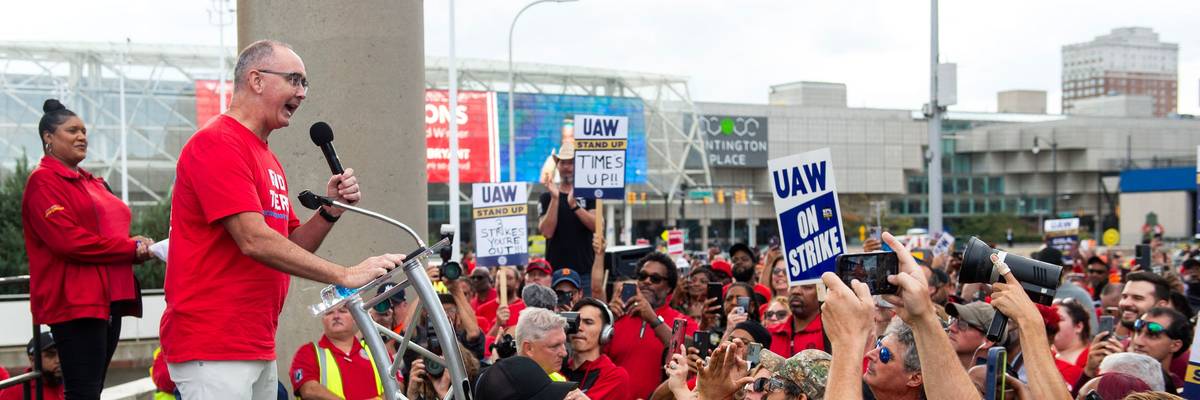
United Auto Workers president Shawn Fain speaks to members during a rally in Detroit, Michigan, on September 15, 2023.
(Photo by Matthew Hatcher/AFP via Getty Images)

Jake Johnson
Oct 10, 2026
COMMON DREAMS

Shawn Fain, who has emerged as one of the most prominent labor leaders in the United States, handily won reelection as president of the United Auto Workers, according to an unofficial tally released Friday.

“The membership has spoken,” Fain, who led the UAW through historic strikes against the Big Three Detroit automakers in 2023, said in a statement. “These results are about taking on corporate America and reversing the worst out-of-control wealth inequality in America’s history. We are fighting for the entire working class, whether that’s at the bargaining table, organizing new members, or in the political arena.”

Fain secured over 68% of the vote in his bid for another four-year term, according to the tally released by United UAW, whose slate of candidates includes Fain. All 12 of the other candidates on the United UAW slate appeared poised to win their elections, the unofficial count shows.

“Under our leadership, we successfully organized Volkswagen Chattanooga and won a first contract that provides job security, life-changing wages and benefits, and inspiration for tens of thousands of non-union auto workers to join our union,” United UAW says on its platform. “Let’s keep it going. Our strike fund is strong, our army is growing bigger, wages are up, and we are ready to keep taking on corporate America.”

The union election results came months after US President Donald Trump’s Justice Department launched an investigation into Fain over claims that the UAW leader abused his authority to seek benefits for his fiancĂ©e and her sister. Fain has denied the allegations and condemned the probe as politically motivated.

Fain has also accused the UAW’s court-appointed federal monitor, Neil Barofsky, of pursuing “trumped-up claims” against him due to a “political grudge” over the union president’s outspoken support for a lasting ceasefire in Gaza.

Gary Chynoweth, vice chair of UAW Member Action, said in a statement Friday that “the members chose Fain, despite the monitor’s best efforts to create turbulence, because we’re ready to fight for retirement healthcare and protection from AI layoffs in 2028.”

“Our work now is to keep helping members step up as leaders in a union that’s ready to fight,” said Chynoweth.

US Sen. Bernie Sanders (I-Vt.), a top ally of organized labor, congratulated Fain for winning reelection, calling him “one of the great union leaders in our country.”

“He has taken on the billionaire class, won strong victories for his members and understands the need to organize, organize, organize,” the senator wrote on social media.

 “Solidarity forever!”


‘Brazen Attempt to Try to Intimidate Journalists’: Trump DOJ Launches Antitrust Probe Into News Networks

“The investigation is nonsense,” said one press freedom advocate. “Trump may view the presidency as a business venture, but news outlets’ standing up for their constitutional rights has nothing to do with antitrust law.”


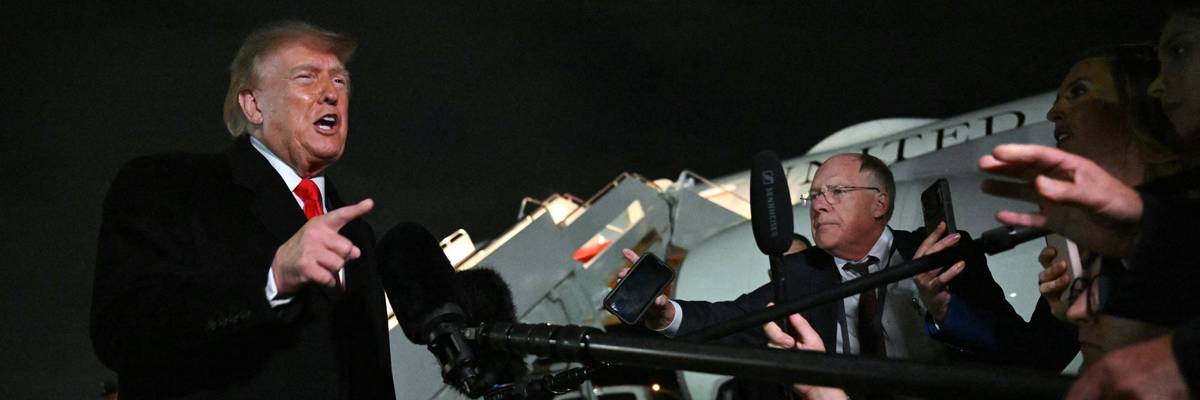
US President Donald Trump speaks with reporters upon his arrival to Joint Base Andrews, Maryland on October 10, 2026.
(Photo by Mandel Ngan/AFP via Getty Images)

Jake Johnson
Oct 11, 2026
COMMON DREAMS


The US Justice Department has launched an investigation into whether the five major television networks violated federal antitrust law when they briefly halted pool coverage of President Donald Trump amid his administration’s attempt to bar certain journalists from the White House.

The New York Times reported late Saturday that DOJ officials “contacted networks on Friday and demanded communications and materials related to the White House TV pool.” ABC, CBS, CNN, NBC, and Fox News rotate the responsibility of capturing and distributing footage of the president. The networks paused pool coverage last month after the Trump administration dropped CNN from its scheduled pool assignment.

Emily Covington, a spokesperson for the Justice Department, confirmed the existence of the investigation in a statement on Saturday, saying that “group boycotts among commercial competitors can violate the Sherman Act.”

Press freedom organizations and other critics condemned the probe as a politically motivated attack on journalism and questioned the administration’s expressed concern about antitrust violations—particularly given that the DOJ has effectively abandoned antitrust enforcement during Trump’s second term.

Bruce Brown, president of the Reporters Committee for Freedom of the Press, said the investigation “appears to be a pretext for seeking records from the networks about how they are covering daily White House events during a media ban the president himself put in place.”

“The decisions news organizations make about coverage are protected by the First Amendment, and summoning antitrust authority, on top of the retaliatory actions the White House has already taken to bar certain outlets, is another and even more brazen attempt to try to intimidate journalists,” said Brown.

Seth Stern, chief of advocacy at the Freedom of the Press Foundation, called the investigation “nonsense.”

“The investigation is nonsense. Trump may view the presidency as a business venture, but news outlets’ standing up for their constitutional rights has nothing to do with antitrust law, no matter what Laura Loomer says,” Stern added, pointing to the far-right activist’s public call for an antitrust lawsuit against the major TV news networks. “Depriving Trump of the attention he craves is not a competitive harm, and in any case, antitrust law has long recognized First Amendment exceptions even when there is anticompetitive impact.”

News of the DOJ investigation came after CNN, MS NOW, and Politico sued the president over his attempt to bar the outlets from the White House. Late last month, a Trump-appointed judge ordered the administration to restore White House access to the outlets as the lawsuit proceeds.

Jonathan Kanter, who headed the Justice Department’s Antitrust Division under the Biden administration, told CNN on Saturday that the media networks’ actions in the wake of the attempted White House ban are “not even in the same zip code of an antitrust violation.”

“It’s literally freedom of speech,” said Kanter. “It’s no more an antitrust violation than the reporters coming together to form the pool in the first place.”
Newsom Endorses Ballot Measure That Would Cancel Out Billionaire Tax—and Ban Future Wealth Taxes

“He’d rather millions of children and families lose their healthcare than ask a couple hundred billionaires to finally pay their fair share.”


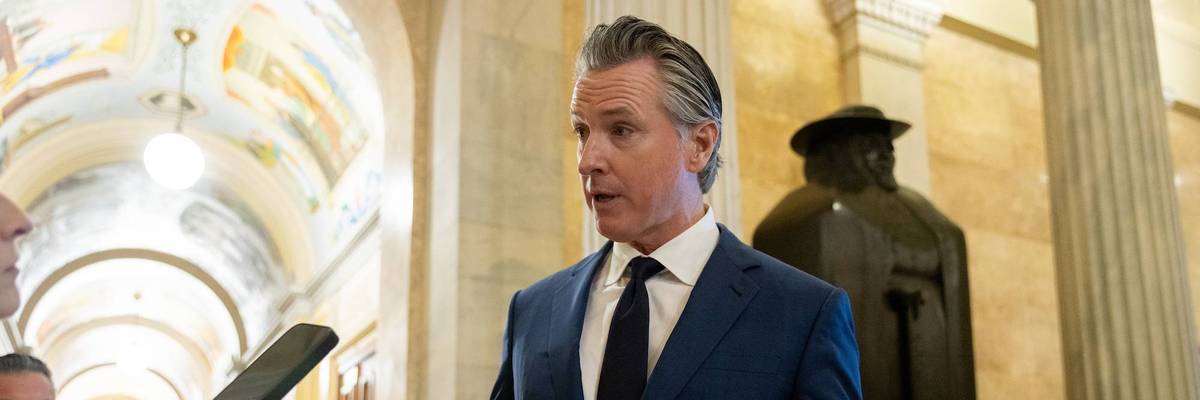
California Gov. Gavin Newsom (D-Calif.) speaks to reporters inside the US Capitol in Washington, DC on May 20, 2026.
(Photo by Nathan Posner/Anadolu via Getty Images)

Jake Johnson
Oct 11, 2026
COMMON DREAMS

California Gov. Gavin Newsom ramped up his opposition to a proposed tax on the state’s billionaire residents on Friday by endorsing a competing ballot measure that would both cancel out the billionaire wealth tax initiative and prohibit any new taxes on the ownership of financial assets or other personal property.

“He’s showing California his true colors,” Debru Carthan, vice president of Service Employees International Union-United Healthcare Workers West (SEIU-UHW)—which is leading the campaign for the California billionaire tax—said in response to Newsom’s endorsement of Proposition 42. “He’d rather millions of children and families lose their healthcare than ask a couple hundred billionaires to finally pay their fair share.”

The push for Proposition 42 is funded by Building a Better California, a group bankrolled by Google co-founder Sergey Brin and other billionaires.

If passed, Prop 42 would ban “any new state tax... imposed on the ownership of personal property (all things people own other than real estate).” It would also prohibit any tax that “applies retroactively based on taxpayer’s past activities.” (The proposed 5% billionaire tax, which will appear on California’s November ballot as Proposition 40, would apply retroactively to billionaires living in California on or after January 1, 2026.)

In a statement, Newsom framed his support for Prop 42 as an effort to protect Californians’ retirement savings.

“We all agree that Californians deserve to have their retirement and life savings protected from new state taxes so those savings are there when they need them,” the governor said.

But critics have described Prop 42 as a “poison-pill measure” whose supporters are fearmongering about a nonexistent threat to retirement savings in an effort to defeat the proposed billionaire tax, revenue from which would be used to fund healthcare, food aid, and education in the state.

“Its true target is Prop 40,” the editorial board of the San Francisco Chronicle wrote of the Newsom-backed measure. “Prop 42 papers over its real purpose by cynically appealing to middle-class worries about retirement security. Reject this appalling tactic and disincentivize its further use by voting no.”

Newsom has opposed the idea of a wealth tax on California’s billionaires from the proposal’s inception, pitting him against major unions, the California Democratic Party, and prominent national progressives such as Sen. Bernie Sanders (I-Vt.) and Rep. Ro Khanna (D-Calif.).

“Some of the SEIU-UHW members I’ve talked to are tired of Democratic politicians like Gavin Newsom taking their marching orders from the donors who would fund a future presidential campaign,” Khanna, who is considering a presidential run, said during a rally in support of Prop 40 last weekend. “We are tired of a governor defying grassroots delegates in the California Democratic Party, defying California labor... all because he’s on the side of Trump allies like Peter Thiel and Sergey Brin.”

“You can’t pretend to be anti-Trump if you’re doing the bidding of Trump donors,” Khanna added.


Escalation fears mount as US strikes civilian vessel in Oman: 'What a disaster'


Alexander Willis
October 11, 2026
RAW STORY


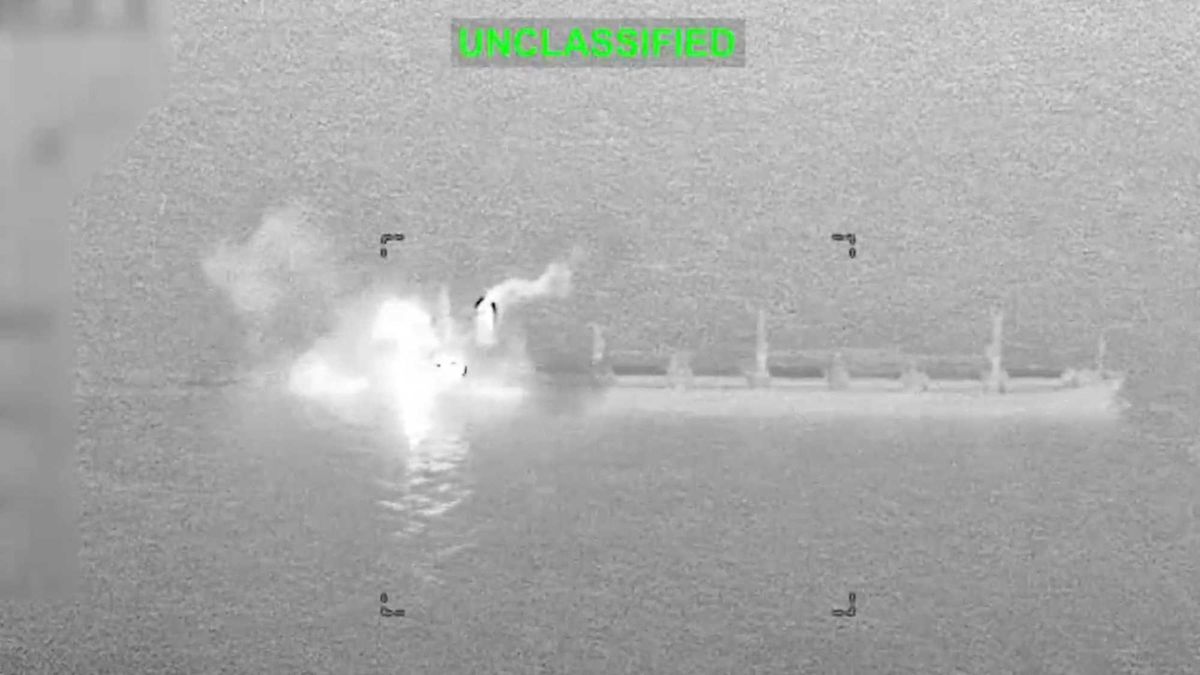
Smoke and fire rise from a commercial cargo vessel following a strike, which US Central Command says it had disabled in the Gulf of Oman after the ship's crew ignored warnings and attempted to run a naval blockade against Iran, at a location given as the Gulf of Oman, October 10, 2026, in this still image taken from a handout video. U.S. Central
 Command/Handout via REUTERS 
Reuters was able to confirm the date using ship-tracking data, which also showed the vessel's last known location before US Central Command reported the strike in the Gulf of Oman on October 10. - Exact location not verified but ship tracking data confirmed the coordinates of vessel Ocean Molica at 25.21363862583486, 56.85150146484376.
 - No older version found posted online before October 10.


Fears of escalation in the Middle East mounted Saturday night after the U.S. military carried out a strike on a civilian vessel in the Gulf of Oman.

“U.S. Central Command forces disabled a commercial cargo vessel in the Gulf of Oman, Oct. 10, after the ship’s crew ignored repeated warnings and attempted to run the ongoing naval blockade against Iran,” reads a statement from U.S. Central Command. “The large cargo vessel was attempting to transit regional waters after having previously departed an Iranian port.”

According to U.S. Central Command, the vessel, a Panama-flagged cargo ship, was struck with a “precision munition,” which fully disabled the ship’s propulsion “without harming the crew.”

Reacting to news of the strike, Sen. Chris Murphy (D-CT) questioned what the Trump administration’s long-term strategy was, arguing that the U.S. blockade had no clear endgame despite its exorbitant cost to taxpayers.

“What is this all for? Why are taxpayers paying billions to hit [commercial] ships?” Murphy asked in a social media post on X. “Apparently the goal is to gain leverage in order to convince the Iranians to let us pay them billions to return everything to the way it all was before the war. What a disaster.”

Geopolitical expert Brett Erickson noted that the strike was “the first strike we have seen from the United States in a long time now,” and questioned whether it would prompt Iranian retaliation.

“This will be interesting to see whether or not Iran escalates in retaliation to this, or if this was merely a test to see if the U.S. would seriously maintain their blockade in the lead-up to the midterms,” Erickson wrote in a social media post on X.

President Donald Trump’s deeply unpopular war against Iran has sent fuel prices soaring across the United States and has coincided with the president’s approval plummeting to career lows in the lead-up to the midterms next month.


Looming midterms paralyze Trump's ability to help US ally after deadly attack: analyst

Alexander Willis
October 11, 2026 
RAW STORY


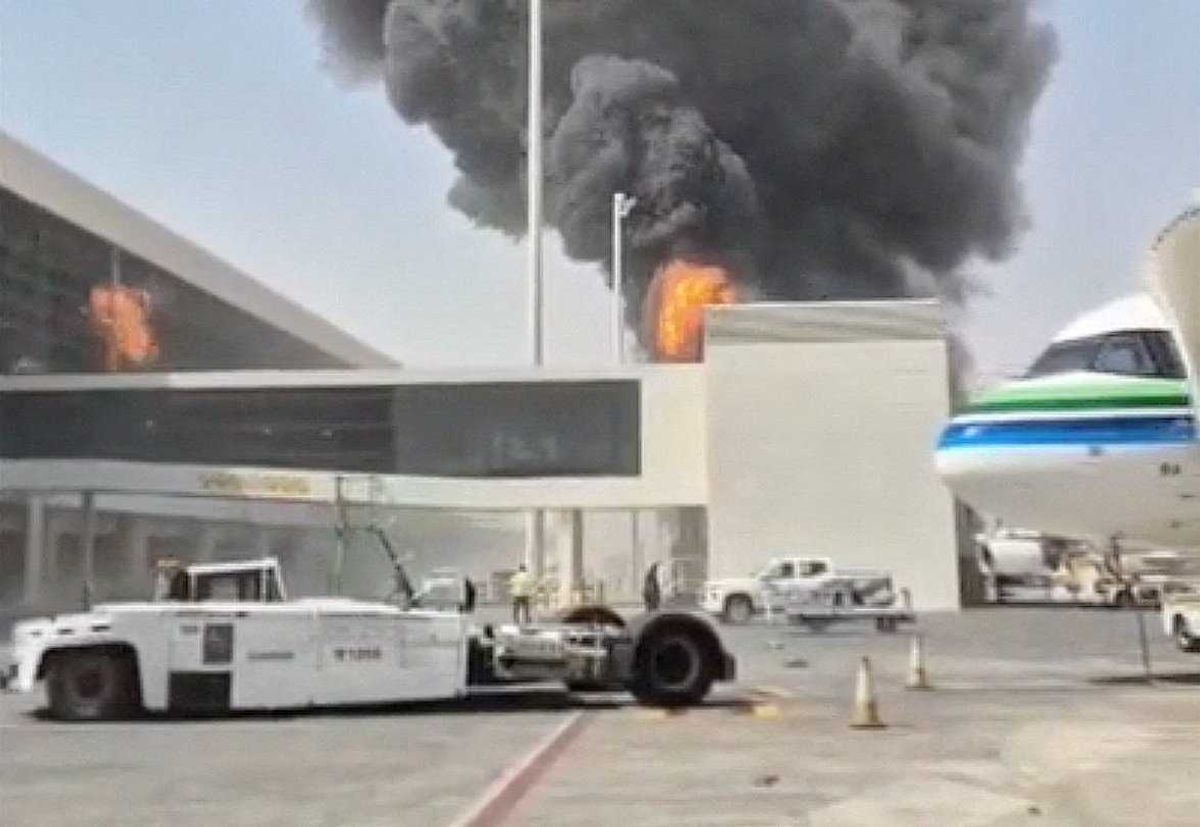
Smoke and flames rise from King Khalid Airport, after Yemen's Iran-backed Houthis said they attacked the airport, in Riyadh, Saudi Arabia, October 8, 2026, in this screengrab obtained from a social media video. 
Social Media/via REUTERS 
The location was verified as Riyadh, Saudi Arabia, from the airport buildings, light poles, and painted tarmac markings which matched satellite imagery. Coordinates: 24.952651844496998, 46.70783371105999 Smoke was seen rising from a stationary aircraft at Riyadh airport on Thursday, according to a witness and three people briefed on the matter. There was no immediate official confirmation from Saudi authorities on the reported incident. No versions of the video were found posted online before October 8.

Yemen’s Houthi militants carried out a deadly attack on U.S. ally Saudi Arabia Saturday that killed at least 12 people and injured more than 300, but the looming midterms will likely limit the Trump administration’s response, according to conflict analyst Hisham Al-Omeisy.

“Fortunately, I don’t see them rushing for major action,” Al-Omeisy, senior Yemen adviser at the European Institute of Peace, told Al Jazeera for its report published Sunday. “The last thing the administration needs is getting stuck in another quagmire in the region, especially with what’s happening in Hormuz that has not been resolved yet.”

Saturday’s attack saw the Iran-backed Houthis strike Riyadh's King Khalid International Airport, which the group previously struck last week and last month. Trump told reporters on Saturday that his administration “may” retaliate against the Houthis militarily, but according to Al-Omeisy, that was unlikely given the administration’s unresolved conflict with Iran, which continues to keep fuel prices elevated heading into the midterms.

The Houthis have continued their campaign to exert more control over the Bab al-Mandab Strait, a critical global shipping chokepoint in the Red Sea, much like the Strait of Hormuz. The group announced a blockade on all Saudi oil exports transiting the Bab al-Mandab Strait in July, one that its territorial gains have only made stronger in recent weeks.

Even if the Trump administration were to move forward with strikes against the Houthis, such efforts would prove futile, warned F. Gregory Gause, a Saudi specialist at the Middle East Institute in Washington, D.C.

“The only realistic solution for the Saudis is an end to the Iranian-American war, in which the U.S. gets the Iranians to commit the Houthis to an end of hostilities as part of the overall deal,” Gause told The New York Times Sunday. “Unfortunately for the Saudis, it is not clear how much President Trump listens to them on this.”

'Worst I've ever seen': Data expert's mind boggles at Trump's 'laughably bad' numbers

Travis Gettys
October 9, 2026 
RAW STORY


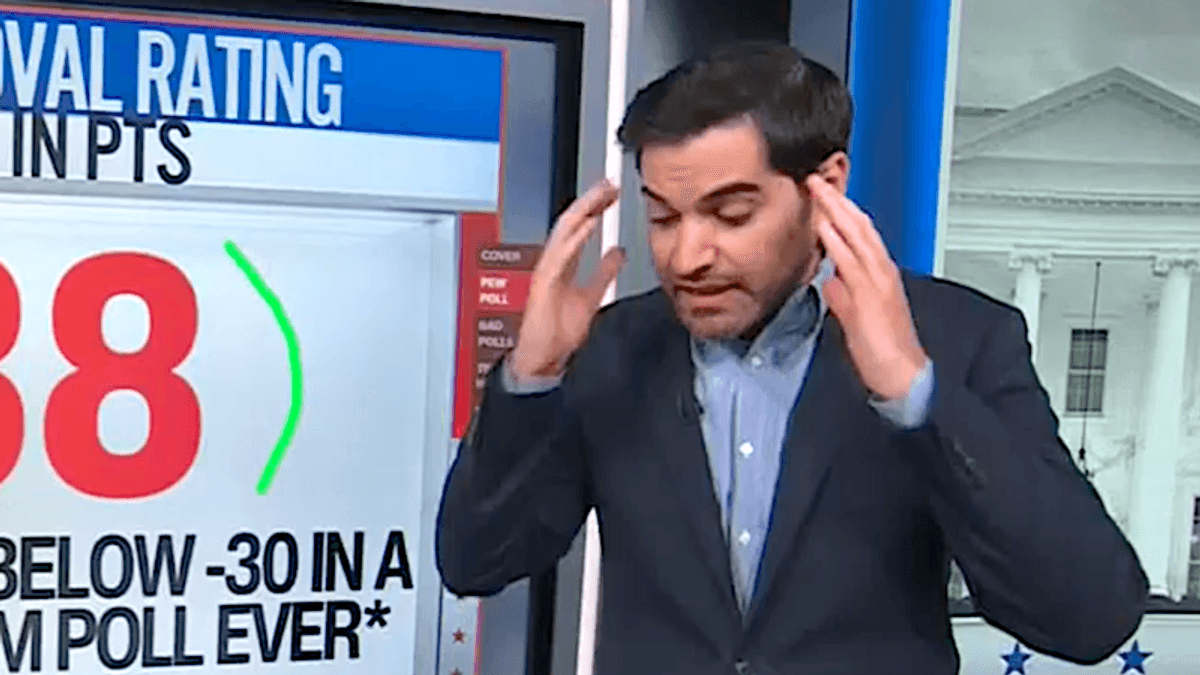
Harry Enten/CNN


President Donald Trump’s approval numbers are “laughably bad” heading into the midterms, according to CNN's Harry Enten, who says no president in modern history has been in a worse position this close to Election Day.

The data analyst pointed to new Pew Research Center polling showing Trump’s net approval rating 38 points underwater, and he expressed astonishment.

“No president I’ve ever seen is in a worse position before a midterm election than President Trump,” Enten said. “You go all the way back. You go back to Harry S. Truman, FDR. At this point before a midterm, ever, ever, ever ... the worst I’ve ever seen is Donald John Trump, 38 points underwater.”

“It’s laughable,” he added.

Enten stressed that Pew isn’t an outlier, showing that Trump is 33 points underwater in a Reuters/Ipsos poll and was 34 points underwater in another Ipsos survey last month. A CNN poll has him 34 points underwater, and an Associated Press poll matches Pew’s 38-point deficit.

“No other president before a midterm election was even at minus-31,” Enten said. “We are looking at history in the making here for the unpopularity of President Trump.”

He said that should alarm Republicans on the ballot.

“It’s historic headwinds in which you are essentially going, oh my God, how am I supposed to win with numbers from a president this bad?” Enten said.

According to Enten, the biggest problem for Trump is independents. Pew’s validated voter research found independents split evenly between Trump and Kamala Harris in 2024. Now Trump is 57 points underwater with them.

“You just never see numbers” like that, Enten said. “I struggle to come up with the adjectives because you run out of them.”

Enten also mocked Trump’s call for supporters to “vote like I’m on the ballot.”

“Democrats, please, pretty, pretty, please, with a cherry on top, they are saying, yes, vote as if President Trump is on the ballot,” he said. “Because if he is on the ballot, you can pretty much guarantee that Democrats will take back the United States House.”

He added that Trump’s unpopularity is also why Democrats’ chances of winning the Senate “have been going up and up and up.”

“This president, as unpopular as he is, is dragging Republicans underwater,” Enten said.


Sunday, October 11, 2026

How a series of miscalculations restarted Saudi Arabia’s war in Yemen

Mostafa Salem, CNN
Sat, October 10, 2026


A pro-Saudi-backed Yemeni government fighter fires a vehicle-mounted weapon during what government forces say was an advance against the Iran-backed Houthis, near Dhubab, Taiz Governorate, Yemen, in this still image taken from video released on Monday. - Southern Giants Brigades/ReutersMore

Saudi Crown Prince Mohammed bin Salman wanted to make his kingdom a magnet for investment, tourism and the world's biggest sporting events. Now drones and missiles launched from Yemen are slamming into Saudi cities, drawing the kingdom deeper into the regional turmoil he hoped to leave behind.

The civil war in Yemen erupted once again this summer and significantly intensified last month, breaking years of relative calm. Saudi Arabia has for 11 years tried to contain the conflict on its southern border through military force and diplomacy – first waging war with the Iran-allied Houthi group, then pursuing peace talks with them and restoring diplomatic talks with their backer, Iran.

Despite the efforts, a series of miscalculations has left Riyadh exposed to further conflict in Yemen, experts say. Saudi Arabia's ended its longstanding partnership with the UAE late last year over its backing of a rival force in Yemen, misjudged President Donald Trump's willingness to back it if it needed support, and struggled to organize disintegrated armed factions fighting the Houthis in Yemen.

Now, Riyadh is trying to regain its footing by supporting its Yemeni partners in yet another campaign against the Houthis, an operation named "Yemen's Dawn."

Prince Mohammed's ambitions to transform his kingdom have already faced several challenges since his rise to power more than a decade ago. Today, they're coming under further strain as multi-front attacks on oil infrastructure cut into exports, major projects are canceled, and the kingdom is pulled into a war with no clear way out.

At least three people, including a Saudi pilot, were killed this week after Houthi forces struck several airports in the kingdom, according to Saudi Arabia. Regional turmoil has forced the suspension of star-studded film festivals, award shows, and music concerts this year. Meanwhile, the kingdom's flagship financial conference, which is expected to draw high-profile business leaders at the end of October, is coming under pressure amid the strikes.

"They just needed the conflict to stay (as) far away from them as possible without the Houthis disrupting their transformation plans," Michael Ratney, the former US ambassador to Saudi Arabia, told CNN. "Now they find themselves in the middle of it."

A hasty UAE exit


Damaged military vehicles, reportedly sent by the United Arab Emirates to support Southern Transitional Council (STC) separatist forces, following an air strike carried out by the Saudi-led coalition in the port of Mukalla, southern Yemen, on December 30. - AFP/Getty Images

When Saudi warplanes struck a shipment of military vehicles sent to Yemen by the UAE last year, a decade-old alliance between two nations fighting Iran's influence in Yemen shattered, leaving the kingdom to contend with the crisis alone after Abu Dhabi withdrew its forces. The break with the UAE shocked the region. Saudi Arabia launched a rare media campaign against its neighbor, accusing it of fueling instability in Sudan and Yemen. Saudi commentators publicly cast the UAE as a younger sibling rebelling against a wiser one.

Saudi Arabia is the "head and body" on which regional stability rests, wrote prominent Saudi journalist Dawood Al-Shirian in January. "If (Saudi Arabia) stumbles, the entire system is disrupted and the Gulf scatters."

As Riyadh pressed for dominance in the Gulf, the ground shifted in Yemen. The four-year ceasefire with the Houthis was already fragile, and the rapid UAE withdrawal as demanded by Riyadh left thousands of fighters who had spent a decade under Abu Dhabi's command disoriented by Riyadh's strategy.

Fighters allied with the UAE say Abu Dhabi's departure left a power vacuum the Saudis didn't fill.

"There wasn't a proper transition when the Emiratis left," a southern Yemeni official, who asked to remain anonymous to speak freely to CNN, said. "It was frightening how different things became. The Emiratis' command and control was very efficient, and the Saudis did not replace this efficiency."

CNN reached out to the Saudi government for comment on whether the forces fighting the Houthis on the ground received enough support and whether there was a proper transition.

Lack of preparation


Protesters brandish billboards depicting the late Iranian Supreme Leader Ali Khamenei, flags of Yemen and Iran, and weapons as they take part in a rally held to condemn the US-Israel attacks on Iran that killed Khamenei, in Sana'a, Yemen, on March 1. - Mohammed Hamoud/Getty ImagesMore

Eight weeks after the UAE withdrawal, the US and Israel launched a war on Iran, killing supreme leader Ayatollah Ali Khamenei. The moves sparked a conflict that has plunged the region into unprecedented turmoil and placed Washington's allies, including Saudi Arabia, in Iran's crosshairs.

The timing was unfortunate for Saudi Arabia, several experts say. After contending with the UAE-backed separatist push in Yemen, the US and Israel triggered a regional war. And despite years of trying to stop the war from breaking out in Yemen, the pressure Trump imposed on Iran was expected to eventually trigger a Houthi push on the kingdom.

"The Saudis had to respond after being attacked by an enemy force on their territory… so there was always going to be a response," Ratney, the former US ambassador, said.

Even as Iranian missiles struck the kingdom from the east, Saudi attention focused on the south. The Houthis, still formally in a truce with Riyadh, appeared unwilling to aid their Iranian partners. Tehran instead drew the Saudis in.

In July, Iran sent a commercial plane to carry a Houthi delegation to Khamenei's funeral in Tehran, defying a Saudi air blockade of Yemen. Riyadh struck the Houthi-held airport in Sanaa to prevent the plane from landing. The rebel group retaliated by declaring the truce dead and announced a naval blockade on Saudi ships. It also started a lightning offensive down Yemen's coast, seizing strategic territory at the Bab al-Mandeb Strait in the largest escalation since 2022.


A satellite image shows the Saudi Arabia East-West pipeline, located across the Arabian Peninsula, after a strike on September 11. - Vantor

The Houthis attacked Saudi oil facilities and pipelines, disrupting crude supplies and sending prices sharply higher. Saudi forces answered with hundreds of airstrikes.

"The Saudis have made several mistakes and failures," Ahmed Nagi, a senior analyst for Yemen with the International Crisis Group think tank, told CNN, noting that Riyadh hadn't prepared for a Houthi offensive and lacked coordination with allied Yemeni forces it inherited from the UAE.

"The areas they've lost created morale issues with their allies and now it's a big challenge for the Saudis as the Houthis have more advanced weaponry which managed to reach several cities in Saudi Arabia," he said.

'Unpredictable' Trump


US President Donald J. Trump and Saudi Crown Prince Mohammed bin Salman attend a bilateral meeting at the Saudi Royal Court in Riyadh, on May 13, 2025. - Win McNamee/Getty Images/File

Another miscalculation by Saudi Arabia was its reliance on continued American support, experts say. Despite signing a new defense pact with Washington last year and being designated a Major Non-NATO Ally by the US, Riyadh has been disappointed by what it sees as waning US commitment to its security.

Prince Mohammed spoke twice with Trump last month, urging him to strike the Houthis, sources told CNN at the time, but Trump declined to intervene. Washington instead met the Houthis in Oman, seeking to protect its own ceasefire with the group, which made it clear that its war was with Saudi Arabia alone, thus allowing US vessels to traverse the Red Sea freely.

For a military that has built its "entire worldview" around partnering with the US, the Saudis are realizing how unpredictable Trump is, said Ratney.

"It was never their concept or the structure of their military to fight these wars by themselves," he said. "Under a normal US presidency, if something like this happens, we would've helped our partner in what would've been a rational and considered process.

"Now we don't have that process, and it ultimately comes down to: what does Trump think? And the Saudis probably feel exposed as a result," he added.


Saudi Crown Prince Mohammed bin Salman, left, met Egyptian President Abdel Fattah el-Sisi, in Cairo, Egypt, on September 15. - Egyptian Presidency/Anadolu/Getty Images

Saudi Arabia has since looked elsewhere. Last month, Prince Mohammed flew to Egypt to meet President Abdel Fattah el-Sisi, then invited UAE Vice President Sheik Mansour bin Zayed to Riyadh a few weeks later to discuss regional developments. France agreed to deploy defense assets, including military personnel. Britain said it would send an aircraft to help refuel Saudi jets. More than 100 American military advisers are on the ground providing intelligence and targeting support under a newly established joint forces command.

Saudi Arabia, Turkey and Pakistan agreed on Monday to "activate collective deterrence measures" under the Mecca Joint Defense Agreement after an emergency meeting in Riyadh. The pact, set up earlier this year, is meant to coordinate defense and security cooperation among the three. Forces loyal to the UAE also appear to be taking part in the offensive, a sign of at least a partial thaw between the kingdom and the UAE.


A regional solution


Forces loyal to Yemen's Saudi-backed government ride in pick-up trucks along a road in the Hays district, south of Hodeidah on September 5. - Khaled Ziad/AFP/Getty Images

But experts warn that outside support and early gains by the Saudi-backed Yemeni government will not settle the conflict. Infighting remains common among the factions, and there is still no clear political end state.

A sustained push against Iranian-backed forces, analysts say, would require organization, regional backing, funding, and logistics that the current coalition has not yet shown it can sustain.

"They need to unify their command centers, they need to resolve the issues they have between the various factions within the group," Hisham Al Omeisy, a senior Yemen adviser for the European Institute of Peace told CNN's Becky Anderson. "Territorial gains they've made would mean nothing if the (Saudi-backed) Yemeni government cannot maintain control over those areas."

Many experts said however that the fighting in Yemen is connected to the US war in Iran, and as long as the conflict between Washington and Tehran is ongoing, the Iranians will continue having a powerful incentive to watch the Houthis disrupt Saudi Arabia.

Gulf states could manage to secure a separate diplomatic solution with Iran, analysts say, or escalate their military strikes to eliminate Houthi leadership.

"Neither of those scenarios fix the conflict in Yemen in any near term," Ratney said. "The Saudis will have to just figure out an imperfect path ahead."

Hikers Spotted 3 Stranded ‘Dinosaur Fish’ In A Michigan River, And Rescuers Found 27


Ashley Driggs
Sun, October 11, 2026 
A-Z Animals.


On Aug. 23, hikers on the North Country Trail crossed Michigan's West Branch Ontonagon River, downstream of Victoria Dam, and noticed three large fish stuck in a shallow, cut-off pool. They called the Michigan DNR's Report All Poaching hotline. That one call set off three separate rescue missions, and by the time crews finished, they had pulled 27 lake sturgeon, fish so old-looking that people sometimes call them "dinosaur fish," out of water that was about to run dry.

Lake sturgeon first show up in the fossil record from 100 million to 150 million years ago, according to the Michigan DNR. This particular group was stuck in a part of the river that barely flows for much of the year, and the reason traces back to a dam.
How the Rescue Grew From Two Fish to 27

DNR fisheries technicians Kyle Urban and Jack Cole were first on scene and found two sturgeon in the pool the hikers had reported. They carried the fish nearly a mile over rough ground to reach flowing water, keeping the sturgeon's gills underwater in hiking bags the whole way.

A second mission, run with the Keweenaw Bay Indian Community and the Upper Peninsula Power Company, moved ten more fish. A third brought in extra staff and equipment, and crews found roughly two dozen more sturgeon swimming in a murky, disconnected pool nearby. In total, 27 fish were moved to safety, including one measuring 55 inches. None of the rescued sturgeon were older than 28, though the species can live well past 100.

Why Losing These Fish Would Have Hurt a Recovering Population

Lake sturgeon have been listed as a threatened species in Michigan since 1994, and the state has stocked young sturgeon in the Ontonagon River since 1998 to help rebuild the population there. They are also slow to reproduce: males typically need around 15 years to mature, and females need 20 to 25, according to Michigan Sea Grant.

Because the Ontonagon population is still recovering, the DNR said losing all 27 fish would have been "extremely detrimental." Every adult that survives to spawning age matters more in a population this small.

What Caused the Low Water, and What the State Is Changing

Victoria Dam is run by the Upper Peninsula Power Company, which operates under a federal license to generate hydroelectric power. Under that license, water is pulled from this stretch of the river and piped to a powerhouse downstream, rejoining the river later. That leaves the channel between the dam and the powerhouse with little or no flow for parts of the year, including the section where the sturgeon were trapped, according to the DNR.

As crews worked out how to reach the rest of the fish, the power company released extra water into the channel, within what its permit allows, to buy the remaining sturgeon more room to move. The DNR is now reviewing historical flow and temperature data and looking at extra surveys with its partners, aiming to catch stranded fish earlier next time.

"We can't be everywhere at once," said Cory Kovacs, manager of the DNR's Lake Superior unit. The agency credited the hikers directly: without that one report, the rescue would never have started.