
The worst year in shutdowns: a blow to democracy and human rights in Africa
It’s official, 2024 was the worst year on record for internet shutdowns. From people’s movements to contentious elections, as political escalations continued to make headlines in Africa, authorities increasingly defaulted to internet shutdowns to disempower and disconnect people.
Launching today, February 24, 2025, Access Now and the #KeepItOn coalition’s new report, Emboldened offenders, endangered communities: internet shutdowns in 2024, exposes how authorities imposed at least 296 internet shutdowns in 54 countries, causing chaos across borders, exacerbating trauma during conflict, and fracturing the lives of millions of people around the globe. The findings reveal that 21 shutdowns impacted 15 countries in Africa — the highest number of shutdowns ever recorded in a single year for the region.
For the second year in a row, authorities and warring parties wielded an unprecedented number of internet shutdowns as a weapon of war and a tool for collective punishment — hurling communities into digital darkness, and concealing grave human rights abuses. As internet access becomes consistently weaponized, restricted, and precarious, we are seeing pervasive patterns of crushing censorship and an urgent need for greater accountability. No single stakeholder can end internet shutdowns alone. The time to act is now.Felicia Anthonio, #KeepItOn Campaign Manager at Access Now
Key regional findings:
- The new offenders: Comoros, Guinea-Bissau, and Mauritius shut down the internet for the first time in 2024, while hacker group Anonymous Sudan claimed responsibility for cyberattacks that disconnected people in Chad;
- The triggers: protests were the leading trigger for shutdowns in 2024, with authorities in nine countries imposing 12 shutdowns during protests and political instability. This was followed by shutdowns to control information (4) and election-related shutdowns (3);
- The entrenched offenders: despite the Ethiopian government’s claims about restoring internet services, people in Tigray and Amhara continued to suffer from the effects of shutdowns beginning in 2020 and 2023 respectively, with connectivity well below pre-conflict levels. Uganda continued to block access to Facebook for the fourth year in a row;
- The emerging offenders: authorities in Kenya blocked Telegram during national exams for the second year in a row, and shut down the internet amidst protests that also impacted connectivity in Burundi and Rwanda. In Mozambique, authorities imposed curfew-style shutdowns and platform blockings following protests, while in Equatorial Guinea, authorities imposed a shutdown in July 2024 in Annobón that continues to persist; and
- The positives: The African Commission on Human and Peoples Rights (ACHPR) passed resolution 580 0f 2024 calling on member states to ensure open and secure internet access before, during, and after elections and refrain from shutting down the internet during democratic processes. Authorities in Mauritius also rescinded an order to block social media platforms following pressure from civil society organisations.
The right to freedom of expression, access to information, and peaceful assembly are at risk now more than ever. As civil society, we will continue to hold authorities to account and raise the alarm on human rights abuses that fester in the darkness of internet shutdowns. During protests, elections, exams, and conflicts, authorities must respect human rights and #KeepItOn.Bridget Andere, Senior Policy Analyst at Access Now
In 2024, shutdowns were imposed across Africa in: Burundi, Chad, Comoros, Equatorial Guinea, Ethiopia, Guinea, Guinea-Bissau, Kenya, Mauritius, Mozambique, Nigeria, Rwanda, Senegal, Tanzania, and Uganda.
Access the full report, global snapshot, and shutdowns dashboard.
Report: In record year of internet shutdowns, Myanmar leads
By Tommy Walker
Bangkok —
In a record year for internet shutdowns, countries in the Asia-Pacific region imposed the most restrictions, according to a new report.
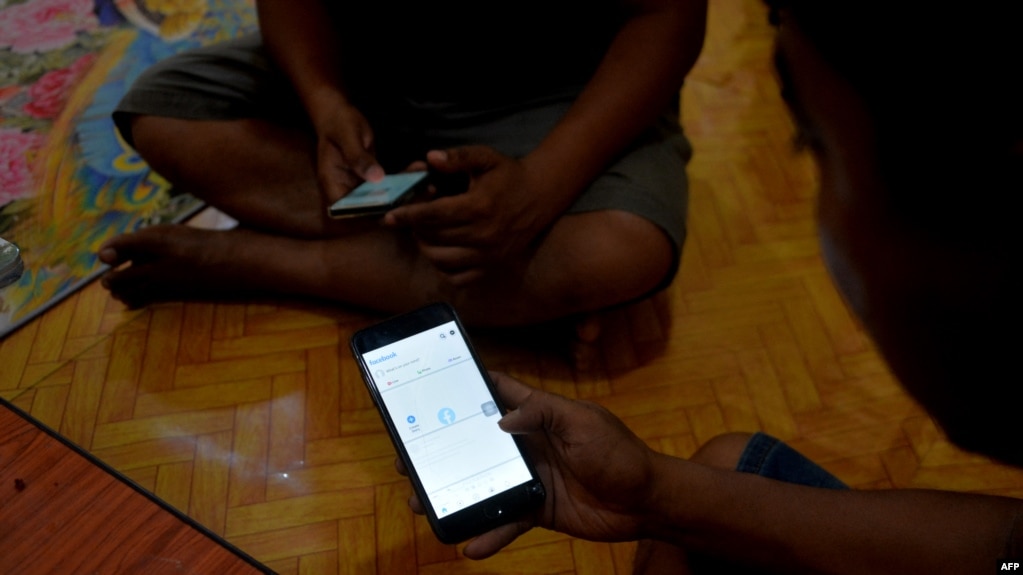
Myanmar is the worst-affected country worldwide, with 85 shutdowns last year, research by the digital rights group Access Now found.
Its report, released Monday, Feb. 24, shows authorities worldwide imposed at least 296 shutdowns in 54 countries. Conflict — followed by protests, school or university exams and elections — was the biggest trigger, Access Now found.
For the Asia-Pacific region, the report finds 202 shutdowns in 11 countries or territories. It is the highest number ever recorded by Access Now in a single year for the region.
The three countries with the worst record are all in Asia: 190 cases in Myanmar, India and Pakistan accounted for around 64% of all recorded shutdowns in 2024. India, often referred to as the biggest democracy in the world, had 84 recorded cases.
VOA contacted Myanmar’s military administration, and the Washington embassies for India and Pakistan for comment. As of publication, VOA had not received a reply.
Raman Jit Singh Chima, the Asia Pacific policy director at Access Now, warned of a rise of digital authoritarianism in Asia.
“Shutdowns destabilize societies, undermine digital progress, put entire communities at risk, and provide a cloak of impunity for human rights abuses,” he said in a statement. “Authorities from Myanmar to Pakistan are isolating people from the rest of the world with impunity, reflecting the rising digital authoritarianism in Asia.”
Access Now collects data on shutdowns, which include cables being cut, equipment confiscated, platforms being blocked, and orders to telecommunication companies.
'Rebirth' of radio
Since seizing power in a coup in February 2021, the junta in Myanmar has regularly blocked access to the internet. The junta says the blocks are to maintain “stability” and prevent what it calls the spread of disinformation and fake news.
At the same time, the junta has jailed dozens of journalists and revoked media licenses.
Out of the 85 shutdowns imposed in Myanmar last year, 31 coincided with documented human rights abuses and at least 17 correlated with airstrikes on civilians, the Access Now report found.
The record puts the country among the worst for digital rights for the fourth consecutive year, the report found.
Toe Zaw Latt, a veteran journalist from Myanmar, told VOA it was “no surprise” that the country tops the list.
“Myanmar has one of the worst censorship [records] on digital platforms,” he said. “[The military does this] so most of the people can’t access independent information or internet mainly, especially young people. They just want one version of truth, the army’s version of truth.”
Zaw Latt said the junta is trying to prevent “independent access of information on the internet.”
A journalist for decades, Zaw Latt is also secretary of the Independent Press Council Myanmar. He said the internet blocks have seen a “rebirth” in radio.
“Globally, radio is dying but it’s having a rebirth in Burma because it’s cheap and accessible,” he said, using the country’s former name. “Even some people go back, very primitive, back to print because of these internet shutdowns.”
Still, Zaw Latt said, it is not possible to completely cut off the internet, “because people will find a way.”
Alongside shutdowns the junta has passed laws to further control the information narrative.
On Jan. 1, a cybersecurity law was enacted in Myanmar, banning the use of Virtual Private Networks, or VPNs, that people use to access blocked or censored content. The law penalizes those who share information from banned websites. Experts say it’s another attempt from the junta to suppress public information.

SEE ALSO:
Myanmar's new cybercrime law will suppress information, say analysts
Two other Asian countries — Malaysia and Thailand — also made the list for the Southeast Asia region for the first time.
Thailand was included after it shut electricity and internet connections on its border with Myanmar following an attempt to crack down on scam centers that have lured thousands into forced labor and scammed billions from internet users worldwide.

SEE ALSO:
Thailand cuts power, fuel and internet supply to parts of Myanmar
Overall, press freedom in East Asia continues to see a decline, according to Reporters without Borders. The global watchdog reports that 26 out of 31 countries in the Asia-Pacific region have seen a decline in press freedoms between 2023 and 2024.

No comments:
Post a Comment