CLIMATE CHANGE
ICJ delivers an unambiguous order on states’ responsibilities to halt climate change
The United Nations’ judicial organ paved the way for states to be held accountable for fossil fuel emissions and the resultant climate harm.
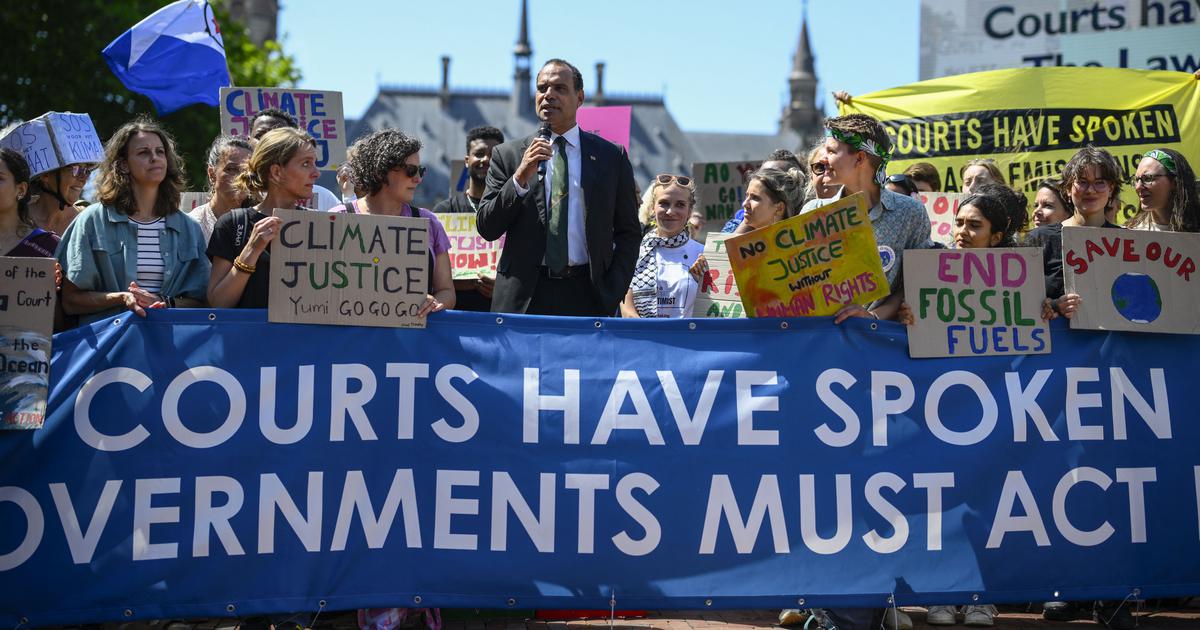
Vanuatu's Climate Change Minister Ralph Regenvanu delivers a speech at a demonstration ahead of the International Court of Justice session on climate change July 23. | John Thys / AFP
In a much-awaited readout of its advisory opinion on climate change, the president of the International Court of Justice Iwasawa Yuji on July 23 spelt out in crystal-clear terms the legal and customary obligations of states under international law and climate treaties to ensure the planet survives the catastrophic impacts of climate change.
The opinion paved the way for states to be held accountable for fossil fuel emissions and the resultant climate harm. The order has been hailed by the Pacific Islands states especially, Vanuatu, which led the global demand for the opinion, as unprecedented and as going above all expectations.
In a much-awaited readout of its advisory opinion on climate change, the president of the International Court of Justice Iwasawa Yuji on July 23 spelt out in crystal-clear terms the legal and customary obligations of states under international law and climate treaties to ensure the planet survives the catastrophic impacts of climate change.
The opinion paved the way for states to be held accountable for fossil fuel emissions and the resultant climate harm. The order has been hailed by the Pacific Islands states especially, Vanuatu, which led the global demand for the opinion, as unprecedented and as going above all expectations.
The advisory opinion clearly mentioned that failure of states to take measures to reduce greenhouse gas emissions by continuing fossil fuel production, granting exploration licences or fossil fuel subsidies constituted an internationally wrongful act. States also have an obligation to regulate private actors as a matter of due diligence.
In relation to climate damage, the court held that in the event that restitution should prove to be materially impossible, responsible states have an obligation to compensate. Some states argued during the hearing in December that it was difficult to fix responsibility. But the court held that it was scientifically possible to determine the emissions contribution of each state in both current and historical terms.
The court also stated that injured states could separately invoke the responsibility of states committing wrongful acts that caused climate harm and seek reparations. Judge Yuji said climate change was more than a legal problem: it concerns an existential problem of “planetary proportions that imperils all forms of life and the very health of our planet”.
A complete solution to this daunting and self- inflicted problem, the court said, required all forms of human and scientific knowledge and human will and wisdom at the individual, social and political level to change habits, comforts and the current way of life. The court expressed the hope that its conclusions would allow the law to inform and guide social and political action to address the climate crisis.
The advisory opinion clearly mentioned that failure of states to take measures to reduce greenhouse gas emissions by continuing fossil fuel production, granting exploration licences or fossil fuel subsidies constituted an internationally wrongful act. States also have an obligation to regulate private actors as a matter of due diligence.
In relation to climate damage, the court held that in the event that restitution should prove to be materially impossible, responsible states have an obligation to compensate. Some states argued during the hearing in December that it was difficult to fix responsibility. But the court held that it was scientifically possible to determine the emissions contribution of each state in both current and historical terms.
The court also stated that injured states could separately invoke the responsibility of states committing wrongful acts that caused climate harm and seek reparations. Judge Yuji said climate change was more than a legal problem: it concerns an existential problem of “planetary proportions that imperils all forms of life and the very health of our planet”.
A complete solution to this daunting and self- inflicted problem, the court said, required all forms of human and scientific knowledge and human will and wisdom at the individual, social and political level to change habits, comforts and the current way of life. The court expressed the hope that its conclusions would allow the law to inform and guide social and political action to address the climate crisis.
Two questions
The court had been requested by the United Nations General Assembly to address two critical questions in its advisory opinion, the hearings for which were completed in December 2024 in The Hague.
The court first examined the obligations of states to address climate change for current and future generations under international laws including human rights law, the United Nations Charter, the Law of the Sea and climate treaties and agreements.
Secondly, it considered the legal consequences that states face if they failed to meet their obligations and caused serious climate harm.
The United Nations General Assembly resolution seeking this advisory opinion was the result of a six-year campaign by law students of the University of the South Pacific.
The advisory opinion was a transformational shift to seeking climate justice, said Vishal Prasad, the campaign director of Pacific Islands Students Fighting Climate Change. “Everything we hoped for is there,” he said. “We are grateful and happy with the outcome.”
The court also addressed intergenerational equity by underscoring the need for action to save the planet. It sends a strong message to young people and “gives us hope, a tool for climate justice, a strong tool to carry on the fight for climate justice”, Prasad said.
The court had been requested by the United Nations General Assembly to address two critical questions in its advisory opinion, the hearings for which were completed in December 2024 in The Hague.
The court first examined the obligations of states to address climate change for current and future generations under international laws including human rights law, the United Nations Charter, the Law of the Sea and climate treaties and agreements.
Secondly, it considered the legal consequences that states face if they failed to meet their obligations and caused serious climate harm.
The United Nations General Assembly resolution seeking this advisory opinion was the result of a six-year campaign by law students of the University of the South Pacific.
The advisory opinion was a transformational shift to seeking climate justice, said Vishal Prasad, the campaign director of Pacific Islands Students Fighting Climate Change. “Everything we hoped for is there,” he said. “We are grateful and happy with the outcome.”
The court also addressed intergenerational equity by underscoring the need for action to save the planet. It sends a strong message to young people and “gives us hope, a tool for climate justice, a strong tool to carry on the fight for climate justice”, Prasad said.
Placing responsibility
Some important observations made by the court include placing clear responsibility on polluters and those states causing climate harm and the obligation of such states to pay for damage and restoration for the loss of habitat and biodiversity.
The court clarified that states were obliged to adhere to both customary and international laws as well the climate treaties: the United Nations Framework Convention on Climate Change, the Kyoto Protocol and the Paris Agreement and other United Nations conventions on biodiversity, desertification as well as human rights and the Law of the Sea.
It was not merely enough to prepare Nationally Determined Contributions as obligated by the Paris Agreement that set out ambitions and targets of each state to curb greenhouse gas emissions but also to ensure that all states were collectively moving towards the common goal of curbing emissions.
Some important observations made by the court include placing clear responsibility on polluters and those states causing climate harm and the obligation of such states to pay for damage and restoration for the loss of habitat and biodiversity.
The court clarified that states were obliged to adhere to both customary and international laws as well the climate treaties: the United Nations Framework Convention on Climate Change, the Kyoto Protocol and the Paris Agreement and other United Nations conventions on biodiversity, desertification as well as human rights and the Law of the Sea.
It was not merely enough to prepare Nationally Determined Contributions as obligated by the Paris Agreement that set out ambitions and targets of each state to curb greenhouse gas emissions but also to ensure that all states were collectively moving towards the common goal of curbing emissions.
‘Beyond expectations
Ralph Regenvanu, Vanuatu Minister of Climate Change Adaptation, said the opinion was above and beyond his expectations because it directly addressed fossil fuels, reiterating that it was wrong for states to give exploration licences or to subsidise or produce fossil fuels.
The key contribution of the advisory opinion was two- fold, said Margaretha Wewerinke-Singh, legal counsel for Vanuatu’s case and international lawyer at Blue Ocean Law. She said the court has mentioned the whole spectrum of obligations that applies to the conduct of states that have caused climate change and that states that failed to regulate fossil fuels, and continue with subsidies, are liable.
“When you violate your obligations and commit a wrongful act, you need to stop that and you need to make reparations for the injuries that you have caused,” she said.
The implications of this advisory opinion are tremendous, she added. The advisory opinion endorsed the “polluter pays” principle. “We have come to the era of accountability and states can be held accountable for current and past emissions, states can be held to account for failing to meet their obligations.” she said.
Experts from the Center for International Environmental Law commended the ruling for offering a legal foundation for climate accountability. “The world’s highest court has spoken – reinforcing what frontline communities have long demanded: justice means remedy,” said senior attorney Joie Chowdhury of the centre.
The court’s decision lays a stronger legal foundation for climate accountability, offering a vital lifeline to frontline communities and nations, with far-reaching consequences for climate litigation, multilateral negotiations, and campaigns across the world. Merely adhering to the climate agreements was not enough the Court held and that states had an obligation to do more and their best to limit climate harm.
Added Sebastien Duyck, senior attorney at the Center For International Environmental Law, “When a court like the ICJ recognises new connections between conduct and legal norms, like the idea that failing to curb fossil fuels-related emissions can violate international legal obligations, it does not stop there. That recognition opens the door for further legal claims.”
Meena Menon is a freelance journalist and a postdoctoral visiting fellow at the Leeds Arts and Humanities Research Institute, University of Leeds, UK.
EU-China climate statement shows joint resolve in face of US desertion
While the two powers made no new commitments, experts say the cooperation agreement reaffirms their climate leadership ahead of COP30
 Chinese President Xi Jinping shakes hands with European Council President Antonio Costa and European Commission President Ursula von der Leyen at the Great Hall of the People in Beijing, China July 24, 2025. (Photo: China Daily via REUTERS)
Megan Rowling
EditorCLIMATE CHANGE
Jul 24, 2025
Editing: Matteo Civillini
The European Union and China promised on Thursday to demonstrate joint leadership on driving a “global just transition” and said the “defining color” of their cooperation would be green, in a statement issued after their leaders met in Beijing.
They also confirmed they would submit their updated national climate plans for cutting emissions through to 2035 before the COP30 climate summit in Brazil this November. Those plans, known as NDCs, will cover all economic sectors and all greenhouse gases and align “with the long-term temperature goal of the Paris Agreement”, the declaration added.
That goal is to limit global warming to “well below” 2 degrees Celsius and make efforts to keep it to 1.5C above pre-industrial times.
While the EU-China statement did not contain any concrete new commitments from either side, climate policy experts welcomed it as reinforcing their willingness to cooperate in the face of the United States quitting international climate action under Donald Trump.
Andreas Sieber, associate director of policy and campaigns at climate group 350.org, said the joint statement “offers a timely stabilising signal in an increasingly fragmented geopolitical landscape and the United States’ withdrawal from climate diplomacy”.
New climate plans must supercharge energy transition, says UN’s Guterres
The declaration noted that “in the fluid and turbulent international situation today, it is crucial that all countries, notably the major economies maintain policy continuity and stability and step up efforts to address climate change”.
It added that stronger cooperation between the EU and China “is of great and special significance to upholding multilateralism and advancing global climate governance” while benefiting the well-being of their peoples.
David Waskow, international climate director at the World Resources Institute, said stronger climate leadership from the two major emitters “is critically needed to rekindle global momentum after the US stepped away from the Paris Agreement again”.
The US gave notice in January 2025 that it will leave the Paris pact in a year’s time and has not yet said whether it will participate in the UN climate negotiations at COP30.
Calls for more ambition on both sides
In the run-up to the summit between European Commission President Ursula von der Leyen and Chinese President Xi Jinping and other top politicians, the Financial Times reported that the EU had held back on signing a joint climate action pledge as it wanted China to show more ambition on cutting greenhouse gas emissions. It is unclear how that issue was resolved.
But in response to Thursday’s joint statement, climate policy watchers called on both sides to up their game ahead of COP30.
Coming a day after the world’s top court issued a landmark opinion on states’ legal obligations to protect the climate, Waskow said both the EU and China “have a chance to meet the bar set by the International Court of Justice, which emphasised that climate commitments should reflect their highest ambition possible”.
World’s top court opens door to compensation from countries responsible for climate crisis
This week, UN Secretary-General Antonio Guterres invited countries that have yet to submit their new NDCs – more than 160 – to do so during a summit he will host in late September in New York.
So far, the European Commission has publicly proposed a new goal to cut the EU’s net emissions by 90% on 1990 levels by 2040 – but has come under pressure from some member states to allow up to 3% of those reductions to come from paying other countries outside the bloc to lower their greenhouse gas pollution.
China – which alone accounts for a third of global emissions – has a current goal of peaking CO2 emissions “before 2030” and reaching carbon neutrality by 2060. It has also pledged to reduce CO2 emissions per unit of GDP – a measure known as carbon intensity – by more than 65% below 2005 levels by 2030, but is far off track for that intensity target, partly as its economy has slowed.
Responding to Thursday’s joint statement, Belinda Schäpe, China policy analyst at the Centre for Research on Energy and Clean Air, said China could cut emissions by at least 30% from current levels by 2035, which would double the value of its clean energy industries. The EU, meanwhile, should lower emissions by around 78% below 1990 levels by 2035, she added.
Clean tech overtures?
The two sides also committed jointly to turn their climate targets into “tangible outcomes” and to accelerate global renewable energy deployment, including by providing access to green technologies for developing countries.
In a post on LinkedIn, Schäpe noted that this suggests “a willingness to move beyond tit-for-tat clean tech tensions”. “If both sides can manage China’s dominance and co-develop resilient supply chains, it would be a game-changer for the global energy transition,” she wrote.
Does the world need a global treaty on energy transition minerals?
Yao Zhe, Greenpeace East Asia’s Beijing-based global policy advisor, said this remained a difficult question in the relationship, with Europe needing to preserve its industrial competitiveness while the energy transition requires China to deliver clean technology at scale around the world.
“Finding the right balance is key to future EU-China cooperation,” Zhe said in a statement. “But across any potential solutions, engagement remains a necessary step.”
Ralph Regenvanu, Vanuatu Minister of Climate Change Adaptation, said the opinion was above and beyond his expectations because it directly addressed fossil fuels, reiterating that it was wrong for states to give exploration licences or to subsidise or produce fossil fuels.
The key contribution of the advisory opinion was two- fold, said Margaretha Wewerinke-Singh, legal counsel for Vanuatu’s case and international lawyer at Blue Ocean Law. She said the court has mentioned the whole spectrum of obligations that applies to the conduct of states that have caused climate change and that states that failed to regulate fossil fuels, and continue with subsidies, are liable.
“When you violate your obligations and commit a wrongful act, you need to stop that and you need to make reparations for the injuries that you have caused,” she said.
The implications of this advisory opinion are tremendous, she added. The advisory opinion endorsed the “polluter pays” principle. “We have come to the era of accountability and states can be held accountable for current and past emissions, states can be held to account for failing to meet their obligations.” she said.
Experts from the Center for International Environmental Law commended the ruling for offering a legal foundation for climate accountability. “The world’s highest court has spoken – reinforcing what frontline communities have long demanded: justice means remedy,” said senior attorney Joie Chowdhury of the centre.
The court’s decision lays a stronger legal foundation for climate accountability, offering a vital lifeline to frontline communities and nations, with far-reaching consequences for climate litigation, multilateral negotiations, and campaigns across the world. Merely adhering to the climate agreements was not enough the Court held and that states had an obligation to do more and their best to limit climate harm.
Added Sebastien Duyck, senior attorney at the Center For International Environmental Law, “When a court like the ICJ recognises new connections between conduct and legal norms, like the idea that failing to curb fossil fuels-related emissions can violate international legal obligations, it does not stop there. That recognition opens the door for further legal claims.”
Meena Menon is a freelance journalist and a postdoctoral visiting fellow at the Leeds Arts and Humanities Research Institute, University of Leeds, UK.
EU-China climate statement shows joint resolve in face of US desertion
While the two powers made no new commitments, experts say the cooperation agreement reaffirms their climate leadership ahead of COP30
Megan Rowling
Editor
Jul 24, 2025
Editing: Matteo Civillini
The European Union and China promised on Thursday to demonstrate joint leadership on driving a “global just transition” and said the “defining color” of their cooperation would be green, in a statement issued after their leaders met in Beijing.
They also confirmed they would submit their updated national climate plans for cutting emissions through to 2035 before the COP30 climate summit in Brazil this November. Those plans, known as NDCs, will cover all economic sectors and all greenhouse gases and align “with the long-term temperature goal of the Paris Agreement”, the declaration added.
That goal is to limit global warming to “well below” 2 degrees Celsius and make efforts to keep it to 1.5C above pre-industrial times.
While the EU-China statement did not contain any concrete new commitments from either side, climate policy experts welcomed it as reinforcing their willingness to cooperate in the face of the United States quitting international climate action under Donald Trump.
Andreas Sieber, associate director of policy and campaigns at climate group 350.org, said the joint statement “offers a timely stabilising signal in an increasingly fragmented geopolitical landscape and the United States’ withdrawal from climate diplomacy”.
New climate plans must supercharge energy transition, says UN’s Guterres
The declaration noted that “in the fluid and turbulent international situation today, it is crucial that all countries, notably the major economies maintain policy continuity and stability and step up efforts to address climate change”.
It added that stronger cooperation between the EU and China “is of great and special significance to upholding multilateralism and advancing global climate governance” while benefiting the well-being of their peoples.
David Waskow, international climate director at the World Resources Institute, said stronger climate leadership from the two major emitters “is critically needed to rekindle global momentum after the US stepped away from the Paris Agreement again”.
The US gave notice in January 2025 that it will leave the Paris pact in a year’s time and has not yet said whether it will participate in the UN climate negotiations at COP30.
Calls for more ambition on both sides
In the run-up to the summit between European Commission President Ursula von der Leyen and Chinese President Xi Jinping and other top politicians, the Financial Times reported that the EU had held back on signing a joint climate action pledge as it wanted China to show more ambition on cutting greenhouse gas emissions. It is unclear how that issue was resolved.
But in response to Thursday’s joint statement, climate policy watchers called on both sides to up their game ahead of COP30.
Coming a day after the world’s top court issued a landmark opinion on states’ legal obligations to protect the climate, Waskow said both the EU and China “have a chance to meet the bar set by the International Court of Justice, which emphasised that climate commitments should reflect their highest ambition possible”.
World’s top court opens door to compensation from countries responsible for climate crisis
This week, UN Secretary-General Antonio Guterres invited countries that have yet to submit their new NDCs – more than 160 – to do so during a summit he will host in late September in New York.
So far, the European Commission has publicly proposed a new goal to cut the EU’s net emissions by 90% on 1990 levels by 2040 – but has come under pressure from some member states to allow up to 3% of those reductions to come from paying other countries outside the bloc to lower their greenhouse gas pollution.
China – which alone accounts for a third of global emissions – has a current goal of peaking CO2 emissions “before 2030” and reaching carbon neutrality by 2060. It has also pledged to reduce CO2 emissions per unit of GDP – a measure known as carbon intensity – by more than 65% below 2005 levels by 2030, but is far off track for that intensity target, partly as its economy has slowed.
Responding to Thursday’s joint statement, Belinda Schäpe, China policy analyst at the Centre for Research on Energy and Clean Air, said China could cut emissions by at least 30% from current levels by 2035, which would double the value of its clean energy industries. The EU, meanwhile, should lower emissions by around 78% below 1990 levels by 2035, she added.
Clean tech overtures?
The two sides also committed jointly to turn their climate targets into “tangible outcomes” and to accelerate global renewable energy deployment, including by providing access to green technologies for developing countries.
In a post on LinkedIn, Schäpe noted that this suggests “a willingness to move beyond tit-for-tat clean tech tensions”. “If both sides can manage China’s dominance and co-develop resilient supply chains, it would be a game-changer for the global energy transition,” she wrote.
Does the world need a global treaty on energy transition minerals?
Yao Zhe, Greenpeace East Asia’s Beijing-based global policy advisor, said this remained a difficult question in the relationship, with Europe needing to preserve its industrial competitiveness while the energy transition requires China to deliver clean technology at scale around the world.
“Finding the right balance is key to future EU-China cooperation,” Zhe said in a statement. “But across any potential solutions, engagement remains a necessary step.”

No comments:
Post a Comment