World Nuclear News
Malaysia launches nuclear energy feasibility study
_45704.jpg)
Following the tabling of the 13th Malaysia Plan (2026-2030) by Prime Minister Datuk Seri Anwar Ibrahim on 31 July, the Ministry of Energy Transition and Water Transformation (PETRA) announced on 2 August the launch of a feasibility study on the use of nuclear energy.
"This initiative takes into account the need to diversify energy sources, strengthen long-term energy security, support carbon emission reduction targets, and reduce dependence on fossil fuels, in line with the country's climate change commitment and increasing energy demand," the ministry said.
MyPOWER Corporation, a special purpose agency under PETRA, has been given the responsibility to coordinate the preparation efforts based on guidelines recommended by the International Atomic Energy Agency (IAEA). This preparatory phase is being implemented through a coordinated framework, through a technical committee mechanism across ministries and departments/agencies, to "ensure an integrated and comprehensive approach at the national level", the ministry said. Its implementation will be guided by the IAEA Milestones Approach, including aspects of the country's position, legal and regulatory framework, stakeholder engagement and human resource development.
"At this time, no decision has been made on the implementation, type of technology or capacity of the nuclear reactor to be developed," PETRA stressed. "The government's priority at this time is to ensure that any future considerations are based on comprehensive technical analysis and in line with national development priorities and comply with international obligations."
Speaking at the 5th International Green Build Conference in Petaling Jaya today, Deputy Prime Minister and Minister for Energy Transition and Water Transformation Datuk Seri Fadillah Yusof said the feasibility study will focus on regions where renewable energy deployment faces unique challenges. He noted that Peninsular Malaysia and Sabah have been identified as potential locations for nuclear power plant development.
"Sabah's energy generation is limited due to its constrained hydro and solar capacities, which must be supplemented with batteries," he was quoted as saying by The Vibes Dotcom. "We also have biomass and biogas sources, but these too are limited. We therefore need to explore other stable energy sources for both Peninsular Malaysia and Sabah."
According to Fadillah, the feasibility study will also focus on regulatory requirements, including the need to amend existing laws and related regulations, as well as on human capital development, the Bernama news agency reported. Additionally, he said the ministry will examine nuclear safety, safeguards and security, alongside efforts to engage with the public to ensure wider acceptance before any further action is taken.
“We are also working together to ensure that human capital development will be one of the area that we focus on, not only in terms of technology but also from the enforcement perspective,” he added.
Companies join forces for possible US HALEU project
Advanced materials company ASP Isotopes, together with its Quantum Leap Energy LLC subsidiary, has signed an agreement with Fermi America to look into the development of a facility to produce high-assay low-enriched uranium using laser-based isotope separation technology in Texas.
_69042.jpg)
The non-binding Memorandum of Understanding (MoU) contemplates Quantum Leap Energy and Fermi America forming a joint venture for the research and development, and then the construction, of an advanced nuclear fuel enrichment facility capable of producing" large quantities" of high-assay-low enriched uranium (HALEU) - uranium containing 5-20% of the fissile uranium-235 isotope - for small modular reactors. The facility is anticipated to provide for the conversion and deconversion of uranium products, as well as the fabrication of fuel assemblies, ASP Isotopes (ASPI) said. Fermi America is expected to be responsible for obtaining all licences, permits, governmental and regulatory approvals, and other required consents for the HALEU joint venture project.
In addition, the MoU contemplates ASPI entering into a separate lease for the development and construction of a 100% ASPI-owned enrichment research and commercial production facility for stable isotopes and advanced materials other than advanced nuclear fuels.
ASP Isotopes traces its origins back to the South African uranium enrichment programme of the 1980s, and uses two proprietary isotope enrichment processes: the Aerodynamic Separation Process, which uses an aerodynamic technique and is most suitable to separate gases with lower atomic masses; and the Quantum Enrichment advanced isotope enrichment technique, which uses lasers to selectively ionise and separate isotopes with high precision.
The company has previously entered into two supply agreements with TerraPower LLC to supply HALEU from a facility intended to be built at Pelindaba in South Africa: an initial core supply agreement to support the first fuel cores for the initial loading of TerraPower's first-of-a-kind Natrium project which is currently being built in Wyoming; and a 10-year supply agreement for up to a total of 150 tonnes of HALEU starting in 2028.
The construction of an advanced nuclear fuel facility in Texas, USA would become the second facility owned or co-owned by QLE for the production of HALEU, ASPI said. It is also in discussion with the UK government regarding the construction of an advanced nuclear fuel facility in the UK, and has previously announced its intention to spin out Quantum Leap Energy as a public company listed on the NASDAQ stock exchange in the fourth quarter of this year.
Quantum Leap Energy CEO Ryno Pretorius said the company was "excited" to enter the US domestic production market. "Our goal is to scale our technologies as quickly as possible to reduce the bottleneck on the nuclear fuel industry and unlock clean American nuclear energy that will provide consistent, base load power, not only for AI but millions of Americans," he said.
Earlier this year, private energy developer Fermi America announced plans for what it describes as the world's largest energy-driven artificial intelligence complex at Amarillo, Texas, in partnership with the Texas Tech University System: an 11 GW private grid campus for next-generation hyperscale AI in collaboration with the Texas Tech University System. Its campus would be anchored by four AP1000 nuclear units using conventional fuel, with the potential to integrate advanced reactor technologies in future phases. The addition of domestic HALEU production capability would position the private grid as both a significant clean energy generator and a strategic nuclear fuel hub, the company said.
"This decision helps ensure that America's next generation of nuclear reactors will be powered by American innovation, technology, and resolve," Fermi America co-founder and CEO Toby Neugebauer said.
Former US Secretary of Energy Rick Perry, who is also a co-founder of Fermi America, said the project "will help America control its own destiny in nuclear power, create jobs here in Texas, and send a clear message that the United States intends to lead - not follow - in the race for advanced, carbon-free energy."
Assessment of Asse storage chamber conditions begins
_58913.jpg)
Between 1967 and 1978, thousands of barrels of mostly low-level radioactive waste were emplaced in a total of 13 former mining chambers at the Asse II mine on behalf of the federal government. However, the facility has proven unstable and retrieval of the waste has been legally mandated since 2013.
Germany's Federal Company for Radioactive Waste Disposal (BGE) has announced it "made significant progress" in its preparations for the retrieval of radioactive waste from the Asse II mine at the beginning of August.
"Through a tennis ball-sized hole, we were able to take a look into Storage Chamber 12 for the first time in decades," said Iris Graffunder, Chair of the Management Board of BGE. "Our first impression is that at least the visible barrels are in good condition. Now we will find out the exact composition of the chamber atmosphere and measure the activity levels in the chamber. For this, we need more space and will have to expand the borehole."
Storage Chamber 12 contains 7,464 containers, including 6,747 drums and 717 so-called 'lost concrete shields' (drums encased in concrete). The containers were stacked horizontally. Storage took place in 1973 and 1974. The eventual formation of a sump containing contaminated solution in the access area to this storage chamber led, among other things, to the Asse II mine being placed under nuclear law in 2009.
Storage Chamber 12 is one of the highest radon emitters in the Asse II mine. At the end of May 2024, miners began the targeted drilling into the chamber under the highest radiation protection standards. At a depth of 750 metres, a borehole about 117 metres long was drilled to access the chamber. On 6 August, radiation protection measurements during drilling showed elevated radon levels, indicating that the chamber had been reached.
A planned gas measurement will reveal the composition of the chamber atmosphere and the factors that influence it. Further geological exploration is also underway. Preliminary investigations revealed that the chamber ceiling was deeper than expected. The first images from the chamber confirm these radar and magnetic measurements. A planned 3D scan is intended to provide a more complete picture of the emplacement chamber.
All of the measured values obtained will be utilised in the further planning of retrieval and in future licensing procedures. Among other things, they will allow BGE to determine which recovery technologies can be used in Storage Chamber 12.
BGE - a federally owned company within the remit of the Federal Environment Ministry - took over responsibility as operator of the Asse II mine and the Konrad and Morsleben repositories from the Federal Office for Radiation Protection in April 2017. It is also tasked with searching for a repository site to dispose of the high-level radioactive waste generated in Germany on the basis of the Site Selection Act that came into force in May 2017.
According to current planning, retrieval of the radioactive waste stored in Asse II is scheduled to begin in 2033. Currently, costs of about EUR4.7 billion (USD5.5 billion) are expected until retrieval begins, including the costs of keeping the mine open and implementing the emergency planning precautions. The costs for retrieval, interim storage, and final disposal after 2033 have not been taken into account.
CORE Energy secures strategic investment
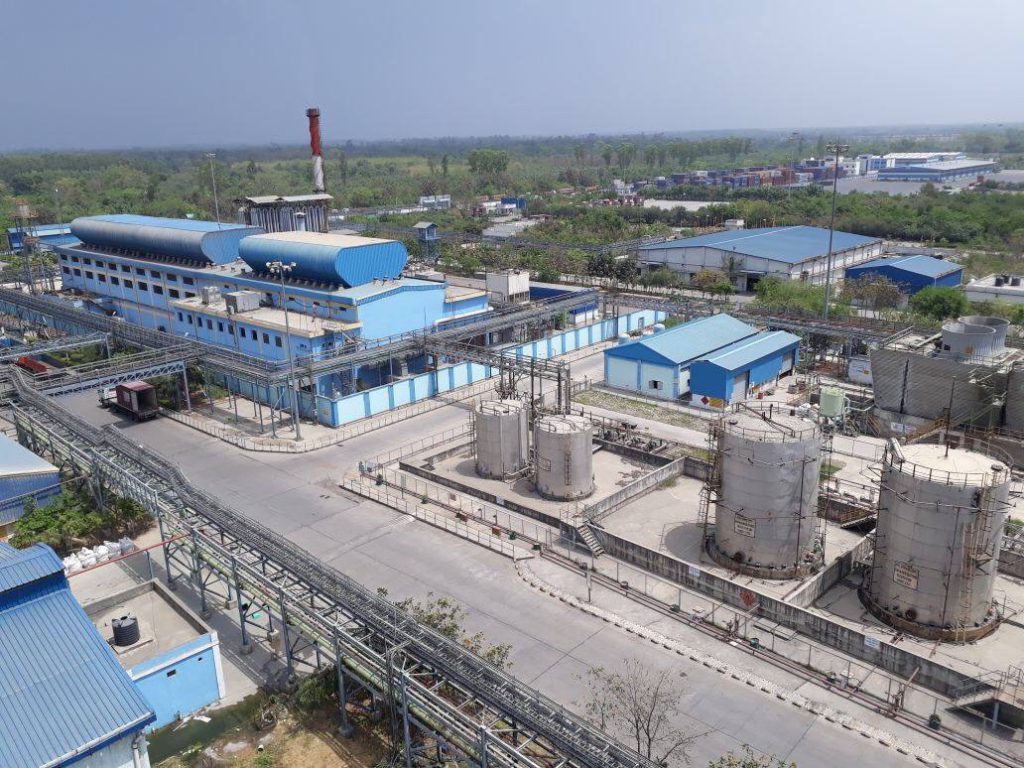
Indian engineering, procurement and construction company Core Energy Systems says the fundraise - equivalent to nearly USD23 million - reinforces its role in shaping India’s civil nuclear future.
_44233.jpg)
The INR200 crore (USD22.86 million - one crore is 10 million) investment was led by Indian investors Pankaj Prasoon, Ashish Kacholia, and "a consortium of like-minded investors aligned with India’s long-term energy sovereignty goals," the company said.
CORE Energy said the funding will allow it to expand precision nuclear engineering and high-tech manufacturing of critical components, while also supporting India’s Small Modular Reactor and Bharat Modular Reactor programmes, both central to the government’s Atmanirbhar Bharat initiative. The company added that the investment will boost its manufacturing, R&D and infrastructure capacity to deliver large-scale nuclear projects to international safety and quality standards, in line with India’s goal of achieving 100 GW of nuclear capacity by 2047.
CORE Energy holds ISO 19443 nuclear-quality certification and is currently carrying out refurbishment work at the Tarapur nuclear power plant, having been contracted by Nuclear Power Corporation of India Ltd to carry out the complete replacement of the primary recirculation piping in Tarapur units 1 and 2 - two boiling water reactors which entered commercial operation in 1969. This first-of-its-kind nuclear life-extension project is now nearing completion, the company told World Nuclear News.
Hindustan Zinc to expand into uranium mining if government allows, CEO says
Hindustan Zinc, India’s top refined zinc producer, will aim to expand into uranium mining if the government opens up the sector to private players, its chief executive Arun Misra told Reuters on Tuesday.

Government sources told Reuters last week that India wants to allow private firms to mine, import and process uranium as part of plans to end a decades-old state monopoly over the nuclear sector and bring in billions of dollars in investment.
“If new uranium blocks are put out for private companies, Hindustan Zinc will be the first to bid,” Misra said in an interview.
“We will get into atomic minerals and especially uranium because the country needs it.”
Prime Minister Narendra Modi’s government plans to expand nuclear power production capacity 12-fold by 2047. The state has historically maintained tight control over the sector due to concerns about safety, strategic security and the potential misuse of nuclear materials.
Hindustan Zinc is, meanwhile, also looking to begin mining rare earth minerals in India, having won its first such block in the northern state of Uttar Pradesh earlier this year.
It has floated global tenders for companies to explore the potential of the block, where it expects to start extracting neodymium – a rare earth used in magnets for motors and generators – in five to six years, Misra said.
Among other critical minerals, Hindustan Zinc is interested in mining lithium, antimony, germanium, copper, and graphite and is seeking the assistance of firms from Australia, South Africa, Peru, Chile, as well as China for exploration, he said.
China, which controls the bulk of global rare earth mining, suspended exports of a wide range of rare earths and related magnets in April, upending critical supply chains for automakers, aerospace manufacturers, and semiconductor companies.
Beijing has promised to address New Delhi’s rare earth needs, however, a top Indian official and a source said on Tuesday, as the neighbours rebuild ties damaged by a 2020 border clash.
Misra said Hindustan Zinc will, meanwhile, ramp up its traditional zinc business, doubling its production capacity to 2 million metric tons by 2029.
(By Neha Arora and Sethuraman NR; Editing by Joe Bavier)

No comments:
Post a Comment