A French court on Thursday sentenced ex-president Nicolas Sarkozy to five years in prison for accepting illegal campaign funds from late Libyan strongman Muammar Gaddafi. Sarkozy, who was convicted of criminal conspiracy but acquitted on other charges, denounced his conviction as "extremely serious for the rule of law". His lawyer confirmed an appeal has already been filed.
Issued on: 25/09/2025 -
By:
FRANCE 24
Video by:
Claire PACCALIN/
James ANDRE/
 F
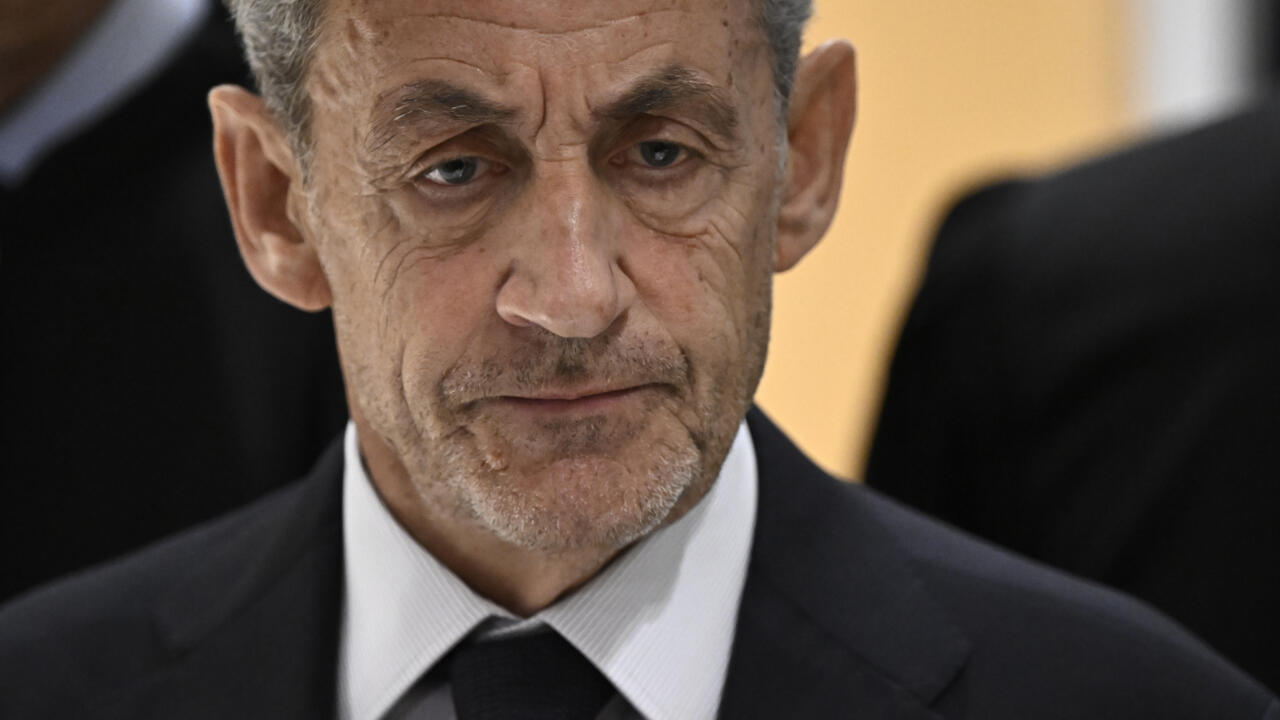
Former French President Nicolas Sarkozy talks to journalists after the verdict in his trial related to alleged Libyan funding of his successful 2007 presidential bid, Paris, France, September 25, 2025. © Stéphanie Lecocq, Reuters
17:09
A court on Thursday sentenced former French president Nicolas Sarkozy to five years in prison over a scheme for late Libyan dictator Moamer Kadhafi to fund his 2007 presidential run.
In a verdict that will make the rightwinger the first French postwar leader to serve jail time, the Paris criminal court convicted Sarkozy, 70, on criminal conspiracy charges.
However, it acquitted the former head of state, France's president from 2007 to 2012, of corruption and personally accepting illegal campaign financing.
The court ordered that Sarkozy should be placed in custody at a later date, with prosecutors to inform him on October 13 when he should go to prison.
He was also fined €100,000 ($117,000) and banned from holding public office. He has been convicted already in two separate trials but always avoided jail, in one case serving his graft sentence with an electronic tag, which has since been removed.
Sarkozy, who was present in court for the verdict accompanied by his model and musician wife Carla Bruni-Sarkozy as well as his three sons, looked ashen-faced and shaken after the verdict.
But he vowed to appeal and his lawyer Christophe Ingrain later confirmed one had been filed.
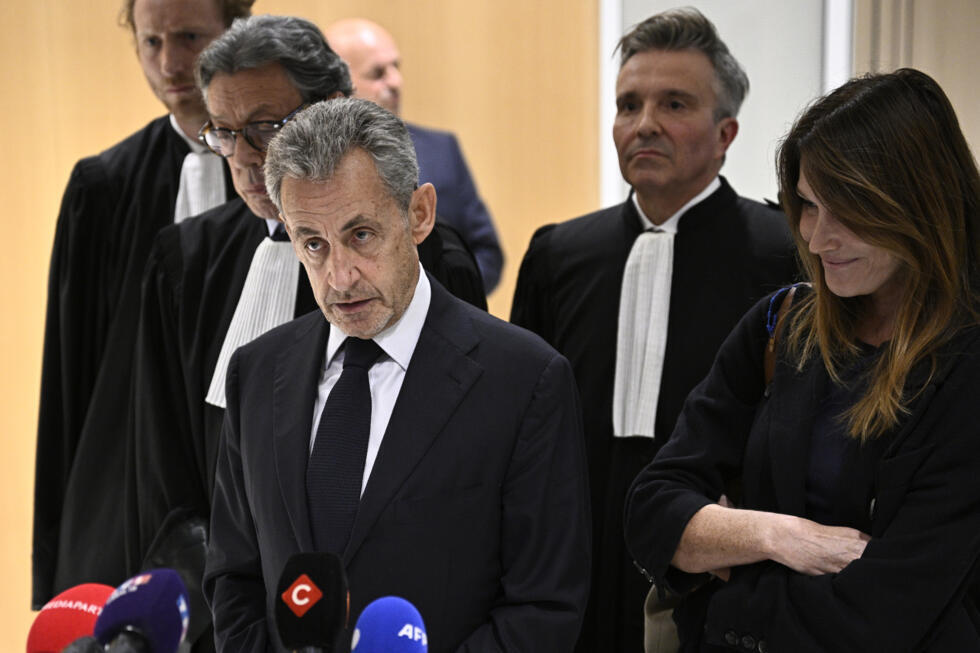
The verdict was "extremely serious for the rule of law", Sarkozy told reporters after leaving the courtroom, adding that he would "sleep in prison with my head held high".
"This injustice is a scandal," he said.
After her husband finished addressing reporters, Bruni-Sarkozy, in a sign of the family's anger, snatched away the microphone muffler of the Mediapart news website which had published the first revelations on the case.
Sarkozy will have to serve his sentence while awaiting the outcome of his appeal.
He is to be the first French leader to be incarcerated since Philippe Petain, the Nazi collaborationist head of state of France's Vichy regime, who was jailed after World War II.
'Exceptional gravity'
Prosecutors argued Sarkozy and his aides, acting with his authority and in his name, struck a deal with Kadhafi in 2005 to illegally fund his victorious presidential election bid two years later.
The public prosecutor accused Sarkozy of entering into a "Faustian pact of corruption with one of the most unspeakable dictators of the last 30 years".
Investigators believe that in return, Kadhafi was promised help to restore his international image after Tripoli was blamed by the West for bombing a plane in 1988 over Lockerbie, Scotland, and another over Niger in 1989, killing hundreds of passengers.
The presiding judge, Nathalie Gavarino, said the offences were of "exceptional gravity".
The court's ruling, however, did not follow the conclusion of prosecutors that Sarkozy was the beneficiary of the illegal campaign financing.
He was acquitted on separate charges of embezzlement of Libyan public funds, passive corruption and illicit financing of an electoral campaign.
Another defendant in the trial, Alexandre Djouhri, who is accused of being the intermediary in the scheme, was sentenced to six years and ordered to be placed immediately under arrest.
Sarkozy's right-hand man, Claude Gueant, and ex-minister Brice Hortefeux were ordered to serve six and two years respectively.
Hortefeux, 67, will be able to serve his term with an electronic tag, while Gueant, 80, will not go to prison, due to his health.
Hortefeux told BFMTV he was "angry" at the sentence.
Eric Woerth, Sarkozy's 2007 campaign treasurer, was acquitted.
Accuser's death
The judgment came two days after the death in Beirut of Franco-Lebanese businessman Ziad Takieddine, a key accuser in the case.
Takieddine, 75, had claimed several times he helped deliver up to €5 million ($6 million) in cash from Kadhafi to Sarkozy and the former president's chief of staff in 2006 and 2007.
He then spectacularly retracted his claims, before contradicting his own retraction, prompting the opening of another case against both Sarkozy and Bruni-Sarkozy, on suspicion of pressuring a witness.
Sarkozy has faced repercussions beyond the courtroom, including losing his Legion of Honour -- France's highest distinction -- following the graft conviction.
But he still enjoys considerable influence and popularity on the French right, and has on occasion had private meetings with President Emmanuel Macron.
Interior Minister Bruno Retailleau, who leads Sarkozy's right-wing Republicans party, expressed his "full support and friendship", adding he had "no doubt" the ex-president will "devote all his energy" to defending himself on appeal.
(FRANCE 24 with AFP)
17:09
A court on Thursday sentenced former French president Nicolas Sarkozy to five years in prison over a scheme for late Libyan dictator Moamer Kadhafi to fund his 2007 presidential run.
In a verdict that will make the rightwinger the first French postwar leader to serve jail time, the Paris criminal court convicted Sarkozy, 70, on criminal conspiracy charges.
However, it acquitted the former head of state, France's president from 2007 to 2012, of corruption and personally accepting illegal campaign financing.
The court ordered that Sarkozy should be placed in custody at a later date, with prosecutors to inform him on October 13 when he should go to prison.
He was also fined €100,000 ($117,000) and banned from holding public office. He has been convicted already in two separate trials but always avoided jail, in one case serving his graft sentence with an electronic tag, which has since been removed.
Sarkozy, who was present in court for the verdict accompanied by his model and musician wife Carla Bruni-Sarkozy as well as his three sons, looked ashen-faced and shaken after the verdict.
But he vowed to appeal and his lawyer Christophe Ingrain later confirmed one had been filed.
The verdict was "extremely serious for the rule of law", Sarkozy told reporters after leaving the courtroom, adding that he would "sleep in prison with my head held high".
"This injustice is a scandal," he said.
After her husband finished addressing reporters, Bruni-Sarkozy, in a sign of the family's anger, snatched away the microphone muffler of the Mediapart news website which had published the first revelations on the case.
Sarkozy will have to serve his sentence while awaiting the outcome of his appeal.
He is to be the first French leader to be incarcerated since Philippe Petain, the Nazi collaborationist head of state of France's Vichy regime, who was jailed after World War II.
'Exceptional gravity'
Prosecutors argued Sarkozy and his aides, acting with his authority and in his name, struck a deal with Kadhafi in 2005 to illegally fund his victorious presidential election bid two years later.
The public prosecutor accused Sarkozy of entering into a "Faustian pact of corruption with one of the most unspeakable dictators of the last 30 years".
Investigators believe that in return, Kadhafi was promised help to restore his international image after Tripoli was blamed by the West for bombing a plane in 1988 over Lockerbie, Scotland, and another over Niger in 1989, killing hundreds of passengers.
The presiding judge, Nathalie Gavarino, said the offences were of "exceptional gravity".
The court's ruling, however, did not follow the conclusion of prosecutors that Sarkozy was the beneficiary of the illegal campaign financing.
He was acquitted on separate charges of embezzlement of Libyan public funds, passive corruption and illicit financing of an electoral campaign.
Another defendant in the trial, Alexandre Djouhri, who is accused of being the intermediary in the scheme, was sentenced to six years and ordered to be placed immediately under arrest.
Sarkozy's right-hand man, Claude Gueant, and ex-minister Brice Hortefeux were ordered to serve six and two years respectively.
Hortefeux, 67, will be able to serve his term with an electronic tag, while Gueant, 80, will not go to prison, due to his health.
Hortefeux told BFMTV he was "angry" at the sentence.
Eric Woerth, Sarkozy's 2007 campaign treasurer, was acquitted.
Accuser's death
The judgment came two days after the death in Beirut of Franco-Lebanese businessman Ziad Takieddine, a key accuser in the case.
Takieddine, 75, had claimed several times he helped deliver up to €5 million ($6 million) in cash from Kadhafi to Sarkozy and the former president's chief of staff in 2006 and 2007.
He then spectacularly retracted his claims, before contradicting his own retraction, prompting the opening of another case against both Sarkozy and Bruni-Sarkozy, on suspicion of pressuring a witness.
Sarkozy has faced repercussions beyond the courtroom, including losing his Legion of Honour -- France's highest distinction -- following the graft conviction.
But he still enjoys considerable influence and popularity on the French right, and has on occasion had private meetings with President Emmanuel Macron.
Interior Minister Bruno Retailleau, who leads Sarkozy's right-wing Republicans party, expressed his "full support and friendship", adding he had "no doubt" the ex-president will "devote all his energy" to defending himself on appeal.
(FRANCE 24 with AFP)
From power to prison: The stunning downfall of France's former president Nicolas Sarkozy
Nicolas Sarkozy, once a dynamic and controversial leader who promised to transform France, has been sentenced to five years in prison for criminal conspiracy tied to illegal campaign funding from Libya. This marks a stunning fall for Sarkozy, who has faced numerous legal battles since leaving office in 2012 and now becomes the first French head of state to face jail time in decades.
Issued on: 25/09/2025
By: FRANCE 24
'Won't hear about me anymore'
Born on January 28, 1955, the football fanatic and cycling enthusiast is an atypical French politician.
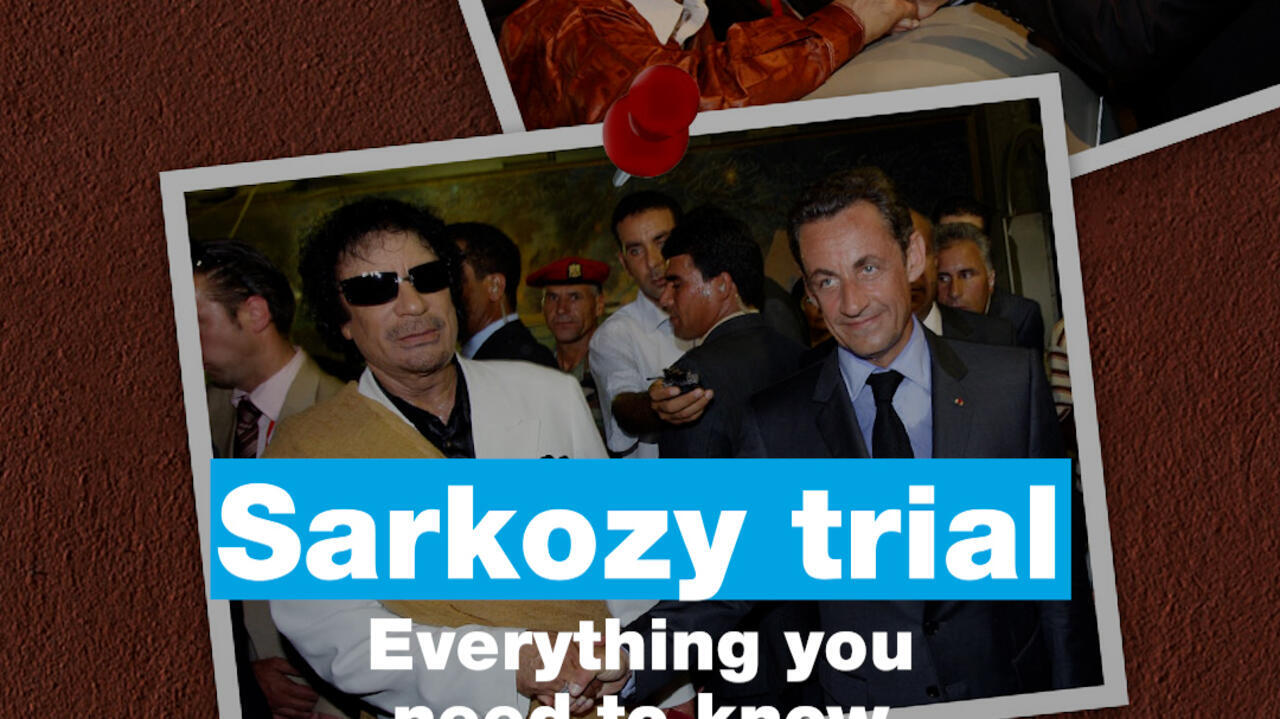
Sarkozy trial: Everything you need to know
The son of a Hungarian immigrant father, Sarkozy has a law degree but unlike most of his peers did not attend the exclusive Ecole Nationale d'Administration, the well-worn production line for future French leaders.
After winning the presidency at age 52, he was initially seen as injecting a much-needed dose of dynamism, making a splash on the international scene and wooing the corporate world. He took a hard line on immigration, security and national identity.
But Sarkozy's presidency was overshadowed by the 2008 financial crisis, and he left the Elysée with the lowest popularity ratings of any postwar French leader up to then.
Few in France have forgotten his visit to the 2008 agriculture show in Paris, when he said "get lost, dumbass" to a man who refused to shake his hand.
Nicolas Sarkozy, once a dynamic and controversial leader who promised to transform France, has been sentenced to five years in prison for criminal conspiracy tied to illegal campaign funding from Libya. This marks a stunning fall for Sarkozy, who has faced numerous legal battles since leaving office in 2012 and now becomes the first French head of state to face jail time in decades.
Issued on: 25/09/2025
By: FRANCE 24
The verdict was a stunning reverse for Sarkozy © Julien De Rosa, AFP
Nicolas Sarkozy entered the Elysée Palace in 2007 boasting hyperactive energy and a vision to transform France, but lost office after just one term and the ex-president is now set to go to prison in a spectacular downfall.
Embroiled in legal problems since losing the 2012 election, Sarkozy, 70, had already been convicted in two separate cases but managed to avoid going to jail.
But after a judge sentenced him on Thursday to five years for criminal conspiracy over a scheme to find funding from Libya's then-leader Moamer Kadhadi for his 2007 campaign, Sarkozy appeared to acknowledge that this time he will go behind bars.
Prosecutors have one month to inform Sarkozy when he must report to jail, a measure that will remain in force despite his promised appeal.
"I will assume my responsibilities, I will comply with court summonses, and if they absolutely want me to sleep in prison, I will sleep in prison but with my head held high," he told reporters after the verdict.
"I am innocent. This injustice is a scandal. I will not accuse myself of something I did not do," he added, declaring that hatred towards him "definitely has no limits".
The drama and defiance were typical of Sarkozy, who is still seen by some supporters on the right as a dynamic saviour of his country but by detractors as a vulgar populist mired in corruption.
Nicolas Sarkozy entered the Elysée Palace in 2007 boasting hyperactive energy and a vision to transform France, but lost office after just one term and the ex-president is now set to go to prison in a spectacular downfall.
Embroiled in legal problems since losing the 2012 election, Sarkozy, 70, had already been convicted in two separate cases but managed to avoid going to jail.
But after a judge sentenced him on Thursday to five years for criminal conspiracy over a scheme to find funding from Libya's then-leader Moamer Kadhadi for his 2007 campaign, Sarkozy appeared to acknowledge that this time he will go behind bars.
Prosecutors have one month to inform Sarkozy when he must report to jail, a measure that will remain in force despite his promised appeal.
"I will assume my responsibilities, I will comply with court summonses, and if they absolutely want me to sleep in prison, I will sleep in prison but with my head held high," he told reporters after the verdict.
"I am innocent. This injustice is a scandal. I will not accuse myself of something I did not do," he added, declaring that hatred towards him "definitely has no limits".
The drama and defiance were typical of Sarkozy, who is still seen by some supporters on the right as a dynamic saviour of his country but by detractors as a vulgar populist mired in corruption.
'Won't hear about me anymore'
Born on January 28, 1955, the football fanatic and cycling enthusiast is an atypical French politician.
Sarkozy trial: Everything you need to know
Sarkozy trial: Everything you need to know © France 24
02:17
02:17
The son of a Hungarian immigrant father, Sarkozy has a law degree but unlike most of his peers did not attend the exclusive Ecole Nationale d'Administration, the well-worn production line for future French leaders.
After winning the presidency at age 52, he was initially seen as injecting a much-needed dose of dynamism, making a splash on the international scene and wooing the corporate world. He took a hard line on immigration, security and national identity.
But Sarkozy's presidency was overshadowed by the 2008 financial crisis, and he left the Elysée with the lowest popularity ratings of any postwar French leader up to then.
Few in France have forgotten his visit to the 2008 agriculture show in Paris, when he said "get lost, dumbass" to a man who refused to shake his hand.
He was flanked by his wife Carla Bruni © Julien de Rosa, AFP
Sarkozy failed to win a second mandate in 2012 in a run-off against Socialist François Hollande, a bruising defeat over which he remains embittered more than a decade on.
The 2012 defeat made Sarkozy the first president since Valéry Giscard d'Estaing (1974-1981) to be denied a second term, prompting him to famously promise: "You won't hear about me anymore."
That prediction turned out to be anything but true, given his marriage to superstar musician and model Carla Bruni and a return to frontline politics. But the latter ended when he failed to win his party's nomination for another crack at the presidency in 2017.
The series of legal woes left Sarkozy a behind-the-scenes political player, far from the limelight in which he once basked, although he has retained influence on the right and is known to meet President Emmanuel Macron.
But Sarkozy is tainted by a number of unwanted firsts: while his predecessor and mentor Jacques Chirac was also convicted of graft, Sarkozy was the first postwar French former head of state to be convicted twice and the first to be formally given jail terms.
Already stripped of the Legion of Honour, France's highest distinction, he will now be the first French head of state to go to jail since Philippe Pétain, France's nominal leader during the Nazi occupation.
(FRANCE 24 with AFP)
Sarkozy failed to win a second mandate in 2012 in a run-off against Socialist François Hollande, a bruising defeat over which he remains embittered more than a decade on.
The 2012 defeat made Sarkozy the first president since Valéry Giscard d'Estaing (1974-1981) to be denied a second term, prompting him to famously promise: "You won't hear about me anymore."
That prediction turned out to be anything but true, given his marriage to superstar musician and model Carla Bruni and a return to frontline politics. But the latter ended when he failed to win his party's nomination for another crack at the presidency in 2017.
The series of legal woes left Sarkozy a behind-the-scenes political player, far from the limelight in which he once basked, although he has retained influence on the right and is known to meet President Emmanuel Macron.
But Sarkozy is tainted by a number of unwanted firsts: while his predecessor and mentor Jacques Chirac was also convicted of graft, Sarkozy was the first postwar French former head of state to be convicted twice and the first to be formally given jail terms.
Already stripped of the Legion of Honour, France's highest distinction, he will now be the first French head of state to go to jail since Philippe Pétain, France's nominal leader during the Nazi occupation.
(FRANCE 24 with AFP)
What does former French President Nicolas Sarkozy's conviction mean for France?
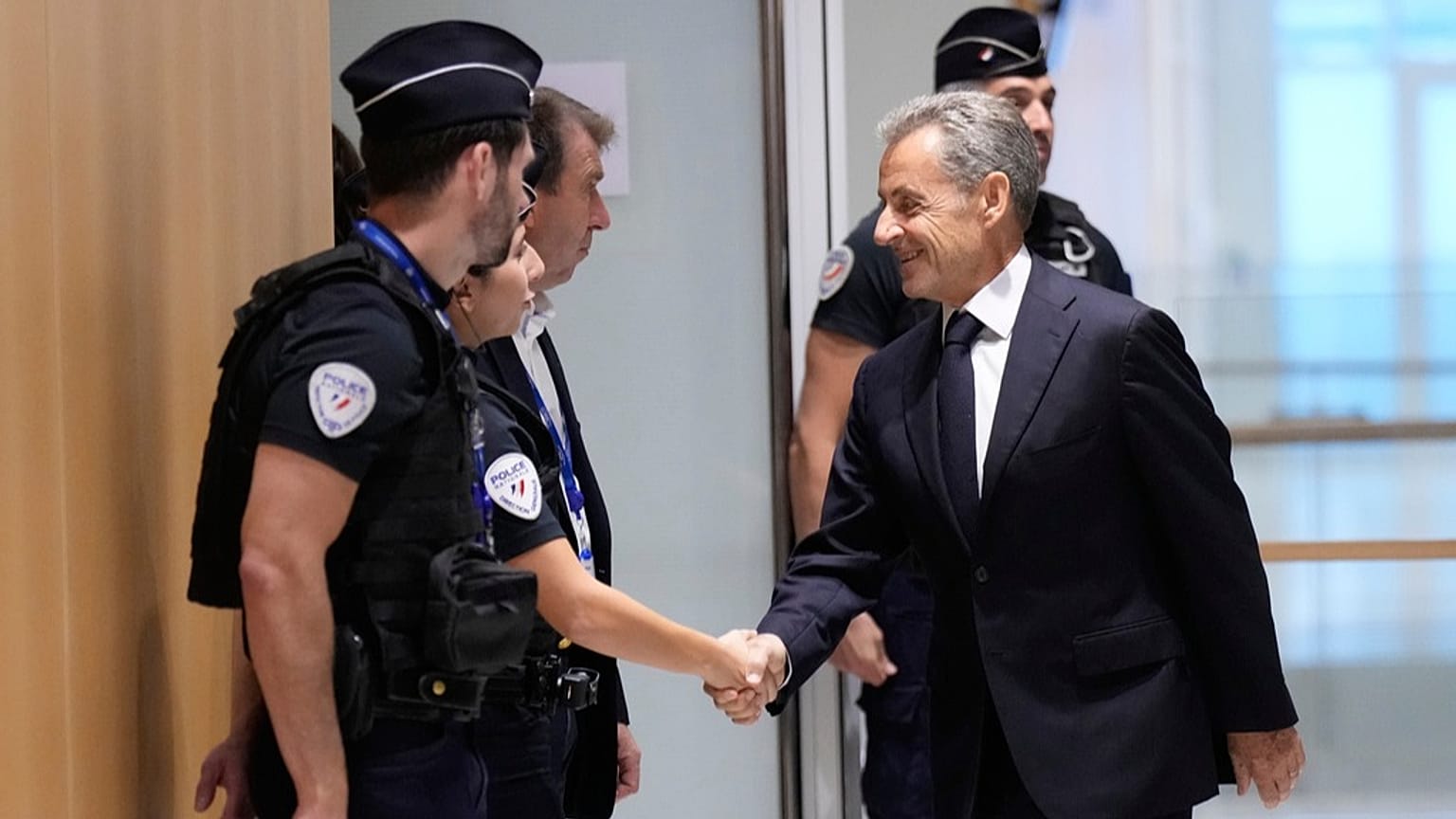
Copyright AP Photo
By Sophia Khatsenkova
Published on 25/09/2025 -EURONEWS
Sarkozy received a five-year prison sentence for criminal conspiracy in a complex scheme allegedly involving the former Libyan regime of Muammar Gaddafi.
Former French President Nicolas Sarkozy was found guilty on Thursday of criminal conspiracy in a long-running case alleging that he sought illegal financing from late Libyan dictator Muammar Gaddafi to secure his 2007 election victory.
The Paris court handed Sarkozy a five-year prison sentence, a €100,000 fine and a five-year ban on holding public office.
In a shocking twist, 70-year-old Sarkozy was also given a deferred detention order, effective immediately.
He must appear before prosecutors by 13 October to be notified of when his imprisonment will begin. His incarceration must start within a maximum period of four months.
Under French law, this measure applies even if he appeals. Because of his age, however, he can request conditional release.
Related
Political and legal fallout
The verdict further complicates Sarkozy's growing list of legal challenges. On 8 October, France's highest court will review his appeal in the Bygmalion case, which saw him sentenced to one year in prison for overspending on his failed 2012 re-election bid.
He has also been convicted in the so-called Bismuth case, involving corruption and influence peddling.
Between January and May, the former head of state had to wear an electronic ankle bracelet, an unprecedented punishment for a former president.
He has lodged an appeal for that case with the European Court of Human Rights.
Copyright AP Photo
By Sophia Khatsenkova
Published on 25/09/2025 -EURONEWS
Sarkozy received a five-year prison sentence for criminal conspiracy in a complex scheme allegedly involving the former Libyan regime of Muammar Gaddafi.
Former French President Nicolas Sarkozy was found guilty on Thursday of criminal conspiracy in a long-running case alleging that he sought illegal financing from late Libyan dictator Muammar Gaddafi to secure his 2007 election victory.
The Paris court handed Sarkozy a five-year prison sentence, a €100,000 fine and a five-year ban on holding public office.
In a shocking twist, 70-year-old Sarkozy was also given a deferred detention order, effective immediately.
He must appear before prosecutors by 13 October to be notified of when his imprisonment will begin. His incarceration must start within a maximum period of four months.
Under French law, this measure applies even if he appeals. Because of his age, however, he can request conditional release.
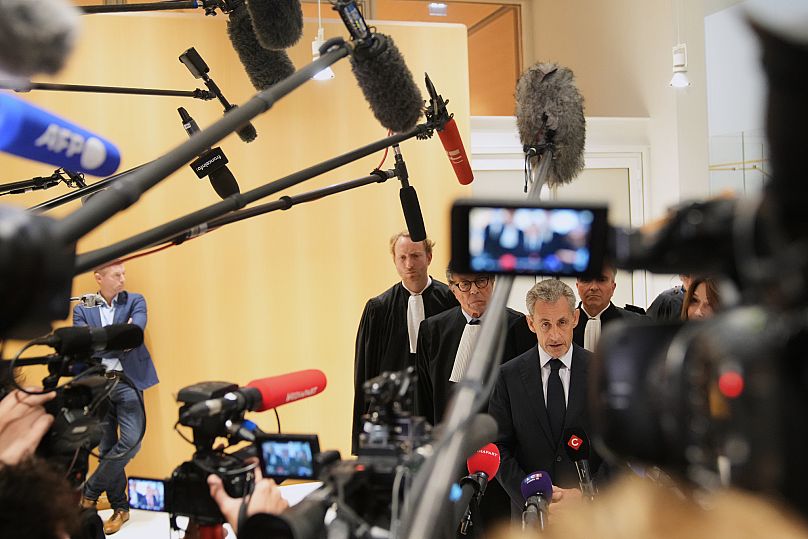
Former French President Nicolas Sarkozy speaks with the media after a Paris court sentenced him to five years in prison, 25 September, 2025 AP Photo
However, the court acquitted him of passive corruption, embezzlement of Libyan public funds and illegal campaign financing, concluding that prosecutors had failed to prove Libyan money directly flowed into Sarkozy's campaign.
The conspiracy charge, the court explained, stemmed from Sarkozy's involvement in a group that prepared a corruption offence between 2005 and 2007.
The chief judge noted that Sarkozy allowed his close associates to approach Libyan officials "to obtain or try to obtain financial support in Libya for the purpose of securing campaign financing."
However, the judge concluded they could not determine with certainty that Libyan money was ultimately used to pay for the campaign.
Sarkozy vows to fight on
After the sentencing, Sarkozy told journalists the ruling was "of extreme gravity for the rule of law" and said he would appeal.
"I will take responsibility. I will comply with the summons of justice. And if they absolutely want me to sleep in prison, I will sleep in prison. But with my head held high. I am innocent," he declared.
Reactions were sharply divided. On the left, many seized the chance to mock the former leader.
Green MP Benjamin Lucas quipped, "In the end, Sarkozy got his new five-year term," referring to the length of a presidential mandate in France.
However, the court acquitted him of passive corruption, embezzlement of Libyan public funds and illegal campaign financing, concluding that prosecutors had failed to prove Libyan money directly flowed into Sarkozy's campaign.
The conspiracy charge, the court explained, stemmed from Sarkozy's involvement in a group that prepared a corruption offence between 2005 and 2007.
The chief judge noted that Sarkozy allowed his close associates to approach Libyan officials "to obtain or try to obtain financial support in Libya for the purpose of securing campaign financing."
However, the judge concluded they could not determine with certainty that Libyan money was ultimately used to pay for the campaign.
Sarkozy vows to fight on
After the sentencing, Sarkozy told journalists the ruling was "of extreme gravity for the rule of law" and said he would appeal.
"I will take responsibility. I will comply with the summons of justice. And if they absolutely want me to sleep in prison, I will sleep in prison. But with my head held high. I am innocent," he declared.
Reactions were sharply divided. On the left, many seized the chance to mock the former leader.
Green MP Benjamin Lucas quipped, "In the end, Sarkozy got his new five-year term," referring to the length of a presidential mandate in France.
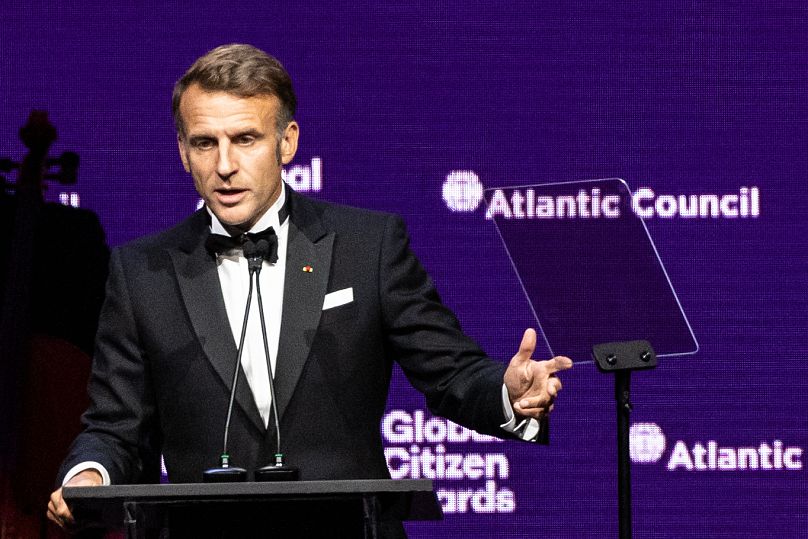
French President Emmanuel Macron speaks at the Global Citizen Awards ceremony in New York, 24 September, 2025 Stefan Jeremiah/Copyright 2025, The AP. All rights reserved
On the right, the verdict was slammed as disproportionate. Conservative Les Républicains party senator Stéphane Le Rudulier called it "a tsunami of shame" and urged President Emmanuel Macron to pardon Sarkozy.
Far-right figurehead Marine Le Pen warned that the ruling set a dangerous precedent by imposing immediate enforcement despite appeal rights.
Marine Le Pen was herself found guilty earlier this year of misappropriating EU public funds in the case involving parliamentary assistants for her party the National Front, now called the National Rally.
A long-running and sprawling case
The ruling also concerned 11 co-defendants, including three of Sarkozy's former ministers.
Businessman Ziad Takieddine, considered a key intermediary and one of Sarkozy's most vocal accusers, died in Beirut earlier this week at the age of 75, never standing trial.
Another intermediary, Alexandre Djouhri, along with other figures linked to Gaddafi's inner circle, was also implicated.
Muammar Gaddafi, Libya's longtime dictator, was toppled and killed in an uprising in 2011, ending his four-decade rule of the North African country.
The three-month trial examined a wide range of evidence, from trips to Tripoli to suspicious offshore transfers.
On the right, the verdict was slammed as disproportionate. Conservative Les Républicains party senator Stéphane Le Rudulier called it "a tsunami of shame" and urged President Emmanuel Macron to pardon Sarkozy.
Far-right figurehead Marine Le Pen warned that the ruling set a dangerous precedent by imposing immediate enforcement despite appeal rights.
Marine Le Pen was herself found guilty earlier this year of misappropriating EU public funds in the case involving parliamentary assistants for her party the National Front, now called the National Rally.
A long-running and sprawling case
The ruling also concerned 11 co-defendants, including three of Sarkozy's former ministers.
Businessman Ziad Takieddine, considered a key intermediary and one of Sarkozy's most vocal accusers, died in Beirut earlier this week at the age of 75, never standing trial.
Another intermediary, Alexandre Djouhri, along with other figures linked to Gaddafi's inner circle, was also implicated.
Muammar Gaddafi, Libya's longtime dictator, was toppled and killed in an uprising in 2011, ending his four-decade rule of the North African country.
The three-month trial examined a wide range of evidence, from trips to Tripoli to suspicious offshore transfers.
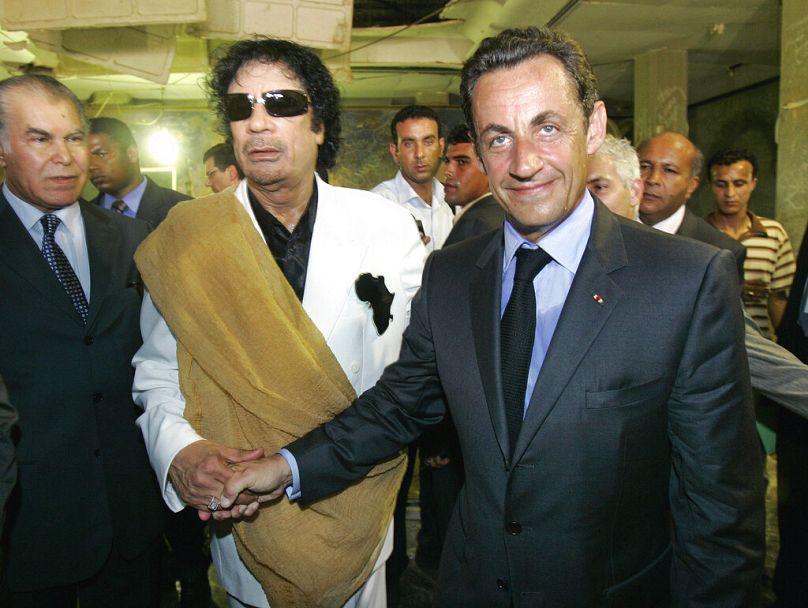
July 2007 - Libyan leader Moammar Gaddafi, left, shakes hands with French President Nicolas Sarkozy as they visit a house bombed by American airplanes MICHEL EULER/2007 AP
Judges also reviewed claims that Sarkozy's government had shielded Gaddafi's former chief of staff, Bechir Saleh.
Prosecutors alleged that Sarkozy and his associates forged a corruption pact with the Gaddafi regime in exchange for campaign financing.
The pact reportedly included promises to rehabilitate Libya's international standing and grant leniency to Abdallah Senoussi, Gaddafi's brother-in-law, who had been convicted in France for his role in a 1989 airline bombing over Niger that killed 170 people.
But the court dismissed a key piece of evidence that was revealed in 2012 by French investigative journal Mediapart: a document signed by Gaddafi's former intelligence chief, Moussa Koussa, which suggested €6.5 million had been sent for Sarkozy's campaign. Judges said the document "now appears more likely" to be forged.
Judges also reviewed claims that Sarkozy's government had shielded Gaddafi's former chief of staff, Bechir Saleh.
Prosecutors alleged that Sarkozy and his associates forged a corruption pact with the Gaddafi regime in exchange for campaign financing.
The pact reportedly included promises to rehabilitate Libya's international standing and grant leniency to Abdallah Senoussi, Gaddafi's brother-in-law, who had been convicted in France for his role in a 1989 airline bombing over Niger that killed 170 people.
But the court dismissed a key piece of evidence that was revealed in 2012 by French investigative journal Mediapart: a document signed by Gaddafi's former intelligence chief, Moussa Koussa, which suggested €6.5 million had been sent for Sarkozy's campaign. Judges said the document "now appears more likely" to be forged.
Related
Political and legal fallout
The verdict further complicates Sarkozy's growing list of legal challenges. On 8 October, France's highest court will review his appeal in the Bygmalion case, which saw him sentenced to one year in prison for overspending on his failed 2012 re-election bid.
He has also been convicted in the so-called Bismuth case, involving corruption and influence peddling.
Between January and May, the former head of state had to wear an electronic ankle bracelet, an unprecedented punishment for a former president.
He has lodged an appeal for that case with the European Court of Human Rights.

No comments:
Post a Comment