It’s possible that I shall make an ass of myself. But in that case one can always get out of it with a little dialectic. I have, of course, so worded my proposition as to be right either way (K.Marx, Letter to F.Engels on the Indian Mutiny)
Tuesday, September 23, 2025
Report: UK's Seafaring Community is in Decline
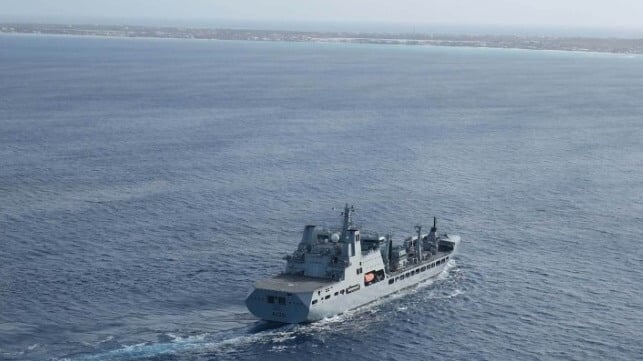
Civilian-crewed RFA Tideforce off the Turks and Caicos (Royal Navy file image)
The United Kingdom is on track for a massive decline in the number of its homegrown seafarers over the next decade and a half owing to rising challenges, which is also making the country struggle to recruit the next generation of seafarers.
A new report commissioned by the Maritime Charities Group (MCG) shows that due to burnout and safety concerns, the UK’s diverse seafaring community is vanishing at an unprecedented rate. Currently, the community - defined as active seafarers, former seafarers, and dependent children - is estimated at more than half a million. By 2040, the community is projected to decline by 40 percent to around 300,000. In an extreme scenario, projections indicate a substantial 75 percent decrease to as low as 131,000.
The future is gloomy for the community of the UK's active seafarers, which is expected to decrease by approximately six percent from 35,000 to 33,000 - or even as low as 23,000, in an extreme scenario. This would mean a loss of one in three seafarers.
According to the report - based on a survey of hundreds of seafarers and their families - the strains that come with the job are the main contributing factors for the declining numbers. For instance, two out of five seafarers believe their vessels are unsafe due to lack of crew, while only one in three agree that they receive adequate shore leave. While on duty in the high seas for weeks and even months, 40 percent of seafarers reported that they do not get enough sleep onboard. Other factors like lack of social interaction and workplace bullying are also a persistent challenge.
The declining numbers of seafarers, coupled by the challenges to recruit, are a major worry for the UK’s shipping industry, which contributes $22 billion in gross value to the national economy annually. Its maritime sector directly employs more than 98,000 people at sea and on shore in roles including cargo, fishing, ferries, superyachts, cruise ships and workboats, and also supports 728,000 jobs.
Seafarers handle 90 percent of the country’s traded goods and support the Royal Navy via the Royal Fleet Auxiliary, as well as crewing cruise ships, ferries and more. Many more are employed in the commercial fishing industry.
“If seafaring communities start to disappear, it will get harder and harder to restore them and to attract the next generation into vital seafaring careers,” said Tim Slingsby, MCG chair.
To safeguard the UK’s seafarers’ community, the MCG wants maritime welfare charities to take urgent action, including reviewing eligibility criteria to expand the number of seafarers they can support, and working with policymakers to ensure standards on seafarer safety and wellbeing.
King Charles Commissions New Royal Navy Attack Sub
After 12 years of construction, the Royal Navy is celebrating the commissioning of another of its most advanced hunter-killer submarines, this time with a royal welcome.
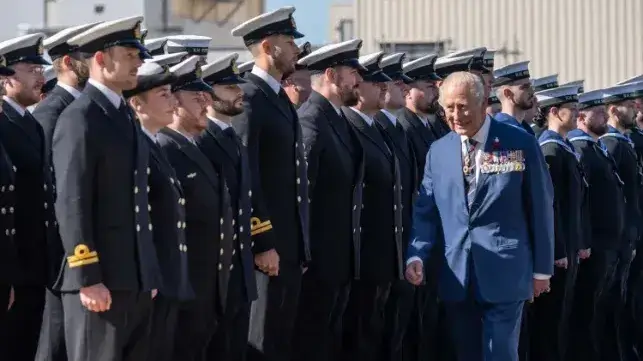
The HMS Agamemnon (S123), built at a cost of $2 billion, was commissioned at the BAE Systems’ yard in Barrow-in-Furness by King Charles III in a ceremony that departed from naval tradition. The King read the commissioning warrant, an act that is typically performed by the Fleet Commander.
Following the commissioning, the 7,400 tonnes nuclear-powered boat that is 97 meters long is expected to complete her final tests and commissioning program before leaving Barrow for sea trials. Nicknamed "Awesome Aggie," the boat becomes the sixth of seven Astute-class submarines built for the Royal Navy over the past quarter of a century. Once fully operational, she will be based at the HM Naval Base Clyde, joining her five sister submarines that are already in service.
The contract for Agamemnon was awarded in 2010, with her keel laid in 2013 marking the beginning of a 12-year construction period, which BAE Systems has described as quite complex. She becomes the sixth Royal Navy vessel to carry the name taken from the Greek king from the Trojan Wars going back to the late 18th century.
Described as the most advanced hunter-killer, Agamemnon is expected to carry out a number of important roles from covert surveillance, tactical strikes to protecting critical underwater infrastructure owing to her advanced weaponry that includes the spearfish heavyweight torpedo and the Tomahawk Block IV land-attack missile, which has a range of some 1,000 miles.
The Tomahawk IV has a longer range but can also be re-directed at a new target mid-flight. It can also beam back images of the battlefield to other assets. The UK says the boat will be pivotal to the country’s national security going into the second half of the 21st Century.
“HMS Agamemnon is a product of stealth, equipped with world-leading sensors and is crewed by a highly-trained and dedicated crew. Together, they form a formidable capability, vital to protecting the United Kingdom’s security interests and supporting our global responsibilities,” said Commander David Crosby.
Crosby is taking over Agamemnon’s command, having commanded her three older sister boats namely Astute, Artful and Anson.
Apart from the commissioning of Agamemnon, the event also marked the steel cutting for the fourth and last Dreadnought-class submarine, HMS King George VI, that is also being built by BAE Systems. The boats, due to enter service from the early 2030s, are the replacement for the Vanguard-class submarines.
King Charles also visited Barrow Town Hall to bestow Royal Port status on the town in honor of its 120-year history as the home of UK submarine construction. Two boats, the final Astute-class submarine Agincourt and Dreadnought are currently under construction in the gigantic Devonshire Dock Hall, which dominates the Barrow townscape.

No comments:
Post a Comment