Inside Tibet’s Digital Prison: PLA And Police Merge To Enforce China’s Grip – Analysis
By Ashu Mann
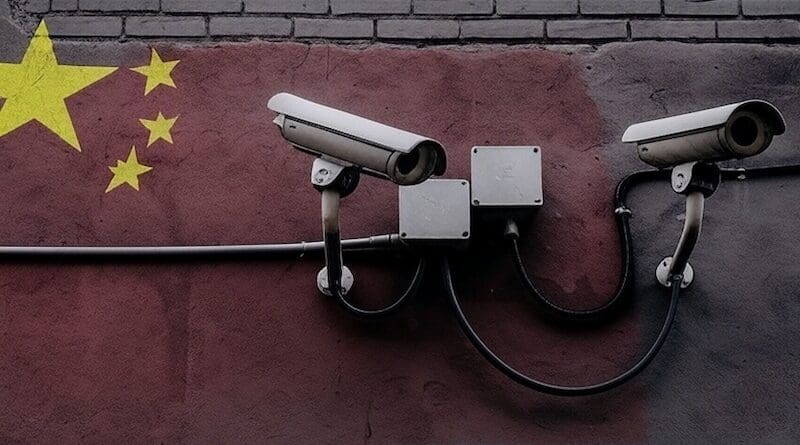
The People’s Liberation Army (PLA) controls Tibet through a combination of military force, comprehensive surveillance technology, and integration with civilian police and administrative bodies. The Chinese government treats urban areas in Tibet like a battlefield, deploying civilian AI-driven surveillance systems derived from military command-and-control frameworks.
The PLA’s tactics are increasingly integrated with civilian police and administrative functions. The military provides the technology, while the police and local officials execute the day-to-day surveillance and enforcement.
This combination of military force, advanced technology, and integrated police control is used to suppress any form of dissent or perceived threat to the Chinese Communist Party’s rule. Tibetan cultural and religious activities are heavily monitored and protests are quickly and harshly put down, as seen in the crackdown on anti-dam protests.
Chinese software developers openly acknowledge that they treat cities and towns in Tibet like a battlefield. The AI-driven civilian surveillance systems deployed in the region are derived from military-grade C4ISR (Command, Control, Communications, Computers, Intelligence, Surveillance, and Reconnaissance) systems.
China has created a “widespread optical fibre cable network” and uses satellite stations (VSAT) to create an effective and secure command and control network across Tibet. Comprehensive broadband connections enable the government to monitor and control the flow of information.
A new report, titled ‘Weaponising Big Data: Decoding China’s Digital Surveillance in Tibet’ by Free Tibet’s sister organisation Tibet Watch and the research organisation Turquoise Roof, uncovers new and alarming evidence of the Chinese government’s deepening digital intrusion into Tibetan lives through the mandatory installation of an app on smartphones at police checkpoints
It sheds new light on the extent to which Party mechanisms infiltrate the personal sphere. This is not only changing the way people communicate, but also creating a society-wide chilling effect on the way they think, feel, and relate to one another, in many cases leading to a complete breakdown of contact.
The integration of a panoply of advanced technologies in Tibet – AI-driven systems fusing facial recognition with internet browsing and app-based monitoring, DNA and genomic surveillance, and GIS tracking data – underlines the emergence of a terrifying approach to governance in the 21st century. It uses machine learning to power systems that prioritise state control and suppression over individual liberties and self-determination.
The Turquoise Roof team conducted a dynamic analysis of the Android version of the app installed by the Chinese police, in order to assess the likelihood that the collected data could feed into broader control mechanisms, including integration with databases managed by the Criminal Investigation Bureau, reflecting wider surveillance and oversight strategies in the region.
The report also investigates a big data policing platform known as the ‘Tibet Underworld Criminal Integrated Intelligence Application Platform’. Analysis of government procurement notices revealed that this system amalgamates data from various existing Public Security Bureau systems in the Tibetan Autonomous Region (TAR) into a central Oracle database. This database system, developed on top of US technology, is instrumental in a campaign that criminalises even moderate cultural and religious expression, Tibetan language study groups, and community welfare work in Tibet.
This report uncovers the Chinese government’s escalated digital surveillance in Tibet, marked by the compulsory installation of the ‘National Anti-Fraud Centre’ app on smartphones. Initially presented as a fraud prevention tool, the app is in fact a crucial element of a larger surveillance network. This report, developed in collaboration with Tibet Watch, London, is based on accounts from a Tibetan refugee in Golog in eastern Tibet (present-day Qinghai province).
According to the report, a dynamic analysis of the Android and Windows Desktop versions of this app found that data collected could extend beyond internet fraud detection, feeding into broader control mechanisms. This includes integration with databases managed by the Criminal Investigation Bureau, reflecting broader surveillance and oversight strategies in the region.
This investigation into the weaponisation of big data analytics in Tibet by the Chinese security state sheds new light on the reach of Party mechanisms into the personal sphere. This is not only changing the way people communicate, but having a society-wide ‘chilling effect’ on the way they think, feel and relate to each other, in many cases leading to a complete breakdown of contact.
There are clear parallels in the deployment of spyware and Universal Forensic Extraction Devices (UFEDs) at police checkpoints in both Tibet and Xinjiang. Similarly, sophisticated big data analytics platforms are in operation in both regions, and although specific systems might differ, the same overarching strategy of control and suppression through intelligence-led policing is evident in both regions.
Chinese software developers have acknowledged this evolution in which cities and towns where people live are treated like a battlefield, the report stated. Now this is an extremely dangerous trend. On one hand, the international human rights organisations just jump onto the bandwagon led by Pakistan and supported by China to condemn alleged human rights violations committed by the Indian security forces in Kashmir and the North East, but turn a blind eye to the suppression by the PLA in Tibet and Xinjiang province. This is because either they have business interests with China or are crushed under the weight of the Chinese debt trap. It can’t get worse than treating humans and their settlements as virtual battlefields.
In contrast to the PLA, The Indian Army implements Operation Sadbhavana in Kashmir and other conflict-affected regions to win the hearts and minds of the local population through welfare and development projects like Army Goodwill Schools and vocational training programs. In Kashmir, this includes national integration tours and direct engagement with youth through Mission Pehal to address grievances and build trust. In the North East, similar community-focused initiatives are undertaken, aiming to counter terrorism and foster trust.
The strategy of “Winning Hearts and Minds” (WHAM) is a people-centric approach used by governments and militaries to gain the trust and support of local populations in conflict-ridden areas, which aims to counter the influence of terrorism and foster normalcy. In the North East, the Indian Army also conducts military civic action programs similar to those in Kashmir. These programs focus on infrastructure development and welfare activities to address the needs of local populations and gain their confidence.
Those who find ways to criticise the Indian Army every now and then, should know that the other international armies like the PLA are no match for the Indian Army – be it on the battlefield or dealing with ordinary citizens of their country.
Ashu Mann
Ashu Mann is an Associate Fellow at the Centre for Land Warfare Studies. He was awarded the Vice Chief of the Army Staff Commendation card on Army Day 2025. He is pursuing a PhD from Amity University, Noida, in Defence and Strategic Studies. His research focuses include the India-China territorial dispute, great power rivalry, and Chinese foreign policy.


No comments:
Post a Comment