It’s possible that I shall make an ass of myself. But in that case one can always get out of it with a little dialectic. I have, of course, so worded my proposition as to be right either way (K.Marx, Letter to F.Engels on the Indian Mutiny)
Tuesday, October 14, 2025
NATO chief Mark Rutte mocks Russia over 'limping' submarine in English Channel
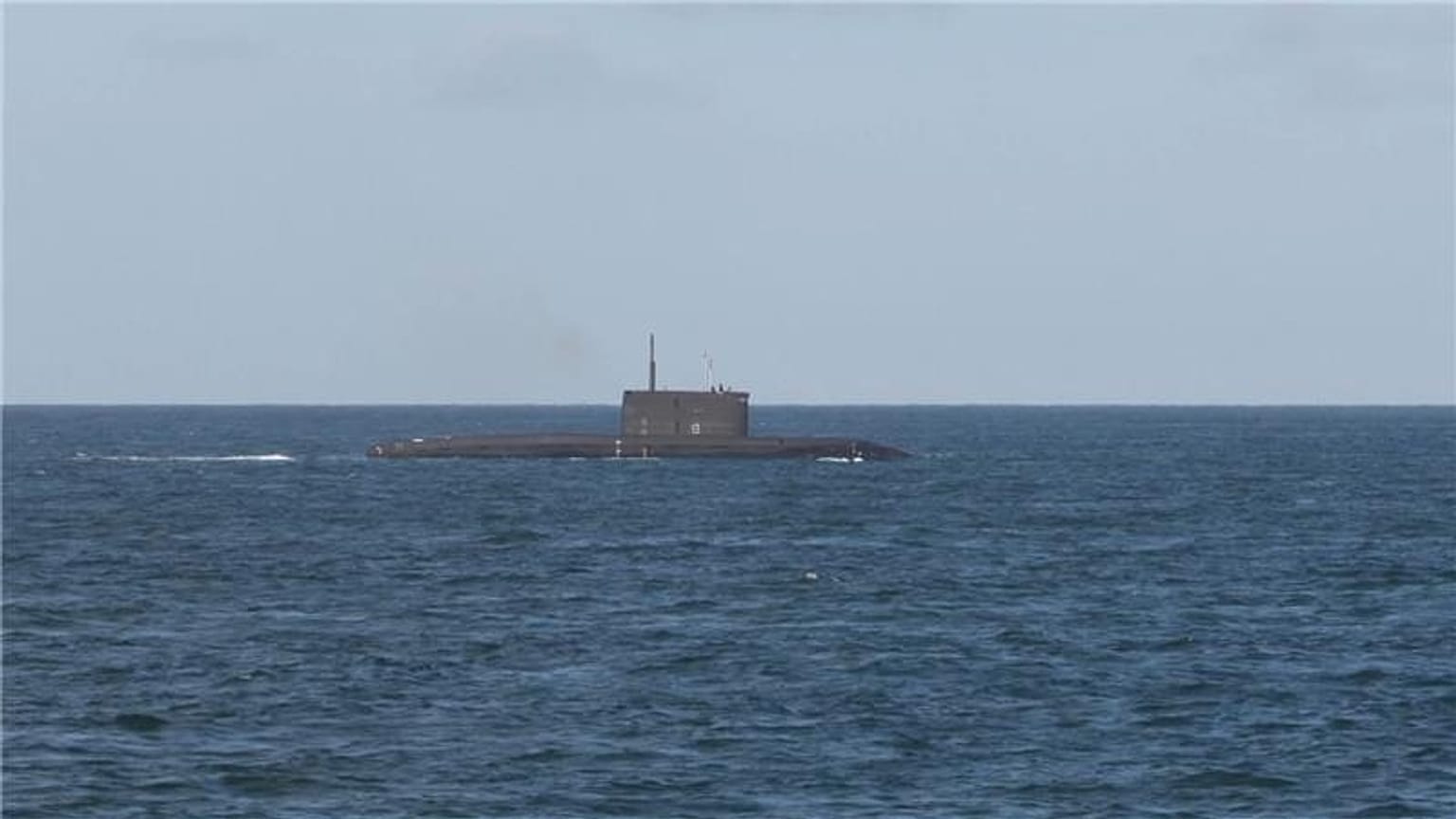
The Russian submarine Nvorossiysk had surfaced off the coast of France last week and was later escorted by the Dutch navy in the North Sea.
NATO chief Mark Rutte has mocked Russia over a "broken" submarine that surfaced off the coast of France last week.
"Now, in effect, there is hardly any Russian naval presence in the Mediterranean left. There's a lone and broken Russian submarine limping home from patrol," he said during a speech in Slovenia on Monday.
Russia's Black Sea Fleet denied the submarine had surfaced because of a malfunction, instead claiming it was complying with navigation rules in the English Channel.
It also said on Monday that the submarine was conducting a "scheduled inter-fleet transit" after completing tasks in the Mediterranean.
The Novorossiysk submarine reportedly suffered a fuel leak, and the Dutch defence ministry said it was being escorted by the country's navy in the North Sea on Saturday.
"What a change from the 1984 Tom Clancy novel 'The Hunt for Red October,'" Rutte said during his speech. "Today, it seems more like the hunt for the nearest mechanic."
NATO'S Maritime Command said in a post on X last Thursday that the French navy was observing the submarine.
"NATO stands ready to defend our Alliance with constant vigilance and maritime awareness across the Atlantic," it wrote.EMENT
The submarine sighting follows several other sightings in the English Channel of ships allegedly belonging to Russia's so-called "shadow fleet".
French authorities launched an investigation earlier this month into the Benin-flagged Boracay oil tanker that was anchored off the coast of Saint-Nazaire in western France.
The so-called shadow fleet consists of aging vessels with obscure ownership and operating without Western-regulated insurance.
Russia's use of the vessels has also raised environmental concerns about accidents given their age and uncertain insurance coverage. A fuel leak on the surface submarine could raise similar concerns.
NATO Highlights Decline of Russian Navy After Sub Surfaces Off France
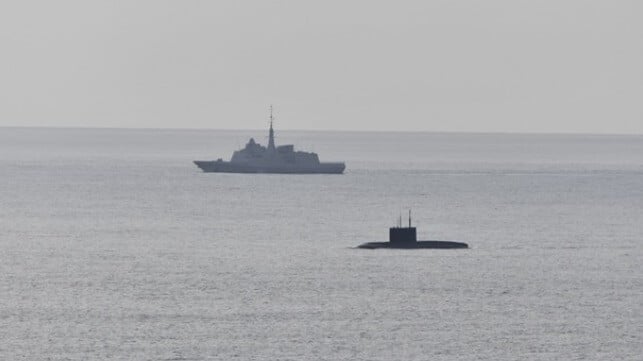
French frigate monitoring the Russian submarine after it surface off the coast of Brittany (NATO Maritime Command)
Speculation continues days after a Russian submarine surfaced off France during its trip home. Today, October 13, NATO Secretary General Mark Rutte took the opportunity to highlight the decline of the Russian navy, saying the vessel was “limping” and jokingly said it could be a “hunt for the nearest mechanic.”
Russian media have been quick to deny the Western media coverage and widespread rumors of a malfunction on the diesel-electric submarine Novorossiysk. TASS said today it is a routine journey home at the end of the patrol, and that the ballistic-missile submarine had simply surfaced due to international rules for the transit of the English Channel.
Rutte, however, openly talked of the decline of the Russian navy. He noted the lack of a Russian naval presence in the Mediterranean.
Rumors began to circulate on well-informed social media channels that the Novorossiysk had suffered a fuel leak. They suggested the vessel lacked onboard capabilities and was forced to surface to empty flooded compartments. Some reports said it was a dangerous fuel leak aboard the vessel, which was commissioned in 2012.
NATO Maritime Command was the first to highlight that the submarine had surfaced with a posting on social media entitled “We are watching.” In the October 9 report, they said a French frigate was conducting surveillance off the coast of Brittany, marking the presence of a Russian submarine operating on the surface.
Monitoring was later handed off to British and then Belgian vessels. The Dutch Navy on Saturday highlighted that its hydrographic survey vessel HNLMS Luymes had been tracking the Novorossiysk, which was traveling with the tugboat Yakov Grebelskiy. An NH90 helicopter was also used in the surveillance operation.
The UK’s Royal Navy and NATO forces have repeatedly highlighted their efforts at tracking Russian vessels during their transits through these waters. The Dutch highlighted that it was the second time this year that Novorossiysk has been tracked off the coast, although the mention this time of a “supporting tug” added to the speculation of problems aboard the submarine.
Russia aiding North Korea’s submarine programme: Seoul
In a disclosure that could shift strategic calculations across East Asia and beyond, South Korea’s Defence Minister Ahn Gyu-back told parliament on October 13, that Russia had likely provided “various technologies” to North Korea to assist in the development of submarines, The Kyiv Independent reports.
The revelation lends weight to long-standing suspicions that Moscow is exchanging military know-how for munitions, manpower, or other support in its ongoing war with Ukraine.
North Korea has over recent years advanced its underwater warfare ambitions, unveiling both ballistic missile submarines and, in March this year, what it claimed was a nuclear-powered strategic guided missile submarine, The Independent adds. Meanwhile, tensions in the Russia–North Korea relationship have increasingly centred on reciprocal security commitments. In June 2024 the two states signed a strategic cooperation agreement that includes mutual support in the event of attack. The military alignment has only grown tighter: data suggests that North Korea dispatched between 11,000 and 12,000 troops to fight alongside Russian forces in late 2024, with some Western estimates placing the number at 20,000 to 30,000.
As a result, critics warn the burgeoning partnership threatens not only European security but regional stability across the Asia-Pacific. And, while South Korea’s minister flagged Russian assistance, the precise nature of the transfers remains murky. It is not yet clear whether the technologies include propulsion systems, missile integration capabilities, stealth design, or control systems. And crucially, there is no public proof to date that North Korea has managed a successful SLBM test launch The Independent added.
Seoul has called for increased vigilance and intelligence sharing among allies though. In response, the United States, Japan, and others in the region will likely intensify maritime and undersea surveillance efforts, wary of an emerging submarine threat.
Russia Tests NATO’s Eastern Defenses – Analysis
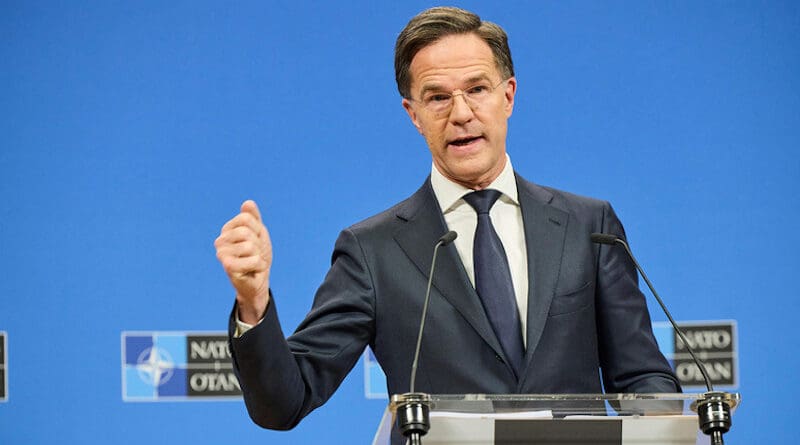
NATO Secretary General Mark Rutte. Photo Credit: NATO
In September, countries in the North Atlantic Treaty Organization (NATO) reported several incidents involving airspace violations. On September 10, 19 drones crossed into Polish territory, prompting Warsaw to call for Article 4 consultations (Polskieradio, September 10; see EDM, September 15).
In a separate episode on September 19, three Russian MiG-31 jets briefly entered Estonian airspace before being intercepted by NATO air policing units (Rus.Postimees, September 19). NATO Secretary-General Mark Rutte described these developments as concerning and emphasized that the Alliance remains attentive to safeguarding its members’ security (NATO, September 23).
These incidents reflect an increasingly complex security environment along NATO’s eastern flank. The combination of drone activity and jet overflights highlights the challenges of managing airspace security in an era of hybrid threats (Meduza, September 20). At the same time, the use of unmarked drones, short-duration incursions, and deactivated transponders complicates attribution and leaves room for differing interpretations of intent (24tv.ua, September 12). NATO leaders emphasize the importance of maintaining readiness and alliance unity in the face of threats from Russia, while Moscow views such maneuvers as responses to what it perceives as increasing Western military pressure (NATO, September 23; RBC, September 27). In this delicate environment, transparency, communication, and crisis-management mechanisms are likely to play a decisive role in preventing unintended confrontation (Lenta.ru, September 28).
The Zapad-2025 exercise, which took place in Belarus from September 12 to 16, has been noted for what it represents in terms of Russia’s evolving military posture (see EDM, September 15; President of Russia, September 16). The exercise was nominally characterized by some 13,000 troops, a number aligned with reporting requirements under the Organization for Security and Co-operation in Europe (OSCE) Vienna Document (Belta, February 20). Zapad- 2025, similar to previous iterations, may have represented an even larger body of activity outside the declared scope (seeEDM, September 15).
Contrary to past exercises oriented toward mass mobilization, this year’s Zapad exercise appeared to prioritize the deployment of more discriminate, high-leverage capabilities. These included integrated air and missile defense systems, electronic warfare assets, precision strike platforms, and enhanced command-and-control measures (TASS, September 18). Some in Belarus and Russia view the priority on these systems as a response to battlefield attrition lessons from Ukraine, as well as to Moscow’s adaptation to resourcing constraints (News.by, September 14)
The geography in the exercises, conducted deep within Belarus, in the context of smaller Collective Security Treaty Organization (CSTO) exercises, suggests attempts to develop a tiered area of operations along the eastern boundary of NATO (Kommersant, September 17). This would presumably provide Russia with greater room to project power toward the Baltic states or Poland if tensions are raised (see EDM, June 11).
Russian officials presented the exercises as routine and defensive in nature, designed to enhance coordination with Belarus and prepare for contingencies under the CSTO umbrella (President of Russia, September 16). From this perspective, Zapad is part of Moscow’s overall strategy to reassure domestic constituencies and regional allies about its military staying power. Others argue that the exercise serves as a testing ground for new operational ideas, particularly hybrid warfare, electronic predominance, and the coordination of distant strikes. Such experimentation does not necessarily imply an instant escalation, but rather indicates that Russia is continuing to formulate its doctrine for potential long-term competition with NATO (Belarusian Investigative Center, May 30).
More generally, Zapad-2025 illustrates the dual nature of Russian maneuvers. Externally, they are declared defensive in nature, but internally, they are doctrinally exploratory. The extent to which the changes are appreciated will depend on the political frame of analysis through which they are viewed, as stabilizing maneuvers within Russia’s declared defense zone, or as part of a broader effort to maintain leverage against NATO over an extended period of strategic tension (Russian Ministry of Foreign Affairs, September 18).
Outside of the brief military actions, the never-ending crisis cycle between Russia and NATO places perception management at the forefront (Mir24.tv, September 15). For Russia, limited incursions and drills, such as Zapad-2025, are not only military exercises but also a form of political communication with both domestic and foreign audiences. By demonstrating preparedness without directly crossing red lines, Russia maintains leverage without triggering escalatory measures. For NATO, the test is less about equalizing capabilities than about maintaining political unity among its 32 members, despite each having differing priorities and resource bases (see EDM, June 3, June 4,September 16, October 5). Burden-sharing, defense budgets, and policy toward Ukraine are potential fault lines that Moscow can exploit (see EDM, July 22). Confrontation is therefore as much about narrative control and alliance unity as it is about military deployments. Whether this phase coalesces into a prolonged standoff or stabilizes into managed competition will depend on how each one of them calculates deterrence and restrains itself (Pronedra.ru, September 15).
In response to these operations, NATO launched Operation Eastern Sentry on September 12, enhancing air and sea deterrence in its eastern direction with additional aircraft, frigates, and missile defense capabilities (NATO, September 12; see EDM, September 15, 17). During its June 2025 Hague Summit, NATO pledged to increase defense expenditure to 5 percent of GDP by 2035—3.5 percent for central military capabilities and 1.5 percent for infrastructure (NATO, June 15). That is from reactive deterrence to proactive resilience. Not all members of NATO have reached the former 2 percent threshold, casting doubt on whether the 5 percent mark can be achieved (Atlantic Council NATO Defense Spending Tracker, September 2025).
The Russia–NATO relationship now unfolds on multiple levels. Moscow employs graduated pressure and hybrid tactics to test boundaries, and NATO navigates the need for deterrence credibility against the risk of over-escalation. The standoff is not a brief fire but an occurrence within a broader cycle of competition, with each learning to react to the other (RG.ru, August 28).
The extent of the Alliance’s commitment to remaining united and maintaining its credibility will determine the direction of this confrontation. If NATO holds firm, it may gain a new purpose from today’s tensions. If divisions intensify, Moscow may achieve a strategic advantage without actual escalation (Zavtra.ru, September 23).
The Jamestown Foundation’s mission is to inform and educate policy makers and the broader community about events and trends in those societies which are strategically or tactically important to the United States and which frequently restrict access to such information. Utilizing indigenous and primary sources, Jamestown’s material is delivered without political bias, filter or agenda. It is often the only source of information which should be, but is not always, available through official or intelligence channels, especially in regard to Eurasia and terrorism.




No comments:
Post a Comment