Ørsted Posts Massive $262 Million Q3 Loss As Offshore Challenges Mount

Ørsted, the world’s largest offshore wind developer, reported on Wednesday a loss for the third quarter amid soaring impairment charges as the offshore wind industry faces backlash in the United States and rising costs in all geographies.
Ørsted, which has recently completed a huge rights issue equal to some $9.35 billion, booked a loss of $262 million (1.7 billion Danish crowns) for the third quarter, compared to a profit of $796 million (5.17 billion crowns) for the same quarter of 2024.
Impairment losses soared by 519% to $240 million (1.757 billion crowns) in July to September this year, which turned out to be one of the most tumultuous periods in the history of the company.
Faced with numerous headwinds, Ørsted last month said it would slash its workforce numbers by 2,000 by 2027, eliminating a quarter of its current roles.
Fresh off its $9.35 billion rights issue to raise funds from existing shareholders, Ørsted announced it is taking another step in the execution of its strategic priorities by reducing its organization by about 2,000 positions by the end of 2027.
The Denmark-based offshore wind developer has faced mounting challenges in the United States, where the Trump Administration is obstructing the construction of offshore wind projects, including the fully permitted 704-megawatt (MW) Revolution Wind being built by Ørsted offshore Rhode Island and Connecticut.
Regulatory changes, cost inflation, and high interest rates have impacted project economics in the offshore wind industry in the past two years. The impact has been felt by Ørsted, which turned to its existing shareholders to raise capital to cover immediate financing needs, manage risks from regulatory uncertainty in the U.S., and strengthen its capital structure.
In comments on the Q3 results today, CEO Rasmus Errboe said,
“Our key focus is to continue delivering on our business plan, which will enable Ørsted to remain a global leader of offshore wind with a strong foothold in Europe.”
By Tsvetana Paraskova for Oilprice.com
Multi-Billion Dollar Offshore Wind Energy Investments from Apollo and CIP
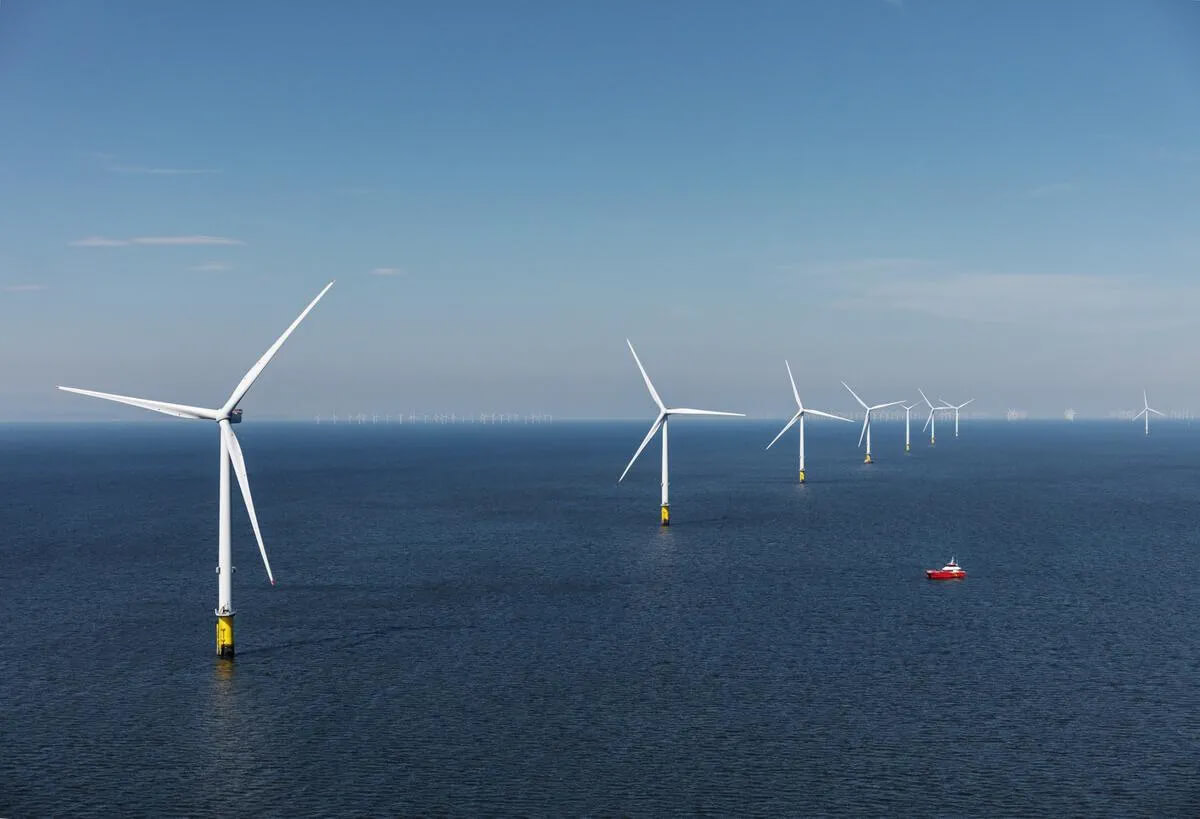
The international investment community continues to see compelling investment opportunities in the offshore wind energy sector, with the respected Apollo-managed funds announcing they will invest $6.5 billion in the UK, while Copenhagen Infrastructure Partners is reported to be planning a $3 billion investment in the Philippines. The moves come despite the repeated headlines about the troubles in the offshore wind energy sector.
Danish developer Ørsted has struck a deal with Apollo to sell a 50 percent stake in the under-construction Hornsea 3 project, which will be one of the largest offshore wind farms ever built. Located in the North Sea, the project will have a total of up to 231 turbines and a capacity of 2.9 GW. Onshore work has been underway since 2023, with the project expected to be completed in 2027.
Ørsted reports that it chose to partner with Apollo in part for its ability to deliver a long-term, comprehensive equity and financing solution for the large-scale infrastructure project. It cites the investment group’s expertise and scaled capital, along with Ørsted’s strategy to divest of shares in projects to reduce risks, as the group faces deep financial troubles.
“The divestment represents an important milestone for Ørsted as we continue to deliver on our partnership and divestment program, which is a cornerstone of our business plan,” said Trond Westlie, Ørsted Group CFO.
The Hornsea 3 transaction is subject to regulatory approvals and is anticipated to close before year-end 2025. The Apollo Funds are expected to invest approximately $3.25 billion upon close, with the remaining $3.25 billion to be funded as the project reaches certain construction and development milestones in the coming years.
Apollo Partner and Co-Head of European Credit Leslie Mapondera noted that this is the latest large-scale transaction in Europe for the group, where it is investing behind energy infrastructure, transition assets, AI, and other key priorities. The investment in Hornsea 3 follows a series of recent large-scale capital solutions Apollo Funds have provided for European energy infrastructure, including a €3.2 billion investment to support expansion of the German energy grid, a £4.5 billion financing commitment to EDF for its Hinkley Point C nuclear power plant, and more than $4.5 billion of investments with BP in its TANAP and TAP pipelines.
While Apollo has been making large investments in Europe, President Ferdinand Marcos of the Philippines met with representatives of Copenhagen Infrastructure Partners today to discuss the company’s first offshore wind development in Southeast Asia. The Philippines reports that CIP will build a $3 billion offshore farm project south of Manila in the central Philippines. The project will be on the East Coast in the Philippine Sea.
The reports said CIP was attracted to the project because of the strategic location of the Philippines and the government’s commitment to shifting to renewable energy.
SouthCoast Wind Loses Court Appeal to Block BOEM Review of Permits
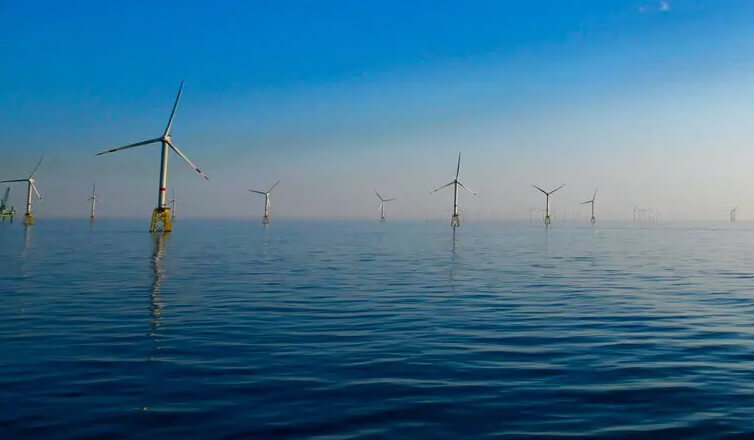
The offshore wind energy sector in the U.S. suffered another setback on Tuesday, November 4, as part of the efforts of the Trump administration to derail future projects. The U.S. District Court for the District of Columbia granted a federal motion that clears the way for the Bureau of Ocean Energy Management to review the approvals and permits issued to the project during the Biden administration.
District Judge Tanya Chutkan filed a five-page opinion and order in the suit seeking to challenge the permits for the SouthCoast Wind project off Massachusetts. The opinion cites the Secretary of the Interior’s “broad discretion” under the Outer Continental Shelf Lands Act and, in so doing finds BOEM has the authority to review the previously granted approvals.
Chutkan writes that there was a lack of evidence that SouthCoast Wind, a project being developed by EDP Renewables and ENGIE, “will suffer significant and immediate hardship during a stay.” The decision sides with the federal government, which asked for the stay in a suit filed by the Town and County of Nantucket, Massachusetts, challenging the approvals. The federal government asked for the stay in that case on the grounds of “judicial economy.”
Nantucket has repeatedly filed cases against the project, challenging the licensing process and the decision by the Biden-era BOEM and Department of the Interior. The project, which was then known as Mayflower Wind, won its lease in a December 2018 auction. After years of review, the Construction and Operation plan was approved in December 2024, and the permits were granted in January 2025, calling for the construction of up to 141 wind turbine generators and up to five offshore substation platforms with the potential to generate up to 2,400 MW. It would be located about 26 nautical miles south of Martha’s Vineyard and 20 nm south of Nantucket, Massachusetts.
In March 2025, Nantucket filed yet another case against BOEM and SouthCoast to challenge the permits. The decision handed down today stays that case while BOEM reviews the approval of the Construction and Operations Plan. However, Chutkan also instructs that on or before January 3, 2026, the court must receive a joint status report on BOEM’s review and every 60 days thereafter. Also, within 30 days of the final decision, another report has to be submitted to the court.
BOEM contends it is acting in compliance with the order issued by Donald Trump, hours after he was sworn in as president, to pause offshore wind projects and review the process. In its filing calling for the stay in the Nantucket case, BOEM and the Department of the Interior allege that the Environmental Impact Statement may have “understated or obfuscated impacts that could have subsequently been improperly weighted.”
The developer had argued that it was proceeding with the preparation for the project based on the approvals granted and the belief that the U.S. would honor its obligation. It says it has invested over $600 million in the project, and the stay and review “implicates various contracts and commitments made in reliance on the lawful issuance of project approvals, project financing, and recent Congressional action to set firm deadlines on environmental reviews.”
The first phase of SouthCoast wind was selected by Massachusetts and Rhode Island. The company has been negotiating its power agreements and faces state deadlines that it said could be jeopardized.
The federal government has sought similar stays in other cases pending over the approval of offshore wind permits by the Biden administration. It has made similar arguments that the individual cases should not proceed because of its plans to review the approvals granted by its predecessors.
Interior Secretary Doug Burgum has said several times that the administration will end the offshore wind energy industry, while Trump has ordered multiple agencies to work together to draft plans to stop offshore wind. Recently, Health and Human Services (HHS) Secretary Robert F. Kennedy Jr. directed the federal Centers for Disease Control and Prevention to investigate potential health and safety hazards from offshore wind turbines.


No comments:
Post a Comment