Nuclear News
Nuclear entering a 'golden age', WNE told
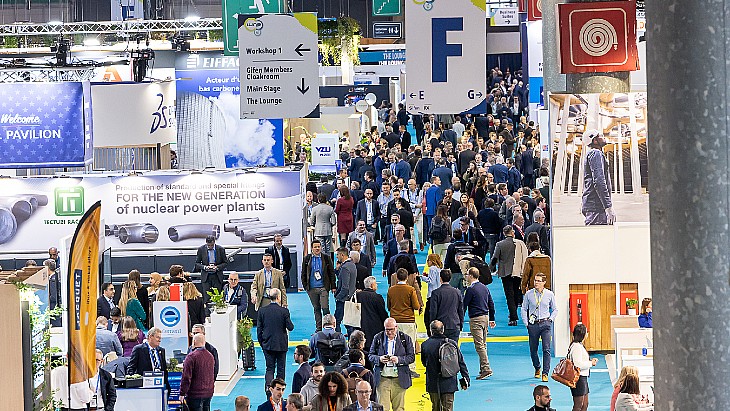
"Two years ago in Dubai in one of these big climate conferences - they are called the COPS, it was the 28th COP - for the first time, everybody around the world ... agreed that nuclear energy should be accelerated, not just tolerated," noted Rafael Mariano Grossi, Director General of the International Atomic Energy Agency. "Accelerated, because we know and we finally accepted the indispensable nature of this through the energy mixes in the world. So from that moment on, and on that occasion, a number of candidates said, well, we should perhaps triple our nuclear percentage. So, of course, big words, big promises.
"From promise to progress, the sector is experiencing a return to realism, as countries expand existing programmes, launch new ones and update regulations to meet future energy needs."
Grossi said that for the first time in the commercial history of nuclear exploitation, the market is demanding it. "The market is pushing for nuclear. It's no longer about states taking decisions top-down and going for an avenue that says nuclear has to be there. And it is obvious where this is happening."
He told delegates to "keep engaged because there are great moments ahead for all nuclear, all over the world."
Grossi's comments were echoed by Fatih Birol, Executive Director of the International Energy Agency, who said at World Nuclear Exhibition (WNE) in 2021 that, looking at the data, he dared to say that nuclear energy may make a comeback. "And today, nuclear is back. Nuclear is back in a very strong way," he declared. "2025, this year, according to our numbers, is the highest amount of electricity generated from nuclear in the world."
Furthermore, he noted, 70 gigawatts of nuclear power plants are under currently construction - "the highest ever in the last three decades". In addition, 40 nuclear newcomer countries have plans to build a nuclear industry. "So all these three things coming together, I think, what I said four years ago, nuclear is going to make comeback, is a reality now.
"In my view, nuclear has a golden opportunity to make this comeback to see a golden age of nuclear power as we have seen in the '70s and '80s. But this is not taken for granted."
Birol added: "The market is there, demand is there, technology is there, and the field of policy is moving in the right direction. Whether or not, in this very fertile and excellent basis, nuclear industry, governments will make sure that we are entering the golden age for nuclear power remains to all of you."
Framatome, TerraPower in advanced fuel breakthrough
_28385.jpg)
Production of HALEU (high-assay low-enriched uranium) metal is a crucial part of the fuel fabrication process to transform uranium into a metallic feedstock that is used to fabricate fuel for advanced reactors. A metallisation fabrication line has been completed at Framatome's facility in Richland, Washington, and the companies said the process, technologies, and expertise used to produce metal from depleted uranium can be used with uranium at the higher enrichment levels required to power TerraPower's advanced reactor design.
"This milestone underscores the critical progress being made in developing a reliable advanced reactor fuel supply chain and in propelling TerraPower's Natrium technology," Lionel Gaiffe, senior executive vice president of Framatome's Fuel Business Unit, said. "Through this strategic collaboration, we are delivering the next generation of nuclear technology that will define the future of clean energy."
TerraPower's Natrium technology features a 345 MWe sodium-cooled fast reactor with a molten salt-based energy storage system. The company broke ground on the first Natrium project last year at a site in Kemmerer, Wyoming.
Natrium - like many advanced reactors currently under development - will use HALEU fuel, with uranium enriched to contain between 5% and 20% uranium-235. The US Department of Energy established its HALEU Availability Program in 2020 to secure a domestic supply of HALEU for civilian domestic research, development, demonstration, and commercial use, enabling nuclear developers to request HALEU material from DOE sources, including material from the National Nuclear Security Administration. Earlier this year - following Executive Orders to expedite the roll-out of new reactors - the DOE launched a new pilot programme to accelerate the development of advanced nuclear reactors and strengthen domestic supply chains for nuclear fuel.
Successful completion and operation of the metallisation fabrication line demonstrates Framatome's readiness to accept DOE funding as part of the HALEU Availability Program Solicitation and deploy in a Category II facility. (Category II facilities are licensed by the US Nuclear Regulatory Commission to handle "special nuclear material of moderate strategic significance" such as HALEU: the low-enriched uranium used to fuel the USA's current reactor fleet is classed as being of low strategic significance and can be handled in a Category III facility.)
"TerraPower has been committed to supporting the development of a robust, domestic HALEU fuel supply chain," TerraPower President and CEO Chris Levesque said. "The successful production of these metallic uranium pucks proves that we can manufacture the metallisation component of HALEU fuel here in Washington and support our plans to rapidly deploy Natrium plants across the United States."
The Natrium reactor is a TerraPower and GE Vernova Hitachi Nuclear Energy technology.
Industry gets call for action
"Nuclear energy has moved from the margins of energy discourse to the centre of global climate action, national energy security and socio-economic progress," World Nuclear Association Director General Sama Bilbao y León said in a keynote speech later during the opening day.
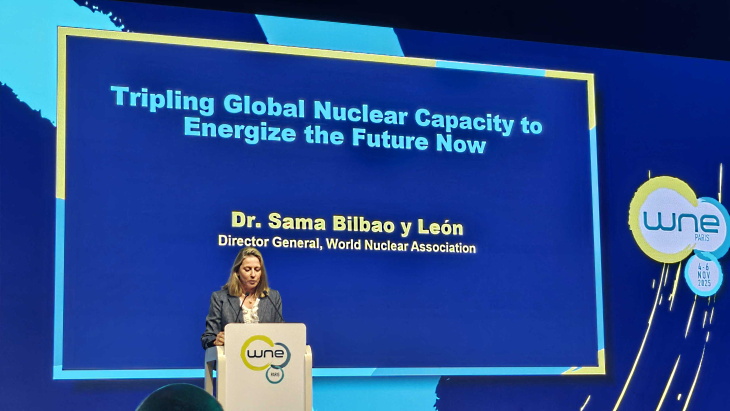
(Image: WNN)
"Nuclear will be back at COP again, COP30 taking place in Belem, Brazil next week," she added. "World Nuclear Association will be there, representing the industry and providing authoritative information and influencing decision makers. We hope for more countries, and key stakeholders to join our growing coalition of the ambitious. But declarations alone are not enough. We - the nuclear industry - must now deliver."
She said the world will need at least 1000 GWe of new nuclear generating capacity in the next 25 years. "Over the past 25 years we added 100 GWe, so we need to do much more than triple our delivery capacity. The groundwork is being laid, but the path ahead requires unity, urgency, and unwavering commitment."
Bilbao y León declared: "To succeed, we must turn political goodwill into pragmatic policies. That means streamlining licensing, securing affordable financing, expanding our supply chains, and investing in human capital. Governments will set the frameworks - but it is us, the industry, who must build and operate this future. Let me be clear: a successful project anywhere is a success everywhere. Every reactor that comes online, every innovation that proves viable, every community that embraces nuclear - these are victories for all of us. They build confidence, attract investment, and inspire replication."
She called for the nuclear industry to "unite around shared goals ... Share best practices, support each other's projects, and speak with one voice when it comes to the value of nuclear energy. The world is watching. The nuclear industry must be ready."
Kansai begins surveys of Mihama site for new reactor
_49483_45517.jpg)
In a statement on Wednesday the company said: "As preparations for the on-site investigation are complete, we began transporting materials and equipment today and have begun the investigation. Further preliminary investigations, including drilling surveys and surface reconnaissance, are scheduled to be completed by around March 2027.
"We will prioritise safety during this investigation, and will continue to work hard to ensure the safe and stable operation of our nuclear power plants. We will continue to promote our nuclear power generation business with the understanding of local residents and others."
The projected timeline is for the detailed survey to take place from April 2027 to 2030.
According to a Jiji Press report the survey "will examine the geological and topographical conditions of two areas inside and outside the existing plant".
Kansai originally announced in November 2010 its intention to begin a voluntary survey at the Mihama site for the construction of a new reactor to replace unit 1 there. However, the survey has been suspended since the accident at the Fukushima Daiichi plant in March 2011.
According to a Reuters report in July, Kansai is considering deploying the SRZ-1200 advanced light water reactor being developed by Mitsubishi Heavy Industries (MHI).
MHI launched the SRZ-1200 design, which is being developed in collaboration with four Japanese utilities, in 2022. The 1200 MWe reactor is designed to meet the country's enhanced regulatory safety standards.
While both units 1 and 2 at the Mihama plant have been shut down, unit 3 of the plant is among the Japanese reactors that have resumed operation, having been restarted in June 2021.
The last nuclear power reactor to be constructed in Japan was unit 3 of Hokkaido Electric Power Company's Tomari plant, which began operation in 2009.
Tractebel and Hexana launch SMR cogeneration task force
The two companies have signed a memorandum of understanding aimed at promoting nuclear-powered cogeneration "as a key solution for industrial decarbonisation, energy system resilience, and efficiency across Europe".
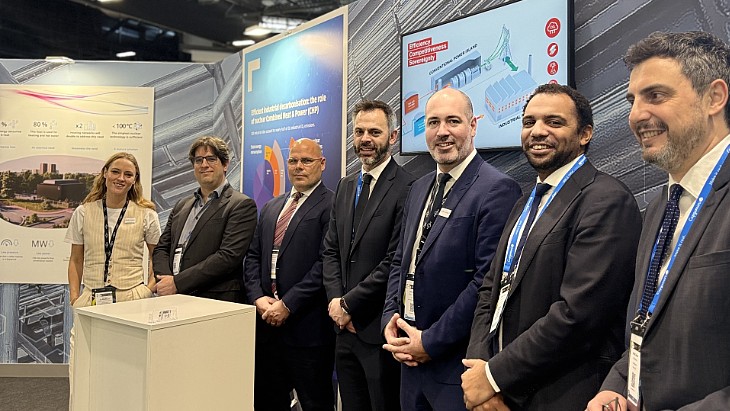
Belgium-headquarted Tractebel and Hexana, which was spun out of the French Alternative Energies and Atomic Energy Commission, are aiming to bring together stakeholders from the nuclear, industrial and cogeneration sectors in a new small modular reactor and advanced modular reactor Cogeneration Task Force.
Hexana aims to develop a small modular reactor featuring a sodium-cooled fast neutron reactor, integrated with a high temperature storage device. A plant would comprise two of these reactors (400 MWt each) supplying a heat storage device. An adjoining conversion system will allow it to produce electricity on demand and in a flexible manner to compete with gas-fired power plants, but also to supply heat directly to nearby energy-intensive industries.
Cogeneration refers to producing both electricity and heat and is seen as a way to be able to decarbonise, in particular, certain heavy industries. The new task force will be within COGEN Europe, which is the European Association for the Promotion of Cogeneration.
Bernard Marié, Head of Flex Power, Renewable, Industry & SMR at Tractebel, said: "Decarbonising industry remains one of Europe's greatest challenges, with hard-to-abate sectors like cement, steel, and chemicals responsible for over 60% of EU industrial CO2 emissions. Under the umbrella of COGEN Europe, the Task Force is a strategic step to unlock the potential of nuclear cogeneration and help shape a low-carbon industrial future for Europe. We invite all stakeholders to join us in this effort."
Sylvain Nizou, Hexana CEO, said: "Nuclear cogeneration represents a unique opportunity to combine energy efficiency and low-carbon innovation to replace fossil fuels in industrial clusters. By joining forces, we can make nuclear cogeneration a visible, credible, and supported pathway for industrial decarbonisation in Europe."
Hexana and Tractebel said that their shared vision with the MoU was "ensuring that nuclear cogeneration gains greater recognition within European strategies and financial frameworks supporting the clean energy transition".
Latvia’s nuclear emergency preparedness reviewed by IAEA
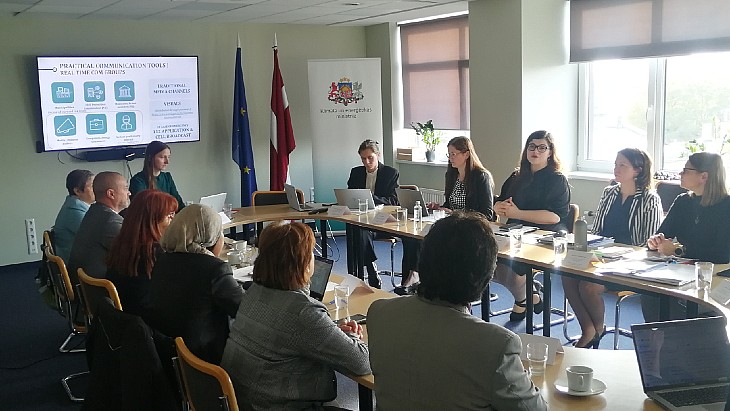
The 10-day, six-person, Emergency Preparedness Review Service mission was requested by the Latvian government and hosted by the Radiation Safety Centre of the State Environmental Service.
Genaro Rodrigo Salinas Mariaca, Senior Specialist on Emergency Preparedness and Response at the Federal Authority for Nuclear Regulation in the United Arab Emirates, led the team which also included experts from Bulgaria, Indonesia, Portugal, Finland and the IAEA.
He said: "The outcomes of this mission highlight both well-established practices and valuable opportunities for further strengthening integration, coordination and resilience."
Examples of strengths identified included: the continuous proactive approach and strong determination of the radiation safety centre in leading preparedness and response initiatives for nuclear and radiological emergencies; the government's efforts to establish reliable communication channels to disseminate information and instructions to potentially affected populations; and on-going initiatives to build public trust through effective crisis communication as a way to strengthen the overall national emergency response framework.
Suggestions made included: to align national regulations and emergency frameworks with relevant international safety standards; to implement a national coordinating mechanism in all emergency response organisations; to integrate the Crisis Management Centre into the national framework; to conduct hazard assessments in line with relevant international safety standards; define guidance values for emergency workers and helpers, including provisions to register and integrate non-designated emergency workers and helpers into emergency response arrangements; and establish arrangements for environmental and food monitoring during emergencies.
It also stressed the importance of organisations having sufficient qualified personnel to carry out their emergency responsibilities.
Kaspars Melnis, Latvia's Minister of Climate and Energy, said: "This review has enabled us to benchmark our systems against international best practices, identify areas of strength and pinpoint opportunities for improvement. We are committed to translating the mission’s recommendations into concrete measures to further enhance our preparedness and response capabilities, ensure public confidence, and remain aligned with international safety standards. Latvia values its partnership with the IAEA and looks forward to deepening cooperation in the years ahead."
The Radiation Safety Centre of the State Environmental Service said that before the mission it had already prepared a new draft Cabinet of Ministers regulation to include the requirements of international safety standards, replacing those from 2003. "Based on the recommendations of the experts, the draft regulation will be improved" it said, and would, in cooperation with other institutions, develop an action plan for the implementation of the recommendations made as a result of the mission.
Latvia does not currently have any nuclear power reactors; its research reactor closed in 1998 and is in the early stages of decommissioning. It uses radiation sources in medical, scientific and industrial applications and has a disposal and storage site for low and intermediate level radioactives waste 30 kilometres from the country’s capital, Riga.

No comments:
Post a Comment